simon weiner

Scaling Smart – AI Techniques for Rapid Business Growth and Financial Success

As you navigate the competitive business landscape, you’re likely seeking innovative ways to drive growth and boost financial success. You understand that leveraging cutting-edge technologies is key to staying ahead of the curve. With the power of Artificial Intelligence (AI) at your fingertips, you can revolutionize your business operations, streamline processes, and unlock new opportunities for expansion. By embracing AI techniques, you can make data-driven decisions, optimize resources, and propel your business towards rapid growth and financial prosperity.

Key Takeaways:

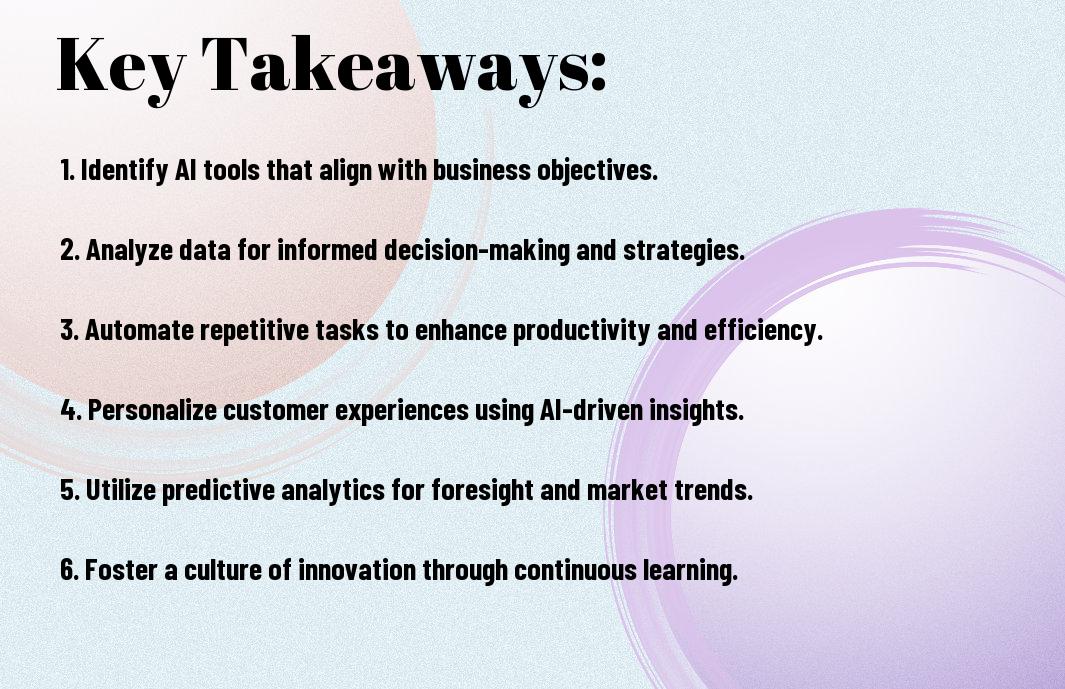
  • Implementing AI techniques can significantly accelerate business growth by automating processes, enhancing decision-making, and improving customer experiences, ultimately leading to increased revenue and financial success.
  • Effective scaling of AI solutions requires a strategic approach, including identifying key areas of business that can benefit from AI, developing a robust infrastructure, and ensuring seamless integration with existing systems.
  • By leveraging AI-driven insights and analytics, businesses can gain a competitive edge, drive innovation, and make data-driven decisions to navigate complex market landscapes and achieve sustainable growth.

The AI-Driven Business Landscape

Your business operates in a world where artificial intelligence (AI) is increasingly driving growth and financial success. You need to understand the AI-driven landscape to stay competitive and achieve your goals.

Current Market Dynamics

Between the rise of digital transformation and the growing demand for data-driven insights, you are likely to encounter a complex market environment that requires innovative solutions to stay ahead.

Technology Integration Points

Beneath the surface of your organization, there are numerous opportunities to integrate AI technologies that can enhance your operations and decision-making processes.

For instance, you can leverage AI-powered tools to automate routine tasks, analyze customer behavior, and optimize your supply chain, leading to increased efficiency, improved customer satisfaction, and reduced costs, ultimately driving your business towards rapid growth and financial success.
Smart Scaling Fundamentals

One of the key aspects of scaling your business is understanding the fundamentals that drive growth. You need to focus on strategies that will help your business expand rapidly while maintaining financial stability. Your goal is to create a solid foundation for long-term success, and this requires careful planning and execution.

Data-Driven Decision Making

Decisively, you will need to rely on data to make informed decisions that drive your business forward. You should utilize analytics and metrics to understand your market, customers, and operations, allowing you to make adjustments and optimizations that support your growth strategy.

Automation Architecture

After establishing a solid foundation, you can start building an automation architecture that streamlines your operations and increases efficiency. You should identify areas where automation can have the greatest impact and implement solutions that support your growth goals.

Hence, as you develop your automation architecture, you will need to consider the specific needs of your business and the technologies that will best support your goals. You should evaluate various automation tools and platforms, and select those that integrate seamlessly with your existing systems, allowing you to automate tasks, processes, and workflows with ease, and freeing up resources to focus on high-value activities that drive growth and innovation.

Financial Intelligence Systems

Many businesses are now leveraging financial intelligence systems to drive growth and success. You can utilize these systems to make informed decisions, optimize operations, and improve your bottom line. By implementing financial intelligence systems, you can gain valuable insights into your financial performance and make data-driven decisions to drive your business forward.

Predictive Analytics for Growth

Gaining insights into future trends and patterns is imperative for your business growth. You can use predictive analytics to forecast revenue, identify new opportunities, and optimize your operations. By leveraging predictive analytics, you can make informed decisions and stay ahead of the competition, driving your business towards rapid growth and financial success.

Risk Management Protocols

Balancing risk and opportunity is a delicate task for your business. You need to navigate between potential risks and opportunities to ensure sustainable growth. By establishing effective risk management protocols, you can minimize potential losses and maximize gains, protecting your business from unforeseen circumstances.

With effective risk management protocols in place, you can identify potential risks, assess their impact, and develop strategies to mitigate them. You can use data analytics and machine learning algorithms to identify patterns and predict potential risks, enabling you to take proactive measures to protect your business and ensure long-term financial success.

Customer Experience Enhancement

Unlike traditional methods, AI-driven approaches can significantly enhance your customer experience, leading to increased loyalty and retention. You can leverage AI to analyze customer data, preferences, and behaviors, enabling you to tailor your services to meet their unique needs.

AI-Powered Personalization

To take personalization to the next level, you can utilize AI algorithms that learn from customer interactions and adapt your offerings accordingly, ensuring a highly customized experience that drives engagement and satisfaction.

Digital Touchpoint Optimization

Similarly, personalization extends to optimizing your digital touchpoints, where you can use AI to streamline and refine your online presence, making it more intuitive and user-friendly for your customers to interact with your brand.

Understanding how your customers interact with your digital touchpoints is key to optimizing their experience. You can use AI to analyze customer journeys, identify pain points, and make data-driven decisions to improve your website, mobile app, or social media channels, ultimately leading to increased conversions and revenue growth for your business.

Operational Excellence

Despite the complexity of scaling a business, achieving operational excellence is within your reach. You can leverage AI techniques to streamline processes, enhance efficiency, and reduce costs, ultimately driving your business towards rapid growth and financial success.

Process Automation Strategies

Any organization can benefit from automating repetitive and mundane tasks, freeing up your team to focus on high-value activities. You can utilize AI-powered tools to identify areas where automation can have the greatest impact, allowing you to optimize your operations and improve productivity.

Resource Allocation Models

Across your organization, effective resource allocation is important for achieving operational excellence. You can use AI-driven models to analyze your resources, identify areas of waste, and optimize allocation to maximize ROI and drive business growth.

Indeed, by implementing advanced resource allocation models, you can gain valuable insights into your business operations, enabling you to make data-driven decisions and allocate resources more efficiently. You can use AI to analyze your resource utilization patterns, forecast demand, and predict potential bottlenecks, allowing you to proactively adjust your resource allocation and ensure that your business is running at optimal levels.

Market Expansion Tactics

Keep expanding your business with smart market expansion tactics, as discussed in Part 2: Scaling Smarter, Growing Faster – A Framework & AI Driven Approach, to achieve rapid growth and financial success.

AI-Based Market Analysis

Markets are constantly evolving, and you can leverage AI-based market analysis to identify new opportunities and stay ahead of the competition, enabling your business to make informed decisions.

Scaling Across Territories

Any business can scale across territories with the right strategy, and you can use AI techniques to analyze market trends and expand your customer base.

Due to the complexity of expanding into new territories, you will need to develop a tailored approach that takes into account local market conditions, cultural differences, and regulatory requirements, allowing you to successfully scale your business and achieve financial success.

Summing up

To wrap up, you now have the tools to leverage AI for rapid business growth and financial success. You can apply these techniques to scale your business smartly. For inspiration, you can explore How 6 mid-market companies are using AI to scale and learn from their experiences to drive your own business forward.

FAQ

Q: What is Scaling Smart, and how can it benefit my business?

A: Scaling Smart refers to the strategic application of Artificial Intelligence (AI) techniques to drive rapid business growth and achieve financial success. By leveraging AI, businesses can automate processes, gain data-driven insights, and make informed decisions to stay ahead of the competition. With Scaling Smart, companies can optimize their operations, improve customer experiences, and increase revenue, ultimately leading to sustainable growth and profitability.

Q: How can AI techniques be applied to drive business growth and financial success?

A: AI techniques can be applied in various ways to drive business growth and financial success, including predictive analytics, machine learning, and natural language processing. These techniques can help businesses identify new opportunities, optimize marketing campaigns, and improve customer engagement. Additionally, AI-powered tools can automate tasks, enhance supply chain management, and provide real-time insights to inform strategic decision-making.

Q: What are the key challenges that businesses may face when implementing AI techniques for scaling?

A: Businesses may face several challenges when implementing AI techniques for scaling, including data quality issues, lack of skilled talent, and integration with existing systems. Moreover, ensuring transparency, accountability, and ethics in AI decision-making can be a significant challenge. To overcome these challenges, businesses must invest in data infrastructure, develop a skilled workforce, and establish clear guidelines for AI adoption and governance.

Q: How can businesses measure the effectiveness of AI techniques in driving growth and financial success?

A: Businesses can measure the effectiveness of AI techniques by tracking key performance indicators (KPIs) such as revenue growth, customer acquisition costs, and return on investment (ROI). Additionally, metrics like customer satisfaction, retention rates, and net promoter scores can help evaluate the impact of AI on customer experiences. Regular monitoring and analysis of these metrics can help businesses refine their AI strategies and make data-driven decisions to optimize their growth and financial performance.

Q: What is the future of Scaling Smart, and how will AI continue to evolve in driving business growth and financial success?

A: The future of Scaling Smart is promising, with AI continuing to play a vital role in driving business growth and financial success. As AI technologies advance, businesses can expect to see increased adoption of emerging technologies like edge AI, explainable AI, and autonomous systems. Furthermore, the integration of AI with other technologies like blockchain, IoT, and cloud computing will create new opportunities for innovation and growth. To stay ahead, businesses must stay agile, invest in ongoing learning and development, and prioritize AI-driven innovation to drive sustainable growth and financial success.

The AI Wealth Blueprint – Turning Technology into a Lucrative Business Model

As you navigate the rapidly evolving landscape of artificial intelligence, you’re likely wondering how to harness its power to drive business success. You’re looking to transform your understanding of AI into a tangible, profitable venture. Your goal is to leverage technology to boost your bottom line, and you’re seeking a clear roadmap to achieve this objective. This post will guide you through the process, providing valuable insights and expert advice to help you turn AI into a lucrative business model that yields significant returns on your investment.

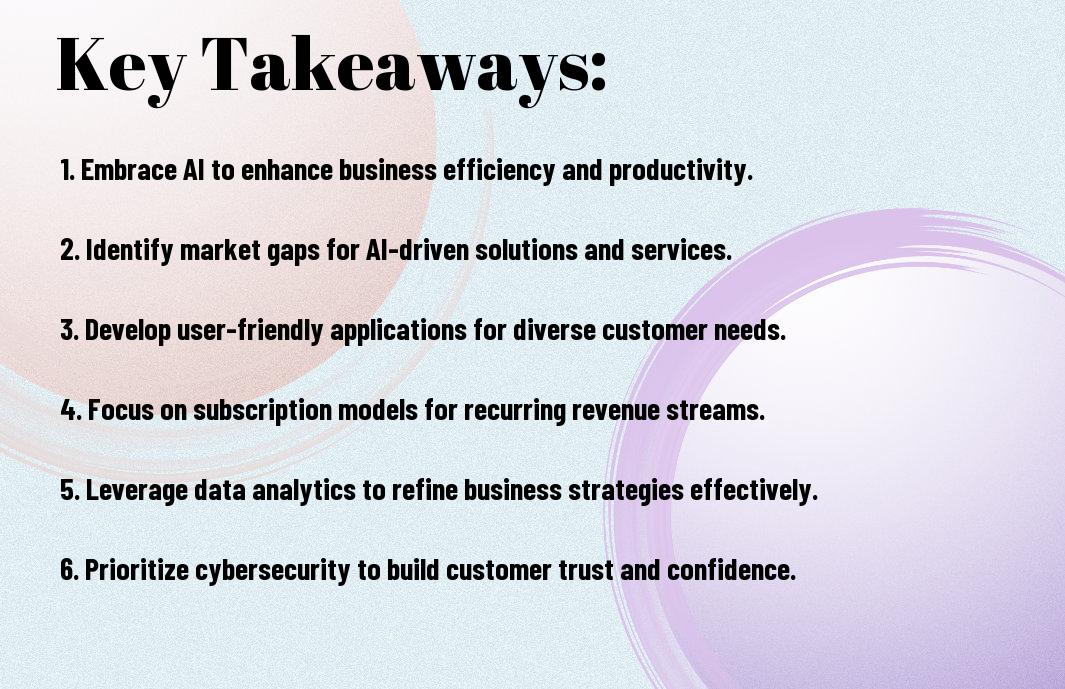
Key Takeaways:

  • The AI Wealth Blueprint provides a comprehensive guide on how to leverage artificial intelligence and technology to create a profitable business model, highlighting the potential for significant financial gains through strategic implementation and innovation.
  • By understanding the intersection of technology and business, entrepreneurs and investors can identify new opportunities for growth and development, using AI to drive efficiency, improve decision-making, and enhance customer experiences.
  • Effective execution of The AI Wealth Blueprint requires a deep understanding of the latest advancements in AI, as well as the ability to adapt and evolve business strategies in response to rapidly changing technological landscapes and market demands.

The Digital Gold Rush

Before entering into the world of AI, you need to understand the vast opportunities it presents. You are on the cusp of a revolution that can transform your business and generate significant wealth.

AI Market Evolution

Glorious advancements in AI have led to unprecedented growth, and you can capitalize on this trend. You will witness the emergence of new technologies and innovations that can be leveraged to create lucrative business models.

Identifying Profitable Niches

Around every corner, there are opportunities waiting to be seized. You can explore various AI applications and identify areas that align with your interests and expertise, paving the way for a successful business venture.

It is imperative to conduct thorough research and analyze market trends to identify profitable niches. You should focus on areas with high demand and limited competition, allowing you to establish a strong foothold in the market. By doing so, you can create a robust business model that generates significant revenue and drives long-term growth, ultimately helping you achieve your financial goals.

Core AI Business Models

Clearly, understanding the core AI business models is necessary to creating a lucrative business. You will need to explore various models, including subscription-based services and data monetization strategies, to determine which one suits your business needs.

Subscription-Based Services

Across various industries, you can leverage AI to offer subscription-based services, providing your customers with ongoing access to AI-powered tools and features, generating a steady revenue stream for your business.

Data Monetization Strategies

Business owners like you can capitalize on AI-driven data monetization strategies, enabling you to unlock new revenue streams and gain a competitive edge in the market.

For instance, you can utilize AI to analyze and process large datasets, creating valuable insights that can be sold to other businesses or used to inform your own business decisions, ultimately driving growth and increasing your bottom line.

Technology Infrastructure

Keep in mind that a robust technology infrastructure is vital for your AI-powered business. You can learn more about building a successful AI business by checking out the THE AI WEALTH CREATION BLUEPRINT eBook, which provides valuable insights and strategies for turning technology into a lucrative business model.

Essential AI Tools and Platforms

Among the various AI tools and platforms available, you will need to select the ones that best fit your business needs, considering factors such as scalability, security, and ease of use, to ensure seamless integration and optimal performance.

Scalability Framework

To achieve long-term success, you must design a scalability framework that allows your AI system to grow and adapt to increasing demands, ensuring that your business remains competitive and efficient.

Hence, as you develop your scalability framework, you should focus on creating a flexible and modular architecture that can be easily upgraded or modified, enabling your AI system to handle large volumes of data and traffic, while maintaining high performance and reliability, which is vital for your business to thrive in a rapidly changing market.

Revenue Generation Mechanics

All successful businesses rely on effective revenue generation mechanics to drive growth and profitability. You will need to develop a deep understanding of your target market and the value proposition your AI-powered business offers to create a robust revenue stream.

Pricing Strategies

After establishing your unique value proposition, you can develop pricing strategies that align with your business goals and customer expectations. You will need to consider factors such as production costs, market conditions, and competition to determine the optimal pricing for your AI-driven products or services.

Value Chain Optimization

Below the surface of your revenue generation mechanics lies the value chain, which encompasses all activities that create value for your customers. You can optimize your value chain by streamlining processes, reducing costs, and enhancing the overall customer experience.

A key aspect of value chain optimization is identifying areas where AI can be leveraged to improve efficiency, reduce waste, and create new opportunities for growth. As you analyze your value chain, you will be able to pinpoint bottlenecks and areas for improvement, allowing you to make data-driven decisions that drive your business forward and increase your revenue.

Risk Management

Many factors can impact your AI business, and it’s imperative to consider them when developing your strategy. You need to identify potential risks and develop plans to mitigate them, ensuring your business remains stable and profitable.

Technical Challenges

Beneath the surface of any AI project, technical issues can arise, and you must be prepared to address them. You should have a team of experts who can handle complex problems and find solutions quickly, minimizing downtime and ensuring your business continues to run smoothly.

Market Competition Safeguards

Prior to entering the market, you should have a plan in place to protect your business from competitors. You need to understand your unique selling points and develop strategies to differentiate your products or services, making them more attractive to customers.

Due to the ever-changing nature of the AI industry, you must stay ahead of the competition by continuously monitoring market trends and adjusting your strategy accordingly. You should also focus on building strong relationships with your customers, providing them with exceptional service and support, and encouraging loyalty to your brand, ultimately safeguarding your position in the market.

Growth and Scaling

Not every business can scale effectively, but with the right strategy, you can turn your AI technology into a lucrative business model. You will need to focus on expanding your market reach and building a strong partnership ecosystem to achieve growth.

Market Expansion Tactics

Gaining traction in new markets requires a thoughtful approach, you will need to identify opportunities and develop strategies to capitalize on them, expanding your customer base and increasing your revenue.

Partnership Ecosystems

Above all, building a strong network of partners is vital to your success, you will need to identify key stakeholders and collaborate with them to drive growth and innovation in your business.

For instance, you can leverage partnerships to access new technologies, expertise, and markets, enabling you to stay ahead of the competition and achieve your business goals, by doing so, you will be able to create a robust and sustainable business model that drives long-term growth and profitability.

Conclusion

Drawing together the key concepts, you now have a comprehensive understanding of how to leverage AI for financial gain. As you commence on your journey, you can refer to The AI Wealth Blueprint: A Real-World Guide to Building Your AI-Powered Business for expert guidance. With your newfound knowledge, you can turn technology into a lucrative business model, driving your success and transforming your financial future, as you apply your skills to build your AI-driven enterprise, shaping your prosperity.

FAQ

Q: What is The AI Wealth Blueprint and how can it help me turn technology into a lucrative business model?

A: The AI Wealth Blueprint is a comprehensive guide designed to help entrepreneurs and businesses harness the power of Artificial Intelligence (AI) to create profitable and sustainable business models. By following the blueprint, you will learn how to identify opportunities, develop strategies, and implement AI solutions that drive growth, increase efficiency, and generate significant revenue streams. With The AI Wealth Blueprint, you will gain the knowledge and tools necessary to stay ahead of the competition and capitalize on the vast potential of AI in the market.

Q: What kind of skills or experience do I need to have to benefit from The AI Wealth Blueprint?

A: The AI Wealth Blueprint is designed to be accessible to individuals from various backgrounds and industries. You don’t need to have extensive technical expertise in AI or programming to benefit from the blueprint. The guide provides a thorough introduction to AI concepts, technologies, and applications, making it suitable for beginners and experienced professionals alike. Whether you are an entrepreneur, business owner, or investor, The AI Wealth Blueprint will provide you with the insights and strategies necessary to leverage AI for business success.

Q: How does The AI Wealth Blueprint help me identify profitable AI business opportunities?

A: The AI Wealth Blueprint provides a structured approach to identifying and evaluating AI business opportunities. The guide includes market analysis, trend identification, and risk assessment tools to help you pinpoint high-potential areas for AI application. You will learn how to analyze industry trends, assess market demand, and evaluate the competitive landscape to determine the most lucrative opportunities for AI-driven businesses. By following the blueprint, you will be able to identify and capitalize on emerging trends and opportunities in the AI market.

Q: Can The AI Wealth Blueprint be applied to existing businesses, or is it only suitable for new ventures?

A: The AI Wealth Blueprint is designed to be flexible and adaptable to various business contexts. Whether you are looking to launch a new AI-driven venture or integrate AI into an existing business, the guide provides actionable strategies and tactics to help you achieve your goals. You will learn how to assess your current business operations, identify areas for AI integration, and develop a roadmap for implementation. The AI Wealth Blueprint can help you enhance your existing business model, improve efficiency, and unlock new revenue streams through AI adoption.

Q: What kind of support and resources are available to help me implement The AI Wealth Blueprint?

A: The AI Wealth Blueprint comes with a range of support resources and tools to help you implement the strategies and tactics outlined in the guide. You will gain access to a community of like-minded entrepreneurs and business leaders, as well as expert mentors and coaches who can provide guidance and support. Additionally, the blueprint includes templates, worksheets, and case studies to help you apply the concepts and principles to your specific business context. With The AI Wealth Blueprint, you will have everything you need to turn technology into a lucrative business model and achieve long-term success in the AI-driven economy.

Merging Creativity and Code – How AI Sparks Entrepreneurial Wealth

As you explore the intersection of innovation and technology, you’ll discover how artificial intelligence (AI) can amplify your creative potential. You can leverage AI to unlock new ideas and business opportunities, driving your entrepreneurial ventures forward. To learn more about boosting your creativity with AI, visit Increase Your Creativity with Artificial Intelligence, and discover the tools to transform your vision into wealth-generating realities, revolutionizing your approach to entrepreneurship.

Key Takeaways:

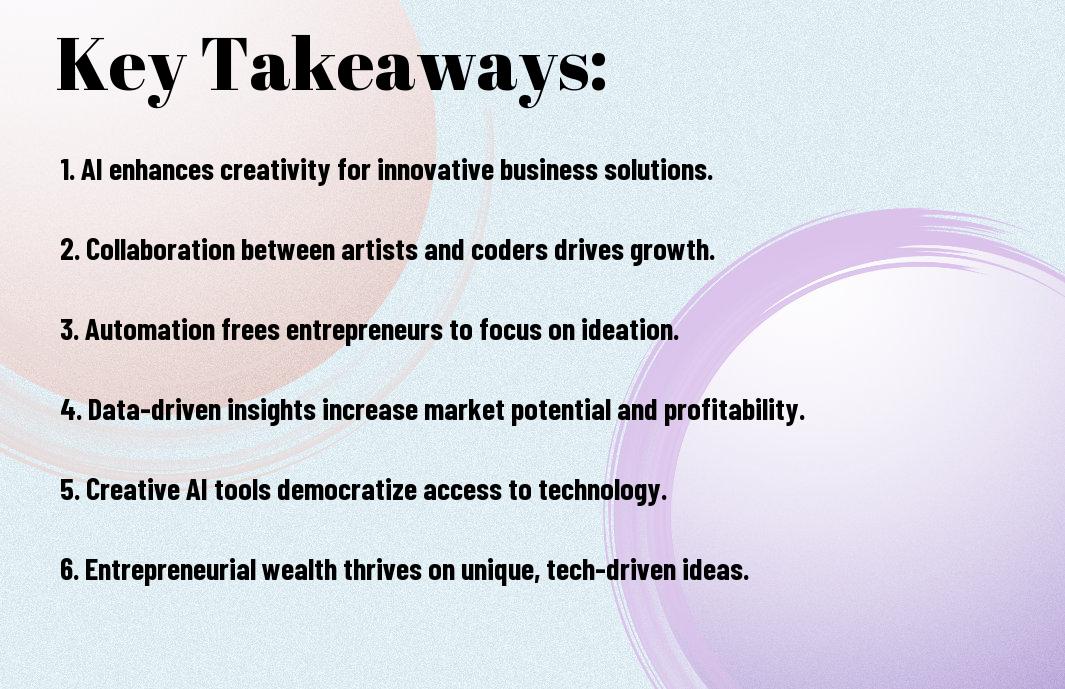
  • The integration of artificial intelligence (AI) and creativity has the potential to generate significant entrepreneurial wealth by automating routine tasks, enhancing innovation, and improving decision-making processes.
  • AI-driven technologies can facilitate the development of novel products and services, enabling entrepreneurs to tap into new markets and create unique value propositions that differentiate them from competitors.
  • By leveraging AI to augment human creativity, entrepreneurs can unlock new opportunities for growth, increase productivity, and stay ahead of the curve in today’s fast-paced and competitive business landscape.

    The Convergence of Art and Algorithm

    The intersection of creativity and code is transforming the way you approach entrepreneurship, enabling you to turn your innovative ideas into successful ventures. As you explore this convergence, you’ll discover new opportunities for growth and development.

    Creative Intelligence in the Digital Age

    Beneath the surface of traditional art and algorithm lies a new era of creative intelligence, where you can leverage AI to enhance your artistic expression and bring your unique vision to life in the digital age.

    Breaking Traditional Boundaries

    Following the emergence of AI-powered tools, you’re now able to break free from conventional constraints and explore uncharted territories of innovation, where art and technology blend seamlessly to create something entirely new and exciting.

    It is in this space that you’ll find the most significant potential for growth, as you’re able to push beyond traditional boundaries and create innovative solutions that showcase your unique perspective and talent, allowing you to stand out in a crowded market and establish yourself as a pioneer in your field.

    AI as the Entrepreneur’s Canvas

    It is an exciting time for entrepreneurs, as AI technology offers a blank canvas to bring your innovative ideas to life, enabling you to turn your vision into a successful business venture, and ultimately, generating wealth.

    From Concept to Creation

    Entrepreneurially-minded individuals like you can leverage AI to transform concepts into tangible products or services, streamlining the development process and allowing you to focus on refining your unique value proposition.

    Scaling Imagination

    Before entering into the world of AI-powered entrepreneurship, you should consider how this technology can help you scale your imagination, turning even the most ambitious ideas into scalable and sustainable businesses.

    Conceptually, scaling your imagination with AI means that you can explore new markets, test innovative products, and refine your business strategy, all while leveraging the power of machine learning and data analysis to inform your decisions and drive growth, allowing you to achieve your entrepreneurial goals more efficiently.

    The New Economics of AI-Driven Ventures

    Not surprisingly, the integration of AI in your business ventures can lead to unprecedented economic growth, transforming the way you approach entrepreneurship and wealth creation.

    Investment Landscapes

    By exploring the investment landscapes of AI-driven ventures, you will discover new opportunities for funding and growth, enabling you to make informed decisions about your business investments.

    Revenue Models in the AI Economy

    One of the key aspects of AI-driven ventures is the emergence of new revenue models, allowing you to monetize your products and services in innovative ways, and increasing your potential for financial returns.

    But as you probe deeper into the revenue models in the AI economy, you will find that they often rely on data-driven approaches, requiring you to collect, analyze, and utilize large amounts of data to drive your business forward, and it’s up to you to navigate these complex models and harness their full potential to maximize your entrepreneurial wealth.

    Cognitive Tools for Business Innovation

    After exploring the potential of AI in business, you’ll discover that cognitive tools can revolutionize your entrepreneurial journey, enabling you to make informed decisions and drive innovation.

    Predictive Analytics for Market Discovery

    Cognizant of the latest trends, you can leverage predictive analytics to uncover new market opportunities, identifying patterns and insights that inform your business strategy and drive growth.

    Generative Systems in Product Development

    For instance, you can utilize generative systems to create novel products and services, streamlining your development process and enhancing your overall customer experience.

    Predictive modeling and machine learning algorithms can further enhance your generative systems, allowing you to test and refine your products in a virtual environment, reducing costs and accelerating time-to-market, so you can focus on delivering innovative solutions that meet your customers’ evolving needs.

    The Human Element in Algorithmic Wealth

    Now that you’re exploring the intersection of creativity and code, you’ll discover how human intuition and machine learning collide to generate wealth. Your ability to leverage this synergy will be key to unlocking entrepreneurial success.

    Augmentation Rather Than Replacement

    Besides the notion that AI will replace human workers, you’ll find that it actually enhances your capabilities, freeing you to focus on high-level creative decisions and strategy.

    Emotional Intelligence and Machine Learning

    One of the most significant advantages you’ll gain from merging human and artificial intelligence is the ability to inject emotional intelligence into your decision-making processes, allowing you to better understand your customers and create more effective solutions.

    Wealth creation through AI-driven entrepreneurship relies heavily on your understanding of emotional intelligence and machine learning. As you investigate deeper into this realm, you’ll learn how to harness the power of emotional intelligence to inform your machine learning models, creating more nuanced and effective algorithms that drive business success. By combining these two disciplines, you’ll be able to develop innovative solutions that not only meet but exceed your customers’ expectations, ultimately leading to increased revenue and growth.

    Building Sustainable AI Businesses

    Your ability to merge creativity and code can lead to the development of innovative AI solutions, ultimately driving your entrepreneurial wealth and success in the industry.

    Ethical Frameworks for Growth

    Following the establishment of your AI business, afterwards you will need to consider implementing ethical frameworks that ensure your growth is both responsible and beneficial to society, allowing you to maintain a positive reputation and build trust with your customers.

    Long-term Vision in Rapid Innovation

    Steadily, you will need to balance your short-term goals with a long-term vision, ensuring that your AI solutions are adaptable and can evolve with the rapidly changing technological landscape, enabling you to stay ahead of the competition and achieve lasting success.

    Growth in the AI industry requires a deep understanding of the complex interplay between technological advancements, market trends, and societal needs. As you navigate the challenges of building a sustainable AI business, you will need to prioritize your long-term vision, focusing on developing solutions that are not only innovative but also scalable, secure, and aligned with your overall business strategy, allowing you to achieve your goals and maintain a competitive edge in the market.

    Final Words

    The intersection of creativity and code has opened up new avenues for you to explore your entrepreneurial spirit. As you launch on this journey, you can tap into the vast potential of AI to spark your wealth. For more insights, you can visit Could AI-Based Entrepreneurship Spark A Consciousness Revolution to discover how AI-based entrepreneurship can transform your business. Your ability to harness this technology will be key to unlocking your full potential.

    FAQ

    Q: What is the relationship between creativity and code in the context of AI-powered entrepreneurship?

    A: The relationship between creativity and code is symbiotic, where creative ideas and innovative thinking are combined with coding skills to develop unique AI-powered solutions. This fusion enables entrepreneurs to create cutting-edge products and services that can disrupt markets and generate wealth. By leveraging AI technologies, entrepreneurs can automate tasks, analyze data, and make informed decisions, ultimately driving business growth and success.

    Q: How can AI spark entrepreneurial wealth, and what are the key factors involved in this process?

    A: AI can spark entrepreneurial wealth by providing entrepreneurs with the tools and capabilities to develop innovative products and services that meet the evolving needs of customers. The key factors involved in this process include access to AI technologies, a deep understanding of the market and customer needs, and the ability to integrate AI into business operations. Additionally, entrepreneurs must be able to navigate the complexities of AI development, including data privacy, security, and ethics, to ensure the long-term sustainability of their ventures.

    Q: What are the benefits of merging creativity and code in AI-powered entrepreneurship, and how can entrepreneurs leverage these benefits to drive success?

    A: The benefits of merging creativity and code in AI-powered entrepreneurship include increased efficiency, improved decision-making, and enhanced customer experiences. Entrepreneurs can leverage these benefits by using AI to automate routine tasks, analyze large datasets, and develop personalized products and services. Furthermore, the integration of creativity and code enables entrepreneurs to develop unique value propositions, differentiate themselves from competitors, and establish a strong market presence.

    Q: What skills and knowledge are required for entrepreneurs to successfully merge creativity and code in AI-powered ventures?

    A: To successfully merge creativity and code, entrepreneurs need to possess a combination of technical, business, and creative skills. This includes proficiency in programming languages, data analysis, and AI technologies, as well as a deep understanding of market trends, customer needs, and business operations. Additionally, entrepreneurs must be able to think creatively, develop innovative solutions, and navigate the complexities of AI development, including data privacy, security, and ethics.

    Q: What are the potential challenges and limitations of merging creativity and code in AI-powered entrepreneurship, and how can entrepreneurs overcome these obstacles?

    A: The potential challenges and limitations of merging creativity and code in AI-powered entrepreneurship include the need for significant investment in AI technologies, the risk of job displacement, and the potential for AI bias and errors. To overcome these obstacles, entrepreneurs must be able to navigate the complexities of AI development, invest in ongoing education and training, and prioritize transparency, accountability, and ethics in their AI-powered ventures. By doing so, entrepreneurs can mitigate the risks associated with AI and unlock the full potential of merging creativity and code to drive business success and generate wealth.

Business Intelligence Redefined – Leveraging AI for Competitive Advantage

As you navigate the ever-evolving business landscape, you need to stay ahead of the curve to maintain a competitive edge. You can leverage artificial intelligence (AI) to redefine your business intelligence and make data-driven decisions. To develop a winning strategy, consider exploring resources like Strategy: Leveraging AI for Competitive Advantage, which can help you unlock your organization’s full potential and drive success.

Key Takeaways:

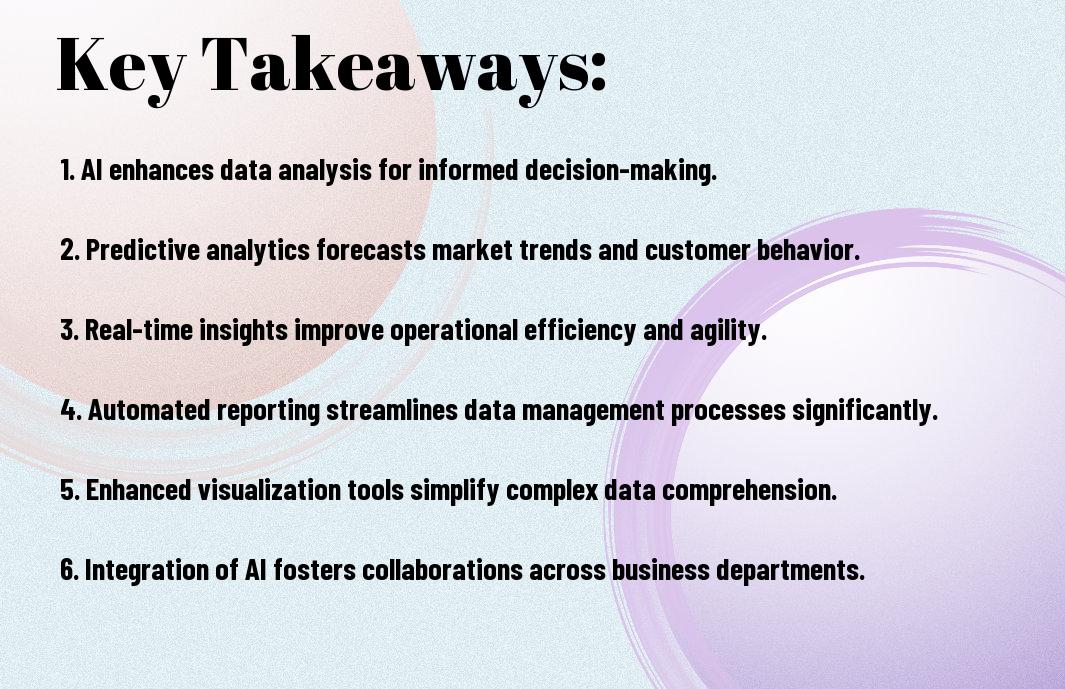
  • Business Intelligence (BI) is evolving with the integration of Artificial Intelligence (AI), enabling organizations to make data-driven decisions and gain a competitive edge in the market by uncovering hidden patterns and insights that traditional BI methods may miss.
  • The application of AI in BI allows for the automation of routine analytical tasks, freeing up resources for more strategic and high-value tasks, and facilitating real-time analysis and decision-making.
  • By leveraging AI-driven BI, organizations can enhance their ability to predict market trends, identify new business opportunities, and optimize operational efficiency, ultimately leading to improved performance and sustained competitive advantage.

The Evolution of Business Intelligence

A significant transformation has taken place in the field of business intelligence, and you are now at the forefront of this change, poised to leverage its power for your competitive advantage.

Traditional BI Approaches

One of the primary limitations of traditional business intelligence approaches is their reliance on manual data analysis, which you have likely experienced firsthand, and this has hindered your ability to make swift, informed decisions.

The AI Revolution in Data Analytics

At the heart of the evolution of business intelligence lies the integration of artificial intelligence, which you can utilize to streamline your data analysis and uncover hidden insights that would be impossible to detect through traditional methods alone.

With the advent of AI-powered business intelligence, you can now automate many of the tasks that previously consumed a significant amount of your time, such as data processing and reporting, and focus on higher-level strategic decision-making that drives your business forward, enabling you to stay ahead of the competition and achieve your goals more efficiently.

Core AI Technologies Transforming Business Intelligence

Some of the key AI technologies driving this transformation include machine learning and natural language processing. You can learn more about How AI is Transforming Business Intelligence and discover how these technologies can enhance your business intelligence capabilities.

Machine Learning Applications

Any organization looking to leverage AI for business intelligence can start by exploring machine learning applications, which enable you to analyze large datasets and identify patterns that inform your business decisions, helping you to make more accurate predictions and drive growth.

Natural Language Processing in BI

To effectively analyze and interpret large amounts of unstructured data, you can utilize natural language processing, which allows you to extract insights from text-based data sources, such as customer feedback and social media posts, and integrate them into your business intelligence strategy.

It is worth noting that natural language processing can be particularly useful in business intelligence, as it enables you to analyze and understand the sentiment and tone of customer feedback, allowing you to make more informed decisions about your products and services, and ultimately driving your business forward with more precision and accuracy, giving you a competitive edge in the market.

Implementation Strategies

Once again, you’ll need to assess your business goals and identify areas where AI can drive the most value when implementing business intelligence solutions, ensuring a tailored approach that meets your unique needs.

Infrastructure Requirements

Around the same time, you will be evaluating your existing infrastructure to determine if it can support AI-powered business intelligence, and if not, what upgrades or new investments are necessary to ensure seamless integration.

Talent and Organizational Structure

Talented individuals with expertise in AI and data analysis will be imperative to your success, so you should focus on acquiring or developing the necessary skills within your organization to effectively leverage AI for business intelligence.

Considering your organization’s structure, you will need to ensure that it is adaptable and agile enough to respond to the insights and opportunities generated by AI-driven business intelligence, allowing you to stay ahead of the competition and drive growth, which means you should be prepared to make adjustments to your workflows, processes, and even your overall business model if necessary, to maximize the benefits of AI-powered business intelligence.

Competitive Advantage Metrics

Despite the numerous benefits of business intelligence, measuring its impact on your organization can be challenging. You need to define key metrics that align with your business objectives, such as revenue growth, customer satisfaction, and operational efficiency.

Measuring ROI of AI-Powered BI

Any analysis of your AI-powered business intelligence investment should consider the return on investment (ROI). You will want to assess how AI-driven insights are impacting your bottom line, and whether they are generating significant revenue or cost savings for your organization.

Performance Indicators

Among the key performance indicators (KPIs) you should track are those related to data quality, user adoption, and decision-making speed. You can use these metrics to evaluate the effectiveness of your business intelligence strategy and identify areas for improvement.

Another important aspect of performance indicators is that they help you to refine your business intelligence strategy over time. As you collect more data and analyze your KPIs, you can adjust your approach to better meet your business objectives, and make more informed decisions that drive growth and profitability for your organization. You will be able to identify trends, opportunities, and challenges, and respond quickly to changes in the market, giving you a competitive edge.

Risk Management

Now that you’re leveraging AI for business intelligence, you need to consider the risks involved. Effective risk management is vital to minimize potential threats and maximize benefits, ensuring your organization stays competitive.

Data Privacy Concerns

Between the lines of code and data analysis, you must address data privacy concerns. You should prioritize protecting sensitive information and ensure compliance with regulations to maintain trust and avoid reputational damage.

Algorithmic Bias Mitigation

To mitigate potential biases, you should implement strategies that detect and correct discriminatory patterns in your AI systems. You can achieve this by regularly auditing your algorithms and incorporating diverse data sets.

Mitigation of algorithmic bias is an ongoing process that requires your attention and effort. As you continue to develop and refine your AI systems, you should prioritize fairness and transparency, ensuring that your decision-making processes are unbiased and accurate, which will ultimately enhance your business intelligence capabilities and maintain your competitive edge.

Future Trends

After embracing AI in business intelligence, you will be able to make more informed decisions and stay ahead of the competition. Your organization will be able to analyze large amounts of data, identify patterns, and predict future trends, giving you a competitive advantage in the market.

Predictive Intelligence

Trending technologies like machine learning and deep learning will enable your business to forecast future outcomes, allowing you to make proactive decisions and stay ahead of the curve. Your ability to predict customer behavior and market trends will become more accurate, enabling you to optimize your strategies.

Autonomous Decision Systems

Above all, autonomous decision systems will revolutionize the way you make decisions, enabling your organization to respond quickly to changing market conditions. Your business will be able to automate decision-making processes, freeing up time for more strategic tasks.

But as you implement autonomous decision systems, you will need to ensure that they are aligned with your business goals and values. You will need to carefully evaluate the data and algorithms used to make decisions, and establish clear guidelines for when human intervention is necessary, allowing you to maintain control and accountability in your decision-making processes.

To wrap up

Ultimately, you now understand how Business Intelligence is redefined by leveraging AI for a competitive advantage. You can harness the power of AI to drive your business forward, making informed decisions with data-driven insights. Your organization will thrive in a rapidly changing market, staying ahead of the competition with AI-driven Business Intelligence, enhancing your strategic decision-making capabilities.

FAQ

Q: What is Business Intelligence Redefined, and how does it leverage AI for competitive advantage?

A: Business Intelligence Redefined refers to the transformation of traditional business intelligence by incorporating Artificial Intelligence (AI) and machine learning capabilities. This integration enables organizations to analyze vast amounts of data, identify patterns, and make data-driven decisions in real-time, thereby gaining a competitive advantage in the market. By leveraging AI, businesses can automate routine tasks, improve predictive analytics, and uncover new insights that inform strategic decisions.

Q: How does AI-driven Business Intelligence enhance decision-making processes within an organization?

A: AI-driven Business Intelligence enhances decision-making by providing organizations with accurate, timely, and relevant data insights. AI algorithms can analyze large datasets, identify trends, and predict outcomes, enabling businesses to make informed decisions quickly. Additionally, AI-powered BI tools can simulate different scenarios, assess risks, and provide recommendations, thereby facilitating more effective and data-driven decision-making.

Q: What are the key benefits of adopting AI-powered Business Intelligence solutions for businesses?

A: The key benefits of adopting AI-powered Business Intelligence solutions include improved operational efficiency, enhanced customer experience, and increased revenue growth. AI-driven BI solutions can automate routine tasks, freeing up resources for strategic activities. They can also provide personalized customer insights, enabling businesses to tailor their offerings and improve customer satisfaction. Furthermore, AI-powered BI can identify new business opportunities, optimize pricing strategies, and predict market trends, leading to increased revenue and competitiveness.

Q: How can organizations ensure the successful implementation of AI-powered Business Intelligence solutions?

A: To ensure the successful implementation of AI-powered Business Intelligence solutions, organizations should first define clear goals and objectives. They should then assess their current data infrastructure, identify gaps, and develop a roadmap for integration. It is also vital to invest in employee training and development, ensuring that teams have the necessary skills to work with AI-powered BI tools. Additionally, organizations should establish a governance framework to ensure data quality, security, and compliance, and continuously monitor and evaluate the performance of their AI-powered BI solutions.

Q: What is the future of Business Intelligence, and how will AI continue to shape the industry?

A: The future of Business Intelligence will be characterized by increased adoption of AI, machine learning, and cloud-based technologies. As AI continues to evolve, we can expect to see more advanced analytics capabilities, such as natural language processing, computer vision, and predictive maintenance. The use of AI will enable businesses to analyze complex data sets, identify new patterns, and make more accurate predictions. Furthermore, the integration of AI with emerging technologies like IoT, blockchain, and augmented reality will create new opportunities for businesses to innovate and stay ahead of the competition, redefining the role of Business Intelligence in driving strategic decision-making and growth.

How to Harness the Power of AI to Drive Profitable Entrepreneurship

As you launch on your entrepreneurial journey, you’re likely looking for innovative ways to drive growth and increase profits. You can leverage artificial intelligence (AI) to streamline your operations, enhance customer experiences, and gain a competitive edge. By harnessing the power of AI, you can make data-driven decisions, automate tasks, and unlock new opportunities for your business, ultimately leading to increased revenue and success. You will learn how to apply AI strategies to boost your entrepreneurial endeavors.

Key Takeaways:

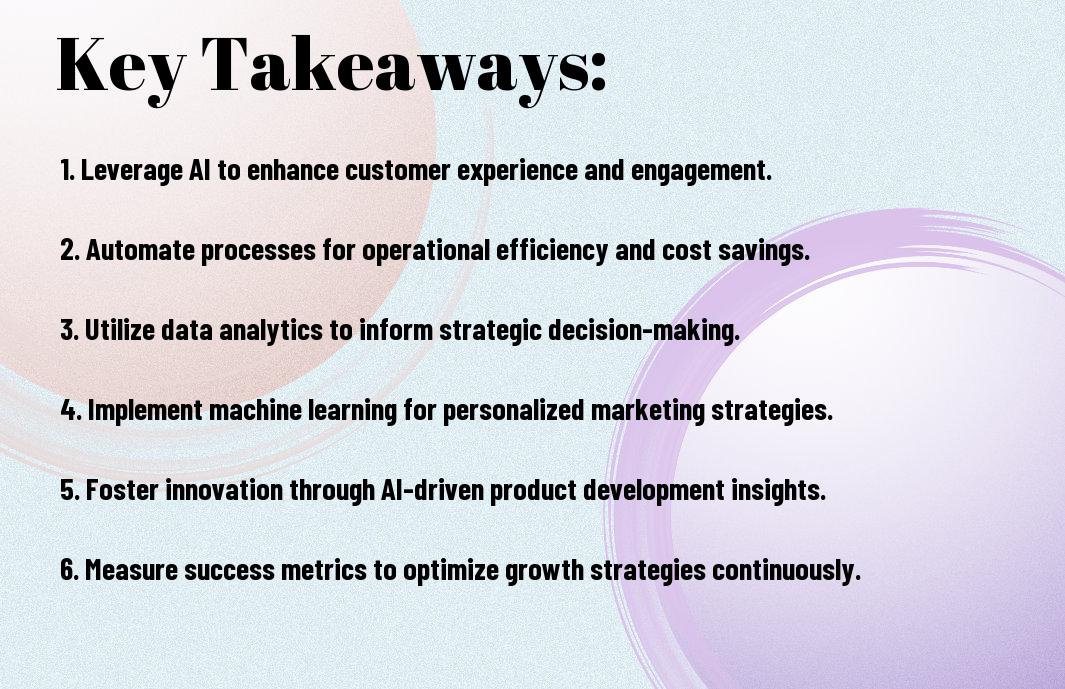
  • Leverage AI to automate repetitive tasks and focus on high-leverage activities that drive business growth, such as strategy development and customer engagement, to increase productivity and efficiency.
  • Utilize AI-powered tools to gain valuable insights from data analysis, enabling informed decision-making and identifying new opportunities for innovation and expansion.
  • Integrate AI into customer-facing operations to enhance user experience, personalize interactions, and build strong relationships, ultimately driving customer loyalty and revenue growth.

    The AI Entrepreneurship Landscape

    The current state of entrepreneurship is being transformed by artificial intelligence (AI). You are likely aware that AI is no longer a futuristic concept, but a reality that is already impacting your business. As you navigate this new landscape, you will need to understand how AI can be leveraged to drive profitability and growth.

    Current AI Technologies Reshaping Business

    Any analysis of the current business environment will show that AI technologies such as machine learning and natural language processing are having a significant impact. You will see that these technologies are being used to automate tasks, improve customer service, and gain valuable insights from data.

    The Entrepreneurial Advantage in the AI Era

    Entrepreneurially-minded individuals like yourself are well-positioned to take advantage of the opportunities presented by AI. You have the ability to innovate and adapt quickly, which will serve you well in this rapidly changing environment.

    This advantage can be further leveraged by focusing on the development of AI-powered products and services that meet the unique needs of your customers. You can use AI to gain a deeper understanding of your target market, and create personalized experiences that drive engagement and loyalty. By doing so, you will be able to differentiate your business and establish a competitive edge in the market, ultimately driving profitable growth and success.

    Identifying AI-Ready Business Opportunities

    Even the most innovative entrepreneurs can struggle to identify opportunities that leverage AI for growth. You need to assess your business and industry to find areas where AI can drive profitability.

    Market Gap Analysis Through AI Lens

    Assessing your market through the lens of AI helps you identify gaps in the industry that AI can fill, allowing you to develop targeted solutions that meet specific needs, giving you a unique position in the market, and you can use this to your advantage.

    Competitive Edge Assessment

    Across various industries, you can evaluate how AI can enhance your competitive edge by streamlining processes, improving customer experience, and increasing efficiency, enabling you to make informed decisions about where to focus your efforts.

    Plus, by conducting a thorough competitive edge assessment, you can pinpoint areas where your competitors are leveraging AI and identify opportunities to outmaneuver them, ultimately driving your business forward and increasing your profitability, as you strategically integrate AI into your operations, you will be able to stay ahead of the curve and achieve your business goals.

    AI Implementation Strategies for Startups

    For startups, implementing AI can be a game-changer, enabling you to automate tasks, gain insights, and make data-driven decisions to drive your business forward. You can leverage AI to optimize operations, improve customer experiences, and stay ahead of the competition.

    Scalable AI Solutions on Limited Budgets

    One of the primary concerns for startups is finding affordable AI solutions that can scale with your business. You can explore cloud-based services, open-source tools, and partnerships with AI providers to access cutting-edge technology without breaking the bank.

    Build vs. Buy Decision Framework

    Across various industries, startups face the dilemma of whether to build or buy AI solutions. You need to weigh the pros and cons of developing your own AI capabilities versus purchasing existing solutions, considering factors such as cost, time, and expertise.

    Indeed, as you navigate the build vs. buy decision, you should consider your specific business needs, resources, and goals. You can assess your in-house capabilities, evaluate the total cost of ownership, and consider the potential risks and benefits of each approach to make an informed decision that aligns with your overall strategy and drives your business forward.

    Revenue Models Enhanced by AI

    To maximize your entrepreneurial potential, you can leverage AI to enhance your revenue models, creating new opportunities for growth and profitability. By integrating AI into your business, you can optimize your pricing strategies, improve customer experiences, and increase revenue streams.

    Subscription and SaaS Approaches

    Among the various revenue models, subscription-based and SaaS approaches can be particularly effective when combined with AI. You can use AI to personalize your services, offering tailored solutions to your customers and increasing the value of your subscriptions.

    Data Monetization Pathways

    About the potential of data monetization, you can utilize AI to analyze and extract valuable insights from your data, creating new revenue streams. You can sell these insights to other companies or use them to improve your own business operations.

    In addition, as you explore data monetization pathways, you will find that AI can help you identify patterns and trends in your data, enabling you to make informed decisions and drive business growth. You can also use AI to develop predictive models, forecasting customer behavior and optimizing your marketing strategies to maximize your revenue.

    Managing AI Development Risks

    Many entrepreneurs underestimate the potential risks associated with AI development, but you can mitigate them by learning how to Harness the Power of AI for Advanced Business Analytics and Decision Making to drive your business forward.

    Technical Debt Considerations

    On the technical side, you should consider the potential debt that can accrue from AI development, including outdated systems and inefficient algorithms that can hinder your progress.

    Ethical Implementation Guardrails

    Risks associated with AI development also include ethical concerns, such as bias and transparency, which you must address to ensure your AI systems are fair and trustworthy.

    In addition, to establish effective ethical implementation guardrails, you should prioritize transparency, accountability, and ongoing monitoring to prevent potential pitfalls and ensure your AI systems align with your business values and goals, allowing you to harness the power of AI while maintaining your integrity and reputation.

    Measuring AI’s Impact on Profitability

    Now that you have integrated AI into your business, it’s imperative to measure its impact on your profitability. You need to track key metrics to understand how AI is driving your business forward and identify areas for improvement.

    Key Performance Indicators for AI Investments

    Above all, you should focus on metrics such as revenue growth, customer acquisition costs, and return on investment (ROI) to evaluate the effectiveness of your AI investments. You can use these indicators to adjust your strategy and optimize your AI-driven initiatives.

    Attribution Models for AI-Driven Growth

    Investing time and resources into attribution models will help you understand how AI contributes to your business growth. You can use models like multi-touch attribution or machine learning-based attribution to assign credit to your AI-driven initiatives and measure their impact on your bottom line.

    But as you research deeper into attribution models, you will realize that measuring the impact of AI on your business is not a straightforward process. You will need to consider various factors, such as data quality, model complexity, and stakeholder buy-in, to ensure that your attribution models accurately capture the value of your AI investments and inform your business decisions. You should continuously monitor and refine your models to ensure they remain effective and aligned with your business goals.

    Final Words

    With this in mind, you now have the tools to harness the power of AI and drive your entrepreneurship forward. You can leverage AI to streamline your operations, enhance your products, and make data-driven decisions. By embracing AI, you will unlock new opportunities, boost your efficiency, and increase your profits. Your business will thrive, and you will stay ahead of the competition, achieving your goals and realizing your vision.

    FAQ

    Q: What are the key steps to harnessing the power of AI for profitable entrepreneurship?

    A: To harness the power of AI for profitable entrepreneurship, start by identifying areas in your business where AI can automate tasks, enhance decision-making, or improve customer experiences. Next, invest in AI-powered tools and technologies that align with your business goals. Develop a strategy for integrating AI into your operations, and ensure that your team has the necessary skills and training to work effectively with AI systems. Finally, continuously monitor and evaluate the impact of AI on your business, making adjustments as needed to optimize its benefits.

    Q: How can AI be used to drive innovation and growth in entrepreneurship?

    A: AI can be used to drive innovation and growth in entrepreneurship by providing insights and patterns in data that can inform product development, marketing strategies, and customer engagement. AI-powered tools can help entrepreneurs identify new business opportunities, predict market trends, and optimize their operations for maximum efficiency. Additionally, AI can enable entrepreneurs to automate routine tasks, freeing up time and resources to focus on high-level creative thinking and strategic decision-making.

    Q: What are some common challenges that entrepreneurs face when implementing AI in their businesses, and how can they be overcome?

    A: Common challenges that entrepreneurs face when implementing AI in their businesses include data quality issues, lack of technical expertise, and integration with existing systems. To overcome these challenges, entrepreneurs can start by ensuring that their data is accurate, complete, and well-organized. They can also invest in training and development programs to build their team’s AI skills, or partner with AI experts and consultants who can provide guidance and support. Additionally, entrepreneurs can start with small-scale AI pilots to test and refine their approaches before scaling up to larger implementations.

    Q: How can AI be used to enhance customer experiences and build stronger relationships with customers?

    A: AI can be used to enhance customer experiences and build stronger relationships with customers by providing personalized recommendations, offering real-time support and feedback, and streamlining customer service interactions. AI-powered chatbots and virtual assistants can help entrepreneurs respond quickly and effectively to customer inquiries, while AI-driven analytics can provide insights into customer behavior and preferences. By leveraging AI in these ways, entrepreneurs can create more engaging, responsive, and tailored customer experiences that drive loyalty and retention.

    Q: What are some best practices for ensuring the responsible and ethical use of AI in entrepreneurial ventures?

    A: Best practices for ensuring the responsible and ethical use of AI in entrepreneurial ventures include being transparent about AI-driven decision-making processes, ensuring that AI systems are fair and unbiased, and protecting customer data and privacy. Entrepreneurs should also establish clear guidelines and policies for AI development and deployment, and invest in ongoing monitoring and evaluation to detect and address any potential issues or concerns. By prioritizing responsibility and ethics in AI adoption, entrepreneurs can build trust with their customers, stakeholders, and the wider public, while also minimizing the risks associated with AI implementation.

Skip to content