simon weiner

The Smart Entrepreneur’s Guide to AI and Wealth Creation

As you navigate the ever-evolving landscape of entrepreneurship, you’re likely aware of the significant impact artificial intelligence (AI) is having on businesses. You’re probably wondering how to harness the power of AI to drive your own success. Your ability to adapt and innovate will be key to unlocking new opportunities for wealth creation. You’ll need to understand how to leverage AI to streamline operations, enhance customer experiences, and inform data-driven decisions that drive growth and profitability.

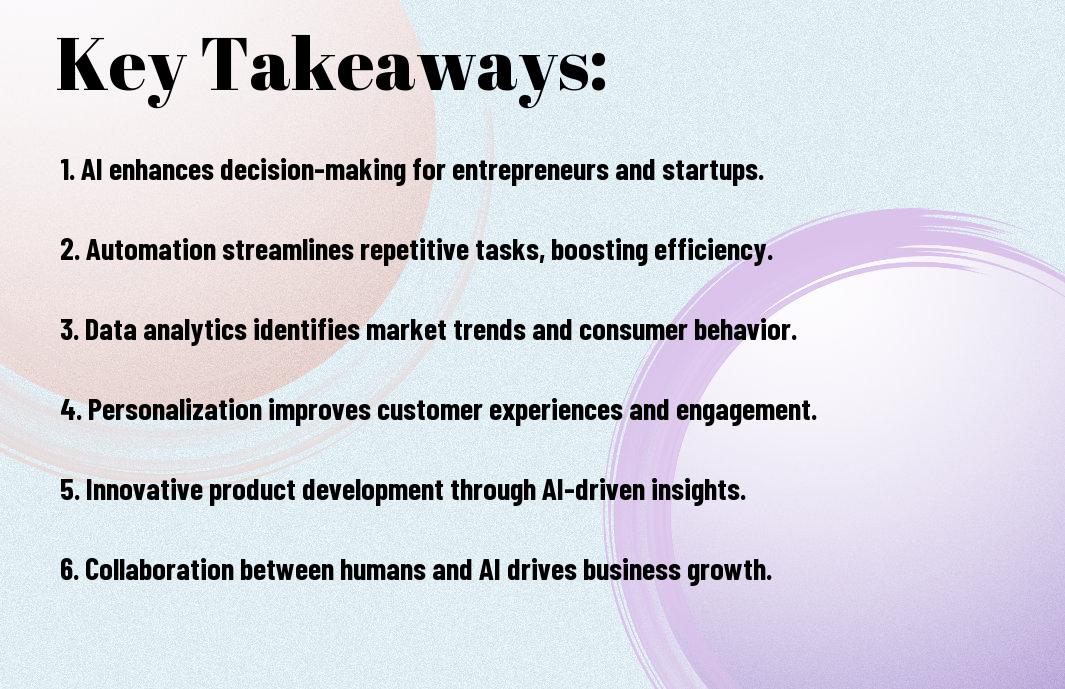
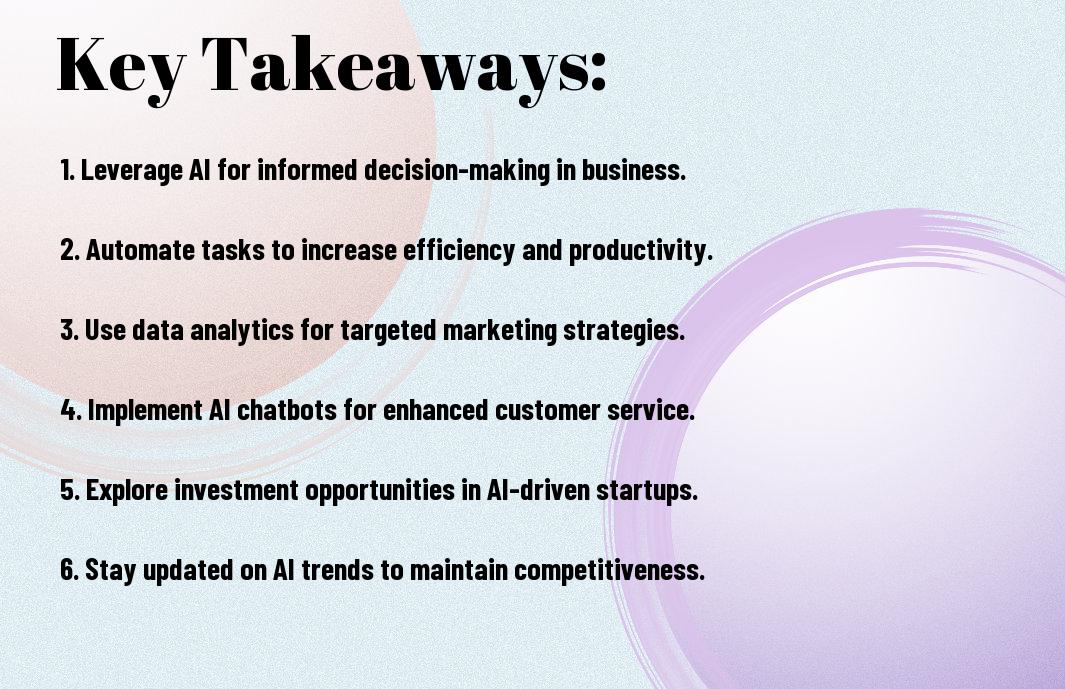
Key Takeaways:

  • The book “The Smart Entrepreneur’s Guide to AI and Wealth Creation” highlights the potential of artificial intelligence to transform businesses and create new wealth opportunities, emphasizing the importance of understanding AI’s capabilities and limitations to leverage its power effectively.
  • Entrepreneurs can apply AI to enhance their business operations, such as automating tasks, analyzing data, and making informed decisions, which can lead to increased efficiency, productivity, and competitiveness in the market.
  • By embracing AI and developing strategies to harness its potential, entrepreneurs can unlock new revenue streams, drive innovation, and achieve sustainable growth, ultimately leading to significant wealth creation and long-term success in their respective industries.

The AI Revolution in Business

A new era of innovation is unfolding, and you are at the forefront of this transformation, with AI revolutionizing the way you approach business and wealth creation.

Current AI Technologies Transforming Industries

Industrial sectors are being reshaped by AI, and you can leverage these advancements to enhance your operations, as AI-powered tools automate tasks and provide valuable insights to inform your decisions.

Market Opportunities in the AI Landscape

Currently, you have access to a vast array of AI-driven solutions that can help you capitalize on emerging trends and stay ahead of the competition, from chatbots to predictive analytics, and you can utilize these tools to optimize your business strategy.

And as you explore the market opportunities in the AI landscape, you will discover new avenues for growth, such as AI-powered marketing and customer service, which can help you build stronger relationships with your clients and establish a competitive edge in your industry, allowing you to make informed decisions and drive your business forward.
Strategic Implementation of AI

Even as you launch on leveraging AI for wealth creation, it’s important to have a well-thought-out strategy in place, ensuring that your implementation is both effective and efficient, yielding the desired outcomes for your business.

Identifying Business Processes for AI Enhancement

On the path to integrating AI, you’ll need to pinpoint areas where AI can enhance your business processes, streamlining operations and boosting productivity, allowing you to make informed decisions about where to focus your efforts.

Cost-Benefit Analysis of AI Integration

Identifying the potential costs and benefits of AI integration is vital, as you need to understand how this technology will impact your bottom line, and whether the advantages outweigh the expenses, enabling you to make a well-informed decision.

This cost-benefit analysis will help you determine which AI solutions are best suited for your business, taking into account factors such as the initial investment, maintenance costs, and potential return on investment, allowing you to prioritize your spending and maximize your ROI, and as you weigh the pros and cons, you’ll be able to create a tailored strategy that meets your unique needs and goals, ensuring that your AI integration is a success.

Building AI-Enhanced Products

For entrepreneurs looking to leverage AI, building AI-enhanced products is a key step. You can learn more about this topic by listening to Ep 36: An Entrepreneur’s Guide to ChatGPT, which provides valuable insights on AI integration.

Product Development Frameworks

For instance, you will need to consider various frameworks that can help you develop AI-enhanced products, such as design thinking and agile development, to ensure your product meets your customers’ needs.

Monetization Strategies

On the other hand, you will also need to think about how to monetize your AI-enhanced products, including subscription-based models, advertising, and data analytics.

Strategies for monetizing AI-enhanced products involve understanding your target audience and creating revenue streams that align with their needs, allowing you to generate wealth and grow your business sustainably, and you can achieve this by experimenting with different pricing models and revenue streams to find what works best for your product.

AI-Driven Marketing and Customer Acquisition

Not only can AI enhance your marketing efforts, but it can also help you acquire new customers and retain existing ones, leading to increased revenue and growth for your business.

Personalization at Scale

Customers expect tailored experiences, and AI can help you deliver, enabling you to create personalized marketing campaigns that resonate with your target audience and drive engagement.

Predictive Analytics for Market Trends

Before exploring into predictive analytics, you need to understand its potential to forecast market trends, allowing you to make informed decisions and stay ahead of the competition.

Consequently, as you explore predictive analytics for market trends, you will discover that it can help you identify patterns and anomalies in customer behavior, enabling you to adjust your marketing strategy and optimize your resources for maximum impact, ultimately driving your business forward and increasing your wealth.

Securing Investment for AI Ventures

Many entrepreneurs struggle to secure funding for their AI ventures, but with the right approach, you can increase your chances of success. You need to demonstrate a deep understanding of the AI landscape and a clear vision for your business.

Crafting the AI Business Case

Building a solid business plan is imperative, and you should focus on creating a compelling narrative that highlights the potential of your AI venture. You will need to outline your unique value proposition, target market, and revenue streams to attract investors.

Approaching AI-Focused Investors

Towards securing funding, you will need to identify and approach investors who have a track record of investing in AI startups. You should research their investment portfolios and tailor your pitch to showcase how your venture aligns with their interests.

Indeed, when approaching AI-focused investors, you should be prepared to address their concerns and questions about your business. You will need to provide detailed information about your technology, market potential, and competitive advantage, as well as a clear outline of how you plan to use their investment to drive growth and returns. By being thorough and transparent, you can build trust with potential investors and increase your chances of securing the funding you need to take your AI venture to the next level.

Risk Management in AI Entrepreneurship

To navigate the complexities of AI entrepreneurship, you must consider the potential risks involved. As you venture into this space, you’ll need to assess and mitigate risks to ensure the success of your business. This includes evaluating the potential impact of AI on your operations, finances, and reputation.

Ethical Considerations and Compliance

Among the key concerns you’ll face are ethical considerations and compliance issues. As you develop and implement AI solutions, you’ll need to ensure that they align with regulatory requirements and ethical standards, protecting your customers’ data and privacy.

Technological Obsolescence Prevention

Among the challenges you’ll encounter is the rapid evolution of AI technology, which can quickly render your solutions obsolete. You’ll need to stay up-to-date with the latest developments and innovations to remain competitive.

A key aspect of preventing technological obsolescence is investing in ongoing research and development, allowing you to adapt and evolve your AI solutions in response to changing market conditions and technological advancements. As you prioritize this, you’ll be better equipped to stay ahead of the curve and maintain a competitive edge in the AI landscape, ultimately protecting your business and ensuring long-term success.

Summing up

Taking this into account, you now have a comprehensive understanding of how to leverage AI for wealth creation. You can apply your knowledge to make informed decisions, driving your business forward. Your ability to harness AI’s potential will set you apart, enabling you to stay ahead in the competitive landscape and achieve your financial goals. You are equipped to unlock new opportunities and maximize your wealth creation potential.

FAQ

Q: What is “The Smart Entrepreneur’s Guide to AI and Wealth Creation” about?

A: “The Smart Entrepreneur’s Guide to AI and Wealth Creation” is a comprehensive guide designed for entrepreneurs who want to leverage Artificial Intelligence (AI) to create wealth and grow their businesses. This guide provides insights into the latest AI technologies, strategies for implementing AI in business operations, and methods for generating wealth through innovative AI-powered solutions.

Q: How can AI be applied in my business to increase efficiency and productivity?

A: AI can be applied in various aspects of your business to increase efficiency and productivity. For instance, AI-powered tools can automate repetitive tasks, enhance customer service through chatbots, improve data analysis for better decision-making, and optimize supply chain management. By integrating AI into your business operations, you can streamline processes, reduce costs, and enhance overall performance.

Q: What kind of wealth creation opportunities are available through AI?

A: AI presents numerous wealth creation opportunities for entrepreneurs. These include developing and selling AI-powered products or services, investing in AI startups, creating and licensing AI algorithms, and offering AI consulting services to other businesses. Additionally, AI can be used to create new business models, such as subscription-based services or data-as-a-service, further expanding the potential for wealth creation.

Q: Do I need to have a technical background to benefit from “The Smart Entrepreneur’s Guide to AI and Wealth Creation”?

A: No, you don’t need a technical background to benefit from this guide. “The Smart Entrepreneur’s Guide to AI and Wealth Creation” is designed to be accessible to entrepreneurs from all backgrounds. It provides a clear, non-technical introduction to AI and its applications in business, along with practical advice on how to get started with AI adoption and wealth creation strategies. The guide focuses on the business and strategic aspects of AI, making it useful for anyone interested in leveraging AI for business growth.

Q: How will “The Smart Entrepreneur’s Guide to AI and Wealth Creation” help me stay ahead of the competition in a rapidly changing business landscape?

A: “The Smart Entrepreneur’s Guide to AI and Wealth Creation” helps you stay ahead of the competition by providing you with the latest insights and strategies on AI adoption and wealth creation. The guide covers emerging trends in AI, best practices for AI implementation, and innovative approaches to creating wealth through AI. By following the guidance and strategies outlined in the book, you can position your business at the forefront of AI adoption, drive innovation, and achieve a competitive edge in the market.

From Concept to Capital – How AI Tools Turn Ideas into Wealth

You have an innovative idea, but turning it into a profitable venture can be daunting. With AI tools, you can bridge the gap between concept and capital. As you explore the possibilities of artificial intelligence, you’ll discover how to leverage your ideas into wealth. To get started, learn How to make money with AI: the digital gold rush, and unlock your potential to transform your ideas into successful businesses.

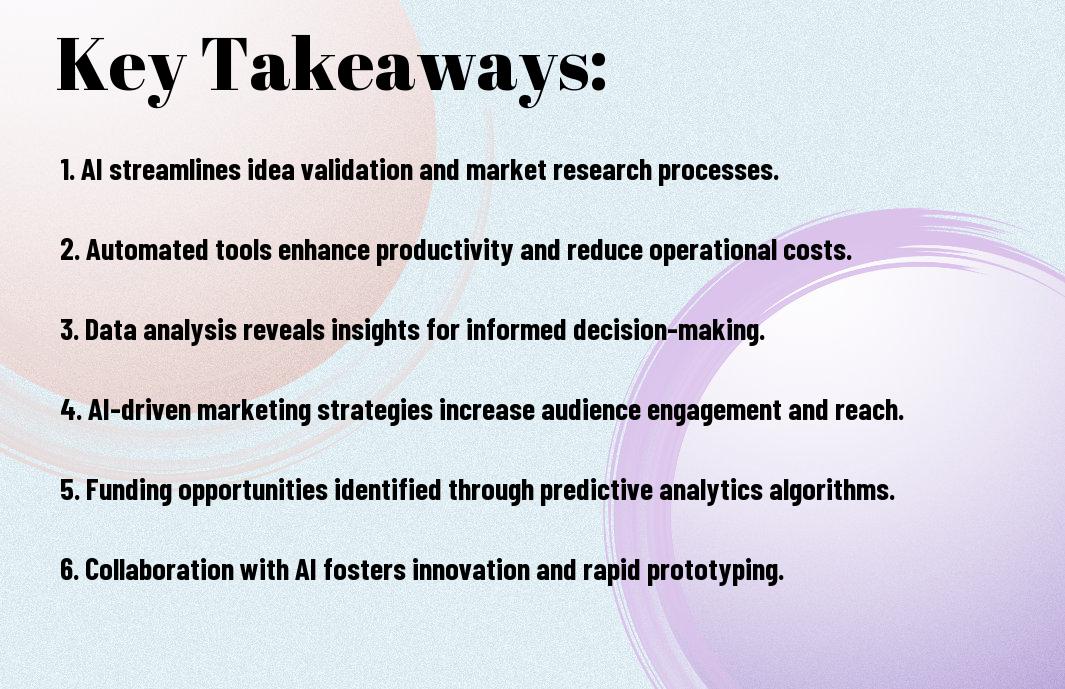
Key Takeaways:

  • AI tools can significantly accelerate the process of turning ideas into wealth by automating tasks, analyzing data, and providing valuable insights to inform decision-making.
  • The effective use of AI tools can help entrepreneurs and businesses validate their ideas, identify potential markets, and develop strategies to reach their target audience, ultimately leading to increased revenue and growth.
  • By leveraging AI tools, individuals can streamline their workflow, reduce costs, and focus on high-level creative thinking, allowing them to bring their ideas to life and achieve their financial goals more efficiently.

The Idea Economy

To succeed in the idea economy, you need to understand how to turn your concepts into capital. Your ability to generate and develop ideas will be the key to your success, and with the right tools, you can unlock your full potential.

Recognizing Valuable Concepts

Upon examining your ideas, you will begin to identify patterns and themes that can be developed into valuable concepts. Your task is to evaluate and refine these concepts to ensure they have the potential to generate wealth.

The Democratization of Innovation

Concepts like artificial intelligence and machine learning are becoming more accessible, allowing you to innovate and create new products and services. Your access to these tools will enable you to compete with larger companies and turn your ideas into successful ventures.

It is crucial to note that the democratization of innovation has leveled the playing field, allowing you to participate in the idea economy regardless of your background or resources. You can now use AI tools to develop and refine your concepts, and with the right strategy, you can turn your ideas into wealth, creating a successful and sustainable business that generates long-term value.

AI as the Modern Alchemist

One of the most significant advantages of AI tools is their ability to turn your ideas into wealth, and this process is revolutionizing the way you approach innovation and entrepreneurship, allowing you to transform your concepts into tangible assets.

Transformative Technologies

For instance, AI-powered technologies are enabling you to automate tasks, streamline processes, and gain valuable insights that can inform your decision-making, ultimately helping you to create more effective and efficient strategies for turning your ideas into wealth.

Acceleration of Development Cycles

During the development phase, your ability to iterate and refine your ideas is significantly enhanced with AI tools, allowing you to test and validate your concepts more quickly and effectively, which in turn enables you to bring your products or services to market faster.

Consequently, as you leverage AI to accelerate your development cycles, you’ll find that you’re able to respond more rapidly to changing market conditions and customer needs, giving you a competitive edge and enabling you to capitalize on new opportunities as they emerge, thereby turning your ideas into wealth more efficiently.

Building Your AI Toolkit

Despite the numerous AI tools available, you need to focus on those that align with your business goals. You will want to identify the tools that can help you turn your ideas into wealth, and then build a toolkit that supports your vision.

Essential AI Platforms for Entrepreneurs

The foundation of your AI toolkit will consist of platforms that provide a wide range of functionalities, such as data analysis, automation, and machine learning. These platforms will enable you to streamline your workflow, make data-driven decisions, and drive innovation in your business.

Selecting Tools for Your Specific Vision

Vision is key when selecting AI tools for your business. You need to consider your specific needs, goals, and industry requirements when choosing the tools that will help you achieve success. Your AI toolkit should be tailored to your unique vision and objectives.

Plus, as you explore the various AI tools available, you will want to evaluate their scalability, user interface, and integration capabilities. You should consider how each tool will fit into your overall workflow and whether it will help you achieve your desired outcomes, allowing you to make informed decisions and drive your business forward with confidence.

From Raw Concept to Refined Product

Once again, you find yourself at the forefront of innovation, poised to transform your idea into a tangible product. With AI tools, you can refine your concept, streamlining it into a viable solution that meets the needs of your target market.

Ideation Enhancement Through AI

Bridging the gap between your initial idea and a well-defined concept, AI-powered tools help you generate, develop, and evaluate your ideas, ensuring that your product is innovative and competitive.

Prototype Development and Testing

Around this stage, you begin to shape your refined concept into a prototype, using AI-driven design tools to create a functional model of your product, which you can then test and iterate upon.

Product development is an iterative process, and with AI tools, you can quickly test and refine your prototype, gathering feedback from users and making data-driven decisions to improve your product, ultimately creating a polished and market-ready solution that meets your customers’ needs and exceeds their expectations, helping you to turn your idea into wealth.

Monetization Strategies

Your ability to turn ideas into wealth relies heavily on effective monetization strategies, which involve leveraging AI tools to identify and capitalize on revenue streams.

AI-Driven Market Analysis

By utilizing AI-driven market analysis, you can gain valuable insights into consumer behavior, market trends, and competitor activity, enabling you to make informed decisions about your product or service.

Pricing and Value Proposition Optimization

Above all, optimizing your pricing and value proposition is vital to attracting and retaining customers, and AI tools can help you achieve this by analyzing market data and providing personalized recommendations.

Strategies for optimizing your pricing and value proposition include using AI to analyze customer feedback, track market fluctuations, and identify opportunities to offer premium services or bundles, allowing you to maximize your revenue and stay competitive in the market, and as you explore these strategies, you will be able to create a tailored approach that suits your business needs and goals.

Scaling with Artificial Intelligence

Keep in mind that AI tools can significantly accelerate your growth, allowing you to scale your business efficiently. You can leverage AI to streamline processes, enhance decision-making, and improve customer experiences, ultimately driving your success.

Automation of Growth Processes

Similarly, one of the key benefits of AI is its ability to automate repetitive tasks, freeing up your time to focus on high-level strategy and innovation, enabling you to expand your business rapidly.

Managing Expansion with Limited Resources

Resourcefully, you can manage your growth with limited resources by utilizing AI tools to optimize operations, prioritize tasks, and allocate resources effectively, ensuring your business expansion is sustainable and profitable.

Adeptly, you can navigate the challenges of managing expansion with limited resources by implementing AI-driven solutions that provide valuable insights, enabling you to make informed decisions and drive your business forward, even with restricted resources, you can achieve your goals and maintain a competitive edge.

Conclusion

With these considerations, you can now harness the power of AI tools to turn your ideas into wealth. You will be able to navigate the process of transforming concepts into successful ventures, leveraging AI-driven insights to inform your decisions. By utilizing these tools, you can optimize your approach, mitigate risks, and maximize your returns, ultimately turning your innovative ideas into tangible assets that generate wealth and drive your success. Your ability to capitalize on AI will be the key to unlocking your financial potential.

FAQ

Q: What is the role of AI tools in turning ideas into wealth, and how do they facilitate the concept-to-capital process?

A: AI tools play a significant role in transforming ideas into wealth by providing innovative solutions, automating tasks, and enhancing decision-making processes. They facilitate the concept-to-capital process by generating, evaluating, and refining ideas, as well as identifying potential markets and revenue streams. By leveraging AI tools, entrepreneurs and businesses can accelerate the development of their concepts, reduce costs, and increase the likelihood of success.

Q: How do AI-powered idea generation tools help in identifying profitable business opportunities, and what are their key features?

A: AI-powered idea generation tools utilize machine learning algorithms and natural language processing to analyze market trends, consumer behavior, and industry patterns. These tools help identify profitable business opportunities by providing insights into emerging markets, predicting demand, and suggesting innovative solutions. Key features of these tools include data analytics, trend forecasting, and idea ranking, which enable users to evaluate and prioritize their concepts based on potential returns and feasibility.

Q: What is the impact of AI-driven market research on the concept-to-capital process, and how does it influence investment decisions?

A: AI-driven market research significantly impacts the concept-to-capital process by providing actionable insights into consumer behavior, market trends, and competitor analysis. This research enables entrepreneurs and businesses to make informed decisions about their concepts, identify potential risks, and develop targeted marketing strategies. By leveraging AI-driven market research, investors can also assess the viability of projects, evaluate growth potential, and make more informed investment decisions, ultimately influencing the flow of capital into promising ventures.

Q: How do AI tools facilitate the prototyping and testing phases of the concept-to-capital process, and what benefits do they offer?

A: AI tools facilitate the prototyping and testing phases by enabling rapid prototyping, simulation, and virtual testing. These tools offer benefits such as reduced development time, lower costs, and improved product quality. AI-powered prototyping tools can also analyze user feedback, identify design flaws, and suggest optimizations, allowing for iterative refinement and improvement. By streamlining the prototyping and testing phases, AI tools help entrepreneurs and businesses accelerate the development of their concepts, mitigate risks, and increase the chances of success.

Q: What are the key challenges and limitations of using AI tools in the concept-to-capital process, and how can they be addressed?

A: Key challenges and limitations of using AI tools in the concept-to-capital process include data quality issues, algorithmic biases, and the need for human oversight. To address these challenges, it is vital to ensure high-quality data inputs, regularly update and refine AI models, and maintain human involvement in the decision-making process. Additionally, entrepreneurs and businesses should be aware of the potential risks and limitations of AI tools, such as job displacement and dependency on technology. By acknowledging these challenges and taking steps to mitigate them, users can effectively leverage AI tools to turn their ideas into wealth and achieve success in the concept-to-capital process.

The AI Revolution in Entrepreneurship – Pioneering Paths to Financial Success

As you navigate the ever-changing landscape of entrepreneurship, you’re likely aware of the significant impact artificial intelligence (AI) is having on your industry. You’re seeing AI transform business models, streamline operations, and unlock new revenue streams. Your ability to harness AI’s power will be key to staying ahead of the competition and achieving financial success. You’re about to discover how AI is revolutionizing entrepreneurship and how you can leverage it to pioneer your own path to prosperity.

Key Takeaways:

  • The AI revolution is transforming the entrepreneurial landscape by providing new opportunities for innovation and growth, enabling entrepreneurs to automate tasks, gain insights from data, and make informed decisions to drive their businesses forward.
  • Entrepreneurs who embrace AI can gain a competitive edge in the market by developing new products and services, improving operational efficiency, and enhancing customer experiences, ultimately leading to increased revenue and financial success.
  • As AI technology continues to evolve, entrepreneurs must stay adaptable and be willing to invest in ongoing education and training to leverage the latest advancements and stay ahead of the curve in the rapidly changing business environment.

The Tipping Point of AI in Business

Your business is on the cusp of a revolution with AI, and you can learn more about its potential by reading Pioneering AI-Driven Financial Inclusion Through Transformative Innovation, which explores the latest advancements.

When Algorithms Become Partners

By leveraging AI, you can create powerful partnerships that drive your business forward, enabling you to make data-driven decisions and stay ahead of the competition.

The Little Things That Make Big Differences

Beside the obvious benefits, AI can also help you optimize everyday tasks, freeing up time for more strategic endeavors and ultimately leading to increased productivity.

Make the most of AI’s capabilities by integrating them into your daily operations, and you will start to notice significant improvements in efficiency and profitability, allowing you to focus on growing your business and achieving your goals.

AI’s Cognitive Advantage

One of the key benefits of AI in entrepreneurship is its ability to process vast amounts of data, providing you with valuable insights to inform your business decisions. This cognitive advantage enables you to stay ahead of the competition and make informed decisions quickly.

Pattern Recognition Beyond Human Capacity

Around the concept of pattern recognition, AI can analyze large datasets to identify trends and patterns that may elude you, giving you a unique perspective on your business and industry, allowing you to make more accurate predictions and strategic decisions.

The Outlier Effect in Decision Making

Between the lines of data analysis and decision making, AI helps you identify outliers and anomalies that can significantly impact your business, enabling you to adjust your strategies accordingly and minimize potential risks, which can be beneficial for your entrepreneurial endeavors.

Consequently, as you investigate deeper into the outlier effect, you’ll discover that AI’s ability to detect these anomalies can be a game-changer for your business, allowing you to capitalize on unexpected opportunities and mitigate potential threats, ultimately leading to increased financial success and a competitive edge in the market, where you can leverage AI’s capabilities to drive your entrepreneurial vision forward.

Reimagining Traditional Business Models

Many entrepreneurs are leveraging AI to transform their businesses, and you can too. By embracing innovation, you can stay ahead of the competition and achieve financial success.

The Subscription Economy Revolution

Businesses are shifting towards subscription-based models, offering you new revenue streams and opportunities for growth. You can adopt this approach to increase customer loyalty and retention.

From Products to AI-Enhanced Experiences

At the forefront of this revolution, you can create immersive experiences that combine AI and human interaction. You will be able to offer personalized services, increasing customer satisfaction and loyalty.

From this perspective, you can focus on developing AI-enhanced experiences that cater to individual needs. You will be able to collect data, analyze preferences, and create tailored solutions, setting your business apart from the competition and driving your financial success.

The Human-AI Collaborative Framework

Despite the rise of AI, your success as an entrepreneur still depends on your ability to work with machines, creating a collaborative framework that amplifies your strengths and those of AI, leading to innovative solutions and financial growth.

Complementary Intelligence

Any analysis of human-AI collaboration highlights the benefits of combining your creative problem-solving skills with the analytical power of AI, enabling you to make more informed decisions and drive your business forward.

The New Division of Labor

For you to maximize the potential of AI, it’s important to redefine the roles within your organization, allocating tasks that play to the strengths of both humans and machines, and ensuring a seamless workflow that boosts productivity and efficiency.

Considering the new division of labor, you’ll need to focus on developing skills that complement AI capabilities, such as strategic thinking, creativity, and emotional intelligence, allowing you to oversee and direct AI-driven processes, and make strategic decisions that drive your business towards financial success.

Financial Landscapes Transformed

Unlike traditional business models, AI-driven entrepreneurship offers unprecedented opportunities for financial growth. You can leverage AI to optimize your financial operations, predict market trends, and make data-driven decisions to drive your business forward.

Predictive Analytics and Capital Allocation

Leveraging similar technologies, you can harness predictive analytics to allocate your capital more efficiently, identifying areas of high potential return and minimizing risk. This enables you to make informed decisions, maximizing your financial gains.

Risk Assessment in the Algorithm Age

Shifting landscapes of risk assessment are transforming the way you approach financial decision-making. You can utilize AI algorithms to analyze vast amounts of data, identifying potential risks and opportunities, and adjusting your strategy accordingly.

Even as you navigate the complexities of risk assessment in the algorithm age, you can trust that AI-driven tools will provide you with actionable insights to inform your decisions. You will be able to identify potential pitfalls, mitigate risks, and capitalize on emerging trends, ultimately driving your business towards financial success.

Ethical Considerations and Guardrails

Once again, as you navigate the AI revolution in entrepreneurship, you’ll encounter complex ethical dilemmas. For guidance, consider exploring resources like Make Cash With AI: Your Gateway to Profit in the AI Revolution, which can help you make informed decisions.

The Responsibility Equation

AFTER delving into the world of AI, you’ll need to consider the responsibility that comes with leveraging automated systems, and how you can ensure your business practices align with your values and the law.

Building Trust in Automated Systems

BETWEEN the lines of code and data analysis, you’ll find that building trust in automated systems is imperative for your business’s success, and it starts with transparency and accountability in your AI-driven decision-making processes.

Plus, as you work to establish trust in your automated systems, you’ll need to prioritize ongoing monitoring and evaluation to identify potential biases and areas for improvement, ensuring that your AI solutions are fair, reliable, and aligned with your business goals and values, allowing you to maintain your customers’ trust and confidence in your brand.

Conclusion

With these considerations, you now have a solid foundation to navigate the AI revolution in entrepreneurship. You can harness AI’s potential to pioneer your path to financial success, leveraging its power to drive innovation and growth in your business. As you commence on this journey, your ability to adapt and evolve will be key to unlocking your full potential and achieving your goals.

FAQ

Q: What is the AI Revolution in Entrepreneurship and how is it changing the business landscape?

A: The AI Revolution in Entrepreneurship refers to the integration of artificial intelligence technologies into various aspects of business, enabling entrepreneurs to innovate, automate, and optimize their operations. This revolution is transforming the business landscape by providing entrepreneurs with unprecedented opportunities for growth, improved decision-making, and enhanced customer experiences. With AI, entrepreneurs can analyze vast amounts of data, identify patterns, and make informed decisions, ultimately leading to increased efficiency, productivity, and financial success.

Q: How can entrepreneurs leverage AI to pioneer new paths to financial success?

A: Entrepreneurs can leverage AI in numerous ways to pioneer new paths to financial success. For instance, they can use AI-powered tools to analyze market trends, predict customer behavior, and identify new business opportunities. Additionally, AI can be used to automate routine tasks, freeing up time for entrepreneurs to focus on strategic decision-making and innovation. AI can also be used to develop personalized marketing campaigns, improve customer service, and optimize supply chain management, ultimately leading to increased revenue and profitability.

Q: What are some of the key challenges that entrepreneurs may face when adopting AI in their businesses?

A: While AI offers numerous benefits, entrepreneurs may face several challenges when adopting AI in their businesses. These challenges include the need for significant investments in AI infrastructure, the requirement for specialized skills and expertise, and the potential risks associated with data privacy and security. Moreover, entrepreneurs may also face challenges in integrating AI with existing systems and processes, as well as addressing potential job displacement and workforce transformation. However, with careful planning, strategic investment, and a focus on upskilling and reskilling, entrepreneurs can overcome these challenges and harness the full potential of AI.

Q: How can entrepreneurs ensure that their AI-powered businesses are ethical and socially responsible?

A: Ensuring that AI-powered businesses are ethical and socially responsible is crucial for building trust with customers, employees, and stakeholders. Entrepreneurs can achieve this by prioritizing transparency, accountability, and fairness in their AI systems. They should also ensure that their AI systems are designed and trained to avoid bias, discrimination, and other forms of unfairness. Furthermore, entrepreneurs should establish clear guidelines and regulations for the use of AI, invest in AI literacy and education, and engage in ongoing monitoring and evaluation to ensure that their AI systems are aligned with human values and societal norms.

Q: What is the future of AI in entrepreneurship, and how can entrepreneurs prepare themselves for the opportunities and challenges that lie ahead?

A: The future of AI in entrepreneurship is exciting and rapidly evolving. As AI technologies continue to advance, entrepreneurs can expect to see even more innovative applications of AI in areas such as natural language processing, computer vision, and predictive analytics. To prepare themselves for the opportunities and challenges that lie ahead, entrepreneurs should focus on developing a deep understanding of AI technologies, investing in ongoing education and training, and building a strong network of AI experts and partners. By staying ahead of the curve and embracing the potential of AI, entrepreneurs can unlock new paths to financial success, drive innovation, and create a better future for themselves, their customers, and society as a whole.

Data-Driven Wealth – How AI is Redefining Investment in Entrepreneurship

As you navigate the complex world of entrepreneurship, you’re likely aware that making informed investment decisions is key to your success. Your ability to analyze data and make strategic choices can significantly impact your wealth. With the advent of Artificial Intelligence (AI), you now have access to advanced tools that can help you optimize your investment strategies, providing you with a competitive edge in the market and enabling you to make more accurate predictions about your business’s future performance.

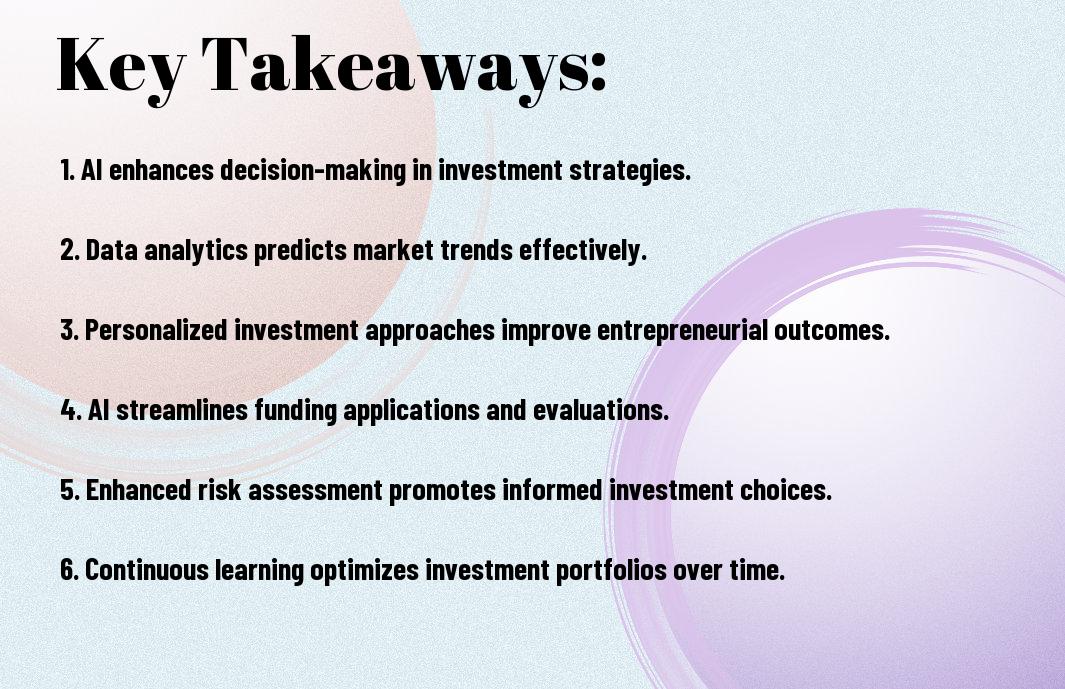
Key Takeaways:

  • AI-driven investment strategies are transforming the way entrepreneurs approach wealth creation, enabling them to make more informed decisions and optimize their portfolios with predictive analytics and machine learning algorithms.
  • The integration of AI in investment processes allows for real-time data analysis, providing entrepreneurs with a competitive edge in identifying emerging trends and opportunities, and enabling them to adapt quickly to changing market conditions.
  • By leveraging AI-powered tools and platforms, entrepreneurs can streamline their investment operations, reduce risk, and unlock new avenues for growth, ultimately redefining the landscape of investment in entrepreneurship and creating new pathways to wealth creation.

The AI Revolution in Investment Landscapes

For investors, the integration of artificial intelligence (AI) is transforming the way you approach wealth creation. You can now leverage AI-powered tools to make data-driven decisions, maximizing your returns and minimizing risks. This shift is redefining the investment landscape, enabling you to stay ahead of the curve.

Traditional Investment Models vs AI-Powered Decisions

To navigate the complexities of investment, you need to understand the differences between traditional models and AI-driven approaches. You will notice that AI-powered decisions offer more accuracy and speed, allowing you to respond quickly to market changes and make informed choices.

Machine Learning Algorithms in Market Analysis

On the forefront of this revolution are machine learning algorithms, which enable you to analyze vast amounts of market data and identify patterns that inform your investment strategies. You can use these algorithms to predict market trends and make decisions that drive your wealth creation goals.

Consequently, as you probe deeper into machine learning algorithms, you will discover their potential to analyze complex market data, identify trends, and provide insights that inform your investment decisions. You can apply these algorithms to various asset classes, from stocks to real estate, and optimize your portfolio to achieve your financial objectives, giving you a competitive edge in the investment landscape.

Predictive Analytics and Investment Opportunities

It is no secret that predictive analytics is revolutionizing the way you approach investment opportunities, and you can learn more about The Impact of AI in Wealth Management to make informed decisions. By leveraging AI, you can uncover hidden patterns and trends, giving you a competitive edge in the market.

Pattern Recognition in Startup Success

Against the backdrop of a rapidly changing entrepreneurial landscape, you can utilize AI-powered tools to identify successful startup patterns, allowing you to make more informed investment decisions and maximize your returns.

Risk Assessment Through Data Mining

Beside the potential for high returns, you must also consider the risks involved in investing in startups, and data mining can help you assess these risks by analyzing large datasets and identifying potential pitfalls.

Predictive analytics plays a significant role in risk assessment, enabling you to forecast potential outcomes and adjust your investment strategy accordingly, thereby protecting your assets and ensuring your financial security as you navigate the complex world of entrepreneurship and investment.

Digital Transformation of Venture Capital

To stay ahead in the investment game, you need to understand how AI is changing the landscape of venture capital, as seen in AI and the Future of Wealth Management: How AI is Redefining Investment Advice and Client Relationships, which is revolutionizing your approach to investment.

Automated Deal Flow Management

Deals are now being managed more efficiently with AI, allowing you to focus on high-potential investments and streamlining your workflow, making your investment process more effective.

AI-Driven Due Diligence Processes

Around the clock, AI-driven due diligence processes are analyzing vast amounts of data, helping you make informed decisions about your investments and minimizing your risk exposure.

Due to the advanced capabilities of AI, you can now conduct thorough due diligence processes, analyzing complex data sets and identifying potential issues before they become major problems, giving you a competitive edge in the investment landscape and allowing you to make smarter, data-driven decisions about your investments.

Entrepreneurial Success Metrics

Once again, you find yourself at the forefront of innovation, navigating the complex world of entrepreneurship, where data-driven decisions are key to your success. You need to understand the metrics that define your entrepreneurial journey, and how AI is transforming the way you approach investment and growth.

Data Points That Matter

Prior to making informed decisions, you must identify the data points that have a significant impact on your business, such as revenue growth, customer acquisition, and market trends, which will help you refine your investment strategy and drive your business forward.

Performance Indicators in the Digital Age

Indicative of a successful entrepreneurial venture, your performance indicators must be aligned with the digital landscape, incorporating metrics such as website traffic, social media engagement, and online customer reviews, to gauge your business’s overall health and make data-driven decisions.

Success in the digital age is contingent upon your ability to leverage these performance indicators to inform your investment decisions, and AI can help you analyze and interpret this data to optimize your business strategy, allowing you to make more informed decisions and drive your business towards long-term growth and profitability, ultimately leading to your entrepreneurial success.

The Human-AI Investment Partnership

Keep in mind that AI is not replacing human investors, but rather augmenting their capabilities. You can leverage AI to analyze vast amounts of data, identify patterns, and make predictions, freeing up your time to focus on high-level decision-making.

Balancing Algorithmic Insights with Human Judgment

By combining AI-driven insights with your own expertise, you can make more informed investment decisions. You will be able to identify potential biases in AI recommendations and adjust them according to your own risk tolerance and investment goals.

Building Trust in AI Investment Tools

By utilizing transparent and explainable AI models, you can gain a deeper understanding of how investment recommendations are generated, allowing you to trust the decisions made by these tools.

Judgment is key when it comes to building trust in AI investment tools. As you use these tools, you will begin to understand their strengths and limitations, and be able to adjust your investment strategy accordingly. You will be able to evaluate the performance of AI-driven investments and make adjustments to optimize your portfolio, ultimately leading to more effective investment decisions.

Future Investment Trends

Now, as you navigate the evolving landscape of entrepreneurship, you’ll notice that data-driven wealth is becoming increasingly prominent, with AI playing a key role in redefining investment strategies, enabling you to make more informed decisions.

Emerging Technologies in Investment Analysis

Besides the current tools, you’ll find that emerging technologies like machine learning and natural language processing are being integrated into investment analysis, allowing you to analyze vast amounts of data and identify trends that may not be immediately apparent, giving you a competitive edge.

Global Market Integration Through AI

About to revolutionize the way you invest, global market integration through AI is enabling you to access a broader range of investment opportunities, connecting you with investors and markets worldwide, and facilitating more efficient transactions.

Technologies such as blockchain and cloud computing are supporting this integration, providing you with secure, transparent, and scalable platforms to manage your investments, and allowing you to respond quickly to changing market conditions, thereby maximizing your returns and minimizing your risks, as you leverage the power of AI to drive your investment decisions.

Summing up

As a reminder, you now have insight into how AI is revolutionizing investment in entrepreneurship through data-driven wealth. You can leverage this knowledge to make informed decisions, maximizing your investment potential. Your understanding of AI’s role in shaping the future of entrepreneurship will help you navigate the evolving landscape and capitalize on emerging opportunities, ultimately transforming your approach to investment and wealth creation.

FAQ

Q: What is Data-Driven Wealth and how is it changing the investment landscape in entrepreneurship?

A: Data-Driven Wealth refers to the use of advanced data analytics and artificial intelligence (AI) to make informed investment decisions in entrepreneurial ventures. This approach is revolutionizing the investment landscape by providing a more accurate and efficient way to identify high-potential startups and optimize investment portfolios. With the help of AI, investors can analyze vast amounts of data, including market trends, financial performance, and industry benchmarks, to make data-driven decisions that minimize risk and maximize returns.

Q: How is AI being used in Data-Driven Wealth to support entrepreneurial investment decisions?

A: AI is being used in several ways to support Data-Driven Wealth, including predictive modeling, risk assessment, and portfolio optimization. For example, AI algorithms can analyze historical data and market trends to predict the likelihood of a startup’s success, allowing investors to make more informed decisions. Additionally, AI can help identify potential risks and opportunities, enabling investors to adjust their portfolios accordingly. Furthermore, AI can optimize investment portfolios by identifying the most promising startups and allocating resources effectively.

Q: What are the benefits of using Data-Driven Wealth in entrepreneurial investment, and how does it compare to traditional investment methods?

A: The benefits of using Data-Driven Wealth in entrepreneurial investment include increased accuracy, efficiency, and transparency. By leveraging AI and data analytics, investors can make more informed decisions, reduce the risk of human bias, and optimize their investment portfolios. Compared to traditional investment methods, Data-Driven Wealth offers a more systematic and data-driven approach, which can lead to higher returns and lower risk. Additionally, Data-Driven Wealth can help investors identify emerging trends and opportunities, allowing them to stay ahead of the competition.

Q: How can entrepreneurs prepare their startups for Data-Driven Wealth investment, and what are the key factors that investors look for in a data-driven investment opportunity?

A: To prepare their startups for Data-Driven Wealth investment, entrepreneurs should focus on collecting and analyzing relevant data, developing a robust financial model, and demonstrating a clear understanding of their market and industry. Investors look for startups with a strong data-driven approach, a clear value proposition, and a scalable business model. Additionally, investors consider factors such as market size, competitive landscape, and team experience when evaluating investment opportunities. By having a solid data-driven foundation, entrepreneurs can increase their chances of securing investment and achieving success.

Q: What is the future of Data-Driven Wealth in entrepreneurial investment, and how will it continue to evolve and shape the investment landscape?

A: The future of Data-Driven Wealth in entrepreneurial investment is promising, with AI and data analytics continuing to play a central role in investment decisions. As technology advances, we can expect to see even more sophisticated AI algorithms and data analytics tools being developed to support Data-Driven Wealth. Additionally, the increasing availability of data and the growing adoption of AI will lead to more efficient and effective investment processes. As a result, Data-Driven Wealth is likely to become the norm in entrepreneurial investment, enabling investors to make more informed decisions and driving innovation and growth in the startup ecosystem.

Innovate, Integrate, Accumulate – The AI-Driven Formula for Business Success

As you navigate the ever-evolving business landscape, you’re likely seeking a formula for success that drives growth and sets your organization apart. Your search ends here. By embracing artificial intelligence, you can unlock a powerful combination that fuels innovation, streamlines operations, and accelerates accumulation of valuable insights and revenue. You will discover how to harness the potential of AI to transform your business and stay ahead of the competition.

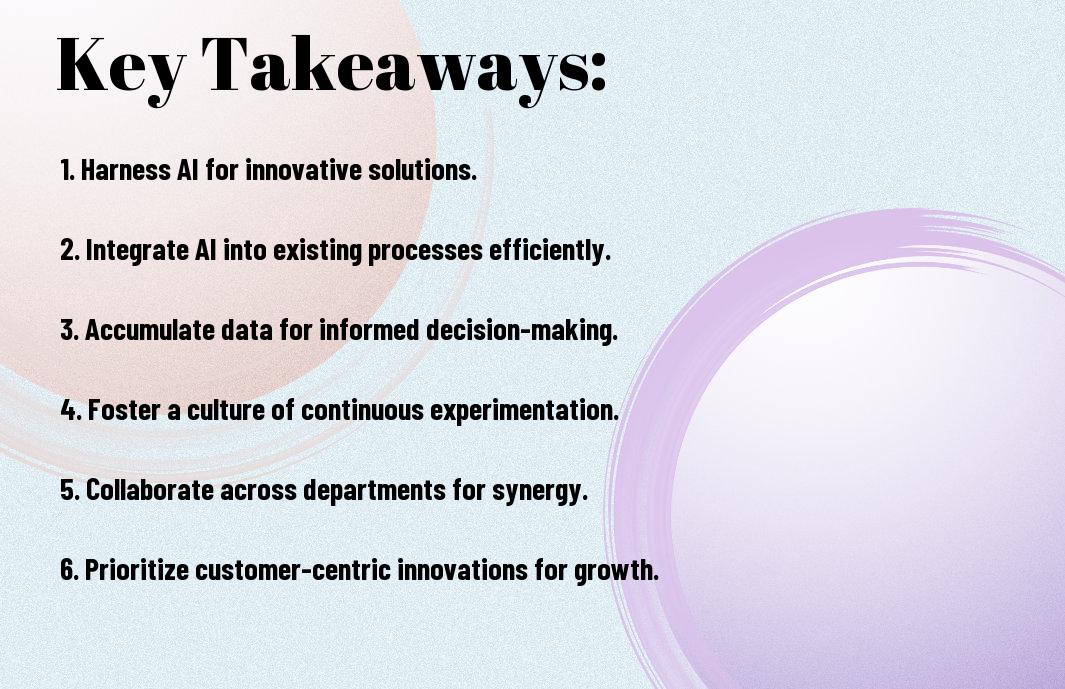
Key Takeaways:

  • The formula “Innovate, Integrate, Accumulate” offers a structured approach to achieving business success through the strategic use of artificial intelligence (AI), emphasizing the importance of continuous innovation, seamless integration of new technologies, and accumulation of knowledge and resources.
  • By innovating, businesses can leverage AI to develop new products, services, and processes that drive growth and competitiveness, while integration ensures that these innovations are effectively incorporated into existing systems and operations.
  • Accumulation, the final component of the formula, involves building on successes and lessons learned to create a foundation for sustained growth and improvement, allowing businesses to stay ahead of the curve in an increasingly AI-driven marketplace.

The Innovation Catalyst

A key driver of business success in today’s fast-paced environment is innovation, and you can leverage AI to accelerate your growth. By embracing AI-driven solutions, you can unlock new opportunities and stay ahead of the competition.

Breaking Traditional Business Models

Beneath the surface of traditional business models lies a world of untapped potential, and you can uncover it by adopting AI-powered innovations that disrupt conventional practices and enable you to explore new avenues for growth.

AI-Powered Decision Making

With the ability to analyze vast amounts of data, AI empowers you to make informed decisions that drive your business forward, and you can trust the insights generated by AI to optimize your operations and improve your bottom line.

AIPowered decision making enables you to automate routine tasks, freeing up your time to focus on strategic planning and growth initiatives. You can utilize AI-driven tools to analyze market trends, customer behavior, and other factors that impact your business, allowing you to make data-driven decisions that propel your organization towards success. As you integrate AI into your decision-making process, you’ll be able to respond more quickly to changing market conditions and stay ahead of the competition.

Integration Architecture

If you’re looking to harness the full potential of AI in your business, a well-designed integration architecture is necessary. You need to ensure seamless communication between different systems and departments to maximize the benefits of AI-driven innovation.

Cross-Functional AI Implementation

Cross-functionally, you will need to implement AI solutions that can be used across various departments, allowing you to leverage AI-driven insights to inform your business decisions and drive growth.

Data Ecosystem Development

To develop a robust data ecosystem, you should focus on creating a unified platform that can collect, process, and analyze data from diverse sources, enabling you to make data-driven decisions and drive business success.

In addition, as you develop your data ecosystem, you will be able to integrate AI algorithms and machine learning models, allowing you to uncover hidden patterns and insights, and make predictions that can inform your business strategy and drive innovation, helping you to stay ahead of the competition and achieve your business goals.

Accumulation Strategy

Many businesses strive to create a robust accumulation strategy, leveraging their innovations and integrations to drive growth and success. You can achieve this by focusing on key areas that will propel your business forward, including knowledge capital growth and scalable learning systems.

Knowledge Capital Growth

One of the most significant advantages you can gain is through the growth of your knowledge capital, which enables you to make informed decisions and stay ahead of the competition. You will be able to identify opportunities and challenges, and develop effective strategies to address them.

Scalable Learning Systems

With the right approach, you can develop scalable learning systems that allow your business to adapt and evolve over time. You will be able to integrate new technologies and innovations, and apply them in a way that drives real results.

Capitalizing on the power of scalable learning systems, you can create a culture of continuous improvement within your organization, where you and your team are constantly learning and growing. You will be able to analyze data, identify areas for improvement, and develop targeted solutions to address them, ultimately driving your business towards long-term success.

Digital Transformation Journey

For your business to thrive in today’s fast-paced environment, embracing digital transformation is vital. You must adapt to stay competitive, leveraging technology to streamline processes and enhance customer experiences.

Cultural Shift Elements

One key aspect of digital transformation is the cultural shift within your organization. You need to foster a culture that encourages innovation, experimentation, and continuous learning, allowing your business to stay agile and responsive to changing market conditions.

Workforce Evolution

Around the time you begin on digital transformation, your workforce will undergo significant changes. You will need to upskill and reskill your employees to ensure they can effectively utilize new technologies and contribute to your business’s growth.

To achieve a successful workforce evolution, you should focus on providing ongoing training and development opportunities, allowing your employees to acquire the skills necessary to thrive in an AI-driven environment. You can also consider hiring new talent with expertise in emerging technologies, such as AI and data analytics, to complement your existing workforce and drive innovation within your organization.

Risk Management Framework

Unlike traditional risk management approaches, an AI-driven framework requires you to consider the unique risks associated with AI adoption, such as data bias and algorithmic errors, to ensure your business remains resilient and adaptable in a rapidly changing environment.

AI Security Protocols

Alongside your existing security measures, you should implement AI-specific protocols to protect your systems and data from potential threats, such as cyber attacks and data breaches, to safeguard your business and maintain customer trust.

Ethical Considerations

One of the key aspects of an AI-driven risk management framework is considering the ethical implications of AI adoption, including issues related to transparency, accountability, and fairness, to ensure your business operates responsibly and maintains a positive reputation.

And as you examine deeper into the ethical considerations of AI adoption, you will need to assess your business’s values and principles, and ensure that your AI systems align with these, to maintain transparency and trust with your customers and stakeholders, and to avoid potential reputational damage, you should also establish clear guidelines and protocols for AI development and deployment, and ensure that your teams are trained to identify and address potential ethical issues.

Performance Metrics

Despite the complexity of AI implementation, you can track your progress by monitoring key performance indicators. To develop a comprehensive strategy, you can Learn to Build an AI Strategy for Your Business that aligns with your goals.

Success Indicators

On the path to success, you will encounter various indicators that signal the effectiveness of your AI-driven approach, such as increased efficiency and improved decision-making.

ROI Measurement Systems

Before implementing any AI solution, you need to establish a robust ROI measurement system to evaluate its impact on your business.

Measurement of ROI is imperative to understanding the value of your AI investments, and you should consider factors such as cost savings, revenue growth, and enhanced customer experience when assessing the effectiveness of your AI strategy, allowing you to make informed decisions about future investments and optimizations.

Summing up

Presently, you have the power to transform your business with the AI-driven formula for success. You can innovate by leveraging AI technologies, integrate them into your operations, and accumulate the benefits. By following this formula, you will unlock new opportunities, enhance your decision-making, and drive growth. Your business will thrive in a competitive landscape, and you will stay ahead of the curve, achieving your goals and realizing your vision.

FAQ

Q: What is the concept of “Innovate, Integrate, Accumulate” and how does it relate to AI-driven business success?

A: The concept of “Innovate, Integrate, Accumulate” is a strategic formula designed to guide businesses towards achieving success in an AI-driven world. It emphasizes the importance of innovation in adopting new technologies and processes, integrating these innovations seamlessly into existing systems, and accumulating knowledge and data to drive continuous improvement and informed decision-making. By following this formula, businesses can harness the power of AI to enhance their operations, improve customer experiences, and stay competitive in the market.

Q: How does innovation play a role in the “Innovate, Integrate, Accumulate” formula for business success?

A: Innovation is the foundation of the “Innovate, Integrate, Accumulate” formula. It involves embracing new ideas, technologies, and methodologies that can transform business operations, products, and services. In the context of AI, innovation could mean adopting machine learning algorithms to improve predictive analytics, using natural language processing to enhance customer service, or leveraging computer vision to optimize supply chain management. By innovating, businesses can create new opportunities, solve complex problems, and differentiate themselves from competitors.

Q: What does integration mean in the context of the “Innovate, Integrate, Accumulate” formula, and why is it important?

A: Integration refers to the process of incorporating new technologies, systems, or processes into the existing infrastructure of a business. This step is vital because it ensures that innovations are not isolated but are instead connected and aligned with the overall business strategy. Effective integration enables businesses to derive maximum value from their investments in AI and other technologies, streamline operations, and provide a cohesive and enhanced experience for customers and employees alike. It involves technical integration, such as linking new AI tools with legacy systems, as well as cultural integration, ensuring that the workforce is prepared and trained to work with new technologies.

Q: How does accumulation contribute to business success in the “Innovate, Integrate, Accumulate” formula?

A: Accumulation in the “Innovate, Integrate, Accumulate” formula refers to the process of gathering, analyzing, and utilizing data and knowledge to drive business decisions and improvements. As businesses innovate and integrate new technologies, they generate vast amounts of data. Accumulating this data and leveraging it through AI-driven analytics can provide deep insights into customer behavior, market trends, operational efficiency, and more. This insights-driven approach enables businesses to refine their strategies, optimize operations, and make informed decisions, ultimately leading to sustained growth and success.

Q: What are the key challenges that businesses might face when implementing the “Innovate, Integrate, Accumulate” formula, and how can they be overcome?

A: Businesses may face several challenges when implementing the “Innovate, Integrate, Accumulate” formula, including resistance to change, lack of skilled personnel, technological compatibility issues, and data privacy concerns. To overcome these challenges, businesses should foster a culture of innovation, invest in employee training and development, adopt agile and flexible technological architectures, and implement robust data governance policies. Additionally, engaging with external partners, such as technology startups and consultants, can provide access to expertise and resources that can facilitate a smoother transition to an AI-driven business model. By addressing these challenges proactively, businesses can successfully implement the “Innovate, Integrate, Accumulate” formula and achieve their goals in an increasingly competitive and technology-driven marketplace.

Skip to content