Uncategorized

Innovate, Disrupt, and Prosper – The Ultimate Guide to AI, Entrepreneurship, and Wealth

As you navigate the ever-changing landscape of business and technology, you’re likely aware of the significant impact artificial intelligence is having on industries worldwide. You’re probably wondering how to harness its power to drive innovation and growth in your own endeavors. Your journey to success begins here, as you’ll discover the tools and strategies necessary to leverage AI, foster entrepreneurship, and build wealth in this rapidly evolving environment, positioning you for long-term prosperity.

Key Takeaways:

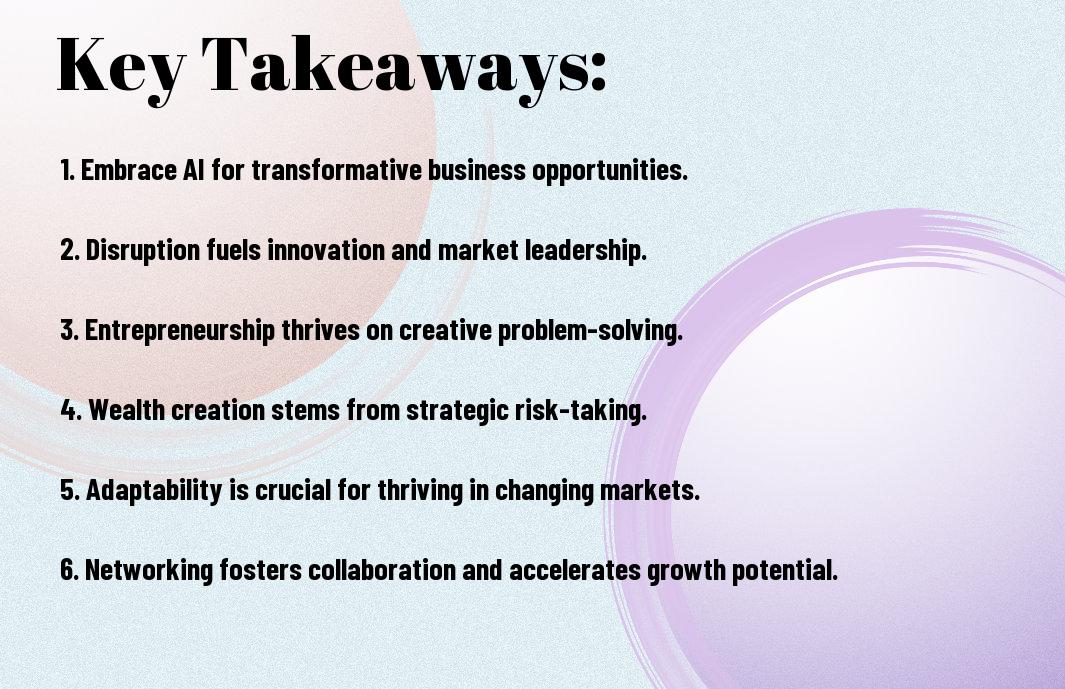
  • The book “Innovate, Disrupt, and Prosper” provides a comprehensive guide to navigating the intersection of artificial intelligence, entrepreneurship, and wealth creation, offering insights into how to leverage AI for business success.
  • Embracing a mindset of innovation and disruption is important for entrepreneurs and businesses to stay ahead of the curve and capitalize on emerging opportunities in the AI-driven economy.
  • Understanding the potential applications and implications of AI is vital for developing effective strategies to harness its power and mitigate its risks, ultimately driving business growth and profitability.
  • The book offers practical advice and real-world examples for entrepreneurs, investors, and business leaders looking to innovate and disrupt their industries, and create new wealth opportunities in the process.
  • By combining AI, entrepreneurship, and strategic thinking, individuals and organizations can position themselves for success in a rapidly changing business landscape and unlock new paths to prosperity and growth.

The AI Revolution

While the world is witnessing a significant transformation, you can stay ahead by understanding the AI revolution. Check out Suraj Srivastava ☯’s Post to learn more about the intersection of AI and entrepreneurship.

Identifying Breakthrough Technologies

To identify breakthrough technologies, you need to analyze market trends and assess the potential impact of AI on your industry, allowing you to make informed decisions about your business strategy.

Capitalizing on Machine Learning Opportunities

For entrepreneurs, capitalizing on machine learning opportunities requires a deep understanding of the technology and its applications, enabling you to develop innovative solutions that meet the needs of your customers.

Technologies like natural language processing and computer vision are becoming increasingly important for businesses, and you can leverage these technologies to improve your operations, enhance customer experience, and drive growth, ultimately giving you a competitive edge in the market.
Disruption Mindset

Now, embracing a disruption mindset is key to your success, and understanding the impact of AI on various industries is vital. You can explore the Generative AI Economic Model – Oxford Economics to learn more about the potential of AI in driving economic growth.

Breaking Industry Paradigms

Among the key aspects of a disruption mindset is the ability to challenge existing norms and conventions. You will need to think creatively and consider how AI can be used to break industry paradigms and create new opportunities for growth and innovation.

Creative Destruction Principles

Industry leaders are now applying creative destruction principles to stay ahead of the curve. You can do the same by embracing the idea that innovation often requires the destruction of existing business models and processes.

To apply creative destruction principles, you will need to be willing to take calculated risks and experiment with new ideas and approaches. This may involve investing in AI research and development, partnering with startups and other innovators, and being open to new and unconventional solutions. By doing so, you can stay ahead of the competition and create new opportunities for growth and prosperity.

Entrepreneurial Framework

Once again, you’ll find that a well-structured approach is important to your success as an entrepreneur. Your framework will serve as the foundation for your business, guiding your decisions and actions. By establishing a clear framework, you’ll be better equipped to navigate the challenges of entrepreneurship and make informed decisions that drive growth and profitability.

Lean Startup Methodology

Entrepreneurially-minded individuals will appreciate the lean startup methodology, which emphasizes rapid experimentation and continuous iteration. You’ll learn to validate your ideas, gather feedback, and make data-driven decisions to propel your business forward. This approach will help you stay agile and adaptable in a rapidly changing market.

Scaling Strategies

Foundationally, you’ll need to develop effective scaling strategies to take your business to the next level. You’ll focus on optimizing operations, streamlining processes, and leveraging technology to drive efficiency and growth. By doing so, you’ll be able to expand your reach, increase revenue, and solidify your position in the market.

Understanding the intricacies of scaling strategies is vital to your success. You’ll need to analyze your business metrics, identify bottlenecks, and develop targeted solutions to overcome them. As you scale, you’ll encounter new challenges, but with a solid framework in place, you’ll be well-equipped to address them and continue driving growth. By applying the right scaling strategies, you’ll be able to unlock new opportunities, expand your customer base, and achieve long-term prosperity.

Capital Acquisition

After securing a solid business plan, you’ll need to focus on acquiring the necessary capital to bring your innovative ideas to life, and there are several strategies you can employ to achieve this goal, which will be discussed in the following sections.

Venture Funding Tactics

Besides traditional funding methods, you can explore alternative options such as crowdfunding, angel investors, or incubators to secure the funds your business needs to grow and thrive in a competitive market.

Bootstrap to Billions

Tactically, you can start by investing your own savings, reducing costs, and generating revenue quickly to fuel your business growth, allowing you to maintain control and ownership of your company.

With a well-executed bootstrapping strategy, you can avoid debt and equity dilution, giving you the freedom to make decisions that align with your vision and values, and you will be able to scale your business sustainably, creating a solid foundation for long-term success and prosperity.

Digital Empire Building

Many entrepreneurs are turning to digital means to build their empires, and you can do the same by leveraging platforms like AWS Innovate – Migrate . Modernize . Build to streamline your operations and reach a wider audience.

Platform Economics

With the right strategy, you can create a digital platform that generates significant revenue and drives your business forward, allowing you to focus on what matters most – growing your empire.

Network Effect Maximization

Below the surface of every successful digital empire lies a complex network of users, partners, and stakeholders, and you must understand how to maximize this network effect to achieve long-term success.

Another key aspect of network effect maximization is creating a self-reinforcing cycle of growth, where each new user or partner adds value to your platform, attracting even more users and partners, and you can achieve this by designing your platform with scalability and interoperability in mind, allowing you to adapt to changing market conditions and stay ahead of the competition.

Wealth Preservation

Your wealth is the culmination of your hard work and innovative endeavors, and preserving it is imperative to securing your financial future and achieving long-term prosperity.

Investment Diversification

For instance, spreading your investments across various asset classes can help mitigate risk and ensure the stability of your wealth, allowing you to navigate market fluctuations with confidence and make informed decisions about your financial portfolio.

Tax Optimization Strategies

Among the various approaches to managing your wealth, tax optimization is a key consideration, as it can significantly impact your financial bottom line and help you retain more of your hard-earned money, enabling you to allocate it towards your goals and aspirations.

Understanding the intricacies of tax optimization strategies is vital to minimizing your tax liability and maximizing your wealth, and by taking a proactive and informed approach, you can make the most of available tax deductions, credits, and exemptions, ultimately contributing to your overall financial well-being and success.

Conclusion

Hence, as you launch on your journey to innovate, disrupt, and prosper, you will find that the intersection of AI, entrepreneurship, and wealth creation is a powerful catalyst for your success. You will be equipped to harness the potential of AI to drive your business forward, and your wealth will be a direct reflection of your innovative spirit and entrepreneurial prowess, enabling you to achieve your goals and secure your financial future, as you apply the principles outlined in this guide to your advantage.

FAQ

Q: What is the main focus of the book “Innovate, Disrupt, and Prosper – The Ultimate Guide to AI, Entrepreneurship, and Wealth”?

A: The book “Innovate, Disrupt, and Prosper – The Ultimate Guide to AI, Entrepreneurship, and Wealth” is primarily focused on providing readers with a comprehensive understanding of how artificial intelligence (AI) is transforming the business landscape and how entrepreneurs can leverage this technology to create innovative products and services, disrupt existing markets, and ultimately achieve wealth. It explores the intersection of AI, entrepreneurship, and wealth creation, offering insights and strategies for success in this rapidly evolving environment.

Q: Who is the target audience for “Innovate, Disrupt, and Prosper – The Ultimate Guide to AI, Entrepreneurship, and Wealth”?

A: The target audience for “Innovate, Disrupt, and Prosper – The Ultimate Guide to AI, Entrepreneurship, and Wealth” includes aspiring and established entrepreneurs, business leaders, investors, and anyone interested in understanding the potential of AI to drive innovation and wealth creation. This book is particularly useful for those looking to start or grow a business that incorporates AI, as well as individuals seeking to invest in AI-driven ventures or simply wanting to stay ahead of the curve in terms of technological and business trends.

Q: What kind of information and guidance can readers expect to find in “Innovate, Disrupt, and Prosper – The Ultimate Guide to AI, Entrepreneurship, and Wealth”?

A: Readers of “Innovate, Disrupt, and Prosper – The Ultimate Guide to AI, Entrepreneurship, and Wealth” can expect to find in-depth information and guidance on a wide range of topics related to AI, entrepreneurship, and wealth creation. This includes practical strategies for identifying and capitalizing on AI-driven business opportunities, insights into the latest AI technologies and trends, advice on building and leading successful AI-focused teams, and discussions on the ethical and societal implications of AI adoption. The book is designed to be a valuable resource for anyone looking to navigate the exciting and rapidly changing world of AI and entrepreneurship.

From Startup to Scale-Up – How AI Fuels Business Transformation

As you navigate the challenges of growing your business, you’re likely exploring innovative ways to drive transformation and stay ahead of the competition. You understand that scaling your company requires more than just increasing revenue – it demands strategic investments in technology that can propel your business forward. Your journey from startup to scale-up can be accelerated with the power of Artificial Intelligence (AI), and this post will explore how AI can fuel your business transformation, helping you make informed decisions to achieve sustainable growth.

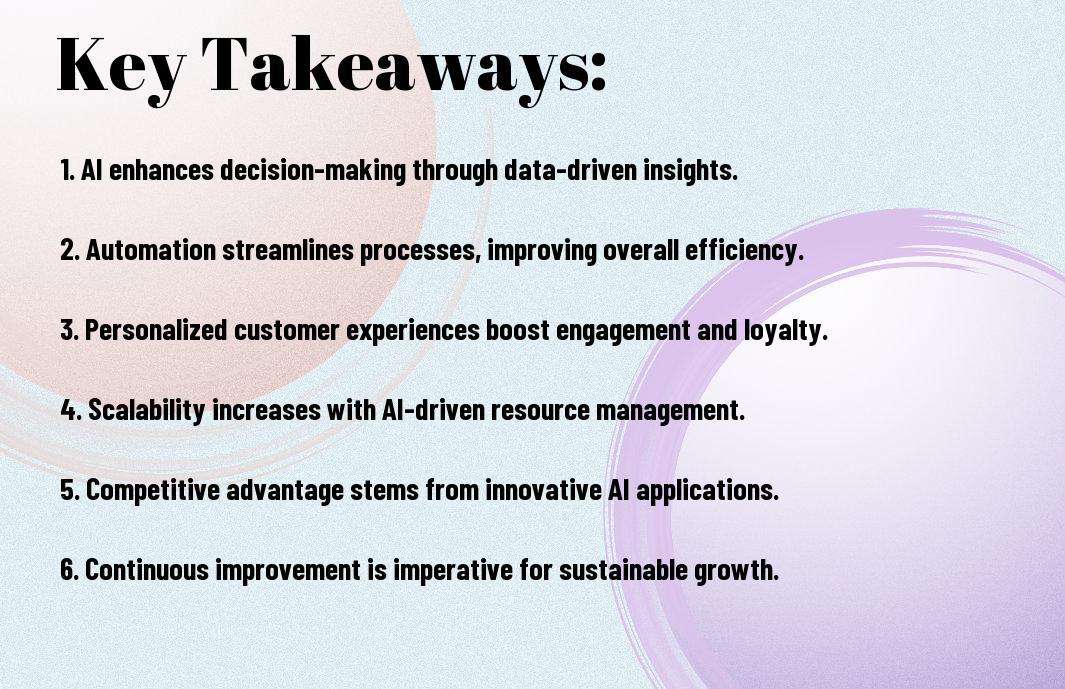
Key Takeaways:

  • AI adoption is a significant driver of business transformation, enabling companies to scale up and achieve exponential growth by automating processes, enhancing decision-making, and improving customer experiences.
  • Successful scale-ups leverage AI to unlock new revenue streams, optimize operations, and gain a competitive edge in the market, allowing them to stay ahead of the curve and adapt to changing business landscapes.
  • AI-powered data analytics is a key factor in informing business strategy, providing insights that help companies make data-driven decisions, identify new opportunities, and mitigate potential risks.
  • The integration of AI into existing business models requires a strategic approach, including investments in talent, technology, and process redesign, to ensure seamless adoption and maximize the benefits of AI-driven transformation.
  • As companies scale up with AI, they must prioritize ongoing innovation, continuous learning, and a culture of experimentation to fully harness the potential of AI and maintain a competitive advantage in an increasingly digital landscape.

The Tipping Point of AI Adoption

To reach the tipping point of AI adoption, you need to understand the factors that drive its implementation in your business, and how it can fuel your transformation from a startup to a scale-up.

Why Small Startups Embrace AI First

The ability to innovate and adapt quickly is what sets small startups apart, and you’ll find that they often embrace AI first to gain a competitive edge and drive growth in your business.

The Psychology of Technological Resistance

Resisting change is natural, and you may find yourself hesitant to adopt AI due to concerns about job displacement or the complexity of implementation, but understanding the psychology behind this resistance can help you overcome it and unlock the full potential of AI in your business.

Due to the fear of the unknown, you may be hesitant to adopt AI, but as you learn more about its capabilities and benefits, you’ll become more confident in its ability to transform your business, and you’ll be able to make informed decisions about how to implement it in a way that complements your existing operations and drives growth.

AI as the Great Business Equalizer

While AI is often associated with large corporations, you can leverage it to transform your business, regardless of its size. AI helps you automate tasks, gain insights, and make informed decisions, allowing you to compete with larger companies.

David vs. Goliath: How AI Levels the Playing Field

Beneath the surface of traditional business hierarchies, AI creates opportunities for you to innovate and disrupt markets, enabling your company to challenge larger competitors.

The Counterintuitive Economics of AI Implementation

Around the time you consider implementing AI, you may think it’s expensive, but AI can actually help you reduce costs and increase efficiency in the long run, making it a worthwhile investment for your business.

Business owners like you are often surprised to find that AI implementation can have a positive impact on their bottom line. As you explore AI solutions, you’ll discover that they can help you streamline processes, reduce labor costs, and improve productivity, leading to increased profitability and competitiveness in your market. You’ll be able to allocate your resources more effectively, making your business more agile and responsive to changing circumstances.

The Thin Slice of AI Decision-Making

Keep in mind that AI decision-making is a complex process that involves multiple factors. As you navigate the world of AI, you’ll discover that machines can analyze vast amounts of data and make decisions quickly.

How Machines Make Split-Second Judgments

Behind the scenes, machines use sophisticated algorithms to process information and make judgments in a fraction of a second. You’ll be amazed at how accurately they can predict outcomes and make decisions that impact your business.

When Algorithmic Intuition Outperforms Human Expertise

Algorithmic decision-making can be surprisingly effective, often outperforming human intuition in certain situations. You’ll find that AI can analyze patterns and make predictions that might elude even the most experienced experts.

Make no mistake, when algorithmic intuition outperforms human expertise, it’s a game-changer for your business. You’ll be able to leverage AI to make data-driven decisions, optimize processes, and drive growth. As you explore this phenomenon, you’ll discover that AI can help you identify new opportunities, mitigate risks, and stay ahead of the competition, ultimately transforming your business in profound ways.

Outliers: Unexpected AI Success Stories

For your business to thrive, you need to explore unconventional AI applications, as seen in A.I. Is Changing How Silicon Valley Builds Start-Ups, where innovators leverage AI to drive growth.

The 10,000 Hours Rule Reimagined for Machine Learning

Unpredictably, you’ll find that machine learning requires a different approach, one that emphasizes data quality over quantity, allowing you to achieve expertise in a shorter timeframe.

Companies That Defied Conventional AI Wisdom

That being said, you’ll discover companies that successfully applied AI in unexpected ways, challenging traditional notions and achieving remarkable results, which you can learn from to inform your own strategy.

Also, as you probe deeper into these success stories, you’ll notice that they often involve a willingness to experiment and adapt, allowing you to apply similar principles to your own business and drive transformation through AI-powered innovation, ultimately leading to sustained growth and competitiveness in your industry.

The Social Dynamics of AI-Transformed Organizations

Not surprisingly, the integration of AI into your organization will significantly impact the social dynamics within your company, leading to a more efficient and productive work environment.

How Workplace Hierarchies Evolve With AI

Towards a more flat structure, your organization will likely shift as AI takes over routine tasks, allowing employees to focus on higher-level decision-making and strategy, which will change your role and responsibilities.

The New Rules of Engagement Between Humans and Machines

Besides the technical aspects, you will need to consider how AI will interact with your employees, and how this will affect your company culture, as you navigate the new relationships between humans and machines.

It is crucial to establish clear guidelines and protocols for human-AI collaboration, ensuring that you are leveraging the strengths of both humans and machines to drive innovation and growth, and that your employees are comfortable working alongside AI systems, which will ultimately lead to increased productivity and job satisfaction, as you successfully integrate AI into your organization.

Blink: Making Decisions at AI Speed

Now that you’re scaling your business, you need to make decisions faster. AI helps you analyze vast amounts of data, enabling swift and informed choices.

The Cognitive Load of Human-AI Collaboration

For instance, when you work with AI systems, you must consider the mental effort required to interpret and act on algorithmic insights, ensuring seamless collaboration.

Training Leaders to Trust Algorithmic Insights

To effectively leverage AI, you must develop trust in its decision-making capabilities, which requires educating your leaders on AI-driven analytics and their applications.

Consequently, as you train your leaders to trust algorithmic insights, you’ll notice a significant shift in your decision-making processes, allowing your business to respond more agilely to market changes, and you’ll be able to make data-driven decisions with confidence, driving your business forward with precision and speed.

Final Words

Drawing together the insights from your journey, you now understand how AI fuels business transformation, from startup to scale-up. You’ve seen how AI can enhance your operations, inform your decisions, and drive your growth. As you initiate on your own transformation, you’ll be able to leverage AI to unlock new opportunities, optimize your processes, and stay ahead of the competition, ultimately taking your business to the next level and achieving your goals.

FAQ

Q: What role does AI play in transforming a startup into a scale-up, and how can businesses leverage this technology to drive growth?

A: AI plays a significant role in transforming a startup into a scale-up by automating processes, enhancing decision-making, and improving operational efficiency. Businesses can leverage AI by integrating it into their core operations, such as using machine learning algorithms to analyze customer data, predict market trends, and optimize supply chains. By doing so, companies can accelerate their growth, increase competitiveness, and achieve scale-up status more efficiently.

Q: How can AI be used to drive innovation and improve customer experience in a scale-up business, and what are some examples of successful AI-powered transformations?

A: AI can be used to drive innovation and improve customer experience in a scale-up business by enabling personalized marketing, streamlining customer service, and developing new products and services. For instance, companies can use natural language processing (NLP) to analyze customer feedback, sentiment analysis to gauge market reactions, and predictive analytics to identify new business opportunities. Examples of successful AI-powered transformations include companies like Netflix, which uses AI to personalize content recommendations, and Amazon, which leverages AI to optimize its supply chain and improve customer service.

Q: What are the key challenges and limitations that businesses may face when implementing AI-powered solutions, and how can they overcome these obstacles to achieve successful business transformation?

A: Businesses may face several challenges when implementing AI-powered solutions, including data quality issues, talent acquisition and retention, and integration with existing systems. To overcome these obstacles, companies can invest in data quality management, develop strategic partnerships with AI vendors, and prioritize employee upskilling and reskilling. Additionally, businesses can start with small-scale AI pilots, focus on high-impact applications, and establish clear governance and ethics guidelines to ensure responsible AI adoption and successful business transformation.

Maximizing ROI with AI – Financial Strategies for the Modern Entrepreneur

As you navigate the ever-evolving landscape of modern entrepreneurship, you’re likely exploring innovative ways to optimize your financial performance. Your business can greatly benefit from leveraging Artificial Intelligence (AI) to streamline operations and boost profitability. By integrating AI into your financial strategies, you can make data-driven decisions, enhance efficiency, and ultimately increase your return on investment (ROI). You will learn how to harness the power of AI to drive your business forward and achieve long-term success.

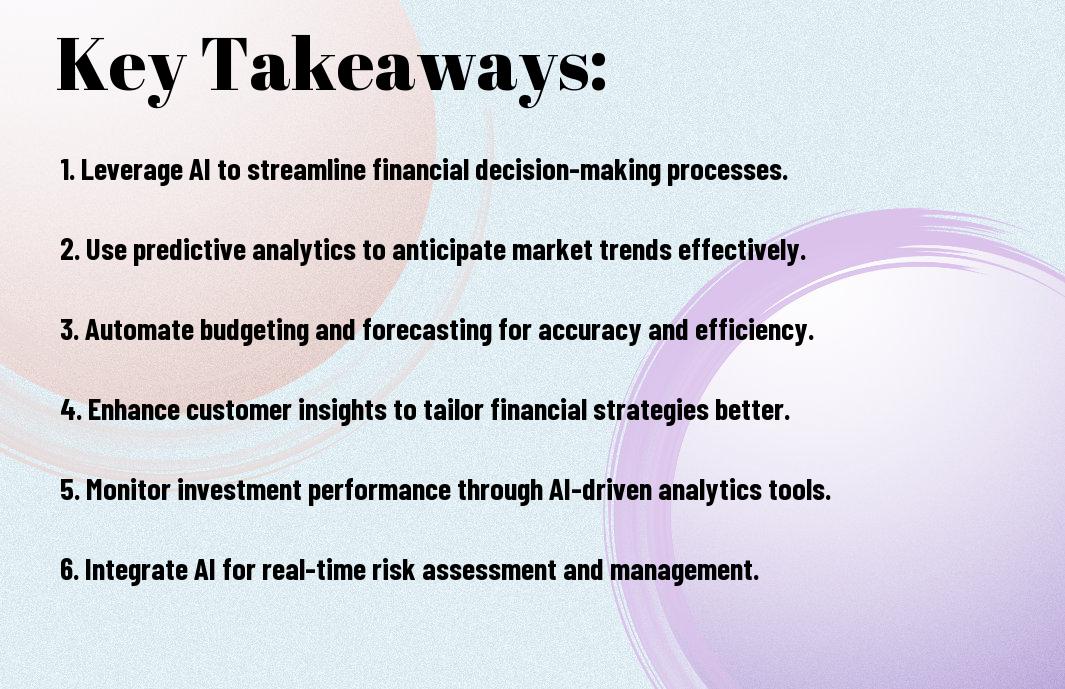
Key Takeaways:

  • Implementing AI solutions can significantly enhance business efficiency and productivity, leading to increased revenue and profitability for modern entrepreneurs.
  • AI-driven financial analysis and forecasting enable entrepreneurs to make informed decisions, mitigate risks, and capitalize on emerging opportunities in the market.
  • Entrepreneurs can leverage AI-powered tools to automate routine tasks, streamline operations, and allocate resources more effectively, resulting in substantial cost savings.
  • By integrating AI into their financial strategies, entrepreneurs can gain a competitive edge, drive innovation, and achieve sustainable growth in today’s fast-paced business landscape.
  • Continuous monitoring and evaluation of AI-driven financial strategies are important to ensure alignment with business objectives, identify areas for improvement, and maximize return on investment (ROI) over time.

    The AI Investment Landscape

    The current state of AI investments is rapidly evolving, and you need to stay informed to make the most of your financial strategies. You will encounter various opportunities and challenges as you navigate this landscape, and it’s crucial to understand the trends and technologies that are shaping the industry.

    Current AI Technologies Worth Your Dollar

    Amazing advancements in AI have led to the development of innovative technologies that are worth considering for your investment portfolio. You can explore opportunities in natural language processing, computer vision, and machine learning, which are transforming industries and creating new business models.

    Risk Assessment in AI Investments

    Assessing the risks associated with AI investments is vital to ensuring the success of your financial strategies. You must evaluate the potential downsides of investing in AI, including regulatory challenges, data privacy concerns, and the potential for job displacement.

    Hence, as you examine into the world of AI investments, you will need to carefully consider these risks and develop strategies to mitigate them. You can do this by conducting thorough research, diversifying your portfolio, and staying up-to-date with the latest developments in the field, allowing you to make informed decisions and maximize your returns.

    Cost-Benefit Analysis of AI Integration

    It is vital to evaluate the cost-benefit analysis of AI integration, as you consider implementing AI solutions in your business. You can learn more about maximizing efficiency and ROI in AI initiatives by visiting Maximizing Efficiency and ROI in AI Initiatives: A Guide to Cost Optimization to make informed decisions.

    Initial Implementation Costs

    CostEffectively, you will need to assess the initial investment required for AI integration, including hardware, software, and personnel costs, to determine the potential return on investment for your business.

    Long-term Value Creation

    Costs associated with AI integration can be offset by long-term value creation, as you experience increased efficiency and productivity in your operations, leading to improved profitability and competitiveness.

    This long-term value creation can be achieved through various means, such as automation of repetitive tasks, enhanced customer experience, and data-driven decision making, allowing you to stay ahead of the competition and drive business growth, as you continue to leverage AI technologies to optimize your operations and improve your bottom line.

    AI-Driven Financial Decision Making

    Now that you’re exploring the potential of AI in finance, you’ll discover how it can revolutionize your decision-making process, enabling you to make data-driven choices that maximize your ROI.

    Algorithmic Trading and Portfolio Management

    Around the clock, AI-powered systems can monitor market trends, allowing you to optimize your trading strategies and manage your portfolio with precision, giving you a competitive edge in the market.

    Predictive Analytics for Cash Flow

    Trading on insights from predictive analytics, you can forecast your cash flow with greater accuracy, enabling you to make informed decisions about investments, funding, and resource allocation, ultimately driving your business forward.

    The predictive analytics for cash flow subsection is particularly significant for your business, as it allows you to anticipate and prepare for fluctuations in your cash flow, ensuring that you have sufficient liquidity to meet your financial obligations and capitalize on new opportunities, thereby minimizing risk and maximizing your ROI, you can leverage AI-driven predictive models to analyze historical data, seasonal trends, and market conditions, providing you with a comprehensive view of your cash flow and enabling you to make strategic decisions that drive growth and profitability.

    Scaling Operations Through Automation

    To maximize your ROI, you need to streamline your operations, and automation is key. By leveraging AI, you can optimize your workflows, increase efficiency, and reduce costs.

    Reducing Overhead with Smart Systems

    One of the most significant benefits of automation is the ability to reduce overhead costs. You can implement smart systems that minimize manual labor, freeing up resources for more strategic initiatives.

    Quality Control and Error Reduction

    Below the surface of automation lies a powerful tool for quality control and error reduction. You can use AI to monitor and analyze your operations, identifying areas for improvement and optimizing your processes.

    Reduction of errors is a significant advantage of automation, as you can use machine learning algorithms to detect and correct mistakes in real-time. By implementing these systems, you can improve the overall quality of your operations, reduce waste, and increase customer satisfaction, ultimately driving your business forward and maximizing your ROI.

    Customer Acquisition and Retention

    Unlike traditional methods, AI-powered strategies can help you optimize your customer acquisition and retention efforts, leading to significant returns on investment.

    Personalization Engines and ROI

    Around 80% of customers are more likely to engage with your brand if you offer personalized experiences, which can be achieved through AI-driven personalization engines, increasing your ROI.

    Behavioral Prediction Models

    Along with personalization, behavioral prediction models can help you anticipate customer needs, enabling you to tailor your marketing efforts and improve customer retention, ultimately boosting your bottom line.

    Even with the complexity of implementing behavioral prediction models, you can leverage AI to analyze customer data, identify patterns, and make informed decisions to drive your business forward, resulting in increased customer loyalty and revenue growth, allowing you to maximize your ROI and stay ahead of the competition.

    Measuring AI Performance

    Many entrepreneurs struggle to evaluate the effectiveness of their AI investments, but it’s crucial to track performance to maximize ROI. You need to assess your AI systems’ impact on your business, identifying areas of improvement and optimizing your strategy accordingly. By doing so, you’ll be able to make data-driven decisions and drive growth.

    Key Performance Indicators

    After implementing AI solutions, you’ll need to establish relevant metrics to measure their success. You should focus on indicators that align with your business goals, such as revenue growth, customer engagement, or operational efficiency, to assess the effectiveness of your AI investments.

    Adjusting Strategy Based on Data

    The key to maximizing ROI with AI is to continuously monitor and adjust your strategy based on data insights. You should analyze the performance of your AI systems, identifying areas of strength and weakness, and make adjustments to optimize your approach and achieve better outcomes.

    This process of adjusting your strategy based on data involves regularly reviewing your key performance indicators, analyzing the results, and making informed decisions to refine your AI investments. You can refine your approach by allocating more resources to high-performing areas, addressing weaknesses, and exploring new opportunities to drive growth and improve efficiency, ultimately leading to increased ROI and business success.

    Final Words

    Following this guide, you will be equipped to maximize your ROI with AI-driven financial strategies. You can now leverage AI to optimize your investments, streamline operations, and make data-driven decisions. By implementing these modern techniques, you will enhance your business’s financial performance and stay competitive in the market. Your ability to adapt and innovate with AI will drive your success as a modern entrepreneur, enabling you to achieve your financial goals and grow your business effectively.

    FAQ

    Q: What are the key benefits of leveraging AI in financial strategies for maximizing ROI?

    A: Leveraging AI in financial strategies can bring numerous benefits, including enhanced predictive analytics, automated decision-making, and optimized resource allocation. By utilizing machine learning algorithms and natural language processing, entrepreneurs can gain valuable insights into market trends, customer behavior, and financial performance, ultimately leading to data-driven decisions that drive business growth and maximize ROI. Additionally, AI-powered financial tools can help streamline financial operations, reduce costs, and improve overall efficiency, allowing entrepreneurs to focus on high-level strategic planning and innovation.

    Q: How can entrepreneurs effectively integrate AI into their existing financial planning and analysis processes?

    A: To effectively integrate AI into existing financial planning and analysis processes, entrepreneurs should start by identifying areas where AI can add the most value, such as forecasting, budgeting, or risk management. Next, they should invest in AI-powered financial tools and platforms that can seamlessly integrate with their current systems and workflows. It’s also imperative to develop a robust data infrastructure to support AI-driven financial analysis, including data collection, storage, and governance. Furthermore, entrepreneurs should prioritize ongoing education and training to ensure their teams have the necessary skills to effectively work with AI technologies and interpret their outputs, making informed decisions that drive business success.

    Q: What are some common pitfalls or challenges that entrepreneurs should be aware of when using AI to maximize ROI in their financial strategies?

    A: When using AI to maximize ROI in financial strategies, entrepreneurs should be aware of several common pitfalls, including data quality issues, algorithmic bias, and overreliance on automation. Poor data quality can lead to inaccurate predictions and flawed decision-making, while algorithmic bias can result in unfair or discriminatory outcomes. Additionally, overreliance on automation can lead to a lack of human oversight and judgment, potentially resulting in missed opportunities or unforeseen consequences. To mitigate these risks, entrepreneurs should prioritize data quality and integrity, regularly audit and test AI systems, and maintain a balanced approach that combines the benefits of AI with human expertise and judgment, ensuring that AI is used as a tool to augment and support, rather than replace, human decision-making.

The Future of Business Intelligence – AI Transforming Market Analysis

As you navigate the ever-changing landscape of business, you’re likely aware that staying ahead of the curve is key to success. Your ability to analyze market trends and make informed decisions will be revolutionized by the integration of Artificial Intelligence (AI) in business intelligence. You will soon be able to uncover hidden patterns, predict future trends, and optimize your strategies with unprecedented accuracy, giving you a competitive edge in the market.

Key Takeaways:

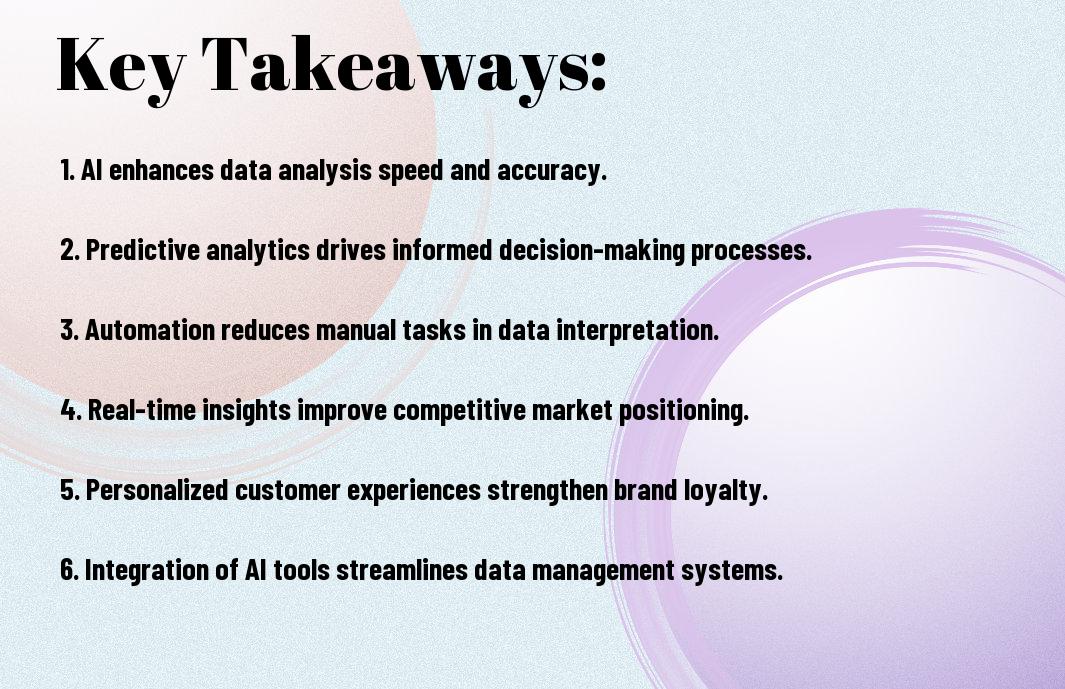
  • The integration of Artificial Intelligence (AI) in business intelligence is revolutionizing market analysis by providing faster and more accurate insights, enabling businesses to make informed decisions and stay ahead of the competition.
  • AI-powered tools can analyze vast amounts of data, identify patterns, and predict trends, allowing businesses to optimize their operations, improve customer experience, and increase revenue.
  • The use of machine learning algorithms in business intelligence enables the automation of routine tasks, freeing up human analysts to focus on higher-level tasks such as strategy development and decision-making.
  • AI-driven business intelligence also enhances data visualization, making it easier for stakeholders to understand complex data and trends, and facilitating more effective communication and collaboration across organizations.
  • The future of business intelligence will be shaped by the continued advancement of AI technologies, such as natural language processing and deep learning, which will further enhance the accuracy and speed of market analysis and decision-making.

The Tipping Point for AI in Business Intelligence

For businesses, the integration of AI in market analysis is becoming increasingly prevalent, and you are likely to see significant advancements in the near future, transforming your approach to business intelligence.

From Data Collection to Intelligent Insights

Once you start leveraging AI, you will notice a shift from mere data collection to deriving intelligent insights that inform your business decisions, enabling you to make more accurate predictions and drive growth.

The Small Changes Creating Big Impacts

The subtle incorporation of AI in your business operations will start yielding noticeable results, and you will begin to see improvements in your market analysis, allowing you to respond more effectively to changing market conditions.

Point to consider is that these small changes will compound over time, and as you continue to integrate AI into your business intelligence, you will unlock new opportunities for innovation and expansion, ultimately giving you a competitive edge in the market, and enabling you to make more informed decisions about your business strategy.

Cognitive Revolution in Market Analysis

Assuming you are familiar with the concept of business intelligence, you will understand that the integration of AI is transforming market analysis, enabling you to make more informed decisions.

Pattern Recognition Beyond Human Capability

Cognitively, you will be able to analyze vast amounts of data, identifying patterns that may have gone unnoticed, and gaining valuable insights that inform your business strategy.

The Outliers That Machines Can Spot

Revolutionizing the way you approach market analysis, machines can identify anomalies in data that you may have missed, providing you with a more comprehensive understanding of your market.

Spot the differences in your data that machines can identify, and you will be able to refine your strategy, targeting specific areas of your business that require attention, and driving growth as a result of your newfound understanding of the market and its trends.

Predictive Analytics Reimagined

Not only is AI transforming market analysis, but it’s also revolutionizing predictive analytics, enabling you to make more informed decisions about your business’s future.

From Reactive to Proactive Business Decisions

One of the key benefits of AI-powered predictive analytics is that it allows you to shift from reactive to proactive business decisions, enabling you to anticipate and prepare for changes in your market, giving you a competitive edge.

The Blink Moment: Intuitive AI Systems

Moment by moment, AI systems are becoming more intuitive, allowing you to make swift and informed decisions, and as you probe deeper into your data, you’ll uncover new insights that will transform your business.

In fact, as you explore the capabilities of intuitive AI systems, you’ll find that they can analyze vast amounts of data in real-time, providing you with instant insights that will enable you to make swift and informed decisions, and drive your business forward with confidence, allowing you to stay ahead of the curve and capitalize on new opportunities as they arise.

Democratization of Complex Analysis

Many businesses are now able to perform complex analysis, thanks to AI-powered tools. You can now access advanced analytics, enabling your organization to make data-driven decisions.

When Specialized Knowledge Becomes Accessible

Diffusion of specialized knowledge enables you to tap into the power of data analysis, regardless of your technical expertise. You can now interpret complex data, making informed decisions for your business.

The Power Shift in Data Interpretation

The ability to analyze data is no longer limited to experts, as you can now use AI-driven tools to uncover insights. You can interpret complex data, identifying trends and patterns that inform your business strategy.

Complex data analysis is now at your fingertips, as AI-powered tools provide you with the ability to uncover hidden insights. You can explore into your data, identifying areas of opportunity and optimizing your business performance. As you explore your data, you’ll discover new ways to drive growth and stay ahead of the competition, making your business more agile and responsive to changing market conditions.

Ethical Dimensions and Blind Spots

Despite the benefits of AI in business intelligence, you must consider the ethical implications of relying on automated systems for market analysis, as your decisions will have a significant impact on your organization and stakeholders.

The Hidden Biases in Algorithmic Decision-Making

Blindly trusting AI-driven insights can lead to unintended consequences, as you may unknowingly perpetuate biases present in the data, affecting your ability to make informed decisions and potentially harming your business.

Navigating the Moral Landscape of Automated Analysis

Algorithmically driven analysis can raise complex moral questions, and as you probe deeper into the world of AI-powered business intelligence, you will need to carefully consider the potential consequences of your actions and ensure that your use of automation aligns with your values and principles.

For instance, you will need to think about how to address issues like data privacy, transparency, and accountability in your AI-driven market analysis, and develop strategies to mitigate potential risks and ensure that your use of automation is fair, unbiased, and respectful of all stakeholders involved, ultimately protecting your business’s reputation and maintaining trust with your customers.

Human-Machine Collaboration Models

Unlike traditional approaches, human-machine collaboration models enable you to leverage the strengths of both humans and machines, leading to more accurate and efficient market analysis.

Redefining Analytical Roles and Expertise

Roles are evolving as you work alongside AI systems, requiring you to develop new skills and expertise to effectively interpret and apply insights generated by machines.

The Connectors: Interfaces Between Insight and Action

An integral part of human-machine collaboration, you will use interfaces that facilitate seamless interaction between insights and actions, enabling you to make data-driven decisions.

At the heart of these interfaces, you will find advanced visualization tools and natural language processing, allowing you to communicate complex ideas and insights to stakeholders, and to translate data into actionable strategies that drive your business forward, helping you to stay ahead in the market.

Conclusion

From above, you can see how AI is revolutionizing market analysis. As you move forward, your business will rely on AI-driven insights to make informed decisions. You will witness enhanced predictive capabilities, automating your analysis and uncovering new opportunities. Your ability to adapt to this shift will determine your success in the market, enabling you to stay ahead of the competition and drive your business forward with data-driven confidence.

FAQ

Q: What role will Artificial Intelligence (AI) play in the future of business intelligence, particularly in market analysis?

A: AI is poised to revolutionize the field of business intelligence by enhancing market analysis through advanced data analytics, predictive modeling, and machine learning algorithms. This technology will enable businesses to make more informed decisions by providing real-time insights into market trends, customer behavior, and competitor activity. AI-driven tools will automate data processing, identify patterns, and predict future market shifts, allowing companies to stay ahead of the competition and capitalize on emerging opportunities.

Q: How will AI transform the process of market analysis, and what benefits can businesses expect from this transformation?

A: AI will transform market analysis by introducing speed, accuracy, and depth to the process. AI algorithms can analyze vast amounts of data from various sources, including social media, customer feedback, and market research reports, to provide a comprehensive view of the market. This transformation will benefit businesses by enhancing their ability to identify new market opportunities, optimize product development, and improve customer satisfaction. Additionally, AI-driven market analysis will enable businesses to respond quickly to changes in the market, reducing the risk of missing out on trends and opportunities.

Q: What skills and investments will businesses need to make to leverage AI in market analysis and stay competitive in the future of business intelligence?

A: To leverage AI in market analysis, businesses will need to invest in data infrastructure, AI technologies, and talent acquisition. They will need to develop a data-driven culture, ensuring that high-quality data is available and accessible across the organization. Investing in AI tools and platforms that can handle complex data analytics and machine learning will be imperative. Moreover, businesses will need to attract and retain professionals with expertise in data science, AI, and business analysis to interpret AI-generated insights and make strategic decisions. Continuous training and development of existing staff will also be necessary to ensure that they can work effectively with AI systems and understand their capabilities and limitations.

Entrepreneurial Success in the AI Era – Lessons from the Front Lines

As you navigate the rapidly evolving business landscape, you’re likely wondering how to leverage artificial intelligence to drive your venture forward. Your ability to adapt and innovate will be key to staying ahead of the curve. You’ll need to understand how AI is transforming industries and identify opportunities to harness its power. In this post, you’ll gain valuable insights from entrepreneurs who have successfully integrated AI into their businesses, and learn how to apply these lessons to achieve your own success.

Key Takeaways:

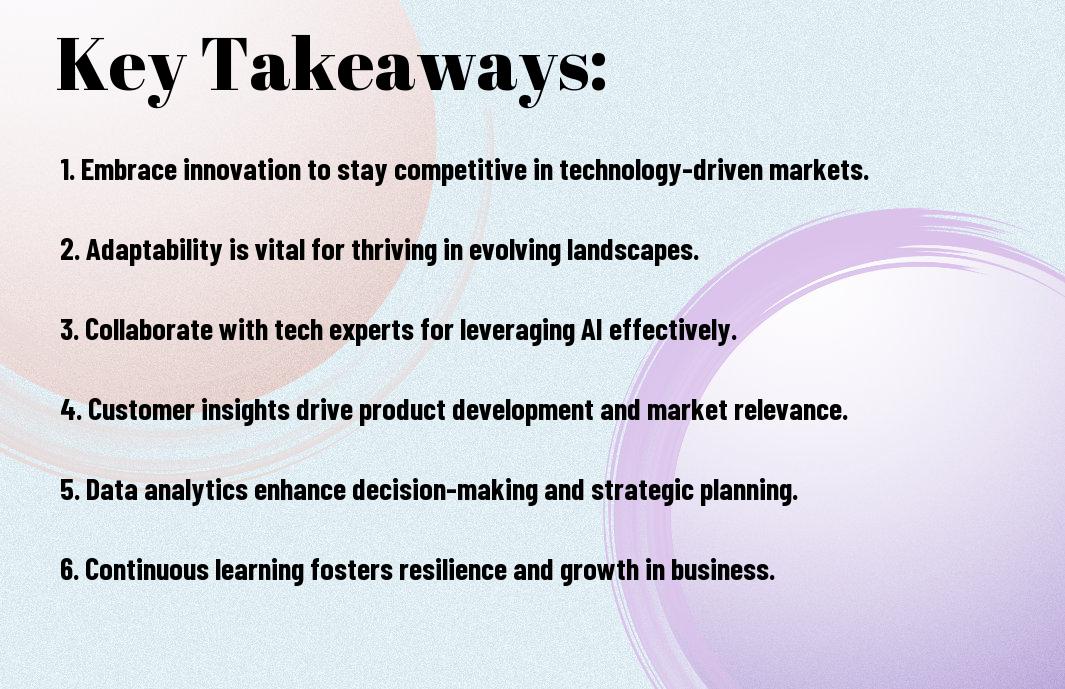
  • Embracing AI technology is important for entrepreneurs to stay competitive in today’s fast-paced business landscape, as it enables them to automate tasks, gain insights, and make data-driven decisions.
  • Developing a deep understanding of AI and its applications is vital for entrepreneurs to identify opportunities and challenges, and to create innovative solutions that leverage AI capabilities.
  • Building a strong team with diverse skills, including AI expertise, is necessary for entrepreneurs to successfully develop and implement AI-powered products and services.
  • Entrepreneurs must prioritize ethics and responsibility when developing and deploying AI systems, ensuring that they are transparent, fair, and respectful of user data and privacy.
  • Staying adaptable and agile is key for entrepreneurs to navigate the rapidly evolving AI landscape, as they must be prepared to pivot and adjust their strategies in response to new technologies and market trends.

    The New Entrepreneurial Landscape

    Before entering the entrepreneurial arena, you need to understand the shifting dynamics of the business world. The AI era has brought about significant changes, and you must be prepared to adapt and innovate to succeed.

    AI as the Great Equalizer

    Generally, AI has leveled the playing field, allowing small businesses and startups to compete with larger corporations. You can now access advanced technologies and tools, enabling you to scale and grow your business more efficiently.

    The Velocity of Change

    Against the backdrop of rapid technological advancements, you must be agile and responsive to changing market conditions. You need to stay ahead of the curve, anticipating and adapting to new trends and innovations.

    This velocity of change requires you to be highly adaptable and open to new ideas and strategies. You must be willing to pivot your business model, products, or services to stay relevant in a rapidly evolving market. By doing so, you can capitalize on new opportunities and stay ahead of the competition, ultimately driving your entrepreneurial success in the AI era.

    First-Principles Thinking

    Now, as you navigate the AI era, you’ll need to adopt a mindset that allows you to challenge conventional wisdom and think creatively. This involves breaking down complex problems into their fundamental components and solving them from the ground up.

    Questioning Assumptions

    For instance, you should constantly question the assumptions that underlie your business model and be willing to pivot when necessary. By doing so, you’ll be able to identify new opportunities and stay ahead of the competition.

    Building from the Ground Up

    On the other hand, building from the ground up allows you to create a solid foundation for your business, unencumbered by legacy systems or outdated thinking. You can design and optimize each component to work seamlessly together, creating a more efficient and effective whole.

    Plus, when you build from the ground up, you have the opportunity to incorporate AI and other emerging technologies into the very fabric of your business, enabling you to innovate and adapt more quickly to changing market conditions, and ultimately, driving your entrepreneurial success.

    Adaptation Over Perfection

    Not every entrepreneurial venture will be a perfect, polished product from the start. You will encounter setbacks and make adjustments as you navigate the AI era.

    The Minimum Viable Product Philosophy

    Among the strategies you can employ is launching a minimum viable product, allowing you to test and refine your offering based on user feedback, helping you to adapt quickly to changing market conditions.

    Iterative Growth Cycles

    By embracing iterative growth cycles, you can continuously evaluate and improve your product or service, ensuring it meets the evolving needs of your customers and stays competitive in the market.

    In addition, as you progress through these cycles, you will gather valuable insights and data, enabling you to make informed decisions about your business, and driving your entrepreneurial success in the AI era, allowing you to stay ahead of the curve and achieve your goals.

    Data as the New Currency

    Many entrepreneurs are now recognizing the value of data in driving business decisions and gaining a competitive edge. You can leverage data to inform your strategy, optimize operations, and create new opportunities for growth. As you navigate the AI era, your ability to collect, analyze, and apply data will be important to your success.

    Harvesting Meaningful Insights

    Upon closer examination, you’ll find that data holds the key to unlocking meaningful insights that can transform your business. You can use data analytics tools to identify trends, patterns, and correlations that inform your decision-making and drive innovation. By doing so, you’ll be able to refine your strategy and stay ahead of the curve.

    Ethical Considerations

    Any entrepreneur operating in the AI era must consider the ethical implications of data collection and usage. You need to ensure that your data practices are transparent, secure, and respectful of users’ privacy. As you develop your data strategy, you should prioritize ethical considerations to maintain trust and avoid potential pitfalls.

    Hence, as you probe deeper into the world of data-driven decision-making, you’ll need to balance the benefits of data analysis with the potential risks and consequences. You should establish clear guidelines and protocols for data collection, storage, and usage, and invest in robust security measures to protect sensitive information. By doing so, you’ll be able to harness the power of data while maintaining the trust and integrity of your business.

    The Human Element

    Unlike other factors that contribute to entrepreneurial success, the human element is often overlooked in the AI era. You must prioritize your team’s skills and abilities to stay competitive.

    Emotional Intelligence in the AI Age

    Along with technological advancements, you need to develop emotional intelligence to effectively lead and manage your team in this new landscape, ensuring you make informed decisions that balance human and artificial intelligence.

    Building Teams That Complement Technology

    With the rise of AI, you should focus on building teams that complement technology, rather than replacing it, to maximize efficiency and innovation in your organization.

    Complement your technology with a team that possesses skills such as creativity, problem-solving, and adaptability, allowing you to leverage AI’s capabilities while maintaining a human touch, and you will be able to drive your business forward in the AI era, making the most of the unique strengths that both humans and machines bring to the table.

    Funding in the AI Ecosystem

    Once again, you find yourself at the forefront of innovation, navigating the complex landscape of funding in the AI era, where traditional models are being disrupted and new opportunities are emerging, allowing you to capitalize on your vision.

    New Venture Capital Paradigms

    To succeed, you need to understand the evolving venture capital landscape, where AI-focused funds and investors are looking for startups that can leverage AI to drive growth and returns, and you must be prepared to demonstrate your AI strategy to secure funding.

    Alternative Financing Routes

    Along with traditional venture capital, you can explore alternative financing options, such as crowdfunding, angel investors, and corporate venture arms, which can provide the necessary capital to fuel your AI-driven venture, and you should consider these options to fund your growth.

    In fact, alternative financing routes can offer you more flexibility and control over your business, allowing you to maintain equity and make strategic decisions without external pressure, and you should carefully evaluate these options to determine the best fit for your AI startup, considering factors such as investment size, valuation, and investor expectations, to ensure that you secure the funding you need to drive your business forward.

    To wrap up

    On the whole, you now have a deeper understanding of what it takes to achieve entrepreneurial success in the AI era. You have learned valuable lessons from the front lines, and you can apply these insights to your own business ventures. As you move forward, you will be able to leverage AI to drive innovation and growth, and your ability to adapt will be key to staying ahead of the curve and achieving your goals in this rapidly evolving landscape.

    FAQ

    Q: What are the key characteristics of successful entrepreneurs in the AI era?

    A: Successful entrepreneurs in the AI era are those who are able to adapt quickly to changing market conditions, leverage AI technologies to drive innovation, and foster a culture of experimentation and continuous learning within their organizations. They are also able to identify and capitalize on new opportunities created by AI, such as the development of new products and services, and the creation of new business models. Additionally, they are able to navigate the ethical and societal implications of AI, and prioritize transparency, accountability, and fairness in their use of AI technologies.

    Q: How can entrepreneurs effectively integrate AI into their business strategy to drive growth and competitiveness?

    A: Entrepreneurs can effectively integrate AI into their business strategy by starting with a clear understanding of their business goals and identifying areas where AI can add value. They should then develop a roadmap for AI adoption, which includes assessing their current data infrastructure, identifying potential AI applications, and developing a plan for implementing and scaling AI solutions. It’s also important to invest in employee education and training, to ensure that they have the skills needed to work effectively with AI technologies. Furthermore, entrepreneurs should prioritize ongoing evaluation and monitoring of AI systems, to ensure that they are delivering the expected benefits and to identify areas for improvement.

    Q: What are some common pitfalls that entrepreneurs should avoid when navigating the AI landscape, and how can they mitigate potential risks?

    A: Common pitfalls that entrepreneurs should avoid when navigating the AI landscape include underestimating the complexity of AI technologies, overestimating their potential benefits, and failing to consider the potential risks and downsides of AI adoption. To mitigate these risks, entrepreneurs should take a nuanced and informed approach to AI adoption, which includes conducting thorough research and due diligence, developing a clear understanding of the potential benefits and risks of AI, and prioritizing transparency, accountability, and fairness in their use of AI technologies. They should also invest in ongoing monitoring and evaluation, to ensure that AI systems are delivering the expected benefits and to identify areas for improvement. By taking a thoughtful and informed approach to AI adoption, entrepreneurs can minimize the risks and maximize the benefits of AI for their businesses.

Skip to content