Financial Freedom Through AI – Entrepreneurial Stories of Success and Innovation

As you explore the world of entrepreneurship, you’re likely seeking innovative ways to achieve financial freedom. Your journey to success can be accelerated by leveraging Artificial Intelligence (AI). You’ll discover how AI is transforming industries and creating new opportunities for entrepreneurs like yourself. By embracing AI, you can unlock new revenue streams, optimize operations, and gain a competitive edge, ultimately achieving the financial freedom you desire.

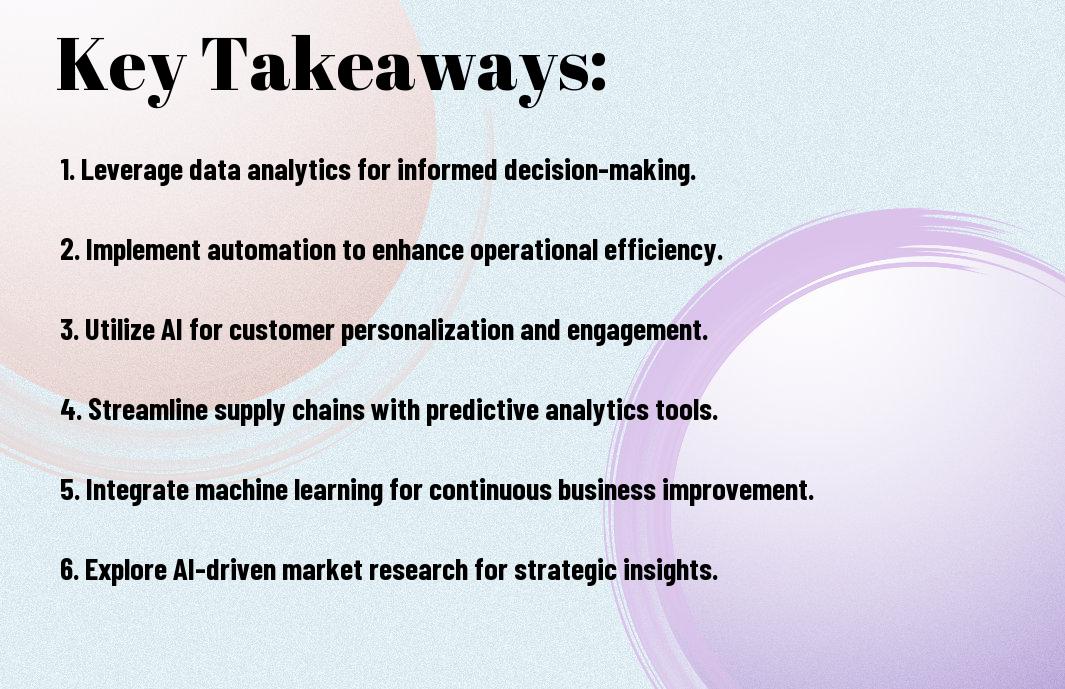
Key Takeaways:

  • Financial freedom can be achieved through the strategic implementation of Artificial Intelligence (AI) in entrepreneurial ventures, as seen in various success stories where AI-driven innovations have transformed businesses and created new opportunities for growth and profitability.
  • Entrepreneurs who have successfully harnessed the power of AI have been able to automate tasks, enhance decision-making, and gain a competitive edge in their respective markets, leading to significant financial gains and increased freedom.
  • The application of AI in finance and business has given rise to new entrepreneurial opportunities, such as AI-powered investment platforms, automated trading systems, and data-driven consulting services, which have enabled individuals to build successful and profitable businesses.
  • Stories of entrepreneurial success through AI highlight the importance of embracing innovation, taking calculated risks, and continuously learning and adapting to the rapidly evolving AI landscape in order to stay ahead of the curve and achieve financial freedom.
  • By leveraging AI and machine learning, entrepreneurs can create scalable and sustainable business models that generate passive income, providing them with the financial freedom to pursue their passions and interests without being tied to a traditional 9-to-5 job.
The Tipping Point of AI Entrepreneurship

Before the advent of AI, you may have thought that achieving financial freedom through entrepreneurship was a distant dream, but with the rise of innovative technologies, your chances of success have increased exponentially.

When AI Became Accessible to Everyday Entrepreneurs

For many years, AI was reserved for large corporations, but now you can access these powerful tools to transform your business and create new opportunities for growth and development.

Small Changes That Created Massive Opportunities

Beside the numerous benefits of AI, you can leverage its capabilities to streamline your operations, making your business more efficient and profitable, which can have a significant impact on your bottom line.

For instance, you can use AI-powered chatbots to automate customer service, freeing up your time to focus on high-leverage activities, such as strategy and innovation, allowing you to stay ahead of the competition and achieve your financial goals faster.

AI Outliers: Unconventional Paths to Financial Success

You are about to discover the unconventional paths to financial success through AI, where entrepreneurs have achieved remarkable results by deviating from traditional methods.

The 10,000 Hours Myth in AI Business

For instance, you’ll find that the notion of requiring 10,000 hours to master AI is being challenged by entrepreneurs who have achieved success in a fraction of the time, leveraging their unique strengths and innovative approaches.

Intuitive Entrepreneurs Who Defied Convention

Across various industries, you’ll encounter entrepreneurs who have defied conventional wisdom and achieved remarkable success with AI, often by trusting their intuition and taking calculated risks to stay ahead of the curve.

Plus, as you examine deeper into the stories of these intuitive entrepreneurs, you’ll notice that they share a common trait: the ability to balance technical expertise with creative vision, allowing them to identify opportunities that others may have missed, and to develop innovative solutions that have disrupted entire markets, leading to significant financial gains and a lasting impact on their industries.

The Financial Freedom Algorithm

Once again, you can achieve financial freedom by leveraging AI, as seen in The age of the entrepreneur: AI unlocks financial freedom, where innovative entrepreneurs share their success stories.

Recurring Revenue Models in AI Businesses

For instance, you can create a stable income stream by developing AI-powered products with subscription-based models, allowing you to generate revenue consistently.

Scaling Without Traditional Resources

Financial constraints no longer limit your ability to scale your AI business, as cloud computing and outsourcing enable you to access necessary resources without significant upfront investments.

Models like pay-as-you-go pricing and freemium models allow you to scale your AI business efficiently, enabling you to focus on growth and development, rather than worrying about resource allocation, and you can explore these models to find what works best for your business.

Cognitive Barriers to AI Wealth Creation

Your mindset plays a significant role in achieving financial freedom through AI. You must be aware of the cognitive barriers that can hinder your success, such as fear and lack of understanding.

Overcoming Technological Intimidation

Among the most significant obstacles to AI wealth creation is technological intimidation. You may feel overwhelmed by the complexity of AI, but you can overcome this by educating yourself and taking small steps towards automation.

Reframing Risk in the Age of Automation

To succeed in AI-driven wealth creation, you need to reframe your perception of risk. You should view risk as an opportunity for growth and innovation, rather than a threat to your financial security.

And as you probe deeper into the world of AI, you will discover that reframing risk is imperative to unlocking your full potential. You will learn to navigate the uncertainties of automation and make informed decisions that drive your financial freedom forward, enabling you to stay ahead of the curve and achieve your goals.

The Connector Effect in AI Entrepreneurship

Not every entrepreneur has the same level of access to resources, but you can still achieve financial freedom through AI by leveraging the right connections. You will learn how to build a network that amplifies your AI solutions and increases your social currency.

Building Networks That Amplify AI Solutions

Against the backdrop of a rapidly evolving AI landscape, you will find opportunities to connect with like-minded entrepreneurs and innovators, helping you to stay ahead of the curve and identify new opportunities for growth.

The Social Currency of Technical Innovation

About the time you start to build your reputation as an AI entrepreneur, you will begin to appreciate the value of social currency in technical innovation, which can open doors to new partnerships, investments, and collaborations.

And as you examine deeper into the world of AI entrepreneurship, you will discover that your social currency is directly tied to your ability to innovate and adapt, and you will need to continually develop your skills and knowledge to stay relevant in this rapidly changing field, allowing you to make informed decisions about your business and stay ahead of the competition.

Pattern Recognition: Identifying Profitable AI Niches

Unlike traditional industries, AI niches often emerge unexpectedly, and your ability to identify them can make or break your entrepreneurial venture. You need to stay vigilant and adapt quickly to capitalize on new opportunities. By analyzing market trends and consumer behavior, you can uncover profitable AI niches and position yourself for success.

The Psychology of Market Gaps

Prior to venturing into AI entrepreneurship, you should understand the psychology behind market gaps. You will find that unmet consumer needs and desires often drive innovation, and your task is to identify these gaps and develop AI solutions to fill them. By doing so, you can create a loyal customer base and establish a strong market presence.

Timing Your Entry for Maximum Impact

Entering the AI market at the right time is important for your success. You should monitor industry developments and wait for the perfect moment to launch your product or service. This strategic approach will enable you to maximize your impact and gain a competitive edge.

A key aspect of timing your entry for maximum impact is being able to analyze market conditions and anticipate future trends. As you consider launching your AI-powered product or service, you should assess the current competitive landscape, consumer demand, and potential barriers to entry. By doing so, you can make informed decisions and increase your chances of success in the rapidly evolving AI landscape, allowing you to stay ahead of the curve and achieve your entrepreneurial goals.

To wrap up

Ultimately, as you explore Financial Freedom Through AI, you will discover entrepreneurial stories of success and innovation that can inspire your own journey. You will learn how to leverage AI to optimize your financial decisions, creating a more secure and prosperous future for yourself. By embracing AI-driven solutions, you can unlock new opportunities and achieve your financial goals, transforming your life and securing your financial freedom.

FAQ

Q: What is Financial Freedom Through AI and how can it benefit entrepreneurs?

A: Financial Freedom Through AI refers to the ability to achieve financial independence and success through the strategic use of Artificial Intelligence (AI) in business. By leveraging AI technologies, entrepreneurs can automate tasks, gain valuable insights, and make data-driven decisions, leading to increased efficiency, productivity, and profitability. This can enable them to break free from the constraints of traditional business models and achieve financial freedom, allowing them to pursue their passions and interests without being tied down by financial worries.

Q: What kind of entrepreneurial stories can I expect to learn from Financial Freedom Through AI?

A: Financial Freedom Through AI features a collection of inspiring and informative stories from successful entrepreneurs who have harnessed the power of AI to achieve remarkable success in their respective fields. These stories showcase innovative business models, cutting-edge AI applications, and strategic decision-making, providing valuable lessons and insights for aspiring entrepreneurs. From e-commerce and marketing to healthcare and finance, these stories demonstrate the versatility and potential of AI in driving business growth and achieving financial freedom.

Q: How can I apply the principles of Financial Freedom Through AI to my own business or entrepreneurial venture?

A: By reading and learning from the entrepreneurial stories featured in Financial Freedom Through AI, you can gain practical knowledge and insights on how to integrate AI into your own business or venture. You can start by identifying areas where AI can automate tasks, improve efficiency, or provide valuable insights, and then explore the various AI tools and technologies available to support your goals. Additionally, you can learn from the successes and challenges faced by other entrepreneurs, avoiding common pitfalls and staying up-to-date with the latest trends and innovations in the field, ultimately paving your way to achieving financial freedom through AI-driven innovation.

Optimizing Business Models with AI – Tools and Techniques for Modern Entrepreneurs

You’re likely aware that artificial intelligence (AI) is transforming the business landscape, and as an entrepreneur, you’re looking to leverage its power to optimize your business model. Your goal is to stay ahead of the competition, and AI can help you achieve that. By utilizing AI tools and techniques, you can streamline operations, enhance decision-making, and drive growth, allowing you to take your business to the next level and achieve unprecedented success.

Key Takeaways:

  • Implementing AI in business models can significantly enhance operational efficiency and decision-making processes by providing data-driven insights and automating repetitive tasks.
  • AI-powered tools can help entrepreneurs identify new market opportunities, predict customer behavior, and develop targeted marketing strategies to stay competitive in the market.
  • Modern entrepreneurs can leverage AI techniques such as machine learning and natural language processing to analyze large datasets, gain valuable insights, and make informed business decisions.
  • AI-driven business models can also improve customer experience by providing personalized services, streamlining customer support, and offering tailored product recommendations.
  • To successfully integrate AI into their business models, entrepreneurs should focus on developing a strategic roadmap, investing in AI talent, and fostering a culture of innovation and continuous learning.

    The AI Revolution in Business

    The advent of artificial intelligence is transforming the business landscape, and you are at the forefront of this change. As you navigate this new era, you’ll discover innovative tools and techniques to optimize your business model. With AI, you can streamline operations, enhance customer experiences, and gain a competitive edge.

    Current AI Landscape

    Prior to the widespread adoption of AI, you may have been unsure about its potential impact on your business. However, as you explore the current landscape, you’ll find that AI is being leveraged in various industries to drive growth and improvement.

    Transformation of Traditional Models

    Currently, you are witnessing a significant shift in traditional business models, as AI-powered solutions are being integrated into existing frameworks. You can apply AI to your business to automate tasks, analyze data, and make informed decisions.

    Revolutionizing your business with AI requires a strategic approach, and you can start by identifying areas where AI can add value. As you launch on this journey, you’ll find that AI can help you optimize your operations, enhance customer engagement, and drive innovation, ultimately leading to increased efficiency and profitability for your business.

    Essential AI Tools for Entrepreneurs

    You will need to leverage various AI tools to optimize your business model, including data analytics platforms and predictive modeling systems, which can help you make data-driven decisions and stay ahead of the competition.

    Data Analytics Platforms

    On the path to optimizing your business, you’ll find data analytics platforms to be highly beneficial, providing you with insights into your operations and customer behavior, enabling you to refine your strategies.

    Predictive Modeling Systems

    Entrepreneurs like you can utilize predictive modeling systems to forecast market trends and identify potential opportunities, allowing you to adjust your business model accordingly and drive growth.

    Another key aspect of predictive modeling systems is their ability to help you identify potential risks and challenges, enabling you to develop proactive strategies to mitigate them and ensure the long-term success of your business, giving you a competitive edge in the market.

    Implementation Strategies

    Keep in mind that effective implementation of AI in your business model requires a well-planned approach. You need to identify areas where AI can bring the most value and develop a strategy to integrate it into your existing infrastructure.

    Integration Frameworks

    Prior to implementing AI, you should consider developing a framework that outlines how AI will be integrated into your business. You will need to assess your current systems and determine how AI can be seamlessly incorporated to enhance your operations.

    Scalability Considerations

    Towards achieving successful AI implementation, you must consider scalability from the outset. You should design your AI system to grow with your business, taking into account potential increases in data and user demand.

    Strategies for addressing scalability considerations involve designing flexible architectures, using cloud-based services, and implementing automated testing and monitoring. You can ensure your AI system scales efficiently by prioritizing these strategies, allowing your business to adapt to changing demands and maximize the benefits of AI integration.

    Cost-Benefit Analysis

    To optimize your business model with AI, you need to conduct a thorough cost-benefit analysis, weighing the potential advantages against the potential drawbacks and expenses. This involves evaluating the costs of implementing AI solutions and comparing them to the potential benefits, such as increased efficiency and revenue growth.

    Investment Requirements

    At the outset, you will need to assess the investment required to implement AI solutions, including the cost of software, hardware, and personnel. You should consider the upfront costs, as well as ongoing expenses, such as maintenance and updates.

    Return Metrics

    Returning to the key performance indicators, you will need to establish metrics to measure the return on investment (ROI) of your AI initiatives, such as increased revenue, improved customer satisfaction, or enhanced operational efficiency.

    Considering the return metrics, you will be able to evaluate the effectiveness of your AI solutions and make data-driven decisions to optimize your business model. You can track key metrics, such as customer acquisition costs, retention rates, and revenue growth, to determine the impact of AI on your business and identify areas for further improvement.

    Risk Management

    All businesses face risks, and AI is no exception. You need to assess and mitigate potential risks to ensure your business model’s success. This involves identifying potential threats, evaluating their likelihood and impact, and developing strategies to minimize them.

    Security Protocols

    After implementing AI tools, you should establish robust security protocols to protect your data and systems. You will need to ensure that your AI systems are secure, and your data is protected from unauthorized access or breaches.

    Ethical Considerations

    About the ethical implications of AI, you should consider the potential consequences of your AI-driven decisions. You must ensure that your AI systems are fair, transparent, and unbiased, and that they align with your business values and principles.

    Hence, as you develop and implement AI-powered business models, you must prioritize ethical considerations to maintain your customers’ trust and loyalty. You should establish clear guidelines and principles for AI development and deployment, and ensure that your AI systems are designed to promote fairness, accountability, and transparency, ultimately protecting your business’s reputation and long-term success.

    Future Trends

    Unlike traditional business models, AI-optimized models will continue to evolve, offering you new opportunities for growth and innovation. You can expect significant advancements in AI technology, enabling you to make more informed decisions and drive your business forward.

    Emerging Technologies

    With the rise of emerging technologies like machine learning and natural language processing, you will have access to more sophisticated tools to optimize your business model, allowing you to stay ahead of the competition and improve your overall performance.

    Market Predictions

    Any changes in the market will be driven by AI adoption, and you will need to be prepared to adapt your business model accordingly, leveraging AI to stay competitive and achieve your goals.

    Future market predictions indicate that AI will play an increasingly important role in shaping your business strategy, and you will need to consider how to effectively integrate AI into your operations to maximize its potential and drive success, enabling you to make more accurate predictions and informed decisions about your business’s future direction.

    To wrap up

    The implementation of AI in your business model can significantly enhance your entrepreneurial endeavors. You can leverage AI tools and techniques to streamline operations, improve decision-making, and drive growth. By integrating AI into your strategy, you will be able to optimize your business model, increasing efficiency and competitiveness in the market. You will gain a competitive edge, allowing your business to thrive in today’s fast-paced environment.

    FAQ

    Q: What are the key benefits of using AI to optimize business models, and how can entrepreneurs leverage these benefits to drive growth and innovation?

    A: The integration of Artificial Intelligence (AI) into business models offers numerous benefits, including enhanced operational efficiency, improved decision-making capabilities, and the ability to personalize customer experiences. By leveraging AI tools and techniques, entrepreneurs can automate routine tasks, analyze large datasets to gain valuable insights, and develop targeted marketing strategies. This enables businesses to stay competitive, adapt to changing market conditions, and explore new revenue streams. Moreover, AI-driven analytics can help identify areas of improvement, allowing entrepreneurs to refine their business models and make data-driven decisions that drive growth and innovation.

    Q: What AI tools and techniques are most effective for modern entrepreneurs looking to optimize their business models, and how can they be implemented in practice?

    A: Modern entrepreneurs can utilize a variety of AI tools and techniques to optimize their business models, including machine learning algorithms, natural language processing, and predictive analytics. Machine learning can be applied to automate customer service through chatbots, while natural language processing can enhance market research and sentiment analysis. Predictive analytics, on the other hand, can forecast market trends and customer behavior, enabling businesses to make informed decisions. To implement these tools in practice, entrepreneurs should start by identifying specific business challenges that AI can address, then select the most appropriate AI solutions, and finally, integrate these solutions into their existing infrastructure. It’s also important to invest in employee training to ensure that the workforce is equipped to work effectively with AI technologies.

    Q: How can entrepreneurs ensure the ethical and responsible use of AI in optimizing their business models, and what considerations should they keep in mind when implementing AI-driven strategies?

    A: Ensuring the ethical and responsible use of AI in business model optimization is paramount. Entrepreneurs should prioritize transparency, fairness, and accountability when implementing AI-driven strategies. This includes being clear with customers about how their data is used, ensuring that AI algorithms are free from bias, and establishing mechanisms for accountability in case of errors or adverse outcomes. Additionally, entrepreneurs should consider the potential impact of AI on their workforce and the broader community, focusing on upskilling and reskilling employees to work alongside AI systems. By adopting a human-centered approach to AI integration, businesses can harness the benefits of AI while minimizing its risks and negative consequences, ultimately leading to more sustainable and equitable business models.

Smart Scaling – How AI Helps Startups Navigate Rapid Growth

As you navigate the challenges of rapid growth, your startup faces unique obstacles. You must balance expanding operations with maintaining efficiency, all while keeping costs in check. Fortunately, you can leverage artificial intelligence (AI) to streamline processes, optimize resources, and make data-driven decisions, enabling your business to scale smarter, not just faster. By harnessing the power of AI, you can overcome growth hurdles and set your startup up for long-term success.

Key Takeaways:

  • AI-powered tools can help startups scale efficiently by automating repetitive tasks, analyzing large datasets, and providing actionable insights to inform business decisions.
  • Smart scaling involves leveraging AI to optimize operations, streamline processes, and enhance customer experiences, ultimately driving revenue growth and competitiveness.
  • AI-driven analytics can help startups identify areas of improvement, predict market trends, and make data-driven decisions to mitigate risks associated with rapid growth.
  • Implementing AI solutions can enable startups to adapt quickly to changing market conditions, innovate continuously, and stay ahead of the competition in a rapidly evolving business landscape.
  • By embracing AI, startups can unlock new opportunities for growth, improve operational efficiency, and build a strong foundation for long-term success and sustainability.

    The AI Advantage in Startup Ecosystems

    For startups, leveraging AI can be a game-changer, enabling you to scale rapidly and efficiently. You can automate tasks, gain valuable insights, and make data-driven decisions, giving you a competitive edge in the market.

    Automating Operational Bottlenecks

    Among the many benefits of AI, automating repetitive tasks is a significant advantage, allowing you to free up resources and focus on high-value activities, such as strategy and innovation, to drive your startup’s growth.

    Predictive Analytics for Decision-Making

    Operationally, AI-powered predictive analytics helps you make informed decisions by analyzing large datasets and identifying patterns, enabling you to anticipate and respond to market trends, customer needs, and potential challenges.

    Hence, as you explore predictive analytics for decision-making, you’ll discover that AI algorithms can help you forecast revenue, optimize pricing, and identify new business opportunities, giving you the confidence to make strategic decisions that drive your startup’s success, and you can trust the data-driven insights to inform your choices, ultimately leading to better outcomes for your business.

    Data-Driven Customer Acquisition

    Even as your startup grows, acquiring new customers is vital. AI helps you analyze data to identify target audiences, creating personalized experiences that drive engagement and conversion.

    Personalization at Scale

    Along with AI-powered tools, you can tailor your marketing efforts to individual preferences, increasing the likelihood of attracting and retaining customers.

    Behavioral Pattern Recognition

    Among the many benefits of AI in customer acquisition, recognizing behavioral patterns stands out, enabling you to anticipate and respond to customer needs effectively.

    With behavioral pattern recognition, you can gain a deeper understanding of your customers’ actions and decision-making processes, allowing you to refine your marketing strategies and improve customer satisfaction, ultimately driving your startup’s growth and success, as you leverage AI to make data-driven decisions that propel your business forward.

    AI-Powered Resource Allocation

    Now that your startup is growing rapidly, you need to allocate resources efficiently to sustain this growth. AI helps you make data-driven decisions, ensuring your resources are utilized optimally.

    Smart Budgeting Systems

    Following the initial growth phase, afterwards, you’ll need to implement smart budgeting systems to manage your finances effectively. AI-powered tools help you create personalized budgets, track expenses, and forecast revenue, enabling you to make informed decisions about your financial resources.

    Talent Optimization Algorithms

    Alongside financial management, another aspect to consider is talent optimization. Accordingly, you can leverage AI-driven algorithms to identify the most skilled candidates, streamline your hiring process, and develop training programs tailored to your team’s needs.

    Due to the complexity of managing a rapidly growing team, you can use talent optimization algorithms to analyze your workforce’s performance, identifying areas where additional training or support is needed, and providing you with actionable insights to enhance your team’s overall productivity and job satisfaction.

    Scaling Without Infrastructure Bloat

    Many startups face the challenge of scaling their infrastructure to keep up with rapid growth, but this can often lead to unnecessary bloat and wasted resources. You need to find a way to scale efficiently, without sacrificing performance or breaking the bank.

    Cloud-Based AI Solutions

    Solutions like cloud-based AI platforms can help you navigate this challenge, providing the scalability and flexibility you need to grow your business without being tied to expensive hardware or infrastructure investments.

    Pay-As-You-Grow Technologies

    By leveraging pay-as-you-grow technologies, you can ensure that your infrastructure scales in line with your business needs, avoiding unnecessary costs and complexity.

    Considering pay-as-you-grow technologies can be a game-changer for your startup, as you only pay for the resources you use, allowing you to allocate your budget more efficiently and focus on driving growth and innovation, you can optimize your infrastructure to meet the evolving needs of your business, and make data-driven decisions to inform your scaling strategy.

    Risk Management Through Machine Learning

    To effectively navigate rapid growth, you need to leverage machine learning to identify potential risks and opportunities. This enables you to make informed decisions and stay ahead of the competition.

    Early Warning Systems

    Managing your startup’s growth requires proactive measures, such as implementing early warning systems that detect anomalies and alert you to potential issues, allowing you to take corrective action.

    Competitive Intelligence Gathering

    Among the key benefits of machine learning is its ability to gather competitive intelligence, providing you with valuable insights into your competitors’ strategies and market trends, enabling you to adjust your approach accordingly.

    Hence, as you probe deeper into competitive intelligence gathering, you’ll discover that machine learning algorithms can analyze vast amounts of data, including social media, customer reviews, and market reports, to identify patterns and trends that can inform your business decisions, giving you a competitive edge in the market and allowing you to make strategic decisions that drive your startup’s growth and success.

    Ethical Considerations in AI-Driven Growth

    Unlike traditional growth strategies, AI-driven scaling requires careful consideration of ethical implications. As you navigate rapid growth, you must prioritize ethical concerns to maintain trust and integrity.

    Privacy Safeguards

    After implementing AI solutions, you’ll need to ensure your customers’ data is protected. You should establish robust privacy safeguards to prevent unauthorized access and misuse of sensitive information.

    Algorithmic Transparency

    Above all, transparency is key to building trust in AI-driven decision-making. You should be able to explain how your algorithms work and make decisions, ensuring fairness and accountability in your processes.

    Another aspect of algorithmic transparency is understanding how your AI systems learn and adapt. As you scale, you’ll need to monitor your algorithms’ performance and adjust them to prevent bias and errors, ensuring your AI-driven growth is fair, reliable, and trustworthy, and that you can maintain control over your decision-making processes.

    Summing up

    Upon reflecting on the role of AI in startup growth, you can see how it enables your business to scale efficiently. As you navigate rapid expansion, AI helps you maintain high service standards. To learn more about leveraging AI for growth, visit From Startups to Scaleups: How AI Supports Growth Without Sacrificing Service, and discover how to take your business to the next level.

    FAQ

    Q: What is Smart Scaling and how does it benefit startups navigating rapid growth?

    A: Smart Scaling refers to the strategic use of artificial intelligence (AI) and data analytics to manage and optimize the growth of startups. By leveraging AI, startups can streamline operations, predict market trends, and make informed decisions, ultimately leading to sustainable and efficient growth. This approach enables startups to adapt quickly to changing market conditions, mitigate risks, and capitalize on new opportunities, thereby ensuring a strong foundation for long-term success.

    Q: How does AI contribute to the smart scaling of startups, particularly in terms of resource allocation and talent management?

    A: AI plays a significant role in smart scaling by providing startups with actionable insights that inform resource allocation and talent management decisions. For instance, AI-powered tools can analyze market data to identify areas of high demand, allowing startups to allocate resources more effectively. Additionally, AI-driven talent management systems can help startups identify, attract, and retain top talent by analyzing candidate data, predicting skill gaps, and recommending personalized development plans. This enables startups to build a high-performing team that can drive growth and innovation.

    Q: What are some common challenges that startups may face when implementing AI-driven smart scaling strategies, and how can they overcome these obstacles?

    A: Startups may face several challenges when implementing AI-driven smart scaling strategies, including data quality issues, lack of AI expertise, and integration with existing systems. To overcome these challenges, startups can invest in high-quality data infrastructure, partner with AI experts or consultants, and prioritize incremental implementation to ensure seamless integration with existing systems. Furthermore, startups should focus on building a culture of data-driven decision-making, providing training and upskilling programs for employees, and continuously monitoring and evaluating the effectiveness of their AI-driven smart scaling strategies to ensure they are achieving their intended goals.

The AI Playbook for Entrepreneurs – Tactics for Sustainable Wealth Creation

As you navigate the ever-evolving landscape of entrepreneurship, you’re likely aware of the significant impact artificial intelligence (AI) can have on your business. You’re looking to harness the power of AI to drive growth and create sustainable wealth. Your goal is to stay ahead of the curve and make informed decisions that propel your business forward. This guide will provide you with the imperative tactics and strategies to leverage AI and achieve long-term success, helping you unlock your full potential as an entrepreneur.

Key Takeaways:

  • The book provides a comprehensive guide for entrepreneurs to leverage AI in their businesses, focusing on strategies that drive sustainable wealth creation and long-term success.
  • It highlights the importance of understanding AI technologies, such as machine learning and deep learning, and how they can be applied to various industries and business models.
  • Entrepreneurs can gain insights into how to identify opportunities for AI adoption, assess their business’s readiness for AI implementation, and develop a roadmap for integration.
  • The book also explores the potential risks and challenges associated with AI adoption, including data privacy concerns, job displacement, and the need for ongoing education and training.
  • By applying the tactics and strategies outlined in the book, entrepreneurs can harness the power of AI to drive innovation, improve efficiency, and create sustainable wealth, ultimately gaining a competitive edge in their respective markets.

Identifying AI Opportunities

A key step in leveraging AI for sustainable wealth creation is identifying opportunities that align with your business goals. You will need to analyze your industry, competitors, and target market to determine where AI can add value.

Market Gap Analysis

Matching your AI strategy to market needs is vital, you must assess the current landscape to pinpoint areas where AI can fill gaps and improve existing solutions, allowing you to capitalize on untapped opportunities.

Value Creation Assessment

After identifying potential AI applications, you should evaluate their potential to create value for your business, considering factors such as cost savings, revenue growth, and competitive advantage, to ensure that your AI investments yield meaningful returns.

In fact, conducting a thorough value creation assessment enables you to prioritize AI projects, allocate resources effectively, and measure the success of your AI initiatives, allowing you to refine your strategy and make data-driven decisions that drive your business forward, helping you to achieve your goals and create sustainable wealth.

Building AI-Enhanced Business Models

Any entrepreneur looking to create sustainable wealth must consider the role of AI in their business. You will need to assess your current models and identify areas where AI can enhance your operations, improve efficiency, and increase revenue.

Recurring Revenue Structures

AI-Driven business models enable you to create recurring revenue streams, allowing your business to generate consistent income. You can leverage AI to develop subscription-based services, offering your customers ongoing value and support, which in turn, provides your business with a predictable revenue stream.

Scalability Frameworks

Across various industries, AI-enhanced scalability frameworks enable you to expand your business rapidly and efficiently. You can use AI to automate processes, analyze data, and make informed decisions, allowing your business to scale quickly and effectively.

But as you develop your scalability frameworks, you will need to consider the complexity of your operations and the potential challenges that come with rapid growth. You must ensure that your AI systems can handle increased traffic, data, and customer demand, and that your team is equipped to manage the expanded operations, allowing your business to scale sustainably and maintain its competitive edge.

Capital Efficiency in AI Ventures

For entrepreneurs, capital efficiency is key to sustainable wealth creation in AI ventures, as it enables you to maximize returns while minimizing costs and risks, allowing your business to scale and thrive in a competitive market.

Bootstrap Strategies

Economizing on resources, you can adopt bootstrap strategies to reduce your startup costs, such as leveraging open-source AI tools and outsourcing non-core functions, which enables you to allocate more resources to high-priority areas of your business.

Strategic Investment Allocation

Allocating your resources wisely, an informed investment approach is vital to drive growth and profitability in your AI venture, as you need to balance short-term needs with long-term goals, and prioritize investments that will generate the highest returns.

In fact, as you develop your strategic investment allocation plan, you will need to consider various factors, including your business objectives, risk tolerance, and market trends, to ensure that your investments are aligned with your overall vision and strategy, and that you are maximizing your returns while minimizing waste and inefficiency, which will ultimately contribute to the success and sustainability of your AI venture.

Risk Management for AI Entrepreneurs

Keep your AI venture on track by prioritizing risk management, as it directly impacts your sustainable wealth creation goals. You must consider various factors, including technical, regulatory, and financial risks, to ensure your business thrives in the long term.

Technical Debt Considerations

For instance, your AI systems’ technical debt can quickly accumulate, leading to increased maintenance costs and decreased efficiency. You should regularly assess your technology stack and address any issues promptly to avoid significant problems down the line.

Regulatory Navigation

On the regulatory front, you face a complex landscape of laws and guidelines that govern AI development and deployment. You must stay informed about relevant regulations and ensure your business complies with them to avoid potential penalties and reputational damage.

This regulatory navigation requires ongoing effort and attention, as laws and regulations are continually evolving. You should establish a process to monitor changes in the regulatory environment and adjust your business strategies accordingly, ensuring you remain compliant and competitive in the market. You can achieve this by setting up a dedicated team or partnering with experts who specialize in AI regulation, allowing you to focus on your core business while staying ahead of regulatory requirements.

AI Competitive Advantage

Now that you’re exploring AI, you’ll discover that harnessing its power can significantly enhance your business’s competitive edge. By leveraging AI, you can automate tasks, gain valuable insights, and make data-driven decisions to stay ahead of the competition.

Proprietary Data Moats

On the path to establishing a strong AI competitive advantage, you’ll need to focus on building proprietary data moats that protect your business from competitors. You can achieve this by collecting and analyzing unique data sets that are exclusive to your company.

Network Effect Amplification

To amplify your AI competitive advantage, you’ll want to tap into the power of network effects. You can do this by creating AI-driven platforms that become more valuable to users as more people use them, thereby increasing your market share and reinforcing your competitive position.

Plus, as you continue to leverage network effects, you’ll find that your AI systems become increasingly sophisticated, allowing you to refine your products and services, and further differentiate yourself from competitors, ultimately leading to sustainable wealth creation and long-term success for your business.

Long-term Value Creation

Once again, you’ll find that creating sustainable wealth is about making strategic decisions that benefit your business in the long run, rather than just focusing on short-term gains. You need to prioritize investments that will generate returns over time, and be patient as your business grows and matures.

Customer Retention Economics

Valuing your existing customers is key to driving revenue and reducing acquisition costs. You can achieve this by offering personalized experiences, loyalty programs, and exceptional customer service, which will encourage customers to stay with your business and become repeat customers.

Sustainable Growth Metrics

On the path to sustainable growth, you’ll need to track metrics that indicate your business’s overall health and potential for long-term success. You should focus on metrics such as customer lifetime value, retention rates, and return on investment, which will give you a clear picture of your business’s performance.

Growth is a continuous process, and you’ll need to regularly assess and adjust your strategies to ensure you’re on track to meet your goals. As you monitor your sustainable growth metrics, you’ll be able to identify areas for improvement and make data-driven decisions that will drive your business forward, helping you achieve sustainable wealth creation and long-term success.

Final Words

So, as you conclude your journey through “The AI Playbook for Entrepreneurs – Tactics for Sustainable Wealth Creation”, you now possess the knowledge to harness AI’s potential. You can apply these strategies to your business, driving innovation and growth. Your path to sustainable wealth creation is clearer, and with AI by your side, you are equipped to make informed decisions and stay ahead in the competitive landscape.

FAQ

Q: What is “The AI Playbook for Entrepreneurs – Tactics for Sustainable Wealth Creation” and how can it benefit my business?

A: “The AI Playbook for Entrepreneurs – Tactics for Sustainable Wealth Creation” is a comprehensive guide designed to help entrepreneurs leverage Artificial Intelligence (AI) to create sustainable wealth. This playbook offers practical strategies and tactics to integrate AI into various aspects of business operations, from marketing and customer service to product development and financial management. By following the playbook, entrepreneurs can enhance efficiency, reduce costs, improve customer satisfaction, and ultimately drive business growth and profitability.

Q: How does “The AI Playbook for Entrepreneurs” address the challenge of implementing AI solutions in a small to medium-sized enterprise (SME) with limited resources?

A: The playbook is tailored to cater to the needs of SMEs, providing actionable advice on how to implement AI solutions with limited resources. It outlines cost-effective strategies for AI adoption, including the use of open-source tools, cloud-based services, and collaborative partnerships. Additionally, it offers guidance on prioritizing AI projects, building a skilled team, and measuring the return on investment (ROI) of AI initiatives, ensuring that SMEs can make the most of their resources and achieve significant benefits from AI adoption.

Q: What kind of support or community resources are available for entrepreneurs who are using “The AI Playbook for Entrepreneurs – Tactics for Sustainable Wealth Creation” to transform their businesses with AI?

A: To support entrepreneurs in their AI journey, “The AI Playbook for Entrepreneurs” is complemented by a range of community resources and support mechanisms. These include online forums where entrepreneurs can share their experiences, ask questions, and get feedback from peers and AI experts. Furthermore, regular webinars, workshops, and updates on the latest AI trends and technologies are provided to ensure that entrepreneurs stay ahead of the curve. Access to a network of mentors and AI specialists is also available, offering personalized guidance and consulting services to help entrepreneurs overcome specific challenges and achieve their business goals.

Building a Culture of Innovation – Integrating AI into Your Business DNA

As you navigate the ever-evolving business landscape, you’re likely aware of the transformative power of artificial intelligence (AI). You understand that embracing AI is no longer a choice, but a necessity to stay competitive. By integrating AI into your business, you can unlock new opportunities, drive growth, and foster a culture of innovation that sets you apart from the rest. You will learn how to harness the potential of AI to revolutionize your operations and stay ahead of the curve.

Key Takeaways:

  • Embracing a culture of innovation is necessary for businesses to stay competitive in today’s fast-paced digital landscape, and integrating AI into core operations can be a key driver of this culture.
  • AI adoption requires a strategic approach, starting with identifying areas where AI can add significant value, such as process automation, data analysis, and customer experience enhancement.
  • Effective integration of AI into business DNA involves developing a workforce with the necessary skills to work alongside AI systems, including data science, machine learning, and critical thinking.
  • Leadership plays a significant role in fostering a culture of innovation, by encouraging experimentation, learning from failures, and promoting a mindset that is open to new ideas and technologies.
  • Continuous monitoring and evaluation of AI initiatives is necessary to ensure they align with business objectives and to identify areas for improvement, allowing for adaptive strategies that maximize the benefits of AI integration.

    The Current AI Landscape

    Your business operates in a world where artificial intelligence (AI) is increasingly prevalent, transforming industries and revolutionizing the way you work. AI is no longer a novelty, but a necessity for staying competitive.

    Technological Disruption

    Any organization looking to innovate must consider the impact of AI on their operations, as it can significantly disrupt traditional business models and create new opportunities for growth and development, allowing you to streamline processes and improve efficiency.

    Market Transformation

    For your business to thrive, you need to understand the market transformation driven by AI, which is changing the way you interact with customers, develop products, and deliver services, enabling you to make data-driven decisions and stay ahead of the competition.

    But as you explore deeper into the market transformation aspect, you will find that AI is not just a tool, but a strategic partner that can help you identify new revenue streams, improve customer experience, and create a sustainable competitive advantage, ultimately driving your business forward and allowing you to achieve your goals.

    Assessing Your Organization’s AI Readiness

    Any organization looking to integrate AI into its DNA must first assess its readiness. You need to evaluate your current infrastructure, skills, and processes to determine how well you can support AI adoption.

    Digital Infrastructure Evaluation

    Digitally transforming your organization requires a robust infrastructure. You will need to assess your data management capabilities, IT systems, and cybersecurity to ensure they can support AI technologies.

    Skills Gap Analysis

    Before you begin your AI journey, you need to assess the skills of your workforce. You should evaluate the expertise of your employees in areas such as data science, machine learning, and programming to identify gaps that need to be filled.

    Skills are a key component of successful AI adoption. You will need to consider the skills required for AI development, deployment, and maintenance, and develop a plan to address any gaps. This may involve training your existing staff or hiring new employees with the necessary expertise to support your AI initiatives.

    Designing an AI Integration Strategy

    Not every business is ready to integrate AI into their operations, but you can start by assessing your current infrastructure and identifying areas where AI can bring the most value.

    Identifying High-Value Applications

    To determine which areas of your business can benefit from AI, you need to analyze your operations and look for opportunities to automate repetitive tasks or gain insights from data analysis, allowing you to make informed decisions about where to focus your AI integration efforts.

    Establishing Ethical Guidelines

    Applications of AI in your business must be aligned with your values and principles, so you should establish clear guidelines for the development and use of AI systems, ensuring that they are fair, transparent, and respectful of your customers’ and employees’ rights.

    HighValue applications of AI require careful consideration of ethical implications, and you should prioritize transparency, accountability, and fairness in your AI systems, ensuring that they are designed and deployed in ways that benefit both your business and society as a whole, and that you are prepared to address any potential risks or challenges that may arise from their use.

    Fostering an Innovation Mindset

    All organizations strive to innovate, but it requires a mindset shift. You need to encourage experimentation, learning, and creativity within your company to stay ahead of the competition.

    Breaking Organizational Silos

    Bridging departmental gaps is necessary for innovation. You can achieve this by promoting cross-functional teams and collaboration, allowing your employees to share ideas and expertise freely.

    Rewarding Experimentation

    With a culture that encourages risk-taking, you can foster innovation. You should acknowledge and reward your employees’ efforts to experiment and try new approaches, even if they don’t always succeed.

    Mindset shifts are necessary for your organization to embrace a culture of experimentation. You can achieve this by leading by example, celebrating failures as learning opportunities, and providing your employees with the autonomy to make decisions and try new things. This will help your company stay adaptable and innovative in a rapidly changing business landscape, allowing you to stay ahead of the competition and drive growth.

    Implementing AI Solutions

    Now that you have a solid foundation for AI integration, it’s time to start implementing AI solutions within your organization, focusing on areas that can drive the most value for your business, and aligning them with your overall strategy.

    Pilot Programs and Scalability

    After identifying the right opportunities, you can launch pilot programs to test and refine your AI solutions, ensuring they meet your needs and are scalable for broader implementation across your organization.

    Measuring Impact and ROI

    Behind every successful AI integration is a thorough measurement and evaluation process, allowing you to assess the effectiveness of your AI solutions and make data-driven decisions to optimize your strategy and maximize your return on investment.

    At this stage, you will need to establish clear metrics and benchmarks to evaluate the performance of your AI solutions, considering factors such as increased efficiency, cost savings, and revenue growth, and use this data to refine your approach and make adjustments as needed to ensure your AI investments are generating the desired outcomes for your business.

    Overcoming Resistance to Change

    Unlike other business initiatives, integrating AI into your organization requires a thoughtful approach to overcome resistance to change. You need to address the concerns and fears of your employees to ensure a smooth transition.

    Addressing Fear and Misconceptions

    By educating your workforce about the benefits and limitations of AI, you can alleviate concerns and misconceptions that may be hindering adoption. You should provide your employees with the necessary information to understand how AI will impact their roles and the organization as a whole.

    Creating AI Champions

    Changing the mindset of your employees is important to driving AI adoption. You can start by identifying and empowering AI champions within your organization to promote the benefits of AI and encourage others to embrace the technology.

    Plus, as you create AI champions, you will notice a significant shift in your organization’s culture, with more employees becoming open to innovation and willing to experiment with new ideas, ultimately driving business growth and success. You will be able to leverage their enthusiasm and expertise to develop AI-powered solutions that address specific business challenges and improve overall efficiency.

    Final Words

    From above, you can see that integrating AI into your business DNA requires a strategic approach. You will need to assess your organization’s readiness and develop a plan to foster a culture of innovation. To learn more, visit 3 Steps to Building a Culture of Learning and Innovation with AI to discover how you can drive growth and success in your business by embracing AI-driven innovation. You can then apply these insights to transform your organization.

    FAQ

    Q: What are the key steps to integrate AI into our company’s DNA to build a culture of innovation?

    A: To integrate AI into your business DNA, start by identifying areas where AI can bring significant value, such as improving operational efficiency, enhancing customer experience, or driving new revenue streams. Next, develop a strategic roadmap that outlines how AI will be used to achieve these goals, including the necessary investments in technology, talent, and training. It’s also important to foster a culture that encourages experimentation, learning from failures, and continuous improvement. This can be achieved by setting up cross-functional teams, providing resources for AI education and development, and recognizing and rewarding innovative achievements. Lastly, ensure that AI integration is aligned with your company’s overall mission and values, and that its implementation is transparent and accountable.

    Q: How can we ensure that our employees are prepared to work effectively with AI systems and contribute to a culture of innovation?

    A: Preparing your workforce for an AI-driven environment involves a combination of training, upskilling, and reskilling. Start by offering workshops and courses that introduce AI fundamentals, including machine learning, data science, and AI ethics. It’s also vital to provide hands-on experience with AI tools and technologies, allowing employees to apply their knowledge in practical scenarios. Furthermore, encourage a mindset shift towards lifelong learning, emphasizing the importance of adaptability and continuous professional development in an AI-centric world. Leadership should lead by example, demonstrating a commitment to learning and innovation, and fostering an environment where employees feel empowered to explore new ideas and collaborate with AI systems effectively.

    Q: What role does leadership play in building and sustaining a culture of innovation with AI integration, and how can leaders measure the success of such initiatives?

    A: Leadership plays a pivotal role in building and sustaining a culture of innovation with AI integration. Leaders must champion the vision for AI adoption, ensuring it aligns with the company’s strategic objectives and is communicated clearly across the organization. They should foster an environment that encourages creativity, experimentation, and calculated risk-taking, and prioritize the development of a diverse and inclusive workforce that can leverage AI to drive innovation. To measure the success of AI integration initiatives, leaders can track key performance indicators (KPIs) such as the number of AI-powered projects, the ROI of AI investments, employee engagement and skill development metrics, and customer satisfaction ratings. Regular feedback loops, both internally and from external stakeholders, are also critical for assessing the impact of AI on the business and making necessary adjustments to the innovation strategy.

Skip to content