How do betting odds correlate with horse race prediction accuracy

There’s a fascinating relationship between betting odds and horse race prediction accuracy that can impact how you strategize your bets. Understanding how these odds are determined and how they relate to the actual outcome of a race can give you valuable insights into making more informed decisions when it comes to betting on horse races. Let’s examine into the intriguing world of betting odds and prediction accuracy in the context of horse racing.

Key Takeaways:

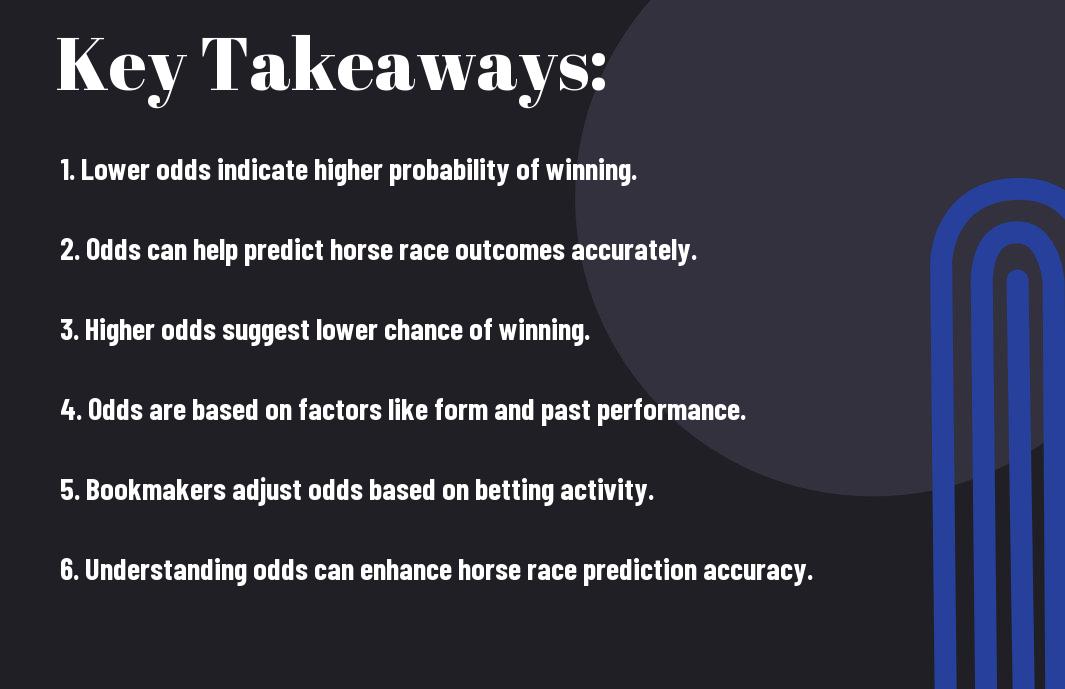
  • Betting odds reflect the perceived likelihood of a horse winning: Lower odds indicate higher expectations of success, while higher odds indicate lower expectations.
  • Correlation exists between lower odds and higher prediction accuracy: Horses with lower odds are more likely to win, making them more predictable for race prediction accuracy.
  • Using betting odds in combination with other factors can improve prediction accuracy: While odds can be a helpful indicator, combining them with additional information such as past performance and track conditions can lead to more accurate race predictions.

The Basics of Horse Racing and Betting Odds

A brief history of horse racing and betting

Odds are an integral part of horse racing and betting. Horse racing has a rich history that dates back centuries, with roots in ancient civilizations like the Greeks and Romans who held chariot races. Over time, horse racing evolved into the sport we know today, with organized races and betting becoming a significant aspect of the industry.

Today, horse racing is a popular sport globally, with various types of races such as flat racing, steeplechasing, and harness racing. Betting on horse races adds an element of excitement and anticipation for spectators, with odds playing a crucial role in the betting process.

How betting odds are calculated

Any seasoned bettor knows that understanding how betting odds are calculated is crucial for making informed bets. Betting odds are determined based on the probability of a horse winning a race. Factors such as the horse’s past performance, jockey, track conditions, and competition all play a part in calculating odds.

Bookmakers use a complex algorithm to set odds, taking into account various variables to ensure a fair and accurate representation of each horse’s chances of winning. The odds reflect not only the likelihood of a horse winning but also the potential payout for bettors.

Betting on horse races can be both thrilling and rewarding, especially when you grasp the significance of odds in the betting process. Understanding the basics of horse racing and betting odds can give you valuable insights into how to approach betting strategically and increase your chances of making successful bets.
The Role of Probability in Horse Racing

The concept of probability in horse racing

Some of the most critical aspects of horse racing involve understanding the concept of probability. In horse racing, probability refers to the likelihood of a particular event happening, such as a specific horse winning a race. By analyzing past performances, track conditions, jockey statistics, and other relevant factors, you can calculate the probability of each horse winning a race.

How probability affects betting odds

On the other hand, probability also plays a significant role in determining betting odds in horse racing. Bookmakers use the calculated probabilities to set the odds for each horse in a race. The more likely a horse is to win, the lower the odds will be. Conversely, the less likely a horse is to win, the higher the odds will be. Understanding how probability affects betting odds can help you make more informed decisions when placing your bets.

Probability ultimately influences how much you can potentially win when betting on horse races. Bookmakers adjust the odds based on the perceived probability of each horse winning, so the more accurate your own probability calculations are, the better equipped you’ll be to identify value bets with favorable odds.

Analyzing the Correlation between Betting Odds and Prediction Accuracy

Historical data analysis: Do betting odds reflect true probabilities?

All too often, you might wonder whether the odds provided by bookmakers truly reflect the actual probabilities of a horse winning a race. On your quest to understand the correlation between betting odds and prediction accuracy, historical data analysis can be a valuable tool. By examining past races and outcomes, you can start to gauge whether there is a pattern of correlation between the odds offered and the actual results.

Identifying patterns and trends in betting odds and prediction accuracy

Analyzing betting odds and prediction accuracy involves more than just looking at individual races. It requires a keen eye for spotting trends and patterns that can provide valuable insights into the predictive nature of odds. By delving into the data and observing how odds fluctuate leading up to a race, you can start to unravel the intricacies of how bookmakers and punters assess the chances of each horse.

The relationship between betting odds and prediction accuracy is a complex one, influenced by a myriad of factors such as form, track conditions, jockey performance, and even insider information. By analyzing these patterns, you can enhance your understanding of how betting odds are derived and how they impact the accuracy of race predictions.

Factors Influencing Betting Odds and Prediction Accuracy

The impact of horse and jockey performance on betting odds

Accuracy in predicting horse race outcomes is influenced by various factors, with the performance of the horse and jockey playing a significant role. Bookmakers analyze past performances, track records, and the reputation of both the horse and jockey when setting betting odds. A winning streak or a renowned jockey can sway the odds in favor of a particular horse, reflecting the perceived likelihood of success.

After considering the performance of the horse and jockey, bookmakers adjust the odds to align with their predictions based on these factors. A strong track record of victories might result in shorter odds, while inconsistent performances could lead to longer odds being offered.

The role of track conditions and weather on prediction accuracy

Accuracy in predicting horse race outcomes is also affected by track conditions and weather. Different horses perform better under specific conditions, such as firm or soft ground, and bookmakers take these factors into account when setting odds. Weather conditions, such as rain or strong winds, can also impact a horse’s performance on the track.

Another aspect to consider is that certain horses may have a preference for particular track conditions, giving them an advantage over competitors. Bookmakers incorporate this information into their odds to reflect the potential impact of track conditions and weather on race outcomes.

How public opinion and sentiment affect betting odds

An understanding of public opinion and sentiment is crucial in analyzing how they influence betting odds and prediction accuracy. Your perception of a horse’s chances of winning can be swayed by media coverage, rumors, or the popularity of a particular horse or jockey. Bookmakers consider this factor when adjusting odds to balance their risk exposure.

Performance in previous races also influences public opinion and sentiment, affecting the betting odds offered. If a horse has consistently performed well, public confidence and betting activity may increase, leading to shorter odds. Conversely, a string of losses or underwhelming performances can result in longer odds as public sentiment shifts.

The Psychology of Betting and Prediction

Cognitive biases in betting and prediction

On the journey of making betting decisions, your mind can play tricks on you. Cognitive biases, or the systematic patterns of deviation from norm or rationality in judgment, can heavily influence how you perceive information and make predictions. Some common biases include confirmation bias, where you seek out information that confirms your preconceptions, and availability bias, where recent or vivid information holds more weight in your decision-making process. Being aware of these biases and actively trying to counteract them can help you make more accurate assessments in betting and prediction.

The influence of emotions on betting decisions

To research into the world of betting is to confront a rollercoaster of emotions that can sway your decisions. Emotions like excitement, fear, and overconfidence can cloud your judgment and lead you astray when placing bets. Recognizing the role that emotions play in your decision-making process is crucial for maintaining a rational approach to betting. By learning to regulate your emotions and make decisions based on logic rather than impulse, you can improve your chances of making informed and strategic bets.

Prediction: Emotions are an inevitable part of the human experience and can greatly impact your betting decisions. When you feel overwhelmed by emotions, take a step back, assess the situation objectively, and consider the facts before making a bet. By acknowledging and managing your emotions, you can enhance your ability to make insightful predictions and increase your overall success in betting.

Advanced Analytics and Machine Learning in Horse Racing

Not all horse racing predictions are based solely on intuition or historical data anymore. Advanced analytics and machine learning have revolutionized the way analysts approach predicting the outcomes of horse races. In a study titled Horse Racing Prediction using Deep Probabilistic Programming, researchers probed into deep probabilistic programming to enhance prediction accuracy.

Using machine learning algorithms to predict horse racing outcomes

Advanced analytics

Machine learning algorithms have shown great promise in predicting horse racing outcomes. By analyzing vast amounts of data including past performance, track conditions, jockey and trainer statistics, and even weather forecasts, these algorithms can uncover patterns and insights that humans might overlook. These algorithms continuously learn and adapt, improving their accuracy over time.

The potential of advanced analytics in improving prediction accuracy

Learning

This approach opens up a world of possibilities in horse racing prediction. By leveraging advanced analytics, you can refine your predictions and make more informed betting decisions. These tools can help you uncover hidden trends, identify key factors influencing race outcomes, and ultimately increase your chances of success in the world of horse racing betting.

To wrap up

Conclusively, understanding the correlation between betting odds and horse race prediction accuracy can greatly enhance your ability to make informed decisions when placing bets. By recognizing that odds are not merely random numbers but rather reflections of the perceived likelihood of a horse winning a race, you can use this information to your advantage. By analyzing trends in odds and researching factors influencing them, you can increase your chances of making successful predictions and ultimately improve your chances of winning.

Q: How do betting odds correlate with horse race prediction accuracy?

A: Betting odds in horse racing are determined by the probability of a horse winning a race as perceived by the betting public. Generally, lower odds indicate a higher probability of winning according to the public consensus. However, it is important to note that betting odds do not always directly correlate with prediction accuracy. While they can provide some insight into the perceived chances of a horse winning, they are not a guarantee of accuracy.

Q: Can betting odds be used as a reliable indicator of a horse’s chances of winning a race?

A: While betting odds can provide valuable information about the perceived chances of a horse winning a race, they should not be the sole factor used in predicting the outcome. Factors such as past performance, track conditions, jockey and trainer statistics, and other relevant data should also be taken into consideration when making predictions. Betting odds should be used in conjunction with other information to make informed decisions.

Q: How should bettors incorporate betting odds into their horse race predictions?

A: Bettors can use betting odds as one of many tools in their prediction process. By comparing the betting odds with other factors such as form, class, track conditions, and jockey/trainer performance, bettors can get a more comprehensive view of a horse’s chances in a race. It is important to weigh all relevant factors and not rely solely on betting odds when making race predictions.


What ethical considerations should be taken into account when developing horse race prediction models

There’s a fine line to tread when delving into the world of horse race prediction models, where technical prowess meets ethical responsibility. In this intricate dance, you must consider the implications of developing such models, ensuring that fairness, transparency, and respect for animal welfare are at the forefront of your endeavors. As you navigate this terrain, ponder on the ethical considerations that must not be overlooked in your quest for predictive accuracy.

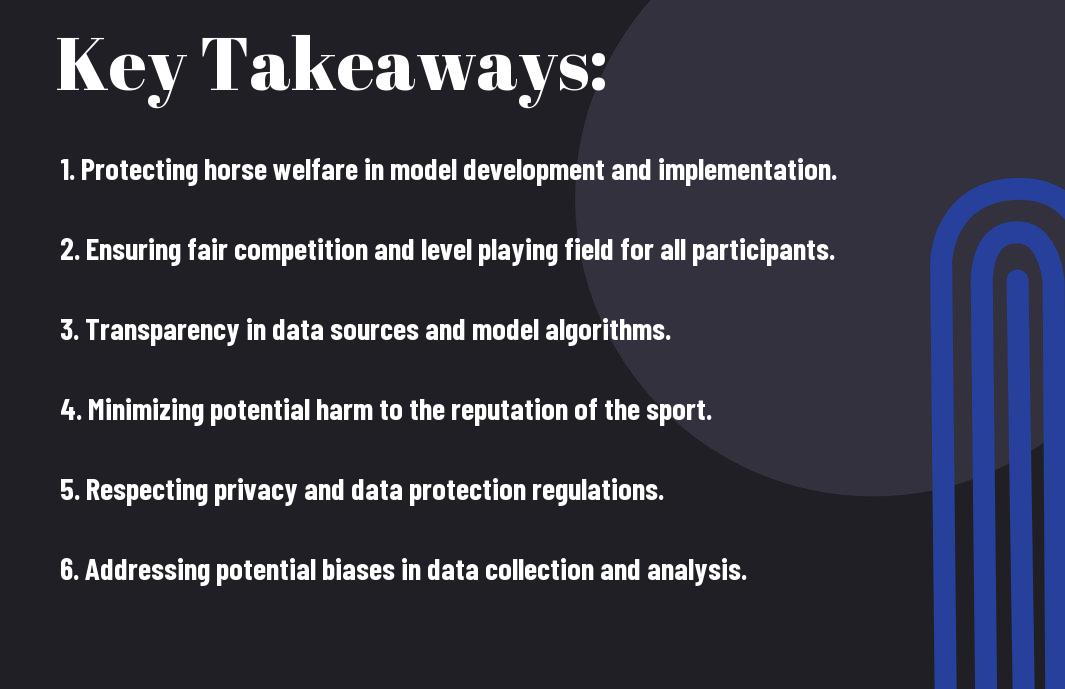
Key Takeaways:

  • Transparency: It is vital for developers of horse race prediction models to be transparent about the data used, the methodologies applied, and the potential biases in the model.
  • Fairness: Ethical considerations should be made to ensure that the models do not discriminate against certain horses, trainers, or jockeys based on irrelevant factors such as gender or race.
  • Accountability: Developers should be held accountable for the predictions made by their models and take responsibility for any negative impacts that may arise from inaccuracies or biases in the model.

The Ethics of Prediction

The Responsibility of Forecasting

Before delving into the intricacies of developing horse race prediction models, it is necessary to consider the ethical implications of forecasting. As a developer of prediction models, you hold a significant responsibility in ensuring that your predictions are made ethically and with the utmost consideration for the well-being of all involved. It is crucial to approach the task with integrity, transparency, and a deep understanding of the potential consequences of your predictions.

The Impact of Inaccurate Predictions

Prediction models, especially those related to horse racing, can have far-reaching effects on various stakeholders. Inaccurate predictions can lead to financial losses, emotional distress, and even harm to the welfare of the horses or individuals involved. As you develop your prediction models, it is imperative to acknowledge the potential impact of inaccuracies and work towards minimizing these risks. By prioritizing accuracy, ethical considerations, and continuous evaluation of your models, you can help mitigate the negative repercussions of inaccurate predictions.

With the power of prediction comes great responsibility. It is necessary to approach the development of horse race prediction models with a deep sense of ethical awareness and a commitment to uphold the welfare of all those affected by your forecasts. By embracing transparency, accountability, and a conscientious approach to forecasting, you can navigate the complex ethical landscape of prediction modeling with integrity and prudence.

Data Collection and Bias

Even in horse race prediction models, data collection is a crucial aspect that can dictate the success or failure of your endeavors. It is vital to consider the sources of data you are utilizing and their potential limitations.

Sources of Data and Their Limitations

Their selection and quality can significantly impact the performance and ethical considerations of your prediction model. Ensure that the data you collect is diverse, representative, and devoid of any underlying biases to avoid misleading outcomes.

Avoiding Implicit Bias in Data Collection

Data collection plays a pivotal role in shaping the accuracy and fairness of your prediction model. It is imperative to approach data collection with a critical eye to prevent the introduction of implicit biases that could skew your results.

Bias can manifest in various forms, such as skewed sampling methods, incomplete data sets, or even unintentional preferences in selecting certain variables. Being mindful of these potential pitfalls and incorporating checks and balances in your data collection process can help mitigate these biases and enhance the robustness of your model.

The Dangers of Cherry-Picking Data

Collection of data should be approached with integrity and transparency to avoid the dangers of cherry-picking. Selectively choosing data points that align with your desired outcome can lead to skewed predictions and ethical concerns.

This practice not only compromises the credibility of your model but also raises ethical questions about the validity and fairness of your predictions. By prioritizing a comprehensive and unbiased approach to data collection, you can uphold the integrity of your horse race prediction model and foster trust among stakeholders.

Model Development and Transparency

The Importance of Transparent Modeling

Many ethical considerations come into play when developing horse race prediction models, and one of the most critical is the need for transparent modeling. Transparency in model development is crucial to ensure that the processes, data sources, and methodologies used are clear and understandable. When developing prediction models for horse racing, transparency helps to build trust with stakeholders, including bettors, regulators, and the public.

Avoiding Black Box Models

One ethical consideration in developing horse race prediction models is the avoidance of black box models. Black box models are complex algorithms that provide predictions without revealing how these predictions are made. While these models may offer high accuracy, they lack transparency and make it challenging to understand why a particular prediction was generated.

One way to avoid black box models is by using interpretable methodologies that allow you to understand how input variables are weighted and how predictions are generated. This not only enhances transparency but also enables you to detect and mitigate biases that may be present in the model.

The Role of Human Judgment in Model Development

To ensure ethical considerations are met, it’s crucial to recognize the role of human judgment in model development. While algorithms play a significant role in predicting horse race outcomes, human judgment is crucial in designing the model, selecting relevant variables, and interpreting the results. Your expertise and ethical considerations can guide the development process to ensure fairness, accuracy, and transparency in the predictions.

With human judgment, you can consider factors beyond data inputs, such as historical trends, expert insights, and regulatory requirements, to refine and validate the model effectively. By combining your expertise with the power of algorithms, you can create prediction models that are not only accurate but also ethically sound.

Fairness and Justice in Predictive Models

The Concept of Fairness in Horse Racing

All predictive models should strive to uphold the principles of fairness and equity, especially in the context of horse racing. To ensure fairness, it is crucial to consider the impact of the predictive model on all involved parties, including the horses, jockeys, trainers, owners, and bettors. Fairness in horse racing prediction models means that the predictions and outcomes do not systematically favor certain individuals or groups over others.

Avoiding Discrimination in Model Development

Model developers must be vigilant in avoiding any form of discrimination when creating horse race prediction models. Discriminatory practices, whether intentional or unintentional, can have detrimental effects on the integrity of the racing industry and the well-being of its participants. It is crucial to actively assess and address any biases present in the data used to train the models to prevent discrimination.

Models should be designed to treat all participants fairly and impartially, regardless of factors such as horse breed, jockey background, or trainer reputation. By incorporating ethical considerations into the development process, model creators can help mitigate potential discriminatory outcomes and promote a more inclusive and just racing environment.

Ensuring Equal Opportunities for All Participants

Model developers should prioritize ensuring equal opportunities for all participants in horse racing. This includes fostering a level playing field where each horse, jockey, trainer, and owner has a fair chance to succeed based on their skills, training, and performance, rather than arbitrary or biased factors. By promoting equal opportunities, predictive models can contribute to a more transparent and equitable horse racing industry.

Justice in predictive modeling for horse racing involves upholding principles of fairness and equity, and striving to minimize any disparities or advantages that may arise from the use of predictive models. By prioritizing justice in model development and implementation, stakeholders can work towards a more ethical and sustainable future for horse racing.

Privacy and Data Protection

Keep Avoiding the horse race: a resource guide for ethical election coverage in mind when developing horse race prediction models to ensure the ethical considerations around privacy and data protection are met.

Protecting Sensitive Information

Sensitive information such as personally identifiable data or health information should be handled with utmost care when developing horse race prediction models. It is crucial to anonymize or encrypt this data to prevent it from being misused or accessed by unauthorized parties.

Ensuring Compliance with Data Protection Regulations

Ensuring compliance with data protection regulations such as the General Data Protection Regulation (GDPR) is necessary in the development of horse race prediction models. You must be diligent in obtaining consent for data collection, storing data securely, and complying with regulations regarding data usage and transfer.

Data protection regulations are designed to safeguard individuals’ personal information and must be strictly adhered to when dealing with sensitive data in the context of horse race prediction modeling.

The Consequences of Data Breaches

An understanding of the consequences of data breaches is crucial when developing horse race prediction models. A data breach can result in severe privacy violations, financial losses, and reputational damage. It is important to have robust security measures in place to prevent and mitigate the risks of data breaches.

Information security is paramount in the development of horse race prediction models, as even a single data breach can have far-reaching consequences for both individuals and organizations involved. It is necessary to prioritize data protection and security at every stage of model development to uphold ethical standards and protect sensitive information.

Accountability and Regulation

The Role of Regulatory Bodies in Ensuring Ethical Models

Despite the advancements in technology and data analytics, the development of horse race prediction models must be guided by ethical considerations. Regulatory bodies play a crucial role in ensuring that these models are developed and deployed ethically. These bodies are responsible for setting guidelines and standards that developers must adhere to when creating prediction models. By enforcing regulations, they help protect against biased or unfair practices in model development, ensuring transparency and accountability.

Holding Developers Accountable for Model Performance

On the path to ethical model development, holding developers accountable for the performance of their models is paramount. Developers should be transparent about the methodologies and data used in their models, allowing for external validation and scrutiny. By holding developers responsible for the outcomes of their models, there is an incentive to prioritize fairness and accuracy over potentially harmful shortcuts or biases.

Models should be evaluated not only based on their predictive performance but also on their societal impact. Developers should be held accountable for any negative consequences that may arise from the implementation of their models, taking responsibility for the ethical implications of their work.

Establishing Industry-Wide Standards for Ethical Model Development

Performance standards alone are not enough to ensure ethical model development. Establishing industry-wide standards that encompass fairness, transparency, and accountability is important. These standards should be collaboratively developed by stakeholders in the horse racing prediction industry, including developers, regulators, and ethicists. By adhering to these standards, developers can ensure that their models are not only accurate but also ethical in their design and implementation.

Another aspect of establishing industry-wide standards is the ongoing monitoring and evaluation of model performance. This continuous assessment allows for adaptations and improvements to be made, ensuring that ethical considerations remain at the forefront of model development in horse race prediction.

Conclusion

Presently, as you probe into developing horse race prediction models, it is crucial to consider the ethical implications of such endeavors. The welfare of the horses involved in these races should be at the forefront of your considerations. It is important to ensure that the use of these models does not compromise the well-being of the animals, as detailed in a research paper on (PDF) The ethics and welfare of horses intensively used in horse racing.

Additionally, you must also take into account issues of fairness, transparency, and integrity when developing such models. Ethical considerations should guide your every decision, from data collection and analysis to the implementation of the predictive algorithms. By keeping ethical principles at the core of your work, you can contribute to the development of responsible and sustainable practices in horse race prediction modeling.

FAQ

Q: What ethical considerations should be taken into account when developing horse race prediction models?

A: One important ethical consideration is data privacy and transparency. It’s important to ensure that the data used in developing the prediction models is obtained and used in a legal and ethical manner. Transparency is also key, as users should be informed about the data sources and methodologies used in creating the models.

Q: How can bias be addressed in horse race prediction models?

A: Bias can be a significant issue in prediction models, as it can lead to unfair outcomes. To address bias in horse race prediction models, it’s important to carefully evaluate the data being used and to actively work to mitigate any biases that may be present. This can include diversifying the data sources, using fair algorithms, and regularly monitoring and updating the models.

Q: What impact can horse race prediction models have on the sport and betting industry?

A: Horse race prediction models can have a significant impact on the sport and betting industry. While these models can provide valuable insights and improve decision-making for stakeholders, there is also the potential for negative consequences such as increased problem gambling and loss of the human element in decision-making. It’s important to carefully consider and mitigate these potential impacts when developing and using prediction models in this context.

What are the fundamental principles of wealth building

There’s a science to building wealth, and understanding the fundamental principles can propel you towards financial success. By adopting habits like saving, investing, and leveraging assets, you can secure your financial future. Learning to make your money work for you through passive income streams and cultivating a mindset of abundance are crucial components of wealth building. Let’s examine into the core principles that can help you create and grow your wealth effectively.

Key Takeaways:

  • Income generation: The key principle of wealth building is to focus on increasing income through various sources such as salary, investments, side hustles, and passive income streams.
  • Spending wisely: Wealth building involves controlling expenses, living below your means, and prioritizing investments over luxuries to build wealth over time.
  • Long-term focus: Building wealth requires patience, discipline, and a long-term investment mindset to allow assets to grow and compound over time.

Living Below Your Means

To build wealth successfully, you need to adopt the mindset of living below your means. This principle is crucial in your journey towards financial independence and achieving your long-term financial goals. By spending less than you earn, you create a surplus that can be utilized for investments, savings, and building your wealth over time. This mindset requires discipline, conscious decision-making, and a commitment to prioritizing your financial well-being.

The importance of budgeting

Below your means lies the core principle of budgeting. Creating and sticking to a budget is important for effectively managing your expenses and ensuring that you do not overspend. A budget helps you track your income, expenses, and savings, giving you a clear picture of where your money is going. By understanding your financial inflows and outflows, you can make informed decisions about your spending habits and identify areas where you can cut back to save more.

Creating a spending plan that works for you

Spending within your means involves creating a spending plan that aligns with your financial goals and lifestyle. This plan should prioritize important expenses, such as housing, utilities, food, and transportation, while also allocating funds for savings, investments, and debt repayment. By tailoring your spending plan to your specific financial situation, you can ensure that you are living within your means and making progress towards your wealth-building objectives.

For instance, you may choose to use the 50/30/20 rule, where 50% of your income goes towards necessities, 30% towards discretionary expenses, and 20% towards savings and investments. This guideline can serve as a starting point for creating a spending plan that works for you, but feel free to adjust it based on your individual circumstances and financial goals. Note, the key is to find a balance that allows you to live comfortably while still saving and investing for your future.

Investing Wisely

Now, when it comes to investing wisely for building wealth, it’s imperative to educate yourself on the various investment options available to you. A great resource to start with is the comprehensive guide on Building Wealth, which covers key principles and strategies for successful wealth accumulation.

Diversification: spreading risk and increasing returns

On the journey to building wealth, diversification is a fundamental principle to reduce risk and potentially increase returns on your investments. By spreading your investments across different asset classes such as stocks, bonds, real estate, and commodities, you can minimize the impact of a single investment underperforming or facing losses. This strategy helps safeguard your wealth while positioning you to benefit from the growth of various sectors in the market.

Compound interest: the power of time and patience

On the path to wealth building, understanding the concept of compound interest is crucial. This principle highlights the potential for your money to grow exponentially over time with the reinvestment of earnings. By allowing your returns to generate further earnings, you can benefit from compounding to accelerate the growth of your wealth. Any investment, no matter how small initially, has the potential to snowball into significant returns through the power of compound interest.

Compound interest can work wonders for your wealth accumulation over the long term. The key is to start investing early and be patient, allowing your money to grow steadily over time. As your investments compound, you’ll see the remarkable impact of consistent growth and reinvestment on your overall wealth. By harnessing the power of compound interest, you can set yourself up for financial success and security in the future.

Building Multiple Income Streams

Why one income stream is not enough

Despite the stability and security that a single source of income may provide, relying solely on one income stream can be risky. If that one source is compromised or lost, you could find yourself in financial hardship. Diversifying your income streams is key to creating long-term wealth and financial stability.

Exploring alternative sources of income

One way to secure your financial future is by exploring alternative sources of income. By leveraging your skills, interests, and resources, you can create additional streams of income that can supplement your main source. This could include starting a side business, investing in real estate, or generating passive income through investments.

Exploring different income streams not only provides financial security but also opens up opportunities for growth and wealth accumulation. By spreading your income across various channels, you can protect yourself from economic downturns and unforeseen circumstances that could impact a single source of revenue.

Minimizing Debt

Not all debt is bad, but minimizing it is a fundamental principle of wealth building. By keeping your debt levels low, you can allocate more of your income towards investing and growing your wealth.

The dangers of high-interest debt

With high-interest debt, such as credit card debt, you can quickly find yourself trapped in a cycle of making minimum payments and struggling to make a dent in the principal balance. This can lead to a downward spiral of increasing debt and financial stress, hindering your ability to build wealth.

Strategies for paying off debt quickly

An vital strategy for paying off debt quickly is to focus on high-interest debt first. By prioritizing your high-interest debts, you can save money on interest payments and accelerate your journey to becoming debt-free.

For instance, you can consider using the debt snowball method, where you pay off your smallest debts first and then roll that payment into larger debts. This can help you stay motivated by seeing quick wins and progress in reducing your overall debt load.

Building Wealth Through Entrepreneurship

All successful investors know that entrepreneurship is a key component of building lasting wealth. By starting your own business or getting involved in ventures that have significant growth potential, you can create multiple streams of income and build equity over time. If you’re new to investing, consider familiarizing yourself with the Five principles of successful investing to lay a strong foundation for your wealth-building journey.

Identifying opportunities and taking calculated risks

One imperative aspect of wealth-building through entrepreneurship is the ability to identify opportunities and take calculated risks. Successful entrepreneurs don’t shy away from stepping out of their comfort zones to pursue ventures that have the potential for high returns. By carefully assessing risks and rewards, you can make informed decisions that maximize your chances of success.

Turning passions into profitable ventures

One powerful way to build wealth as an entrepreneur is by turning your passions into profitable ventures. When you’re genuinely passionate about the work you’re doing, you’re more likely to stay motivated during challenging times and persist in the face of obstacles. By aligning your business goals with your interests and strengths, you can create a sustainable and fulfilling path to wealth creation.

With the right mindset and strategies in place, you can harness your entrepreneurial spirit to build wealth steadily over time. By identifying opportunities, taking calculated risks, and turning your passions into profitable ventures, you can set yourself on a path to financial success and fulfillment.

Educating Yourself

The importance of financial literacy

Unlike what some may believe, wealth building goes beyond just earning money and saving it. It involves understanding how money works and making it work for you. Financial literacy plays a crucial role in wealth building as it equips you with the knowledge and skills needed to manage your finances effectively. By educating yourself on topics such as budgeting, investing, and debt management, you empower yourself to make informed decisions that can help grow your wealth in the long run.

Continuously learning and improving your skills

Learning doesn’t stop with gaining financial literacy. Continuous learning and skill improvement are imperative components of wealth building. As you immerse yourself in learning opportunities, whether through books, courses, or seminars, you broaden your knowledge base and acquire new skills that can enhance your earning potential. By staying curious and open to new information, you position yourself to adapt to changing economic landscapes and seize opportunities for growth.

This commitment to ongoing learning sets you apart as someone dedicated to personal and financial growth. The more you invest in expanding your knowledge and honing your skills, the better equipped you’ll be to navigate the complexities of wealth building and achieve your financial goals.

Summing up

Now that you are familiar with the fundamental principles of wealth building, it’s time to take action and start implementing what you’ve learned. Remember that building wealth is a gradual process that requires discipline, patience, and smart decision-making. By following the principles outlined in this article, such as setting financial goals, investing wisely, and living below your means, you can pave the way towards a secure financial future.

If you want to dive deeper into practical steps to build wealth, check out this article on 9 Practical Steps to Build Wealth on Any Budget. By combining the knowledge from both sources, you will be well-equipped to create a solid foundation for your financial success. Keep in mind, wealth building is a journey, so stay committed and focused on your goals.

FAQ

Q: What are the fundamental principles of wealth building?

A: The fundamental principles of wealth building include saving and investing wisely, living below your means, setting financial goals, diversifying your investments, and continuously educating yourself about personal finance.

Q: Why is it important to save and invest wisely?

A: Saving and investing wisely allows you to grow your money over time and build wealth. By putting your money to work through smart investment decisions, you can potentially earn a higher return than just keeping it in a savings account.

Q: How does living below your means contribute to wealth building?

A: Living below your means involves spending less than you earn, which allows you to save and invest the difference. This practice helps you avoid debt, build an emergency fund, and have more money to put towards investments that can help you achieve your financial goals.

How does compound interest contribute to wealth building

There’s a powerful concept in personal finance that can help you grow your wealth steadily over time – compound interest. When you invest your money, the interest you earn gets reinvested, allowing your investment to grow exponentially. This means that the longer you keep your money invested, the more it can work for you, helping you build significant wealth in the long run. Understanding how compound interest works is key to achieving your financial goals.

Key Takeaways:

  • Power of compounding: Compound interest allows your money to grow exponentially over time as you earn interest not only on your initial investment but also on the interest that has been previously added.
  • Long-term perspective is crucial: The longer your money compounds, the greater the wealth accumulation. Starting to invest early and consistently contributing to your investments can significantly increase your wealth over time.
  • Patience and discipline are key: Investing regularly, avoiding withdrawing funds prematurely, and allowing your investments to grow over time are necessary factors in leveraging the power of compound interest for building wealth.

The Power of Compound Interest

Defining Compound Interest

On your journey to building wealth, understanding compound interest is crucial. Compound interest is the interest calculated on the initial principal, which also includes all the accumulated interest from previous periods on a deposit or loan. In simple terms, it allows you to earn interest on your interest, making your money grow exponentially over time.

How Compound Interest Works

With compound interest, the interest you earn each period is added to your principal sum, and the next interest calculation will be based on this larger amount. This compounding effect snowballs your money’s growth, especially over long periods. For example, a small amount invested today can grow significantly over the years due to compound interest working its magic.

Defining how compound interest works in your financial journey is vital. Keep in mind, the more time you give your money to grow with compound interest, the greater the effect it will have on building your wealth. Starting early and being consistent with your investments can lead to substantial financial gains down the road.

The Magic of Time

For the full understanding of how compound interest contributes to wealth building, one must grasp the concept of time. Compound interest works in your favor as time progresses. Assuming you are not familiar with how compound interest works, take a moment to read more about it How Does Compound Interest Work?.

The Earlier You Start, the Better

For every year you delay investing, you are missing out on potential growth. Starting to invest early allows your money more time to compound. Even small contributions made consistently over a long period can lead to significant wealth accumulation. The power of compounding is truly unleashed when you give it time to work its magic.

The Impact of Time on Compound Interest

Start investing now to take advantage of time. The longer your money stays invested, the more it can grow. Compound interest is not just about the initial investment; it’s about the continuous growth of your money over time. As your investment grows, the interest it earns also increases. This creates a snowball effect where your wealth can multiply exponentially over the years.

Better late than never, but better early than late. The impact of time on compound interest cannot be overstated. Even if you feel like you are starting small, the longer you allow your investments to grow, the more you will benefit in the long run. Making the decision to start investing now will set you on the path to building substantial wealth through the power of compound interest.

The Role of Interest Rates

How Interest Rates Affect Compound Interest

Interest rates play a crucial role in how your wealth grows over time through compound interest. When you invest or save money, the interest rate determines how fast your initial investment will grow. Higher interest rates accelerate the growth of your money, allowing you to earn more through compounding over time. On the other hand, lower interest rates can slow down the growth of your wealth, impacting the overall amount you accumulate.

High-Interest Rates vs. Low-Interest Rates

High-interest rates can significantly boost your wealth-building efforts. If you invest or save money in accounts with high-interest rates, you will see substantial growth in your initial investment over time. This growth is further amplified by the power of compounding, as your interest earnings also earn interest. In contrast, low-interest rates can hinder your wealth-building journey, as the growth of your money may not keep up with inflation, potentially decreasing the real value of your savings or investments.

It’s imperative to seek out investment opportunities or savings accounts with competitive interest rates to maximize the benefits of compound interest. By carefully considering the interest rates offered and choosing the options that provide higher returns, you can accelerate your wealth-building process and achieve your financial goals more efficiently.

The Importance of Consistency

Despite the power of compound interest in growing your wealth, it is crucial to understand its full potential. If you want to examine deeper into the concept of compound interest and its impact on wealth building, you can read more about it in this informative article: What is compound interest, and how does it work?

Regular Deposits and Withdrawals

Consistency is key when it comes to maximizing the benefits of compound interest. By making regular deposits into your investment accounts, you allow your money to grow more effectively over time. Similarly, avoiding frequent withdrawals helps to keep your principal amount intact, ensuring that your interest earnings can compound at a steady rate.

Avoiding Fees and Penalties

Any fees or penalties incurred on your investments can have a detrimental effect on your overall returns. It is vital to be mindful of the fees associated with your investment products and strive to minimize them as much as possible. By avoiding unnecessary fees and penalties, you can ensure that a larger portion of your earnings goes towards accelerating your wealth accumulation.

Plus, staying informed about the terms and conditions of your investment accounts can help you steer clear of potential penalties that may hinder the growth of your wealth over time. By maintaining consistency in your investment strategy and being vigilant about avoiding fees and penalties, you can make the most of compound interest and achieve your long-term financial goals.

Compound Interest in Action

All successful wealth-building journeys have one thing in common: the power of compound interest. With compound interest, your money grows exponentially over time, thanks to the interest earned on both your initial investment and the interest it accumulates. Let’s explore how compound interest works in action through different accounts.

Examples of Compound Interest in Different Accounts

With a high-yield savings account, you can see compound interest in action as your interest is calculated on your balance and the interest you’ve already earned. Similarly, in a retirement account like a 401(k) or an IRA, your contributions, gains, and dividends all work together to grow your nest egg exponentially over the years. These examples illustrate how starting early and letting your money compound can lead to significant wealth accumulation.

Real-Life Scenarios of Wealth Building

One real-life scenario where compound interest plays a significant role in wealth building is investing in the stock market. By reinvesting your dividends and allowing your investments to grow over time, you can benefit from the power of compounding. For example, investing a set amount regularly in a diversified portfolio can lead to substantial wealth accumulation over decades due to the compounding effect.

Compound interest is not just a concept; it is the secret weapon to building wealth over time. By harnessing the power of compound interest through smart investment choices and consistent contributions, you can set yourself up for a financially secure future. Be mindful of, the key is to start early, stay committed, and let time work its magic on your investments.

Overcoming Obstacles

Many people understand the concept of compound interest and its potential to build wealth over time. If you want to dive deeper into how compound interest can help you grow your wealth, check out our blog post on How to Use Compound Interest to Build Wealth. However, despite the benefits of compound interest, there can be challenges along the way as you work towards building your wealth.

Common Challenges to Wealth Building

The journey to building wealth through compound interest may come with obstacles. One of the common challenges is the temptation to spend rather than save. It can be difficult to resist the allure of instant gratification when you could be investing for your future. Another hurdle is the fluctuation of the market, which can make it hard to stay committed to your long-term investment strategy when faced with short-term losses.

Strategies for Staying on Track

To overcome these challenges, it’s imperative to have a solid financial plan in place. Setting clear goals and creating a budget that includes regular contributions to your savings and investment accounts can help you stay on track. Additionally, diversifying your investments can help mitigate risks associated with market fluctuations and provide more stability to your portfolio.

Track:
It’s important to regularly review your financial goals and track your progress towards them. By staying informed about your investments and making adjustments as needed, you can navigate obstacles and continue on the path to building wealth through compound interest.

Final Words

Upon reflecting on the role of compound interest in wealth building, it becomes evident that this powerful financial concept can significantly impact your financial future. By allowing your money to grow over time through compound interest, you can accelerate wealth accumulation and secure a more stable financial future for yourself and your loved ones.

Note, the key to harnessing the full potential of compound interest is to start early, be consistent in your contributions, and allow your investments to grow over time. By prioritizing long-term savings and investments, you can take advantage of the magic of compound interest and set yourself on a path towards financial independence and prosperity.

Q: What is compound interest?

A: Compound interest is the interest calculated on the initial principal amount as well as the accumulated interest of previous periods. It allows your investments to grow exponentially over time, as the interest is added to the principal each period, resulting in a higher amount of interest earned in subsequent periods.

Q: How does compound interest contribute to wealth building?

A: Compound interest plays a crucial role in wealth building by accelerating the growth of your investments. By reinvesting the interest earned, your money has the potential to grow at a much faster rate than simple interest. Over a long period of time, compound interest can turn a modest investment into a substantial sum.

Q: What are some strategies to maximize the benefits of compound interest for wealth building?

A: To maximize the benefits of compound interest, it is important to start investing early, regularly contribute to your investments, and reinvest the returns to allow your money to grow exponentially. Additionally, choosing investments with higher interest rates and compounding frequencies can further boost your wealth building efforts through compound interest.

What role does budgeting play in the process of accumulating wealth

If you aspire to accumulate wealth, budgeting is an imperative process that serves as the blueprint for your financial success. By carefully planning and allocating your income to prioritize saving and investing, you pave the way for building a solid foundation for wealth creation. Budgeting empowers you to control your spending, identify areas for potential savings, and make informed decisions to grow your assets over time. It is the disciplined practice of budgeting that sets the stage for achieving your long-term financial goals and ultimately realizing your dreams of wealth accumulation.

Key Takeaways:

  • Financial discipline: Budgeting helps in fostering financial discipline by tracking expenses, prioritizing savings, and avoiding unnecessary spending.
  • Goal setting: Budgeting enables individuals to set clear financial goals, such as saving for retirement, purchasing a home, or investing in assets that contribute to wealth accumulation.
  • Long-term wealth accumulation: Consistent budgeting allows for the accumulation of wealth over time through disciplined saving, investment, and strategic financial planning.

Setting Financial Goals

A crucial step in the process of accumulating wealth is setting clear financial goals. By establishing specific objectives, you give yourself a roadmap to follow and a target to aim for. This clarity will help you stay focused and motivated on your journey towards financial success.

Identifying Short-Term and Long-Term Objectives

To begin, you need to identify both short-term and long-term financial goals. Short-term goals typically include building an emergency fund, paying off high-interest debts, or saving for a vacation. Long-term goals, on the other hand, may involve purchasing a home, funding your children’s education, or retiring comfortably. By distinguishing between these two types of objectives, you can create a balanced financial plan that caters to your immediate needs and secures your future.

Prioritizing Needs vs. Wants

To make progress towards your financial goals, it is necessary to prioritize your needs over your wants. Needs are necessities like food, shelter, healthcare, and transportation, while wants are luxuries such as dining out, designer clothes, or the latest gadgets. By differentiating between the two and focusing on fulfilling your needs first, you ensure that your financial resources are allocated sensibly and constructively.

ShortTerm It’s important to remember that prioritizing needs over wants does not mean depriving yourself of all enjoyment. It simply means making conscious choices that align with your financial goals and values. By cutting back on unnecessary expenses and redirecting those savings towards your long-term objectives, you are investing in your financial well-being and building a solid foundation for future wealth accumulation.

Creating a Budget

Some people view budgeting as a restrictive financial practice, but in reality, it is a powerful tool that can help you achieve your wealth accumulation goals. Creating a budget is the first step towards gaining control of your finances and making informed decisions about your money.

Tracking Income and Expenses

An necessary part of creating a budget is tracking your income and expenses. By keeping a record of how much money you earn and where it goes, you can gain a clear understanding of your financial habits and identify areas where you can make improvements. This step is crucial in helping you establish a solid foundation for your wealth-building journey.

Categorizing Expenditures

Categorizing your expenditures is a key component of creating an effective budget. By organizing your expenses into different categories such as housing, transportation, food, and entertainment, you can see where the majority of your money is being spent. This insight allows you to prioritize your spending and make adjustments to ensure you are allocating your resources wisely.

A well-crafted budget will not only help you track where your money is going but also enable you to set specific savings goals and monitor your progress towards achieving them. By categorizing your expenditures, you can identify areas where you can cut back on spending and redirect those funds towards your wealth accumulation goals.

Allocating Resources Effectively

With a detailed budget in place, you can allocate your resources effectively towards wealth accumulation. By setting aside a portion of your income for savings, investments, and debt repayment, you are actively working towards building long-term financial security. Budgeting allows you to make intentional decisions about how you want to use your money, ensuring that every dollar has a purpose in helping you achieve your wealth goals.

Expenditures such as dining out, shopping, and entertainment can quickly add up and derail your wealth accumulation efforts if left unchecked. By allocating your resources wisely and staying disciplined with your budget, you can make significant strides towards accumulating wealth and securing your financial future.

Managing Debt

Assessing Debt Levels

For you to effectively manage your finances and work towards accumulating wealth, the first step is to assess your current debt levels. Take stock of all your outstanding debts, including credit card balances, loans, and any other financial obligations you may have. Understanding the total amount of debt you owe is crucial in creating a strategic plan to pay it off.

Developing a Debt Repayment Plan

With a clear picture of your debt situation, the next step is to develop a debt repayment plan. This plan should outline how you will tackle each debt systematically, considering factors such as interest rates, due dates, and your financial capacity. By creating a structured repayment plan, you can stay organized and focused on reducing your debt effectively.

Managing debt can seem overwhelming, but breaking it down into manageable steps can make the process more achievable. Start by listing out all your debts, then prioritize them based on factors like interest rates or outstanding balances. This approach allows you to see the bigger picture and develop a clear strategy for paying off your debts.

Strategies for Reducing Debt

To successfully reduce your debt and move closer to your goal of accumulating wealth, consider implementing strategies such as the snowball or avalanche method. The snowball method involves paying off the smallest debts first to gain momentum, while the avalanche method focuses on tackling debts with the highest interest rates to save on interest costs over time.

For instance, you could start by committing to paying more than the minimum due on your highest-interest debt while making minimum payments on the others. Once the high-interest debt is cleared, you can move on to the next one, gradually eliminating your debts and freeing up more funds to save and invest for your future.

Building an Emergency Fund

Importance of Liquidity

Liquidity, the ease with which an asset can be converted into cash, is crucial when building an emergency fund. Having a liquid emergency fund ensures that you can quickly access funds in case of unexpected expenses or financial difficulties. By prioritizing liquidity in your emergency fund, you can safeguard yourself against unforeseen circumstances and avoid dipping into long-term investments that may carry penalties or fees for early withdrawal.

Calculating Emergency Fund Requirements

With the importance of liquidity in mind, calculating your emergency fund requirements involves analyzing your monthly expenses and determining how many months’ worth of expenses you should aim to save. Financial experts often recommend setting aside three to six months’ worth of living expenses in your emergency fund. This amount can vary based on your individual circumstances, such as job stability, health considerations, and overall risk tolerance.

  • Assess your monthly expenses to determine your financial safety net.
  • Consider any additional factors that may impact your emergency fund needs.

Requirements: To ensure that you have a sufficient cushion to weather financial storms, you should strive to continuously grow your emergency fund. Consistently saving a portion of your income each month and cutting unnecessary expenses can accelerate your progress in reaching your emergency fund goal. Keep in mind, emergencies are unpredictable, so being proactive in building and maintaining your emergency fund is key to your financial security.

Tips for Growing an Emergency Fund

Understanding the significance of having a robust emergency fund, here are some tips to help you grow your financial safety net:

  • Automate your savings by setting up recurring transfers to your emergency fund.
  • Cut back on non-crucial expenses and redirect those funds to your emergency fund.

After implementing these strategies, you will be better equipped to handle unexpected financial setbacks and stay on track towards building wealth and achieving your long-term financial goals.

Investing for the Future

Introduction to Investment Options

One of the key steps in accumulating wealth is investing for the future. By putting your money into various investment options, you have the potential to grow your wealth significantly over time. There are a wide range of investment options available to you, each with its own level of risk and potential return.

Risk Management Strategies

With any investment, there is an inherent level of risk involved. To mitigate these risks, it’s important to implement effective risk management strategies. Diversifying your investment portfolio is one such strategy that can help spread risk across different asset classes.

By diversifying, you reduce the impact of a poor performance in any single investment on your overall portfolio. This can help cushion the effects of market fluctuations and decrease the likelihood of incurring significant losses.

Diversifying Your Portfolio

One way to manage risk in your investment portfolio is by diversifying. By spreading your investments across different asset classes, such as stocks, bonds, real estate, and commodities, you can reduce the impact of any single asset underperforming. Diversification can help you achieve a more stable and balanced portfolio, which is crucial for long-term wealth accumulation.

The key is to find the right balance of investments that align with your risk tolerance, financial goals, and time horizon. Regularly reviewing and adjusting your portfolio to ensure it remains diversified in line with your financial objectives is necessary to long-term success.

Avoiding Lifestyle Creep

After creating a budget and starting your journey towards accumulating wealth, one of the biggest challenges you may face is avoiding lifestyle creep. This phenomenon occurs when your spending gradually increases as your income rises. It can be tempting to upgrade to a fancier lifestyle with every raise or bonus, but this can hinder your progress towards financial independence.

Recognizing the Dangers of Overspending

For you to reach your wealth accumulation goals, it’s crucial to recognize the dangers of overspending. Constantly increasing your expenses to match your income not only makes it harder to save and invest but also creates a cycle of dependency on a high income to maintain your lifestyle. This can leave you vulnerable to financial setbacks and limit your ability to build long-term wealth.

Strategies for Maintaining a Frugal Mindset

Strategies for maintaining a frugal mindset can help you combat lifestyle creep and stay on track towards your financial goals. One effective approach is to set strict budget limits for different spending categories and regularly track your expenses to ensure you’re not overspending. Additionally, consider automating your savings and investments to prioritize building wealth over unnecessary expenditures.

Strategies such as regularly reviewing your budget, setting specific financial goals, and avoiding impulse purchases can all contribute to maintaining a frugal mindset. By consciously choosing to prioritize long-term financial security over short-term gratification, you’ll be better equipped to resist the temptation of lifestyle inflation and make decisions that align with your wealth accumulation objectives.

Practicing Gratitude and Contentment

Overspending is often driven by a desire for more possessions or experiences, leading to a never-ending cycle of chasing material wealth. Practicing gratitude and contentment can help you break free from this mindset and appreciate what you already have. By focusing on the things that truly matter to you and finding joy in simplicity, you can reduce the urge to overspend on unnecessary luxuries.

For you, cultivating a sense of gratitude for your current financial situation and celebrating small milestones along your wealth accumulation journey can provide a sense of fulfillment that doesn’t depend on the accumulation of material goods. By embracing contentment with what you have and staying mindful of your financial goals, you can resist the pressures of lifestyle creep and stay committed to building lasting wealth.

Lifestyle

Lifestyle creep can be a significant obstacle on your path to financial success, but by recognizing its dangers and adopting strategies to maintain a frugal mindset, you can overcome this challenge and make significant progress towards accumulating wealth. Practicing gratitude and contentment can further reinforce your commitment to financial independence and help you appreciate the journey as much as the destination. By prioritizing long-term financial security over short-term indulgences, you’ll be better positioned to achieve your wealth accumulation goals and secure a prosperous future.

To wrap up

Considering all points discussed in this article, budgeting plays a crucial role in the process of accumulating wealth. By creating a budget, you gain better control over your finances, allowing you to track your spending, save more effectively, and invest wisely. Budgeting is the foundation upon which your financial success is built, helping you to achieve your long-term goals and build wealth over time. It is a powerful tool that empowers you to take charge of your financial future and make informed decisions about your money. To learn more about budgeting, saving, investments, and education, check out Budgeting, Saving, Investments & Education – BWSS.

FAQ

Q: What role does budgeting play in accumulating wealth?

A: Budgeting is important in accumulating wealth as it helps individuals track their income and expenses, identify areas where they can save money, and invest those savings to grow their wealth over time. By creating a budget and sticking to it, individuals can ensure they are living within their means and have funds available to put towards their long-term financial goals.

Q: How can budgeting help in achieving financial independence?

A: Budgeting is a crucial tool in achieving financial independence as it allows individuals to take control of their finances, avoid debt, and build savings that can support them in times of need. By following a budget, individuals can also prioritize their spending towards investments and assets that generate passive income streams, ultimately leading to financial freedom and independence.

Q: What are some tips for effective budgeting to accumulate wealth?

A: To effectively use budgeting to accumulate wealth, individuals should first track their income and expenses to understand their financial situation. They should then set clear financial goals, prioritize saving and investing, and regularly review and adjust their budget as needed. It is also important to avoid unnecessary expenses, live below one’s means, and consistently contribute to wealth-building vehicles such as retirement accounts and investment portfolios.

Skip to content