
Over the years, horse racing has captivated audiences with its blend of grace, speed, and unpredictability. However, when it comes to making sound predictions, the age and health of the horse play a crucial role in determining the outcome of the race. Your ability to assess these factors can greatly enhance your chances of accurately predicting race results.
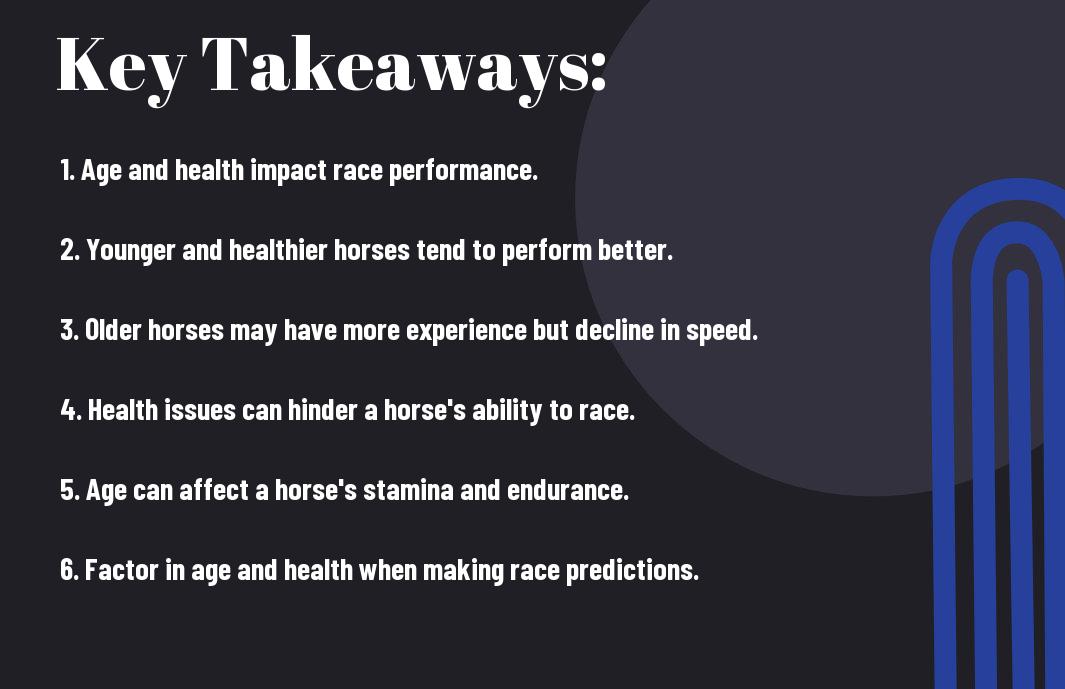
Key Takeaways:
- Age matters: The age of a horse can impact its performance in races, with younger horses typically showing more speed and agility, while older horses may have more experience and endurance.
- Health is crucial: The health of a horse is a critical factor in making accurate race predictions, as injuries or illnesses can greatly affect performance. Regular vet checks and proper care are imperative for ensuring peak racing condition.
- Overall assessment: Considering both the age and health of a horse is imperative for making accurate race predictions. A thorough evaluation of these factors, along with training, track conditions, and competition, can help in determining a horse’s potential performance in a race.
The Significance of Age in Horse Racing
For accurate race predictions in horse racing, understanding the significance of age is crucial. A study by the University of Sydney found that the racing start for two-year-old Thoroughbreds is not detrimental to their long-term success. According to Racing start for two-year-old Thoroughbreds not detrimental, starting young can actually be beneficial for their development as racehorses.
Physical Development and Maturation
Racing young allows horses to start their training and conditioning early, aiding in their physical development and maturation. As horses age, their bodies go through significant changes, and starting early helps them build the necessary strength and stamina required for racing at a competitive level.
Mental Maturity and Focus
Mental maturity plays a vital role in a horse’s performance on the racetrack. Younger horses may lack the focus and experience of older, seasoned competitors. Training and racing experience over time help horses develop the mental resilience needed to handle the pressures of racing, making older horses more consistent performers.
The mental maturity and focus of a racehorse can significantly impact their performance on the track. Seasoned horses who have been exposed to various racing scenarios are better equipped to handle the excitement and pressures of competitive events. As a horse grows older and gains more racing experience, they tend to become more focused, disciplined, and less prone to distractions, ultimately improving their chances of success in races.

The Impact of Health on Racing Performance
Even in the world of horse racing, the health of the equine athletes plays a crucial role in their performance on the track. According to a study on the Race performance of thoroughbred horses determined by…, it was found that the physical well-being of horses significantly influences their racing capabilities and outcomes. Understanding the impact of health, both chronic and acute, on racing performance is crucial for predicting the success of a racehorse.
Chronic Injuries and Their Effects
Effects of chronic injuries on a horse can be detrimental to its racing performance. These ongoing issues, such as tendon or ligament damage, can lead to decreased speed, agility, and overall stamina. Chronic conditions not only affect the horse’s physical ability but can also impact their mental state, causing distress or discomfort that hinders their performance.
Acute Injuries and Recovery Time
The occurrence of acute injuries in horses can have a significant impact on their racing career. The severity and type of injury will determine the recovery time needed before the horse can return to training and competition. It’s crucial to consider the downtime required for healing and rehabilitation when assessing a horse’s readiness to perform at its best.
This understanding is vital in managing a horse’s training regimen to ensure proper recovery and minimize the risk of reinjury. By recognizing the implications of acute injuries on a horse’s racing performance, trainers and owners can make informed decisions that prioritize the well-being and longevity of their equine athletes.
The Interplay Between Age and Health
Despite your best efforts to make accurate race predictions, the age and health of a horse play crucial roles in determining its performance on the track. Understanding how these factors interact can give you valuable insights into a horse’s potential success.
How Age Affects Injury Susceptibility
Injury susceptibility tends to increase as horses age. Just like humans, the wear and tear on a horse’s body accumulate over time, making older horses more prone to injuries. As horses age, their bones may become less dense, their ligaments and tendons may lose elasticity, and their overall musculoskeletal strength may decline. These age-related changes can impact a horse’s speed, agility, and stamina, affecting its performance in races.
How Health Issues Affect Age-Related Decline
Decline in a horse’s health can exacerbate age-related issues and further impact its racing abilities. Health issues such as arthritis, respiratory problems, digestive disorders, or metabolic issues can accelerate the decline in a horse’s performance as it ages. These health issues can limit a horse’s mobility, endurance, and overall well-being, contributing to a decrease in its competitive edge on the racetrack.
Plus, certain health issues may require specific medications or treatments that can have additional side effects on an aging horse’s body. It’s necessary to consider the overall health and well-being of a horse in conjunction with its age when making race predictions, as these factors are closely intertwined and can significantly influence its racing outcomes.
Analyzing Racing Data and Statistics
Identifying Patterns and Trends
All racing data and statistics are crucial in helping you identify patterns and trends that can lead to more accurate race predictions. By analyzing past performances, track conditions, jockey statistics, and more, you can start to see patterns emerge that can give you an edge in predicting race outcomes. It’s important to pay attention to these details and look for correlations that can help you make more informed decisions when placing your bets.
The Role of Data in Prediction Models
Models that take into account various racing data and statistics play a significant role in helping you make accurate race predictions. These models use sophisticated algorithms to analyze large sets of data and identify patterns that may not be immediately obvious to the naked eye. By feeding in variables like age, health, race distance, and past performances, these models can provide you with probabilities and predictions that can guide your betting strategy.
Another important aspect to consider is that these prediction models are constantly evolving and improving. As new data becomes available and the algorithms are refined, the accuracy of these predictions continues to increase. By staying informed about the latest advancements in prediction modeling, you can stay ahead of the game and make more informed decisions when betting on horse races.
The Importance of Pre-Race Veterinary Checks
Once again, before a race, it’s crucial to pay close attention to the health and age of the horse. Pre-race veterinary checks play a pivotal role in ensuring the well-being and performance of the horse on the track. These checks are designed to identify any potential health issues that could affect the horse’s ability to compete effectively.
Identifying Potential Health Issues
Identifying any potential health issues before a race is necessary for making accurate predictions. A thorough examination by a veterinarian can reveal underlying issues that may impact the horse’s performance. From checking for signs of lameness to monitoring heart rate and overall physical condition, these checks are instrumental in understanding the horse’s readiness to race.
Assessing Fitness and Readiness
Potential fitness and readiness play a significant role in determining a horse’s performance on race day. Assessing the horse’s fitness level involves evaluating its muscle tone, hydration levels, and overall stamina. Understanding these factors can give you valuable insights into how well-prepared the horse is for the upcoming race.
Assessing the horse’s readiness also involves assessing its mental state. A calm and focused horse is more likely to perform well in a race compared to a nervous or distracted one. Observing the horse’s behavior during pre-race activities can provide clues about its mental preparedness for the competition.

Breeding and Genetics: A Factor in Age and Health
Now, when delving into horse racing predictions, it’s vital to consider the intricate relationship between breeding and genetics. According to the article on Using Data to Predict Horse Racing Outcomes, genetics play a significant role in determining the athletic ability of a horse. Factors such as muscle composition, heart size, lung capacity, and even the temperament of the horse can be influenced by its genetic makeup.
The Role of Genetics in Determining Athletic Ability
Factor in the genetic predispositions of a horse when considering its racing potential. Certain bloodlines are renowned for producing exceptional athletes with specific traits that contribute to success on the racetrack. By understanding the genetic background of a horse, you can gain insights into its strengths and weaknesses, ultimately aiding in making more accurate race predictions.
Breeding Strategies and Their Impact on Racing Performance
Any discussion on age and health in horse racing predictions is incomplete without examining breeding strategies and their profound effects on racing performance. Breeders meticulously select mating pairs to enhance desirable traits in their offspring. By focusing on specific bloodlines known for speed, endurance, or agility, breeders can influence the athletic abilities of future generations. This strategic approach to breeding has a direct impact on the success of racehorses, shaping their competitive potential on the track.
Determining the lineage of a horse can provide valuable insights into its racing capabilities. When analyzing race predictions, understanding the influence of breeding strategies on a horse’s performance can give you a competitive edge in accurately assessing its potential and predicting race outcomes.
To wrap up
So, when it comes to making accurate race predictions, the age and health of a horse can play a significant role in determining its performance on the track. Younger horses may have more potential for growth and improvement, while older horses may have more experience and endurance. Additionally, the health of a horse can greatly impact its ability to compete at its best. By considering these factors when studying race statistics and analyzing past performances, you can enhance your predictions and have a better understanding of what to expect from each horse on race day.
FAQ
Q: How does the age of a horse affect race predictions?
A: The age of a horse is an important factor in making accurate race predictions. In general, younger horses tend to have more potential for improvement and may have more speed, while older horses may have more experience and maturity which can give them an advantage. Trainers and jockeys often consider the age of a horse when deciding on race strategies and training programs.
Q: Why is the health of a horse important in race predictions?
A: The health of a horse is crucial in making accurate race predictions. A healthy horse is more likely to perform at its best and have the stamina and agility needed to compete successfully. Health issues such as injuries, illness, or poor conditioning can significantly affect a horse’s performance in a race. Trainers and veterinarians closely monitor the health of racehorses to ensure they are in optimal condition for racing.
Q: How do age and health interact in making race predictions?
A: The age and health of a horse are closely related factors when making race predictions. Younger horses may have more potential, but they also require careful monitoring of their health and physical development to ensure they reach their peak performance levels. Older horses may have more experience, but they need to be in good health to maintain their competitive edge. Trainers and owners take into account both the age and health of a horse when making race predictions and developing training plans.