AI

Smart Investments – Leveraging AI to Maximize Your Business Returns

As you navigate the complex world of business investments, you’re likely looking for ways to maximize your returns. You can leverage artificial intelligence (AI) to make informed decisions and stay ahead of the competition. By harnessing the power of AI, you can analyze market trends, identify opportunities, and optimize your investment strategies to achieve greater success. You will learn how to utilize AI to drive your business forward and increase your profits.

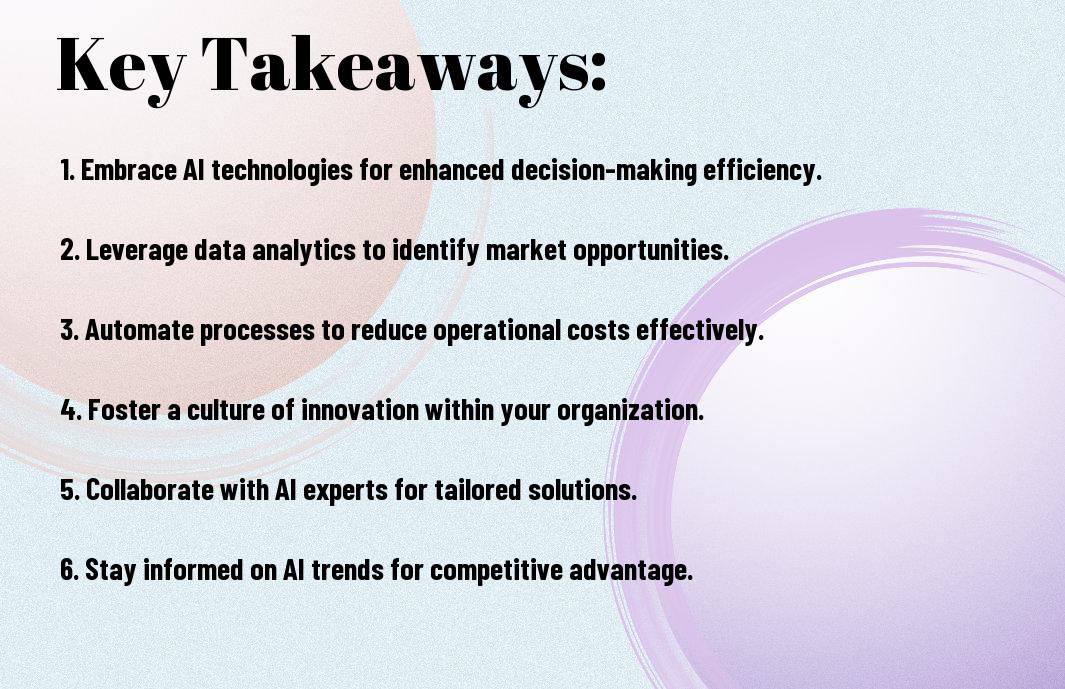
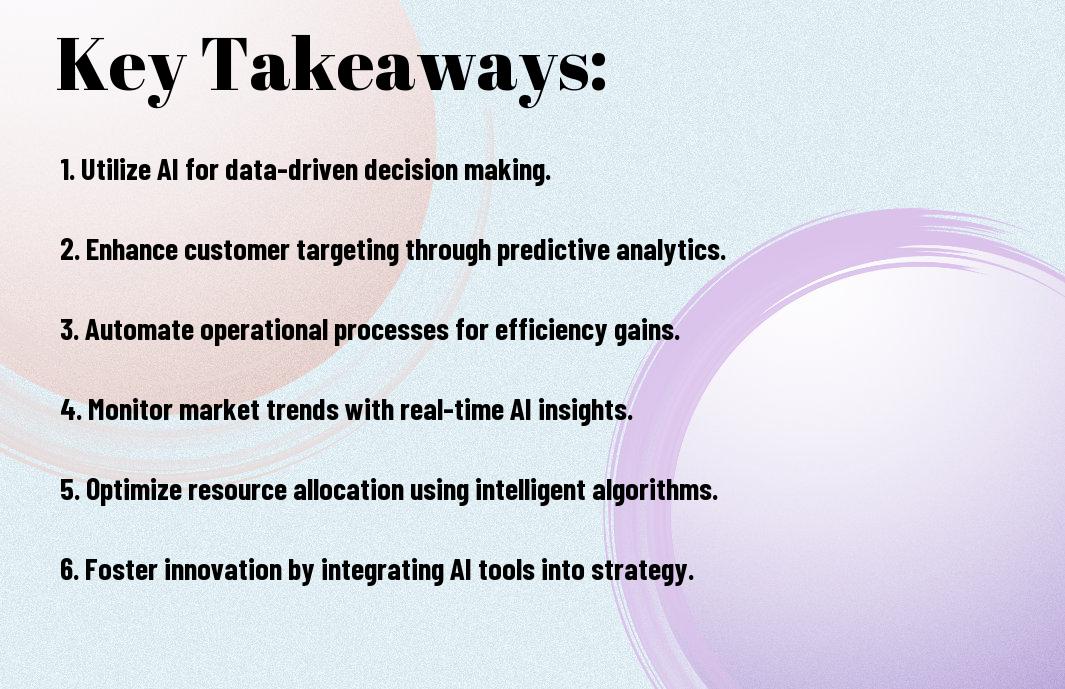
Key Takeaways:

  • Leveraging AI in business investments can significantly enhance decision-making by providing predictive analytics and insights, thereby maximizing returns and minimizing risks.
  • AI-driven tools can help automate various investment processes, such as data analysis and portfolio management, allowing businesses to allocate resources more efficiently and effectively.
  • By integrating AI into their investment strategies, businesses can gain a competitive edge in the market, stay ahead of trends, and identify new opportunities for growth and expansion.

The AI Investment Landscape

Before entering into the world of AI investments, you need to understand the current landscape. You’ll find a vast array of opportunities, from machine learning to natural language processing, each with its own potential for growth and returns.

Current Market Opportunities

For instance, you can explore investments in AI-powered startups, or established companies incorporating AI into their operations, offering you a range of options to diversify your portfolio and maximize returns.

Risk Assessment Framework

Among the key considerations for your investment strategy is evaluating the risks associated with AI investments, including data privacy concerns and regulatory compliance, to ensure you make informed decisions.

Assessment of these risks is vital to your success, as you need to weigh the potential benefits of AI investments against the potential downsides, and develop a framework that helps you navigate this complex landscape, allowing you to make smart investment choices that align with your goals and risk tolerance.
Financial Returns of AI Implementation

While implementing AI in your business, you can expect significant financial returns, as seen in AI in Investment: Business Insights & Use Cases, which provides valuable insights into AI’s potential. You can maximize your business returns by leveraging AI effectively.

Cost-Benefit Analysis

To determine the financial viability of AI implementation, you need to conduct a thorough cost-benefit analysis, weighing the potential returns against the investment required, allowing you to make informed decisions about your business.

ROI Measurement Techniques

The key to measuring the success of AI implementation lies in effective ROI measurement techniques, which enable you to assess the financial impact of AI on your business and identify areas for improvement, helping you to optimize your investment.

Even as you probe deeper into ROI measurement techniques, you will discover that they involve tracking key performance indicators, such as revenue growth, cost savings, and customer engagement, to name a few, allowing you to evaluate the effectiveness of your AI implementation and make data-driven decisions to drive your business forward, ensuring you achieve the maximum possible returns on your investment in AI.

Strategic AI Integration Points

To maximize your business returns, you need to identify the right areas to integrate AI. This involves analyzing your operations and pinpointing where AI can have the most significant impact.

Customer Service Automation

Automating your customer service with AI allows you to provide 24/7 support, enhancing your customer experience and reducing operational costs. You can use chatbots to handle routine inquiries, freeing up your staff to focus on more complex issues.

Supply Chain Optimization

At the heart of your business is your supply chain, and AI can help you optimize it. You can use AI to analyze data, predict demand, and streamline your logistics, resulting in cost savings and improved efficiency.

In fact, by leveraging AI in your supply chain, you can gain real-time visibility into your operations, enabling you to make data-driven decisions and stay ahead of the competition. You can also use AI to identify potential bottlenecks and mitigate risks, ensuring that your business runs smoothly and efficiently.

Choosing the Right AI Solutions

Not all AI solutions are created equal, and selecting the right one for your business can be a daunting task. You need to consider your specific needs and goals, as well as the capabilities and limitations of different AI technologies.

Build vs. Buy Considerations

Around the time you start exploring AI solutions, you will need to decide whether to build your own AI system or purchase an existing one, considering factors such as cost, time, and expertise, to make an informed decision that aligns with your business objectives.

Vendor Evaluation Criteria

One key aspect of choosing the right AI solution is evaluating potential vendors, considering factors such as their experience, reputation, and support offerings, to ensure you find a reliable partner for your AI journey.

To further evaluate vendors, you will want to assess their AI solutions’ performance, scalability, and integration capabilities, as well as their ability to provide ongoing maintenance and support, ensuring that their solution will meet your evolving business needs and provide a strong return on investment, allowing you to maximize your business returns and stay ahead of the competition.

Implementation Timeline and Resources

After planning your AI strategy, you’ll need to consider the timeline and resources required for implementation. You can learn more about maximizing your ROI by Leveraging Technology For Sustainable Growth In Manufacturing to inform your approach.

Phased Approach Strategy

About to begin on your AI implementation journey, you’ll want to consider a phased approach to ensure a smooth transition and minimize disruptions to your business operations.

Required Team Capabilities

Around the time you start implementing AI, you’ll need to assess your team’s capabilities to ensure they can support the new technology and maximize its potential.

Capabilities such as data analysis, programming, and project management will be crucial for your team to successfully implement and maintain AI solutions, allowing you to focus on driving business growth and maximizing your returns.

Avoiding Common AI Investment Pitfalls

Keep in mind that investing in AI requires careful consideration to maximize your business returns. You need to be aware of the potential pitfalls that can hinder your success.

Overspending Traps

Pitfalls such as overspending on AI solutions can lead to significant financial losses, so you should set a budget and stick to it to avoid wasting your resources.

Underutilization Issues

Common mistakes like underutilizing AI capabilities can limit your potential returns, and you should ensure that you are using your AI investments to their full potential.

Another issue with underutilization is that you may not be leveraging the data and insights provided by your AI solutions, which can lead to missed opportunities for growth and improvement, so you should make sure to regularly review and act on the data and recommendations provided by your AI systems.

Conclusion

As a reminder, you now have the tools to make smart investments by leveraging AI to maximize your business returns. You can analyze market trends, optimize operations, and predict outcomes to make informed decisions. By embracing AI, you will stay ahead of the competition and drive your business forward, increasing your chances of success and boosting your bottom line. You are poised to unlock new opportunities and achieve your goals with AI-driven investments.

FAQ

Q: What is Smart Investment and how does it relate to Artificial Intelligence (AI)?

A: Smart Investment refers to the strategic use of data analysis and technology to make informed investment decisions. With the integration of Artificial Intelligence (AI), smart investments can leverage machine learning algorithms to analyze vast amounts of data, identify patterns, and predict market trends, enabling businesses to maximize their returns and minimize risks. By utilizing AI, investors can make data-driven decisions, optimize their portfolios, and stay ahead of the competition.

Q: How can AI be used to maximize business returns in investments?

A: AI can be used in various ways to maximize business returns in investments, including predictive analytics, portfolio optimization, and risk management. AI algorithms can analyze historical data, market trends, and economic indicators to predict future market movements and identify potential investment opportunities. Additionally, AI can help optimize investment portfolios by allocating assets, managing risk, and minimizing losses. By leveraging AI, businesses can make more informed investment decisions and achieve higher returns.

Q: What are the benefits of using AI in smart investments, and how can it impact business operations?

A: The benefits of using AI in smart investments include improved accuracy, increased efficiency, and enhanced decision-making capabilities. AI can analyze vast amounts of data quickly and accurately, providing businesses with valuable insights and recommendations. By automating routine tasks and providing real-time market analysis, AI can help businesses streamline their operations, reduce costs, and improve productivity. Furthermore, AI can help businesses identify new investment opportunities, diversify their portfolios, and mitigate potential risks, ultimately leading to increased returns and improved overall business performance.

Q: What types of investments can benefit from AI-driven smart investment strategies?

A: Various types of investments can benefit from AI-driven smart investment strategies, including stocks, bonds, commodities, currencies, and real estate. AI can be applied to both traditional and alternative investments, such as hedge funds, private equity, and venture capital. Additionally, AI can be used in investment strategies like index fund investing, dividend investing, and value investing. By leveraging AI, businesses can optimize their investment portfolios, minimize risks, and maximize returns across various asset classes and investment strategies.

Q: How can businesses implement AI-driven smart investment strategies, and what are the key considerations for successful implementation?

A: To implement AI-driven smart investment strategies, businesses can start by assessing their investment goals, risk tolerance, and existing infrastructure. They can then explore AI-powered investment platforms, tools, and services that align with their needs and objectives. Key considerations for successful implementation include data quality, algorithmic transparency, and regulatory compliance. Businesses should also ensure that their AI systems are regularly updated, monitored, and validated to maintain their performance and accuracy. By carefully evaluating these factors and implementing AI-driven smart investment strategies, businesses can unlock new opportunities, drive growth, and achieve long-term success.

AI-Driven Disruption – Strategies to Revolutionize Your Business and Build Wealth

As you navigate the ever-changing business landscape, you’re likely aware of the transformative power of artificial intelligence. You understand that AI-driven disruption can either make or break your business. By embracing AI, you can revolutionize your operations, enhance customer experiences, and unlock new revenue streams. You will learn how to harness the potential of AI to drive growth, increase efficiency, and build wealth, setting your business up for long-term success in a rapidly evolving market.

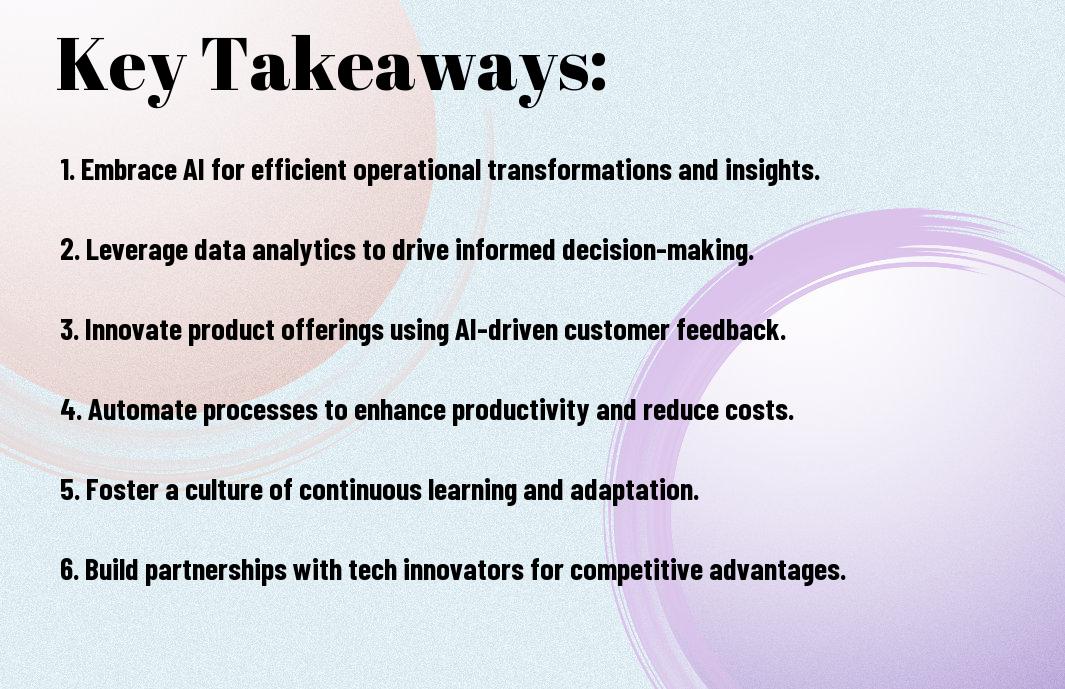
Key Takeaways:

  • Embracing AI-driven disruption can be a powerful catalyst for business growth and wealth creation, allowing companies to innovate and stay ahead of the competition in a rapidly changing market landscape.
  • Effective strategies for leveraging AI disruption involve identifying areas where automation and machine learning can enhance operational efficiency, improve customer experience, and unlock new revenue streams.
  • By adopting a forward-thinking approach to AI adoption and integration, businesses can position themselves for long-term success and capitalize on the vast potential of AI to revolutionize industries and create new opportunities for wealth generation.

    The AI Revolution in Modern Business

    A midst the rapidly evolving business landscape, you can stay ahead by embracing AI-driven strategies, as seen in AI rewrites the playbook: Is your business strategy keeping pace?, to revolutionize your operations and build wealth.

    Core Technologies Driving Change

    Around the globe, you will find that advancements in AI, machine learning, and data analytics are driving change, enabling your business to make informed decisions and stay competitive.

    Market Transformation Patterns

    By analyzing market trends, you can identify patterns that will help your business navigate the AI-driven landscape, leveraging opportunities for growth and innovation.

    At the forefront of this transformation, you will notice that AI is not only automating routine tasks but also enhancing your ability to understand customer needs, creating new revenue streams and business models that you can capitalize on to build wealth and stay ahead in the market.

    Digital Transformation Framework

    Now that you’re embracing AI-driven disruption, it’s time to develop a digital transformation framework that will revolutionize your business and build wealth. This framework will serve as a roadmap for your journey, guiding you through the process of integrating AI into your operations.

    Assessment and Readiness

    For your business to undergo a successful digital transformation, you need to evaluate your current state and determine your readiness for change. You will assess your strengths, weaknesses, and areas that require improvement, allowing you to create a tailored plan that addresses your unique needs.

    Infrastructure Requirements

    Framework for digital transformation requires a solid infrastructure to support your AI initiatives. You will need to invest in technologies such as cloud computing, data analytics, and cybersecurity to ensure a seamless integration of AI into your business operations.

    Understanding the infrastructure requirements for your digital transformation is key to a successful implementation. You will need to consider factors such as data storage, processing power, and network connectivity to support your AI applications. By investing in the right infrastructure, you will be able to unlock the full potential of AI and drive business growth, increasing your competitiveness and building wealth in the process.

    AI Implementation Strategies

    Once again, you are at the forefront of innovation, poised to harness the power of AI to transform your business. You will need to develop a comprehensive strategy that aligns with your goals and objectives, leveraging AI to drive growth and profitability.

    Data-Driven Decision Making

    Across your organization, you will be able to make informed decisions with AI-driven insights, analyzing vast amounts of data to optimize operations and stay ahead of the competition, enabling you to refine your strategy and achieve your goals.

    Process Automation Priorities

    The key to successful AI implementation lies in identifying areas where automation can have the greatest impact, streamlining processes and increasing efficiency, allowing you to focus on high-value tasks that drive innovation and growth in your business.

    Due to the complexity of AI implementation, you will need to prioritize your process automation efforts, focusing on areas that will have the greatest impact on your bottom line, and developing a roadmap for implementation that ensures a smooth transition and minimal disruption to your operations, enabling you to maximize the benefits of AI and achieve your business objectives.

    Risk Management and Ethics

    Not all AI-driven disruptions are without challenges, and you must consider the potential risks and ethical implications of implementing AI in your business, as this will impact your overall strategy and success.

    Security Considerations

    Around the issue of security, you need to assess your systems and data to ensure they are protected from potential threats and breaches, which could compromise your business and reputation.

    Ethical AI Implementation

    On the topic of ethics, you should consider the potential impact of AI on your customers, employees, and society as a whole, and develop strategies to ensure that your AI systems are fair, transparent, and accountable.

    Management of ethical AI implementation is key to your success, and you should establish clear guidelines and principles to govern the development and deployment of AI in your business, ensuring that you prioritize fairness, safety, and transparency, and regularly monitor and evaluate your AI systems to identify and address any potential issues or biases, allowing you to build trust with your stakeholders and maintain a competitive edge in the market.

    Building Sustainable AI Value

    To achieve long-term success with AI, you need to focus on creating sustainable value that drives your business forward. This involves developing strategies that not only leverage AI’s potential but also ensure its effective integration into your operations.

    Revenue Generation Models

    Beneath the surface of AI-driven innovation lies a wealth of opportunities for revenue growth. You can explore new business models, such as subscription-based services or data-driven products, to capitalize on AI’s capabilities and increase your revenue streams.

    Cost Optimization Approaches

    On the path to AI adoption, you will encounter various cost optimization strategies that can significantly impact your bottom line. You can streamline processes, reduce manual labor, and improve resource allocation to minimize costs and maximize efficiency.

    Considering the various cost optimization approaches, you can further refine your strategy by analyzing your specific business needs and identifying areas where AI can have the most significant impact. You can then prioritize investments in AI solutions that offer the highest potential for cost savings and efficiency gains, ensuring that your AI initiatives are aligned with your overall business objectives and drive sustainable value creation.

    Team Development and Culture

    Many organizations are leveraging AI to enhance their team development and culture, and you can do the same by investing in AI-driven tools and training programs that foster a culture of innovation and continuous learning.

    Skills and Competencies

    Any successful AI implementation requires your team to possess a unique set of skills and competencies, and you should focus on developing these skills to ensure your team can effectively work with AI systems and drive business growth.

    Change Management

    After implementing AI, your organization will undergo significant changes, and you should be prepared to manage these changes effectively to minimize disruptions and ensure a smooth transition.

    It is crucial to have a clear change management strategy in place, and you should communicate the benefits and expectations of AI adoption to your team, providing them with the necessary training and support to adapt to the new technology and work processes, allowing your organization to reap the full benefits of AI-driven disruption.

    Final Words

    Summing up, you now have the tools to harness AI-driven disruption and transform your business. You can revolutionize your operations, enhance customer experiences, and build wealth. By embracing AI, you will stay ahead of the competition and drive innovation. Your ability to adapt and evolve will be key to unlocking new opportunities and achieving success in a rapidly changing landscape. You are poised to thrive in this new era of AI-driven disruption.

    FAQ

    Q: What is AI-Driven Disruption and how can it impact my business?

    A: AI-Driven Disruption refers to the transformation of traditional business models and processes using Artificial Intelligence (AI) technologies, such as machine learning, natural language processing, and predictive analytics. This disruption can significantly impact your business by increasing efficiency, reducing costs, and creating new revenue streams. By leveraging AI, you can automate tasks, gain valuable insights from data, and make informed decisions to stay ahead of the competition and drive growth.

    Q: How can I identify areas in my business where AI-Driven Disruption can be applied?

    A: To identify areas where AI-Driven Disruption can be applied, you should start by analyzing your business operations, customer interactions, and market trends. Look for processes that are repetitive, time-consuming, or prone to errors, as these are prime candidates for automation using AI. Additionally, consider areas where data-driven decision-making can add significant value, such as marketing, sales, or product development. By applying AI in these areas, you can unlock new opportunities for innovation and growth.

    Q: What strategies can I use to build wealth through AI-Driven Disruption?

    A: To build wealth through AI-Driven Disruption, you can use several strategies, including investing in AI-powered startups, developing and licensing AI-based products or services, or creating and selling AI-driven solutions to other businesses. You can also use AI to optimize your investment portfolio, predict market trends, and identify new business opportunities. Furthermore, you can leverage AI to improve operational efficiency, reduce costs, and increase revenue, ultimately leading to increased profitability and wealth creation.

    Q: How can I ensure a smooth transition to an AI-Driven business model?

    A: To ensure a smooth transition to an AI-Driven business model, you should start by developing a clear understanding of your business goals and objectives. Next, assess your current infrastructure, talent, and technology to identify gaps and areas for improvement. Then, develop a roadmap for AI adoption, including training and upskilling your workforce, investing in AI technologies, and piloting AI-powered projects. It’s also important to establish a culture of innovation and experimentation, encouraging experimentation and learning from failures. Finally, continuously monitor and evaluate your progress, making adjustments as needed to ensure successful implementation.

    Q: What are the potential risks and challenges associated with AI-Driven Disruption, and how can I mitigate them?

    A: The potential risks and challenges associated with AI-Driven Disruption include job displacement, data privacy concerns, and the potential for AI systems to perpetuate biases and errors. To mitigate these risks, you should prioritize transparency, accountability, and ethics in AI development and deployment. This includes ensuring that AI systems are designed and trained with diverse and representative data, implementing robust testing and validation protocols, and establishing clear guidelines and regulations for AI use. Additionally, invest in workforce retraining and upskilling programs to support workers who may be displaced by automation, and prioritize open communication with stakeholders to address concerns and build trust in AI-driven decision-making.

Building a Legacy – How AI Transforms Startups into Wealth-Generating Enterprises

As you launch on your entrepreneurial journey, you’re likely thinking about how to turn your startup into a successful, wealth-generating enterprise. You’re aware that leveraging technology is key to achieving your goals. With Artificial Intelligence (AI) revolutionizing the business landscape, you can now harness its power to transform your startup into a legacy-building venture. Your ability to adapt and innovate with AI will be the driving force behind your success, enabling you to stay ahead of the competition and achieve long-term prosperity.

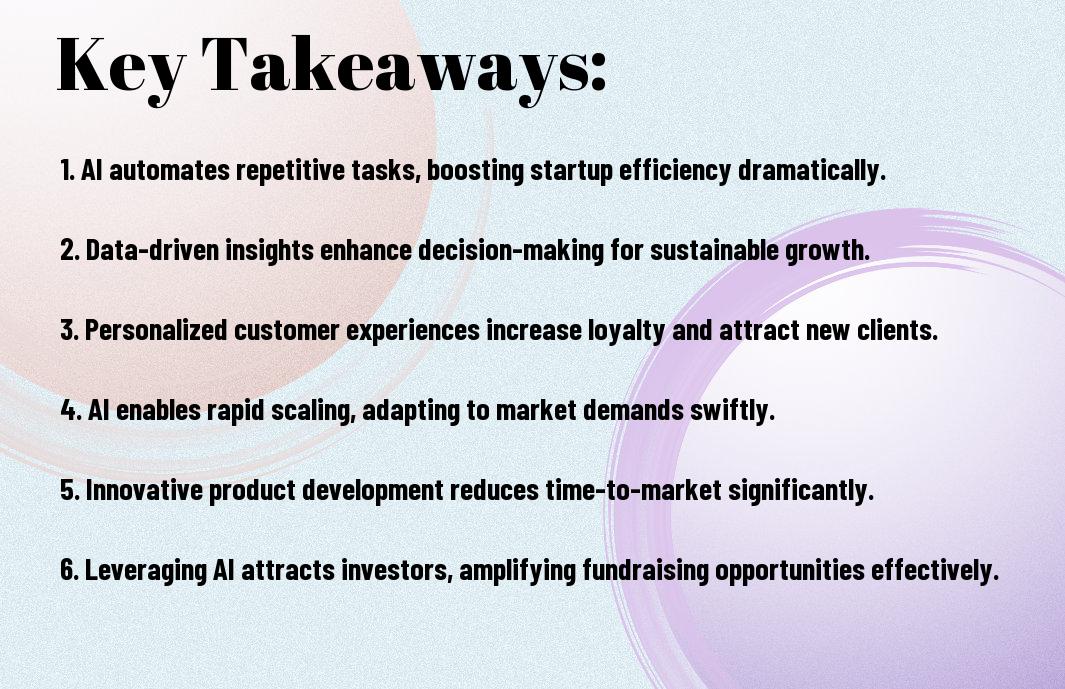
Key Takeaways:

  • AI integration can significantly accelerate a startup’s growth, enabling it to evolve into a wealth-generating enterprise by enhancing operational efficiency, improving decision-making, and driving innovation.
  • By leveraging AI, startups can unlock new revenue streams, expand their customer base, and gain a competitive edge in the market, ultimately leading to increased profitability and long-term sustainability.
  • Effective implementation of AI requires a strategic approach, including identifying areas where AI can add the most value, investing in the right talent and technology, and fostering a culture that embraces continuous learning and adaptation.

    The Entrepreneurial Landscape

    While navigating the complex world of startups, you’ll encounter numerous challenges that can make or break your business. As you strive to build a legacy, it’s imperative to understand the transformative power of AI in driving growth and success.

    Startups in the Digital Era

    Alongside the rapid evolution of technology, you’re likely to find that your startup operates in a highly competitive and ever-changing environment. As you adapt to these shifts, you’ll need to leverage AI to stay ahead of the curve and capitalize on emerging opportunities.

    The Wealth Creation Imperative

    Besides the obvious benefits of innovation, you’ll discover that AI-driven startups are more likely to generate significant wealth and achieve long-term sustainability. As you prioritize wealth creation, you’ll need to develop a strategic approach that integrates AI into your business model and decision-making processes.

    For instance, as you explore the potential of AI in your startup, you’ll find that it can help you optimize operations, enhance customer experiences, and drive revenue growth. By harnessing the power of AI, you can create a robust foundation for wealth generation, setting your business up for success and establishing a lasting legacy that reflects your vision and entrepreneurial spirit.

    AI as the Modern Alchemist

    Some of the most successful startups have leveraged AI to transform their businesses into wealth-generating enterprises, and you can do the same by harnessing its power.

    Transforming Data into Gold

    Into the world of AI, your data is converted into valuable insights that can inform your business decisions and drive growth, enabling you to make informed choices that propel your startup forward.

    Automating the Path to Prosperity

    Any entrepreneur can benefit from AI’s automation capabilities, which streamline processes and free up resources, allowing you to focus on high-level strategy and innovation, and you will see your startup thrive as a result.

    Modern technologies like machine learning and natural language processing are key to automating the path to prosperity, and as you explore these tools, you’ll discover how they can help you optimize operations, enhance customer experiences, and ultimately drive revenue growth, taking your startup to new heights and establishing a lasting legacy in your industry.

    Strategic Implementation

    Many startups struggle to effectively implement AI solutions, but with a clear strategy, you can overcome common obstacles and achieve your goals. By leveraging AI, you can streamline operations, enhance customer experiences, and drive business growth.

    Identifying AI Opportunities

    One of the first steps in implementing AI is to identify areas where it can add value to your business, and you should start by assessing your operations and customer needs to determine where AI can make the greatest impact.

    Building the Technological Framework

    Identifying the right technological framework is imperative for successful AI implementation, and you should consider factors such as scalability, security, and integration with existing systems to ensure a seamless transition.

    In fact, building a robust technological framework requires careful planning and execution, and you will need to consider factors such as data management, algorithm selection, and model training to ensure that your AI system is accurate and reliable, and as you move forward, you will be able to refine and improve your framework to drive even greater business success.

    Financial Metamorphosis

    Unlike traditional businesses, your startup can undergo a significant transformation with AI, revolutionizing your financial landscape. You can explore how Investment companies can use AI responsibly to gain an edge and apply similar strategies to your own business.

    Cost Reduction Mechanisms

    Approximately, at this stage, you will identify areas where AI can help minimize expenses, streamlining your operations and maximizing efficiency, allowing you to allocate resources more effectively.

    Revenue Amplification Strategies

    Regarding your revenue, you will discover new opportunities to increase your earnings through AI-driven innovations, enabling you to make data-informed decisions and stay ahead of the competition.

    Metamorphosis in your revenue streams will occur as you leverage AI to identify untapped markets, personalize customer experiences, and develop targeted marketing campaigns, ultimately leading to increased profitability and sustainable growth for your business, allowing you to achieve your long-term goals and establish a lasting legacy.

    Scaling with Artificial Intelligence

    Once again, you can leverage AI to propel your startup’s growth, as seen in How AI is transforming venture building and venture capital. This technology helps you streamline operations, making it easier to expand your business.

    From Startup to Empire

    Between the initial stages and maturity, you’ll notice significant changes in your startup’s dynamics, and AI will be instrumental in this transformation, enabling you to make data-driven decisions and drive growth.

    Sustainable Growth Patterns

    Sustainably, you’ll want to focus on establishing a strong foundation for your business, and AI can help you identify areas for improvement, optimizing your strategies for long-term success.

    With a solid understanding of sustainable growth patterns, you can use AI to analyze your market, identify trends, and make informed decisions to drive your business forward, ensuring that your startup becomes a wealth-generating enterprise that stands the test of time, and you can achieve your goals with confidence and precision.

    The Human Element

    For any startup, the human element is what sets the foundation for success, and as you integrate AI into your business, you’ll find that it’s crucial to balance technology with the skills and expertise of your team.

    Leadership in the Age of Machines

    Towards the goal of building a legacy, you must adapt your leadership style to effectively manage both human and artificial intelligence, ensuring that you’re leveraging the strengths of each to drive your startup forward.

    Cultivating Talent Alongside Technology

    Humans are the driving force behind innovation, and as you grow your startup, you’ll need to focus on developing the skills of your team to work in tandem with AI, creating a symbiotic relationship that fuels your business’s success.

    Element of your strategy should involve identifying the areas where your team’s skills complement AI capabilities, and investing in training and development to enhance those skills, allowing you to unlock the full potential of your team and drive your startup’s growth, as you navigate the ever-changing landscape of entrepreneurship, you’ll find that cultivating talent alongside technology is key to building a lasting legacy.

    Summing up

    So, as you begin on building a legacy, you’ll find that AI transforms your startup into a wealth-generating enterprise by streamlining operations and driving innovation. You’ll leverage AI to make data-driven decisions, optimize processes, and create new opportunities. By harnessing the power of AI, you’ll position your business for long-term success and create a lasting impact, ultimately securing your legacy as a visionary entrepreneur. Your ability to adapt and innovate with AI will be the key to your enduring success.

    FAQ

    Q: What role does AI play in transforming startups into successful enterprises?

    A: AI plays a significant role in transforming startups into successful enterprises by automating processes, enhancing decision-making, and driving innovation. By leveraging AI technologies such as machine learning and natural language processing, startups can analyze vast amounts of data, identify patterns, and make informed decisions to drive business growth. Additionally, AI-powered tools can help startups streamline operations, improve customer engagement, and develop new products and services, ultimately leading to increased revenue and competitiveness.

    Q: How can startups effectively integrate AI into their business strategy?

    A: To effectively integrate AI into their business strategy, startups should start by identifying areas where AI can have the most impact, such as customer service, marketing, or product development. They should then invest in AI-powered tools and technologies, and develop a team with the necessary skills to implement and manage AI solutions. It’s also important to establish clear goals and metrics to measure the success of AI initiatives and ensure that AI is aligned with the company’s overall mission and vision.

    Q: What are the key benefits of using AI in startup development?

    A: The key benefits of using AI in startup development include increased efficiency, improved decision-making, and enhanced customer experience. AI can help startups automate routine tasks, freeing up resources for more strategic and creative work. Additionally, AI-powered analytics can provide startups with valuable insights into customer behavior and market trends, enabling them to make data-driven decisions and stay ahead of the competition. Furthermore, AI-powered chatbots and virtual assistants can help startups provide 24/7 customer support, improving customer satisfaction and loyalty.

    Q: How can startups ensure that their AI systems are transparent and accountable?

    A: To ensure that their AI systems are transparent and accountable, startups should prioritize explainability and fairness in their AI decision-making processes. This can be achieved by using techniques such as model interpretability, which provides insights into how AI models make decisions, and bias detection, which identifies and mitigates potential biases in AI systems. Startups should also establish clear guidelines and regulations for AI development and deployment, and ensure that AI systems are regularly audited and tested for transparency and accountability.

    Q: What is the future of AI in startup development, and how can startups prepare for it?

    A: The future of AI in startup development is expected to be shaped by emerging technologies such as edge AI, transfer learning, and explainable AI. To prepare for this future, startups should invest in ongoing education and training for their teams, staying up-to-date with the latest AI trends and technologies. They should also prioritize flexibility and adaptability, being open to experimenting with new AI-powered solutions and pivoting their strategies as needed. By embracing a culture of innovation and continuous learning, startups can stay ahead of the curve and harness the full potential of AI to drive growth and success.

The Entrepreneur’s Guide to AI – From Concept to Capital

As you launch on your entrepreneurial journey, you’re likely exploring ways to leverage artificial intelligence (AI) to drive innovation and growth. You’re not alone in this pursuit, as many entrepreneurs are now turning to AI to stay ahead of the curve. To learn more about the intersection of AI and entrepreneurship, you can explore resources like Catalyzing Creativity: The Role of AI in Entrepreneurship, which can help you understand how to harness AI’s potential to fuel your business success. Your path to capital starts here.

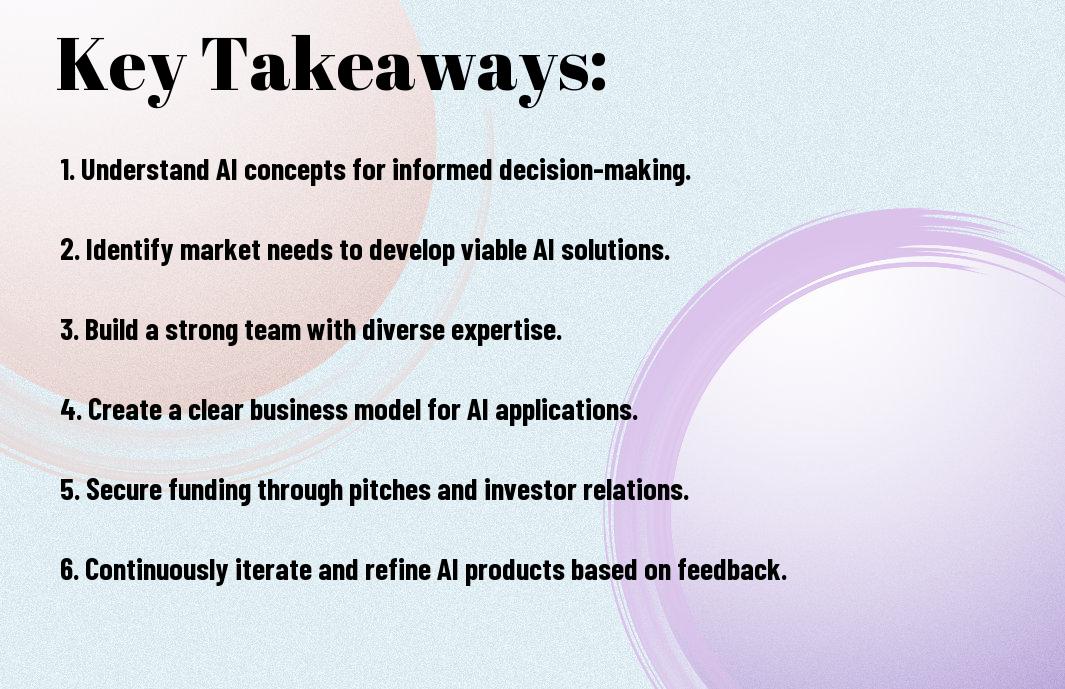
Key Takeaways:

  • The book “The Entrepreneur’s Guide to AI – From Concept to Capital” provides a comprehensive overview of how artificial intelligence can be leveraged to drive business growth and innovation, offering practical advice on integrating AI into existing operations and creating new AI-powered products and services.
  • It highlights the importance of understanding the different types of AI, including machine learning and deep learning, and how they can be applied to solve real-world problems and create new business opportunities, helping entrepreneurs to make informed decisions about AI adoption and investment.
  • The guide also explores the funding landscape for AI startups, offering insights and strategies for securing capital and building successful AI-powered businesses, from seed funding to scaling and exit, making it a valuable resource for entrepreneurs looking to navigate the AI ecosystem.

The AI Landscape

While navigating the AI landscape, you’ll encounter various technologies and innovations that can transform your business. The AI landscape is constantly evolving, with new developments and advancements emerging regularly.

Current Market Dynamics

On the surface, the current market dynamics may seem complex, but as you examine deeper, you’ll find opportunities to leverage AI for your business growth. You’ll notice that AI adoption is on the rise, and companies are investing heavily in AI technologies.

Opportunity Spaces for Entrepreneurs

Opportunities abound in the AI landscape, and as an entrepreneur, you can capitalize on them to drive innovation and growth. You can explore areas like AI-powered chatbots, predictive analytics, and machine learning to enhance your business operations and customer experience.

Even as you explore these opportunity spaces, you’ll find that AI can help you automate tasks, gain valuable insights, and make data-driven decisions. You can use AI to personalize customer interactions, optimize supply chains, and develop new products and services, giving you a competitive edge in the market and enabling you to achieve your business goals.

Identifying Your AI Niche

If you’re looking to leverage AI in your business, it’s important to identify a specific niche where you can apply AI solutions. This involves understanding your industry, target audience, and the problems you can solve using AI.

Problem-Solution Alignment

Before submerging into AI development, you need to ensure that your solution aligns with the problems your target audience faces. You must understand their needs and pain points to create an effective AI-powered solution.

Competitive Edge Analysis

The key to success lies in analyzing your competitors and identifying areas where you can outperform them using AI. You should assess their strengths, weaknesses, and AI adoption strategies to inform your own approach.

To gain a competitive edge, you will need to conduct a thorough analysis of your industry and competitors. You should evaluate their AI-powered products and services, identifying gaps in the market that your business can fill. By doing so, you can develop a unique value proposition that sets your business apart and attracts customers looking for innovative AI solutions. This will enable you to establish your brand as a leader in the AI space and drive business growth.

Building Your AI Product

Keep in mind that building a successful AI product requires careful planning and execution. You will need to consider several factors, including your target market, competition, and technical requirements.

Minimum Viable Product Strategy

Beneath the surface of a successful AI product lies a well-planned minimum viable product (MVP) strategy. You should focus on developing a basic version of your product that meets the core needs of your target market, allowing you to test and refine your offering.

Technical Development Roadmap

On the path to developing your AI product, you will need to create a technical development roadmap. You should outline the key milestones, timelines, and resources required to bring your product to life, ensuring that you stay on track and make adjustments as needed.

A well-structured technical development roadmap will help you navigate the complexities of AI product development, allowing you to prioritize tasks, allocate resources, and make informed decisions about your product’s architecture and infrastructure. As you work on your roadmap, you will need to consider factors such as data integration, algorithm development, and testing, ensuring that your product meets the highest standards of quality and performance.

The Human Element

All entrepreneurs know that artificial intelligence is not just about technology, but also about the people behind it. You need to consider how AI will impact your team and your relationships with customers and stakeholders. Your ability to balance human intuition with AI-driven insights will be key to your success.

Team Composition

Typically, to build a successful AI-driven business, you will need a team with a mix of technical and non-technical skills. You should look for individuals who can understand and work with AI systems, as well as those who can provide a human perspective on your business and its goals.

Ethical Considerations

Across your organization, you will need to consider the ethical implications of using AI. You must think about how AI will impact your customers, your employees, and the wider community, and ensure that your use of AI is fair, transparent, and accountable.

With ethical considerations in mind, you can develop an AI strategy that not only drives business success but also builds trust with your stakeholders. You should consider establishing clear guidelines and principles for the use of AI in your organization, and ensure that your team is trained to understand and apply these principles. This will help you to avoid potential risks and ensure that your use of AI is responsible and sustainable.

Funding Your AI Venture

Despite the numerous benefits of AI, funding your venture can be challenging. You’ll need to consider various options, such as investors, loans, or crowdfunding, to secure the necessary capital to bring your AI project to life.

Bootstrapping vs. External Capital

Although bootstrapping allows you to maintain control, external capital can provide the necessary funds to scale your business quickly. You must weigh the pros and cons of each option to determine the best approach for your AI venture.

Navigating Investor Expectations

Beneath the surface of investor interest lies a complex web of expectations. You must understand what investors are looking for in an AI startup, including a solid business plan, a strong team, and a clear path to profitability.

Further, as you navigate investor expectations, you’ll need to be prepared to address questions about your AI technology, its potential applications, and how you plan to stay ahead of the competition. You should also be transparent about your financial projections, milestones, and potential risks, to build trust with potential investors and increase your chances of securing funding for your AI venture.

Go-to-Market Strategy

Once again, you’ll need to consider your business goals and target audience when developing your go-to-market strategy, taking into account the unique aspects of AI-powered products and services.

Customer Acquisition Frameworks

Frameworks such as customer journey mapping and personas can help you understand your target audience and develop effective marketing strategies to acquire new customers for your AI-driven business.

Scaling Mechanisms

With the right approach, you can design scaling mechanisms that support the growth of your AI-powered business, including automation, outsourcing, and strategic partnerships.

Due to the complex nature of AI, you will need to carefully plan your scaling mechanisms to ensure they can handle increased demand and maintain the high level of quality your customers expect from your AI-driven products and services, allowing you to focus on further developing your business and expanding your market reach.

To wrap up

The journey through “The Entrepreneur’s Guide to AI – From Concept to Capital” has equipped you with the knowledge to navigate the AI landscape. As you apply your newfound understanding, consider exploring additional resources, such as A VC Take on Ethan Mollick’s New Book, Co-Intelligence, to further enhance your entrepreneurial pursuits. You now have the tools to leverage AI in your business, driving your venture towards success and maximizing your potential.

FAQ

Q: What is “The Entrepreneur’s Guide to AI – From Concept to Capital” about?

A: “The Entrepreneur’s Guide to AI – From Concept to Capital” is a comprehensive guide designed for entrepreneurs who are interested in leveraging Artificial Intelligence (AI) to launch or grow their businesses. This guide covers the entire spectrum of AI adoption, from understanding the basic concepts of AI, to developing an AI-powered business model, and finally, to securing capital to fund AI-driven ventures. It provides insights into the latest AI technologies, trends, and strategies that entrepreneurs can use to innovate and stay competitive in the market.

Q: Who is the target audience for “The Entrepreneur’s Guide to AI – From Concept to Capital”?

A: The target audience for “The Entrepreneur’s Guide to AI – From Concept to Capital” includes aspiring entrepreneurs, startup founders, small business owners, and corporate innovators who are looking to harness the power of AI to drive business success. This guide is particularly useful for those who have a basic understanding of business principles but may not have extensive technical knowledge of AI. It aims to bridge the gap between business strategy and AI technology, making it accessible to a wide range of readers.

Q: What topics are covered in “The Entrepreneur’s Guide to AI – From Concept to Capital”?

A: “The Entrepreneur’s Guide to AI – From Concept to Capital” covers a broad range of topics related to AI and entrepreneurship. These include an introduction to AI and its applications, how to identify AI opportunities, designing AI-powered products and services, building an AI team, creating a business model and revenue streams, marketing and selling AI solutions, and strategies for securing funding from investors. The guide also explores ethical considerations, regulatory compliance, and the future of AI in business.

Q: How can “The Entrepreneur’s Guide to AI – From Concept to Capital” help entrepreneurs secure capital for their AI ventures?

A: “The Entrepreneur’s Guide to AI – From Concept to Capital” dedicates a significant portion to the process of securing capital for AI-driven startups and businesses. It provides guidance on how to prepare a compelling pitch, understand investor perspectives on AI, craft a persuasive business plan, and navigate the funding landscape, which includes venture capital, angel investors, crowdfunding, and government grants. The guide also offers tips on how to build a financial model, manage cash flow, and scale an AI business sustainably.

Q: Are there any real-world examples or case studies included in “The Entrepreneur’s Guide to AI – From Concept to Capital”?

A: Yes, “The Entrepreneur’s Guide to AI – From Concept to Capital” includes numerous real-world examples and case studies of successful AI startups and businesses. These examples illustrate how different companies have leveraged AI to solve real-world problems, disrupt markets, and achieve significant growth. The guide analyzes these cases to extract valuable lessons and best practices that readers can apply to their own ventures. This practical approach makes the guide not only informative but also highly applicable to the challenges faced by entrepreneurs in the AI space.

Unlocking the Potential of AI – A Wealth-Building Guide for Business Leaders

As you navigate the ever-evolving landscape of business, you’re likely aware of the transformative power of Artificial Intelligence (AI). You understand that AI can revolutionize your operations, enhance efficiency, and drive growth. Your organization’s success depends on harnessing this technology to unlock new opportunities and stay ahead of the competition. This guide will empower you to leverage AI, maximizing its potential to build wealth and propel your business forward, providing you with the insights and strategies necessary to thrive in an AI-driven world.

Key Takeaways:

  • Implementing AI solutions can significantly enhance business operations, leading to increased efficiency, productivity, and competitiveness, ultimately driving revenue growth and profitability.
  • Effective integration of AI requires a strategic approach, including identifying areas where AI can add value, developing a robust implementation plan, and ensuring ongoing monitoring and evaluation to maximize benefits.
  • Business leaders must prioritize investments in AI talent, data infrastructure, and continuous learning to stay ahead of the curve and unlock the full potential of AI in driving business success and wealth creation.

    The AI Revolution in Business

    While navigating the complexities of AI, you’ll discover its transformative power in business. As you explore AI’s potential, you’ll find it can enhance efficiency, drive innovation, and unlock new revenue streams, ultimately changing the way you operate and make decisions.

    The Tipping Point of AI Adoption

    Around this time, you’re likely considering how AI can benefit your organization, and you’re not alone. About now, many businesses are reaching the tipping point of AI adoption, where the benefits of implementation outweigh the costs, and you’re poised to make a significant impact on your industry.

    Separating Signal from Noise in AI Solutions

    Toward the end of your AI journey, you’ll need to sift through numerous solutions to find the ones that truly add value. Turning to trusted sources and experts will help you distinguish between effective and ineffective AI solutions, allowing you to make informed decisions about your investments.

    Revolutionizing your business with AI requires a deep understanding of what sets effective solutions apart from the rest. As you investigate deeper into the world of AI, you’ll need to evaluate solutions based on their ability to drive tangible results, such as increased efficiency, enhanced customer experiences, and data-driven insights that inform your strategic decisions, helping you to maximize your ROI and stay ahead of the competition.

    Strategic Implementation Framework

    Now that you have a solid understanding of AI’s potential, it’s time to develop a strategic implementation framework. This framework will serve as a guide for integrating AI into your business, ensuring you maximize its benefits and minimize potential risks. You will need to assess your current infrastructure, identify areas for improvement, and develop a plan for AI adoption.

    Identifying High-Value AI Applications

    Around this time, you should be considering which AI applications will bring the most value to your business. You will need to evaluate your operations, identifying areas where AI can streamline processes, improve efficiency, and drive innovation. This will help you prioritize your AI initiatives and ensure you are focusing on the most impactful projects.

    Building Your AI Roadmap

    Around the time you have identified high-value AI applications, you can start building your AI roadmap. You will need to define specific goals, objectives, and timelines for your AI initiatives, ensuring everyone in your organization is aligned and working towards the same outcomes. This roadmap will serve as a guide for your AI journey, helping you stay on track and make adjustments as needed.

    To develop a comprehensive AI roadmap, you will need to consider several factors, including your business goals, current infrastructure, and potential challenges. You should start by defining specific, measurable objectives for your AI initiatives, such as improving customer service or increasing operational efficiency. Next, you will need to assess your current infrastructure, identifying areas where AI can be integrated and potential roadblocks that may arise. With this information, you can create a detailed roadmap, outlining key milestones, timelines, and resource allocation. As you move forward, you will need to regularly review and update your roadmap, ensuring it remains aligned with your business goals and reflects any changes in the market or your organization.

    Financial Implications of AI Integration

    After integrating AI into your business, you can expect significant financial implications. To learn more about how AI can transform your business, you can download the Ai Wealth Creation Blueprint Book to unlock your full potential.

    Cost-Benefit Analysis of AI Systems

    Among the key considerations for AI integration is the cost-benefit analysis of AI systems, which you must carefully evaluate to ensure a successful implementation.

    ROI Metrics That Matter

    An crucial aspect of AI integration is understanding the ROI metrics that matter, which will help you measure the success of your AI investments and make informed decisions.

    CostBenefit analysis is key to understanding the ROI metrics that matter, as you will need to weigh the costs of implementing and maintaining AI systems against the potential benefits, such as increased efficiency and revenue growth, to determine the overall value of your AI investments and make adjustments as needed to optimize your returns.

    Leadership in the Age of Automation

    Keep in mind that as a business leader, you will need to adapt to the changing landscape of automation and AI. Your ability to lead and make informed decisions will be key to unlocking the potential of AI in your organization.

    Cultivating an AI-Ready Culture

    The foundation of a successful AI implementation lies in creating a culture that is open to innovation and change, and as you initiate on this journey, you will need to assess your organization’s readiness for AI adoption.

    The New Decision-Making Paradigm

    Across various industries, you will notice a shift in the way decisions are made, and you will need to be aware of the new paradigm that AI brings to the table, enabling you to make more informed decisions.

    DecisionMaking in the age of AI requires you to consider multiple factors, including data-driven insights, ethical implications, and potential risks, and as you navigate this new landscape, you will need to develop a framework that balances human judgment with AI-driven recommendations, allowing you to make decisions that drive business growth and profitability, while also ensuring that your organization remains competitive and agile in a rapidly changing market, and you will need to stay ahead of the curve to unlock the full potential of AI in your organization.

    Risk Management and Ethical Considerations

    For business leaders, understanding the risks and ethical implications of AI is imperative to unlocking its full potential. You must consider the potential consequences of AI on your organization and take steps to mitigate them.

    Navigating Regulatory Landscapes

    Following the development of your AI strategy, you will need to navigate the complex regulatory landscapes that govern AI adoption. You should stay informed about changing regulations and ensure your organization is compliant.

    Establishing Ethical Guardrails

    For your AI systems to be trustworthy, you need to establish ethical guardrails that align with your organization’s values. You should define clear guidelines and principles that ensure AI decision-making is fair, transparent, and accountable.

    A key aspect of establishing ethical guardrails is to consider the potential biases and risks associated with AI decision-making. As you develop your AI systems, you will need to prioritize fairness, transparency, and accountability, ensuring that your AI systems are aligned with your organization’s values and principles, and that you are prepared to address any ethical concerns that may arise, allowing you to build trust with your stakeholders and maintain a competitive edge in the market.

    Competitive Advantage Through AI

    Unlike traditional business strategies, leveraging AI can provide you with a unique edge in the market, enabling your company to stay ahead of the competition and drive growth.

    Creating Inimitable AI Assets

    With the right approach, you can develop AI-powered assets that are tailored to your business needs, setting you apart from others and driving long-term success.

    Scaling Your AI Capabilities

    Through strategic investment and planning, you can expand your AI capabilities, unlocking new opportunities and driving business growth.

    Inimitable AI solutions can be achieved by scaling your AI capabilities, allowing you to automate processes, enhance decision-making, and improve customer experiences, ultimately leading to increased revenue and market share, as you continue to innovate and refine your AI strategy to meet your evolving business needs.

    Final Words

    With this in mind, you now have the foundation to unlock your business’s full potential with AI. You can dive deeper into the subject by reading Unlocking AI’s Potential: A New Guide for Business Leaders, tailored to help you make informed decisions and drive your business forward with confidence, maximizing your wealth-building opportunities.

    FAQ

    Q: What is the main focus of the guide “Unlocking the Potential of AI – A Wealth-Building Guide for Business Leaders”?

    A: The guide is designed to help business leaders understand and harness the power of Artificial Intelligence (AI) to drive growth, increase efficiency, and build wealth. It provides a comprehensive roadmap for leveraging AI technologies to gain a competitive edge in the market and achieve long-term success.

    Q: Who is the target audience for this guide?

    A: The guide is specifically tailored for business leaders, including CEOs, entrepreneurs, and executives, who are looking to leverage AI to drive business transformation and growth. It is also relevant for professionals and individuals interested in understanding the applications and potential of AI in various industries.

    Q: What are the key benefits of implementing AI in business, as outlined in the guide?

    A: The guide highlights several key benefits of implementing AI in business, including increased efficiency, enhanced decision-making, improved customer experience, and accelerated innovation. It also explores how AI can help businesses automate routine tasks, predict market trends, and identify new opportunities for growth and expansion.

    Q: How does the guide address the challenges and risks associated with AI adoption?

    A: The guide provides a balanced view of the opportunities and challenges associated with AI adoption, including data privacy concerns, job displacement, and the need for significant investment in infrastructure and talent. It offers practical advice and strategies for mitigating these risks and ensuring a smooth transition to an AI-driven business model.

    Q: What kind of support and resources can readers expect to find in the guide to help them implement AI in their businesses?

    A: The guide offers a range of support and resources, including case studies, examples, and best practices from leading companies that have successfully implemented AI. It also provides a framework for developing an AI strategy, as well as tips and recommendations for building an AI-ready workforce and creating a culture of innovation and experimentation.

Skip to content