As you launch on your entrepreneurial journey, you’re likely exploring ways to leverage artificial intelligence (AI) to drive innovation and growth. You’re not alone in this pursuit, as many entrepreneurs are now turning to AI to stay ahead of the curve. To learn more about the intersection of AI and entrepreneurship, you can explore resources like Catalyzing Creativity: The Role of AI in Entrepreneurship, which can help you understand how to harness AI’s potential to fuel your business success. Your path to capital starts here.
Key Takeaways:
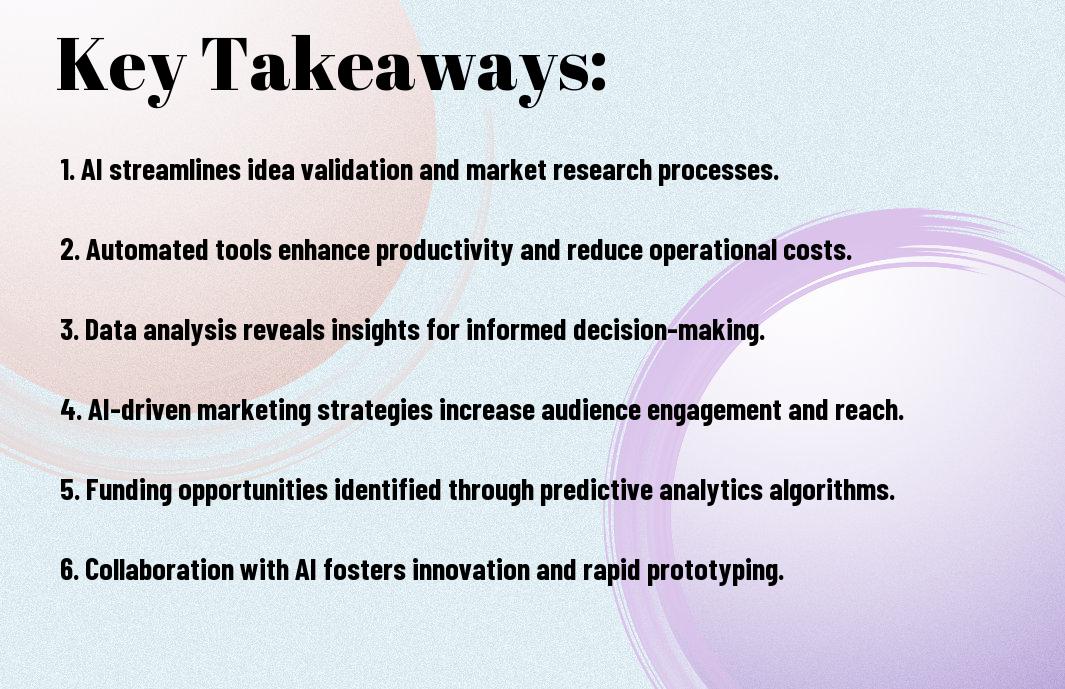
- The book “The Entrepreneur’s Guide to AI – From Concept to Capital” provides a comprehensive overview of how artificial intelligence can be leveraged to drive business growth and innovation, offering practical advice on integrating AI into existing operations and creating new AI-powered products and services.
- It highlights the importance of understanding the different types of AI, including machine learning and deep learning, and how they can be applied to solve real-world problems and create new business opportunities, helping entrepreneurs to make informed decisions about AI adoption and investment.
- The guide also explores the funding landscape for AI startups, offering insights and strategies for securing capital and building successful AI-powered businesses, from seed funding to scaling and exit, making it a valuable resource for entrepreneurs looking to navigate the AI ecosystem.
The AI Landscape
While navigating the AI landscape, you’ll encounter various technologies and innovations that can transform your business. The AI landscape is constantly evolving, with new developments and advancements emerging regularly.
Current Market Dynamics
On the surface, the current market dynamics may seem complex, but as you examine deeper, you’ll find opportunities to leverage AI for your business growth. You’ll notice that AI adoption is on the rise, and companies are investing heavily in AI technologies.
Opportunity Spaces for Entrepreneurs
Opportunities abound in the AI landscape, and as an entrepreneur, you can capitalize on them to drive innovation and growth. You can explore areas like AI-powered chatbots, predictive analytics, and machine learning to enhance your business operations and customer experience.
Even as you explore these opportunity spaces, you’ll find that AI can help you automate tasks, gain valuable insights, and make data-driven decisions. You can use AI to personalize customer interactions, optimize supply chains, and develop new products and services, giving you a competitive edge in the market and enabling you to achieve your business goals.

Identifying Your AI Niche
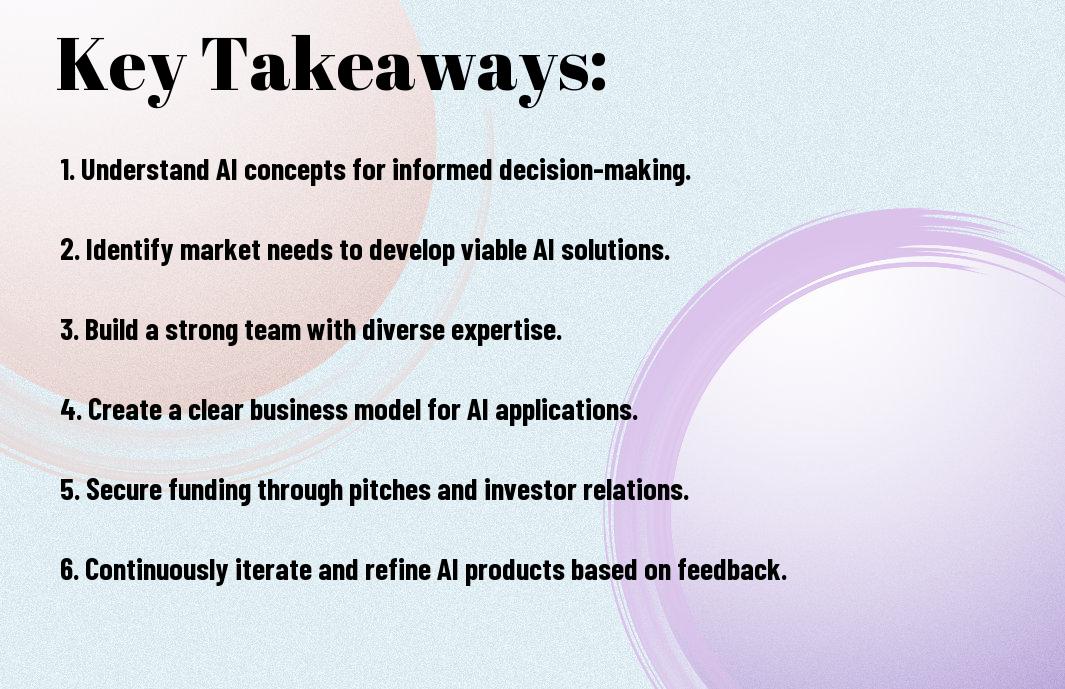
If you’re looking to leverage AI in your business, it’s important to identify a specific niche where you can apply AI solutions. This involves understanding your industry, target audience, and the problems you can solve using AI.
Problem-Solution Alignment
Before submerging into AI development, you need to ensure that your solution aligns with the problems your target audience faces. You must understand their needs and pain points to create an effective AI-powered solution.
Competitive Edge Analysis
The key to success lies in analyzing your competitors and identifying areas where you can outperform them using AI. You should assess their strengths, weaknesses, and AI adoption strategies to inform your own approach.
To gain a competitive edge, you will need to conduct a thorough analysis of your industry and competitors. You should evaluate their AI-powered products and services, identifying gaps in the market that your business can fill. By doing so, you can develop a unique value proposition that sets your business apart and attracts customers looking for innovative AI solutions. This will enable you to establish your brand as a leader in the AI space and drive business growth.
Building Your AI Product
Keep in mind that building a successful AI product requires careful planning and execution. You will need to consider several factors, including your target market, competition, and technical requirements.
Minimum Viable Product Strategy
Beneath the surface of a successful AI product lies a well-planned minimum viable product (MVP) strategy. You should focus on developing a basic version of your product that meets the core needs of your target market, allowing you to test and refine your offering.
Technical Development Roadmap
On the path to developing your AI product, you will need to create a technical development roadmap. You should outline the key milestones, timelines, and resources required to bring your product to life, ensuring that you stay on track and make adjustments as needed.
A well-structured technical development roadmap will help you navigate the complexities of AI product development, allowing you to prioritize tasks, allocate resources, and make informed decisions about your product’s architecture and infrastructure. As you work on your roadmap, you will need to consider factors such as data integration, algorithm development, and testing, ensuring that your product meets the highest standards of quality and performance.
The Human Element
All entrepreneurs know that artificial intelligence is not just about technology, but also about the people behind it. You need to consider how AI will impact your team and your relationships with customers and stakeholders. Your ability to balance human intuition with AI-driven insights will be key to your success.
Team Composition
Typically, to build a successful AI-driven business, you will need a team with a mix of technical and non-technical skills. You should look for individuals who can understand and work with AI systems, as well as those who can provide a human perspective on your business and its goals.
Ethical Considerations
Across your organization, you will need to consider the ethical implications of using AI. You must think about how AI will impact your customers, your employees, and the wider community, and ensure that your use of AI is fair, transparent, and accountable.
With ethical considerations in mind, you can develop an AI strategy that not only drives business success but also builds trust with your stakeholders. You should consider establishing clear guidelines and principles for the use of AI in your organization, and ensure that your team is trained to understand and apply these principles. This will help you to avoid potential risks and ensure that your use of AI is responsible and sustainable.
Funding Your AI Venture
Despite the numerous benefits of AI, funding your venture can be challenging. You’ll need to consider various options, such as investors, loans, or crowdfunding, to secure the necessary capital to bring your AI project to life.
Bootstrapping vs. External Capital
Although bootstrapping allows you to maintain control, external capital can provide the necessary funds to scale your business quickly. You must weigh the pros and cons of each option to determine the best approach for your AI venture.
Navigating Investor Expectations
Beneath the surface of investor interest lies a complex web of expectations. You must understand what investors are looking for in an AI startup, including a solid business plan, a strong team, and a clear path to profitability.
Further, as you navigate investor expectations, you’ll need to be prepared to address questions about your AI technology, its potential applications, and how you plan to stay ahead of the competition. You should also be transparent about your financial projections, milestones, and potential risks, to build trust with potential investors and increase your chances of securing funding for your AI venture.
Go-to-Market Strategy
Once again, you’ll need to consider your business goals and target audience when developing your go-to-market strategy, taking into account the unique aspects of AI-powered products and services.
Customer Acquisition Frameworks
Frameworks such as customer journey mapping and personas can help you understand your target audience and develop effective marketing strategies to acquire new customers for your AI-driven business.
Scaling Mechanisms
With the right approach, you can design scaling mechanisms that support the growth of your AI-powered business, including automation, outsourcing, and strategic partnerships.
Due to the complex nature of AI, you will need to carefully plan your scaling mechanisms to ensure they can handle increased demand and maintain the high level of quality your customers expect from your AI-driven products and services, allowing you to focus on further developing your business and expanding your market reach.
To wrap up
The journey through “The Entrepreneur’s Guide to AI – From Concept to Capital” has equipped you with the knowledge to navigate the AI landscape. As you apply your newfound understanding, consider exploring additional resources, such as A VC Take on Ethan Mollick’s New Book, Co-Intelligence, to further enhance your entrepreneurial pursuits. You now have the tools to leverage AI in your business, driving your venture towards success and maximizing your potential.
FAQ
Q: What is “The Entrepreneur’s Guide to AI – From Concept to Capital” about?
A: “The Entrepreneur’s Guide to AI – From Concept to Capital” is a comprehensive guide designed for entrepreneurs who are interested in leveraging Artificial Intelligence (AI) to launch or grow their businesses. This guide covers the entire spectrum of AI adoption, from understanding the basic concepts of AI, to developing an AI-powered business model, and finally, to securing capital to fund AI-driven ventures. It provides insights into the latest AI technologies, trends, and strategies that entrepreneurs can use to innovate and stay competitive in the market.
Q: Who is the target audience for “The Entrepreneur’s Guide to AI – From Concept to Capital”?
A: The target audience for “The Entrepreneur’s Guide to AI – From Concept to Capital” includes aspiring entrepreneurs, startup founders, small business owners, and corporate innovators who are looking to harness the power of AI to drive business success. This guide is particularly useful for those who have a basic understanding of business principles but may not have extensive technical knowledge of AI. It aims to bridge the gap between business strategy and AI technology, making it accessible to a wide range of readers.
Q: What topics are covered in “The Entrepreneur’s Guide to AI – From Concept to Capital”?
A: “The Entrepreneur’s Guide to AI – From Concept to Capital” covers a broad range of topics related to AI and entrepreneurship. These include an introduction to AI and its applications, how to identify AI opportunities, designing AI-powered products and services, building an AI team, creating a business model and revenue streams, marketing and selling AI solutions, and strategies for securing funding from investors. The guide also explores ethical considerations, regulatory compliance, and the future of AI in business.
Q: How can “The Entrepreneur’s Guide to AI – From Concept to Capital” help entrepreneurs secure capital for their AI ventures?
A: “The Entrepreneur’s Guide to AI – From Concept to Capital” dedicates a significant portion to the process of securing capital for AI-driven startups and businesses. It provides guidance on how to prepare a compelling pitch, understand investor perspectives on AI, craft a persuasive business plan, and navigate the funding landscape, which includes venture capital, angel investors, crowdfunding, and government grants. The guide also offers tips on how to build a financial model, manage cash flow, and scale an AI business sustainably.
Q: Are there any real-world examples or case studies included in “The Entrepreneur’s Guide to AI – From Concept to Capital”?
A: Yes, “The Entrepreneur’s Guide to AI – From Concept to Capital” includes numerous real-world examples and case studies of successful AI startups and businesses. These examples illustrate how different companies have leveraged AI to solve real-world problems, disrupt markets, and achieve significant growth. The guide analyzes these cases to extract valuable lessons and best practices that readers can apply to their own ventures. This practical approach makes the guide not only informative but also highly applicable to the challenges faced by entrepreneurs in the AI space.