
As you navigate the ever-evolving business landscape, you’re likely aware of the transformative power of artificial intelligence (AI). You understand that embracing AI is no longer a choice, but a necessity to stay competitive. By integrating AI into your business, you can unlock new opportunities, drive growth, and foster a culture of innovation that sets you apart from the rest. You will learn how to harness the potential of AI to revolutionize your operations and stay ahead of the curve.
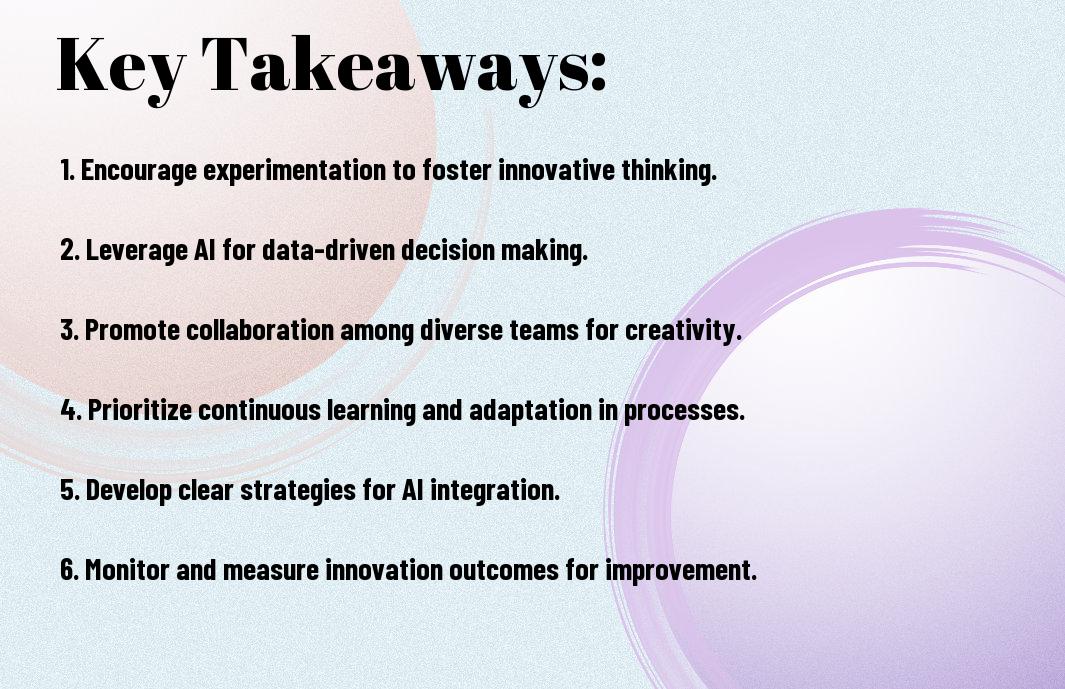
Key Takeaways:
- Embracing a culture of innovation is necessary for businesses to stay competitive in today’s fast-paced digital landscape, and integrating AI into core operations can be a key driver of this culture.
- AI adoption requires a strategic approach, starting with identifying areas where AI can add significant value, such as process automation, data analysis, and customer experience enhancement.
- Effective integration of AI into business DNA involves developing a workforce with the necessary skills to work alongside AI systems, including data science, machine learning, and critical thinking.
- Leadership plays a significant role in fostering a culture of innovation, by encouraging experimentation, learning from failures, and promoting a mindset that is open to new ideas and technologies.
- Continuous monitoring and evaluation of AI initiatives is necessary to ensure they align with business objectives and to identify areas for improvement, allowing for adaptive strategies that maximize the benefits of AI integration.
The Current AI Landscape
Your business operates in a world where artificial intelligence (AI) is increasingly prevalent, transforming industries and revolutionizing the way you work. AI is no longer a novelty, but a necessity for staying competitive.
Technological Disruption
Any organization looking to innovate must consider the impact of AI on their operations, as it can significantly disrupt traditional business models and create new opportunities for growth and development, allowing you to streamline processes and improve efficiency.
Market Transformation
For your business to thrive, you need to understand the market transformation driven by AI, which is changing the way you interact with customers, develop products, and deliver services, enabling you to make data-driven decisions and stay ahead of the competition.
But as you explore deeper into the market transformation aspect, you will find that AI is not just a tool, but a strategic partner that can help you identify new revenue streams, improve customer experience, and create a sustainable competitive advantage, ultimately driving your business forward and allowing you to achieve your goals.
Assessing Your Organization’s AI Readiness
Any organization looking to integrate AI into its DNA must first assess its readiness. You need to evaluate your current infrastructure, skills, and processes to determine how well you can support AI adoption.
Digital Infrastructure Evaluation
Digitally transforming your organization requires a robust infrastructure. You will need to assess your data management capabilities, IT systems, and cybersecurity to ensure they can support AI technologies.
Skills Gap Analysis
Before you begin your AI journey, you need to assess the skills of your workforce. You should evaluate the expertise of your employees in areas such as data science, machine learning, and programming to identify gaps that need to be filled.
Skills are a key component of successful AI adoption. You will need to consider the skills required for AI development, deployment, and maintenance, and develop a plan to address any gaps. This may involve training your existing staff or hiring new employees with the necessary expertise to support your AI initiatives.
Designing an AI Integration Strategy
Not every business is ready to integrate AI into their operations, but you can start by assessing your current infrastructure and identifying areas where AI can bring the most value.
Identifying High-Value Applications
To determine which areas of your business can benefit from AI, you need to analyze your operations and look for opportunities to automate repetitive tasks or gain insights from data analysis, allowing you to make informed decisions about where to focus your AI integration efforts.
Establishing Ethical Guidelines
Applications of AI in your business must be aligned with your values and principles, so you should establish clear guidelines for the development and use of AI systems, ensuring that they are fair, transparent, and respectful of your customers’ and employees’ rights.
HighValue applications of AI require careful consideration of ethical implications, and you should prioritize transparency, accountability, and fairness in your AI systems, ensuring that they are designed and deployed in ways that benefit both your business and society as a whole, and that you are prepared to address any potential risks or challenges that may arise from their use.

Fostering an Innovation Mindset
All organizations strive to innovate, but it requires a mindset shift. You need to encourage experimentation, learning, and creativity within your company to stay ahead of the competition.
Breaking Organizational Silos
Bridging departmental gaps is necessary for innovation. You can achieve this by promoting cross-functional teams and collaboration, allowing your employees to share ideas and expertise freely.
Rewarding Experimentation
With a culture that encourages risk-taking, you can foster innovation. You should acknowledge and reward your employees’ efforts to experiment and try new approaches, even if they don’t always succeed.
Mindset shifts are necessary for your organization to embrace a culture of experimentation. You can achieve this by leading by example, celebrating failures as learning opportunities, and providing your employees with the autonomy to make decisions and try new things. This will help your company stay adaptable and innovative in a rapidly changing business landscape, allowing you to stay ahead of the competition and drive growth.
Implementing AI Solutions
Now that you have a solid foundation for AI integration, it’s time to start implementing AI solutions within your organization, focusing on areas that can drive the most value for your business, and aligning them with your overall strategy.
Pilot Programs and Scalability
After identifying the right opportunities, you can launch pilot programs to test and refine your AI solutions, ensuring they meet your needs and are scalable for broader implementation across your organization.
Measuring Impact and ROI
Behind every successful AI integration is a thorough measurement and evaluation process, allowing you to assess the effectiveness of your AI solutions and make data-driven decisions to optimize your strategy and maximize your return on investment.
At this stage, you will need to establish clear metrics and benchmarks to evaluate the performance of your AI solutions, considering factors such as increased efficiency, cost savings, and revenue growth, and use this data to refine your approach and make adjustments as needed to ensure your AI investments are generating the desired outcomes for your business.
Overcoming Resistance to Change
Unlike other business initiatives, integrating AI into your organization requires a thoughtful approach to overcome resistance to change. You need to address the concerns and fears of your employees to ensure a smooth transition.
Addressing Fear and Misconceptions
By educating your workforce about the benefits and limitations of AI, you can alleviate concerns and misconceptions that may be hindering adoption. You should provide your employees with the necessary information to understand how AI will impact their roles and the organization as a whole.
Creating AI Champions
Changing the mindset of your employees is important to driving AI adoption. You can start by identifying and empowering AI champions within your organization to promote the benefits of AI and encourage others to embrace the technology.
Plus, as you create AI champions, you will notice a significant shift in your organization’s culture, with more employees becoming open to innovation and willing to experiment with new ideas, ultimately driving business growth and success. You will be able to leverage their enthusiasm and expertise to develop AI-powered solutions that address specific business challenges and improve overall efficiency.
Final Words
From above, you can see that integrating AI into your business DNA requires a strategic approach. You will need to assess your organization’s readiness and develop a plan to foster a culture of innovation. To learn more, visit 3 Steps to Building a Culture of Learning and Innovation with AI to discover how you can drive growth and success in your business by embracing AI-driven innovation. You can then apply these insights to transform your organization.
FAQ
Q: What are the key steps to integrate AI into our company’s DNA to build a culture of innovation?
A: To integrate AI into your business DNA, start by identifying areas where AI can bring significant value, such as improving operational efficiency, enhancing customer experience, or driving new revenue streams. Next, develop a strategic roadmap that outlines how AI will be used to achieve these goals, including the necessary investments in technology, talent, and training. It’s also important to foster a culture that encourages experimentation, learning from failures, and continuous improvement. This can be achieved by setting up cross-functional teams, providing resources for AI education and development, and recognizing and rewarding innovative achievements. Lastly, ensure that AI integration is aligned with your company’s overall mission and values, and that its implementation is transparent and accountable.
Q: How can we ensure that our employees are prepared to work effectively with AI systems and contribute to a culture of innovation?
A: Preparing your workforce for an AI-driven environment involves a combination of training, upskilling, and reskilling. Start by offering workshops and courses that introduce AI fundamentals, including machine learning, data science, and AI ethics. It’s also vital to provide hands-on experience with AI tools and technologies, allowing employees to apply their knowledge in practical scenarios. Furthermore, encourage a mindset shift towards lifelong learning, emphasizing the importance of adaptability and continuous professional development in an AI-centric world. Leadership should lead by example, demonstrating a commitment to learning and innovation, and fostering an environment where employees feel empowered to explore new ideas and collaborate with AI systems effectively.
Q: What role does leadership play in building and sustaining a culture of innovation with AI integration, and how can leaders measure the success of such initiatives?
A: Leadership plays a pivotal role in building and sustaining a culture of innovation with AI integration. Leaders must champion the vision for AI adoption, ensuring it aligns with the company’s strategic objectives and is communicated clearly across the organization. They should foster an environment that encourages creativity, experimentation, and calculated risk-taking, and prioritize the development of a diverse and inclusive workforce that can leverage AI to drive innovation. To measure the success of AI integration initiatives, leaders can track key performance indicators (KPIs) such as the number of AI-powered projects, the ROI of AI investments, employee engagement and skill development metrics, and customer satisfaction ratings. Regular feedback loops, both internally and from external stakeholders, are also critical for assessing the impact of AI on the business and making necessary adjustments to the innovation strategy.