Over the years, the integration of machine learning algorithms in various industries has revolutionized the way predictions are made. If you have a fascination for horse racing and the thrill of predicting a winner, then you’re in for a treat. In this blog post, we will explore how you can leverage machine learning algorithms to enhance your horse race prediction capabilities. By understanding the data, selecting the right features, and training the algorithm effectively, you can potentially gain an edge in predicting the outcome of a horse race.

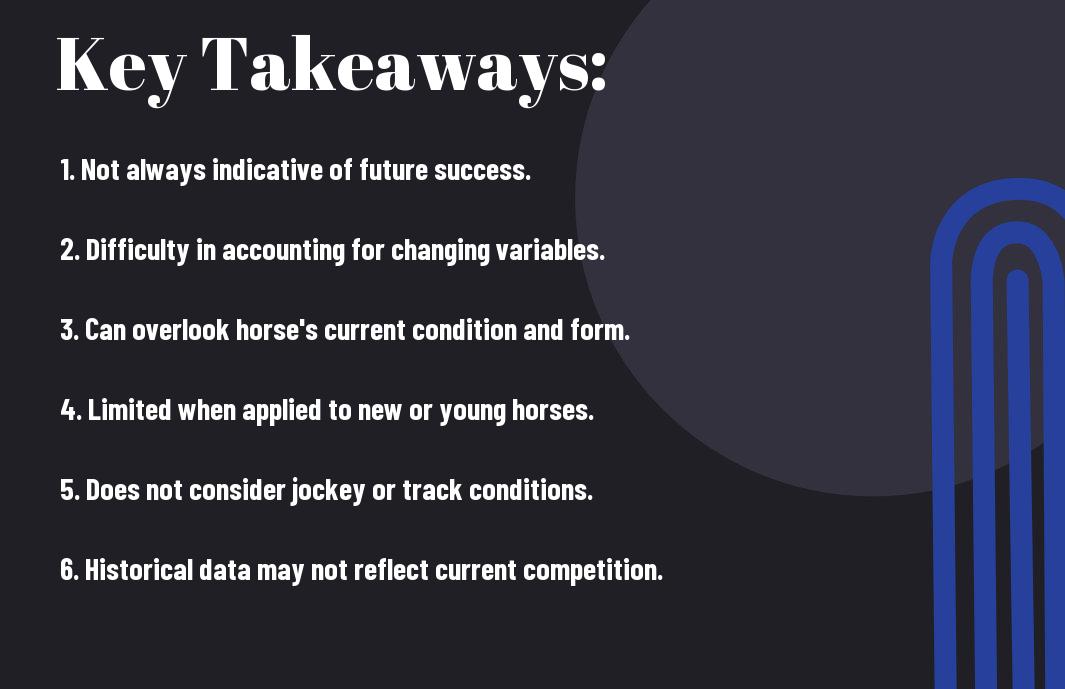
Key Takeaways:
- Feature selection is crucial: Selecting the right features such as past performance, jockey, track conditions, and more is necessary for accurate predictions.
- Use of supervised learning algorithms: Algorithms like Random Forest, Gradient Boosting, and Neural Networks can be effective in predicting horse race outcomes by learning patterns from historical data.
- Continuous model refinement: Regularly updating and refining machine learning models based on new data and feedback can improve prediction accuracy over time.
The Basics of Horse Racing
Historical Background
With a history dating back thousands of years, horse racing has been a popular sport enjoyed by many cultures around the world. The sport has evolved significantly over time, from ancient chariot races to the modern-day races we witness today at prestigious tracks like the Kentucky Derby and Royal Ascot.
Key Factors Affecting Race Outcomes
Race outcomes in horse racing are influenced by a variety of factors that can impact the performance of the horses and jockeys. These key factors include the horse’s past performance, track conditions, jockey skill, and even the post position drawn for the race. Perceiving these factors and how they interact can help you make more informed predictions when placing your bets.
- Horse’s past performance
- Track conditions
- Jockey skill
- Post position

Machine Learning Fundamentals
Assuming you are interested in exploring how machine learning algorithms can improve horse race prediction, you should check out the article on Use Case #3: Horse Racing Prediction : A Machine Learning Approach.
Supervised Learning
Any successful machine learning approach to horse race prediction starts with supervised learning, where the algorithm learns from labeled training data to make predictions. By analyzing historical race data, including variables like past performance, track conditions, and jockey statistics, the algorithm can identify patterns that lead to accurate predictions of race outcomes.
Unsupervised Learning
For a more exploratory approach, unsupervised learning techniques can be applied to horse race prediction. Unsupervised learning allows you to analyze data without predetermined labels, helping you discover hidden patterns and insights that may not be apparent through supervised methods. This can be particularly useful in uncovering unique trends or correlations that can give you a competitive edge in predicting race results.
Unsupervised learning techniques like clustering can group horses with similar characteristics together, helping you identify relationships that go beyond conventional wisdom in horse racing prediction. This can lead to innovative strategies and approaches that set you apart in the highly competitive world of horse race betting.
Neural Networks and Deep Learning
Neural networks and deep learning models offer a powerful tool for horse race prediction by simulating the human brain’s neural networks to analyze complex patterns in data. These advanced algorithms can learn to recognize intricate relationships in vast amounts of race data, providing highly accurate predictions based on a deep understanding of the factors that influence race outcomes.
Neural networks and deep learning excel in capturing subtle nuances and nonlinear relationships in horse race data that may elude traditional machine learning techniques. By leveraging these cutting-edge algorithms, you can enhance your prediction accuracy and stay ahead of the curve in the dynamic world of horse race betting.
Machine learning brings a new level of sophistication and accuracy to horse race prediction, allowing you to harness the power of data-driven insights to make informed betting decisions and increase your chances of success. By understanding the fundamentals of supervised and unsupervised learning, as well as the capabilities of neural networks and deep learning, you can develop innovative strategies and refine your predictive models to achieve superior results in horse race prediction.

Your Data Collection and Preprocessing
Sources of Data
Collection of data is crucial in predicting outcomes of horse racing using machine learning algorithms. Various sources can provide the necessary data for training models. One such source can be found in the article ‘Predicting Outcomes of Horse Racing using Machine …‘. This data can include past performance records of horses, jockeys, track conditions, weather, and more.
Feature Engineering
The feature engineering process involves selecting the most relevant attributes from the collected data to build predictive models. This step is necessary as it directly impacts the performance of the machine learning algorithms in making accurate predictions.
This process can involve transforming existing features, creating new features based on domain knowledge, and selecting the most informative attributes. By engineering the right features, you can improve the model’s ability to generalize and make predictions on new data effectively.
Data Cleaning and Normalization
The data cleaning and normalization phase focuses on preparing the collected data for machine learning algorithms. During this process, irrelevant or redundant data points are removed, missing values are imputed, and the data is scaled to ensure consistency in the dataset.
A standardized dataset enhances the performance and efficiency of machine learning models. By normalizing the data, you reduce the impact of varying scales and units, making it easier for the algorithms to interpret and learn from the data effectively.
Feature Selection and Engineering
After collecting data for your horse race prediction model, the next step is to carefully select and engineer the features that will have the most impact on the prediction accuracy. This process involves identifying relevant features, creating derived features, and handling missing values to ensure your model is robust and effective.
Identifying Relevant Features
Any successful machine learning model relies heavily on the selection of relevant features that have a strong correlation with the target variable. By analyzing the data and understanding the domain, you can identify which features are likely to have a significant impact on the outcome of the race. Features such as past performance, jockey statistics, weather conditions, and track type can all play a crucial role in predicting the winner.
Creating Derived Features
Selection of features is not limited to the ones available in the dataset. You can also create derived features by combining existing features or extracting new information to enhance the predictive power of your model. For example, you can calculate the average race speed based on past performances or create a composite feature that combines jockey win rate and horse age to capture more complex relationships in the data.
Handling Missing Values
Features in your dataset may have missing values, which can negatively impact the performance of your machine learning model. It’s crucial to handle these missing values effectively to ensure the integrity of your data. You can choose to impute missing values by using statistical measures such as mean, median, or mode, or employ more advanced techniques like K-Nearest Neighbors (KNN) to fill in missing values based on similar data points.
Plus, you can also consider creating additional boolean flags to indicate whether a value was missing in the original dataset. This way, your model can learn to account for missing data as a separate category, which might contain valuable information for making predictions.
Model Selection and Training
Regression Analysis
Once again, in the process of applying machine learning algorithms to horse race prediction, the first step involves the selection of a suitable regression model. This choice is crucial as it will determine the accuracy and effectiveness of your predictions. Regression analysis aims to establish the relationship between variables, such as past race performance and factors like track conditions and jockey experience, to predict the outcome of future races.
Classification Models
Selection of the right classification model is imperative in predicting the performance of horses in races. Training these models involves feeding them historical data on various parameters like horse age, weight, speed figures, and past performance to enable them to make accurate predictions about future outcomes. Decision trees, logistic regression, and support vector machines are popular choices for building classification models in horse race prediction.
When training classification models for horse race prediction, it is imperative to choose algorithms that can handle the complexity of the data and adapt to the dynamic nature of horse racing. By fine-tuning the parameters and optimizing the model’s performance, you can improve the accuracy of your predictions and make more informed decisions when placing bets.
Ensemble Methods
Models
Ensemble methods like random forests and gradient boosting can be powerful tools in horse race prediction. By combining multiple base models and aggregating their predictions, ensemble methods can improve the overall accuracy and robustness of your predictions. These methods are particularly useful when dealing with noisy or complex data, providing a more reliable way to forecast race outcomes.
Regression
Another option for improving the accuracy of your predictions is to use ensemble methods in regression analysis. Techniques like bagging and boosting can help reduce overfitting and increase the stability of your models, leading to more reliable predictions in the unpredictable world of horse racing.
Another
Model Evaluation and Refining
Now, let’s explore how to evaluate and refine machine learning models for horse race prediction.
Performance Metrics
Model performance can be assessed using various metrics such as accuracy, precision, recall, and F1 score. Accuracy measures the overall correctness of the model, while precision focuses on the proportion of correctly predicted positive instances. Recall, on the other hand, evaluates the ability of the model to capture all positive instances. The F1 score provides a balance between precision and recall, giving you a single metric to evaluate the model’s performance comprehensively.
Hyperparameter Tuning
Metrics such as grid search and random search can be used to fine-tune the hyperparameters of machine learning algorithms. Grid search exhaustively searches through a specified parameter grid to determine the best parameters, while random search samples randomly from the parameter space. By optimizing hyperparameters, you can improve the model’s performance and ensure it generalizes well to new data.
With hyperparameter tuning, you can experiment with different settings to enhance the model’s predictive capabilities. By fine-tuning parameters such as learning rate, maximum depth, or number of estimators, you can customize the model to suit the specific requirements of horse race prediction. This process allows you to find the optimal configuration that maximizes predictive accuracy and generalization to new data.
Model Interpretability
Model interpretability is crucial for understanding how machine learning algorithms make predictions in the context of horse race prediction. Techniques such as feature importance analysis, partial dependence plots, and SHAP values can help you interpret the outputs of the model and gain insights into which features are driving the predictions. By unraveling the black box of machine learning models, you can explain the reasoning behind the predictions and build trust in the model’s results.
Model interpretability not only provides transparency into the model’s decision-making process but also helps you identify potential biases or errors in the predictions. By delving into the inner workings of the model, you can refine its performance and ensure that it aligns with your objectives for horse race prediction.
Refining machine learning models for horse race prediction involves evaluating their performance, tuning hyperparameters for optimal results, and enhancing their interpretability. By following these steps, you can fine-tune your models to make accurate predictions and gain valuable insights into the factors influencing race outcomes.
Final Words
To wrap up, you have learned about how machine learning algorithms can be applied to horse race prediction. By utilizing vast amounts of historical data, these algorithms can analyze patterns and trends to make predictions about which horse is most likely to win a race. While no prediction can be 100% accurate, machine learning has shown promising results in enhancing the accuracy of horse race predictions and providing valuable insights to bettors.
Q: How can machine learning algorithms be applied to horse race prediction?
A: Machine learning algorithms can be applied to horse race prediction by analyzing a vast amount of data such as past race results, horse characteristics, jockey performance, track conditions, and more. By training the algorithms on historical data, they can learn patterns and trends that can help predict the outcome of future horse races.
Q: What types of machine learning algorithms are commonly used for horse race prediction?
A: Commonly used machine learning algorithms for horse race prediction include decision trees, random forests, support vector machines, and neural networks. Each algorithm has its own strengths and weaknesses, and the choice of algorithm depends on the specific characteristics of the data and the prediction task.
Q: How accurate are machine learning algorithms in predicting horse race outcomes?
A: The accuracy of machine learning algorithms in predicting horse race outcomes can vary depending on the quality of the data, the features included in the analysis, and the complexity of the prediction task. While machine learning algorithms can provide valuable insights and improve the chances of making successful predictions, it is important to remember that horse racing is a complex and unpredictable sport, and there are no guarantees of accuracy.