As you navigate the ever-evolving business landscape, you need to stay ahead of the curve to maintain a competitive edge. You can leverage artificial intelligence (AI) to redefine your business intelligence and make data-driven decisions. To develop a winning strategy, consider exploring resources like Strategy: Leveraging AI for Competitive Advantage, which can help you unlock your organization’s full potential and drive success.
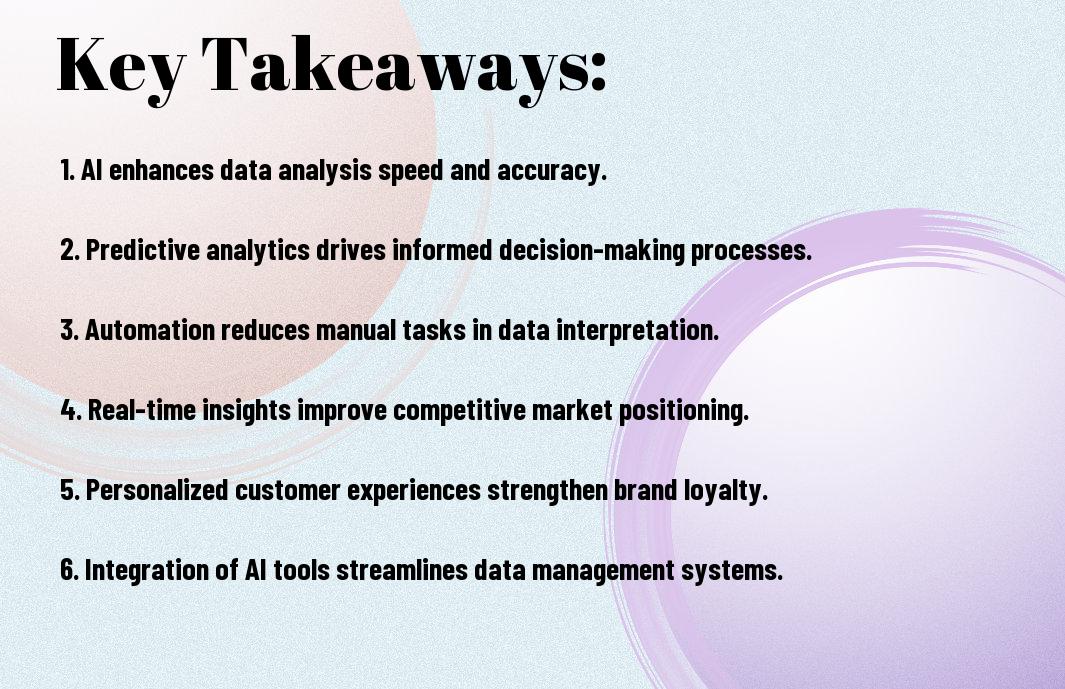
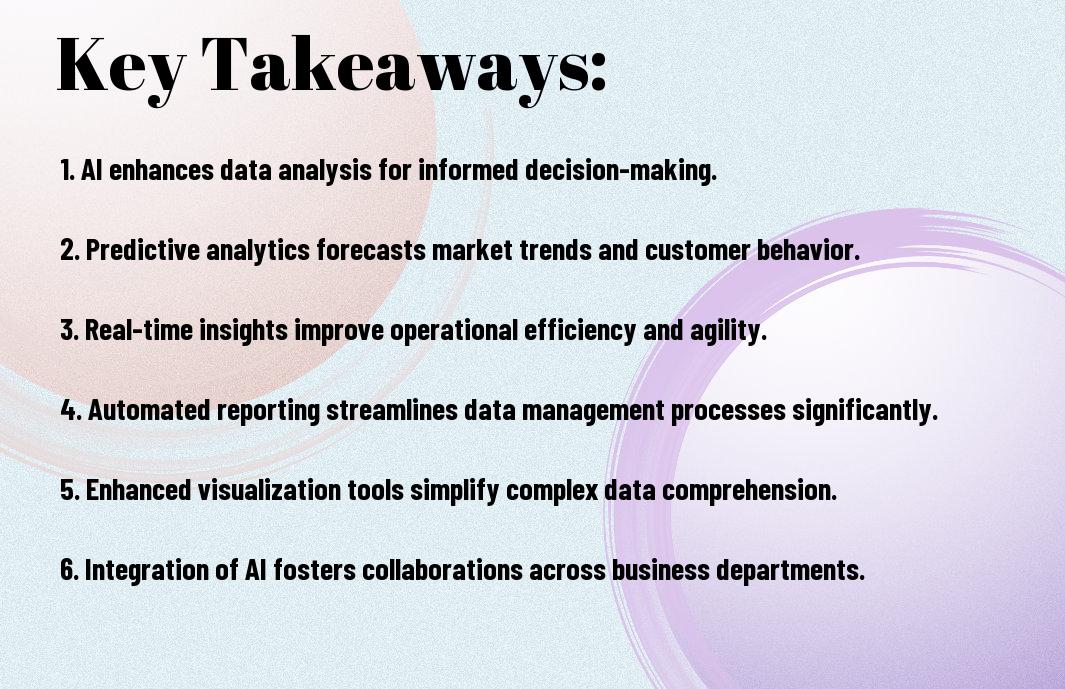
Key Takeaways:
- Business Intelligence (BI) is evolving with the integration of Artificial Intelligence (AI), enabling organizations to make data-driven decisions and gain a competitive edge in the market by uncovering hidden patterns and insights that traditional BI methods may miss.
- The application of AI in BI allows for the automation of routine analytical tasks, freeing up resources for more strategic and high-value tasks, and facilitating real-time analysis and decision-making.
- By leveraging AI-driven BI, organizations can enhance their ability to predict market trends, identify new business opportunities, and optimize operational efficiency, ultimately leading to improved performance and sustained competitive advantage.
The Evolution of Business Intelligence
A significant transformation has taken place in the field of business intelligence, and you are now at the forefront of this change, poised to leverage its power for your competitive advantage.
Traditional BI Approaches
One of the primary limitations of traditional business intelligence approaches is their reliance on manual data analysis, which you have likely experienced firsthand, and this has hindered your ability to make swift, informed decisions.
The AI Revolution in Data Analytics
At the heart of the evolution of business intelligence lies the integration of artificial intelligence, which you can utilize to streamline your data analysis and uncover hidden insights that would be impossible to detect through traditional methods alone.
With the advent of AI-powered business intelligence, you can now automate many of the tasks that previously consumed a significant amount of your time, such as data processing and reporting, and focus on higher-level strategic decision-making that drives your business forward, enabling you to stay ahead of the competition and achieve your goals more efficiently.
Core AI Technologies Transforming Business Intelligence
Some of the key AI technologies driving this transformation include machine learning and natural language processing. You can learn more about How AI is Transforming Business Intelligence and discover how these technologies can enhance your business intelligence capabilities.
Machine Learning Applications
Any organization looking to leverage AI for business intelligence can start by exploring machine learning applications, which enable you to analyze large datasets and identify patterns that inform your business decisions, helping you to make more accurate predictions and drive growth.
Natural Language Processing in BI
To effectively analyze and interpret large amounts of unstructured data, you can utilize natural language processing, which allows you to extract insights from text-based data sources, such as customer feedback and social media posts, and integrate them into your business intelligence strategy.
It is worth noting that natural language processing can be particularly useful in business intelligence, as it enables you to analyze and understand the sentiment and tone of customer feedback, allowing you to make more informed decisions about your products and services, and ultimately driving your business forward with more precision and accuracy, giving you a competitive edge in the market.
Implementation Strategies
Once again, you’ll need to assess your business goals and identify areas where AI can drive the most value when implementing business intelligence solutions, ensuring a tailored approach that meets your unique needs.
Infrastructure Requirements
Around the same time, you will be evaluating your existing infrastructure to determine if it can support AI-powered business intelligence, and if not, what upgrades or new investments are necessary to ensure seamless integration.
Talent and Organizational Structure
Talented individuals with expertise in AI and data analysis will be imperative to your success, so you should focus on acquiring or developing the necessary skills within your organization to effectively leverage AI for business intelligence.
Considering your organization’s structure, you will need to ensure that it is adaptable and agile enough to respond to the insights and opportunities generated by AI-driven business intelligence, allowing you to stay ahead of the competition and drive growth, which means you should be prepared to make adjustments to your workflows, processes, and even your overall business model if necessary, to maximize the benefits of AI-powered business intelligence.
Competitive Advantage Metrics
Despite the numerous benefits of business intelligence, measuring its impact on your organization can be challenging. You need to define key metrics that align with your business objectives, such as revenue growth, customer satisfaction, and operational efficiency.
Measuring ROI of AI-Powered BI
Any analysis of your AI-powered business intelligence investment should consider the return on investment (ROI). You will want to assess how AI-driven insights are impacting your bottom line, and whether they are generating significant revenue or cost savings for your organization.
Performance Indicators
Among the key performance indicators (KPIs) you should track are those related to data quality, user adoption, and decision-making speed. You can use these metrics to evaluate the effectiveness of your business intelligence strategy and identify areas for improvement.
Another important aspect of performance indicators is that they help you to refine your business intelligence strategy over time. As you collect more data and analyze your KPIs, you can adjust your approach to better meet your business objectives, and make more informed decisions that drive growth and profitability for your organization. You will be able to identify trends, opportunities, and challenges, and respond quickly to changes in the market, giving you a competitive edge.
Risk Management
Now that you’re leveraging AI for business intelligence, you need to consider the risks involved. Effective risk management is vital to minimize potential threats and maximize benefits, ensuring your organization stays competitive.
Data Privacy Concerns
Between the lines of code and data analysis, you must address data privacy concerns. You should prioritize protecting sensitive information and ensure compliance with regulations to maintain trust and avoid reputational damage.
Algorithmic Bias Mitigation
To mitigate potential biases, you should implement strategies that detect and correct discriminatory patterns in your AI systems. You can achieve this by regularly auditing your algorithms and incorporating diverse data sets.
Mitigation of algorithmic bias is an ongoing process that requires your attention and effort. As you continue to develop and refine your AI systems, you should prioritize fairness and transparency, ensuring that your decision-making processes are unbiased and accurate, which will ultimately enhance your business intelligence capabilities and maintain your competitive edge.

Future Trends
After embracing AI in business intelligence, you will be able to make more informed decisions and stay ahead of the competition. Your organization will be able to analyze large amounts of data, identify patterns, and predict future trends, giving you a competitive advantage in the market.
Predictive Intelligence
Trending technologies like machine learning and deep learning will enable your business to forecast future outcomes, allowing you to make proactive decisions and stay ahead of the curve. Your ability to predict customer behavior and market trends will become more accurate, enabling you to optimize your strategies.
Autonomous Decision Systems
Above all, autonomous decision systems will revolutionize the way you make decisions, enabling your organization to respond quickly to changing market conditions. Your business will be able to automate decision-making processes, freeing up time for more strategic tasks.
But as you implement autonomous decision systems, you will need to ensure that they are aligned with your business goals and values. You will need to carefully evaluate the data and algorithms used to make decisions, and establish clear guidelines for when human intervention is necessary, allowing you to maintain control and accountability in your decision-making processes.
To wrap up
Ultimately, you now understand how Business Intelligence is redefined by leveraging AI for a competitive advantage. You can harness the power of AI to drive your business forward, making informed decisions with data-driven insights. Your organization will thrive in a rapidly changing market, staying ahead of the competition with AI-driven Business Intelligence, enhancing your strategic decision-making capabilities.
FAQ
Q: What is Business Intelligence Redefined, and how does it leverage AI for competitive advantage?
A: Business Intelligence Redefined refers to the transformation of traditional business intelligence by incorporating Artificial Intelligence (AI) and machine learning capabilities. This integration enables organizations to analyze vast amounts of data, identify patterns, and make data-driven decisions in real-time, thereby gaining a competitive advantage in the market. By leveraging AI, businesses can automate routine tasks, improve predictive analytics, and uncover new insights that inform strategic decisions.
Q: How does AI-driven Business Intelligence enhance decision-making processes within an organization?
A: AI-driven Business Intelligence enhances decision-making by providing organizations with accurate, timely, and relevant data insights. AI algorithms can analyze large datasets, identify trends, and predict outcomes, enabling businesses to make informed decisions quickly. Additionally, AI-powered BI tools can simulate different scenarios, assess risks, and provide recommendations, thereby facilitating more effective and data-driven decision-making.
Q: What are the key benefits of adopting AI-powered Business Intelligence solutions for businesses?
A: The key benefits of adopting AI-powered Business Intelligence solutions include improved operational efficiency, enhanced customer experience, and increased revenue growth. AI-driven BI solutions can automate routine tasks, freeing up resources for strategic activities. They can also provide personalized customer insights, enabling businesses to tailor their offerings and improve customer satisfaction. Furthermore, AI-powered BI can identify new business opportunities, optimize pricing strategies, and predict market trends, leading to increased revenue and competitiveness.
Q: How can organizations ensure the successful implementation of AI-powered Business Intelligence solutions?
A: To ensure the successful implementation of AI-powered Business Intelligence solutions, organizations should first define clear goals and objectives. They should then assess their current data infrastructure, identify gaps, and develop a roadmap for integration. It is also vital to invest in employee training and development, ensuring that teams have the necessary skills to work with AI-powered BI tools. Additionally, organizations should establish a governance framework to ensure data quality, security, and compliance, and continuously monitor and evaluate the performance of their AI-powered BI solutions.
Q: What is the future of Business Intelligence, and how will AI continue to shape the industry?
A: The future of Business Intelligence will be characterized by increased adoption of AI, machine learning, and cloud-based technologies. As AI continues to evolve, we can expect to see more advanced analytics capabilities, such as natural language processing, computer vision, and predictive maintenance. The use of AI will enable businesses to analyze complex data sets, identify new patterns, and make more accurate predictions. Furthermore, the integration of AI with emerging technologies like IoT, blockchain, and augmented reality will create new opportunities for businesses to innovate and stay ahead of the competition, redefining the role of Business Intelligence in driving strategic decision-making and growth.