Investments

Smart Investments – Leveraging AI to Maximize Your Business Returns

As you navigate the complex world of business investments, you’re likely looking for ways to maximize your returns. You can leverage artificial intelligence (AI) to make informed decisions and stay ahead of the competition. By harnessing the power of AI, you can analyze market trends, identify opportunities, and optimize your investment strategies to achieve greater success. You will learn how to utilize AI to drive your business forward and increase your profits.

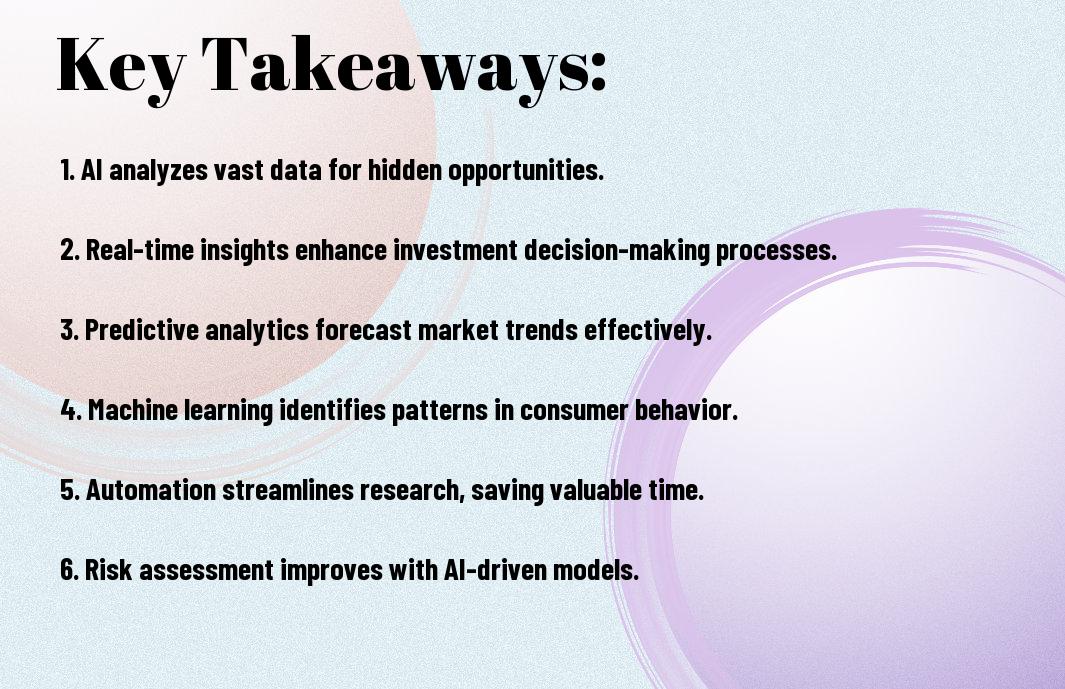
Key Takeaways:

  • Leveraging AI in business investments can significantly enhance decision-making by providing predictive analytics and insights, thereby maximizing returns and minimizing risks.
  • AI-driven tools can help automate various investment processes, such as data analysis and portfolio management, allowing businesses to allocate resources more efficiently and effectively.
  • By integrating AI into their investment strategies, businesses can gain a competitive edge in the market, stay ahead of trends, and identify new opportunities for growth and expansion.

The AI Investment Landscape

Before entering into the world of AI investments, you need to understand the current landscape. You’ll find a vast array of opportunities, from machine learning to natural language processing, each with its own potential for growth and returns.

Current Market Opportunities

For instance, you can explore investments in AI-powered startups, or established companies incorporating AI into their operations, offering you a range of options to diversify your portfolio and maximize returns.

Risk Assessment Framework

Among the key considerations for your investment strategy is evaluating the risks associated with AI investments, including data privacy concerns and regulatory compliance, to ensure you make informed decisions.

Assessment of these risks is vital to your success, as you need to weigh the potential benefits of AI investments against the potential downsides, and develop a framework that helps you navigate this complex landscape, allowing you to make smart investment choices that align with your goals and risk tolerance.
Financial Returns of AI Implementation

While implementing AI in your business, you can expect significant financial returns, as seen in AI in Investment: Business Insights & Use Cases, which provides valuable insights into AI’s potential. You can maximize your business returns by leveraging AI effectively.

Cost-Benefit Analysis

To determine the financial viability of AI implementation, you need to conduct a thorough cost-benefit analysis, weighing the potential returns against the investment required, allowing you to make informed decisions about your business.

ROI Measurement Techniques

The key to measuring the success of AI implementation lies in effective ROI measurement techniques, which enable you to assess the financial impact of AI on your business and identify areas for improvement, helping you to optimize your investment.

Even as you probe deeper into ROI measurement techniques, you will discover that they involve tracking key performance indicators, such as revenue growth, cost savings, and customer engagement, to name a few, allowing you to evaluate the effectiveness of your AI implementation and make data-driven decisions to drive your business forward, ensuring you achieve the maximum possible returns on your investment in AI.

Strategic AI Integration Points

To maximize your business returns, you need to identify the right areas to integrate AI. This involves analyzing your operations and pinpointing where AI can have the most significant impact.

Customer Service Automation

Automating your customer service with AI allows you to provide 24/7 support, enhancing your customer experience and reducing operational costs. You can use chatbots to handle routine inquiries, freeing up your staff to focus on more complex issues.

Supply Chain Optimization

At the heart of your business is your supply chain, and AI can help you optimize it. You can use AI to analyze data, predict demand, and streamline your logistics, resulting in cost savings and improved efficiency.

In fact, by leveraging AI in your supply chain, you can gain real-time visibility into your operations, enabling you to make data-driven decisions and stay ahead of the competition. You can also use AI to identify potential bottlenecks and mitigate risks, ensuring that your business runs smoothly and efficiently.

Choosing the Right AI Solutions

Not all AI solutions are created equal, and selecting the right one for your business can be a daunting task. You need to consider your specific needs and goals, as well as the capabilities and limitations of different AI technologies.

Build vs. Buy Considerations

Around the time you start exploring AI solutions, you will need to decide whether to build your own AI system or purchase an existing one, considering factors such as cost, time, and expertise, to make an informed decision that aligns with your business objectives.

Vendor Evaluation Criteria

One key aspect of choosing the right AI solution is evaluating potential vendors, considering factors such as their experience, reputation, and support offerings, to ensure you find a reliable partner for your AI journey.

To further evaluate vendors, you will want to assess their AI solutions’ performance, scalability, and integration capabilities, as well as their ability to provide ongoing maintenance and support, ensuring that their solution will meet your evolving business needs and provide a strong return on investment, allowing you to maximize your business returns and stay ahead of the competition.

Implementation Timeline and Resources

After planning your AI strategy, you’ll need to consider the timeline and resources required for implementation. You can learn more about maximizing your ROI by Leveraging Technology For Sustainable Growth In Manufacturing to inform your approach.

Phased Approach Strategy

About to begin on your AI implementation journey, you’ll want to consider a phased approach to ensure a smooth transition and minimize disruptions to your business operations.

Required Team Capabilities

Around the time you start implementing AI, you’ll need to assess your team’s capabilities to ensure they can support the new technology and maximize its potential.

Capabilities such as data analysis, programming, and project management will be crucial for your team to successfully implement and maintain AI solutions, allowing you to focus on driving business growth and maximizing your returns.

Avoiding Common AI Investment Pitfalls

Keep in mind that investing in AI requires careful consideration to maximize your business returns. You need to be aware of the potential pitfalls that can hinder your success.

Overspending Traps

Pitfalls such as overspending on AI solutions can lead to significant financial losses, so you should set a budget and stick to it to avoid wasting your resources.

Underutilization Issues

Common mistakes like underutilizing AI capabilities can limit your potential returns, and you should ensure that you are using your AI investments to their full potential.

Another issue with underutilization is that you may not be leveraging the data and insights provided by your AI solutions, which can lead to missed opportunities for growth and improvement, so you should make sure to regularly review and act on the data and recommendations provided by your AI systems.

Conclusion

As a reminder, you now have the tools to make smart investments by leveraging AI to maximize your business returns. You can analyze market trends, optimize operations, and predict outcomes to make informed decisions. By embracing AI, you will stay ahead of the competition and drive your business forward, increasing your chances of success and boosting your bottom line. You are poised to unlock new opportunities and achieve your goals with AI-driven investments.

FAQ

Q: What is Smart Investment and how does it relate to Artificial Intelligence (AI)?

A: Smart Investment refers to the strategic use of data analysis and technology to make informed investment decisions. With the integration of Artificial Intelligence (AI), smart investments can leverage machine learning algorithms to analyze vast amounts of data, identify patterns, and predict market trends, enabling businesses to maximize their returns and minimize risks. By utilizing AI, investors can make data-driven decisions, optimize their portfolios, and stay ahead of the competition.

Q: How can AI be used to maximize business returns in investments?

A: AI can be used in various ways to maximize business returns in investments, including predictive analytics, portfolio optimization, and risk management. AI algorithms can analyze historical data, market trends, and economic indicators to predict future market movements and identify potential investment opportunities. Additionally, AI can help optimize investment portfolios by allocating assets, managing risk, and minimizing losses. By leveraging AI, businesses can make more informed investment decisions and achieve higher returns.

Q: What are the benefits of using AI in smart investments, and how can it impact business operations?

A: The benefits of using AI in smart investments include improved accuracy, increased efficiency, and enhanced decision-making capabilities. AI can analyze vast amounts of data quickly and accurately, providing businesses with valuable insights and recommendations. By automating routine tasks and providing real-time market analysis, AI can help businesses streamline their operations, reduce costs, and improve productivity. Furthermore, AI can help businesses identify new investment opportunities, diversify their portfolios, and mitigate potential risks, ultimately leading to increased returns and improved overall business performance.

Q: What types of investments can benefit from AI-driven smart investment strategies?

A: Various types of investments can benefit from AI-driven smart investment strategies, including stocks, bonds, commodities, currencies, and real estate. AI can be applied to both traditional and alternative investments, such as hedge funds, private equity, and venture capital. Additionally, AI can be used in investment strategies like index fund investing, dividend investing, and value investing. By leveraging AI, businesses can optimize their investment portfolios, minimize risks, and maximize returns across various asset classes and investment strategies.

Q: How can businesses implement AI-driven smart investment strategies, and what are the key considerations for successful implementation?

A: To implement AI-driven smart investment strategies, businesses can start by assessing their investment goals, risk tolerance, and existing infrastructure. They can then explore AI-powered investment platforms, tools, and services that align with their needs and objectives. Key considerations for successful implementation include data quality, algorithmic transparency, and regulatory compliance. Businesses should also ensure that their AI systems are regularly updated, monitored, and validated to maintain their performance and accuracy. By carefully evaluating these factors and implementing AI-driven smart investment strategies, businesses can unlock new opportunities, drive growth, and achieve long-term success.

Data-Driven Entrepreneurship – Leveraging AI to Make Smarter Investments

As you navigate the complex world of entrepreneurship, you’re constantly seeking ways to make informed decisions and drive growth. Your ability to analyze data and make smart investments is key to staying ahead of the competition. With the rise of artificial intelligence (AI), you now have the power to leverage data-driven insights to optimize your investment strategies and maximize returns. By harnessing the potential of AI, you can unlock new opportunities and take your business to the next level.

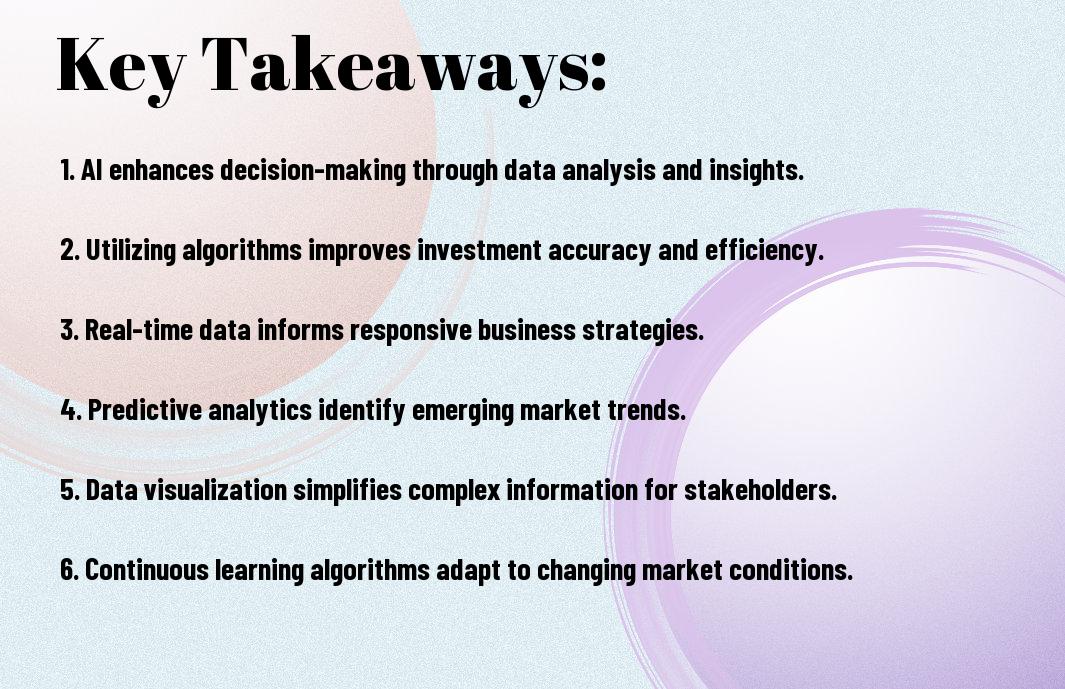
Key Takeaways:

  • Data-driven entrepreneurship involves using artificial intelligence (AI) and data analysis to inform investment decisions, reducing reliance on intuition and increasing the potential for success.
  • AI can be used to analyze large datasets, identify patterns, and predict market trends, allowing entrepreneurs to make more informed decisions about where to invest their resources.
  • By leveraging AI, entrepreneurs can automate many of the tasks involved in data analysis, freeing up time to focus on higher-level strategic decisions and driving business growth.
  • AI-driven insights can help entrepreneurs to identify new opportunities and mitigate risks, enabling them to stay ahead of the competition and adapt to changing market conditions.
  • Effective implementation of AI in entrepreneurship requires a combination of technical expertise, business acumen, and a willingness to experiment and innovate, in order to unlock the full potential of data-driven decision making.

The Evolution of Investment Decision-Making

The investment landscape has undergone significant transformations over the years, and you are now witnessing a paradigm shift towards data-driven approaches. As you consider your investment options, it’s imperative to understand how AI is revolutionizing the way you make informed decisions.

Traditional Approaches vs. Data-Driven Methods

On the one hand, traditional methods relied heavily on intuition and experience, whereas data-driven methods leverage AI to analyze vast amounts of data, providing you with actionable insights to make smarter investments.

The Tipping Point for AI in Investment

Against the backdrop of increasing market volatility, you are likely to find that AI-powered investment tools are becoming increasingly indispensable, enabling you to navigate complex market trends with greater precision.

Hence, as you explore the potential of AI in investment, you will discover that it can help you identify high-growth opportunities, mitigate risks, and optimize your portfolio performance, ultimately giving you a competitive edge in the market. You will be able to make more accurate predictions, and your investment decisions will be backed by data-driven insights, allowing you to stay ahead of the curve.

Key AI Technologies Transforming Entrepreneurial Investments

Some of the most significant AI technologies transforming entrepreneurial investments include machine learning, predictive analytics, and natural language processing. You can leverage these technologies to make data-driven decisions and gain a competitive edge in the market. Your ability to adapt to these technologies will be important in driving your business forward.

Predictive Analytics and Pattern Recognition

Besides traditional investment methods, you can use predictive analytics to identify patterns and trends in the market. Your investments will become more informed, allowing you to mitigate risks and capitalize on opportunities. You will be able to make smarter decisions with the insights gained from predictive analytics.

Natural Language Processing for Market Intelligence

Processing large amounts of market data can be overwhelming, but natural language processing (NLP) can help you make sense of it. You can use NLP to analyze market trends, customer sentiment, and competitor activity, giving you a deeper understanding of the market landscape. Your market intelligence will be enhanced, enabling you to make more informed investment decisions.

Even with the vast amount of market data available, you can use NLP to extract actionable insights and stay ahead of the competition. You will be able to analyze news articles, social media posts, and other sources of market information to identify trends and patterns that can inform your investment decisions. Your ability to analyze large amounts of data quickly and accurately will give you a significant advantage in the market, allowing you to make smarter investments and drive your business forward.

Building Your Data-Driven Investment Framework

Unlike traditional investment approaches, a data-driven framework allows you to make informed decisions based on insights from AI-driven analytics, enabling you to identify trends and patterns that inform your investment strategy.

Essential Metrics and KPIs

One of the key components of your framework will be the metrics and KPIs you use to measure performance, which will help you evaluate the success of your investments and make adjustments as needed, allowing you to refine your strategy over time.

Creating Feedback Loops for Continuous Improvement

DataDriven decision-making relies on continuous feedback, which enables you to assess the effectiveness of your investments and make adjustments in real-time, ensuring your strategy remains optimized and aligned with your goals.

KPIs will play a significant role in creating feedback loops, as they provide a clear indication of your investment’s performance, allowing you to identify areas for improvement and make data-driven decisions to adjust your strategy, ensuring you stay on track to meet your investment objectives, and enabling you to make smarter investments that drive long-term growth and success.

Overcoming Cognitive Biases Through AI

Despite the best intentions, your investment decisions can be influenced by cognitive biases, leading to suboptimal outcomes. By leveraging AI, you can make more informed decisions and avoid common pitfalls.

Recognizing Human Decision Errors

Decisively, you must acknowledge that human decision-making is prone to errors, and your own biases can impact your investment choices. AI can help identify these biases and provide a more objective perspective.

How AI Provides Objective Counterbalance

Cognitively, you can benefit from AI’s ability to analyze large datasets and provide unbiased insights, helping you make more informed investment decisions. AI can identify patterns and trends that may elude you, ensuring your investments are based on data-driven evidence.

But as you probe deeper into the capabilities of AI, you’ll find that it can also help you refine your investment strategy by continuously learning from your decisions and adapting to changing market conditions, allowing you to make adjustments and optimize your portfolio for better returns, ultimately helping you achieve your investment goals.

The Human-AI Partnership

Now that you’re exploring the potential of AI in entrepreneurship, you’ll discover that the most successful approaches involve a harmonious blend of human insight and artificial intelligence, enabling you to make more informed investment decisions.

Where Human Intuition Still Matters

Contrary to the notion that AI replaces human judgment, your intuition and experience are still vital in identifying opportunities that AI systems might overlook, allowing you to guide the decision-making process with a deeper understanding of market nuances.

Designing Effective Collaboration Models

Pairing your expertise with AI’s analytical capabilities, you can create a powerful synergy that enhances your investment strategy, as you learn to leverage the strengths of both human and artificial intelligence to drive your entrepreneurial endeavors forward.

Effective collaboration models involve understanding how to divide tasks between humans and AI systems, allowing you to focus on high-level strategic decisions while AI handles data analysis and pattern recognition, thereby streamlining your investment process and improving overall performance, as you navigate the complex landscape of data-driven entrepreneurship with greater confidence and precision.

Ethical Considerations in AI-Powered Investing

Keep in mind that as you leverage AI for investing, you must consider the ethical implications, such as transparency and bias, to ensure your decisions are fair and unbiased, you can learn more about Harnessing AI and Machine Learning for Smarter Data Analytics Strategies to make informed choices.

Transparency and Explainability

Between the lines of code and complex algorithms, you need to understand how AI-driven investment decisions are made, to trust the process and identify potential flaws, ensuring your investments are aligned with your values and goals.

Addressing Algorithmic Bias

Above all, you should be aware of the potential for algorithmic bias in AI-powered investing, which can lead to unfair outcomes and discrimination, it’s necessary to monitor and address these biases to maintain the integrity of your investment decisions.

Ethical considerations in AI-powered investing are multifaceted, and addressing algorithmic bias is a key aspect, as you work to eliminate biases, you’ll need to continually test and validate your AI systems, ensuring they are fair, transparent, and aligned with your investment goals and values, by doing so, you can trust your AI-driven investment decisions and maintain a competitive edge in the market.

Summing up

Summing up, you now have the tools to leverage AI in your investment decisions, making your entrepreneurship journey more efficient. You can analyze data to identify trends, optimize operations, and mitigate risks. By embracing data-driven entrepreneurship, you will make smarter investments, driving your business forward and staying ahead of the competition. Your ability to adapt and innovate will be the key to your success in this rapidly evolving landscape.

FAQ

Q: What is Data-Driven Entrepreneurship and how does it relate to leveraging AI for smarter investments?

A: Data-Driven Entrepreneurship refers to the practice of using data analysis and interpretation to inform business decisions, drive innovation, and optimize operations. By leveraging Artificial Intelligence (AI), entrepreneurs can analyze large datasets, identify patterns, and make predictions to inform their investment decisions. This approach enables entrepreneurs to minimize risks, maximize returns, and stay ahead of the competition. With AI-powered tools, entrepreneurs can process vast amounts of data, including market trends, customer behavior, and financial metrics, to make informed decisions and drive business growth.

Q: How can AI be used to analyze market trends and make predictions for smarter investments in Data-Driven Entrepreneurship?

A: AI can be used to analyze market trends and make predictions by utilizing machine learning algorithms, natural language processing, and predictive modeling. These techniques enable entrepreneurs to analyze large datasets, including social media, news articles, and financial reports, to identify patterns and trends that may impact their investments. AI-powered tools can also analyze customer behavior, preferences, and demographics to predict market demand and identify potential opportunities for growth. By leveraging AI, entrepreneurs can gain valuable insights into market trends, make data-driven decisions, and stay ahead of the competition.

Q: What are the benefits of using AI in Data-Driven Entrepreneurship, and how can it help entrepreneurs make smarter investment decisions?

A: The benefits of using AI in Data-Driven Entrepreneurship include improved decision-making, increased efficiency, and enhanced risk management. AI-powered tools can analyze large datasets, identify potential risks, and provide entrepreneurs with data-driven insights to inform their investment decisions. Additionally, AI can help entrepreneurs to identify new business opportunities, optimize operations, and improve customer engagement. By leveraging AI, entrepreneurs can make smarter investment decisions, drive business growth, and achieve a competitive advantage in the market. Overall, AI is a powerful tool that can help entrepreneurs to navigate complex business environments, make informed decisions, and achieve their goals.

Smart Investments – Using AI to Identify Lucrative Business Opportunities

As you navigate the complex world of investments, you’re constantly seeking ways to maximize your returns. Your goal is to make informed decisions that drive growth and profitability. With the advent of artificial intelligence (AI), you now have a powerful tool at your disposal to identify lucrative business opportunities. By leveraging AI, you can analyze vast amounts of data, uncover hidden patterns, and make data-driven decisions that propel your investments forward.

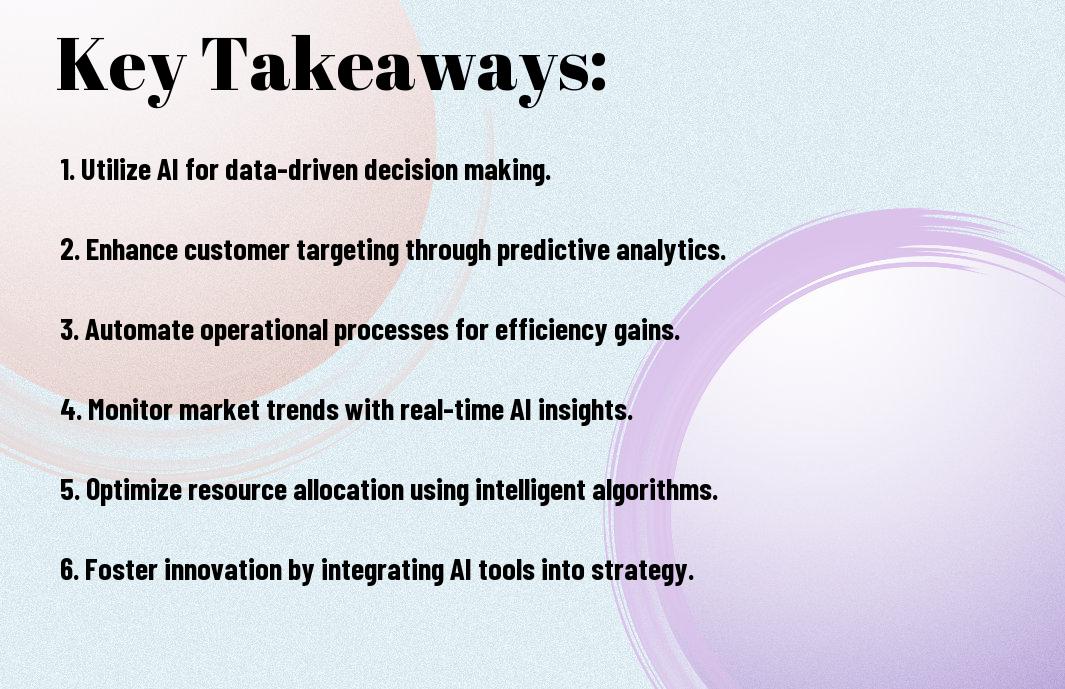
Key Takeaways:

  • Utilizing AI in investment decisions can significantly enhance the ability to identify lucrative business opportunities by analyzing vast amounts of data and recognizing patterns that may not be apparent to human analysts.
  • A key benefit of AI-driven investment strategies is their ability to process and analyze real-time data, allowing for more timely and informed investment decisions that can lead to higher returns.
  • AI can help diversify investment portfolios by identifying opportunities across various sectors and asset classes, reducing reliance on traditional investment avenues and potentially increasing overall portfolio performance.
  • Implementing AI in investment analysis can also help mitigate risks by identifying potential pitfalls and warning signs that may indicate a business or investment is likely to underperform.
  • As AI technology continues to evolve, it is likely to play an increasingly significant role in the investment landscape, making it vital for investors to understand and leverage its capabilities to stay ahead in the market.

The AI Revolution in Investment Analysis

The advent of AI has transformed the investment landscape, enabling you to make informed decisions with unprecedented accuracy. You can now leverage AI-powered tools to analyze vast amounts of data, identify trends, and predict market fluctuations.

Machine Learning Algorithms for Market Prediction

Predictive models are being used to forecast market trends, allowing you to stay ahead of the curve. You can utilize machine learning algorithms to analyze historical data and make informed investment decisions.

Natural Language Processing for Sentiment Analysis

Any investor can benefit from natural language processing, which analyzes market sentiment and provides valuable insights. You can use this technology to gauge public opinion and make informed decisions about your investments.

Plus, with natural language processing, you can analyze large volumes of text data from various sources, including news articles and social media posts, to determine the overall sentiment towards a particular stock or market trend, enabling you to adjust your investment strategy accordingly.

Data-Driven Decision Making

If you’re looking to make informed investment decisions, you can leverage AI to analyze market trends and identify opportunities. You can learn more about 7 Unexpected Ways AI Can Transform Your Investment Strategy to maximize your returns.

Big Data Analytics in Opportunity Identification

Any investment decision you make should be backed by data, and big data analytics can help you identify lucrative opportunities by analyzing market trends and consumer behavior, allowing you to make informed decisions.

Predictive Modeling for Investment Returns

Against the backdrop of market volatility, predictive modeling can help you forecast investment returns and minimize risk, enabling you to make strategic decisions that drive your portfolio’s growth.

Considering the complexity of predictive modeling, you can use machine learning algorithms to analyze historical data and identify patterns that inform your investment strategy, helping you to optimize your portfolio and achieve your financial goals.

AI-Powered Market Research

Many businesses are leveraging AI to gain valuable insights into their target markets, allowing you to make informed decisions about your investments. You can analyze large datasets, identify patterns, and uncover new opportunities with AI-powered market research.

Competitive Intelligence Automation

Alongside this, an added benefit of AI-powered market research is the ability to automate competitive intelligence, enabling you to stay ahead of your competitors and identify gaps in the market that you can capitalize on, tailoring your strategy to your unique strengths.

Trend Forecasting Capabilities

The ability to forecast trends is a key aspect of AI-powered market research, allowing you to anticipate changes in the market and adjust your investments accordingly, giving you a competitive edge and enabling you to make the most of emerging opportunities.

Hence, as you investigate deeper into trend forecasting capabilities, you will discover that AI algorithms can analyze historical data, seasonal fluctuations, and other factors to predict future market trends, enabling you to make informed decisions about your investments and stay ahead of the curve, maximizing your returns and minimizing your risks, allowing you to achieve your financial goals.

Risk Assessment Through Artificial Intelligence

Your investment decisions can be significantly improved by leveraging artificial intelligence (AI) to assess potential risks. AI algorithms can analyze vast amounts of data, identifying patterns and predicting outcomes that may not be apparent to human analysts.

Quantitative Risk Evaluation Models

By utilizing advanced statistical models, you can quantify potential risks and make more informed investment decisions. These models enable you to assess the likelihood and potential impact of various risk factors, allowing you to adjust your strategy accordingly.

Scenario Simulation and Stress Testing

Around the globe, investors are using AI-powered scenario simulation and stress testing to anticipate potential risks and opportunities. This approach enables you to simulate different market scenarios, testing your investment strategy against a range of possible outcomes.

With scenario simulation and stress testing, you can gain a deeper understanding of your investment’s potential vulnerabilities and develop strategies to mitigate them. You can simulate various market conditions, such as economic downturns or regulatory changes, and assess the potential impact on your investment, allowing you to make more informed decisions and minimize potential losses.

Sector-Specific AI Applications

Keep in mind that AI can be applied to various sectors, and understanding these applications is key to making informed investment decisions. You can leverage AI to identify opportunities in industries such as finance, real estate, and healthcare, allowing you to diversify your portfolio and maximize returns.

Fintech Innovations

Above all, fintech innovations are transforming the financial landscape, and you can capitalize on this trend by investing in AI-powered fintech companies that offer innovative solutions for payment processing, lending, and investment management.

Real Estate and Infrastructure Opportunities

Applications of AI in real estate and infrastructure are vast, and you can use AI to analyze market trends, identify lucrative investment opportunities, and optimize property management, enabling you to make data-driven decisions and increase your returns.

Further, as you explore real estate and infrastructure opportunities, you’ll find that AI can help you assess the potential of different projects, from residential and commercial developments to infrastructure initiatives, allowing you to mitigate risks and capitalize on emerging trends, ultimately growing your wealth and securing your financial future.

Implementation Strategies

Unlike traditional investment approaches, using AI to identify lucrative business opportunities requires a thoughtful and multi-step implementation process, allowing you to leverage data-driven insights and maximize your returns, as you navigate the complex landscape of investment opportunities.

Building an AI Investment Framework

Implementing a well-structured AI investment framework enables you to systematically evaluate and prioritize potential investments, using machine learning algorithms to analyze market trends and identify promising opportunities that align with your investment goals and risk tolerance.

Integration with Existing Business Processes

Among the key considerations for successful AI integration is ensuring seamless alignment with your existing business processes, allowing you to efficiently incorporate AI-driven insights into your investment decision-making, and streamline your overall investment strategy, as you work to optimize your portfolio and achieve your financial objectives.

Also, as you integrate AI into your existing business processes, you will be able to automate many routine tasks, freeing up more time for you to focus on higher-level strategic decision-making, and enabling you to respond more quickly to changing market conditions, ultimately giving you a competitive edge in the investment landscape, and allowing you to make more informed, data-driven decisions that drive your long-term success.

To wrap up

With these considerations, you can harness the power of AI to identify lucrative business opportunities, maximizing your returns on investment. By leveraging AI-driven insights, you will make informed decisions, driving your business forward. Your ability to analyze market trends and patterns will enable you to stay ahead of the competition, securing your position in the market and ensuring long-term success for your investments.

FAQ

Q: What is Smart Investment and how can AI help in identifying lucrative business opportunities?

A: Smart Investment refers to the use of advanced technologies, such as Artificial Intelligence (AI), to analyze and identify potentially profitable investment opportunities. AI can help in this process by quickly and efficiently analyzing large amounts of data, identifying patterns, and making predictions about future market trends. This allows investors to make informed decisions and maximize their returns. With AI-powered tools, investors can analyze various factors such as market trends, financial statements, and industry developments to identify lucrative business opportunities that may not be immediately apparent through traditional analysis methods.

Q: How does AI analyze data to identify lucrative business opportunities, and what types of data does it use?

A: AI analyzes data to identify lucrative business opportunities by using machine learning algorithms that can process and analyze large amounts of data from various sources, such as financial reports, market research, social media, and news articles. The AI system can analyze data on factors such as revenue growth, market size, competition, customer demographics, and industry trends. It can also analyze unstructured data, such as social media posts and customer reviews, to gauge market sentiment and identify emerging trends. By analyzing these various data points, AI can identify patterns and correlations that may indicate a lucrative business opportunity, and provide investors with actionable insights to inform their investment decisions.

Q: What are the benefits of using AI to identify lucrative business opportunities, and how can it help investors make better investment decisions?

A: The benefits of using AI to identify lucrative business opportunities include increased efficiency, improved accuracy, and enhanced decision-making capabilities. AI can quickly analyze large amounts of data, identify potential opportunities, and provide investors with real-time insights and recommendations. This can help investors to make more informed decisions, reduce the risk of investment losses, and maximize their returns. Additionally, AI can help investors to diversify their portfolios, identify emerging trends and industries, and stay ahead of the competition. By leveraging AI-powered investment tools, investors can gain a competitive edge in the market and achieve their investment goals more effectively.

How can one effectively manage debt to build wealth

Saving yourself from a lifetime of financial stress starts with effectively managing your debt. By taking control of your debt, you can pave the way to building wealth and financial security. Visit How debt investment can be a powerful bet for financial … – Mint for valuable insights on leveraging debt to grow your wealth strategically.

Key Takeaways:

  • Create a budget: Developing a comprehensive budget can help you track your spending and ensure you have enough funds to pay off debt.
  • Pay more than the minimum: By paying more than the minimum on your debts, you can reduce the amount of interest you pay over time and pay off your debts faster.
  • Consider debt consolidation: If you have multiple debts with high interest rates, consolidating them into one lower-interest loan can help you save money and simplify your debt repayment process.

Identifying Debt

Your journey towards effectively managing debt to build wealth starts with identifying the types of debt you currently have and understanding how they impact your financial health. By recognizing the different categories of debt you carry, you can better strategize how to address and eliminate them.

Types of Debt

There are various types of debt that individuals can accumulate, each with its own implications for your financial well-being. Some common types of debt include:

  • Credit Card Debt
  • Student Loans
  • Car Loans
  • Mortgages
  • Personal Loans

Though these debts can be burdensome, managing them effectively is crucial in your journey towards building wealth.

With various debt assessment tools available, you can gain a better understanding of your financial situation and create a plan to tackle your debts strategically. These tools can help you visualize your debt accounts, interest rates, and repayment timelines all in one place, empowering you to make informed decisions about how to proceed with your debt repayment strategy.

Debt Assessment Tools

With debt assessment tools, you can input all your debt details into an online platform or spreadsheet to get a comprehensive overview of your financial obligations. These tools can help you calculate your total debt amount, track your progress in repaying them, and explore different repayment strategies such as the snowball or avalanche method.

Identifying your debt is the first step towards taking control of your finances and setting yourself on the path to building wealth. By knowing the types of debt you have and utilizing debt assessment tools to analyze your financial situation, you can create a personalized plan to eliminate debt efficiently and start growing your wealth.

Creating a Budget

It’s crucial to have a budget in place to effectively manage your debt and start building wealth. A budget helps you track your income and expenses, allowing you to identify areas where you can cut back and allocate more funds towards debt repayment and savings. Here are some key steps to help you create and stick to a budget.

Tracking Expenses

For tracking expenses, start by listing all your monthly expenses, including necessities like rent/mortgage, utilities, groceries, and debt payments. Use apps or spreadsheets to categorize and monitor your spending. Review your expenses regularly to see where you can make adjustments and reduce unnecessary spending to free up more money for debt repayment.

Prioritizing Needs over Wants

Wants may include dining out, shopping for non-important items, or upgrading to the latest gadgets. While it’s okay to treat yourself occasionally, prioritizing needs over wants is crucial when managing debt. Focus on covering important expenses and debt repayments before indulging in discretionary spending. By prioritizing your needs, you can avoid accumulating more debt and stay on track towards financial stability.

Plus, by distinguishing between needs and wants, you’ll develop better spending habits and a greater sense of financial discipline. This will help you resist impulse purchases and stay committed to your long-term financial goals of reducing debt and building wealth.

Debt Reduction Strategies

Snowball Method

To effectively manage debt and build wealth, you can start by using the snowball method. This strategy involves listing all your debts from smallest to largest, regardless of interest rates. You then focus on paying off the smallest debt first while making minimum payments on the rest. Once the smallest debt is cleared, you roll that payment into the next smallest debt. This method can give you a sense of accomplishment and motivation as you see debts being paid off, one by one.

Avalanche Method

Another effective debt reduction strategy is the avalanche method. With this approach, you list your debts by interest rate, starting with the highest. You continue making minimum payments on all debts while putting extra money towards the debt with the highest interest rate. Once that debt is paid off, you move on to the next highest one. This method can save you money on interest payments in the long run.

The avalanche method is a more financially efficient approach compared to the snowball method because it tackles debts with the highest interest rates first, potentially saving you more money over time.

Debt Consolidation

When managing debt to build wealth, debt consolidation can be a helpful strategy. This involves combining multiple debts into a single loan with a lower interest rate. By consolidating your debts, you may be able to streamline your payments and reduce the total amount of interest you pay over time. It can also simplify your finances by having just one monthly payment to focus on.

To effectively utilize debt consolidation, make sure to shop around for the best interest rates and loan terms. Be cautious of any fees associated with the consolidation process, and ensure that you are committed to changing your spending habits to avoid accumulating more debt.

Building an Emergency Fund

Why You Need One

All debt management plans should start with building an emergency fund. This fund acts as a safety net, protecting you from having to take on more debt in case of unexpected expenses like medical emergencies, car repairs, or job loss.

How Much to Save

Fund experts recommend saving three to six months’ worth of living expenses in your emergency fund. Consider your monthly expenses, including bills, groceries, rent or mortgage, and other necessarys. Aim to save enough to cover these expenses for at least three to six months to ensure you are prepared for any financial emergency that may come your way.

To determine the exact amount to save, calculate your monthly expenses and multiply that by three to six. Keep in mind that the more stable your income, the lower end of the range you can aim for. Keep your emergency fund in a separate savings account, so you’re not tempted to dip into it for non-emergencies. You’ll thank yourself for this financial safety net when the unexpected happens.

Investing for Wealth

For 5 Ways Debt Can Make You Money, start by thinking about how you can use debt as a tool to grow your wealth. One way to start small is by taking out a low-interest loan to invest in a side hustle or a small business. By leveraging debt in this way, you can potentially earn a higher return on your investment than the interest you pay on the loan.

Starting Small

Any successful investor will tell you that starting small is key to building wealth over time. Consider using a portion of your savings or a low-interest loan to dip your toes into the world of investing. This can help you learn valuable lessons without risking too much of your capital.

High-Yield Savings Accounts

The key to building wealth is not just about earning more money but also about saving and investing wisely. High-yield savings accounts offer higher interest rates compared to traditional savings accounts, allowing you to grow your money faster over time. By parking your emergency fund or savings in a high-yield account, you can take advantage of better returns while still having easy access to your cash when needed.

The power of compound interest can significantly boost your savings in a high-yield account. Over time, the interest earned on your initial deposit, plus the interest earned on that interest, can add up to substantial growth in your savings. This can help you reach your financial goals faster and build a solid foundation for future investments.

Low-Cost Index Funds

On your journey to building wealth, consider investing in low-cost index funds. These funds offer diversification across a broad range of assets at a low cost, making them a smart choice for long-term investors. Instead of trying to pick individual stocks, which can be risky and time-consuming, index funds allow you to invest in the overall performance of the market.

Accounts such as retirement accounts or brokerage accounts can be great vehicles for investing in low-cost index funds. By consistently contributing to these accounts and taking advantage of compound interest, you can steadily grow your wealth over time with minimal effort. Do not forget, the key is to stay committed to your investment strategy and avoid making impulsive decisions based on market fluctuations.

Credit Score Improvement

Keep your credit score in good shape to effectively manage debt and build wealth. By maintaining a good credit score, you can access better loan terms, lower interest rates, and increased financial opportunities. To learn more about smart strategies on how to use debt to build wealth effectively, you can check out this resource: Smart Strategies: How to Use Debt to Build Wealth Effectively.

Factors Affecting Credit Score

  • Payment history
  • Amounts owed
  • Length of credit history
  • New credit
  • Credit mix

The way you manage these factors can significantly impact your credit score.

Disputing Errors on Credit Reports

With accuracy being crucial for your credit score, it’s vital to regularly review your credit reports for any inaccuracies. Disputing errors promptly can help you maintain a correct credit profile and prevent any negative impact on your credit score.

Affecting your financial health, errors on your credit report can lead to misunderstandings about your creditworthiness, potentially resulting in higher interest rates or even denial of credit. Make it a habit to monitor your credit reports and address any discrepancies promptly.

Final Words

With this in mind, managing debt effectively is crucial in building wealth. By creating a budget, prioritizing debt repayment, avoiding unnecessary debt, and seeking financial advice when needed, you can work towards a financially secure future. Keep in mind, wealth is not just about how much money you make, but also about how you manage and grow your resources.

Q: What are some tips for effectively managing debt to build wealth?

A: To effectively manage debt and build wealth, you should start by creating a budget to track your expenses and income. Prioritize paying off high-interest debts first, such as credit card debt, to save money on interest in the long run. Consider consolidating debts or negotiating with creditors for lower interest rates. It’s also important to avoid taking on new debt whenever possible and to regularly review and adjust your financial plan.

Q: How can one use debt strategically to build wealth?

A: Debt can be used strategically to build wealth by leveraging it for investments that have the potential to generate a higher return than the cost of the debt. For example, taking out a mortgage to buy property or starting a business with a loan can help grow your net worth over time. It’s important to carefully consider the risks and rewards of using debt for investments and to have a solid plan in place for repayment.

Q: What are some common pitfalls to avoid when managing debt to build wealth?

A: Some common pitfalls to avoid when managing debt to build wealth include taking on too much debt relative to your income, relying on credit cards for everyday expenses, and not having a clear repayment plan in place. It’s also important to be wary of predatory lending practices and to regularly monitor your credit report for any errors or signs of identity theft. Building wealth takes time and discipline, so it’s imperative to stay focused on your financial goals and make informed decisions about debt management.

How does diversification in investments help in building wealth

With the volatile nature of the financial markets, diversification in your investments is key to building long-term wealth. By spreading your money across different asset classes such as stocks, bonds, real estate, and commodities, you can reduce the risk of significant losses and increase your chances of earning consistent returns over time. Diversification not only helps protect your capital but also allows you to benefit from various market trends and economic conditions, ultimately helping you achieve your financial goals more effectively.

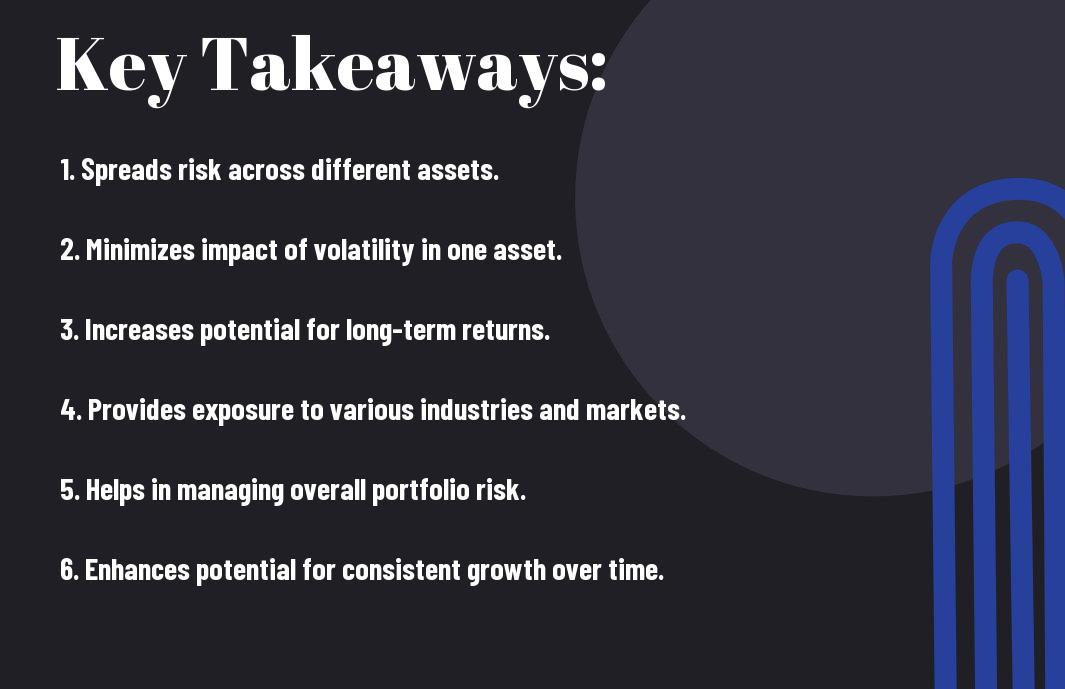
Key Takeaways:

  • Reduced Risk: Diversification helps in spreading risk across different assets, reducing the impact of poor performance of any single investment on the overall portfolio.
  • Enhanced Returns: By investing in a variety of assets, investors can benefit from the potential of different market sectors or industries performing well at different times, leading to enhanced returns.
  • Stability and Consistency: Diversification helps in providing stability and consistency to a portfolio, as losses from one investment can be balanced out by gains from others, leading to a smoother wealth-building journey.

The Importance of Diversification

The What Is Portfolio Diversification? Diversification is crucial in your investment strategy as it involves spreading your investments across different asset classes to reduce the overall risk in your portfolio. By not putting all your eggs in one basket, you can potentially minimize the impact of a poorly performing investment on your overall wealth.

Reducing Risk

On the path to building wealth, it’s important to remember that all investments come with some level of risk. However, by diversifying your portfolio, you can mitigate specific risks associated with individual assets or sectors. For example, if one industry is facing a downturn, having investments in other sectors can help cushion the impact on your overall portfolio.

Increasing Potential Returns

Risk is an inherent part of investing, and higher returns typically come with higher risk. However, by diversifying your investments, you can potentially enhance your overall returns while managing risk. Different asset classes perform differently under varying market conditions, so having a mix of investments can help capture opportunities for growth while balancing out potential losses.

Types of Investment Diversification

Clearly, diversification is key when it comes to building wealth through investments. It involves spreading your investment portfolio across different assets to reduce risk and enhance returns. Here are different types of investment diversification strategies that can help you on your path to financial growth:

Asset Allocation

Diversifying Across Industries

One of the most effective ways to diversify your investments is through asset allocation, where you distribute your funds among different asset classes such as stocks, bonds, real estate, and commodities. This strategy helps you mitigate risks associated with a particular asset class and can improve your overall portfolio performance.

Diversifying across industries involves investing in companies from various sectors. By spreading your investments in industries like technology, healthcare, consumer goods, and energy, you safeguard your portfolio from industry-specific risks. This strategy ensures that even if one sector underperforms, your overall portfolio remains stable.

Geographic Diversification

Diversification across different geographic regions is another crucial strategy to minimize risk in your investment portfolio. By investing in international markets alongside domestic ones, you can reduce the impact of economic downturns in a single country. This approach helps you capture opportunities in global markets and protects your investments from country-specific risks.

For instance, if your portfolio is heavily concentrated in one country and that economy faces a downturn, your investments could suffer significant losses. However, by diversifying geographically, you can cushion the impact of such events and potentially capitalize on growth opportunities in other regions.

Benefits of Diversification

Many financial experts agree that diversification is a key strategy in building wealth. Diversifying your investments means spreading your money across different asset classes like stocks, bonds, real estate, and commodities. According to What Is Portfolio Diversification? Guide, diversification can help reduce risk and increase the potential for higher returns in your investment portfolio.

Risk Management

The primary benefit of diversification is risk management. By investing in a variety of assets, you can lower the overall risk of your portfolio. For example, if one asset class underperforms or faces a downturn, the impact on your overall portfolio is minimized because other assets in different categories may still be performing well. This way, you can protect your investments from significant losses and maintain a more stable financial standing.

Improved Returns

With diversification, you not only manage risk but also have the potential for improved returns. Different asset classes have varying levels of returns and risks. By spreading your investments, you increase the likelihood of capturing opportunities for growth in different sectors of the market. This can lead to a more balanced and potentially higher overall return on your investment portfolio.

Another key advantage of diversification is Enhanced Portfolio Resilience.

Enhanced Portfolio Resilience

Risk management goes beyond just lowering the overall risk; it also enhances the resilience of your portfolio. By diversifying, you reduce the impact of market volatility on your investments. Market conditions can change rapidly, but a diversified portfolio can better withstand the impact of these fluctuations. This resilience can help you stay the course during turbulent times and avoid making hasty decisions that may negatively affect your long-term financial goals.

Improved portfolio resilience is crucial in achieving long-term financial success and weathering the ups and downs of the market.

Common Diversification Mistakes

Despite the benefits of diversification in investments, many people make common mistakes that can hinder their wealth-building efforts. Let’s look at some of these errors so you can avoid them and make the most of your investment strategy.

Over-Diversification

An over-diversified portfolio can actually dilute your returns. While spreading your investments across different asset classes is crucial, having too many holdings can lead to decreased performance. It’s crucial to strike a balance between diversification and concentration to optimize your returns.

Lack of Rebalancing

Lack of rebalancing is another common mistake investors make. Over time, the performance of your investments can cause your asset allocation to drift from your original targets. Without regular rebalancing, you may end up with a portfolio that is riskier than you intended. It’s crucial to review and adjust your investments periodically to ensure they align with your financial goals and risk tolerance.

Understanding how and when to rebalance your portfolio is crucial for maintaining an optimal asset allocation. By periodically reviewing and adjusting your investments, you can ensure that your portfolio remains in line with your risk tolerance and long-term financial objectives.

Inadequate Asset Allocation

Overdiversification can lead to inadequate asset allocation. It’s important to have a well-thought-out investment strategy that defines the proportion of your portfolio allocated to different asset classes such as stocks, bonds, real estate, and cash. Without a clear asset allocation plan, you may end up with a portfolio that does not align with your financial goals or risk tolerance.

Rebalancing your portfolio can help address inadequate asset allocation by ensuring that your investments are allocated according to your desired risk level and return expectations. By periodically reviewing and adjusting your asset allocation, you can optimize your portfolio for long-term growth and wealth-building.

Effective Diversification Strategies

Dollar-Cost Averaging

Strategies for effective diversification in investments can help you build wealth steadily over time. One such strategy is Dollar-Cost Averaging, where you invest a fixed amount of money at regular intervals, regardless of market conditions. This approach helps smooth out the impact of market volatility on your investments, as you buy more units when prices are low and fewer units when prices are high. This disciplined approach can lower the average cost per share of your investments over time.

Regular Portfolio Rebalancing

Rebalancing your portfolio regularly is another crucial diversification strategy that can help you optimize your investments. This involves periodically reviewing your asset allocation and adjusting it to maintain your desired level of risk and return. By selling off overperforming assets and buying more of underperforming ones, you can ensure that your portfolio stays diversified and aligned with your financial goals.

The key to successful portfolio rebalancing is to stick to your long-term investment plan and not give in to emotional reactions based on short-term market fluctuations. By periodically reviewing and adjusting your portfolio, you can stay on track to meet your financial objectives.

Tax-Efficient Investing

On top of diversifying your investments across different asset classes, you should also consider tax-efficient investing strategies to maximize your wealth-building potential. This involves investing in tax-advantaged accounts such as IRAs or 401(k)s, where your contributions can grow tax-deferred or tax-free until withdrawal. By minimizing the taxes you pay on your investments, you can accelerate the growth of your wealth over time.

Plus, certain investment vehicles like index funds or exchange-traded funds (ETFs) are known for their tax efficiency due to lower turnover and capital gains distributions. By incorporating these options into your portfolio, you can reduce the tax drag on your returns and keep more money working for you in the long run.

Real-World Examples of Diversification

Now let’s research into some real-world examples of how diversification in investments can help you build wealth. One notable figure known for his successful investment approach is Warren Buffett.

Warren Buffett’s Investment Approach

Any study of successful investors would be incomplete without mentioning Warren Buffett, one of the most renowned investors of all time. Buffett’s investment approach revolves around the concept of diversification. He emphasizes the importance of investing in a wide range of companies across different industries to mitigate risks and maximize returns. By spreading his investments across various sectors, Buffett reduces the impact of market fluctuations on his overall portfolio.

The Success of Index Funds

Success in investing can also be found through index funds. These funds are designed to track a specific market index, such as the S&P 500, providing instant diversification by including a multitude of stocks in one investment. Index funds have gained popularity for their simplicity, low fees, and historically strong performance compared to actively managed funds.

This investment strategy has proven to be highly effective for many investors, especially those looking for a hands-off approach to building wealth. By investing in index funds, you can achieve broad diversification without the need to constantly monitor and adjust your portfolio.

Diversification in Real Estate

On the real estate front, diversification plays a crucial role in building a resilient investment portfolio. Instead of putting all your money into a single property, you can diversify by investing in different types of real estate assets, such as residential properties, commercial real estate, or real estate investment trusts (REITs). This diversification helps spread risk and increase the likelihood of steady returns over time.

Plus, real estate diversification allows you to leverage the unique benefits of each property type. For example, residential properties may offer long-term appreciation potential, while commercial real estate can generate regular rental income. By diversifying your real estate investments, you can create a balanced portfolio that withstands market fluctuations and contributes to long-term wealth growth.

Summing up

By diversifying your investments, you are spreading your risk across different asset classes and industries, reducing the impact that a single investment’s poor performance could have on your overall wealth. This strategy helps you weather market fluctuations and can potentially lead to more stable and consistent returns over time. Note, the key to building wealth is not just about making money, but also protecting what you have already earned.

So, make sure you carefully consider diversification when creating your investment portfolio. Look beyond just stocks and consider other options like bonds, real estate, and even alternative investments. By having a well-diversified portfolio, you are setting yourself up for long-term success and increasing your chances of achieving your financial goals.

Q: How does diversification help in building wealth?

A: Diversification in investments helps in building wealth by spreading risk across different asset classes, industries, and regions. This reduces the impact of a single investment performing poorly, as gains in other areas can offset losses, resulting in a more stable overall return on investment.

Q: What are the benefits of diversifying investment portfolios?

A: Diversifying investment portfolios can help investors achieve better risk-adjusted returns by reducing the overall volatility of their investments. It also enables investors to take advantage of different market conditions and opportunities, leading to a more balanced and resilient investment strategy.

Q: How should one diversify their investments effectively?

A: To diversify investments effectively, one should consider allocating funds across various asset classes such as stocks, bonds, real estate, and commodities. It is also important to diversify within each asset class by investing in different industries, sectors, and geographical regions. Regularly reviewing and rebalancing the portfolio is key to maintaining an optimal diversification strategy.

Bonza training Skip to content