
With your goal of building wealth, it is crucial to steer clear of common financial pitfalls that can hinder your progress. In this informative blog post, we will discuss key mistakes to avoid on your wealth-building journey. By understanding and sidestepping these errors, you can set yourself up for a successful financial future and reach your wealth accumulation goals more efficiently. Let’s dive in and learn how to navigate these potential roadblocks on your path to financial independence.
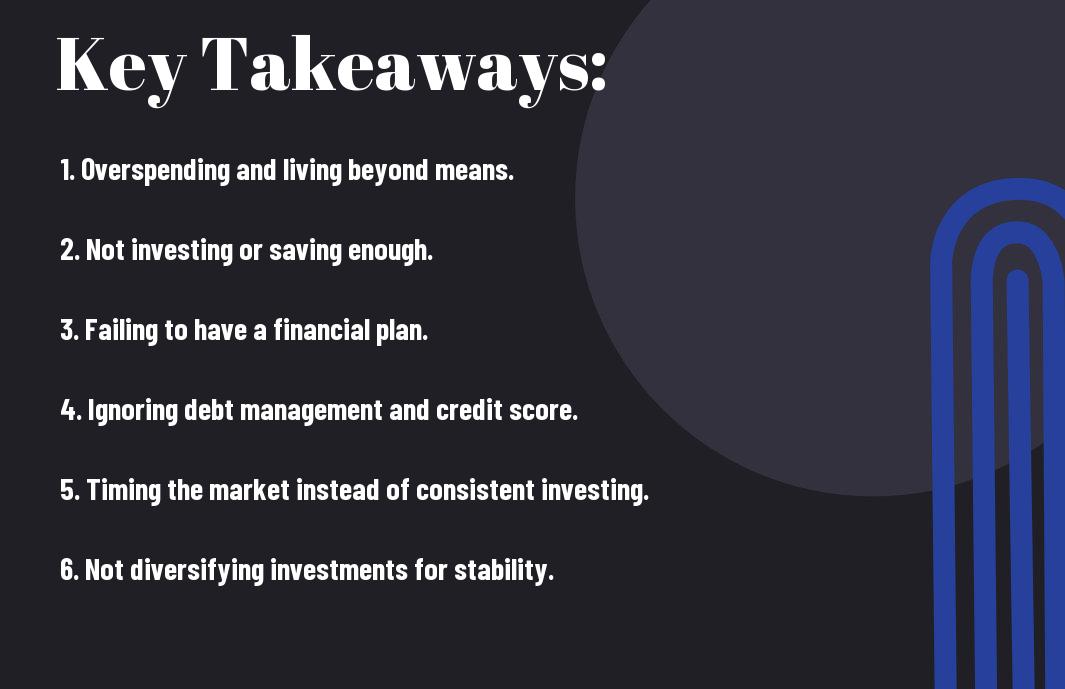
Key Takeaways:
- Not Saving and Investing Early: Delaying saving and investing can significantly impact your wealth-building potential due to the power of compound interest.
- Ignoring Diversification: Putting all your eggs in one basket can be risky. Diversifying your investments helps spread the risk and can lead to better long-term returns.
- Living Beyond Your Means: Spending more than you earn can hinder your ability to build wealth. It’s crucial to live within your means and prioritize saving and investing for the future.

Lack of Clear Financial Goals
The 6 Investing Mistakes the Ultra Wealthy Don’t Make article highlights the importance of having clear financial goals when building wealth. Without a clear vision of where you want to be financially, it’s easy to get off track and make decisions that may not align with your objectives.
Not Defining What Wealth Means to You
An crucial first step in building wealth is to define what wealth means to you personally. Is it early retirement, financial independence, or the ability to afford certain luxuries? By understanding your own definition of wealth, you can set meaningful and achievable goals that will guide your financial decisions and keep you focused on what truly matters to you.
Failing to Set Specific, Measurable Objectives
With a lack of specific and measurable objectives, it’s challenging to track your progress and make necessary adjustments along the way. Setting clear goals, such as saving a specific amount by a certain deadline or increasing your investment portfolio by a certain percentage, gives you a roadmap to follow and a way to measure your success.
Lack of clear financial goals can lead to aimless financial decisions and missed opportunities for growth. By taking the time to define what wealth means to you and setting specific, measurable objectives, you can avoid this common mistake and put yourself on the path to building sustainable wealth.
Poor Budgeting Habits
There’s a reason why budgeting is considered the cornerstone of financial success. Yet, many people fall into the common trap of poor budgeting habits that hinder their ability to build wealth effectively.
Not Tracking Expenses
With every purchase you make, it’s crucial to track your expenses diligently. Failing to do so can lead to overspending and losing sight of where your money is going. By not monitoring your expenses, you may find yourself in a situation where you’re constantly living paycheck to paycheck without making any progress towards your financial goals.
Failing to Prioritize Needs Over Wants
On your journey to building wealth, it’s imperative to distinguish between your needs and wants. While it’s tempting to indulge in luxurious items or experiences, prioritizing your needs over wants is crucial for long-term financial stability. When you consistently prioritize wants over needs, you risk overspending and neglecting imperative aspects such as saving for emergencies or investing for your future.
Understanding the difference between needs and wants can significantly impact your financial health. Needs are imperative for maintaining a basic standard of living, including food, shelter, utilities, and healthcare. On the other hand, wants are non-imperative items or services that bring enjoyment or convenience but are not necessary for survival.
Ignoring the 50/30/20 Rule
Wants are important, but they should be balanced with your needs and savings. Ignoring the 50/30/20 rule, which suggests allocating 50% of your income to needs, 30% to wants, and 20% to savings or debt repayment, can lead to financial instability. By neglecting to save a portion of your income, you may miss out on opportunities to grow your wealth and secure your financial future.
Plus, adhering to the 50/30/20 rule not only helps you manage your current expenses but also allows you to build a financial cushion for unexpected emergencies or future investments. By following this guideline, you can develop healthy budgeting habits that support your long-term financial goals and set you on the path to building wealth successfully.
High-Interest Debt and Credit Mismanagement
Despite the best intentions to build wealth, many individuals fall into the trap of high-interest debt and credit mismanagement. According to Nine Common Wealth-Building Mistakes You Might Be …, these common errors can significantly hinder your financial progress and make it harder to achieve your wealth-building goals.
Accumulating Credit Card Debt
An all-too-common mistake is accumulating credit card debt without a clear plan to pay it off. It can be tempting to swipe your card for purchases, especially when rewards and cashback offers are enticing. However, failing to pay off your credit card balance in full each month can lead to high-interest charges that quickly snowball into a significant financial burden.
Not Paying Off High-Interest Loans Quickly
One critical mistake that can impede your wealth-building efforts is not paying off high-interest loans quickly. Whether it’s a personal loan, payday loan, or any other form of high-interest debt, letting it linger can eat away at your finances. The longer you take to pay off these loans, the more money you end up losing to interest payments that could have been better utilized for building your wealth.
Debt is a burden that can hold you back from reaching your financial goals. By tackling high-interest loans promptly and efficiently, you can free up more of your income to invest and grow your wealth over time. Don’t let debt weigh you down; prioritize paying off high-interest loans to set yourself on a path towards financial freedom.
Failing to Monitor Credit Reports
Quickly falling into a common mistake that can harm your financial health is failing to monitor your credit reports regularly. Your credit report contains vital information that lenders, landlords, and even potential employers use to evaluate your financial responsibility. By neglecting to check your credit reports for errors or signs of fraud, you could be missing out on opportunities to improve your credit score and secure better financial deals.
Loans play an necessary role in shaping your financial profile. By staying proactive in monitoring your credit reports and addressing any discrepancies promptly, you can maintain a healthy credit score and access favorable loan terms when needed. Regularly reviewing your credit reports is a simple yet effective way to safeguard your financial future and ensure that you’re on the right track towards building wealth.
Remember that avoiding high-interest debt and credit mismanagement is crucial for your wealth-building journey. By being mindful of these common mistakes and taking proactive steps to address them, you can set yourself up for long-term financial success and reach your wealth accumulation goals faster.

Inadequate Savings and Emergency Funds
Once again, when it comes to building wealth, one of the most critical mistakes you can make is not having adequate savings and emergency funds in place. These financial safety nets are necessary to protect you from unexpected expenses and financial emergencies that could derail your progress towards financial security.
Not Building an Emergency Fund
Emergency funds are your first line of defense against unforeseen events like medical emergencies, car repairs, or sudden job loss. If you do not have an emergency fund, you may be forced to rely on high-interest debt or liquidate your investments to cover these expenses, setting you back on your wealth-building journey.
Failing to Save for Long-Term Goals
On the other hand, failing to save for long-term goals, such as retirement, buying a home, or starting a business, can limit your financial growth. By not setting aside money specifically for these objectives, you run the risk of not having enough funds when the time comes to pursue these goals.
It is crucial to prioritize saving for the future by setting specific financial goals and creating a saving plan to achieve them. By consistently contributing to your savings account or investment portfolio, you can ensure that you are prepared for significant life milestones and have the financial stability to support your dreams.
Ignoring the Importance of Liquidity
One common pitfall in wealth-building is overlooking the importance of liquidity. While investing in assets like real estate or stocks can offer long-term growth potential, having all your money tied up in illiquid assets can pose a challenge during unexpected financial needs. It’s necessary to strike a balance between long-term investments and maintaining enough liquid assets to cover short-term expenses.
Another aspect of liquidity to consider is having quick access to cash or easily sellable assets in case of emergencies or opportunities that require immediate funds. By keeping a portion of your wealth in liquid assets, you can safeguard yourself against financial hardships and take advantage of investment prospects that may arise unexpectedly.
Investment Mistakes
Many common mistakes can hinder your efforts to build wealth through investing. It’s crucial to be aware of these pitfalls to safeguard your financial future.
Lack of Diversification
On the path to building wealth, one of the most critical mistakes you can make is failing to diversify your investments. Putting all your money into one type of asset or one market sector exposes you to a higher level of risk. If that particular investment underperforms or encounters a downturn, you could face significant losses. Diversification helps spread risk across various investments, reducing the impact of poor performance in any single investment.
Failing to Start Investing Early
To truly maximize your wealth-building potential, it’s vital to start investing as early as possible. Time is a powerful ally when it comes to investing due to the compounding effect. The earlier you begin investing, the more time your money has to grow and multiply. By postponing your investment journey, you miss out on valuable opportunities to increase your wealth over the long term.
Start your investment journey early to take advantage of the power of compounding. Even small contributions made consistently over time can grow into a significant sum due to the effect of compounding returns. Don’t underestimate the impact of starting early on your path to financial independence.
Chasing Hot Investments
Mistakes in investing often include chasing hot investments based on recent trends or media hype. While it can be tempting to invest in the latest fad or get-rich-quick scheme, these investments typically come with high risks. Market timing is challenging, and trying to predict short-term fluctuations can lead to poor investment decisions. Instead of chasing hot investments, focus on building a well-rounded and diversified portfolio that aligns with your financial goals and risk tolerance.
For instance, rather than investing in a speculative asset solely because it’s currently popular, take a disciplined approach by focusing on the long-term performance of an investment. Remember that consistency, diversification, and patience are key principles that lead to sustainable wealth building.
Procrastination and Lack of Discipline
Putting Off Financial Planning
After all, you’ve probably heard the saying “failing to plan is planning to fail.” This is especially true when it comes to building wealth. The longer you put off creating a solid financial plan, the more you delay your ability to grow your wealth effectively. It’s crucial to take the time to outline your financial goals, establish a budget, and set up a strategy for saving and investing.
Failing to Automate Savings and Investments
Discipline is crucial when it comes to growing your wealth. If you fail to automate your savings and investments, you may find it challenging to stay consistent with your financial goals. By setting up automatic transfers from your checking account to your savings or investment accounts, you remove the temptation to spend that money elsewhere. This simple habit can help you steadily grow your wealth over time.
Automating your savings and investments ensures that you consistently put money aside for your future, without needing to rely on willpower or memory. It’s a practical way to make sure you prioritize your financial goals and avoid the risk of neglecting your savings in favor of discretionary expenses.
Giving in to Impulse Purchases
Discipline plays a significant role in wealth-building, and giving in to impulse purchases can hinder your financial progress. Those spontaneous buys may provide instant gratification, but they often derail your budget and savings plan. To build wealth effectively, you need to resist the urge to splurge on unnecessary items and instead focus on long-term financial stability.
By practicing self-control and making thoughtful spending decisions, you can redirect those funds towards investments or savings that will help you reach your wealth-building objectives. Be mindful of, every dollar you save today is a step closer to achieving your financial goals tomorrow.
Final Words
Taking this into account, it is crucial to avoid common mistakes when trying to build wealth. Some of these errors include not having a clear financial plan, spending more than you earn, not investing for the future, and failing to consistently save money. By addressing these pitfalls, you can set yourself up for financial success and secure your future.
FAQ
Q: What are the common mistakes people make when trying to build wealth?
A: Some common mistakes to avoid when trying to build wealth include not having a clear financial plan, not saving and investing consistently, and trying to get rich quick through risky investments.
Q: How important is budgeting when it comes to building wealth?
A: Budgeting is crucial in building wealth as it helps track expenses, identify areas where you can save money, and allocate funds towards savings and investments. Without a budget, it’s easy to overspend and hinder wealth-building efforts.
Q: Is it necessary to have an emergency fund when trying to build wealth?
A: Yes, having an emergency fund is crucial when building wealth. An emergency fund acts as a financial safety net, helping you avoid going into debt in case of unexpected expenses or job loss, thereby protecting your long-term wealth-building goals.