
Revenue

Innovative Revenue Models – How AI is Changing the Way Entrepreneurs Earn

As you navigate the ever-evolving landscape of entrepreneurship, you’re likely aware that traditional revenue models are becoming increasingly outdated. Your business needs to adapt to stay ahead, and that’s where Artificial Intelligence (AI) comes in. You can leverage AI to unlock new revenue streams and transform your earning potential. By embracing innovative revenue models powered by AI, you can revolutionize your approach to generating income and stay competitive in today’s fast-paced market.

Key Takeaways:

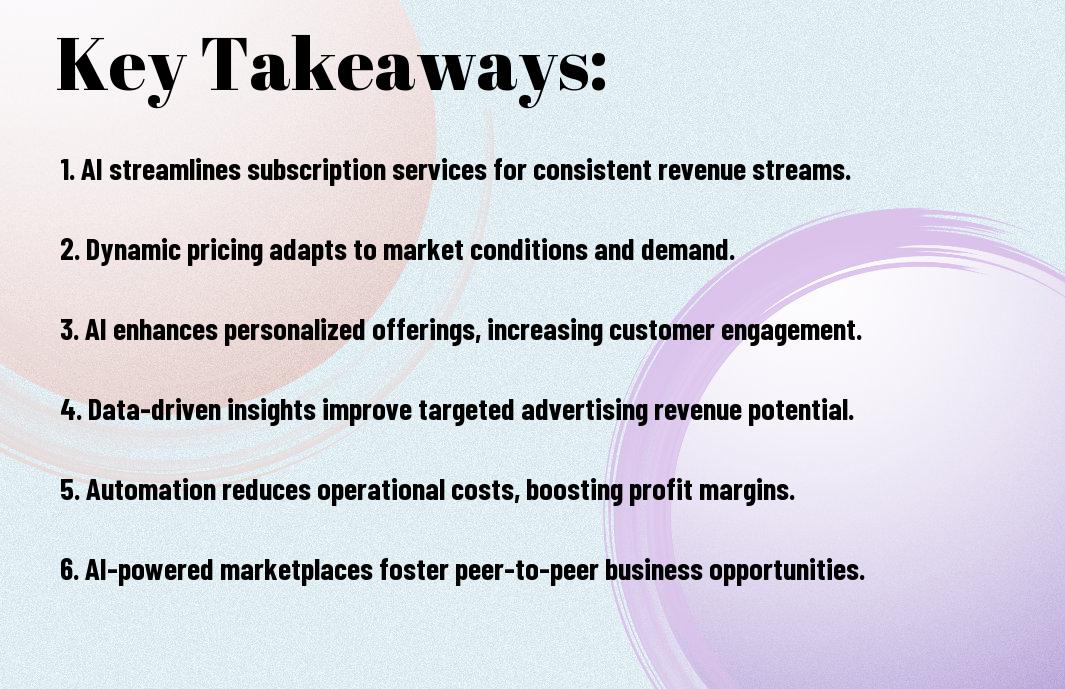
  • AI-driven revenue models are transforming the entrepreneurial landscape by enabling businesses to monetize their data, creating new income streams and increasing profitability.
  • Entrepreneurs can leverage AI to develop subscription-based services, offering personalized experiences and tailored solutions to customers, leading to recurring revenue and customer loyalty.
  • AI-powered marketplaces and platforms are emerging, connecting buyers and sellers in innovative ways, and providing new opportunities for entrepreneurs to earn revenue through commission-based models.
  • The use of AI in revenue modeling allows for predictive analytics and real-time insights, enabling entrepreneurs to make data-driven decisions and optimize their pricing strategies for maximum revenue potential.
  • As AI continues to evolve, entrepreneurs must adapt and innovate their revenue models to stay competitive, exploring new avenues such as AI-generated content, virtual products, and experiential services to drive growth and revenue.
    The Subscription Revolution

    While embracing AI, you can explore innovative revenue models, such as subscription-based services, to earn recurring revenue and foster customer loyalty, allowing you to focus on delivering value to your subscribers.

    AI-Powered Personalization

    Alongside this, you can leverage AI to offer personalized experiences, tailoring your services to meet individual needs, thereby increasing user engagement and retention, which can lead to increased revenue for your business.

    Dynamic Pricing Models

    Among the various applications of AI in revenue models, dynamic pricing stands out, enabling you to adjust prices in real-time based on demand, supply, and other factors, allowing you to maximize your earnings and stay competitive in the market.

    Hence, as you probe deeper into dynamic pricing models, you’ll discover that AI helps you analyze vast amounts of data, including customer behavior, market trends, and seasonal fluctuations, to determine optimal prices for your products or services, ensuring you earn the highest possible revenue while maintaining customer satisfaction, and enabling you to make data-driven decisions to drive your business forward.

    Data as Currency

    One of the most significant ways AI is changing revenue models is by turning data into a valuable asset. You can leverage your data to create new revenue streams, and AI helps you make the most of it.

    Monetizing User Insights

    Any entrepreneur can benefit from understanding their users’ behavior, and AI-driven analytics tools help you gain valuable insights. You can use these insights to create targeted marketing campaigns, improving your overall revenue.

    Predictive Analytics for Revenue

    Analytically-minded entrepreneurs use AI-powered predictive analytics to forecast revenue and make informed decisions. You can optimize your pricing, inventory, and resource allocation to maximize your earnings.

    With predictive analytics, you can identify trends and patterns in your data, allowing you to anticipate and prepare for changes in the market. You can use this information to adjust your strategy, minimizing risks and maximizing opportunities for growth, and ultimately increasing your revenue and competitiveness in the market.

    Automation of Service Delivery

    All entrepreneurs know that automation is key to efficient service delivery. You can now use AI to automate tasks, freeing up time for more strategic activities. This enables you to focus on growing your business and increasing revenue.

    Chatbots and Customer Engagement

    Behind the scenes, chatbots are revolutionizing customer engagement. You can use them to provide 24/7 support, helping you to build stronger relationships with your customers and ultimately drive sales.

    Scaling Without Proportional Costs

    AFTER you’ve automated your service delivery, you can scale your business without incurring proportional costs. You can handle increased demand without having to hire more staff, making your business more profitable.

    Further, as you scale, you’ll find that your AI systems can handle increased complexity with ease. You can use data analytics to optimize your operations, identify new opportunities, and make informed decisions to drive your business forward. This enables you to stay ahead of the competition and achieve your revenue goals.

    AI-Enhanced Product Creation

    Unlike traditional methods, AI-enhanced product creation enables you to develop innovative products quickly and efficiently. You can learn more about How Is AI Revolutionizing the Way Businesses Innovate? and discover new opportunities for your business.

    Generative Design Economics

    Among the benefits of AI-enhanced product creation is the ability to generate multiple design options, allowing you to choose the best one for your business, and with the help of AI, you can optimize your product design for better performance and cost-effectiveness.

    Rapid Prototyping and Market Testing

    About the speed of product development, AI enables you to quickly create and test prototypes, reducing the time and cost associated with traditional methods, and you can validate your product ideas with your target audience.

    Creation of a minimum viable product (MVP) is now faster and more efficient with AI, you can test your product with a small group of users, gather feedback, and make data-driven decisions to improve your product, ultimately leading to a successful product launch and increased revenue for your business.

    Platform Economics in the AI Era

    Your business can thrive in the AI era by leveraging platform economics, which enables you to create and capture value in new ways, disrupting traditional revenue models and opening up fresh opportunities for growth and innovation.

    Network Effects Amplification

    By harnessing the power of AI, you can amplify network effects, creating a self-reinforcing cycle of value that attracts more users, generates more data, and improves your platform’s overall performance, allowing you to stay ahead of the competition.

    Marketplace Optimization

    On the platform, AI-driven optimization enables you to streamline processes, reduce costs, and enhance user experience, making your marketplace more efficient and attractive to participants, which in turn drives your revenue and profitability.

    Effects of AI on marketplace optimization are far-reaching, allowing you to analyze user behavior, predict demand, and personalize offerings, resulting in increased customer satisfaction and loyalty, which ultimately contributes to your long-term success and competitive advantage in the market.

    Micropayment Ecosystems

    For entrepreneurs, micropayment ecosystems are revolutionizing the way you earn revenue, enabling you to capitalize on small, frequent transactions that add up to significant profits. This innovative model allows you to monetize your digital content, services, or products in a more flexible and consumer-friendly way.

    Granular Value Capture

    Ecosystems like these enable you to capture value at a granular level, allowing you to charge for specific features, functions, or pieces of content, giving you more control over your pricing strategy and enabling you to target your customers more effectively.

    Consumption-Based Revenue

    Valuing each interaction, you can generate revenue based on actual consumption, rather than relying on traditional subscription or one-time payment models, giving you a more accurate picture of your customers’ needs and preferences.

    Understanding consumption-based revenue models, you can optimize your pricing and packaging to maximize your earnings, as you gain insights into how your customers interact with your products or services, and adjust your strategy accordingly to meet their evolving needs and preferences, ultimately driving your business growth and success.

    Summing up

    Conclusively, you now understand how AI is transforming your revenue streams. You can leverage AI-driven models to diversify your earnings, making your business more resilient. By embracing these innovations, you will unlock new opportunities, increasing your potential for growth and profitability. Your ability to adapt will be key to staying ahead in this evolving landscape, enabling you to capitalize on the vast possibilities that AI presents.

    FAQ

    Q: What are innovative revenue models and how is AI impacting them?

    A: Innovative revenue models refer to new and creative ways in which entrepreneurs can earn money from their products or services. AI is changing the way entrepreneurs earn by introducing data-driven approaches to pricing, personalized customer experiences, and automated sales processes. With AI, businesses can analyze large amounts of data to identify new revenue streams, optimize their pricing strategies, and create tailored experiences for their customers, leading to increased revenue and competitiveness.

    Q: How can AI-powered revenue models help entrepreneurs to increase their earnings?

    A: AI-powered revenue models can help entrepreneurs to increase their earnings in several ways. For instance, AI-driven predictive analytics can help businesses to forecast demand and adjust their pricing accordingly, maximizing revenue. Additionally, AI-powered chatbots and virtual assistants can enhance customer engagement, leading to increased sales and customer loyalty. Furthermore, AI-driven affiliate marketing and influencer marketing platforms can help entrepreneurs to reach their target audience more effectively, resulting in higher conversion rates and revenue.

    Q: What are some examples of AI-driven innovative revenue models that entrepreneurs can adopt?

    A: There are several examples of AI-driven innovative revenue models that entrepreneurs can adopt. One example is subscription-based services, where AI is used to personalize content and offers to customers, increasing the likelihood of subscription renewal. Another example is pay-per-use models, where AI is used to track usage and charge customers accordingly. Additionally, AI-driven marketplaces and platforms can connect buyers and sellers, earning revenue through transaction fees. Other examples include AI-powered advertising and sponsorship models, where AI is used to match advertisers with their target audience, increasing the effectiveness of ads and revenue for entrepreneurs.

Revolutionizing Customer Experience – AI Strategies for Boosting Revenue

As you strive to stay ahead in today’s competitive market, you’re likely looking for innovative ways to enhance your customer experience and drive revenue growth. Your business can benefit from leveraging AI strategies to personalize interactions, streamline processes, and gain valuable insights into customer behavior. By embracing AI, you can unlock new opportunities to boost customer satisfaction, loyalty, and ultimately, your bottom line. You’ll discover how to harness the power of AI to transform your customer experience and propel your business forward.

Key Takeaways:

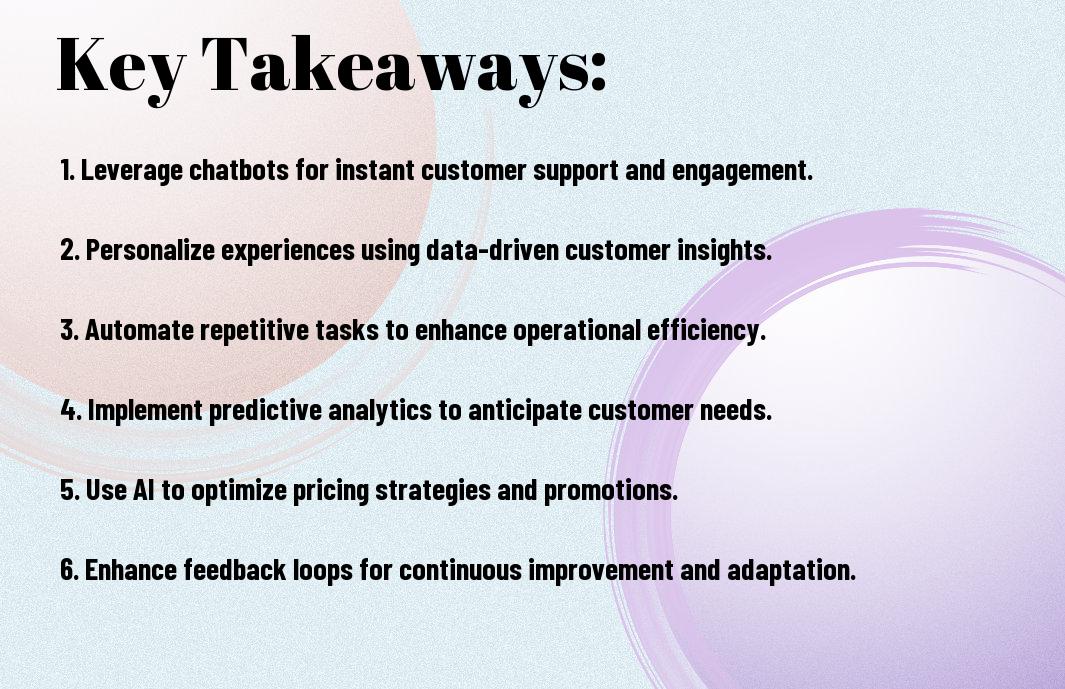
  • Implementing AI-powered chatbots can significantly enhance customer experience by providing 24/7 support, personalized recommendations, and instant resolutions to queries, leading to increased customer satisfaction and loyalty.
  • AI-driven analytics can help businesses gain valuable insights into customer behavior, preferences, and pain points, enabling them to create targeted marketing campaigns and tailor their services to meet specific needs, resulting in improved revenue growth.
  • Integrating AI into customer service operations can automate routine tasks, freeing up human agents to focus on complex issues, and providing a more efficient and effective support system that drives customer engagement and retention.
  • AI-powered predictive modeling can help businesses anticipate customer churn, identify potential upsell and cross-sell opportunities, and develop proactive strategies to retain high-value customers, ultimately boosting revenue and reducing customer acquisition costs.
  • By leveraging AI to streamline and personalize customer interactions, businesses can create a competitive advantage, drive long-term growth, and establish a strong reputation for delivering exceptional customer experiences that foster loyalty and advocacy.

    The Digital Transformation Imperative

    To stay ahead in today’s competitive market, you need to understand the significance of digital transformation in enhancing your customer experience. You can learn more about Customer Experience (CX) with AI: Enhancing the Customer Journey and how it can help you boost revenue.

    Customer Expectations in the Digital Age

    Across various industries, you’ll find that customers expect personalized and seamless experiences. You need to adapt to these evolving expectations to stay competitive and provide your customers with the best possible experience.

    The Cost of Inaction

    Expectations for a superior customer experience are rising, and you must be prepared to meet them. If you fail to do so, you risk losing customers and revenue.

    A significant portion of your customer base will likely switch to a competitor if you don’t provide the experience they expect. As you consider your digital transformation strategy, you should prioritize customer experience and invest in the necessary tools and technologies to meet their evolving needs and stay ahead of the competition, ultimately driving your revenue growth.

    AI-Powered Customer Insights

    Some of the most significant benefits of AI in customer experience come from its ability to provide you with deeper insights into your customers’ behavior and preferences, allowing you to make more informed decisions about your business strategy and improve your overall customer experience.

    Predictive Analytics and Behavior Modeling

    Across various industries, you can leverage AI-powered predictive analytics and behavior modeling to forecast customer churn, identify new sales opportunities, and optimize your marketing efforts to maximize your return on investment and drive business growth.

    Real-Time Personalization Engines

    Beside traditional methods, real-time personalization engines powered by AI enable you to deliver tailored experiences to your customers, increasing engagement and loyalty by providing them with relevant offers and content that meet their individual needs and preferences.

    Analytics play a significant role in real-time personalization engines, as they help you to analyze customer data and behavior in real-time, allowing you to adjust your strategy and provide your customers with the most relevant experience, resulting in increased satisfaction and revenue for your business, and enabling you to stay ahead of the competition by continuously improving your customer experience.

    Conversational AI Solutions

    Despite the complexity of customer interactions, conversational AI solutions can help you streamline your customer experience. You can leverage these solutions to provide personalized support, enhance engagement, and boost revenue. By implementing conversational AI, you can automate routine tasks and focus on high-value interactions.

    Intelligent Chatbots and Virtual Assistants

    Beneath the surface of conversational AI lies the power of intelligent chatbots and virtual assistants. You can use these tools to offer 24/7 support, helping your customers find answers and solutions quickly and efficiently. As you explore these options, you’ll discover how they can enhance your customer experience and drive business growth.

    Voice Recognition Systems

    Toward the forefront of conversational AI are voice recognition systems, enabling you to interact with customers in a more natural, intuitive way. You can use voice recognition to simplify customer interactions, making it easier for them to find what they need and complete transactions.

    This technology has the potential to revolutionize your customer experience, allowing you to provide seamless, hands-free interactions. You can use voice recognition systems to analyze customer behavior, preferences, and pain points, gaining valuable insights to inform your business strategies and drive revenue growth. As you consider implementing voice recognition systems, you’ll find that they can help you stay ahead of the competition and deliver exceptional customer experiences.

    Hyper-Personalization Strategies

    Keep your customers engaged with tailored experiences that cater to their unique preferences and behaviors, leveraging data and analytics to drive your approach, and you will see a significant boost in customer loyalty and retention, ultimately leading to increased revenue for your business.

    Dynamic Content Generation

    Strategically, you can utilize AI-powered tools to generate content that resonates with your audience, creating a personalized experience that sets your brand apart from the competition, and helps you build a strong connection with your customers.

    Micro-Segmentation Techniques

    For your business to thrive, you need to adopt micro-segmentation techniques that allow you to divide your customer base into smaller, highly targeted groups, enabling you to craft messages that speak directly to their needs and interests, and drive meaningful interactions.

    Considering the complexity of micro-segmentation, you can use AI-driven algorithms to analyze customer data, identify patterns, and create detailed profiles that inform your marketing strategies, helping you to deliver highly personalized experiences that drive engagement, conversion, and ultimately, revenue growth for your business.

    Revenue Optimization Through AI

    Many businesses are leveraging AI to optimize their revenue streams, and you can too. By implementing AI-powered solutions, you can gain valuable insights into your customers’ behavior and preferences, enabling you to make data-driven decisions that drive revenue growth.

    Dynamic Pricing Models

    To maximize revenue, you can utilize AI-driven dynamic pricing models that adjust prices in real-time based on demand, competition, and other factors, allowing you to stay competitive and maximize your earnings.

    Cross-Selling and Upselling Algorithms

    About leveraging AI for cross-selling and upselling, you can use algorithms that analyze customer data to identify opportunities to offer complementary products or services, increasing average transaction values and enhancing customer satisfaction.

    Further, by implementing cross-selling and upselling algorithms, you can create a more personalized shopping experience for your customers, as AI-driven recommendations are tailored to their specific needs and interests, leading to increased loyalty and retention, and ultimately, driving revenue growth for your business.

    Implementation Roadmap

    Your journey to revolutionizing customer experience with AI begins with a well-planned implementation roadmap, outlining key milestones and timelines for integrating AI strategies into your business operations.

    Technology Integration Considerations

    With the right technology in place, you can seamlessly integrate AI-powered tools into your existing infrastructure, enhancing your ability to collect and analyze customer data, and make informed decisions to boost revenue.

    Team Structure and Skill Development

    Among the key factors to consider when implementing AI strategies is the development of a skilled team, capable of leveraging AI technologies to drive business growth, and you will need to assess your current team’s strengths and weaknesses to determine the necessary training and hiring requirements.

    Plus, as you build your team, you will need to focus on developing skills in areas such as data analysis, machine learning, and natural language processing, ensuring that your team is equipped to maximize the potential of AI and drive meaningful revenue growth for your business, and you will need to stay up-to-date with the latest advancements in AI to maintain a competitive edge.

    To wrap up

    Presently, you have the power to revolutionize your customer experience with AI strategies, boosting your revenue in the process. You can leverage AI to personalize interactions, streamline processes, and gain valuable insights into your customers’ needs. By implementing these strategies, you can stay ahead of the competition and drive business growth, ultimately enhancing your bottom line and fostering long-term customer loyalty, which will benefit your business in the long run, as you continue to adapt and innovate with AI.

    FAQ

    Q: What role does Artificial Intelligence (AI) play in revolutionizing customer experience, and how can it impact revenue growth?

    A: AI plays a significant role in revolutionizing customer experience by enabling businesses to personalize interactions, predict customer needs, and offer real-time support. By leveraging AI strategies such as chatbots, virtual assistants, and machine learning algorithms, companies can analyze customer data, identify patterns, and deliver tailored experiences that drive engagement, loyalty, and ultimately, revenue growth. Effective implementation of AI can lead to increased customer satisfaction, improved retention rates, and enhanced brand reputation, all of which contribute to boosting revenue.

    Q: How can businesses integrate AI into their existing customer experience strategies to maximize its benefits and minimize potential drawbacks?

    A: To integrate AI into existing customer experience strategies, businesses should start by identifying areas where AI can add the most value, such as customer service, marketing, or sales. They can then implement AI-powered tools and technologies, such as natural language processing (NLP) and predictive analytics, to automate routine tasks, provide personalized recommendations, and gain deeper insights into customer behavior. It’s also necessary to ensure seamless integration with existing systems, invest in employee training, and establish clear metrics to measure the effectiveness of AI-driven initiatives. By taking a strategic and phased approach, companies can minimize potential drawbacks, such as job displacement or data privacy concerns, and maximize the benefits of AI in enhancing customer experience and driving revenue growth.

    Q: What are some key metrics and KPIs that businesses should track to measure the effectiveness of their AI-powered customer experience strategies and their impact on revenue?

    A: To measure the effectiveness of AI-powered customer experience strategies, businesses should track key metrics and KPIs such as customer satisfaction (CSAT) scores, net promoter scores (NPS), customer retention rates, and revenue growth. They should also monitor metrics like chatbot conversation rates, virtual assistant engagement, and AI-driven sales conversions to gauge the impact of AI on customer interactions and revenue generation. Additionally, companies can track metrics like return on investment (ROI), return on ad spend (ROAS), and customer lifetime value (CLV) to evaluate the financial impact of their AI-powered customer experience initiatives. By regularly analyzing these metrics and KPIs, businesses can refine their AI strategies, optimize their customer experience, and drive sustained revenue growth.

Bonza training Skip to content