With the goal of achieving long-term wealth preservation and growth, it is important for you to understand the best investment strategies. In the world of finance, Benjamin Graham’s principles of value investing can guide your choices. By focusing on intrinsic value and margin of safety, you can navigate the market’s fluctuations with a disciplined approach to building wealth over time. To further enhance your knowledge, explore the 5 Best Long-Term Investments 2024 for insights into potential avenues to grow your wealth.
Key Takeaways:
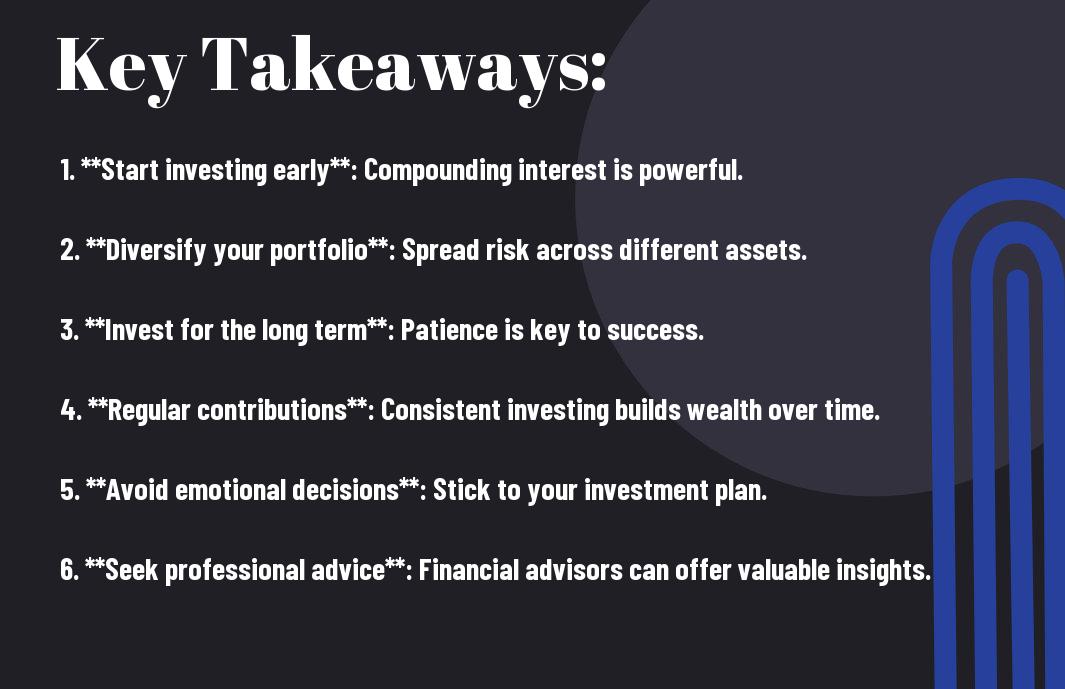
- Diversification: Investing in a variety of assets can help spread risk and minimize potential losses.
- Consistency: Making regular contributions to your investments over time can help take advantage of compounding growth.
- Patience: Long-term wealth building requires patience and a focus on the bigger picture, rather than short-term market fluctuations.
Setting the Foundation
Defining Long-term Wealth Building
With every investment decision you make, you are paving the way towards your long-term wealth building goals. Long-term wealth building is the process of strategically growing your assets over an extended period, typically years or even decades. It involves making consistent and informed investment choices that align with your financial objectives, risk tolerance, and time horizon. By focusing on the long term, you prioritize steady growth and compounding returns, rather than seeking quick gains through speculative endeavors.
Importance of a Well-Planned Investment Strategy
An important aspect of setting the foundation for long-term wealth building is establishing a well-planned investment strategy. This strategy serves as your roadmap, guiding your investment decisions, and helping you stay disciplined during market fluctuations. A well-thought-out investment strategy takes into account your financial goals, risk tolerance, time horizon, and diversification needs. It helps you avoid emotional reactions to market movements, keeping you focused on your long-term objectives.
Setting the foundation for long-term wealth building with a well-planned investment strategy is crucial for your financial success. It provides you with a framework to make thoughtful and informed investment decisions, reducing the impact of market volatility and emotional biases. By crafting a solid investment strategy, you can increase the likelihood of achieving your long-term financial goals and building lasting wealth over time.
Diversification Strategies
There’s a famous saying in the investment world: “Don’t put all your eggs in one basket.” This principle emphasizes the importance of diversification in your investment portfolio. Diversification is a strategy that involves spreading your investments across different assets to reduce risk.
Asset Allocation: Spreading Risk Across Markets
To effectively diversify your portfolio, you need to consider asset allocation. By spreading your investments across various markets, such as stocks, bonds, real estate, and commodities, you can reduce the impact of a downturn in any single market on your overall wealth. This strategy can help you achieve a more balanced and resilient portfolio over the long term.
Diversifying Across Asset Classes
Classes With diversification across asset classes, you can further enhance the risk-reducing benefits of your portfolio. Each asset class – such as equities, fixed income, and alternative investments – has its own risk and return characteristics. By investing in a mix of asset classes, you can capture the potential upside of different market segments while minimizing overall portfolio risk.
International Diversification: Investing Globally
For international diversification, you can expand your investment horizon beyond domestic markets. By investing in foreign stocks, bonds, or real estate, you can gain exposure to different economies, currencies, and geopolitical environments. This global approach can help you diversify away from any country-specific risks and take advantage of growth opportunities in other parts of the world.
Another benefit of international diversification is the potential currency diversification. When you hold assets denominated in different currencies, you can reduce the risk of being overly exposed to fluctuations in a single currency. This can help protect the purchasing power of your investments and enhance the overall stability of your portfolio.
Value Investing
The Principles of Value Investing
Investing in value involves looking for opportunities where the market has undervalued a particular stock or bond. The principle is to buy these assets at a discount to their intrinsic value, with the belief that their true worth will eventually be recognized by the market, resulting in significant returns.
Identifying Undervalued Stocks and Bonds
On your journey to identifying undervalued stocks and bonds, you will need to conduct thorough research and analysis. This may involve investigating financial statements, market trends, and competitive positioning to determine if a particular asset is trading below its intrinsic value.
Value investing requires a keen eye for spotting discrepancies between a stock’s price and its true worth. By delving deep into company fundamentals and market dynamics, you can uncover opportunities that others might overlook, allowing you to make informed investment decisions.
Patiently Holding onto Quality Investments
Quality investments are those that possess strong fundamentals, stable earnings, and a competitive advantage in their industry. When you have identified and acquired such assets at a discount, the key is to patiently hold onto them, allowing time for their value to appreciate.
By maintaining a long-term perspective and resisting the temptation to react to short-term market fluctuations, you give your investments the opportunity to grow steadily over time. This disciplined approach is a hallmark of successful value investors who prioritize the intrinsic value of their assets over short-term gains.

Growth Investing
Your journey towards long-term wealth building through investment involves understanding various strategies. Growth investing is one such strategy where you seek to maximize capital appreciation by investing in companies that have the potential for above-average growth in revenue and earnings.
Focusing on High-Growth Industries and Companies
An imperative aspect of growth investing is focusing on high-growth industries and companies. These are sectors or specific businesses that are experiencing rapid expansion and are expected to continue growing at a significant pace. By identifying and investing in these high-growth opportunities, you position yourself to benefit from the potential upside as these companies increase their market share and profitability.
Identifying Emerging Trends and Opportunities
Growth investing also involves identifying emerging trends and opportunities in the market. By staying informed about technological advancements, societal shifts, and consumer preferences, you can pinpoint companies that are at the forefront of these trends. Investing in companies that are well-positioned to capitalize on these emerging opportunities can lead to substantial returns over the long term.
Growth investors often look for companies that are disrupting traditional industries or creating entirely new markets. By recognizing these early signs of growth and innovation, you can capitalize on the potential for significant wealth accumulation.
Balancing Risk and Potential Return
High-growth investing, while promising significant returns, also carries inherent risks. It’s crucial to balance the potential for high returns with the risks involved in investing in companies with unproven track records or volatile market conditions. Diversification across industries and careful risk management are imperative aspects of mitigating these risks while aiming for long-term wealth accumulation.
By carefully evaluating the growth potential of companies, understanding the risks involved, and diversifying your investment portfolio, you can navigate the world of growth investing more effectively. Recall, the key is to balance the allure of high returns with a prudent approach to risk management in your pursuit of long-term wealth building.
Income Investing
All successful long-term investors know the importance of generating passive income to build wealth steadily over time. Income investing involves putting your money into assets that provide a regular income stream, such as dividends, interest payments, or rental income. By focusing on income-generating investments, you can supplement your active income and grow your wealth more effectively.
Generating Passive Income through Dividend-paying Stocks
Stocks of companies that pay dividends can be an excellent way to generate passive income. When you invest in dividend-paying stocks, you not only benefit from potential capital appreciation but also receive regular dividend payments. By reinvesting these dividends, you can harness the power of compounding and accelerate your wealth accumulation over the long term.
Investing in Bonds and Other Fixed-Income Securities
To further diversify your income sources, consider investing in bonds and other fixed-income securities. Bonds are debt securities issued by governments, municipalities, or corporations to raise capital. When you invest in bonds, you earn interest income based on the bond’s coupon rate and receive the principal amount back at maturity. This can provide a stable income stream while adding stability to your investment portfolio.
Other fixed-income securities, such as certificates of deposit (CDs) and treasury securities, offer additional options for income investors looking for steady returns. These investments typically have lower risk than stocks and can be suitable for conservative investors seeking income with capital preservation.
Real Estate Investment Trusts (REITs) and Master Limited Partnerships (MLPs)
On top of stocks and bonds, you can also explore alternative income investments like Real Estate Investment Trusts (REITs) and Master Limited Partnerships (MLPs). REITs allow you to invest in real estate properties without having to buy, manage, or finance them directly. They generate income through rental payments and can offer high dividend yields to investors. MLPs, on the other hand, are publicly traded partnerships that operate in the natural resources, energy, or real estate sectors. By investing in MLPs, you can benefit from steady cash flows and tax advantages.
Passive
Passive income investing through dividend-paying stocks, bonds, REITs, and MLPs can help you build long-term wealth by generating consistent income streams. By diversifying your portfolio with income-producing assets, you can set yourself up for financial success and a more secure future.
Risk Management Strategies
Many investors aspire to build wealth over the long term by following sound investment strategies. You can learn more about some of these strategies in our article on Investment Strategies for the Long Term. As you aim to grow your wealth, it is crucial to incorporate risk management strategies to protect your investments from potential downturns and uncertainties.
Hedging Against Market Volatility
With market volatility being a constant presence in the investment landscape, it’s vital to consider hedging strategies to safeguard your portfolio. Diversifying your investments across different asset classes can help offset losses in one sector with gains in another. Additionally, options such as purchasing put options or utilizing inverse ETFs can provide protection during market downturns.
Protecting Your Portfolio from Inflation
Risk management also involves protecting your portfolio from the erosive effects of inflation. Inflation can erode the purchasing power of your investments over time. To combat this, consider allocating a portion of your portfolio to assets that tend to perform well during inflationary periods, such as real estate, commodities, or Treasury Inflation-Protected Securities (TIPS).
Market fluctuations and inflation can pose significant risks to your investment portfolio’s long-term growth. It is crucial to implement risk management strategies to mitigate these risks and preserve the value of your assets over time.
Tax-Efficient Investing
For tax-efficient investing, you should consider strategies that aim to minimize the taxes you pay on your investment returns. This can include using tax-advantaged accounts like IRAs and 401(k)s, where your investments can grow tax-free or tax-deferred. Additionally, tax-loss harvesting, where you strategically sell investments at a loss to offset capital gains and reduce your tax liability, can be a valuable tool in tax-efficient investing.
Tax-efficient investing strategies can help you maximize your investment returns by reducing the impact of taxes on your portfolio. By incorporating these strategies, you can potentially increase your after-tax returns and accelerate your wealth-building efforts.
Summing up
Drawing together the various investment strategies discussed in this article, you can see that a diversified portfolio, focused on long-term growth, is key to building wealth over time. By investing in a mix of assets such as stocks, bonds, real estate, and possibly alternative investments, you spread out your risk and position yourself for long-term success.
Approaching investments with a disciplined, patient mindset, and focusing on fundamental analysis rather than short-term market fluctuations, can help you weather economic downturns and take advantage of opportunities for growth. Note, the path to long-term wealth building may not always be smooth, but by staying committed to your investment plan and remaining informed about market trends, you increase your chances of reaching your financial goals over time.
Q: What does long-term wealth building mean?
A: Long-term wealth building refers to the practice of investing and saving money over an extended period, typically with the goal of increasing one’s financial assets over time. This strategy involves making informed and strategic decisions to generate sustainable wealth for the future.
Q: What are some key investment strategies for long-term wealth building?
A: Some key investment strategies for long-term wealth building include diversification, consistent contributions to retirement accounts such as 401(k) or IRAs, investing in low-cost index funds or ETFs, regularly reviewing and rebalancing your investment portfolio, and staying invested through market fluctuations to benefit from compound interest.
How important is risk management in long-term wealth building?
A: Risk management plays a crucial role in long-term wealth building as it helps investors navigate market volatility and mitigate potential losses. By diversifying investments across different asset classes, setting clear investment objectives, and regularly reviewing your portfolio’s performance, you can better manage risk and improve the overall stability of your long-term wealth building strategy.