Success

The Roadmap to Riches – AI-Driven Tactics for Entrepreneurial Success

As you navigate the complex landscape of entrepreneurship, you’re likely seeking innovative strategies to drive your business forward. You understand that staying ahead of the curve is crucial to achieving success. Your journey to riches begins with embracing the power of artificial intelligence (AI). By leveraging AI-driven tactics, you can optimize your operations, enhance decision-making, and unlock new opportunities for growth. You will discover how to harness the potential of AI to propel your entrepreneurial endeavors and achieve unparalleled success.

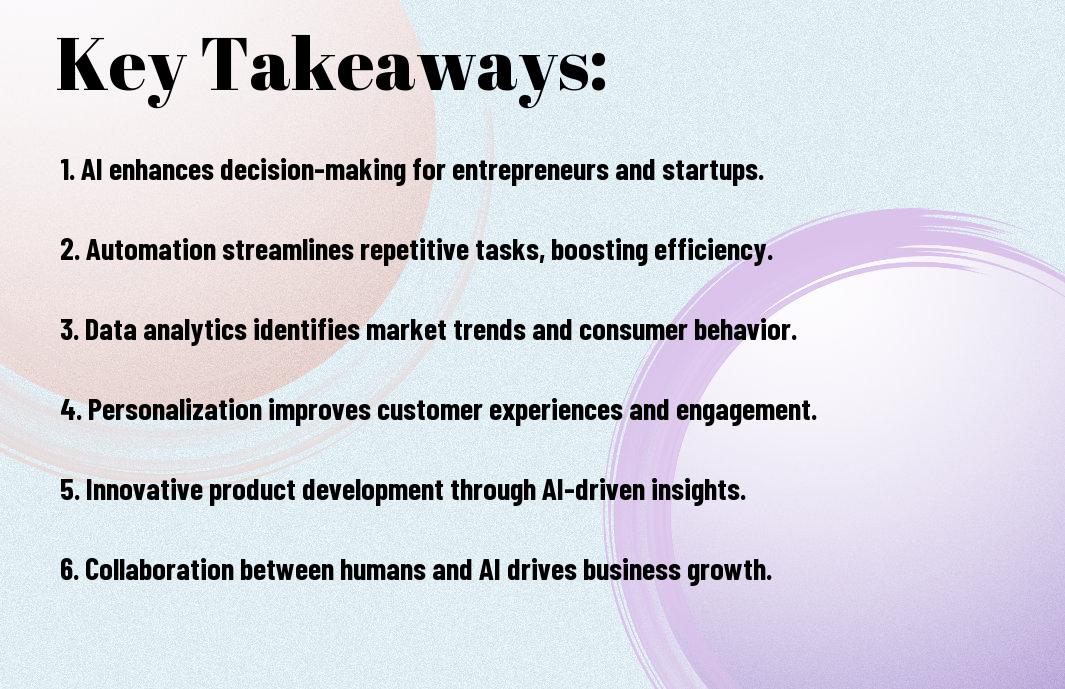
Key Takeaways:

  • The book “The Roadmap to Riches” provides a comprehensive guide to achieving entrepreneurial success through the strategic use of Artificial Intelligence (AI), highlighting the potential for AI-driven tactics to revolutionize business operations and decision-making processes.
  • By leveraging AI, entrepreneurs can gain valuable insights into market trends, customer behavior, and competitor activity, enabling them to make informed decisions and stay ahead of the competition in an increasingly complex and dynamic business landscape.
  • Effective implementation of AI-driven tactics requires a deep understanding of the technology and its applications, as well as the ability to adapt and innovate in response to emerging opportunities and challenges, making it crucial for entrepreneurs to stay up-to-date with the latest developments in AI and its potential to drive business growth.

The AI Revolution in Business

For entrepreneurs, understanding the AI revolution is key to unlocking new opportunities. You will learn how to leverage AI to drive growth, improve efficiency, and gain a competitive edge. Your business will thrive in a rapidly changing landscape with the right AI-driven strategies.

Core AI Technologies for Entrepreneurs

Upon exploring the world of AI, you’ll discover key technologies that can transform your business. You will learn about machine learning, natural language processing, and computer vision, and how to apply them to your entrepreneurial ventures.

Market Disruption Opportunities

Businesses like yours can capitalize on AI-driven market disruptions. You can identify areas where AI can solve real-world problems, creating new products, services, and revenue streams.

Consequently, as you explore deeper into market disruption opportunities, you’ll find that AI can help you anticipate and respond to changing market conditions, allowing you to stay ahead of the competition and achieve your business goals. You will be able to identify gaps in the market and create innovative solutions that meet the evolving needs of your customers.
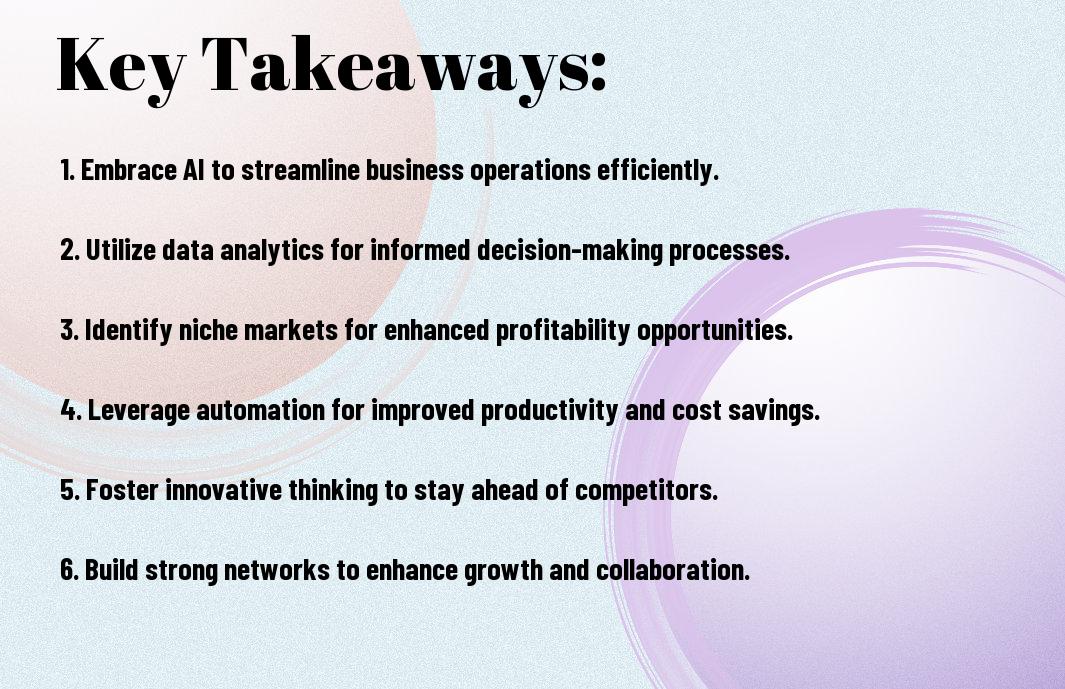
Data-Driven Decision Making

Now that you’re on the path to entrepreneurial success, leveraging data is key. You’ll make informed decisions, driving your business forward with precision and accuracy, using AI-driven tactics to analyze and interpret complex data sets.

Customer Analytics That Matter

Alike other successful entrepreneurs, you will focus on customer analytics that provide actionable insights, helping you understand your target audience and tailor your strategies to meet their needs, ultimately boosting your business’s growth and profitability.

Predictive Business Modeling

Most notably, you will utilize predictive business modeling to forecast market trends and identify potential opportunities, enabling you to stay ahead of the competition and make data-driven decisions that drive your business forward.

Making the most of predictive business modeling, you will be able to analyze historical data, identify patterns, and predict future outcomes, allowing you to optimize your business strategies, mitigate risks, and capitalize on new opportunities, giving you a competitive edge in the market and driving your business towards long-term success.

Automation Strategies

After implementing AI-driven tactics, you’ll notice a significant boost in your business’s efficiency. Automation strategies enable you to streamline tasks, freeing up time for more strategic decision-making, allowing you to focus on growing your entrepreneurial venture.

Workflow Optimization

Besides enhancing productivity, workflow optimization helps you identify areas where AI can be leveraged to improve your business processes, enabling you to make data-driven decisions and drive your company forward.

Cost Reduction Tactics

Beneath the surface of automation strategies lies the potential for significant cost savings. By adopting cost reduction tactics, you can minimize waste, reduce labor costs, and allocate resources more effectively, ultimately increasing your bottom line.

Indeed, cost reduction tactics are a key component of automation strategies, allowing you to reap the benefits of AI-driven efficiencies while minimizing expenses. As you explore cost reduction tactics, you’ll discover opportunities to renegotiate contracts, optimize supply chains, and eliminate unnecessary expenditures, all of which will contribute to the long-term financial health and success of your business.

AI-Enhanced Marketing

Keep your marketing strategy ahead of the curve with AI-driven tactics that amplify your reach and engagement. You can leverage AI to analyze customer data, identify trends, and create personalized experiences that drive conversions and boost your bottom line.

Personalization at Scale

Behind every successful marketing campaign is a deep understanding of your target audience. You can use AI to segment your audience, tailor your messaging, and deliver content that resonates with your customers, fostering a loyal community around your brand.

Conversion Optimization

Any marketer knows that conversion rates are the ultimate measure of success. You can use AI-powered tools to optimize your website, streamline your sales funnel, and maximize your return on investment, ensuring that your marketing efforts yield tangible results.

Marketing teams can further utilize AI-driven conversion optimization to refine their strategies, identifying the most effective channels, messaging, and creative assets that drive conversions. You can apply AI algorithms to analyze customer behavior, predict purchase intent, and automate decision-making, allowing you to focus on high-level strategy and creative vision, while AI handles the heavy lifting of data analysis and optimization, ultimately driving your business forward.

Digital Product Development

Many entrepreneurs struggle to bring their digital product ideas to life, but with AI-driven tactics, you can streamline your development process and create innovative solutions that meet your customers’ needs. You can leverage AI-powered tools to analyze market trends, identify gaps, and develop tailored products that drive business growth.

Rapid Prototyping with AI

Around the clock, AI algorithms can process vast amounts of data, enabling you to quickly develop and refine your digital product prototypes, saving you time and resources. You can utilize AI-driven design tools to create interactive prototypes, test assumptions, and gather feedback from your target audience.

Testing and Iteration

Any successful digital product development process involves rigorous testing and iteration, and AI can help you optimize this phase. You can use AI-powered testing tools to identify bugs, detect patterns, and predict user behavior, allowing you to refine your product and improve its overall quality.

Another key aspect of testing and iteration is analyzing user feedback and incorporating it into your product development cycle. You can use AI-driven analytics tools to process user feedback, identify areas for improvement, and make data-driven decisions to enhance your digital product, ensuring it meets your customers’ evolving needs and exceeds their expectations, ultimately driving your business forward and contributing to your entrepreneurial success.

Scaling with Limited Resources

Your ability to scale your business with limited resources is a key factor in achieving success, and you can learn more about this in The AI-Driven Entrepreneur: Unleashing The Power Of AI For Business, which provides valuable insights on leveraging AI for growth.

Lean Team Management

Adeptly managing a small team is vital for maximizing productivity, and you’ll need to prioritize tasks, set clear goals, and empower your team members to take ownership of their work.

Strategic Outsourcing to AI

Outsourcing tasks to AI can help you free up resources and focus on high-priority tasks, allowing you to scale your business more efficiently, and you can use AI-powered tools to automate routine tasks and make data-driven decisions.

With strategic outsourcing to AI, you can access advanced technologies and expertise without having to invest in expensive infrastructure or hire specialized staff, enabling you to compete with larger businesses and achieve your goals more quickly, and you’ll be able to monitor and adjust your outsourcing strategy as your business evolves, ensuring that you’re always getting the most out of your resources.

Summing up

With these considerations, you now have a solid foundation to integrate AI-driven tactics into your entrepreneurial pursuits. As you initiate on your journey to riches, you can further explore the potential of AI by learning about Leveraging Artificial Intelligence in Business Strategy to optimize your approach and maximize your chances of success, ultimately transforming your business and securing your financial future, with your newfound understanding of AI-driven tactics.

FAQ

Q: What is “The Roadmap to Riches – AI-Driven Tactics for Entrepreneurial Success” and how can it help me achieve my business goals?

A: “The Roadmap to Riches – AI-Driven Tactics for Entrepreneurial Success” is a comprehensive guide designed to equip entrepreneurs with the latest AI-driven strategies and tactics to navigate the complex business landscape. By leveraging the power of artificial intelligence, this roadmap provides actionable insights and expert advice to help entrepreneurs make informed decisions, drive innovation, and achieve sustainable success in their respective industries.

Q: How does “The Roadmap to Riches” utilize AI-driven tactics to support entrepreneurial success?

A: “The Roadmap to Riches” harnesses the potential of AI to analyze market trends, identify opportunities, and predict potential challenges. By integrating AI-driven tools and techniques, entrepreneurs can optimize their business operations, enhance customer engagement, and develop data-driven marketing strategies that yield tangible results. This roadmap offers a unique blend of human expertise and AI-powered insights to help entrepreneurs stay ahead of the competition.

Q: What kind of support and resources can I expect from “The Roadmap to Riches” to help me implement AI-driven tactics in my business?

A: “The Roadmap to Riches” provides a wide range of support and resources, including step-by-step guides, video tutorials, and access to a community of like-minded entrepreneurs. Additionally, the roadmap offers customizable templates, worksheets, and checklists to help entrepreneurs apply AI-driven tactics to their specific business needs. With ongoing updates and new content added regularly, entrepreneurs can stay up-to-date with the latest AI trends and best practices.

Q: Is “The Roadmap to Riches” suitable for entrepreneurs at any stage of their business journey, or is it geared towards a specific level of experience?

A: “The Roadmap to Riches” is designed to be accessible and beneficial for entrepreneurs at any stage of their business journey, from startup founders to established business owners. The roadmap’s flexible and modular approach allows entrepreneurs to tailor the content to their specific needs and goals, whether they’re looking to launch a new venture, scale an existing business, or explore new markets and opportunities.

Q: How will “The Roadmap to Riches” help me measure the effectiveness of AI-driven tactics in my business and make data-driven decisions to drive growth?

A: “The Roadmap to Riches” provides entrepreneurs with a robust framework for tracking key performance indicators (KPIs) and measuring the impact of AI-driven tactics on their business. By leveraging AI-powered analytics and visualization tools, entrepreneurs can gain valuable insights into their business operations, identify areas for improvement, and make informed decisions to drive growth, optimize resources, and maximize returns on investment.

Reinventing the Business Landscape – AI Tools That Lead to Financial Success

As you navigate the ever-changing business world, you’re likely looking for ways to stay ahead of the curve and drive financial success. You can leverage AI tools to optimize your operations and increase revenue. To learn more about how AI can benefit your business, you can explore 9 AI Applications to Make Money & Boost Efficiency for Businesses, and discover the latest innovations that can transform your company’s financial landscape, helping you make informed decisions to propel your business forward.

Key Takeaways:

  • Implementing AI tools can significantly enhance business operations, leading to increased efficiency and reduced costs, which in turn can drive financial success by maximizing productivity and minimizing unnecessary expenditures.
  • AI-driven analytics can provide businesses with valuable insights into market trends and customer behavior, enabling them to make informed decisions and develop targeted strategies that foster growth and competitiveness.
  • By leveraging AI tools, businesses can automate routine tasks, streamline processes, and improve customer service, ultimately resulting in improved profitability and a stronger market position, allowing them to stay ahead of the competition in a rapidly evolving business landscape.

The AI Revolution in Business

Your business is on the cusp of a revolution, driven by AI tools that are transforming the way you operate, making you more efficient and profitable.

From Automation to Intelligence

Above all, AI is evolving from simple automation to intelligent systems that can analyze data, learn, and make decisions, enabling you to make informed choices and stay ahead of the competition.

The Economic Tipping Point

Tipping the scales in your favor, AI is creating new opportunities for growth, innovation, and financial success, allowing you to reinvent your business landscape and achieve unprecedented results.

And as you navigate this new landscape, you’ll discover that AI is not just a tool, but a strategic partner that can help you identify areas of improvement, optimize processes, and create new revenue streams, ultimately leading to increased profitability and a competitive edge in the market.

Essential AI Tools for Financial Growth

It is imperative to stay ahead of the curve when it comes to leveraging AI tools for financial success, and you can achieve this by incorporating the right technologies into your business strategy, enabling you to make informed decisions and drive growth.

Predictive Analytics Platforms

Precisely, predictive analytics platforms are designed to help you forecast future trends and patterns, allowing you to optimize your business operations and make data-driven decisions that drive financial growth and success.

Conversational AI for Customer Engagement

The ability to engage with your customers effectively is vital, and conversational AI can help you achieve this, enabling you to provide personalized support and improve customer satisfaction, which can lead to increased loyalty and retention, ultimately driving your financial success.

Due to the advancements in conversational AI, you can now automate customer support, freeing up resources and enabling your team to focus on high-value tasks, while also providing 24/7 support to your customers, helping you to build strong relationships and drive long-term financial growth.

Implementation Strategies That Work

Unlike traditional business approaches, AI tools require a unique set of implementation strategies to yield financial success. You will need to adapt your business model to leverage AI’s capabilities, and this may involve significant changes to your operations and workflow.

The 10,000 Hour Principle Applied to AI

Applied correctly, the concept of deliberate practice can be used to develop expertise in AI implementation, allowing you to unlock its full potential and drive business growth. You can achieve this by dedicating time and resources to learning and experimenting with AI tools.

Small Changes, Remarkable Outcomes

With even minor adjustments to your business strategy, you can start to see significant improvements in efficiency and productivity when using AI tools. You can begin by automating routine tasks and analyzing customer data to inform your decision-making.

That being said, the key to achieving remarkable outcomes with AI is to start small and scale up gradually, allowing you to test and refine your approach as you go. You can begin by identifying areas of your business where AI can have the most impact, and then develop a plan to implement and integrate AI tools in a way that supports your overall business goals.

Measuring AI’s Financial Impact

Many businesses are now leveraging AI to drive financial success, and as you consider implementing AI tools, it’s vital to understand their impact on your bottom line. You need to assess the financial benefits and returns on investment to make informed decisions about your AI strategy.

Beyond Traditional ROI Metrics

Besides conventional measures, you should consider the broader financial implications of AI on your business, including increased efficiency, improved customer satisfaction, and enhanced decision-making capabilities, allowing you to make more accurate assessments of your AI investments.

The Outlier Advantage

The key to unlocking AI’s full financial potential lies in identifying and capitalizing on unique opportunities that set your business apart from others, enabling you to stay ahead of the competition and drive long-term financial success.

At the heart of the outlier advantage is your ability to analyze and act on data-driven insights that others may miss, allowing you to make strategic decisions that drive innovation and financial growth, and as you explore AI tools, you’ll discover new ways to gain a competitive edge and propel your business forward.

Navigating AI Challenges

To successfully integrate AI into your business, you must be aware of the potential obstacles that can hinder your progress, and develop strategies to overcome them, ensuring your path to financial success remains uninterrupted.

The Paradox of Choice

With numerous AI tools available, you face a dilemma in selecting the most suitable ones for your business, and it’s imperative to evaluate each option carefully to make informed decisions that align with your goals.

Risk Mitigation Frameworks

Challenges associated with AI adoption can be significant, and you need to establish robust risk mitigation frameworks to protect your business from potential pitfalls, such as data breaches or algorithmic biases, and ensure a smooth transition.

Navigating the complexities of risk mitigation frameworks requires you to assess your business’s unique needs and develop tailored strategies to address them, enabling you to minimize risks and maximize the benefits of AI integration, ultimately leading to enhanced financial performance and a competitive edge in the market.

Future-Proofing Your AI Strategy

Now that you’re exploring AI tools for financial success, consider learning about How AI Is Dramatically Transforming the Wealth-Management Landscape to inform your approach. This will help you make informed decisions about your business’s future.

Adaptability as Competitive Advantage

Agility is key to staying ahead in the AI landscape, allowing you to pivot your strategy as new technologies emerge, and you can capitalize on opportunities that align with your business goals.

The Coming Inflection Point

Against the backdrop of rapid technological change, you must be prepared to evolve your AI strategy to stay competitive, and this means being open to new ideas and innovations that can drive your business forward.

Further, as you approach this inflection point, you’ll need to assess your current AI infrastructure and identify areas where you can improve efficiency, reduce costs, and enhance customer experiences, ultimately driving your business towards long-term financial success.

To wrap up

Drawing together the various threads of AI tools, you can now see how they revolutionize your business. By leveraging these innovative solutions, you enhance your decision-making, streamline operations, and drive growth. As you integrate AI into your strategy, you unlock new opportunities for financial success, staying ahead of the competition and shaping your business landscape. Your ability to adapt and innovate with AI tools will be the key to your long-term prosperity.

FAQ

Q: What are the primary AI tools that can lead to financial success in business?

A: The primary AI tools that can lead to financial success in business include machine learning algorithms, natural language processing, predictive analytics, and automation software. These tools can help businesses optimize operations, improve customer service, and make data-driven decisions to increase revenue and reduce costs. By leveraging these AI tools, businesses can gain a competitive edge and achieve financial success in today’s fast-paced market.

Q: How can AI tools help businesses optimize their operations and improve efficiency?

A: AI tools can help businesses optimize their operations and improve efficiency by automating repetitive tasks, analyzing large datasets, and providing insights into business processes. For example, AI-powered chatbots can handle customer inquiries, while machine learning algorithms can analyze production workflows to identify areas of improvement. By streamlining operations and reducing waste, businesses can save time and resources, leading to increased productivity and financial success.

Q: What role does data analytics play in AI-driven financial success?

A: Data analytics plays a significant role in AI-driven financial success, as it enables businesses to make informed decisions based on accurate and timely data. AI-powered analytics tools can analyze large datasets to identify trends, patterns, and correlations, providing valuable insights into customer behavior, market trends, and business performance. By leveraging data analytics, businesses can optimize their strategies, mitigate risks, and capitalize on opportunities, ultimately leading to financial success.

Q: How can businesses ensure the effective implementation of AI tools to achieve financial success?

A: To ensure the effective implementation of AI tools, businesses should start by identifying specific business problems or opportunities that AI can address. They should then develop a clear strategy and roadmap for AI adoption, including investing in the necessary infrastructure, talent, and training. Additionally, businesses should establish metrics to measure the success of AI initiatives and continuously monitor and evaluate their effectiveness. By taking a structured and strategic approach to AI implementation, businesses can maximize the potential of AI tools and achieve financial success.

Q: What are the potential risks and challenges associated with adopting AI tools for financial success?

A: The potential risks and challenges associated with adopting AI tools for financial success include data privacy and security concerns, job displacement, and the need for significant upfront investment in technology and talent. Additionally, businesses may face challenges in integrating AI tools with existing systems and processes, as well as ensuring that AI decision-making is transparent and explainable. To mitigate these risks, businesses should prioritize data governance, invest in employee retraining and upskilling, and carefully evaluate the potential return on investment for AI initiatives. By being aware of these potential risks and challenges, businesses can take steps to minimize them and ensure a successful AI adoption journey.

The AI Revolution in Entrepreneurship – Pioneering Paths to Financial Success

As you navigate the ever-changing landscape of entrepreneurship, you’re likely aware of the significant impact artificial intelligence (AI) is having on your industry. You’re seeing AI transform business models, streamline operations, and unlock new revenue streams. Your ability to harness AI’s power will be key to staying ahead of the competition and achieving financial success. You’re about to discover how AI is revolutionizing entrepreneurship and how you can leverage it to pioneer your own path to prosperity.

Key Takeaways:

  • The AI revolution is transforming the entrepreneurial landscape by providing new opportunities for innovation and growth, enabling entrepreneurs to automate tasks, gain insights from data, and make informed decisions to drive their businesses forward.
  • Entrepreneurs who embrace AI can gain a competitive edge in the market by developing new products and services, improving operational efficiency, and enhancing customer experiences, ultimately leading to increased revenue and financial success.
  • As AI technology continues to evolve, entrepreneurs must stay adaptable and be willing to invest in ongoing education and training to leverage the latest advancements and stay ahead of the curve in the rapidly changing business environment.

The Tipping Point of AI in Business

Your business is on the cusp of a revolution with AI, and you can learn more about its potential by reading Pioneering AI-Driven Financial Inclusion Through Transformative Innovation, which explores the latest advancements.

When Algorithms Become Partners

By leveraging AI, you can create powerful partnerships that drive your business forward, enabling you to make data-driven decisions and stay ahead of the competition.

The Little Things That Make Big Differences

Beside the obvious benefits, AI can also help you optimize everyday tasks, freeing up time for more strategic endeavors and ultimately leading to increased productivity.

Make the most of AI’s capabilities by integrating them into your daily operations, and you will start to notice significant improvements in efficiency and profitability, allowing you to focus on growing your business and achieving your goals.

AI’s Cognitive Advantage

One of the key benefits of AI in entrepreneurship is its ability to process vast amounts of data, providing you with valuable insights to inform your business decisions. This cognitive advantage enables you to stay ahead of the competition and make informed decisions quickly.

Pattern Recognition Beyond Human Capacity

Around the concept of pattern recognition, AI can analyze large datasets to identify trends and patterns that may elude you, giving you a unique perspective on your business and industry, allowing you to make more accurate predictions and strategic decisions.

The Outlier Effect in Decision Making

Between the lines of data analysis and decision making, AI helps you identify outliers and anomalies that can significantly impact your business, enabling you to adjust your strategies accordingly and minimize potential risks, which can be beneficial for your entrepreneurial endeavors.

Consequently, as you investigate deeper into the outlier effect, you’ll discover that AI’s ability to detect these anomalies can be a game-changer for your business, allowing you to capitalize on unexpected opportunities and mitigate potential threats, ultimately leading to increased financial success and a competitive edge in the market, where you can leverage AI’s capabilities to drive your entrepreneurial vision forward.

Reimagining Traditional Business Models

Many entrepreneurs are leveraging AI to transform their businesses, and you can too. By embracing innovation, you can stay ahead of the competition and achieve financial success.

The Subscription Economy Revolution

Businesses are shifting towards subscription-based models, offering you new revenue streams and opportunities for growth. You can adopt this approach to increase customer loyalty and retention.

From Products to AI-Enhanced Experiences

At the forefront of this revolution, you can create immersive experiences that combine AI and human interaction. You will be able to offer personalized services, increasing customer satisfaction and loyalty.

From this perspective, you can focus on developing AI-enhanced experiences that cater to individual needs. You will be able to collect data, analyze preferences, and create tailored solutions, setting your business apart from the competition and driving your financial success.

The Human-AI Collaborative Framework

Despite the rise of AI, your success as an entrepreneur still depends on your ability to work with machines, creating a collaborative framework that amplifies your strengths and those of AI, leading to innovative solutions and financial growth.

Complementary Intelligence

Any analysis of human-AI collaboration highlights the benefits of combining your creative problem-solving skills with the analytical power of AI, enabling you to make more informed decisions and drive your business forward.

The New Division of Labor

For you to maximize the potential of AI, it’s important to redefine the roles within your organization, allocating tasks that play to the strengths of both humans and machines, and ensuring a seamless workflow that boosts productivity and efficiency.

Considering the new division of labor, you’ll need to focus on developing skills that complement AI capabilities, such as strategic thinking, creativity, and emotional intelligence, allowing you to oversee and direct AI-driven processes, and make strategic decisions that drive your business towards financial success.

Financial Landscapes Transformed

Unlike traditional business models, AI-driven entrepreneurship offers unprecedented opportunities for financial growth. You can leverage AI to optimize your financial operations, predict market trends, and make data-driven decisions to drive your business forward.

Predictive Analytics and Capital Allocation

Leveraging similar technologies, you can harness predictive analytics to allocate your capital more efficiently, identifying areas of high potential return and minimizing risk. This enables you to make informed decisions, maximizing your financial gains.

Risk Assessment in the Algorithm Age

Shifting landscapes of risk assessment are transforming the way you approach financial decision-making. You can utilize AI algorithms to analyze vast amounts of data, identifying potential risks and opportunities, and adjusting your strategy accordingly.

Even as you navigate the complexities of risk assessment in the algorithm age, you can trust that AI-driven tools will provide you with actionable insights to inform your decisions. You will be able to identify potential pitfalls, mitigate risks, and capitalize on emerging trends, ultimately driving your business towards financial success.

Ethical Considerations and Guardrails

Once again, as you navigate the AI revolution in entrepreneurship, you’ll encounter complex ethical dilemmas. For guidance, consider exploring resources like Make Cash With AI: Your Gateway to Profit in the AI Revolution, which can help you make informed decisions.

The Responsibility Equation

AFTER delving into the world of AI, you’ll need to consider the responsibility that comes with leveraging automated systems, and how you can ensure your business practices align with your values and the law.

Building Trust in Automated Systems

BETWEEN the lines of code and data analysis, you’ll find that building trust in automated systems is imperative for your business’s success, and it starts with transparency and accountability in your AI-driven decision-making processes.

Plus, as you work to establish trust in your automated systems, you’ll need to prioritize ongoing monitoring and evaluation to identify potential biases and areas for improvement, ensuring that your AI solutions are fair, reliable, and aligned with your business goals and values, allowing you to maintain your customers’ trust and confidence in your brand.

Conclusion

With these considerations, you now have a solid foundation to navigate the AI revolution in entrepreneurship. You can harness AI’s potential to pioneer your path to financial success, leveraging its power to drive innovation and growth in your business. As you commence on this journey, your ability to adapt and evolve will be key to unlocking your full potential and achieving your goals.

FAQ

Q: What is the AI Revolution in Entrepreneurship and how is it changing the business landscape?

A: The AI Revolution in Entrepreneurship refers to the integration of artificial intelligence technologies into various aspects of business, enabling entrepreneurs to innovate, automate, and optimize their operations. This revolution is transforming the business landscape by providing entrepreneurs with unprecedented opportunities for growth, improved decision-making, and enhanced customer experiences. With AI, entrepreneurs can analyze vast amounts of data, identify patterns, and make informed decisions, ultimately leading to increased efficiency, productivity, and financial success.

Q: How can entrepreneurs leverage AI to pioneer new paths to financial success?

A: Entrepreneurs can leverage AI in numerous ways to pioneer new paths to financial success. For instance, they can use AI-powered tools to analyze market trends, predict customer behavior, and identify new business opportunities. Additionally, AI can be used to automate routine tasks, freeing up time for entrepreneurs to focus on strategic decision-making and innovation. AI can also be used to develop personalized marketing campaigns, improve customer service, and optimize supply chain management, ultimately leading to increased revenue and profitability.

Q: What are some of the key challenges that entrepreneurs may face when adopting AI in their businesses?

A: While AI offers numerous benefits, entrepreneurs may face several challenges when adopting AI in their businesses. These challenges include the need for significant investments in AI infrastructure, the requirement for specialized skills and expertise, and the potential risks associated with data privacy and security. Moreover, entrepreneurs may also face challenges in integrating AI with existing systems and processes, as well as addressing potential job displacement and workforce transformation. However, with careful planning, strategic investment, and a focus on upskilling and reskilling, entrepreneurs can overcome these challenges and harness the full potential of AI.

Q: How can entrepreneurs ensure that their AI-powered businesses are ethical and socially responsible?

A: Ensuring that AI-powered businesses are ethical and socially responsible is crucial for building trust with customers, employees, and stakeholders. Entrepreneurs can achieve this by prioritizing transparency, accountability, and fairness in their AI systems. They should also ensure that their AI systems are designed and trained to avoid bias, discrimination, and other forms of unfairness. Furthermore, entrepreneurs should establish clear guidelines and regulations for the use of AI, invest in AI literacy and education, and engage in ongoing monitoring and evaluation to ensure that their AI systems are aligned with human values and societal norms.

Q: What is the future of AI in entrepreneurship, and how can entrepreneurs prepare themselves for the opportunities and challenges that lie ahead?

A: The future of AI in entrepreneurship is exciting and rapidly evolving. As AI technologies continue to advance, entrepreneurs can expect to see even more innovative applications of AI in areas such as natural language processing, computer vision, and predictive analytics. To prepare themselves for the opportunities and challenges that lie ahead, entrepreneurs should focus on developing a deep understanding of AI technologies, investing in ongoing education and training, and building a strong network of AI experts and partners. By staying ahead of the curve and embracing the potential of AI, entrepreneurs can unlock new paths to financial success, drive innovation, and create a better future for themselves, their customers, and society as a whole.

Entrepreneurial Success in the AI Era – Lessons from the Front Lines

As you navigate the rapidly evolving business landscape, you’re likely wondering how to leverage artificial intelligence to drive your venture forward. Your ability to adapt and innovate will be key to staying ahead of the curve. You’ll need to understand how AI is transforming industries and identify opportunities to harness its power. In this post, you’ll gain valuable insights from entrepreneurs who have successfully integrated AI into their businesses, and learn how to apply these lessons to achieve your own success.

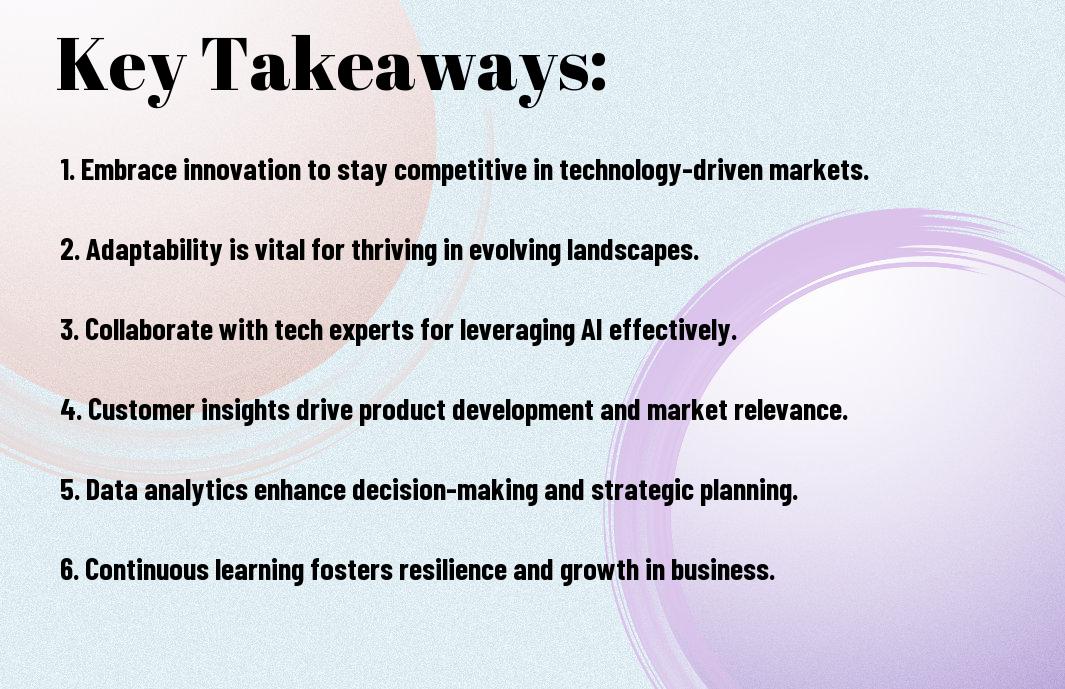
Key Takeaways:

  • Embracing AI technology is important for entrepreneurs to stay competitive in today’s fast-paced business landscape, as it enables them to automate tasks, gain insights, and make data-driven decisions.
  • Developing a deep understanding of AI and its applications is vital for entrepreneurs to identify opportunities and challenges, and to create innovative solutions that leverage AI capabilities.
  • Building a strong team with diverse skills, including AI expertise, is necessary for entrepreneurs to successfully develop and implement AI-powered products and services.
  • Entrepreneurs must prioritize ethics and responsibility when developing and deploying AI systems, ensuring that they are transparent, fair, and respectful of user data and privacy.
  • Staying adaptable and agile is key for entrepreneurs to navigate the rapidly evolving AI landscape, as they must be prepared to pivot and adjust their strategies in response to new technologies and market trends.

    The New Entrepreneurial Landscape

    Before entering the entrepreneurial arena, you need to understand the shifting dynamics of the business world. The AI era has brought about significant changes, and you must be prepared to adapt and innovate to succeed.

    AI as the Great Equalizer

    Generally, AI has leveled the playing field, allowing small businesses and startups to compete with larger corporations. You can now access advanced technologies and tools, enabling you to scale and grow your business more efficiently.

    The Velocity of Change

    Against the backdrop of rapid technological advancements, you must be agile and responsive to changing market conditions. You need to stay ahead of the curve, anticipating and adapting to new trends and innovations.

    This velocity of change requires you to be highly adaptable and open to new ideas and strategies. You must be willing to pivot your business model, products, or services to stay relevant in a rapidly evolving market. By doing so, you can capitalize on new opportunities and stay ahead of the competition, ultimately driving your entrepreneurial success in the AI era.

    First-Principles Thinking

    Now, as you navigate the AI era, you’ll need to adopt a mindset that allows you to challenge conventional wisdom and think creatively. This involves breaking down complex problems into their fundamental components and solving them from the ground up.

    Questioning Assumptions

    For instance, you should constantly question the assumptions that underlie your business model and be willing to pivot when necessary. By doing so, you’ll be able to identify new opportunities and stay ahead of the competition.

    Building from the Ground Up

    On the other hand, building from the ground up allows you to create a solid foundation for your business, unencumbered by legacy systems or outdated thinking. You can design and optimize each component to work seamlessly together, creating a more efficient and effective whole.

    Plus, when you build from the ground up, you have the opportunity to incorporate AI and other emerging technologies into the very fabric of your business, enabling you to innovate and adapt more quickly to changing market conditions, and ultimately, driving your entrepreneurial success.

    Adaptation Over Perfection

    Not every entrepreneurial venture will be a perfect, polished product from the start. You will encounter setbacks and make adjustments as you navigate the AI era.

    The Minimum Viable Product Philosophy

    Among the strategies you can employ is launching a minimum viable product, allowing you to test and refine your offering based on user feedback, helping you to adapt quickly to changing market conditions.

    Iterative Growth Cycles

    By embracing iterative growth cycles, you can continuously evaluate and improve your product or service, ensuring it meets the evolving needs of your customers and stays competitive in the market.

    In addition, as you progress through these cycles, you will gather valuable insights and data, enabling you to make informed decisions about your business, and driving your entrepreneurial success in the AI era, allowing you to stay ahead of the curve and achieve your goals.

    Data as the New Currency

    Many entrepreneurs are now recognizing the value of data in driving business decisions and gaining a competitive edge. You can leverage data to inform your strategy, optimize operations, and create new opportunities for growth. As you navigate the AI era, your ability to collect, analyze, and apply data will be important to your success.

    Harvesting Meaningful Insights

    Upon closer examination, you’ll find that data holds the key to unlocking meaningful insights that can transform your business. You can use data analytics tools to identify trends, patterns, and correlations that inform your decision-making and drive innovation. By doing so, you’ll be able to refine your strategy and stay ahead of the curve.

    Ethical Considerations

    Any entrepreneur operating in the AI era must consider the ethical implications of data collection and usage. You need to ensure that your data practices are transparent, secure, and respectful of users’ privacy. As you develop your data strategy, you should prioritize ethical considerations to maintain trust and avoid potential pitfalls.

    Hence, as you probe deeper into the world of data-driven decision-making, you’ll need to balance the benefits of data analysis with the potential risks and consequences. You should establish clear guidelines and protocols for data collection, storage, and usage, and invest in robust security measures to protect sensitive information. By doing so, you’ll be able to harness the power of data while maintaining the trust and integrity of your business.

    The Human Element

    Unlike other factors that contribute to entrepreneurial success, the human element is often overlooked in the AI era. You must prioritize your team’s skills and abilities to stay competitive.

    Emotional Intelligence in the AI Age

    Along with technological advancements, you need to develop emotional intelligence to effectively lead and manage your team in this new landscape, ensuring you make informed decisions that balance human and artificial intelligence.

    Building Teams That Complement Technology

    With the rise of AI, you should focus on building teams that complement technology, rather than replacing it, to maximize efficiency and innovation in your organization.

    Complement your technology with a team that possesses skills such as creativity, problem-solving, and adaptability, allowing you to leverage AI’s capabilities while maintaining a human touch, and you will be able to drive your business forward in the AI era, making the most of the unique strengths that both humans and machines bring to the table.

    Funding in the AI Ecosystem

    Once again, you find yourself at the forefront of innovation, navigating the complex landscape of funding in the AI era, where traditional models are being disrupted and new opportunities are emerging, allowing you to capitalize on your vision.

    New Venture Capital Paradigms

    To succeed, you need to understand the evolving venture capital landscape, where AI-focused funds and investors are looking for startups that can leverage AI to drive growth and returns, and you must be prepared to demonstrate your AI strategy to secure funding.

    Alternative Financing Routes

    Along with traditional venture capital, you can explore alternative financing options, such as crowdfunding, angel investors, and corporate venture arms, which can provide the necessary capital to fuel your AI-driven venture, and you should consider these options to fund your growth.

    In fact, alternative financing routes can offer you more flexibility and control over your business, allowing you to maintain equity and make strategic decisions without external pressure, and you should carefully evaluate these options to determine the best fit for your AI startup, considering factors such as investment size, valuation, and investor expectations, to ensure that you secure the funding you need to drive your business forward.

    To wrap up

    On the whole, you now have a deeper understanding of what it takes to achieve entrepreneurial success in the AI era. You have learned valuable lessons from the front lines, and you can apply these insights to your own business ventures. As you move forward, you will be able to leverage AI to drive innovation and growth, and your ability to adapt will be key to staying ahead of the curve and achieving your goals in this rapidly evolving landscape.

    FAQ

    Q: What are the key characteristics of successful entrepreneurs in the AI era?

    A: Successful entrepreneurs in the AI era are those who are able to adapt quickly to changing market conditions, leverage AI technologies to drive innovation, and foster a culture of experimentation and continuous learning within their organizations. They are also able to identify and capitalize on new opportunities created by AI, such as the development of new products and services, and the creation of new business models. Additionally, they are able to navigate the ethical and societal implications of AI, and prioritize transparency, accountability, and fairness in their use of AI technologies.

    Q: How can entrepreneurs effectively integrate AI into their business strategy to drive growth and competitiveness?

    A: Entrepreneurs can effectively integrate AI into their business strategy by starting with a clear understanding of their business goals and identifying areas where AI can add value. They should then develop a roadmap for AI adoption, which includes assessing their current data infrastructure, identifying potential AI applications, and developing a plan for implementing and scaling AI solutions. It’s also important to invest in employee education and training, to ensure that they have the skills needed to work effectively with AI technologies. Furthermore, entrepreneurs should prioritize ongoing evaluation and monitoring of AI systems, to ensure that they are delivering the expected benefits and to identify areas for improvement.

    Q: What are some common pitfalls that entrepreneurs should avoid when navigating the AI landscape, and how can they mitigate potential risks?

    A: Common pitfalls that entrepreneurs should avoid when navigating the AI landscape include underestimating the complexity of AI technologies, overestimating their potential benefits, and failing to consider the potential risks and downsides of AI adoption. To mitigate these risks, entrepreneurs should take a nuanced and informed approach to AI adoption, which includes conducting thorough research and due diligence, developing a clear understanding of the potential benefits and risks of AI, and prioritizing transparency, accountability, and fairness in their use of AI technologies. They should also invest in ongoing monitoring and evaluation, to ensure that AI systems are delivering the expected benefits and to identify areas for improvement. By taking a thoughtful and informed approach to AI adoption, entrepreneurs can minimize the risks and maximize the benefits of AI for their businesses.

Entrepreneurial Success in the AI Era – Lessons from the Front Lines

As you navigate the rapidly evolving business landscape, you’re likely wondering how to leverage artificial intelligence to drive your venture forward. Your ability to adapt and innovate will be key to staying ahead of the curve. You’ll need to understand how AI is transforming industries and identify opportunities to harness its power. In this post, you’ll gain valuable insights from entrepreneurs who have successfully integrated AI into their businesses, and learn how to apply these lessons to achieve your own success.

Key Takeaways:

  • Embracing AI technology is important for entrepreneurs to stay competitive in today’s fast-paced business landscape, as it enables them to automate tasks, gain insights, and make data-driven decisions.
  • Developing a deep understanding of AI and its applications is vital for entrepreneurs to identify opportunities and challenges, and to create innovative solutions that leverage AI capabilities.
  • Building a strong team with diverse skills, including AI expertise, is necessary for entrepreneurs to successfully develop and implement AI-powered products and services.
  • Entrepreneurs must prioritize ethics and responsibility when developing and deploying AI systems, ensuring that they are transparent, fair, and respectful of user data and privacy.
  • Staying adaptable and agile is key for entrepreneurs to navigate the rapidly evolving AI landscape, as they must be prepared to pivot and adjust their strategies in response to new technologies and market trends.

    The New Entrepreneurial Landscape

    Before entering the entrepreneurial arena, you need to understand the shifting dynamics of the business world. The AI era has brought about significant changes, and you must be prepared to adapt and innovate to succeed.

    AI as the Great Equalizer

    Generally, AI has leveled the playing field, allowing small businesses and startups to compete with larger corporations. You can now access advanced technologies and tools, enabling you to scale and grow your business more efficiently.

    The Velocity of Change

    Against the backdrop of rapid technological advancements, you must be agile and responsive to changing market conditions. You need to stay ahead of the curve, anticipating and adapting to new trends and innovations.

    This velocity of change requires you to be highly adaptable and open to new ideas and strategies. You must be willing to pivot your business model, products, or services to stay relevant in a rapidly evolving market. By doing so, you can capitalize on new opportunities and stay ahead of the competition, ultimately driving your entrepreneurial success in the AI era.

    First-Principles Thinking

    Now, as you navigate the AI era, you’ll need to adopt a mindset that allows you to challenge conventional wisdom and think creatively. This involves breaking down complex problems into their fundamental components and solving them from the ground up.

    Questioning Assumptions

    For instance, you should constantly question the assumptions that underlie your business model and be willing to pivot when necessary. By doing so, you’ll be able to identify new opportunities and stay ahead of the competition.

    Building from the Ground Up

    On the other hand, building from the ground up allows you to create a solid foundation for your business, unencumbered by legacy systems or outdated thinking. You can design and optimize each component to work seamlessly together, creating a more efficient and effective whole.

    Plus, when you build from the ground up, you have the opportunity to incorporate AI and other emerging technologies into the very fabric of your business, enabling you to innovate and adapt more quickly to changing market conditions, and ultimately, driving your entrepreneurial success.

    Adaptation Over Perfection

    Not every entrepreneurial venture will be a perfect, polished product from the start. You will encounter setbacks and make adjustments as you navigate the AI era.

    The Minimum Viable Product Philosophy

    Among the strategies you can employ is launching a minimum viable product, allowing you to test and refine your offering based on user feedback, helping you to adapt quickly to changing market conditions.

    Iterative Growth Cycles

    By embracing iterative growth cycles, you can continuously evaluate and improve your product or service, ensuring it meets the evolving needs of your customers and stays competitive in the market.

    In addition, as you progress through these cycles, you will gather valuable insights and data, enabling you to make informed decisions about your business, and driving your entrepreneurial success in the AI era, allowing you to stay ahead of the curve and achieve your goals.

    Data as the New Currency

    Many entrepreneurs are now recognizing the value of data in driving business decisions and gaining a competitive edge. You can leverage data to inform your strategy, optimize operations, and create new opportunities for growth. As you navigate the AI era, your ability to collect, analyze, and apply data will be important to your success.

    Harvesting Meaningful Insights

    Upon closer examination, you’ll find that data holds the key to unlocking meaningful insights that can transform your business. You can use data analytics tools to identify trends, patterns, and correlations that inform your decision-making and drive innovation. By doing so, you’ll be able to refine your strategy and stay ahead of the curve.

    Ethical Considerations

    Any entrepreneur operating in the AI era must consider the ethical implications of data collection and usage. You need to ensure that your data practices are transparent, secure, and respectful of users’ privacy. As you develop your data strategy, you should prioritize ethical considerations to maintain trust and avoid potential pitfalls.

    Hence, as you probe deeper into the world of data-driven decision-making, you’ll need to balance the benefits of data analysis with the potential risks and consequences. You should establish clear guidelines and protocols for data collection, storage, and usage, and invest in robust security measures to protect sensitive information. By doing so, you’ll be able to harness the power of data while maintaining the trust and integrity of your business.

    The Human Element

    Unlike other factors that contribute to entrepreneurial success, the human element is often overlooked in the AI era. You must prioritize your team’s skills and abilities to stay competitive.

    Emotional Intelligence in the AI Age

    Along with technological advancements, you need to develop emotional intelligence to effectively lead and manage your team in this new landscape, ensuring you make informed decisions that balance human and artificial intelligence.

    Building Teams That Complement Technology

    With the rise of AI, you should focus on building teams that complement technology, rather than replacing it, to maximize efficiency and innovation in your organization.

    Complement your technology with a team that possesses skills such as creativity, problem-solving, and adaptability, allowing you to leverage AI’s capabilities while maintaining a human touch, and you will be able to drive your business forward in the AI era, making the most of the unique strengths that both humans and machines bring to the table.

    Funding in the AI Ecosystem

    Once again, you find yourself at the forefront of innovation, navigating the complex landscape of funding in the AI era, where traditional models are being disrupted and new opportunities are emerging, allowing you to capitalize on your vision.

    New Venture Capital Paradigms

    To succeed, you need to understand the evolving venture capital landscape, where AI-focused funds and investors are looking for startups that can leverage AI to drive growth and returns, and you must be prepared to demonstrate your AI strategy to secure funding.

    Alternative Financing Routes

    Along with traditional venture capital, you can explore alternative financing options, such as crowdfunding, angel investors, and corporate venture arms, which can provide the necessary capital to fuel your AI-driven venture, and you should consider these options to fund your growth.

    In fact, alternative financing routes can offer you more flexibility and control over your business, allowing you to maintain equity and make strategic decisions without external pressure, and you should carefully evaluate these options to determine the best fit for your AI startup, considering factors such as investment size, valuation, and investor expectations, to ensure that you secure the funding you need to drive your business forward.

    To wrap up

    On the whole, you now have a deeper understanding of what it takes to achieve entrepreneurial success in the AI era. You have learned valuable lessons from the front lines, and you can apply these insights to your own business ventures. As you move forward, you will be able to leverage AI to drive innovation and growth, and your ability to adapt will be key to staying ahead of the curve and achieving your goals in this rapidly evolving landscape.

    FAQ

    Q: What are the key characteristics of successful entrepreneurs in the AI era?

    A: Successful entrepreneurs in the AI era are those who are able to adapt quickly to changing market conditions, leverage AI technologies to drive innovation, and foster a culture of experimentation and continuous learning within their organizations. They are also able to identify and capitalize on new opportunities created by AI, such as the development of new products and services, and the creation of new business models. Additionally, they are able to navigate the ethical and societal implications of AI, and prioritize transparency, accountability, and fairness in their use of AI technologies.

    Q: How can entrepreneurs effectively integrate AI into their business strategy to drive growth and competitiveness?

    A: Entrepreneurs can effectively integrate AI into their business strategy by starting with a clear understanding of their business goals and identifying areas where AI can add value. They should then develop a roadmap for AI adoption, which includes assessing their current data infrastructure, identifying potential AI applications, and developing a plan for implementing and scaling AI solutions. It’s also important to invest in employee education and training, to ensure that they have the skills needed to work effectively with AI technologies. Furthermore, entrepreneurs should prioritize ongoing evaluation and monitoring of AI systems, to ensure that they are delivering the expected benefits and to identify areas for improvement.

    Q: What are some common pitfalls that entrepreneurs should avoid when navigating the AI landscape, and how can they mitigate potential risks?

    A: Common pitfalls that entrepreneurs should avoid when navigating the AI landscape include underestimating the complexity of AI technologies, overestimating their potential benefits, and failing to consider the potential risks and downsides of AI adoption. To mitigate these risks, entrepreneurs should take a nuanced and informed approach to AI adoption, which includes conducting thorough research and due diligence, developing a clear understanding of the potential benefits and risks of AI, and prioritizing transparency, accountability, and fairness in their use of AI technologies. They should also invest in ongoing monitoring and evaluation, to ensure that AI systems are delivering the expected benefits and to identify areas for improvement. By taking a thoughtful and informed approach to AI adoption, entrepreneurs can minimize the risks and maximize the benefits of AI for their businesses.

Skip to content