
Many factors come into play when predicting the outcome of a horse race, but one key element that often gets overlooked is the condition of the track. Understanding how the track’s condition affects a horse’s performance can give you a competitive edge in your race predictions. So, sit back, grab a drink, and let’s examine how different track conditions can impact the outcome of a race.
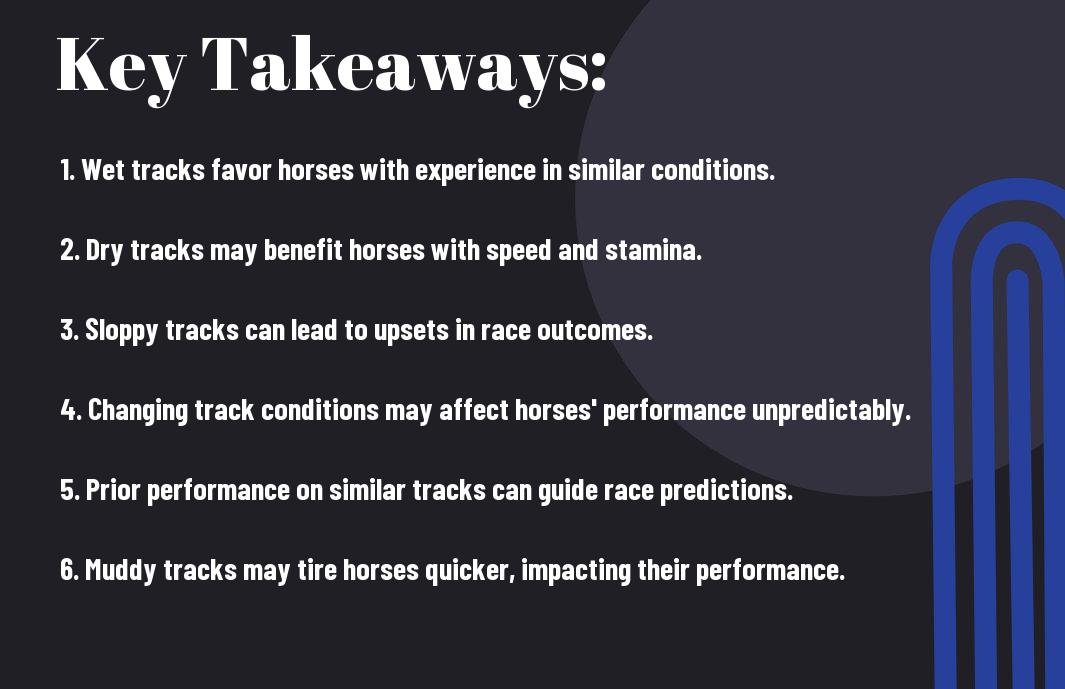
Key Takeaways:
- Track Condition and Performance: The condition of the track, whether it’s fast, muddy, sloppy, or firm, significantly affects the performance of horses in a race.
- Adaptability of Horses: Some horses perform better on specific track conditions, while others are more versatile and can adapt to various conditions, making track condition an important factor in predicting horse race outcomes.
- Expert Analysis: Consulting expert analysis and past performance data on how specific horses have performed under different track conditions can provide valuable insights for making informed predictions.
The Physical Condition of the Track
Before venturing into how the track condition affects horse race predictions, it’s vital to understand the different types of surfaces that horses can race on: Dirt, Turf, and Synthetic.
Surface Types: Dirt, Turf, and Synthetic
To start, dirt tracks are the most common surfaces in horse racing, offering varying degrees of firmness. Turf tracks, on the other hand, are made of grass and can be affected by weather conditions more than dirt. Synthetic tracks are designed to provide a consistent surface regardless of weather, offering a more predictable racing experience for horses and bettors alike.
| Dirt | Varying degrees of firmness |
| Turf | Affected by weather conditions |
| Synthetic | Consistent surface regardless of weather |
Any
information about the type of surface the race will be held on is crucial to consider when predicting race outcomes. Different horses perform better on specific track surfaces, so knowing the surface type can give you a competitive edge in your predictions.
Track Maintenance and Its Impact on Horse Performance
To investigate further into the physical condition of the track, understanding how track maintenance can affect horse performance is important.
Maintenance work on the track, such as harrowing or watering, can greatly impact how fast or slow the track is on race day. Proper maintenance ensures a fair and safe surface for all horses, ultimately influencing their performance.
Synthetic tracks require less maintenance compared to dirt or turf tracks, offering a more consistent surface for horses to race on. This consistency can lead to more predictable outcomes in races, as horses don’t have to contend with changing track conditions.
Weather Conditions and Their Effects
The weather conditions on race day can significantly impact the performance of horses. Understanding how different weather elements affect the track can give you valuable insights for making predictions.
Rain and Mud: How They Affect Horse Traction
Affecting the condition of the track, rain can turn a fast track into a sloppy one, making it harder for horses to maintain their speed and affecting their traction. Horses tend to struggle more in muddy conditions, slipping and sliding, which can lead to unexpected outcomes in races. When handicapping races on wet tracks, consider looking for horses with previous successful performances in such conditions.
Heat and Humidity: The Impact on Horse Endurance
They affect not only the horses but also the way races unfold. High temperatures and humidity levels can challenge a horse’s stamina, affecting their overall performance and potentially causing fatigue. Understanding how heat impacts different horses can help you make more accurate predictions, especially in longer races where endurance plays a significant role in determining the outcome.
To help you make informed decisions when predicting horse race outcomes, consider the weather conditions on race day and how they might impact the performance of the horses involved. By factoring in these variables, you can improve the accuracy of your predictions and gain an edge in your handicapping efforts.

Track Configuration and Its Influence
All factors related to the track configuration can significantly impact horse race predictions.
Track Shape and Size: How They Affect Horse Speed
Affecting horse speeds, track shape and size play a crucial role in determining the outcome of races. Smaller tracks with sharper turns may favor horses with quick acceleration and nimble maneuvering skills. On the other hand, larger tracks with longer straightaways can benefit horses with sustained speed and endurance. Understanding how track dimensions align with your horse’s strengths and racing style can give you a competitive edge in making accurate predictions.
Turns and Corners: The Role of Centrifugal Force
Force, the centrifugal force exerted on horses when navigating turns and corners can either propel them forward or hinder their momentum. Sharp turns require horses to exert more energy to overcome the outward force pulling them away from the inner track. It’s important to consider how your chosen horse handles turns – whether it can maintain its speed through corners or if it tends to slow down, potentially losing ground to competitors.
Track layouts can vary greatly, with some featuring tight turns that demand frequent deceleration and acceleration, while others have more gradual curves that allow horses to maintain a steady pace. By observing how horses handle different track configurations in varying conditions, you can refine your race predictions and make informed decisions when placing your bets.
The Role of Track Bias
What is Track Bias and How Does it Affect Horse Performance?
Now, when considering track bias, it refers to the tendency of a racetrack to give advantage or disadvantage to horses depending on their starting positions, the condition of the track, or other factors. This bias can significantly impact a horse’s performance and ultimately affect race predictions. For example, a track bias that favors inside positions may give an edge to horses starting closer to the rail, affecting how they run the race and potentially altering the outcome.
Identifying and Accounting for Track Bias in Predictions
To track bias and make accurate predictions, you need to pay attention to how different parts of the track are performing throughout the race day. Factors like the weather, track surface, and maintenance can all contribute to track bias. By analyzing past races and observing patterns, you can identify potential biases and adjust your predictions accordingly.
It is crucial to gather as much information as possible about the track conditions and any known biases before placing your bets. By staying informed and adapting your strategies based on the track bias, you can make more informed predictions and increase your chances of success in horse race betting.

The Impact of Track Conditions on Horse Behavior
How Horses Adapt to Different Track Conditions
Conditions on the track play a significant role in how horses perform. Not all horses react similarly to varying track conditions. Some horses might excel on dry, fast tracks, while others might prefer tracks with moisture or a bit of give in them. When analyzing races, it’s necessary to consider how each horse has performed on different track conditions in the past to make more accurate predictions.
Behavioral Cues to Watch for When Analyzing Track Conditions
One key aspect to consider is how horses behave before and during the race in response to the track conditions. Observing how a horse moves during warm-up and how they handle the surface can provide valuable insights into their comfort level. Some horses might show signs of agitation or unease on certain track conditions, which could impact their performance. Pay attention to how horses handle turns, straightaways, and any shifts in the track surface as these can all affect their performance.
Conditions on the track can influence a horse’s demeanor and body language. Watch for signs of distress or discomfort, such as excessive sweating, fighting the bit, or reluctance to move forward. These behavioral cues can indicate whether a horse is likely to struggle or thrive in specific track conditions, helping you make more informed predictions when placing your bets.
Historical Data and Its Significance
Many horse racing enthusiasts understand the importance of historical data when it comes to predicting race outcomes. By looking back at past performances, bettors can gain valuable insights into how a horse might perform under specific conditions. For example, weather conditions can play a significant role in a horse’s performance, as exemplified by the impact of muddy tracks on races like the Kentucky Derby Weather’s Role in the Kentucky Derby and How Muddy Conditions Impact Horse Performance.
Analyzing Past Performances on Similar Tracks
Any successful bettor knows that analyzing past performances on tracks similar to the current racing conditions can provide valuable insights. By looking at how a horse has fared on specific track surfaces, distances, and weather conditions in the past, you can better gauge its chances of success in the upcoming race.
Using Historical Data to Inform Predictions
To improve your predictions, you can use historical data to identify patterns and trends that may impact a horse’s performance. By analyzing factors such as past race results, jockey and trainer statistics, and track biases, you can make more informed decisions when placing your bets.
Data-driven insights from historical data can give you a competitive edge when predicting horse race outcomes. By incorporating these analyses into your handicapping process, you can increase your chances of making successful bets.
Conclusion
Hence, when considering how the condition of the track affects horse race predictions, it is crucial to understand the significant impact it can have on the outcome of a race. The condition of the track plays a vital role in determining which horses may perform better, depending on their preferences and strengths in specific conditions. As a result, analyzing the track conditions and how they may affect each horse’s performance can provide valuable insights to help you make more informed predictions.
Note, the condition of the track is just one of the many factors to consider when predicting horse races. By paying close attention to this detail and factoring it into your predictions, you can increase your chances of making accurate predictions and potentially winning your bets. So, keep an eye on the track conditions, do your research, and trust your instincts – you never know when that extra piece of information could make all the difference in your horse race predictions.
FAQ
Q: How does the condition of the track affect horse race predictions?
A: The condition of the track, such as being fast, muddy, or sloppy, plays a significant role in horse race predictions. Horses may perform differently based on their preferred track conditions, so it’s important to consider how they have fared in similar conditions in the past when making predictions.
Q: What factors should be considered when analyzing how the track condition affects race predictions?
A: Factors to consider include how each horse has performed on similar track conditions in the past, whether they have a preference for a particular type of track, and how the track conditions may impact the horse’s running style. Additionally, it’s important to analyze how the track conditions may affect the overall pace of the race and whether it may favor certain types of horses.
Q: How can bettors use track condition information to make more informed race predictions?
A: Bettors can use track condition information to adjust their predictions by giving more weight to horses that have shown success on similar track conditions. They can also consider how the track conditions may impact the strategies of jockeys and trainers, as well as how it may influence the outcome of the race. Ultimately, incorporating track condition analysis into race predictions can provide bettors with a more comprehensive understanding of the factors that may influence the race’s outcome.