As you begin on your journey to establish a successful business, you’re likely aware of the significant impact artificial intelligence (AI) can have on your venture. You’re looking to harness the power of AI to drive innovation, efficiency, and growth. Your goal is to build, scale, and monetize a thriving business that leverages AI to stay ahead of the competition. You’ll learn how to navigate the AI landscape, making informed decisions to propel your business forward and achieve long-term success.
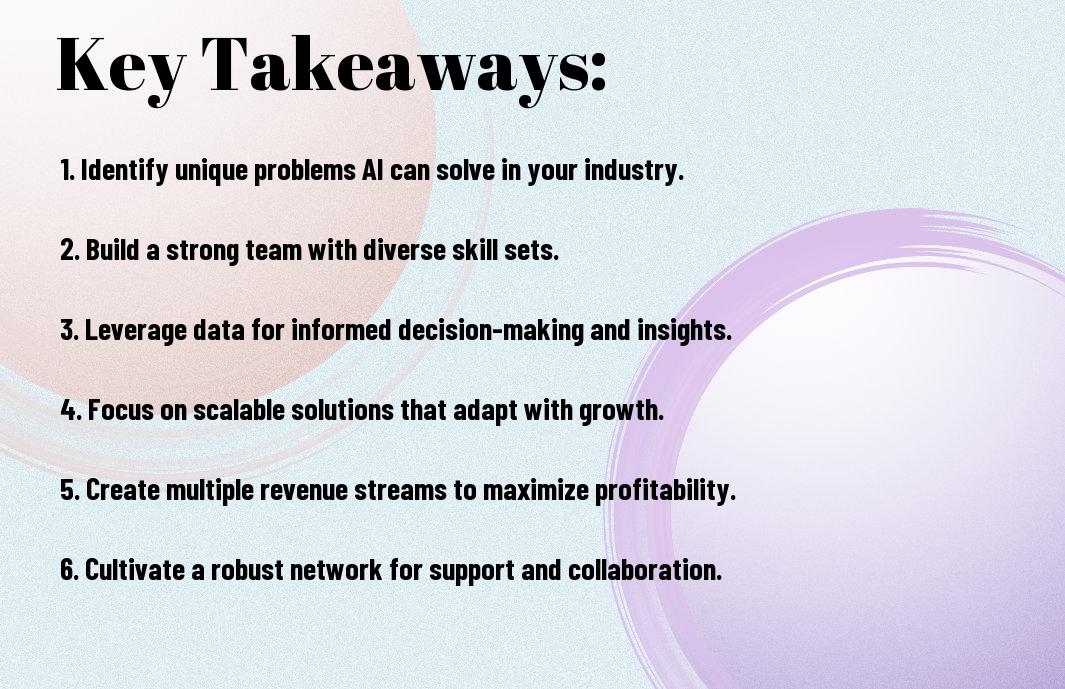
Key Takeaways:
- Developing a successful AI-powered business requires a deep understanding of the technology and its potential applications, as well as the ability to identify and capitalize on market opportunities.
- Building and scaling an AI-driven enterprise involves navigating complex technical, operational, and strategic challenges, including data management, talent acquisition, and partnerships.
- Effective monetization of AI-based products or services depends on a well-designed business model, a strong value proposition, and a customer-centric approach to sales and marketing.

The AI Landscape
While navigating the AI landscape, you’ll find numerous resources to help you understand its impact on business. For instance, you can visit How AI Is Changing The Game For Entrepreneurs In 2025 And Beyond to learn more about AI’s role in entrepreneurship.
Current Market Opportunities
Beneath the surface of the AI landscape, you’ll discover a plethora of opportunities for your business. You can leverage AI to enhance your products, services, and customer experience, setting your business up for success in a competitive market.
Technology Trends and Forecasts
Around the corner, new AI technologies are emerging, and it’s important to stay informed. You can expect significant advancements in areas like machine learning and natural language processing, which will impact your business strategy and decision-making.
According to your business needs, you can explore various AI applications, such as chatbots, predictive analytics, and automation tools. As you investigate deeper into the world of AI, you’ll find that these technologies can help you streamline operations, improve efficiency, and drive growth, ultimately taking your business to the next level.
Ideation and Validation
Some of the most successful AI businesses start with a simple idea, and as you begin to explore your entrepreneurial ventures, you’ll need to consider what problems your business can solve and how you can use AI to innovate and disrupt the market.
Finding Your AI Niche
Prior to plunging into the world of AI entrepreneurship, you need to identify areas where AI can be applied to create value, and as you explore your options, you’ll find that your unique blend of skills and interests can help you uncover a profitable niche for your business.
Validating Market Demand
Following your initial idea, you will need to determine if there’s a market for your product or service, and as you conduct market research, you’ll be able to gauge interest and assess the potential for growth and revenue.
Niche markets can be highly profitable, and as you validate market demand, you’ll want to consider factors such as competition, customer needs, and potential barriers to entry, allowing you to refine your idea and create a solid foundation for your AI business, and you can use tools like surveys, social media, and online forums to gather data and insights that will inform your decision-making process.
Building Your AI Solution
For your AI business to succeed, you need to focus on creating a robust and scalable solution that meets your customers’ needs. You will have to make key decisions about the technical architecture, development approach, and integration strategies to ensure your solution is efficient and effective.
Technical Architecture Decisions
Solution design is the foundation of your AI business, and you must consider factors like data storage, processing power, and security when making technical architecture decisions. You should evaluate different options and choose the one that best fits your needs.
Development vs. Integration Approaches
Behind every successful AI solution is a well-planned development or integration strategy, and you must decide which approach works best for your business. You will need to weigh the pros and cons of building your solution from scratch versus integrating existing AI technologies.
Development of your AI solution requires careful consideration of your resources, expertise, and timeline. You should assess your team’s capabilities and determine whether building a custom solution or integrating existing technologies will help you achieve your business goals more efficiently. As you move forward, you will need to continuously evaluate and refine your approach to ensure your solution stays competitive and meets your customers’ evolving needs.
Funding Your AI Venture
Not every AI entrepreneur has the luxury of self-funding their venture, which is why exploring funding options is vital for growth and scalability, and you will need to consider various avenues to secure the necessary capital to take your business to the next level.
Bootstrapping Strategies
Around the time you start your AI venture, you will need to be frugal and strategic with your finances, and you can utilize bootstrapping strategies such as cost-cutting, revenue-based financing, and strategic partnerships to conserve resources and extend your runway.
Investor Relationships and Pitches
Funding your AI venture often requires securing investments from venture capitalists, angel investors, or other external sources, and you will need to build relationships with potential investors and craft a compelling pitch that showcases your vision, technology, and growth potential to secure the funding you need.
Hence, as you navigate the process of building investor relationships and pitches, you will need to be prepared to address questions about your technology, market, and competitive landscape, and you should be able to articulate a clear and compelling value proposition that resonates with your target investors and sets your AI venture up for long-term success.
Go-to-Market Strategy
After developing your AI product, it’s time to bring it to market. You’ll need to create a go-to-market strategy that showcases your product’s unique value proposition and resonates with your target audience. This involves identifying your ideal customer, crafting a compelling message, and selecting the right channels to reach them.
Pricing Models for AI Products
For instance, you can choose from various pricing models, such as subscription-based, pay-per-use, or tiered pricing, to monetize your AI product. You should consider your costs, target audience, and market conditions when selecting a pricing model that works best for your business.
Customer Acquisition Channels
The most effective customer acquisition channels for your AI business will depend on your target audience and marketing goals. You can leverage social media, content marketing, paid advertising, or partnerships to reach potential customers and drive sales.
Plus, you can also utilize email marketing, webinars, and trade shows to showcase your AI product and build relationships with potential customers. As you experiment with different channels, you’ll be able to refine your approach and optimize your marketing strategy to achieve the best results for your business.
Scaling Operations
All businesses face challenges when scaling, but with the right tools, you can overcome them. You can learn more about scaling your business with AI by visiting How I’m Scaling My Business with AI: The Exact Tools, … to discover the best practices.
Infrastructure and Technical Debt
Once you have a solid foundation, you can focus on optimizing your infrastructure and addressing technical debt, ensuring your systems can support your growing business, allowing you to scale efficiently.
Team Building and Culture
About the people who will help you achieve your goals, you should prioritize building a strong team with a positive culture, as this will be necessary to your success as you scale your operations.
This involves creating an environment where your team feels valued, motivated, and empowered to make decisions, which will help you to attract and retain top talent, and ultimately drive your business forward, as you continue to grow and scale your operations, you will need to adapt your team and culture to meet the changing needs of your business.
Summing up
Ultimately, as you conclude your journey through the world of AI entrepreneurship, you have gained valuable insights into building, scaling, and monetizing your business. You now understand how to leverage AI to drive innovation and growth, and you are equipped with the knowledge to make informed decisions about your company’s future. With this expertise, you can confidently navigate the ever-evolving landscape of AI and propel your business towards success, achieving your goals and realizing your vision.
FAQ
Q: What is the main focus of “The AI Entrepreneur” book?
A: The main focus of “The AI Entrepreneur” book is to provide a comprehensive guide for entrepreneurs on how to build, scale, and monetize their businesses using Artificial Intelligence (AI) technologies. The book covers various aspects of AI adoption, including strategy, innovation, and implementation, to help entrepreneurs make informed decisions and stay ahead of the competition.
Q: Who is the target audience for “The AI Entrepreneur” book?
A: The target audience for “The AI Entrepreneur” book includes entrepreneurs, startup founders, business leaders, and innovators who are interested in leveraging AI to drive growth, improve efficiency, and create new opportunities for their businesses. The book is also suitable for professionals who want to develop a deeper understanding of AI and its applications in the business world.
Q: What are some of the key topics covered in “The AI Entrepreneur” book?
A: The book covers a wide range of topics, including AI strategy, innovation, and implementation, as well as business model development, marketing, sales, and customer engagement. It also explores the latest AI trends, tools, and technologies, such as machine learning, natural language processing, and computer vision, and provides practical examples and case studies of successful AI-powered businesses.
Q: How can “The AI Entrepreneur” book help entrepreneurs build and scale their businesses?
A: The book provides entrepreneurs with a step-by-step guide on how to build and scale their businesses using AI. It offers practical advice on how to develop an AI strategy, build a strong team, and create a culture of innovation. The book also provides insights on how to measure the success of AI initiatives and make data-driven decisions to drive growth and improvement.
Q: What kind of support and resources are available to readers of “The AI Entrepreneur” book?
A: Readers of “The AI Entrepreneur” book can access a range of support and resources, including online communities, webinars, and workshops. The book’s authors and contributors also offer consulting and coaching services to help entrepreneurs implement the strategies and techniques outlined in the book. Additionally, the book’s website provides updates on the latest AI trends, tools, and technologies, as well as success stories and case studies of AI-powered businesses.