
As you navigate the ever-changing business landscape, you’re likely aware of the significant impact artificial intelligence (AI) is having on industries worldwide. You may be wondering how to harness the power of AI to drive growth and increase your wealth. Your business can benefit from AI’s wealth-building potential, and understanding its applications is key to staying ahead of the curve. You will learn how to leverage AI to transform your business and unlock new opportunities for success.

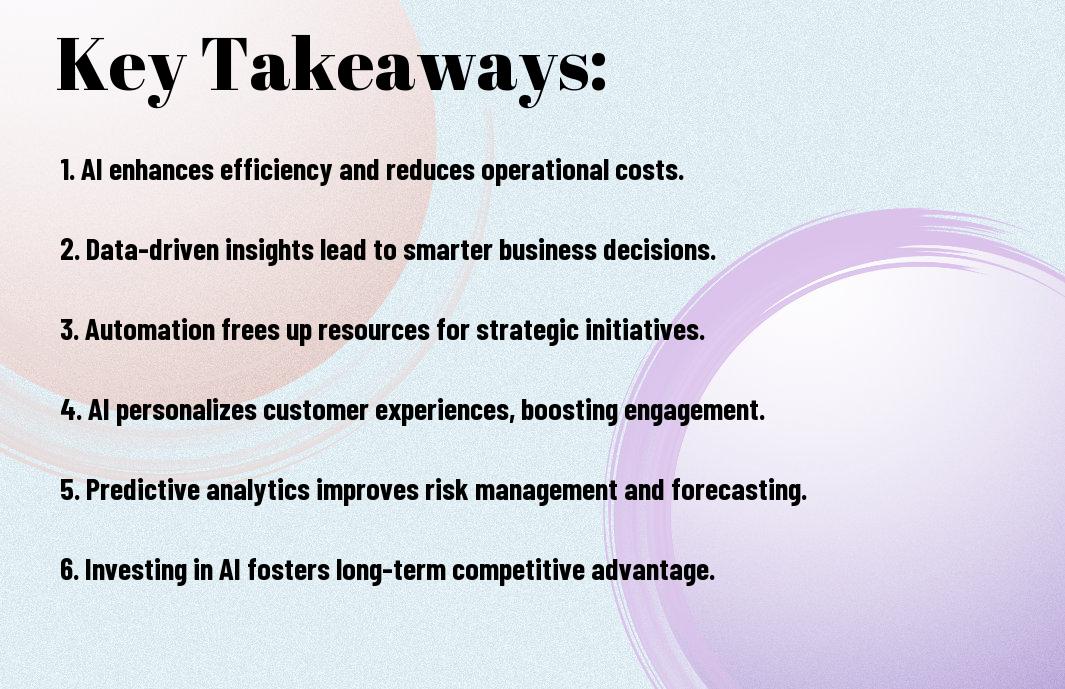
Key Takeaways:
- Implementing AI in business can significantly enhance operational efficiency, leading to increased productivity and reduced costs, thereby contributing to wealth-building potential.
- AI-driven technologies, such as machine learning and natural language processing, can analyze vast amounts of data, providing businesses with valuable insights to inform strategic decisions and drive growth.
- Companies that effectively leverage AI can gain a competitive edge in the market, enabling them to innovate and adapt to changing consumer needs and preferences more quickly than their competitors.
- Investing in AI can also lead to the creation of new business models and revenue streams, such as AI-powered services and products, which can further drive wealth creation and expansion.
- As AI continues to evolve, businesses must prioritize ongoing learning and development to ensure they remain at the forefront of this technological shift and maximize the wealth-building potential of AI in their operations.
The Economic Landscape of AI
The economic landscape of AI is rapidly evolving, and you are likely to see significant changes in the way businesses operate. As AI technology advances, you can expect to see new opportunities for growth and development in various industries.
Market Projections and Growth Metrics
About 70% of businesses are expected to adopt AI technology in the next few years, and you will see a significant impact on the global economy. You can anticipate substantial growth in AI-related investments, and your business can benefit from this trend.
Investment Opportunities in the AI Ecosystem
Any investor looking to diversify their portfolio should consider the AI sector, as you can expect high returns on investment. You will find numerous opportunities to invest in AI startups, and your investment can lead to significant wealth creation.
Due to the rapid growth of the AI industry, you will have access to a wide range of investment opportunities, from venture capital funds to individual startups. You can invest in companies that develop AI-powered products, such as chatbots, virtual assistants, and predictive analytics tools, and your investment can lead to substantial wealth creation as these companies grow and expand their operations.
Transformative Business Models
While embracing AI, you can revolutionize your business operations and create new revenue streams, leading to significant wealth-building opportunities, as you explore innovative models that leverage AI’s capabilities.
Subscription-Based AI Services
Alongside traditional models, you can offer subscription-based AI services, providing your customers with ongoing access to AI-powered tools and expertise, generating recurring revenue and fostering long-term relationships.
Data Monetization Strategies
Across various industries, you can develop data monetization strategies, utilizing AI to extract valuable insights from your data and creating new revenue streams, such as data-as-a-service or AI-driven analytics platforms.
Due to the vast amounts of data being generated, you can leverage AI to identify patterns, trends, and correlations, and then use this information to create targeted products, services, or experiences, ultimately driving business growth and increasing your wealth-building potential, as you capitalize on the power of data-driven decision making.
Revenue Acceleration Through AI
Once again, you can leverage AI to boost your business’s revenue by streamlining processes and enhancing customer experiences, ultimately leading to increased profitability and competitiveness in the market.
Customer Acquisition Optimization
By utilizing AI-driven tools, you can optimize your customer acquisition strategies, allowing you to target the right audience and personalize your marketing efforts, resulting in higher conversion rates and improved brand loyalty.
Operational Efficiency Gains
Revenue growth can also be achieved through AI-driven operational efficiency gains, as you can automate routine tasks, reduce costs, and enhance productivity, freeing up resources to focus on high-value activities.
At the heart of operational efficiency gains is the ability to analyze vast amounts of data, identify areas of improvement, and implement AI-driven solutions to optimize your business processes, enabling you to make data-driven decisions and stay ahead of the competition, thereby driving your business forward and increasing your revenue potential.
Risk Management and AI Implementation
Unlike traditional business strategies, AI implementation requires a unique approach to risk management, as you navigate the complexities of integrating machine learning and automation into your operations. You must consider the potential risks and rewards of AI adoption, weighing the benefits of increased efficiency and innovation against potential drawbacks, such as job displacement and data security threats.
Initial Investment Considerations
Against the backdrop of rapidly evolving AI technologies, you should carefully evaluate your initial investment in AI, considering the potential return on investment and the resources required to implement and maintain AI systems, as you make informed decisions about how to allocate your budget and prioritize your AI initiatives.
Regulatory Navigation
Around the globe, regulatory frameworks are emerging to govern the development and deployment of AI, and you must stay informed about these developments, as you navigate the complex landscape of AI regulations and ensure that your business is compliant with relevant laws and standards.
At the heart of regulatory navigation is the need to balance innovation with responsibility, as you ensure that your AI systems are transparent, accountable, and aligned with ethical principles, and you should prioritize ongoing monitoring and adaptation to stay ahead of the curve, as regulatory requirements continue to evolve and shape the AI landscape, impacting your business and your customers.
Competitive Advantage Metrics
All businesses strive to stay ahead of the competition, and you can achieve this by leveraging AI to enhance your operations. You can learn more about wealth-building strategies through technology ownership by checking out 10 Wealth-Building Strategies Through Technology Ownership for Executives and Entrepreneurs.
Speed-to-Market Improvements
Taking a proactive approach to implementing AI solutions enables you to accelerate your time-to-market, allowing your business to adapt quickly to changing market conditions and stay competitive.
Innovation Capacity Expansion
Competitively, you need to continuously innovate to stay ahead, and AI can help you expand your innovation capacity, enabling your business to explore new opportunities and develop innovative products and services.
Innovation is key to driving business growth, and by expanding your innovation capacity through AI, you can unlock new revenue streams, improve customer experience, and enhance your overall competitiveness, allowing you to make informed decisions about your business and stay ahead of the curve.
Wealth Creation Case Examples
Many businesses have harnessed the power of AI to create unprecedented wealth, and you can learn from their examples to inform your own strategy. By examining successful case studies, you can gain insights into the potential of AI to drive growth and profitability in your own organization.
Startup Valuation Explosions
Following the integration of AI, you may witness significant increases in valuation, as startups that leverage AI tend to attract substantial investments and attention from the market, leading to rapid growth and increased value.
Enterprise Value Multiplication
Explosive growth is often seen in enterprises that successfully implement AI, as you can experience a multiplication of your enterprise’s value through increased efficiency, improved decision-making, and enhanced customer experiences.
Case studies of companies that have achieved remarkable success through AI adoption demonstrate the potential for significant returns on investment, and as you explore these examples, you will see how AI can be a key driver of growth and profitability in your own business, enabling you to make informed decisions about your AI strategy and investments.
Final Words
Ultimately, you now understand the wealth-building potential of AI in business, and your ability to harness it will be key to your success. You can leverage AI to drive innovation, optimize operations, and create new revenue streams. As you move forward, your strategic use of AI will be necessary in staying ahead of the competition and achieving your business goals. You are poised to unlock new opportunities and drive growth, and your future in the digital landscape looks promising.
FAQ
Q: What is digital disruption and how is it related to AI in business?
A: Digital disruption refers to the transformation of traditional business models and processes through the adoption of digital technologies, including Artificial Intelligence (AI). AI has the potential to disrupt various industries by automating tasks, enhancing decision-making, and creating new revenue streams. As businesses leverage AI, they can improve operational efficiency, reduce costs, and develop innovative products and services, ultimately leading to increased competitiveness and wealth-building opportunities.
Q: How can businesses harness the wealth-building potential of AI?
A: To harness the wealth-building potential of AI, businesses should focus on identifying areas where AI can add significant value, such as process automation, predictive analytics, and customer service enhancement. They should also invest in AI talent, develop a robust data infrastructure, and foster a culture of innovation and experimentation. Additionally, businesses should prioritize AI ethics and transparency to ensure that AI systems are fair, accountable, and aligned with their values and goals. By taking a strategic and responsible approach to AI adoption, businesses can unlock new revenue streams, improve profitability, and drive long-term growth.
Q: What are the potential risks and challenges associated with AI adoption in business, and how can they be mitigated?
A: The potential risks and challenges associated with AI adoption in business include job displacement, data privacy concerns, and algorithmic bias. To mitigate these risks, businesses should prioritize AI education and training for their workforce, ensuring that employees have the skills to work effectively with AI systems. They should also implement robust data governance and security measures to protect sensitive information and prevent data breaches. Furthermore, businesses should establish clear guidelines and protocols for AI development and deployment, including regular auditing and testing to detect and address potential biases and errors. By being aware of these risks and taking proactive steps to address them, businesses can minimize the potential downsides of AI adoption and maximize its wealth-building potential.