Disruption

The AI Advantage – Disrupting Traditional Business Models for Massive Wealth

As you navigate the ever-changing business landscape, you’re likely aware that traditional models are being disrupted at an unprecedented rate. You see companies leveraging artificial intelligence to gain a competitive edge, and you wonder how you can harness its power to drive your own success. Your ability to adapt and innovate will be key to unlocking massive wealth, and understanding the AI advantage is the first step in this journey, allowing you to stay ahead of the curve and capitalize on new opportunities.

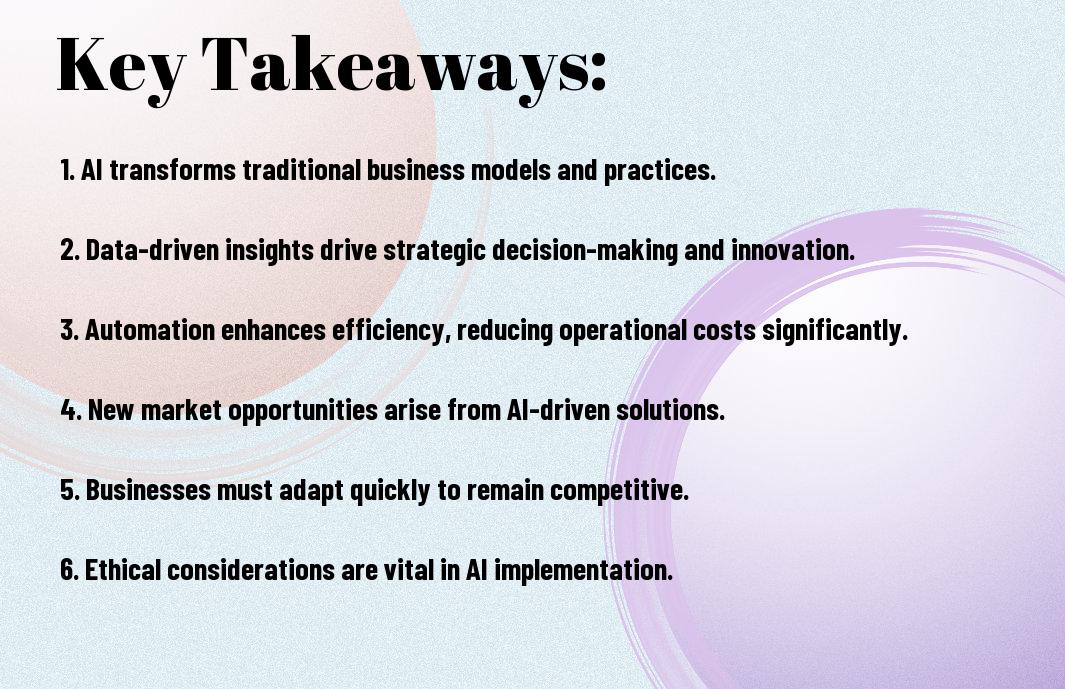
Key Takeaways:

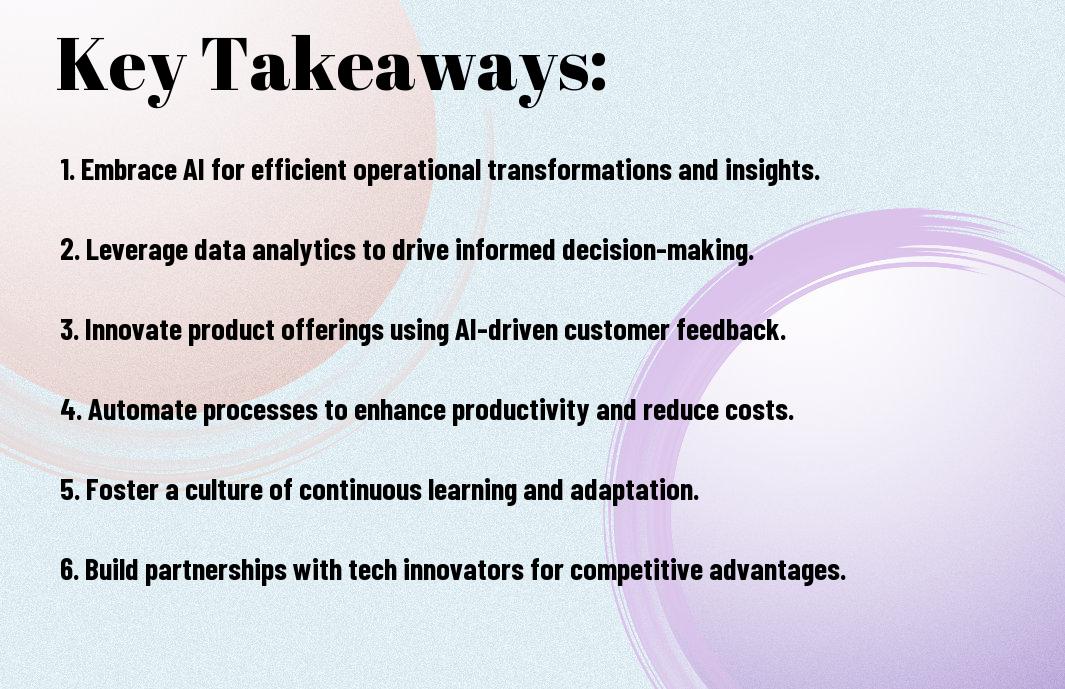
  • Businesses can leverage AI to disrupt traditional models and create new opportunities for massive wealth by automating processes, enhancing customer experiences, and uncovering hidden insights from large datasets.
  • The integration of AI into existing business models can lead to significant improvements in efficiency, productivity, and decision-making, allowing companies to stay ahead of the competition and drive innovation.
  • To fully capitalize on the AI advantage, organizations must be willing to adapt and evolve, investing in the development of AI technologies and the talent needed to implement and maintain them effectively.

    The AI Revolution in Business

    Before the advent of AI, businesses operated within traditional models, limiting their potential for growth and innovation. You are now witnessing a seismic shift, as AI transforms the way companies operate, creating new opportunities for massive wealth creation.

    From Incremental to Exponential Growth

    By leveraging AI, you can propel your business from incremental to exponential growth, unlocking new revenue streams and disrupting traditional industries. Your ability to adapt and innovate will be key to staying ahead of the curve.

    The New Economics of Information

    To fully harness the power of AI, you need to understand the new economics of information, where data is the currency and AI is the engine driving growth. Your business will thrive when you grasp this fundamental shift.

    Due to the rapid advancement of AI, you will see a significant impact on your business, as the cost of information processing and storage plummets, and the value of data-driven insights skyrockets, enabling you to make informed decisions and drive innovation, ultimately leading to massive wealth creation and a significant competitive advantage in the market.
    Winners and Losers in the AI Economy

    Even as AI transforms industries, you will notice a significant shift in the balance of power, with some companies thriving while others struggle to adapt, and your ability to navigate this change will be key to your success.

    Traditional Gatekeepers Under Siege

    Approximately, traditional industries are facing unprecedented disruption, and you are likely to see established players struggling to maintain their market share as AI-powered startups and innovators challenge their dominance, forcing you to rethink your business strategy.

    The Rise of AI-Native Companies

    Alongside the decline of traditional gatekeepers, you will witness the emergence of AI-native companies that are built from the ground up with AI at their core, and you can expect these companies to drive innovation and growth, offering you new opportunities for investment and partnership.

    Hence, as you consider the rise of AI-native companies, you should note that these companies are not just using AI as a tool, but are instead leveraging it to create entirely new business models, products, and services that will disrupt traditional industries and create new markets, allowing you to capitalize on the AI revolution and position yourself for massive wealth and success.

    The Wealth Creation Playbook

    To create massive wealth, you need to understand how AI can disrupt traditional business models and create new opportunities for growth. Your ability to adapt and innovate will be key to unlocking your full potential.

    Leveraging AI as Competitive Moat

    By harnessing the power of AI, you can create a significant competitive advantage that sets you apart from others in your industry. Your unique approach will help you stay ahead of the curve and achieve your goals.

    Scaling Without Traditional Constraints

    Leveraging AI-driven technologies, you can scale your business without being held back by traditional constraints such as limited resources or geographical boundaries. Your business can now reach a global audience and grow exponentially.

    Further, as you scale without traditional constraints, you’ll be able to focus on high-leverage activities that drive growth and innovation, rather than being bogged down by mundane tasks. Your ability to automate and streamline processes will free up more time for strategic thinking and creative problem-solving, allowing you to make better decisions and drive your business forward.

    AI Investment Strategies

    Keep in mind that investing in AI requires a deep understanding of the technology and its potential applications. You need to identify areas where AI can disrupt traditional business models and create new opportunities for growth.

    Identifying Tomorrow’s Giants

    Above all, you should focus on companies that are leveraging AI to drive innovation and improve efficiency. You can look for startups that are using AI to solve real-world problems and have a strong potential for scalability.

    Avoiding the Hype Traps

    Hyping AI investments can lead to unrealistic expectations and poor decision-making. You should be cautious of investments that seem too good to be true and prioritize those with a solid foundation in AI technology.

    Due to the rapid evolution of AI, it’s necessary to stay informed and adapt your investment strategy accordingly. You should continuously monitor the AI landscape, assessing the potential of different technologies and companies, and adjust your portfolio to maximize your returns and minimize your risks. By doing so, you can navigate the complex world of AI investments and make informed decisions that drive your wealth forward.

    The Human Element

    After embracing AI, you’ll need to reassess your business strategy to maximize its benefits, focusing on the human aspects that complement AI’s capabilities, enabling you to make informed decisions and drive growth.

    Talent in the Age of Algorithms

    Essentially, you will need to identify the skills required to work effectively with AI systems, ensuring your team can leverage AI to enhance productivity and innovation, thereby giving your business a competitive edge.

    Leadership for the AI-Driven Organization

    Among the key factors for successful AI adoption, you will need to develop a leadership style that fosters a culture of innovation, experimentation, and continuous learning, allowing your organization to adapt and thrive in an AI-driven environment.

    Understanding the complexities of AI-driven leadership, you will need to cultivate a deep awareness of how AI impacts your business, from strategy to operations, and develop the skills to effectively communicate its value to your stakeholders, ensuring that your organization remains agile and competitive in a rapidly changing landscape, and that you can make the most of the opportunities that AI presents to drive growth and increase your wealth.

    Ethical Considerations and Risks

    Many businesses are leveraging AI to gain a competitive edge, but you must consider the ethical implications of your actions. As you implement AI solutions, you’ll need to weigh the potential benefits against the potential risks and ensure that your use of AI aligns with your values and principles.

    Navigating Regulatory Landscapes

    For instance, you’ll need to familiarize yourself with the regulatory environments in which you operate, as AI raises unique legal and ethical questions that you must address in order to avoid potential pitfalls and ensure compliance with relevant laws and regulations.

    Addressing Bias and Transparency

    Regulatory bodies are increasingly scrutinizing AI systems for bias and transparency, and you’ll need to be able to explain how your AI systems make decisions and ensure that they are fair and unbiased, in order to maintain trust with your customers and stakeholders.

    Risks associated with bias and transparency can have serious consequences for your business, and you’ll need to take steps to mitigate these risks by implementing robust testing and validation procedures, as well as ensuring that your AI systems are transparent and explainable, so that you can identify and address any potential issues before they become major problems, and maintain the trust and confidence of your customers and stakeholders in your AI-powered systems.

    To wrap up

    As a reminder, you now have the knowledge to harness the power of AI to disrupt traditional business models and create massive wealth. You can leverage AI to streamline your operations, enhance customer experiences, and gain a competitive edge. By embracing this technology, you will be well on your way to achieving your business goals and staying ahead of the curve in today’s fast-paced market, maximizing your potential for success and increasing your wealth.

    FAQ

    Q: What is the main concept of “The AI Advantage” and how does it relate to traditional business models?

    A: The AI Advantage refers to the strategic integration of Artificial Intelligence (AI) into business operations to disrupt traditional models and create new opportunities for massive wealth. This involves leveraging AI technologies such as machine learning, natural language processing, and predictive analytics to automate processes, enhance decision-making, and drive innovation. By adopting AI, businesses can gain a competitive edge, improve efficiency, and unlock new revenue streams, ultimately leading to significant financial gains.

    Q: How can AI be used to disrupt traditional business models and create new opportunities for growth?

    A: AI can be used in various ways to disrupt traditional business models, including automating routine tasks, analyzing large datasets to identify trends and patterns, and developing personalized customer experiences. For instance, AI-powered chatbots can revolutionize customer service, while predictive analytics can help businesses anticipate and respond to changing market conditions. Additionally, AI-driven innovation can lead to the creation of new products and services, enabling businesses to tap into new markets and customer segments, and thereby driving growth and revenue.

    Q: What are the key benefits of adopting AI in business, and how can they contribute to massive wealth creation?

    A: The key benefits of adopting AI in business include increased efficiency, enhanced decision-making, and improved customer experiences. By automating routine tasks, businesses can reduce costs and free up resources for more strategic initiatives. AI-driven insights can also inform business decisions, reducing the risk of errors and improving outcomes. Moreover, AI-powered personalization can lead to increased customer loyalty and retention, driving revenue growth and ultimately contributing to massive wealth creation. As businesses scale and expand, the cumulative effect of these benefits can lead to significant financial gains.

    Q: What are the potential risks and challenges associated with adopting AI in business, and how can they be mitigated?

    A: The potential risks and challenges associated with adopting AI in business include data privacy and security concerns, job displacement, and the need for significant investment in AI infrastructure and talent. To mitigate these risks, businesses must prioritize data governance and security, invest in employee retraining and upskilling, and develop a clear AI strategy that aligns with their overall business goals. Additionally, businesses should monitor AI system performance and address any biases or errors that may arise, ensuring that AI adoption is both responsible and sustainable.

    Q: How can businesses get started with AI adoption, and what steps can they take to ensure successful implementation and maximize the AI Advantage?

    A: To get started with AI adoption, businesses should begin by identifying areas where AI can add the most value, such as customer service, marketing, or operations. They should then develop a clear AI strategy, invest in the necessary infrastructure and talent, and start small with pilot projects or proof-of-concepts. As AI adoption scales, businesses should continuously monitor performance, address any challenges that arise, and refine their AI strategy to ensure successful implementation and maximize the AI Advantage. By taking a thoughtful and strategic approach to AI adoption, businesses can unlock the full potential of AI and achieve massive wealth creation.

Disrupting the Status Quo – AI and the Future of Business Wealth

As you navigate the ever-changing landscape of business, you’re likely aware that artificial intelligence (AI) is revolutionizing the way companies operate. You may have already seen the impact of AI on your industry, and you’re probably wondering what the future holds. For insights, you can turn to experts like Liz Wilcox, who shares her thoughts on Liz Wilcox: How AI Is Disrupting Our Industry, and What We Can Do About It, offering valuable perspectives on the role of AI in shaping your business wealth.

Key Takeaways:

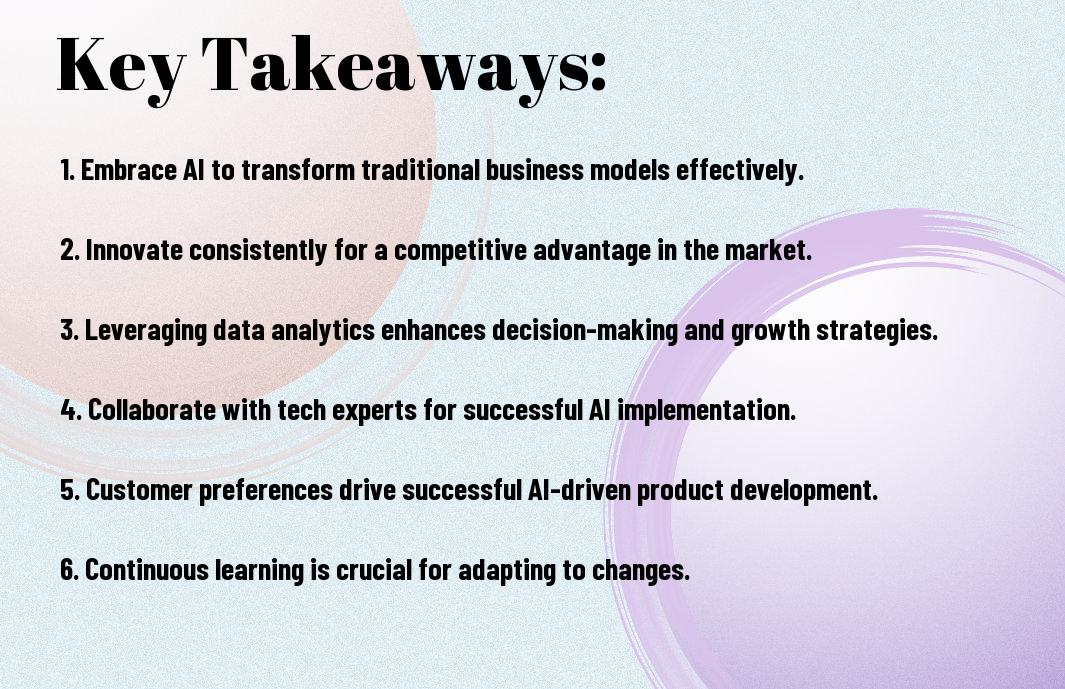
  • The integration of Artificial Intelligence (AI) in business operations is set to significantly disrupt the status quo, leading to new opportunities for wealth creation and innovative business models that can outpace traditional competitors.
  • As AI technology advances, businesses will need to adapt and evolve to stay relevant, leveraging AI-driven insights to inform strategic decisions and drive growth in an increasingly complex and competitive market landscape.
  • The future of business wealth will be shaped by the ability of organizations to harness the power of AI, embracing its potential to automate processes, enhance customer experiences, and unlock new revenue streams, thereby redefining the trajectory of business success.

The Current Business Landscape

A look at the current business landscape reveals a complex web of systems and processes that have been in place for decades. As you navigate this landscape, you’ll notice that many businesses are still relying on traditional methods to generate wealth, which can be limiting in today’s fast-paced economy.

Traditional Wealth Generation Models

Among the various models used to generate wealth, you’ll find that most businesses rely on tried and tested approaches, such as investing in stocks, real estate, or starting a new venture. As you consider your own wealth generation strategy, you’ll want to examine these models and consider how they might be impacted by emerging technologies.

Existing Market Inefficiencies

Businesses often struggle with inefficiencies in the market, which can hinder their ability to generate wealth. As you assess your own business, you’ll likely identify areas where inefficiencies are costing you time and money, and you may be looking for ways to address these issues and improve your bottom line.

Another significant issue with existing market inefficiencies is that they can create barriers to entry for new businesses and limit opportunities for innovation. As you consider the impact of AI on the future of business wealth, you’ll want to think about how these technologies can help you overcome existing inefficiencies and stay competitive in a rapidly changing market, allowing you to make more informed decisions about your business strategy and investments.

AI as the Great Equalizer

While AI is often seen as a tool for large corporations, it also has the potential to level the playing field for smaller businesses and entrepreneurs, allowing you to compete with bigger players in your industry.

Democratization of Business Intelligence

For instance, you can now access advanced analytics and machine learning capabilities that were previously only available to large enterprises, enabling you to make data-driven decisions and drive your business forward.

Automated Decision-Making Systems

Between the various applications of AI, automated decision-making systems stand out as a key area where you can leverage AI to streamline your operations and improve efficiency, allowing you to focus on higher-level strategic decisions.

Also, as you explore automated decision-making systems, you’ll find that they can help you process large amounts of data, identify patterns, and make predictions, freeing up your time to concentrate on driving innovation and growth in your business, and enabling you to respond quickly to changing market conditions and stay ahead of the competition.

Wealth Creation in the AI Era

Your ability to adapt to the changing landscape of business will determine your success in the AI era, as new technologies emerge and transform the way you create wealth.

New Revenue Streams

On the cusp of this revolution, you will discover innovative ways to generate revenue, leveraging AI to identify and capitalize on untapped markets and opportunities.

Digital Asset Optimization

About to experience a significant shift, your digital assets will become more valuable than ever, as AI helps you unlock their full potential and maximize your returns.

Even as you explore the possibilities of digital asset optimization, you will find that AI-driven tools and strategies can help you make data-driven decisions, streamline your operations, and stay ahead of the competition, ultimately leading to increased efficiency and profitability.

Transformation of Business Operations

Not only will AI change the way you conduct business, but it will also revolutionize your entire operation. You will experience significant improvements in efficiency and productivity, allowing you to focus on growth and innovation.

AI-Driven Productivity Gains

About to experience a major boost in productivity, you will be able to automate repetitive tasks and focus on high-value activities. Your business will become more agile and responsive to changing market conditions.

Resource Allocation Revolution

Transforming the way you allocate resources, AI will enable you to make data-driven decisions and optimize your investments. You will be able to identify areas of waste and inefficiency, and redirect resources to drive growth and innovation.

The resource allocation revolution will have a profound impact on your business, enabling you to respond quickly to changing market conditions and stay ahead of the competition. You will be able to analyze vast amounts of data, identify patterns and trends, and make informed decisions about where to allocate your resources. This will enable you to maximize your return on investment and drive long-term growth and success.

Risk and Adaptation

Keep in mind that embracing AI in your business comes with risks, but it also presents opportunities for growth and adaptation, allowing you to stay ahead of the curve and transform your operations.

Strategic Implementation Challenges

Above all, you need to consider the challenges of integrating AI into your existing infrastructure, and develop a strategy that addresses potential obstacles and ensures a seamless transition, enabling you to leverage AI’s full potential.

Competitive Advantage Shifts

Behind the scenes, your competitors are likely exploring AI solutions, so you must prioritize innovation to stay competitive, focusing on how AI can enhance your unique value proposition and drive business success.

Due to the rapid evolution of AI, you will need to continually assess and adjust your strategy to capitalize on emerging trends and technologies, ensuring that your business remains agile and adaptable in a rapidly changing landscape, and that you can harness the power of AI to drive sustainable growth and profitability.

The Human Factor

Despite the rise of AI, your business’s success still depends on human ingenuity and adaptability, as you navigate the changing landscape of work and wealth.

Leadership in an AI-Enhanced World

Around the concept of leadership, you will need to rethink your approach, focusing on developing skills that complement AI, such as creativity and empathy, to stay ahead in the game.

Workforce Evolution

Evoking a new era of collaboration, you will witness significant changes in your workforce, as AI assumes routine tasks, freeing your employees to focus on higher-value work that requires human skills.

Due to the evolving nature of work, you will need to invest in your employees’ upskilling and reskilling, enabling them to thrive in an AI-driven environment, where they can leverage technology to enhance their productivity and decision-making capabilities, ultimately driving your business forward.

Final Words

Taking this into account, you now have a deeper understanding of how AI is transforming the business landscape. As you navigate your own path, you will need to adapt and innovate to stay ahead. Your ability to harness AI’s potential will determine your success in the future of business wealth. You must be prepared to disrupt the status quo and embrace the changes that AI brings to your industry, ultimately shaping your own destiny.

FAQ

Q: What is the impact of AI on traditional business models, and how will it change the way companies operate in the future?

A: The integration of Artificial Intelligence (AI) is set to significantly disrupt traditional business models by automating processes, enhancing decision-making, and improving operational efficiency. As AI technologies continue to evolve, businesses will need to adapt and innovate to stay competitive, focusing on high-value tasks that require human skills such as creativity, empathy, and complex problem-solving. This shift will lead to new opportunities for growth and wealth creation, but it also poses challenges for companies that are slow to adapt to the changing landscape.

Q: How will AI influence the distribution of wealth in the business world, and what are the potential benefits and drawbacks of this shift?

A: AI has the potential to significantly impact the distribution of wealth in the business world by creating new opportunities for entrepreneurship and innovation, but it also risks exacerbating existing inequalities if access to AI technologies and skills is not widely available. On the one hand, AI can enable small businesses and startups to compete more effectively with larger corporations, leading to a more level playing field. On the other hand, the benefits of AI may be concentrated among a small elite of companies and individuals who have the resources and expertise to invest in these technologies, potentially widening the wealth gap.

Q: What role will human skills play in an AI-driven business environment, and how can individuals prepare themselves for the changing job market?

A: While AI will undoubtedly automate many routine and repetitive tasks, human skills such as creativity, critical thinking, and emotional intelligence will become increasingly valuable in the business world. To prepare themselves for the changing job market, individuals should focus on developing skills that are complementary to AI, such as complex problem-solving, data interpretation, and social skills. Additionally, lifelong learning and adaptability will be imperative for professionals to stay relevant in an environment where technological change is rapid and continuous.

Q: How can businesses balance the need to invest in AI and other digital technologies with the need to protect the jobs and livelihoods of their employees?

A: Businesses can balance the need to invest in AI with the need to protect jobs by adopting a strategic approach to automation, focusing on augmenting human capabilities rather than replacing them. This can involve upskilling and reskilling existing employees to work effectively with AI systems, as well as creating new job opportunities in areas such as AI development, deployment, and maintenance. Companies should also prioritize transparency and communication with their employees, providing clear information about the impact of AI on their roles and the support available to help them adapt to change.

Q: What are the potential risks and challenges associated with the increasing use of AI in business, and how can companies mitigate these risks to ensure a successful transition to an AI-driven future?

A: The increasing use of AI in business poses several risks and challenges, including the potential for job displacement, bias in AI decision-making, and cybersecurity threats. To mitigate these risks, companies should prioritize responsible AI development and deployment, ensuring that AI systems are transparent, explainable, and aligned with human values. They should also invest in robust cybersecurity measures to protect against AI-related threats and establish clear governance structures to oversee the use of AI within their organizations. By taking a proactive and responsible approach to AI adoption, businesses can minimize the risks and maximize the benefits of this powerful technology.

AI-Driven Disruption – Strategies to Revolutionize Your Business and Build Wealth

As you navigate the ever-changing business landscape, you’re likely aware of the transformative power of artificial intelligence. You understand that AI-driven disruption can either make or break your business. By embracing AI, you can revolutionize your operations, enhance customer experiences, and unlock new revenue streams. You will learn how to harness the potential of AI to drive growth, increase efficiency, and build wealth, setting your business up for long-term success in a rapidly evolving market.

Key Takeaways:

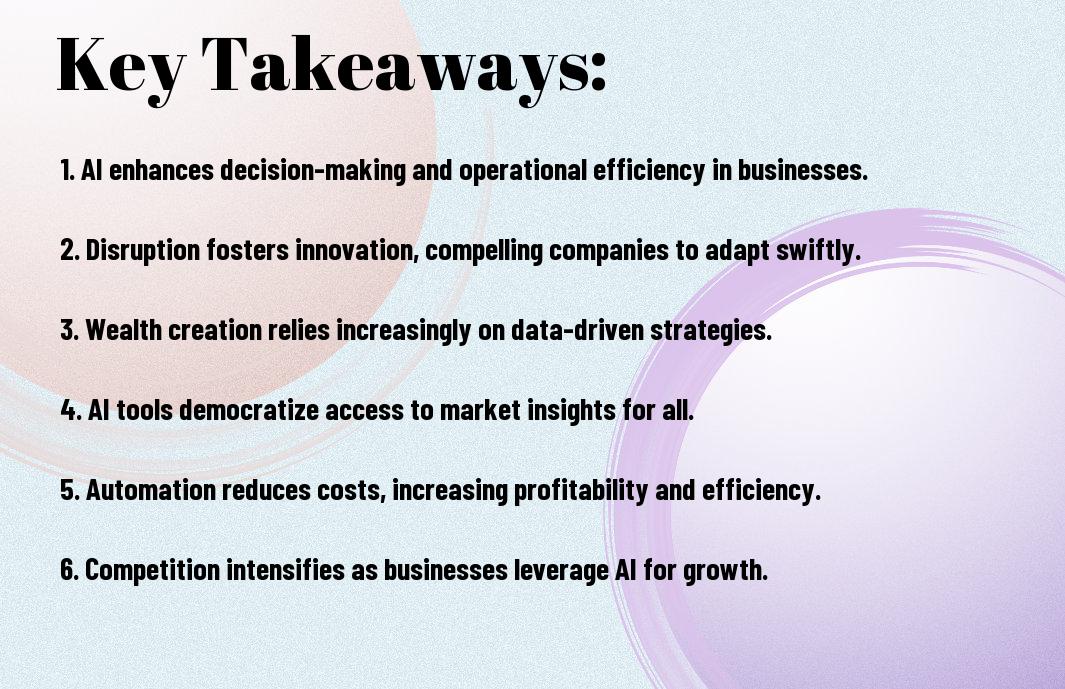
  • Embracing AI-driven disruption can be a powerful catalyst for business growth and wealth creation, allowing companies to innovate and stay ahead of the competition in a rapidly changing market landscape.
  • Effective strategies for leveraging AI disruption involve identifying areas where automation and machine learning can enhance operational efficiency, improve customer experience, and unlock new revenue streams.
  • By adopting a forward-thinking approach to AI adoption and integration, businesses can position themselves for long-term success and capitalize on the vast potential of AI to revolutionize industries and create new opportunities for wealth generation.

    The AI Revolution in Modern Business

    A midst the rapidly evolving business landscape, you can stay ahead by embracing AI-driven strategies, as seen in AI rewrites the playbook: Is your business strategy keeping pace?, to revolutionize your operations and build wealth.

    Core Technologies Driving Change

    Around the globe, you will find that advancements in AI, machine learning, and data analytics are driving change, enabling your business to make informed decisions and stay competitive.

    Market Transformation Patterns

    By analyzing market trends, you can identify patterns that will help your business navigate the AI-driven landscape, leveraging opportunities for growth and innovation.

    At the forefront of this transformation, you will notice that AI is not only automating routine tasks but also enhancing your ability to understand customer needs, creating new revenue streams and business models that you can capitalize on to build wealth and stay ahead in the market.

    Digital Transformation Framework

    Now that you’re embracing AI-driven disruption, it’s time to develop a digital transformation framework that will revolutionize your business and build wealth. This framework will serve as a roadmap for your journey, guiding you through the process of integrating AI into your operations.

    Assessment and Readiness

    For your business to undergo a successful digital transformation, you need to evaluate your current state and determine your readiness for change. You will assess your strengths, weaknesses, and areas that require improvement, allowing you to create a tailored plan that addresses your unique needs.

    Infrastructure Requirements

    Framework for digital transformation requires a solid infrastructure to support your AI initiatives. You will need to invest in technologies such as cloud computing, data analytics, and cybersecurity to ensure a seamless integration of AI into your business operations.

    Understanding the infrastructure requirements for your digital transformation is key to a successful implementation. You will need to consider factors such as data storage, processing power, and network connectivity to support your AI applications. By investing in the right infrastructure, you will be able to unlock the full potential of AI and drive business growth, increasing your competitiveness and building wealth in the process.

    AI Implementation Strategies

    Once again, you are at the forefront of innovation, poised to harness the power of AI to transform your business. You will need to develop a comprehensive strategy that aligns with your goals and objectives, leveraging AI to drive growth and profitability.

    Data-Driven Decision Making

    Across your organization, you will be able to make informed decisions with AI-driven insights, analyzing vast amounts of data to optimize operations and stay ahead of the competition, enabling you to refine your strategy and achieve your goals.

    Process Automation Priorities

    The key to successful AI implementation lies in identifying areas where automation can have the greatest impact, streamlining processes and increasing efficiency, allowing you to focus on high-value tasks that drive innovation and growth in your business.

    Due to the complexity of AI implementation, you will need to prioritize your process automation efforts, focusing on areas that will have the greatest impact on your bottom line, and developing a roadmap for implementation that ensures a smooth transition and minimal disruption to your operations, enabling you to maximize the benefits of AI and achieve your business objectives.

    Risk Management and Ethics

    Not all AI-driven disruptions are without challenges, and you must consider the potential risks and ethical implications of implementing AI in your business, as this will impact your overall strategy and success.

    Security Considerations

    Around the issue of security, you need to assess your systems and data to ensure they are protected from potential threats and breaches, which could compromise your business and reputation.

    Ethical AI Implementation

    On the topic of ethics, you should consider the potential impact of AI on your customers, employees, and society as a whole, and develop strategies to ensure that your AI systems are fair, transparent, and accountable.

    Management of ethical AI implementation is key to your success, and you should establish clear guidelines and principles to govern the development and deployment of AI in your business, ensuring that you prioritize fairness, safety, and transparency, and regularly monitor and evaluate your AI systems to identify and address any potential issues or biases, allowing you to build trust with your stakeholders and maintain a competitive edge in the market.

    Building Sustainable AI Value

    To achieve long-term success with AI, you need to focus on creating sustainable value that drives your business forward. This involves developing strategies that not only leverage AI’s potential but also ensure its effective integration into your operations.

    Revenue Generation Models

    Beneath the surface of AI-driven innovation lies a wealth of opportunities for revenue growth. You can explore new business models, such as subscription-based services or data-driven products, to capitalize on AI’s capabilities and increase your revenue streams.

    Cost Optimization Approaches

    On the path to AI adoption, you will encounter various cost optimization strategies that can significantly impact your bottom line. You can streamline processes, reduce manual labor, and improve resource allocation to minimize costs and maximize efficiency.

    Considering the various cost optimization approaches, you can further refine your strategy by analyzing your specific business needs and identifying areas where AI can have the most significant impact. You can then prioritize investments in AI solutions that offer the highest potential for cost savings and efficiency gains, ensuring that your AI initiatives are aligned with your overall business objectives and drive sustainable value creation.

    Team Development and Culture

    Many organizations are leveraging AI to enhance their team development and culture, and you can do the same by investing in AI-driven tools and training programs that foster a culture of innovation and continuous learning.

    Skills and Competencies

    Any successful AI implementation requires your team to possess a unique set of skills and competencies, and you should focus on developing these skills to ensure your team can effectively work with AI systems and drive business growth.

    Change Management

    After implementing AI, your organization will undergo significant changes, and you should be prepared to manage these changes effectively to minimize disruptions and ensure a smooth transition.

    It is crucial to have a clear change management strategy in place, and you should communicate the benefits and expectations of AI adoption to your team, providing them with the necessary training and support to adapt to the new technology and work processes, allowing your organization to reap the full benefits of AI-driven disruption.

    Final Words

    Summing up, you now have the tools to harness AI-driven disruption and transform your business. You can revolutionize your operations, enhance customer experiences, and build wealth. By embracing AI, you will stay ahead of the competition and drive innovation. Your ability to adapt and evolve will be key to unlocking new opportunities and achieving success in a rapidly changing landscape. You are poised to thrive in this new era of AI-driven disruption.

    FAQ

    Q: What is AI-Driven Disruption and how can it impact my business?

    A: AI-Driven Disruption refers to the transformation of traditional business models and processes using Artificial Intelligence (AI) technologies, such as machine learning, natural language processing, and predictive analytics. This disruption can significantly impact your business by increasing efficiency, reducing costs, and creating new revenue streams. By leveraging AI, you can automate tasks, gain valuable insights from data, and make informed decisions to stay ahead of the competition and drive growth.

    Q: How can I identify areas in my business where AI-Driven Disruption can be applied?

    A: To identify areas where AI-Driven Disruption can be applied, you should start by analyzing your business operations, customer interactions, and market trends. Look for processes that are repetitive, time-consuming, or prone to errors, as these are prime candidates for automation using AI. Additionally, consider areas where data-driven decision-making can add significant value, such as marketing, sales, or product development. By applying AI in these areas, you can unlock new opportunities for innovation and growth.

    Q: What strategies can I use to build wealth through AI-Driven Disruption?

    A: To build wealth through AI-Driven Disruption, you can use several strategies, including investing in AI-powered startups, developing and licensing AI-based products or services, or creating and selling AI-driven solutions to other businesses. You can also use AI to optimize your investment portfolio, predict market trends, and identify new business opportunities. Furthermore, you can leverage AI to improve operational efficiency, reduce costs, and increase revenue, ultimately leading to increased profitability and wealth creation.

    Q: How can I ensure a smooth transition to an AI-Driven business model?

    A: To ensure a smooth transition to an AI-Driven business model, you should start by developing a clear understanding of your business goals and objectives. Next, assess your current infrastructure, talent, and technology to identify gaps and areas for improvement. Then, develop a roadmap for AI adoption, including training and upskilling your workforce, investing in AI technologies, and piloting AI-powered projects. It’s also important to establish a culture of innovation and experimentation, encouraging experimentation and learning from failures. Finally, continuously monitor and evaluate your progress, making adjustments as needed to ensure successful implementation.

    Q: What are the potential risks and challenges associated with AI-Driven Disruption, and how can I mitigate them?

    A: The potential risks and challenges associated with AI-Driven Disruption include job displacement, data privacy concerns, and the potential for AI systems to perpetuate biases and errors. To mitigate these risks, you should prioritize transparency, accountability, and ethics in AI development and deployment. This includes ensuring that AI systems are designed and trained with diverse and representative data, implementing robust testing and validation protocols, and establishing clear guidelines and regulations for AI use. Additionally, invest in workforce retraining and upskilling programs to support workers who may be displaced by automation, and prioritize open communication with stakeholders to address concerns and build trust in AI-driven decision-making.

From Disruption to Domination – Building Wealth with AI Innovations

You are on the cusp of a revolution, as AI innovations transform industries and create new opportunities for wealth creation. Your ability to adapt and leverage these advancements will be key to your success. As you navigate this shifting landscape, you’ll discover how AI can amplify your investments, streamline your operations, and unlock new revenue streams, ultimately propelling you towards financial dominance. Your journey to building wealth with AI innovations starts here.

Key Takeaways:

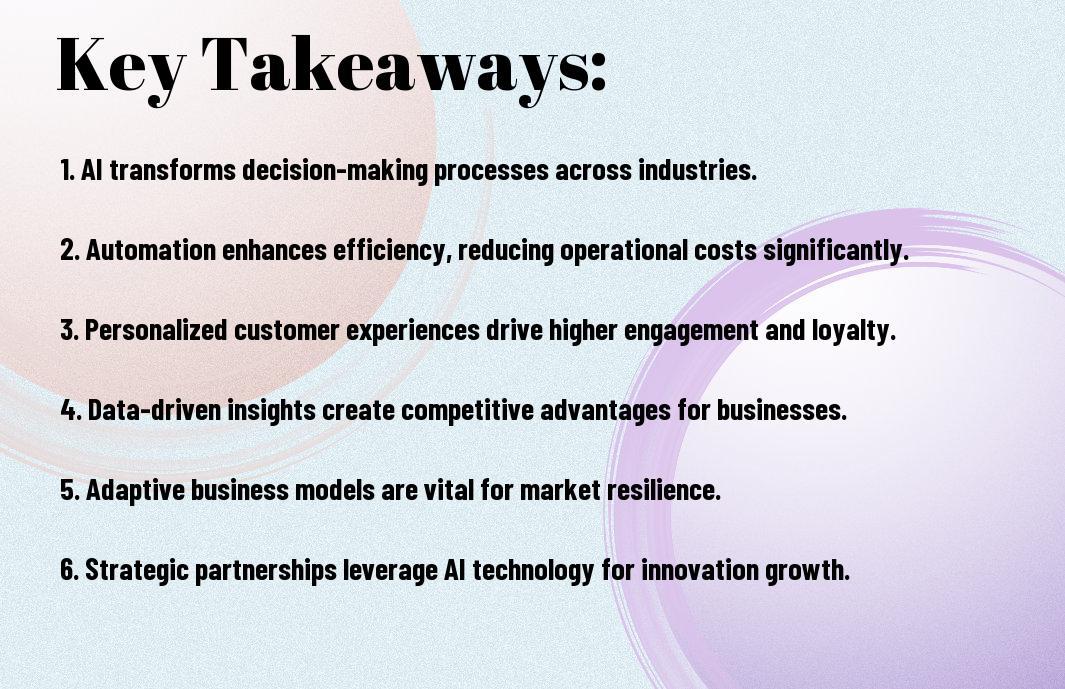
  • Embracing AI innovations can be a significant factor in achieving financial success, as these technologies have the potential to disrupt traditional markets and create new opportunities for wealth creation.
  • Investing in AI-driven companies or developing AI-based products and services can provide a competitive edge, enabling individuals and businesses to dominate their respective markets and build substantial wealth.
  • Staying informed about the latest AI trends and advancements is crucial for making informed investment decisions and capitalizing on the wealth-building potential of AI innovations, which can lead to long-term financial growth and prosperity.

The AI Revolution in Wealth Creation

A new era of wealth creation has emerged, and you are at the forefront of this revolution. With AI innovations, you can now make informed investment decisions and stay ahead of the curve. Your ability to adapt to these changes will determine your success in building wealth.

Identifying Market Inefficiencies

Against the backdrop of traditional investment strategies, you can use AI to identify market inefficiencies and capitalize on them. Your AI-powered tools will analyze vast amounts of data, providing you with valuable insights to make informed decisions.

Algorithmic Investment Strategies

Among the various AI-powered investment strategies, algorithmic trading has gained significant attention. You can use algorithms to automate your investment decisions, minimizing emotional bias and maximizing returns. Your algorithmic strategies will enable you to navigate complex markets with ease.

Plus, as you research deeper into algorithmic investment strategies, you will discover the potential for significant returns on your investments. You will be able to backtest your strategies, evaluate their performance, and refine them to optimize your results. Your ability to leverage AI in this way will give you a competitive edge in the market, allowing you to achieve your financial goals and build wealth with confidence.

Machine Learning as the New Financial Advisor

You are on the cusp of a revolution in financial management, where machine learning algorithms analyze your investment options and provide personalized advice, helping you make informed decisions to grow your wealth.

Predictive Analytics in Portfolio Management

Professionally managed portfolios are leveraging predictive analytics to forecast market trends, allowing you to adjust your strategy and maximize returns, ensuring your investments are aligned with your financial goals.

Risk Assessment Reimagined

At the heart of successful investing is a thorough understanding of risk, and with machine learning, you can assess potential pitfalls and opportunities, enabling you to make more informed decisions about your investments.

Learning from historical data and real-time market analysis, you can refine your risk assessment strategy, allowing you to navigate complex financial landscapes with confidence, and make adjustments to your portfolio as needed to protect your assets and achieve your long-term objectives.

The Competitive Edge of Neural Networks

Your ability to leverage neural networks can give you a significant advantage in the market, as seen in How different approaches to AI will shape the future of wealth management, allowing you to make more informed decisions.

Pattern Recognition in Market Trends

One key benefit of neural networks is their ability to identify complex patterns in market trends, enabling you to anticipate and adapt to changes in the market.

Sentiment Analysis of Financial News

Sentiment analysis is a powerful tool, allowing you to gauge the emotional tone of financial news and make more informed investment decisions based on your analysis.

Market sentiment can greatly impact your investment portfolio, and with sentiment analysis, you can better understand the emotional tone behind financial news, making it easier for you to make decisions that align with your investment goals, and ultimately, achieve your desired outcomes.

Blockchain and AI: The Wealth Preservation Duo

For investors seeking to safeguard their assets, the combination of blockchain and AI presents a compelling solution. By leveraging these technologies, you can create a robust framework for protecting your wealth and ensuring its longevity.

Smart Contracts for Asset Protection

Obviously, one of the most significant advantages of blockchain technology is its ability to facilitate smart contracts, which enable you to automate and secure your asset management processes, thereby minimizing the risk of fraud or manipulation, and giving you greater control over your wealth.

Decentralized Finance Opportunities

Similarly, one of the most exciting developments in the blockchain space is the emergence of decentralized finance (DeFi) opportunities, which allow you to access a wide range of financial services and products, such as lending and borrowing platforms, in a secure and transparent manner, enabling you to grow your wealth with greater ease and flexibility.

Hence, as you explore the possibilities of DeFi, you will discover that it offers a more equitable and accessible financial system, where you can participate in various investment opportunities, such as yield farming and liquidity provision, and earn significant returns on your investments, all while maintaining control over your assets and ensuring their security through the use of blockchain technology and AI-powered tools.

Automation of Wealth Management

Unlike traditional methods, AI-powered automation is revolutionizing your wealth management experience. You can learn more about how AI is transforming asset and wealth management and discover new opportunities for growth.

Robo-Advisors and Their Evolution

Alongside this trend, you’ll find that robo-advisors are becoming increasingly sophisticated, offering you personalized investment advice and portfolio management, making it easier for you to make informed decisions about your wealth.

Cost Reduction Through Technological Efficiency

Wealth creation is often hindered by high management fees, but with AI, you can reduce costs and maximize your returns, allowing you to achieve your financial goals more efficiently.

In addition, as you explore the benefits of AI in wealth management, you’ll find that technological efficiency can help minimize errors, optimize portfolio performance, and provide you with real-time insights, enabling you to make data-driven decisions and stay ahead in the game, ultimately leading to increased wealth and financial stability for you.

Ethical Considerations in AI-Driven Wealth

Once again, you’ll need to consider the ethical implications of using AI to build your wealth, as the technology’s potential for growth is matched only by its potential for misuse, and you must be aware of the risks involved in order to navigate them effectively.

Algorithmic Bias in Financial Systems

At the heart of many AI systems are algorithms that can perpetuate existing biases, and you should be aware that these biases can affect your investment decisions, leading to unfair outcomes and potentially harming your financial goals.

Privacy Concerns in Data-Driven Investing

Around the issue of data collection, you’ll find that your personal information is being used to inform investment decisions, and you should consider how this data is being protected and used, as it has a direct impact on your financial well-being.

But as you investigate deeper into the world of data-driven investing, you’ll find that privacy concerns go beyond just data protection, and you’ll need to consider how your investments are being influenced by the data that’s being collected, and whether this alignment is in your best interests, allowing you to make informed decisions about your financial future.

Summing up

As a reminder, you now have the tools to transform your financial future with AI innovations. You can leverage these technologies to drive your investments and build wealth. By embracing AI, you will stay ahead of the curve, making informed decisions and maximizing your returns. Your ability to adapt and innovate will be key to achieving success in this new era of disruption and domination.

FAQ

Q: What is the main concept of “From Disruption to Domination – Building Wealth with AI Innovations”?

A: The main concept of “From Disruption to Domination – Building Wealth with AI Innovations” is to provide a comprehensive guide on how to leverage Artificial Intelligence (AI) innovations to create wealth and achieve financial success. The book focuses on the opportunities and challenges presented by AI and offers strategies for individuals and businesses to harness its power to dominate their respective markets and build wealth.

Q: How can AI innovations be used to build wealth?

A: AI innovations can be used to build wealth in various ways, including automating business processes, improving decision-making, and creating new revenue streams. For instance, AI-powered chatbots can help businesses automate customer service, while machine learning algorithms can be used to analyze market trends and make data-driven investment decisions. Additionally, AI can be used to develop new products and services, such as virtual assistants and personalized recommendation systems, that can generate significant revenue.

Q: What are the key benefits of investing in AI innovations?

A: The key benefits of investing in AI innovations include increased efficiency, improved accuracy, and enhanced decision-making capabilities. AI can help businesses automate repetitive tasks, freeing up resources for more strategic and creative work. Additionally, AI can analyze large amounts of data quickly and accurately, providing valuable insights that can inform business decisions. Furthermore, AI can help businesses stay ahead of the competition by identifying new opportunities and predicting market trends.

Q: How can individuals and businesses get started with AI innovations?

A: Individuals and businesses can get started with AI innovations by educating themselves on the basics of AI and its applications. They can start by exploring AI-powered tools and platforms, such as machine learning frameworks and natural language processing libraries. Additionally, they can invest in AI-related courses and training programs to develop the necessary skills to work with AI technologies. It’s also important to stay up-to-date with the latest AI trends and advancements by attending industry conferences and following AI thought leaders.

Q: What are the potential risks and challenges associated with investing in AI innovations?

A: The potential risks and challenges associated with investing in AI innovations include job displacement, data privacy concerns, and the potential for AI systems to make biased or inaccurate decisions. Additionally, AI systems can be vulnerable to cyber attacks and data breaches, which can compromise sensitive information. To mitigate these risks, it’s vital to implement robust security measures, ensure transparency and accountability in AI decision-making, and develop strategies for upskilling and reskilling workers who may be displaced by automation. By being aware of these risks and challenges, individuals and businesses can take steps to minimize their impact and ensure that AI innovations are developed and deployed responsibly.

The Power of Disruption – How AI is Reshaping Wealth in Business

Key Takeaways:
  • AI is transforming the wealth management industry by providing personalized investment advice and automating routine tasks, allowing businesses to focus on high-value services and improve client relationships.
  • The integration of AI in business operations enables companies to analyze large datasets, identify patterns, and make data-driven decisions, leading to increased efficiency and competitiveness in the market.
  • As AI continues to reshape the business landscape, companies must adapt and innovate to stay ahead, leveraging AI-powered tools to enhance their services, reduce costs, and drive growth in a rapidly changing environment.

The Tipping Point of AI in Modern Business

A significant shift is occurring in the business world, driven by the rapid advancement of Artificial Intelligence (AI). As you navigate this new landscape, you’ll notice that AI is transforming the way companies operate, creating new opportunities for growth and innovation.

From Incremental to Exponential Change

Once you start to implement AI solutions, you’ll find that the impact is not just incremental, but exponential, leading to unprecedented levels of efficiency and productivity in your organization.

The Wealth Redistribution Effect

About to experience a significant impact on your business, you should consider how AI is redistributing wealth, creating new winners and losers in the market, and affecting your position within it.

Understanding the wealth redistribution effect of AI is important for your business strategy, as it can help you identify potential risks and opportunities, and make informed decisions about investments and resource allocation, ultimately determining your success in this new era of business.

Small Changes, Big Consequences

Any business can benefit from AI, and you may be surprised at the impact it can have on your wealth. By incorporating AI into your operations, you can streamline processes, reduce costs, and increase efficiency, leading to significant profits.

How Minor AI Implementations Create Major Profits

Moderate adjustments to your business strategy, such as implementing AI-powered tools, can have a substantial effect on your bottom line, allowing you to stay ahead of the competition and increase your wealth.

The Outliers Who Saw It Coming

After analyzing the market, you may have noticed that some businesses have successfully harnessed the power of AI to revolutionize their operations, and you can learn from their experiences to inform your own strategy.

With the benefit of hindsight, you can see that these outliers were able to anticipate the potential of AI and adapt their business models accordingly, resulting in significant financial gains and increased wealth, and you can apply these lessons to your own business to achieve similar success.

Historical Patterns of Technological Disruption

Unlike previous technological advancements, AI is transforming industries at an unprecedented pace, and you are witnessing its impact on your business and wealth. You see how AI is changing the way you operate, making some jobs obsolete while creating new ones, and you must adapt to stay ahead.

Lessons from the Industrial Revolution

Around the time of the Industrial Revolution, you began to notice significant changes in the way goods were produced and distributed, and you realized that similar patterns of disruption are emerging with AI, affecting your wealth and business in profound ways.

The Digital Parallel

One of the most significant aspects of AI disruption is its ability to parallel human thought processes, and you are seeing this play out in your own business as AI takes over routine tasks, freeing you to focus on higher-level decision-making.

Disruption in the digital age is happening at a much faster pace than you might have anticipated, and you need to be prepared to pivot your business strategy to take advantage of emerging trends and technologies, such as AI-powered analytics and automation, which can help you make more informed decisions and stay ahead of the competition, ultimately reshaping your wealth and business for the better.

The Counterintuitive Economics of AI Integration

Your business can benefit from AI integration, as seen in How artificial intelligence is reshaping the financial services industry, where innovative approaches lead to increased efficiency.

When Less Investment Yields Greater Returns

At the outset, you may find that minimal investment in AI can yield significant returns, allowing you to allocate resources more effectively and streamline operations.

The Sticky Factor in AI Adoption

On the surface, AI adoption appears straightforward, but you will soon discover that successful integration relies on various factors, including data quality and employee buy-in.

Another aspect to consider is the long-term commitment required for AI adoption, as you will need to continuously update and refine your systems to ensure they remain effective and aligned with your business goals, allowing you to maximize the potential of AI and drive sustainable growth.

Cognitive Biases in AI Investment Decisions

Not surprisingly, your investment decisions are influenced by cognitive biases when it comes to AI. You may overlook potential pitfalls or overestimate the benefits, leading to poor investment choices.

Why Traditional Business Leaders Miss the Signs

With the rise of AI, you will notice that traditional business leaders often fail to adapt, missing signs of disruption in their industry, and you must be aware of this to avoid similar mistakes.

The Psychology of Technological Resistance

For instance, you may experience resistance to new technologies, including AI, due to fear of change or lack of understanding, which can hinder your ability to make informed investment decisions.

At the heart of this resistance lies a complex mix of emotional and psychological factors, including your comfort with uncertainty and willingness to learn, which you must acknowledge and address in order to make the most of AI’s potential in your business and investment strategies.

The New Rules of Wealth Creation

Once again, you’re witnessing a significant shift in the way wealth is created and distributed, as AI continues to disrupt traditional business models, enabling you to rethink your approach to wealth creation and stay ahead of the curve.

Shifting from Ownership to Access Models

Above all, you need to understand that the rise of AI is driving a shift from ownership to access models, allowing you to access goods and services without the need for direct ownership, and you can leverage this trend to create new wealth opportunities.

The Democratization of Enterprise Tools

For instance, you can now access advanced enterprise tools and technologies that were previously only available to large corporations, enabling you to level the playing field and compete with bigger players in your industry.

Wealth creation is no longer the exclusive domain of large corporations, as you can now access a wide range of tools and technologies that enable you to build and grow your own business, and you can use these tools to create new products, services, and business models that generate wealth and drive growth.

Conclusion

Conclusively, as you navigate the evolving landscape of business, you will find that AI is revolutionizing your approach to wealth creation. You are witnessing a seismic shift in how businesses operate, and your ability to adapt will be key to unlocking new opportunities. By harnessing the power of disruption, you can stay ahead of the curve and reshape your wealth in the process, ultimately transforming your business and securing your place in the future.

FAQ

Q: What is the concept of “The Power of Disruption” in the context of AI and wealth in business?

A: The concept of “The Power of Disruption” refers to the significant impact that Artificial Intelligence (AI) is having on traditional business models and wealth creation. AI is disrupting industries and creating new opportunities for growth, innovation, and profit. This disruption is driven by the ability of AI to automate processes, analyze vast amounts of data, and make predictions, leading to increased efficiency, productivity, and competitiveness.

Q: How is AI reshaping wealth in business, and what are the key drivers of this change?

A: AI is reshaping wealth in business by creating new revenue streams, improving operational efficiency, and enabling businesses to make data-driven decisions. The key drivers of this change include the increasing availability of data, advances in machine learning algorithms, and the growing adoption of cloud computing. Additionally, AI is enabling businesses to personalize customer experiences, optimize supply chains, and develop new products and services, leading to increased revenue and profitability.

Q: What are the potential benefits of AI adoption for businesses, and how can they be realized?

A: The potential benefits of AI adoption for businesses include increased efficiency, improved decision-making, enhanced customer experiences, and new revenue opportunities. These benefits can be realized by investing in AI technologies such as machine learning, natural language processing, and computer vision. Businesses can also benefit from AI by automating routine tasks, analyzing large datasets, and identifying new business opportunities. Furthermore, AI can help businesses to improve their risk management, reduce costs, and increase their competitiveness in the market.

Q: What are the potential risks and challenges associated with AI adoption in business, and how can they be mitigated?

A: The potential risks and challenges associated with AI adoption in business include job displacement, data privacy concerns, and the potential for AI systems to perpetuate biases and errors. These risks can be mitigated by implementing robust governance and regulatory frameworks, investing in employee retraining and upskilling, and ensuring that AI systems are designed and deployed in a transparent and accountable manner. Additionally, businesses can mitigate these risks by conducting thorough risk assessments, implementing robust testing and validation protocols, and ensuring that AI systems are aligned with their overall business strategy and values.

Q: What is the future outlook for AI in business, and how will it continue to shape wealth creation and industry disruption?

A: The future outlook for AI in business is highly promising, with AI expected to continue to drive innovation, growth, and disruption across industries. As AI technologies continue to evolve and improve, we can expect to see increased adoption and deployment of AI in areas such as healthcare, finance, and education. AI will also continue to shape wealth creation by enabling businesses to develop new products and services, improve operational efficiency, and make data-driven decisions. Furthermore, AI will drive industry disruption by creating new business models, enabling new forms of entrepreneurship, and changing the way businesses interact with customers and stakeholders.

Skip to content