
- AI is transforming the wealth management industry by providing personalized investment advice and automating routine tasks, allowing businesses to focus on high-value services and improve client relationships.
- The integration of AI in business operations enables companies to analyze large datasets, identify patterns, and make data-driven decisions, leading to increased efficiency and competitiveness in the market.
- As AI continues to reshape the business landscape, companies must adapt and innovate to stay ahead, leveraging AI-powered tools to enhance their services, reduce costs, and drive growth in a rapidly changing environment.

The Tipping Point of AI in Modern Business
A significant shift is occurring in the business world, driven by the rapid advancement of Artificial Intelligence (AI). As you navigate this new landscape, you’ll notice that AI is transforming the way companies operate, creating new opportunities for growth and innovation.
From Incremental to Exponential Change
Once you start to implement AI solutions, you’ll find that the impact is not just incremental, but exponential, leading to unprecedented levels of efficiency and productivity in your organization.
The Wealth Redistribution Effect
About to experience a significant impact on your business, you should consider how AI is redistributing wealth, creating new winners and losers in the market, and affecting your position within it.
Understanding the wealth redistribution effect of AI is important for your business strategy, as it can help you identify potential risks and opportunities, and make informed decisions about investments and resource allocation, ultimately determining your success in this new era of business.
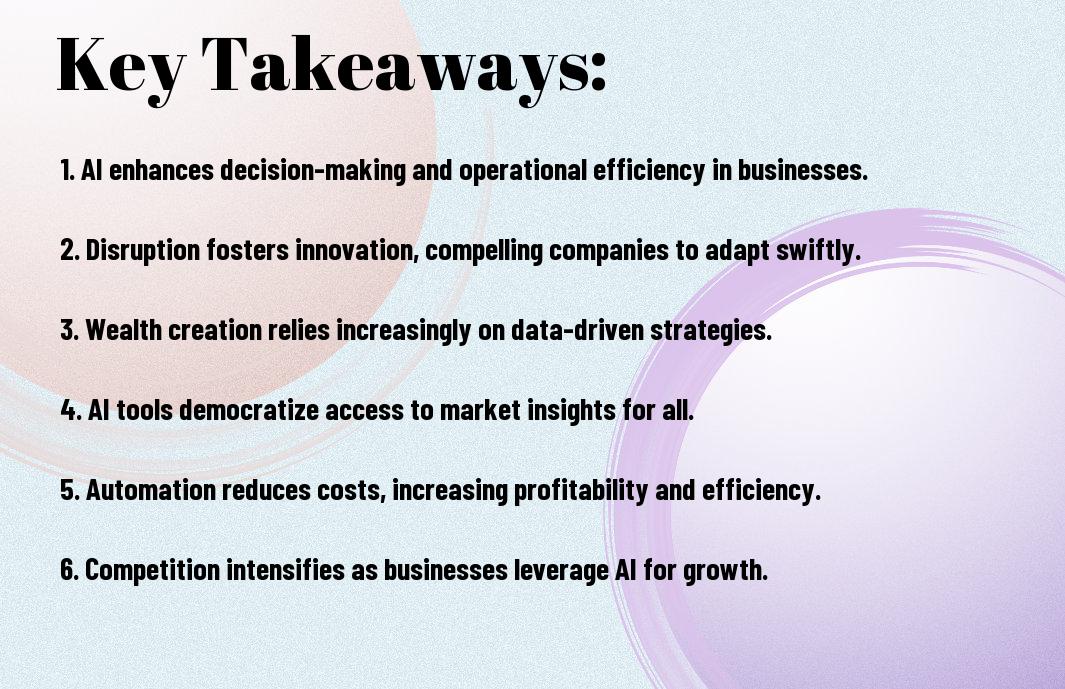
Small Changes, Big Consequences
Any business can benefit from AI, and you may be surprised at the impact it can have on your wealth. By incorporating AI into your operations, you can streamline processes, reduce costs, and increase efficiency, leading to significant profits.
How Minor AI Implementations Create Major Profits
Moderate adjustments to your business strategy, such as implementing AI-powered tools, can have a substantial effect on your bottom line, allowing you to stay ahead of the competition and increase your wealth.
The Outliers Who Saw It Coming
After analyzing the market, you may have noticed that some businesses have successfully harnessed the power of AI to revolutionize their operations, and you can learn from their experiences to inform your own strategy.
With the benefit of hindsight, you can see that these outliers were able to anticipate the potential of AI and adapt their business models accordingly, resulting in significant financial gains and increased wealth, and you can apply these lessons to your own business to achieve similar success.
Historical Patterns of Technological Disruption
Unlike previous technological advancements, AI is transforming industries at an unprecedented pace, and you are witnessing its impact on your business and wealth. You see how AI is changing the way you operate, making some jobs obsolete while creating new ones, and you must adapt to stay ahead.
Lessons from the Industrial Revolution
Around the time of the Industrial Revolution, you began to notice significant changes in the way goods were produced and distributed, and you realized that similar patterns of disruption are emerging with AI, affecting your wealth and business in profound ways.
The Digital Parallel
One of the most significant aspects of AI disruption is its ability to parallel human thought processes, and you are seeing this play out in your own business as AI takes over routine tasks, freeing you to focus on higher-level decision-making.
Disruption in the digital age is happening at a much faster pace than you might have anticipated, and you need to be prepared to pivot your business strategy to take advantage of emerging trends and technologies, such as AI-powered analytics and automation, which can help you make more informed decisions and stay ahead of the competition, ultimately reshaping your wealth and business for the better.
The Counterintuitive Economics of AI Integration
Your business can benefit from AI integration, as seen in How artificial intelligence is reshaping the financial services industry, where innovative approaches lead to increased efficiency.
When Less Investment Yields Greater Returns
At the outset, you may find that minimal investment in AI can yield significant returns, allowing you to allocate resources more effectively and streamline operations.
The Sticky Factor in AI Adoption
On the surface, AI adoption appears straightforward, but you will soon discover that successful integration relies on various factors, including data quality and employee buy-in.
Another aspect to consider is the long-term commitment required for AI adoption, as you will need to continuously update and refine your systems to ensure they remain effective and aligned with your business goals, allowing you to maximize the potential of AI and drive sustainable growth.
Cognitive Biases in AI Investment Decisions
Not surprisingly, your investment decisions are influenced by cognitive biases when it comes to AI. You may overlook potential pitfalls or overestimate the benefits, leading to poor investment choices.
Why Traditional Business Leaders Miss the Signs
With the rise of AI, you will notice that traditional business leaders often fail to adapt, missing signs of disruption in their industry, and you must be aware of this to avoid similar mistakes.
The Psychology of Technological Resistance
For instance, you may experience resistance to new technologies, including AI, due to fear of change or lack of understanding, which can hinder your ability to make informed investment decisions.
At the heart of this resistance lies a complex mix of emotional and psychological factors, including your comfort with uncertainty and willingness to learn, which you must acknowledge and address in order to make the most of AI’s potential in your business and investment strategies.
The New Rules of Wealth Creation
Once again, you’re witnessing a significant shift in the way wealth is created and distributed, as AI continues to disrupt traditional business models, enabling you to rethink your approach to wealth creation and stay ahead of the curve.
Shifting from Ownership to Access Models
Above all, you need to understand that the rise of AI is driving a shift from ownership to access models, allowing you to access goods and services without the need for direct ownership, and you can leverage this trend to create new wealth opportunities.
The Democratization of Enterprise Tools
For instance, you can now access advanced enterprise tools and technologies that were previously only available to large corporations, enabling you to level the playing field and compete with bigger players in your industry.
Wealth creation is no longer the exclusive domain of large corporations, as you can now access a wide range of tools and technologies that enable you to build and grow your own business, and you can use these tools to create new products, services, and business models that generate wealth and drive growth.
Conclusion
Conclusively, as you navigate the evolving landscape of business, you will find that AI is revolutionizing your approach to wealth creation. You are witnessing a seismic shift in how businesses operate, and your ability to adapt will be key to unlocking new opportunities. By harnessing the power of disruption, you can stay ahead of the curve and reshape your wealth in the process, ultimately transforming your business and securing your place in the future.
FAQ
Q: What is the concept of “The Power of Disruption” in the context of AI and wealth in business?
A: The concept of “The Power of Disruption” refers to the significant impact that Artificial Intelligence (AI) is having on traditional business models and wealth creation. AI is disrupting industries and creating new opportunities for growth, innovation, and profit. This disruption is driven by the ability of AI to automate processes, analyze vast amounts of data, and make predictions, leading to increased efficiency, productivity, and competitiveness.
Q: How is AI reshaping wealth in business, and what are the key drivers of this change?
A: AI is reshaping wealth in business by creating new revenue streams, improving operational efficiency, and enabling businesses to make data-driven decisions. The key drivers of this change include the increasing availability of data, advances in machine learning algorithms, and the growing adoption of cloud computing. Additionally, AI is enabling businesses to personalize customer experiences, optimize supply chains, and develop new products and services, leading to increased revenue and profitability.
Q: What are the potential benefits of AI adoption for businesses, and how can they be realized?
A: The potential benefits of AI adoption for businesses include increased efficiency, improved decision-making, enhanced customer experiences, and new revenue opportunities. These benefits can be realized by investing in AI technologies such as machine learning, natural language processing, and computer vision. Businesses can also benefit from AI by automating routine tasks, analyzing large datasets, and identifying new business opportunities. Furthermore, AI can help businesses to improve their risk management, reduce costs, and increase their competitiveness in the market.
Q: What are the potential risks and challenges associated with AI adoption in business, and how can they be mitigated?
A: The potential risks and challenges associated with AI adoption in business include job displacement, data privacy concerns, and the potential for AI systems to perpetuate biases and errors. These risks can be mitigated by implementing robust governance and regulatory frameworks, investing in employee retraining and upskilling, and ensuring that AI systems are designed and deployed in a transparent and accountable manner. Additionally, businesses can mitigate these risks by conducting thorough risk assessments, implementing robust testing and validation protocols, and ensuring that AI systems are aligned with their overall business strategy and values.
Q: What is the future outlook for AI in business, and how will it continue to shape wealth creation and industry disruption?
A: The future outlook for AI in business is highly promising, with AI expected to continue to drive innovation, growth, and disruption across industries. As AI technologies continue to evolve and improve, we can expect to see increased adoption and deployment of AI in areas such as healthcare, finance, and education. AI will also continue to shape wealth creation by enabling businesses to develop new products and services, improve operational efficiency, and make data-driven decisions. Furthermore, AI will drive industry disruption by creating new business models, enabling new forms of entrepreneurship, and changing the way businesses interact with customers and stakeholders.