You are likely aware that artificial intelligence (AI) is transforming the business landscape, and your company’s ability to adapt will determine its success. As you navigate this new era, you need to develop strategies that harness AI’s power to drive growth and sustainability. Your business can thrive with the right approach, and this post will guide you in building a resilient enterprise that leverages AI for long-term wealth and prosperity. You will discover key tactics to future-proof your organization.
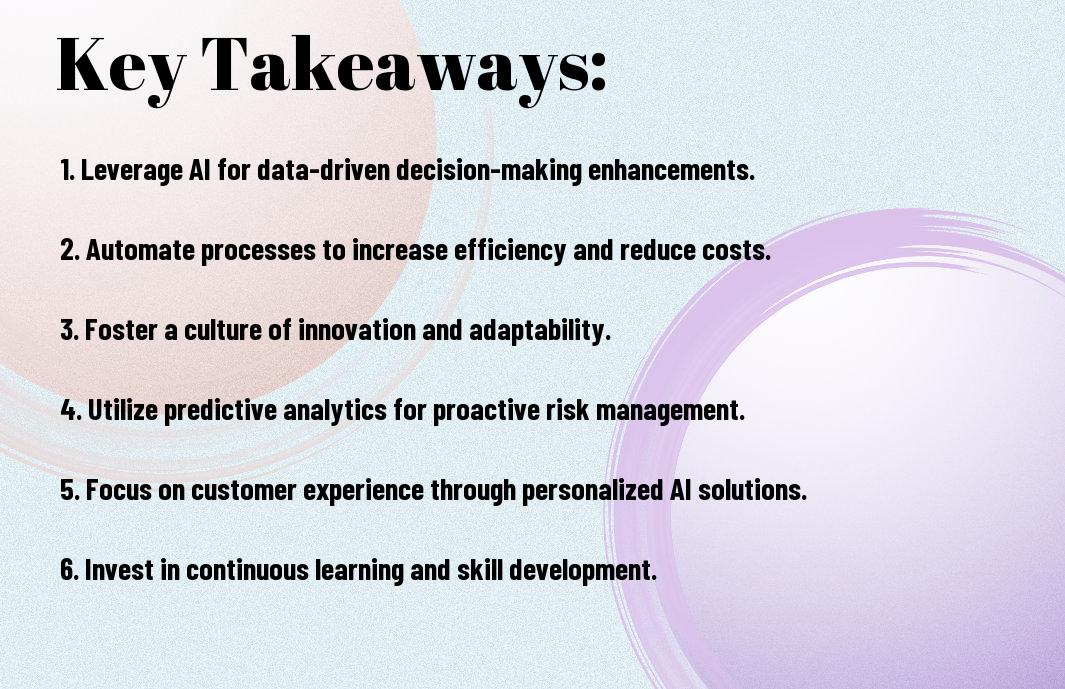
Key Takeaways:
- Implementing AI solutions can help businesses build resilience by automating processes, enhancing decision-making, and improving operational efficiency, ultimately leading to long-term wealth and sustainability.
- Developing a strategic AI roadmap is important to ensure alignment with business goals and objectives, and to maximize the benefits of AI adoption, such as increased productivity and competitiveness.
- Investing in AI-powered data analytics can provide businesses with valuable insights and predictive capabilities, enabling them to anticipate and respond to market changes, mitigate risks, and capitalize on new opportunities.
- Building a resilient business with AI requires a culture of innovation and continuous learning, where employees are empowered to develop new skills and adapt to emerging technologies, ensuring the organization stays ahead of the curve.
- Effective integration of AI into business operations demands a balanced approach, considering both the benefits and potential risks, such as job displacement and bias, to ensure that AI adoption supports the well-being of both the business and its stakeholders.
Identifying AI Opportunities for Business Resilience
For businesses seeking to build resilience, AI offers a wealth of opportunities. You can leverage AI to enhance operational efficiency, improve decision-making, and drive innovation, ultimately leading to long-term wealth and sustainability.
Assessing Your Current Business Vulnerabilities
With a thorough understanding of your business, you can identify areas where AI can mitigate risks and improve resilience. You will need to evaluate your current systems, processes, and infrastructure to determine where AI solutions can be effectively integrated.
Matching AI Solutions to Core Business Needs
Beside your business goals, AI solutions can be tailored to address specific challenges and opportunities. You should consider how AI can be applied to your core business functions, such as customer service, supply chain management, or financial planning, to drive growth and resilience.
It is necessary to align AI solutions with your business objectives, ensuring that they support your overall strategy and drive meaningful outcomes. You should consider factors such as data quality, scalability, and integration with existing systems when selecting AI solutions, and prioritize those that offer the greatest potential for impact and return on investment.
Financial Frameworks for AI Investment
Any business looking to invest in AI needs a solid financial framework to ensure long-term wealth. You must consider the costs and benefits of AI implementation, as well as the potential return on investment.
Capital Allocation Principles for AI Projects
Behind every successful AI project is a well-planned capital allocation strategy. You should prioritize your AI investments based on your business goals and allocate your resources accordingly, ensuring that your investments align with your overall business strategy.
Measuring Return on AI Investments
Investing in AI requires a clear understanding of how to measure the return on your investments. You need to establish key performance indicators (KPIs) to evaluate the success of your AI projects and make data-driven decisions to optimize your investments.
Projects that incorporate AI can be complex and challenging to evaluate, but you can start by tracking metrics such as revenue growth, cost savings, and customer engagement. You should also consider using advanced analytics tools to help you measure the impact of your AI investments and make adjustments to your strategy as needed, allowing you to maximize your returns and achieve your business goals.
Risk Management Through Predictive Analytics
To effectively manage risk in your business, you can leverage predictive analytics to forecast potential threats and opportunities. This enables you to make informed decisions and mitigate risks, ensuring your business remains resilient in the face of uncertainty.
Market Volatility Forecasting Systems
Alongside other tools, advanced market volatility forecasting systems can help you anticipate and prepare for market fluctuations, allowing you to adjust your strategy accordingly and protect your investments.
Supply Chain Resilience Modeling
Meanwhile, management of your supply chain is vital to your business’s overall resilience, and predictive analytics can help you identify potential vulnerabilities and develop strategies to address them, ensuring that your supply chain remains robust and adaptable.
Considering the complexities of modern supply chains, you will need to develop a comprehensive understanding of the various factors that can impact your operations, from logistics and transportation to supplier relationships and inventory management. By using predictive analytics to model different scenarios and identify potential risks, you can develop proactive strategies to mitigate these risks and ensure that your supply chain remains resilient in the face of disruption, ultimately protecting your business’s long-term wealth and stability.
Customer Relationship Enhancement via AI
After implementing AI in your business, you can significantly enhance customer relationships, leading to increased loyalty and retention. You can leverage AI to analyze customer data, preferences, and behavior, allowing you to tailor your services to meet their needs.
Personalization at Scale
By utilizing AI-powered tools, you can personalize your customer interactions at scale, enabling you to provide a unique experience for each customer, thereby strengthening your bond with them.
Retention Strategy Automation
Above all, automating your retention strategy with AI helps you identify and address potential issues before they lead to customer churn, allowing you to proactively retain your customers.
Retention is a key aspect of your business, and with AI, you can develop targeted strategies to retain your customers, such as offering personalized loyalty programs, sending timely notifications, and providing exceptional customer support, ultimately leading to long-term wealth and growth for your business as you continue to meet the evolving needs of your customers.
Operational Efficiency Transformation
Your business can benefit from AI-driven operational efficiency transformation, learn more about How to Build a Resilient Business in an Ever-Changing Economy to stay ahead.
Process Automation Selection Criteria
Among the key factors to consider when selecting process automation, you should evaluate the potential return on investment and the impact on your workforce.
Workforce Augmentation Strategies
To effectively implement AI, you need to develop strategies that augment your workforce, enhancing their capabilities and productivity.
Even as you adopt AI, your focus should be on upskilling your employees, enabling them to work alongside AI systems and maximize the benefits of automation, leading to increased efficiency and long-term wealth for your business.

Competitive Advantage Through Data Assets
Keep in mind that your business’s ability to collect, analyze, and act on data is key to gaining a competitive edge in the market, and leveraging AI can help you make the most of your data assets.
Building Proprietary Data Moats
Alongside your existing data collection efforts, acquiring and utilizing unique data sources can help you build a proprietary data moat that sets your business apart from competitors and provides a foundation for long-term success.
Turning Data into Strategic Decisions
Among the most effective ways to drive business growth, using data to inform your strategic decisions enables you to make informed choices that drive your business forward, and AI can help you uncover hidden insights in your data.
Data drives your ability to make strategic decisions, and by leveraging AI-powered analytics, you can uncover patterns and trends in your data that might otherwise go unnoticed, allowing you to adjust your business strategy and stay ahead of the competition, ultimately leading to increased efficiency and profitability for your business.
Summing up
Now that you have explored the strategies for building a resilient business with AI, you can apply these insights to secure your company’s long-term wealth. You will be able to leverage AI to drive growth, mitigate risks, and stay competitive. By implementing these approaches, you will strengthen your business and ensure its prosperity, ultimately achieving your goals and protecting your investments. Your ability to adapt and innovate with AI will be key to your success.
FAQ
Q: What are the key benefits of incorporating AI into my business strategy for long-term wealth creation?
A: Incorporating AI into your business strategy can bring numerous benefits, including enhanced operational efficiency, improved decision-making, and increased competitiveness. AI can help automate routine tasks, analyze large datasets, and provide valuable insights, enabling you to make informed decisions and stay ahead of the competition. Additionally, AI can help you identify new business opportunities, optimize resource allocation, and mitigate potential risks, ultimately contributing to long-term wealth creation and business resilience.
Q: How can I ensure that my business is prepared to adapt to the changing landscape of AI technology and its applications?
A: To ensure your business is prepared to adapt to the changing landscape of AI technology, it’s vital to stay informed about the latest developments and advancements in the field. This can be achieved by attending industry conferences, participating in online forums, and engaging with AI experts and thought leaders. Furthermore, you should prioritize investing in employee training and development, focusing on building a workforce with the necessary skills to effectively leverage AI technologies. By fostering a culture of innovation and experimentation, you can encourage your team to explore new AI-powered solutions and identify opportunities for growth and improvement.
Q: What role does data quality play in building a resilient business with AI, and how can I ensure that my business has access to high-quality data?
A: Data quality plays a vital role in building a resilient business with AI, as high-quality data is vital for training accurate AI models and generating reliable insights. To ensure access to high-quality data, it’s vital to establish robust data management practices, including data collection, storage, and processing protocols. This can involve implementing data validation and verification processes, as well as investing in data cleansing and normalization tools. Additionally, you should prioritize data security and compliance, ensuring that your business adheres to relevant data protection regulations and standards. By prioritizing data quality, you can trust the insights generated by your AI systems and make informed decisions to drive long-term business success.