simon weiner

How does the condition of the track affect horse race predictions

Many factors come into play when predicting the outcome of a horse race, but one key element that often gets overlooked is the condition of the track. Understanding how the track’s condition affects a horse’s performance can give you a competitive edge in your race predictions. So, sit back, grab a drink, and let’s examine how different track conditions can impact the outcome of a race.

Key Takeaways:

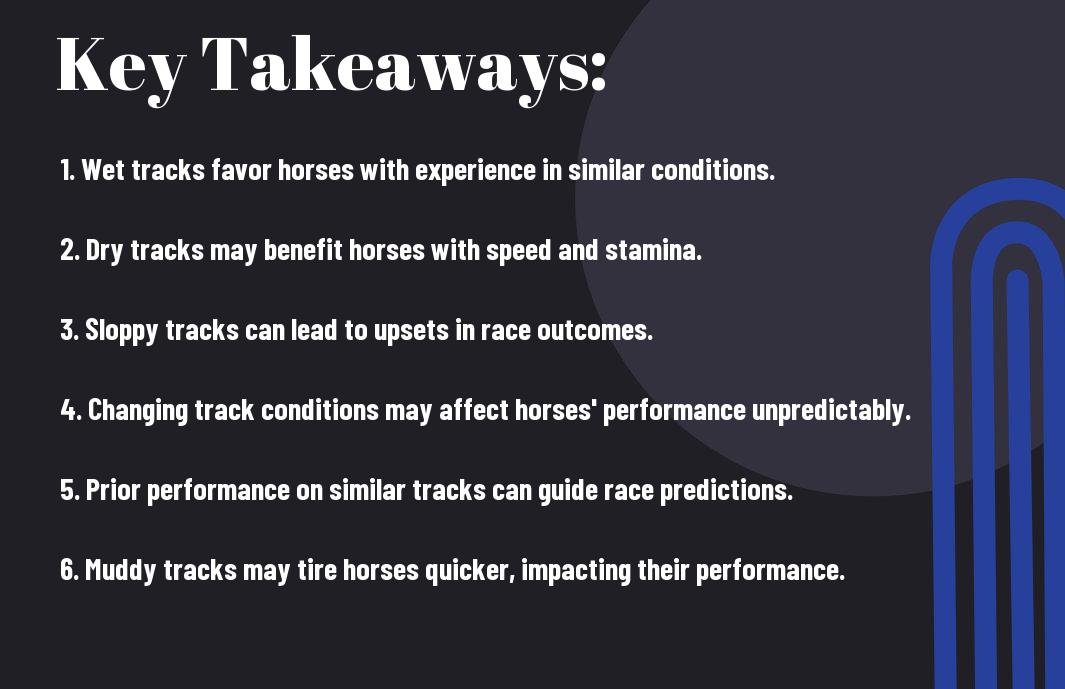
  • Track Condition and Performance: The condition of the track, whether it’s fast, muddy, sloppy, or firm, significantly affects the performance of horses in a race.
  • Adaptability of Horses: Some horses perform better on specific track conditions, while others are more versatile and can adapt to various conditions, making track condition an important factor in predicting horse race outcomes.
  • Expert Analysis: Consulting expert analysis and past performance data on how specific horses have performed under different track conditions can provide valuable insights for making informed predictions.

The Physical Condition of the Track

Before venturing into how the track condition affects horse race predictions, it’s vital to understand the different types of surfaces that horses can race on: Dirt, Turf, and Synthetic.

Surface Types: Dirt, Turf, and Synthetic

To start, dirt tracks are the most common surfaces in horse racing, offering varying degrees of firmness. Turf tracks, on the other hand, are made of grass and can be affected by weather conditions more than dirt. Synthetic tracks are designed to provide a consistent surface regardless of weather, offering a more predictable racing experience for horses and bettors alike.

Dirt Varying degrees of firmness
Turf Affected by weather conditions
Synthetic Consistent surface regardless of weather

Any

information about the type of surface the race will be held on is crucial to consider when predicting race outcomes. Different horses perform better on specific track surfaces, so knowing the surface type can give you a competitive edge in your predictions.

Track Maintenance and Its Impact on Horse Performance

To investigate further into the physical condition of the track, understanding how track maintenance can affect horse performance is important.

Maintenance work on the track, such as harrowing or watering, can greatly impact how fast or slow the track is on race day. Proper maintenance ensures a fair and safe surface for all horses, ultimately influencing their performance.

Synthetic tracks require less maintenance compared to dirt or turf tracks, offering a more consistent surface for horses to race on. This consistency can lead to more predictable outcomes in races, as horses don’t have to contend with changing track conditions.
Weather Conditions and Their Effects

The weather conditions on race day can significantly impact the performance of horses. Understanding how different weather elements affect the track can give you valuable insights for making predictions.

Rain and Mud: How They Affect Horse Traction

Affecting the condition of the track, rain can turn a fast track into a sloppy one, making it harder for horses to maintain their speed and affecting their traction. Horses tend to struggle more in muddy conditions, slipping and sliding, which can lead to unexpected outcomes in races. When handicapping races on wet tracks, consider looking for horses with previous successful performances in such conditions.

Heat and Humidity: The Impact on Horse Endurance

They affect not only the horses but also the way races unfold. High temperatures and humidity levels can challenge a horse’s stamina, affecting their overall performance and potentially causing fatigue. Understanding how heat impacts different horses can help you make more accurate predictions, especially in longer races where endurance plays a significant role in determining the outcome.

To help you make informed decisions when predicting horse race outcomes, consider the weather conditions on race day and how they might impact the performance of the horses involved. By factoring in these variables, you can improve the accuracy of your predictions and gain an edge in your handicapping efforts.

Track Configuration and Its Influence

All factors related to the track configuration can significantly impact horse race predictions.

Track Shape and Size: How They Affect Horse Speed

Affecting horse speeds, track shape and size play a crucial role in determining the outcome of races. Smaller tracks with sharper turns may favor horses with quick acceleration and nimble maneuvering skills. On the other hand, larger tracks with longer straightaways can benefit horses with sustained speed and endurance. Understanding how track dimensions align with your horse’s strengths and racing style can give you a competitive edge in making accurate predictions.

Turns and Corners: The Role of Centrifugal Force

Force, the centrifugal force exerted on horses when navigating turns and corners can either propel them forward or hinder their momentum. Sharp turns require horses to exert more energy to overcome the outward force pulling them away from the inner track. It’s important to consider how your chosen horse handles turns – whether it can maintain its speed through corners or if it tends to slow down, potentially losing ground to competitors.

Track layouts can vary greatly, with some featuring tight turns that demand frequent deceleration and acceleration, while others have more gradual curves that allow horses to maintain a steady pace. By observing how horses handle different track configurations in varying conditions, you can refine your race predictions and make informed decisions when placing your bets.

The Role of Track Bias

What is Track Bias and How Does it Affect Horse Performance?

Now, when considering track bias, it refers to the tendency of a racetrack to give advantage or disadvantage to horses depending on their starting positions, the condition of the track, or other factors. This bias can significantly impact a horse’s performance and ultimately affect race predictions. For example, a track bias that favors inside positions may give an edge to horses starting closer to the rail, affecting how they run the race and potentially altering the outcome.

Identifying and Accounting for Track Bias in Predictions

To track bias and make accurate predictions, you need to pay attention to how different parts of the track are performing throughout the race day. Factors like the weather, track surface, and maintenance can all contribute to track bias. By analyzing past races and observing patterns, you can identify potential biases and adjust your predictions accordingly.

It is crucial to gather as much information as possible about the track conditions and any known biases before placing your bets. By staying informed and adapting your strategies based on the track bias, you can make more informed predictions and increase your chances of success in horse race betting.

The Impact of Track Conditions on Horse Behavior

How Horses Adapt to Different Track Conditions

Conditions on the track play a significant role in how horses perform. Not all horses react similarly to varying track conditions. Some horses might excel on dry, fast tracks, while others might prefer tracks with moisture or a bit of give in them. When analyzing races, it’s necessary to consider how each horse has performed on different track conditions in the past to make more accurate predictions.

Behavioral Cues to Watch for When Analyzing Track Conditions

One key aspect to consider is how horses behave before and during the race in response to the track conditions. Observing how a horse moves during warm-up and how they handle the surface can provide valuable insights into their comfort level. Some horses might show signs of agitation or unease on certain track conditions, which could impact their performance. Pay attention to how horses handle turns, straightaways, and any shifts in the track surface as these can all affect their performance.

Conditions on the track can influence a horse’s demeanor and body language. Watch for signs of distress or discomfort, such as excessive sweating, fighting the bit, or reluctance to move forward. These behavioral cues can indicate whether a horse is likely to struggle or thrive in specific track conditions, helping you make more informed predictions when placing your bets.

Historical Data and Its Significance

Many horse racing enthusiasts understand the importance of historical data when it comes to predicting race outcomes. By looking back at past performances, bettors can gain valuable insights into how a horse might perform under specific conditions. For example, weather conditions can play a significant role in a horse’s performance, as exemplified by the impact of muddy tracks on races like the Kentucky Derby Weather’s Role in the Kentucky Derby and How Muddy Conditions Impact Horse Performance.

Analyzing Past Performances on Similar Tracks

Any successful bettor knows that analyzing past performances on tracks similar to the current racing conditions can provide valuable insights. By looking at how a horse has fared on specific track surfaces, distances, and weather conditions in the past, you can better gauge its chances of success in the upcoming race.

Using Historical Data to Inform Predictions

To improve your predictions, you can use historical data to identify patterns and trends that may impact a horse’s performance. By analyzing factors such as past race results, jockey and trainer statistics, and track biases, you can make more informed decisions when placing your bets.

Data-driven insights from historical data can give you a competitive edge when predicting horse race outcomes. By incorporating these analyses into your handicapping process, you can increase your chances of making successful bets.

Conclusion

Hence, when considering how the condition of the track affects horse race predictions, it is crucial to understand the significant impact it can have on the outcome of a race. The condition of the track plays a vital role in determining which horses may perform better, depending on their preferences and strengths in specific conditions. As a result, analyzing the track conditions and how they may affect each horse’s performance can provide valuable insights to help you make more informed predictions.

Note, the condition of the track is just one of the many factors to consider when predicting horse races. By paying close attention to this detail and factoring it into your predictions, you can increase your chances of making accurate predictions and potentially winning your bets. So, keep an eye on the track conditions, do your research, and trust your instincts – you never know when that extra piece of information could make all the difference in your horse race predictions.

FAQ

Q: How does the condition of the track affect horse race predictions?

A: The condition of the track, such as being fast, muddy, or sloppy, plays a significant role in horse race predictions. Horses may perform differently based on their preferred track conditions, so it’s important to consider how they have fared in similar conditions in the past when making predictions.

Q: What factors should be considered when analyzing how the track condition affects race predictions?

A: Factors to consider include how each horse has performed on similar track conditions in the past, whether they have a preference for a particular type of track, and how the track conditions may impact the horse’s running style. Additionally, it’s important to analyze how the track conditions may affect the overall pace of the race and whether it may favor certain types of horses.

Q: How can bettors use track condition information to make more informed race predictions?

A: Bettors can use track condition information to adjust their predictions by giving more weight to horses that have shown success on similar track conditions. They can also consider how the track conditions may impact the strategies of jockeys and trainers, as well as how it may influence the outcome of the race. Ultimately, incorporating track condition analysis into race predictions can provide bettors with a more comprehensive understanding of the factors that may influence the race’s outcome.

What statistical methods are most effective for predicting horse race winners

Predictions about horse race winners can be a thrilling and rewarding exercise, but it requires more than just luck. By delving into statistical methods, you can enhance your chances of making accurate forecasts. In this article, we will explore some of the most effective statistical techniques that can help you decipher the complex world of horse racing and improve your predictive abilities. So, saddle up and get ready to examine the fascinating world of predictive analytics in horse racing!

Key Takeaways:

  • Historical Data Analysis: Utilizing historical data such as past performance, track conditions, jockey statistics, and previous race outcomes can help in predicting horse race winners effectively.
  • Machine Learning Models: Implementing machine learning algorithms like logistic regression, random forest, or gradient boosting can improve the accuracy of predictions by identifying patterns in the data and making informed decisions.
  • Ensemble Methods: Combining the predictions of multiple models through ensemble methods like bagging or boosting can further enhance the accuracy and reliability of horse race winner predictions.

The Fundamentals of Horse Racing Statistics

For a beginner in horse race prediction, understanding the fundamentals of horse racing statistics is crucial. This knowledge provides the foundation for more advanced statistical models and strategies.

Historical Context: The Evolution of Horse Racing Data

Data collection and analysis in horse racing have come a long way over the years. In the past, handicappers relied heavily on basic information such as win percentage and jockey performance. Nowadays, with the advent of technology, vast amounts of data including speed figures, track conditions, and past performances are available to analyze. This historical context highlights the importance of embracing data-driven approaches in your horse racing predictions.

Key Performance Indicators (KPIs): What Matters Most

When entering into horse racing statistics, identifying the key performance indicators (KPIs) that matter most can significantly enhance your prediction accuracy. Factors such as speed figures, pace analysis, class ratings, and trainer/jockey statistics are crucial metrics to consider. This subsection examines into the significance of these KPIs and how they can be leveraged to make informed betting decisions.

Racing enthusiasts understand that not all statistics are created equal when it comes to predicting race outcomes. It’s vital to focus on the KPIs that have proven to have the most impact on a horse’s performance. By honing in on these key metrics, you can refine your predictive models and increase your chances of success at the racetrack.

Descriptive Statistics in Horse Racing

Clearly, understanding how to analyze the performance of horses in racing is crucial for predicting winners. If you want to investigate deeper into predicting horse race outcomes, you can explore the Formula for most probable horse winner available online.

Mean and Median: The Basics of Performance Analysis

Any keen horse racing enthusiast knows that analyzing the mean and median performance metrics of horses can provide valuable insights. The mean gives you the average performance level of a horse, while the median helps you understand the typical performance within a dataset of races.

Standard Deviation: Measuring Consistency and Volatility

With standard deviation, you can measure the consistency and volatility of a horse’s performances over a series of races. This statistical tool helps you gauge how much a horse’s performance typically varies from its average, giving you a sense of its reliability on the track.

Performance analysis using standard deviation allows you to see which horses have more stable performances versus those with erratic results. By considering this metric, you can make more informed predictions about how a horse is likely to perform in an upcoming race.

Correlation Coefficients: Identifying Patterns and Relationships

Performance in horse racing is influenced by various factors, and correlation coefficients can help you identify patterns and relationships between these variables. By analyzing how different factors such as track conditions, jockeys, or previous performances correlate with race outcomes, you can enhance your predictive skills.

Statistics such as correlation coefficients allow you to quantify the relationships between different variables affecting horse race results. This deeper understanding can give you a competitive edge when assessing the potential success of a horse in a given race.

Inferential Statistics in Horse Racing

Many opportunities exist to apply inferential statistics in horse racing to improve your chances of predicting winners. If you’re interested in exploring the intersection of statistics and horse racing, you may find Can Machine Learning Predict Horse Race Winners? A Deep Dive an intriguing read.

Hypothesis Testing: Proving Theories and Debunking Myths

The realm of hypothesis testing in horse racing allows you to validate or refute various conjectures regarding race outcomes. By analyzing data and applying statistical tests, you can confirm or dismiss hypotheses, enabling you to make more informed decisions when selecting horses to bet on.

Confidence Intervals: Estimating True Performance Levels

Horse racing involves numerous variables that can impact a horse’s performance. Confidence intervals help you estimate the true performance levels of horses by providing a range within which their actual performance may lie. These intervals enable you to assess the reliability of your predictions and make adjustments based on the level of certainty you desire.

Racing enthusiasts often employ confidence intervals to gauge the consistency and potential of horses in different racing conditions. By understanding the range within which a horse’s true performance likely falls, you can make well-informed decisions when evaluating race contenders.

Advanced Statistical Methods for Horse Racing

Your quest to predict horse race winners more accurately has led you to explore advanced statistical methods. These methods can offer deeper insights and help enhance your predictions significantly. Let’s probe into some innovative approaches that harness the power of data and analytics to give you an edge in horse racing.

  1. Machine Learning Algorithms: Boosting Prediction Accuracy

    Horse racing enthusiasts like yourself are increasingly turning to machine learning algorithms to improve their prediction accuracy. By leveraging algorithms like Gradient Boosting and Random Forest, you can analyze vast amounts of data to identify intricate patterns and factors that contribute to race outcomes. These algorithms can adapt and learn from new information, continuously refining your predictions and increasing your chances of picking winners.

  2. Neural Networks: Uncovering Hidden Patterns and Trends

    Trends in horse racing can be complex and elusive, often hiding valuable insights that traditional statistical methods may overlook. Neural networks offer a powerful solution by uncovering these hidden patterns and trends in the data. By mimicking the human brain’s ability to process information, neural networks can identify subtle correlations and relationships that influence race results. Incorporating neural networks into your predictive modeling can provide a comprehensive understanding of the factors impacting race outcomes.

  3. Monte Carlo Simulations: Estimating Probabilities and Outcomes

    Hidden probabilities and potential outcomes in horse racing can be challenging to assess with conventional methods. Monte Carlo simulations offer a sophisticated approach to estimate these probabilities by running thousands of simulations based on different variables and scenarios. This method allows you to gauge the likelihood of various race results, helping you make informed decisions when selecting your winners. By simulating a wide range of possibilities, you can gain a more nuanced perspective on the potential outcomes of each race.

Through these advanced statistical methods, you can elevate your horse racing predictions to new heights. By harnessing the power of machine learning algorithms, neural networks, and Monte Carlo simulations, you can unlock valuable insights and enhance your decision-making process. Embrace these innovative tools to sharpen your predictive abilities and stay ahead in the thrilling world of horse racing.

Data Visualization in Horse Racing

All Unveiling the Secrets of Horse Race Modeling can help you gain a better understanding of horse racing data. Utilizing charts and graphs effectively can communicate insights in a visually compelling manner, allowing you to identify trends and patterns more easily. By visualizing data, you can uncover hidden relationships and characteristics that may not be apparent when simply looking at rows of numbers.

Charts and Graphs: Communicating Insights Effectively

Data visualization plays a crucial role in horse racing analysis. By using various charts and graphs, you can effectively communicate complex insights to make more informed decisions. Bar graphs can help you compare different horses’ performance metrics at a glance, while line charts can show how these metrics evolve over time. Scatter plots can reveal correlations between variables, enabling you to spot factors that may influence race outcomes.

Heat Maps and Clustering: Identifying Patterns and Relationships

Communicating through heat maps and clustering techniques allows you to uncover intricate patterns and relationships within horse racing data. By visualizing data in this way, you can identify clusters of similar horses based on performance attributes such as speed, stamina, or track preferences. These techniques enable you to segment horses effectively, leading to more targeted and accurate predictions for race outcomes.

It is fascinating how heat maps and clustering methods can reveal hidden insights in horse racing data. By identifying patterns and relationships using these visualizations, you can obtain a deeper understanding of the factors that contribute to a horse’s success on the track. This detailed analysis can give you a competitive edge when predicting race winners and developing winning strategies.

Interactive Visualizations: Exploring Data in Real-Time

With interactive visualizations, you can research into horse racing data in real-time, allowing you to explore trends and insights dynamically. These tools enable you to interact with the data, filter information, and customize visualizations to focus on specific aspects that interest you the most. By engaging with the data actively, you can uncover new perspectives and make well-informed decisions when predicting race outcomes.

Clustering techniques can enhance your understanding of horse racing data by grouping similar horses together based on performance attributes. By clustering horses with comparable characteristics, you can identify distinct groups within the data, which may shed light on different racing styles or preferences. This segmentation can help you tailor your analysis and predictions more effectively, leading to more accurate outcomes.

Real-World Applications of Statistical Methods

Handicapping Strategies: Putting Statistics into Practice

To effectively predict horse race winners, you need to apply statistical methods in handicapping strategies. Handicapping involves analyzing various factors such as past performance, speed figures, track conditions, and jockey-trainer combinations to determine the most likely outcome of a race. By utilizing statistical models and algorithms, you can make more informed decisions when selecting horses to bet on.

Betting Systems: Maximizing Returns and Minimizing Risk

On your journey to predicting horse race winners, it’s important to consider different betting systems that can help you maximize returns and minimize risk. These systems use statistical analysis to determine the most profitable bets based on factors like odds, track bias, and historical data. By incorporating these systems into your betting strategy, you can increase your chances of success and make more strategic wagers.

Understanding betting systems allows you to not only enjoy the thrill of horse racing but also approach it with a more calculated and strategic mindset. By incorporating statistical methods into your betting systems, you can make more informed decisions and increase your potential for long-term profitability.

Stable Management: Using Data to Inform Training and Breeding Decisions

Any successful horse racing operation relies heavily on data and statistical analysis to inform key decisions related to training and breeding. By collecting and analyzing data on individual horse performance, pedigree, training routines, and environmental factors, trainers and breeders can optimize their strategies for success. Statistical methods play a crucial role in identifying patterns and trends that can lead to more successful training programs and breeding choices.

Decisions related to stable management are critical in the horse racing industry, and using data-driven approaches can give you a competitive edge. By leveraging statistical methods to inform your training and breeding decisions, you can improve the overall performance and success rate of your racing stable.

To wrap up

Conclusively, when it comes to predicting horse race winners, statistical methods like logistic regression, machine learning algorithms such as Random Forest, and neural networks have all proven to be effective tools. Each of these methods has its strengths and weaknesses, but when used in combination with expert knowledge of the sport, they can significantly increase your chances of making informed predictions. Bear in mind, no method is foolproof, and there will always be an element of uncertainty in horse racing, but by utilizing these statistical techniques, you can stay ahead of the curve and make more informed betting decisions.

Q: What statistical methods can be used to predict horse race winners?

A: There are several statistical methods that can be effective for predicting horse race winners. Some of the most commonly used methods include speed figures, handicapping algorithms, machine learning models, and past performance analysis.

Q: How are speed figures used in predicting horse race winners?

A: Speed figures are numerical representations of a horse’s performance in previous races. By analyzing a horse’s speed figures, bettors can gauge its current form and potential for success in an upcoming race. Speed figures can be a useful tool for predicting winners, especially when combined with other factors like track conditions and race distance.

Q: Can machine learning models be effective for predicting horse race winners?

A: Yes, machine learning models have shown promise in predicting horse race winners. These models use algorithms to analyze a wide range of variables, such as past performance data, jockey statistics, and track conditions, to identify patterns and make predictions. While machine learning models can be complex, they have the potential to provide valuable insights for bettors looking to make informed decisions.

How can machine learning algorithms be applied to horse race prediction

Over the years, the integration of machine learning algorithms in various industries has revolutionized the way predictions are made. If you have a fascination for horse racing and the thrill of predicting a winner, then you’re in for a treat. In this blog post, we will explore how you can leverage machine learning algorithms to enhance your horse race prediction capabilities. By understanding the data, selecting the right features, and training the algorithm effectively, you can potentially gain an edge in predicting the outcome of a horse race.

Key Takeaways:

  • Feature selection is crucial: Selecting the right features such as past performance, jockey, track conditions, and more is necessary for accurate predictions.
  • Use of supervised learning algorithms: Algorithms like Random Forest, Gradient Boosting, and Neural Networks can be effective in predicting horse race outcomes by learning patterns from historical data.
  • Continuous model refinement: Regularly updating and refining machine learning models based on new data and feedback can improve prediction accuracy over time.

The Basics of Horse Racing

Historical Background

With a history dating back thousands of years, horse racing has been a popular sport enjoyed by many cultures around the world. The sport has evolved significantly over time, from ancient chariot races to the modern-day races we witness today at prestigious tracks like the Kentucky Derby and Royal Ascot.

Key Factors Affecting Race Outcomes

Race outcomes in horse racing are influenced by a variety of factors that can impact the performance of the horses and jockeys. These key factors include the horse’s past performance, track conditions, jockey skill, and even the post position drawn for the race. Perceiving these factors and how they interact can help you make more informed predictions when placing your bets.

  • Horse’s past performance
  • Track conditions
  • Jockey skill
  • Post position

Machine Learning Fundamentals

Assuming you are interested in exploring how machine learning algorithms can improve horse race prediction, you should check out the article on Use Case #3: Horse Racing Prediction : A Machine Learning Approach.

Supervised Learning

Any successful machine learning approach to horse race prediction starts with supervised learning, where the algorithm learns from labeled training data to make predictions. By analyzing historical race data, including variables like past performance, track conditions, and jockey statistics, the algorithm can identify patterns that lead to accurate predictions of race outcomes.

Unsupervised Learning

For a more exploratory approach, unsupervised learning techniques can be applied to horse race prediction. Unsupervised learning allows you to analyze data without predetermined labels, helping you discover hidden patterns and insights that may not be apparent through supervised methods. This can be particularly useful in uncovering unique trends or correlations that can give you a competitive edge in predicting race results.

Unsupervised learning techniques like clustering can group horses with similar characteristics together, helping you identify relationships that go beyond conventional wisdom in horse racing prediction. This can lead to innovative strategies and approaches that set you apart in the highly competitive world of horse race betting.

Neural Networks and Deep Learning

Neural networks and deep learning models offer a powerful tool for horse race prediction by simulating the human brain’s neural networks to analyze complex patterns in data. These advanced algorithms can learn to recognize intricate relationships in vast amounts of race data, providing highly accurate predictions based on a deep understanding of the factors that influence race outcomes.

Neural networks and deep learning excel in capturing subtle nuances and nonlinear relationships in horse race data that may elude traditional machine learning techniques. By leveraging these cutting-edge algorithms, you can enhance your prediction accuracy and stay ahead of the curve in the dynamic world of horse race betting.

Machine learning brings a new level of sophistication and accuracy to horse race prediction, allowing you to harness the power of data-driven insights to make informed betting decisions and increase your chances of success. By understanding the fundamentals of supervised and unsupervised learning, as well as the capabilities of neural networks and deep learning, you can develop innovative strategies and refine your predictive models to achieve superior results in horse race prediction.

Your Data Collection and Preprocessing

Sources of Data

Collection of data is crucial in predicting outcomes of horse racing using machine learning algorithms. Various sources can provide the necessary data for training models. One such source can be found in the article ‘Predicting Outcomes of Horse Racing using Machine …‘. This data can include past performance records of horses, jockeys, track conditions, weather, and more.

Feature Engineering

The feature engineering process involves selecting the most relevant attributes from the collected data to build predictive models. This step is necessary as it directly impacts the performance of the machine learning algorithms in making accurate predictions.

This process can involve transforming existing features, creating new features based on domain knowledge, and selecting the most informative attributes. By engineering the right features, you can improve the model’s ability to generalize and make predictions on new data effectively.

Data Cleaning and Normalization

The data cleaning and normalization phase focuses on preparing the collected data for machine learning algorithms. During this process, irrelevant or redundant data points are removed, missing values are imputed, and the data is scaled to ensure consistency in the dataset.

A standardized dataset enhances the performance and efficiency of machine learning models. By normalizing the data, you reduce the impact of varying scales and units, making it easier for the algorithms to interpret and learn from the data effectively.

Feature Selection and Engineering

After collecting data for your horse race prediction model, the next step is to carefully select and engineer the features that will have the most impact on the prediction accuracy. This process involves identifying relevant features, creating derived features, and handling missing values to ensure your model is robust and effective.

Identifying Relevant Features

Any successful machine learning model relies heavily on the selection of relevant features that have a strong correlation with the target variable. By analyzing the data and understanding the domain, you can identify which features are likely to have a significant impact on the outcome of the race. Features such as past performance, jockey statistics, weather conditions, and track type can all play a crucial role in predicting the winner.

Creating Derived Features

Selection of features is not limited to the ones available in the dataset. You can also create derived features by combining existing features or extracting new information to enhance the predictive power of your model. For example, you can calculate the average race speed based on past performances or create a composite feature that combines jockey win rate and horse age to capture more complex relationships in the data.

Handling Missing Values

Features in your dataset may have missing values, which can negatively impact the performance of your machine learning model. It’s crucial to handle these missing values effectively to ensure the integrity of your data. You can choose to impute missing values by using statistical measures such as mean, median, or mode, or employ more advanced techniques like K-Nearest Neighbors (KNN) to fill in missing values based on similar data points.

Plus, you can also consider creating additional boolean flags to indicate whether a value was missing in the original dataset. This way, your model can learn to account for missing data as a separate category, which might contain valuable information for making predictions.

Model Selection and Training

Regression Analysis

Once again, in the process of applying machine learning algorithms to horse race prediction, the first step involves the selection of a suitable regression model. This choice is crucial as it will determine the accuracy and effectiveness of your predictions. Regression analysis aims to establish the relationship between variables, such as past race performance and factors like track conditions and jockey experience, to predict the outcome of future races.

Classification Models

Selection of the right classification model is imperative in predicting the performance of horses in races. Training these models involves feeding them historical data on various parameters like horse age, weight, speed figures, and past performance to enable them to make accurate predictions about future outcomes. Decision trees, logistic regression, and support vector machines are popular choices for building classification models in horse race prediction.

When training classification models for horse race prediction, it is imperative to choose algorithms that can handle the complexity of the data and adapt to the dynamic nature of horse racing. By fine-tuning the parameters and optimizing the model’s performance, you can improve the accuracy of your predictions and make more informed decisions when placing bets.

Ensemble Methods

Models

Ensemble methods like random forests and gradient boosting can be powerful tools in horse race prediction. By combining multiple base models and aggregating their predictions, ensemble methods can improve the overall accuracy and robustness of your predictions. These methods are particularly useful when dealing with noisy or complex data, providing a more reliable way to forecast race outcomes.

Regression

Another option for improving the accuracy of your predictions is to use ensemble methods in regression analysis. Techniques like bagging and boosting can help reduce overfitting and increase the stability of your models, leading to more reliable predictions in the unpredictable world of horse racing.

Another

Model Evaluation and Refining

Now, let’s explore how to evaluate and refine machine learning models for horse race prediction.

Performance Metrics

Model performance can be assessed using various metrics such as accuracy, precision, recall, and F1 score. Accuracy measures the overall correctness of the model, while precision focuses on the proportion of correctly predicted positive instances. Recall, on the other hand, evaluates the ability of the model to capture all positive instances. The F1 score provides a balance between precision and recall, giving you a single metric to evaluate the model’s performance comprehensively.

Hyperparameter Tuning

Metrics such as grid search and random search can be used to fine-tune the hyperparameters of machine learning algorithms. Grid search exhaustively searches through a specified parameter grid to determine the best parameters, while random search samples randomly from the parameter space. By optimizing hyperparameters, you can improve the model’s performance and ensure it generalizes well to new data.

With hyperparameter tuning, you can experiment with different settings to enhance the model’s predictive capabilities. By fine-tuning parameters such as learning rate, maximum depth, or number of estimators, you can customize the model to suit the specific requirements of horse race prediction. This process allows you to find the optimal configuration that maximizes predictive accuracy and generalization to new data.

Model Interpretability

Model interpretability is crucial for understanding how machine learning algorithms make predictions in the context of horse race prediction. Techniques such as feature importance analysis, partial dependence plots, and SHAP values can help you interpret the outputs of the model and gain insights into which features are driving the predictions. By unraveling the black box of machine learning models, you can explain the reasoning behind the predictions and build trust in the model’s results.

Model interpretability not only provides transparency into the model’s decision-making process but also helps you identify potential biases or errors in the predictions. By delving into the inner workings of the model, you can refine its performance and ensure that it aligns with your objectives for horse race prediction.

Refining machine learning models for horse race prediction involves evaluating their performance, tuning hyperparameters for optimal results, and enhancing their interpretability. By following these steps, you can fine-tune your models to make accurate predictions and gain valuable insights into the factors influencing race outcomes.

Final Words

To wrap up, you have learned about how machine learning algorithms can be applied to horse race prediction. By utilizing vast amounts of historical data, these algorithms can analyze patterns and trends to make predictions about which horse is most likely to win a race. While no prediction can be 100% accurate, machine learning has shown promising results in enhancing the accuracy of horse race predictions and providing valuable insights to bettors.

Q: How can machine learning algorithms be applied to horse race prediction?

A: Machine learning algorithms can be applied to horse race prediction by analyzing a vast amount of data such as past race results, horse characteristics, jockey performance, track conditions, and more. By training the algorithms on historical data, they can learn patterns and trends that can help predict the outcome of future horse races.

Q: What types of machine learning algorithms are commonly used for horse race prediction?

A: Commonly used machine learning algorithms for horse race prediction include decision trees, random forests, support vector machines, and neural networks. Each algorithm has its own strengths and weaknesses, and the choice of algorithm depends on the specific characteristics of the data and the prediction task.

Q: How accurate are machine learning algorithms in predicting horse race outcomes?

A: The accuracy of machine learning algorithms in predicting horse race outcomes can vary depending on the quality of the data, the features included in the analysis, and the complexity of the prediction task. While machine learning algorithms can provide valuable insights and improve the chances of making successful predictions, it is important to remember that horse racing is a complex and unpredictable sport, and there are no guarantees of accuracy.

What are the limitations of using past performance data for predicting horse race outcomes

Data can be a powerful tool when it comes to predicting horse race outcomes, but relying solely on past performance data has its limitations. As you explore into the intricacies of predicting race winners, it’s crucial to understand the constraints that come with using historical data. In a fascinating read on Can Machine Learning Predict Horse Race Winners? …, you will discover the challenges and shortcomings of depending solely on past performance data for your predictions.

Key Takeaways:

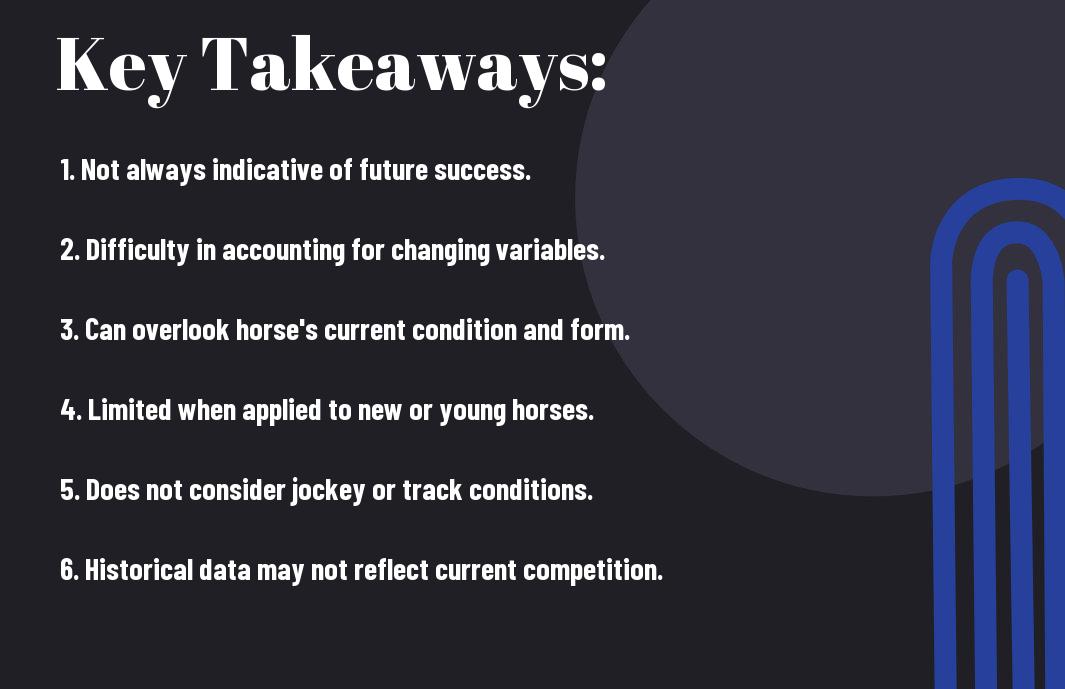
  • Sample size: Past performance data may not have a large enough sample size to accurately predict future outcomes.
  • Variable factors: There are many variables that can affect race outcomes beyond past performance data, such as weather conditions, jockey performance, and track conditions.
  • Complexity of horse racing: Horse racing is a complex and unpredictable sport, making it difficult to rely solely on past performance data for accurate predictions.

The Appeal of Past Performance Data

The Intuition Behind Historical Analysis

For The consequences of horse race reporting, horse racing enthusiasts and analysts alike, past performance data holds a special appeal. It offers a glimpse into the past races, allowing you to analyze trends and patterns that may help in predicting future outcomes. By submerging into these historical statistics, you can gain valuable insights into a horse’s performance, track conditions, jockey partnerships, and more.

The Promise of Pattern Recognition

Data is at the heart of past performance analysis. It enables you to identify patterns and trends that can inform your betting decisions. Whether it’s recognizing a horse’s preference for a specific track length or surface type, or understanding how certain jockeys consistently outperform others, historical data can provide you with a wealth of information to guide your predictions.

Another intriguing aspect of pattern recognition is the potential to uncover hidden gems – those undervalued horses or untapped potential waiting to be discovered. By delving deep into past performance data, you may spot trends that others overlook, giving you a competitive edge when placing your bets.

Limitations of Data Quality

Incomplete or Inaccurate Data

Any prediction based on past performance data is only as good as the data itself. Incomplete or inaccurate data can significantly impact the reliability of your predictions. Missing information about a horse’s previous races, jockeys, track conditions, or any other relevant factors can lead to flawed conclusions.

Biases in Data Collection and Recording

Incomplete or biased data collection and recording practices can skew the results of your analysis. One common bias is the tendency to focus on successful horses or popular trainers while neglecting other factors that could be equally important. This can create a distorted view of past performance and limit the accuracy of your predictions.

The accuracy of your predictions relies heavily on the quality and completeness of the data you use. The more comprehensive and unbiased your dataset, the more reliable your insights will be.

The Impact of External Factors on Performance

The performance of a horse in previous races can be influenced by various external factors beyond just its inherent capabilities. Factors like track conditions, jockey experience, or even weather can play a significant role in determining the outcome of a race. Understanding and incorporating these external factors into your analysis is crucial for making accurate predictions.

  • Changes in track conditions, such as rain or wind, can have a major impact on how a horse performs.
  • The experience and skill of the jockey can also play a significant role in a horse’s performance on race day.

Perceiving how external factors can affect a horse’s performance is imperative for refining your predictive models and making more accurate forecasts.

Data Collection

Collecting high-quality data for your analysis is key to overcoming the limitations of using past performance data. It’s imperative to gather data from reliable sources and ensure its accuracy and completeness. By carefully curating your dataset and accounting for potential biases in data collection, you can enhance the quality of your predictions and make more informed decisions.

  • Avoiding biases in data collection, such as focusing only on certain horses or races, is crucial for obtaining a well-rounded dataset.

The Complexity of Horse Racing

Not only is horse racing a complex and intricate sport, but it also involves a myriad of variables that can impact race outcomes. From the performance of the horse to the jockey’s skill and the track conditions, predicting the winner of a race is far from a simple task.

The Multifaceted Nature of Horse Performance

Any given race is influenced by a multitude of factors, such as the horse’s breed, age, training regimen, and even its mood on race day. A horse that performed exceptionally well in one race may not deliver the same results in the next due to these fluctuating variables.

The Role of Intangible Factors

Any experienced bettor knows that there are intangible factors at play in horse racing that can significantly impact the outcome of a race. These factors include the horse’s temperament, the jockey’s relationship with the horse, and even external influences like the crowd’s energy. Perceiving and accounting for these intangibles is crucial in making accurate predictions.

  • External factors such as weather conditions, track surface, and even the noise level at the racecourse can affect a horse’s performance.
  • The bond between the jockey and the horse, as well as the horse’s overall mental state, can play a pivotal role in determining the outcome of a race. Perceiving and understanding these subtle influences can give you a competitive edge when predicting race results.

The Dynamic Interplay Between Horses and Environment

One of the most fascinating aspects of horse racing is the dynamic interplay between the horses and their environment. Every race is a unique event where factors like the competition’s strength, post position, and even the time of day can influence the race outcome. Plus, each horse has its own racing style and preferences, further complicating the prediction process.

This intricate dance between the horses and their surroundings adds an element of unpredictability to horse racing that makes it both thrilling and challenging to forecast. By understanding and acknowledging the complexity of these interactions, you can gain a deeper appreciation for the sport and enhance your ability to make informed predictions.

The Fallacy of Extrapolation

Unlike Ga Yau: Machine analysis of Hong Kong horse racing data, which researchs into the complexities of analyzing historical data to predict horse race outcomes, it is vital to understand the fallacy of extrapolation when it comes to using past performance data.

Assuming Consistency in Performance

The assumption that a horse’s past performance will perfectly predict its future outcomes is a common mistake made by many. While consistency is key in horse racing, it is crucial to remember that various factors can influence a horse’s performance on any given day, such as weather conditions, track surfaces, jockey changes, and even the horse’s mood.

Ignoring Contextual Differences

To truly grasp the limitations of using past performance data, you must acknowledge the significance of contextual differences. Each race is unique, with its own set of variables that can impact the outcome. Ignoring these contextual differences can lead to flawed predictions and unrealistic expectations.

This can include factors such as the length of the race, the class of competition, the post position, and even the overall pace of the race. Without considering these contextual nuances, relying solely on past performance data may not provide an accurate picture of what to expect.

Overlooking the Role of Chance and Variability

On the surface, past performance data may seem like a reliable indicator of future success. However, overlooking the role of chance and variability in horse racing can lead to misguided predictions. Random events, unexpected happenings, and the element of luck all play a significant role in determining the outcome of a race.

Factors such as a horse getting bumped at the start, encountering traffic during the race, or even an unforeseen burst of speed from an underdog can completely alter the result, regardless of past performances. Understanding and accepting the role of chance and variability is vital in avoiding the fallacy of extrapolation.

Plus, when analyzing past performance data, it’s important to remember that outliers and anomalies can skew the data, leading to inaccurate conclusions. By acknowledging these limitations and approaching data analysis with a critical mindset, you can navigate the complexities of predicting horse race outcomes more effectively.

The Dangers of Overfitting

Many times, when using past performance data to predict horse race outcomes, you might fall into the trap of overfitting. This occurs when you rely too heavily on historical data to make your predictions, without considering other important factors. Overfitting can lead to misleading results and inaccurate predictions, ultimately causing you to lose your bets.

The Perils of Over-Reliance on Historical Data

Data from past races can be valuable in analyzing trends and patterns, but it is crucial not to solely depend on this information. By over-relying on historical data, you might overlook current variables that could have a significant impact on the race outcome. This tunnel vision can blind you to important factors such as the horse’s current form, the jockey’s performance, or external factors like weather conditions.

The Risk of Misinterpreting Patterns

The interpretation of patterns in historical data is another pitfall to watch out for. It’s easy to fall into the trap of seeing patterns where none exist or misinterpreting random fluctuations as significant trends. To avoid this, it’s necessary to approach data analysis with a critical eye and a healthy dose of skepticism. Recall, not every pattern or correlation in the data necessarily translates to a causal relationship that can help you accurately predict race outcomes.

To

The Importance of Balancing Data with Expertise

To make informed predictions in horse racing, striking a balance between data and expertise is key. While historical data provides valuable insights, your expertise and knowledge of the sport are equally important. Your insights into the nuances of horse racing, understanding of individual horse behaviors, and awareness of track conditions can complement the data-driven analysis and enhance your predictive accuracy. By combining data with your expertise, you can make more well-rounded and insightful predictions, giving you an edge in the competitive world of horse race betting.

Understanding the limitations of relying solely on past performance data and the importance of integrating your expertise into the analysis can help you make more informed and successful predictions in horse racing. By finding the right balance between data and expertise, you can improve your predictive accuracy and increase your chances of success at the racetrack.

Alternative Approaches to Prediction

Integrating Multiple Sources of Information

To improve the accuracy of predicting horse race outcomes, you should consider integrating multiple sources of information. By combining past performance data with factors like track conditions, jockey skills, and trainer patterns, you can create a more comprehensive and holistic view of each race. This approach allows you to account for variables that may not be captured in historical data alone, giving you a more well-rounded basis for making predictions.

Incorporating Real-Time Data and Updates

With the advent of technology, incorporating real-time data and updates into your prediction process can provide a significant advantage. By monitoring last-minute changes in odds, weather conditions, or late scratches, you can adjust your predictions accordingly and adapt to the ever-evolving dynamics of each race. This real-time information can give you a competitive edge by allowing you to make more informed decisions right up to the moment of the race.

A key aspect to consider when incorporating real-time data is the reliability of your data sources. Ensure that you are sourcing information from reputable sources to make informed decisions based on accurate and up-to-date data.

The Potential of Machine Learning and AI

The integration of machine learning and Artificial Intelligence (AI) technologies holds great promise in revolutionizing the prediction of horse race outcomes. By leveraging sophisticated algorithms to analyze vast amounts of data, including historical performance, weather patterns, and even social media sentiment, these technologies can uncover complex patterns and correlations that human analysis may overlook. This can lead to more accurate and nuanced predictions, taking into account a multitude of factors simultaneously.

The use of machine learning and AI in predicting horse race outcomes is an exciting frontier that continues to evolve rapidly. As these technologies become more sophisticated and advanced, they have the potential to transform how we approach and engage with horse racing predictions, opening up new possibilities for more precise and insightful outcomes.

Final Words

Drawing together all the information presented, it is important to acknowledge that while past performance data can be a valuable tool in predicting horse race outcomes, it is not without its limitations. Factors such as the unpredictability of weather conditions, the human element of jockeys and trainers, unforeseen injuries, and the complex interactions within a dynamic system like a horse race all contribute to the inherent uncertainty of the sport.

Therefore, as you research into the world of horse race handicapping, keep in mind that past performance data is just one piece of the puzzle. While it can provide useful insights and trends, it is imperative to approach it with a critical eye and an understanding of its limitations. By combining past performance data with other factors such as current form, track conditions, and race dynamics, you can enhance your predictive abilities and make more informed decisions when placing your bets. Bear in mind, in the exciting and unpredictable world of horse racing, fortune favors the prepared mind.

FAQ

Q: What are the limitations of using past performance data for predicting horse race outcomes?

A: While past performance data can provide valuable insights into a horse’s capabilities, there are several limitations to consider:

Q: How reliable is past performance data in predicting horse race outcomes?

A: Past performance data can be a useful tool in predicting outcomes, but it is not foolproof. Factors such as track conditions, jockey performance, and unforeseen circumstances can all impact the outcome of a race.

Q: What other factors should be considered in addition to past performance data when predicting horse race outcomes?

A: In addition to past performance data, other factors such as current form, trainer abilities, horse health, and track biases should also be taken into account when making race predictions. A holistic approach that considers multiple variables will provide a more accurate prediction.

How important is the age and health of a horse in making accurate race predictions

Over the years, horse racing has captivated audiences with its blend of grace, speed, and unpredictability. However, when it comes to making sound predictions, the age and health of the horse play a crucial role in determining the outcome of the race. Your ability to assess these factors can greatly enhance your chances of accurately predicting race results.

Key Takeaways:

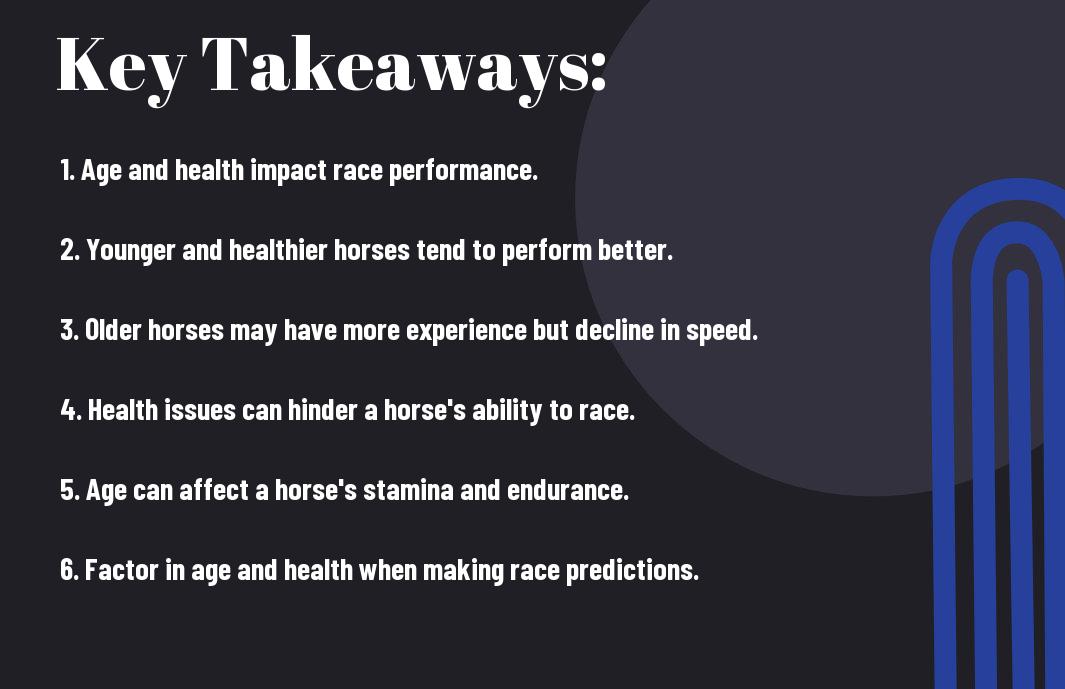
  • Age matters: The age of a horse can impact its performance in races, with younger horses typically showing more speed and agility, while older horses may have more experience and endurance.
  • Health is crucial: The health of a horse is a critical factor in making accurate race predictions, as injuries or illnesses can greatly affect performance. Regular vet checks and proper care are imperative for ensuring peak racing condition.
  • Overall assessment: Considering both the age and health of a horse is imperative for making accurate race predictions. A thorough evaluation of these factors, along with training, track conditions, and competition, can help in determining a horse’s potential performance in a race.

The Significance of Age in Horse Racing

For accurate race predictions in horse racing, understanding the significance of age is crucial. A study by the University of Sydney found that the racing start for two-year-old Thoroughbreds is not detrimental to their long-term success. According to Racing start for two-year-old Thoroughbreds not detrimental, starting young can actually be beneficial for their development as racehorses.

Physical Development and Maturation

Racing young allows horses to start their training and conditioning early, aiding in their physical development and maturation. As horses age, their bodies go through significant changes, and starting early helps them build the necessary strength and stamina required for racing at a competitive level.

Mental Maturity and Focus

Mental maturity plays a vital role in a horse’s performance on the racetrack. Younger horses may lack the focus and experience of older, seasoned competitors. Training and racing experience over time help horses develop the mental resilience needed to handle the pressures of racing, making older horses more consistent performers.

The mental maturity and focus of a racehorse can significantly impact their performance on the track. Seasoned horses who have been exposed to various racing scenarios are better equipped to handle the excitement and pressures of competitive events. As a horse grows older and gains more racing experience, they tend to become more focused, disciplined, and less prone to distractions, ultimately improving their chances of success in races.

The Impact of Health on Racing Performance

Even in the world of horse racing, the health of the equine athletes plays a crucial role in their performance on the track. According to a study on the Race performance of thoroughbred horses determined by…, it was found that the physical well-being of horses significantly influences their racing capabilities and outcomes. Understanding the impact of health, both chronic and acute, on racing performance is crucial for predicting the success of a racehorse.

Chronic Injuries and Their Effects

Effects of chronic injuries on a horse can be detrimental to its racing performance. These ongoing issues, such as tendon or ligament damage, can lead to decreased speed, agility, and overall stamina. Chronic conditions not only affect the horse’s physical ability but can also impact their mental state, causing distress or discomfort that hinders their performance.

Acute Injuries and Recovery Time

The occurrence of acute injuries in horses can have a significant impact on their racing career. The severity and type of injury will determine the recovery time needed before the horse can return to training and competition. It’s crucial to consider the downtime required for healing and rehabilitation when assessing a horse’s readiness to perform at its best.

This understanding is vital in managing a horse’s training regimen to ensure proper recovery and minimize the risk of reinjury. By recognizing the implications of acute injuries on a horse’s racing performance, trainers and owners can make informed decisions that prioritize the well-being and longevity of their equine athletes.

The Interplay Between Age and Health

Despite your best efforts to make accurate race predictions, the age and health of a horse play crucial roles in determining its performance on the track. Understanding how these factors interact can give you valuable insights into a horse’s potential success.

How Age Affects Injury Susceptibility

Injury susceptibility tends to increase as horses age. Just like humans, the wear and tear on a horse’s body accumulate over time, making older horses more prone to injuries. As horses age, their bones may become less dense, their ligaments and tendons may lose elasticity, and their overall musculoskeletal strength may decline. These age-related changes can impact a horse’s speed, agility, and stamina, affecting its performance in races.

How Health Issues Affect Age-Related Decline

Decline in a horse’s health can exacerbate age-related issues and further impact its racing abilities. Health issues such as arthritis, respiratory problems, digestive disorders, or metabolic issues can accelerate the decline in a horse’s performance as it ages. These health issues can limit a horse’s mobility, endurance, and overall well-being, contributing to a decrease in its competitive edge on the racetrack.

Plus, certain health issues may require specific medications or treatments that can have additional side effects on an aging horse’s body. It’s necessary to consider the overall health and well-being of a horse in conjunction with its age when making race predictions, as these factors are closely intertwined and can significantly influence its racing outcomes.

Analyzing Racing Data and Statistics

Identifying Patterns and Trends

All racing data and statistics are crucial in helping you identify patterns and trends that can lead to more accurate race predictions. By analyzing past performances, track conditions, jockey statistics, and more, you can start to see patterns emerge that can give you an edge in predicting race outcomes. It’s important to pay attention to these details and look for correlations that can help you make more informed decisions when placing your bets.

The Role of Data in Prediction Models

Models that take into account various racing data and statistics play a significant role in helping you make accurate race predictions. These models use sophisticated algorithms to analyze large sets of data and identify patterns that may not be immediately obvious to the naked eye. By feeding in variables like age, health, race distance, and past performances, these models can provide you with probabilities and predictions that can guide your betting strategy.

Another important aspect to consider is that these prediction models are constantly evolving and improving. As new data becomes available and the algorithms are refined, the accuracy of these predictions continues to increase. By staying informed about the latest advancements in prediction modeling, you can stay ahead of the game and make more informed decisions when betting on horse races.

The Importance of Pre-Race Veterinary Checks

Once again, before a race, it’s crucial to pay close attention to the health and age of the horse. Pre-race veterinary checks play a pivotal role in ensuring the well-being and performance of the horse on the track. These checks are designed to identify any potential health issues that could affect the horse’s ability to compete effectively.

Identifying Potential Health Issues

Identifying any potential health issues before a race is necessary for making accurate predictions. A thorough examination by a veterinarian can reveal underlying issues that may impact the horse’s performance. From checking for signs of lameness to monitoring heart rate and overall physical condition, these checks are instrumental in understanding the horse’s readiness to race.

Assessing Fitness and Readiness

Potential fitness and readiness play a significant role in determining a horse’s performance on race day. Assessing the horse’s fitness level involves evaluating its muscle tone, hydration levels, and overall stamina. Understanding these factors can give you valuable insights into how well-prepared the horse is for the upcoming race.

Assessing the horse’s readiness also involves assessing its mental state. A calm and focused horse is more likely to perform well in a race compared to a nervous or distracted one. Observing the horse’s behavior during pre-race activities can provide clues about its mental preparedness for the competition.

Breeding and Genetics: A Factor in Age and Health

Now, when delving into horse racing predictions, it’s vital to consider the intricate relationship between breeding and genetics. According to the article on Using Data to Predict Horse Racing Outcomes, genetics play a significant role in determining the athletic ability of a horse. Factors such as muscle composition, heart size, lung capacity, and even the temperament of the horse can be influenced by its genetic makeup.

The Role of Genetics in Determining Athletic Ability

Factor in the genetic predispositions of a horse when considering its racing potential. Certain bloodlines are renowned for producing exceptional athletes with specific traits that contribute to success on the racetrack. By understanding the genetic background of a horse, you can gain insights into its strengths and weaknesses, ultimately aiding in making more accurate race predictions.

Breeding Strategies and Their Impact on Racing Performance

Any discussion on age and health in horse racing predictions is incomplete without examining breeding strategies and their profound effects on racing performance. Breeders meticulously select mating pairs to enhance desirable traits in their offspring. By focusing on specific bloodlines known for speed, endurance, or agility, breeders can influence the athletic abilities of future generations. This strategic approach to breeding has a direct impact on the success of racehorses, shaping their competitive potential on the track.

Determining the lineage of a horse can provide valuable insights into its racing capabilities. When analyzing race predictions, understanding the influence of breeding strategies on a horse’s performance can give you a competitive edge in accurately assessing its potential and predicting race outcomes.

To wrap up

So, when it comes to making accurate race predictions, the age and health of a horse can play a significant role in determining its performance on the track. Younger horses may have more potential for growth and improvement, while older horses may have more experience and endurance. Additionally, the health of a horse can greatly impact its ability to compete at its best. By considering these factors when studying race statistics and analyzing past performances, you can enhance your predictions and have a better understanding of what to expect from each horse on race day.

FAQ

Q: How does the age of a horse affect race predictions?

A: The age of a horse is an important factor in making accurate race predictions. In general, younger horses tend to have more potential for improvement and may have more speed, while older horses may have more experience and maturity which can give them an advantage. Trainers and jockeys often consider the age of a horse when deciding on race strategies and training programs.

Q: Why is the health of a horse important in race predictions?

A: The health of a horse is crucial in making accurate race predictions. A healthy horse is more likely to perform at its best and have the stamina and agility needed to compete successfully. Health issues such as injuries, illness, or poor conditioning can significantly affect a horse’s performance in a race. Trainers and veterinarians closely monitor the health of racehorses to ensure they are in optimal condition for racing.

Q: How do age and health interact in making race predictions?

A: The age and health of a horse are closely related factors when making race predictions. Younger horses may have more potential, but they also require careful monitoring of their health and physical development to ensure they reach their peak performance levels. Older horses may have more experience, but they need to be in good health to maintain their competitive edge. Trainers and owners take into account both the age and health of a horse when making race predictions and developing training plans.

Skip to content