
There’s a fine line to tread when delving into the world of horse race prediction models, where technical prowess meets ethical responsibility. In this intricate dance, you must consider the implications of developing such models, ensuring that fairness, transparency, and respect for animal welfare are at the forefront of your endeavors. As you navigate this terrain, ponder on the ethical considerations that must not be overlooked in your quest for predictive accuracy.

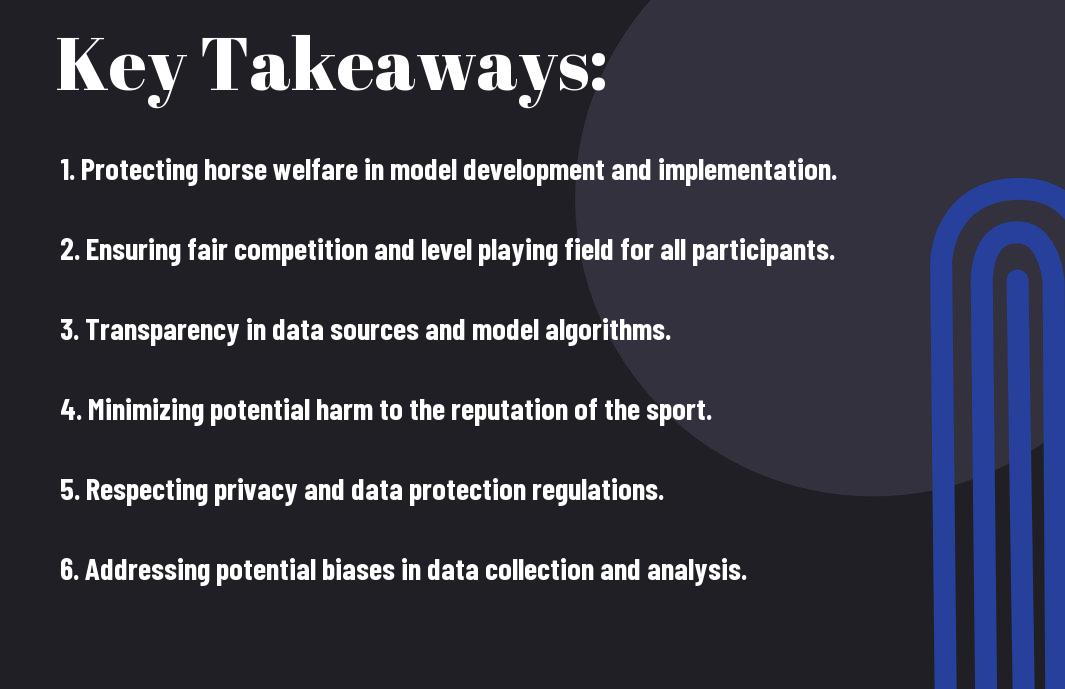
Key Takeaways:
- Transparency: It is vital for developers of horse race prediction models to be transparent about the data used, the methodologies applied, and the potential biases in the model.
- Fairness: Ethical considerations should be made to ensure that the models do not discriminate against certain horses, trainers, or jockeys based on irrelevant factors such as gender or race.
- Accountability: Developers should be held accountable for the predictions made by their models and take responsibility for any negative impacts that may arise from inaccuracies or biases in the model.

The Ethics of Prediction
The Responsibility of Forecasting
Before delving into the intricacies of developing horse race prediction models, it is necessary to consider the ethical implications of forecasting. As a developer of prediction models, you hold a significant responsibility in ensuring that your predictions are made ethically and with the utmost consideration for the well-being of all involved. It is crucial to approach the task with integrity, transparency, and a deep understanding of the potential consequences of your predictions.
The Impact of Inaccurate Predictions
Prediction models, especially those related to horse racing, can have far-reaching effects on various stakeholders. Inaccurate predictions can lead to financial losses, emotional distress, and even harm to the welfare of the horses or individuals involved. As you develop your prediction models, it is imperative to acknowledge the potential impact of inaccuracies and work towards minimizing these risks. By prioritizing accuracy, ethical considerations, and continuous evaluation of your models, you can help mitigate the negative repercussions of inaccurate predictions.
With the power of prediction comes great responsibility. It is necessary to approach the development of horse race prediction models with a deep sense of ethical awareness and a commitment to uphold the welfare of all those affected by your forecasts. By embracing transparency, accountability, and a conscientious approach to forecasting, you can navigate the complex ethical landscape of prediction modeling with integrity and prudence.
Data Collection and Bias
Even in horse race prediction models, data collection is a crucial aspect that can dictate the success or failure of your endeavors. It is vital to consider the sources of data you are utilizing and their potential limitations.
Sources of Data and Their Limitations
Their selection and quality can significantly impact the performance and ethical considerations of your prediction model. Ensure that the data you collect is diverse, representative, and devoid of any underlying biases to avoid misleading outcomes.
Avoiding Implicit Bias in Data Collection
Data collection plays a pivotal role in shaping the accuracy and fairness of your prediction model. It is imperative to approach data collection with a critical eye to prevent the introduction of implicit biases that could skew your results.
Bias can manifest in various forms, such as skewed sampling methods, incomplete data sets, or even unintentional preferences in selecting certain variables. Being mindful of these potential pitfalls and incorporating checks and balances in your data collection process can help mitigate these biases and enhance the robustness of your model.
The Dangers of Cherry-Picking Data
Collection of data should be approached with integrity and transparency to avoid the dangers of cherry-picking. Selectively choosing data points that align with your desired outcome can lead to skewed predictions and ethical concerns.
This practice not only compromises the credibility of your model but also raises ethical questions about the validity and fairness of your predictions. By prioritizing a comprehensive and unbiased approach to data collection, you can uphold the integrity of your horse race prediction model and foster trust among stakeholders.
Model Development and Transparency
The Importance of Transparent Modeling
Many ethical considerations come into play when developing horse race prediction models, and one of the most critical is the need for transparent modeling. Transparency in model development is crucial to ensure that the processes, data sources, and methodologies used are clear and understandable. When developing prediction models for horse racing, transparency helps to build trust with stakeholders, including bettors, regulators, and the public.
Avoiding Black Box Models
One ethical consideration in developing horse race prediction models is the avoidance of black box models. Black box models are complex algorithms that provide predictions without revealing how these predictions are made. While these models may offer high accuracy, they lack transparency and make it challenging to understand why a particular prediction was generated.
One way to avoid black box models is by using interpretable methodologies that allow you to understand how input variables are weighted and how predictions are generated. This not only enhances transparency but also enables you to detect and mitigate biases that may be present in the model.
The Role of Human Judgment in Model Development
To ensure ethical considerations are met, it’s crucial to recognize the role of human judgment in model development. While algorithms play a significant role in predicting horse race outcomes, human judgment is crucial in designing the model, selecting relevant variables, and interpreting the results. Your expertise and ethical considerations can guide the development process to ensure fairness, accuracy, and transparency in the predictions.
With human judgment, you can consider factors beyond data inputs, such as historical trends, expert insights, and regulatory requirements, to refine and validate the model effectively. By combining your expertise with the power of algorithms, you can create prediction models that are not only accurate but also ethically sound.
Fairness and Justice in Predictive Models
The Concept of Fairness in Horse Racing
All predictive models should strive to uphold the principles of fairness and equity, especially in the context of horse racing. To ensure fairness, it is crucial to consider the impact of the predictive model on all involved parties, including the horses, jockeys, trainers, owners, and bettors. Fairness in horse racing prediction models means that the predictions and outcomes do not systematically favor certain individuals or groups over others.
Avoiding Discrimination in Model Development
Model developers must be vigilant in avoiding any form of discrimination when creating horse race prediction models. Discriminatory practices, whether intentional or unintentional, can have detrimental effects on the integrity of the racing industry and the well-being of its participants. It is crucial to actively assess and address any biases present in the data used to train the models to prevent discrimination.
Models should be designed to treat all participants fairly and impartially, regardless of factors such as horse breed, jockey background, or trainer reputation. By incorporating ethical considerations into the development process, model creators can help mitigate potential discriminatory outcomes and promote a more inclusive and just racing environment.
Ensuring Equal Opportunities for All Participants
Model developers should prioritize ensuring equal opportunities for all participants in horse racing. This includes fostering a level playing field where each horse, jockey, trainer, and owner has a fair chance to succeed based on their skills, training, and performance, rather than arbitrary or biased factors. By promoting equal opportunities, predictive models can contribute to a more transparent and equitable horse racing industry.
Justice in predictive modeling for horse racing involves upholding principles of fairness and equity, and striving to minimize any disparities or advantages that may arise from the use of predictive models. By prioritizing justice in model development and implementation, stakeholders can work towards a more ethical and sustainable future for horse racing.
Privacy and Data Protection
Keep Avoiding the horse race: a resource guide for ethical election coverage in mind when developing horse race prediction models to ensure the ethical considerations around privacy and data protection are met.
Protecting Sensitive Information
Sensitive information such as personally identifiable data or health information should be handled with utmost care when developing horse race prediction models. It is crucial to anonymize or encrypt this data to prevent it from being misused or accessed by unauthorized parties.
Ensuring Compliance with Data Protection Regulations
Ensuring compliance with data protection regulations such as the General Data Protection Regulation (GDPR) is necessary in the development of horse race prediction models. You must be diligent in obtaining consent for data collection, storing data securely, and complying with regulations regarding data usage and transfer.
Data protection regulations are designed to safeguard individuals’ personal information and must be strictly adhered to when dealing with sensitive data in the context of horse race prediction modeling.
The Consequences of Data Breaches
An understanding of the consequences of data breaches is crucial when developing horse race prediction models. A data breach can result in severe privacy violations, financial losses, and reputational damage. It is important to have robust security measures in place to prevent and mitigate the risks of data breaches.
Information security is paramount in the development of horse race prediction models, as even a single data breach can have far-reaching consequences for both individuals and organizations involved. It is necessary to prioritize data protection and security at every stage of model development to uphold ethical standards and protect sensitive information.
Accountability and Regulation
The Role of Regulatory Bodies in Ensuring Ethical Models
Despite the advancements in technology and data analytics, the development of horse race prediction models must be guided by ethical considerations. Regulatory bodies play a crucial role in ensuring that these models are developed and deployed ethically. These bodies are responsible for setting guidelines and standards that developers must adhere to when creating prediction models. By enforcing regulations, they help protect against biased or unfair practices in model development, ensuring transparency and accountability.
Holding Developers Accountable for Model Performance
On the path to ethical model development, holding developers accountable for the performance of their models is paramount. Developers should be transparent about the methodologies and data used in their models, allowing for external validation and scrutiny. By holding developers responsible for the outcomes of their models, there is an incentive to prioritize fairness and accuracy over potentially harmful shortcuts or biases.
Models should be evaluated not only based on their predictive performance but also on their societal impact. Developers should be held accountable for any negative consequences that may arise from the implementation of their models, taking responsibility for the ethical implications of their work.
Establishing Industry-Wide Standards for Ethical Model Development
Performance standards alone are not enough to ensure ethical model development. Establishing industry-wide standards that encompass fairness, transparency, and accountability is important. These standards should be collaboratively developed by stakeholders in the horse racing prediction industry, including developers, regulators, and ethicists. By adhering to these standards, developers can ensure that their models are not only accurate but also ethical in their design and implementation.
Another aspect of establishing industry-wide standards is the ongoing monitoring and evaluation of model performance. This continuous assessment allows for adaptations and improvements to be made, ensuring that ethical considerations remain at the forefront of model development in horse race prediction.
Conclusion
Presently, as you probe into developing horse race prediction models, it is crucial to consider the ethical implications of such endeavors. The welfare of the horses involved in these races should be at the forefront of your considerations. It is important to ensure that the use of these models does not compromise the well-being of the animals, as detailed in a research paper on (PDF) The ethics and welfare of horses intensively used in horse racing.
Additionally, you must also take into account issues of fairness, transparency, and integrity when developing such models. Ethical considerations should guide your every decision, from data collection and analysis to the implementation of the predictive algorithms. By keeping ethical principles at the core of your work, you can contribute to the development of responsible and sustainable practices in horse race prediction modeling.
FAQ
Q: What ethical considerations should be taken into account when developing horse race prediction models?
A: One important ethical consideration is data privacy and transparency. It’s important to ensure that the data used in developing the prediction models is obtained and used in a legal and ethical manner. Transparency is also key, as users should be informed about the data sources and methodologies used in creating the models.
Q: How can bias be addressed in horse race prediction models?
A: Bias can be a significant issue in prediction models, as it can lead to unfair outcomes. To address bias in horse race prediction models, it’s important to carefully evaluate the data being used and to actively work to mitigate any biases that may be present. This can include diversifying the data sources, using fair algorithms, and regularly monitoring and updating the models.
Q: What impact can horse race prediction models have on the sport and betting industry?
A: Horse race prediction models can have a significant impact on the sport and betting industry. While these models can provide valuable insights and improve decision-making for stakeholders, there is also the potential for negative consequences such as increased problem gambling and loss of the human element in decision-making. It’s important to carefully consider and mitigate these potential impacts when developing and using prediction models in this context.