Harnessing Data Science for Entrepreneurial Wealth – AI Best Practices

As you navigate the complex landscape of entrepreneurship, you’re likely aware of the vast potential of data science to drive your business forward. You understand that leveraging data can help you make informed decisions, optimize operations, and unlock new opportunities for growth. By applying AI best practices, you can harness the power of data science to propel your entrepreneurial ventures towards unprecedented success, and this blog post will guide you through the process, providing you with actionable insights to enhance your business acumen and drive wealth creation.

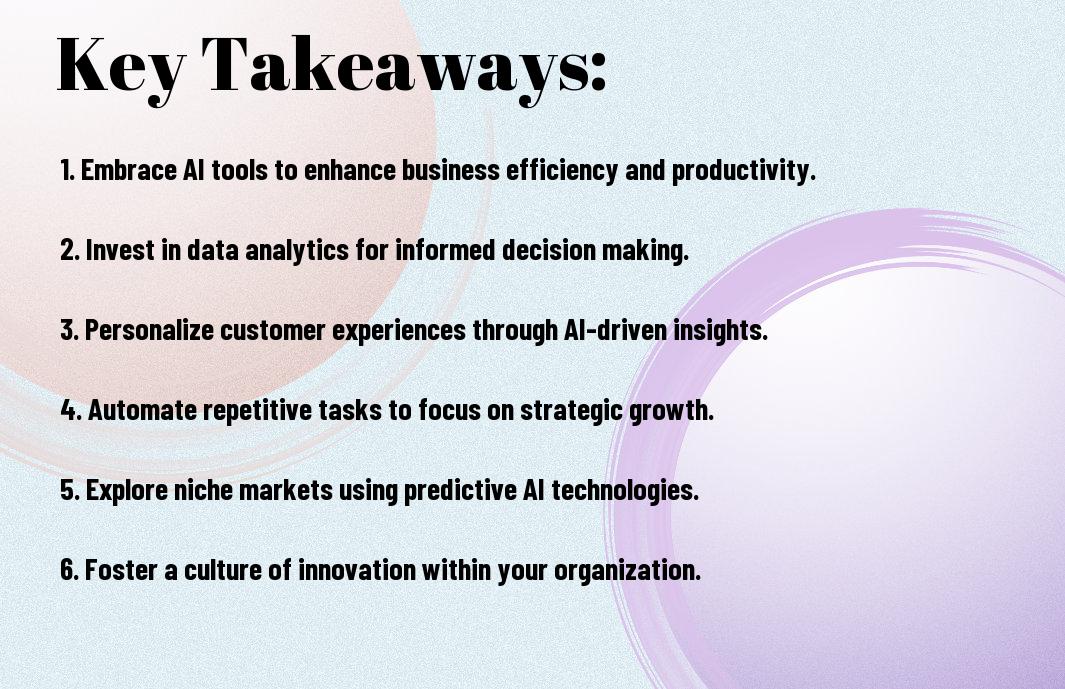
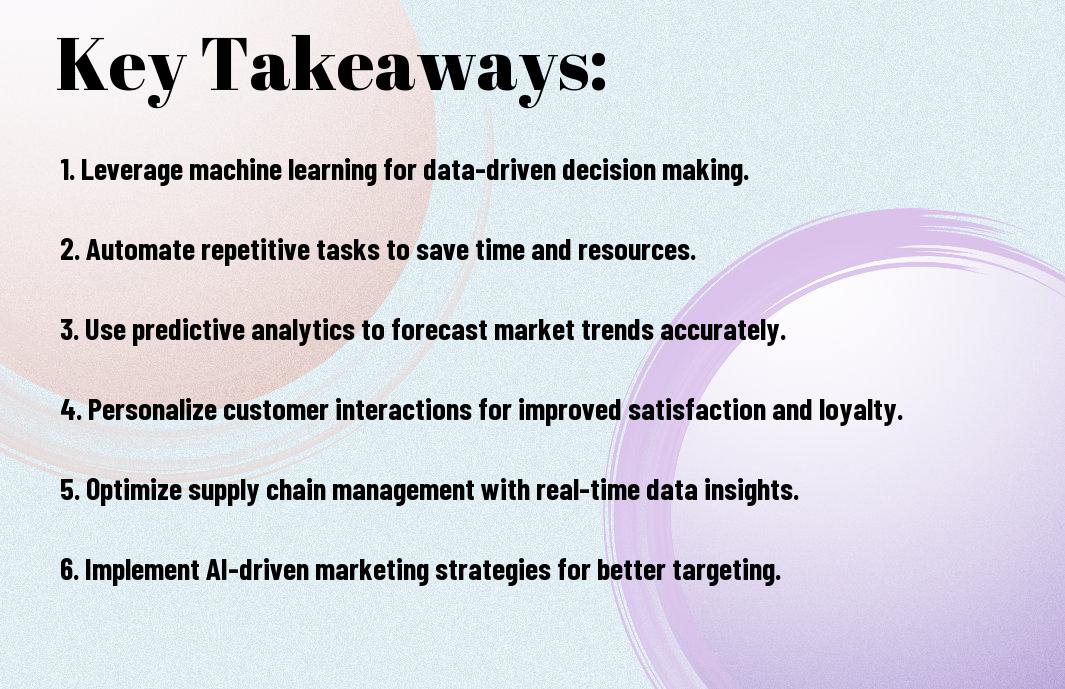
Key Takeaways:

  • Effective use of data science can significantly enhance entrepreneurial ventures by providing valuable insights that inform strategic business decisions, drive innovation, and optimize operations for maximum profitability.
  • Implementing AI best practices, such as leveraging machine learning algorithms and natural language processing, can help entrepreneurs automate tasks, predict market trends, and personalize customer experiences, thereby gaining a competitive edge in the market.
  • Data-driven decision making is crucial for entrepreneurial success, as it enables entrepreneurs to measure the effectiveness of their strategies, identify areas of improvement, and make data-informed decisions that mitigate risks and capitalize on opportunities.
  • Entrepreneurs should prioritize data quality and integrity, ensuring that their data management systems are robust, secure, and compliant with regulatory requirements, to maintain the trust of their customers and stakeholders.
  • Staying up-to-date with the latest advancements in AI and data science is vital for entrepreneurs to remain competitive, as new technologies and techniques can provide innovative solutions to complex business problems and create new opportunities for growth and expansion.
The Entrepreneur’s Data Advantage

To gain a competitive edge, you can leverage data science to inform your business decisions, as discussed in Harnessing AI for Entrepreneurs: Big Data’s Role in Social Innovation. This will enable you to make data-driven decisions and drive your business forward.

Identifying Market Gaps

With access to vast amounts of data, you can identify market gaps and opportunities to innovate and differentiate your business from competitors, ultimately driving your growth and success.

Customer Behavior Analytics

Below the surface of customer interactions, you can uncover valuable insights that inform your marketing strategies and improve customer satisfaction, allowing you to tailor your approach to meet their evolving needs.

A key aspect of customer behavior analytics is understanding the complexities of your customers’ decision-making processes, which enables you to develop targeted marketing campaigns and personalized experiences, increasing the likelihood of conversion and loyalty, and ultimately, driving your business’s revenue and growth, as you continue to refine your strategies based on data-driven insights.

AI Implementation Fundamentals

One of the key aspects of harnessing data science for entrepreneurial wealth is understanding the fundamentals of AI implementation. You will need to consider how AI can be integrated into your business model to drive growth and increase efficiency. By doing so, you can unlock new opportunities and stay ahead of the competition.

Cost-Effective AI Solutions

At this stage, you should be looking for AI solutions that are cost-effective and align with your business goals. You can explore various options, such as cloud-based services or open-source tools, to find the most suitable solution for your needs.

Technical Requirements

Against the backdrop of rapid technological advancements, you must ensure that your technical infrastructure can support AI implementation. You will need to assess your current systems and identify any gaps that need to be addressed to ensure seamless integration.

A thorough evaluation of your technical requirements is imperative to successful AI implementation. As you probe into the specifics, you will need to consider factors such as data storage, processing power, and security protocols to ensure that your systems can handle the demands of AI-driven applications, and that you can effectively leverage your data to drive business growth and inform your decision-making process.

Predictive Models for Business Growth

Keep in mind that predictive models are important for your business growth, as they enable you to make informed decisions and stay ahead of the competition. You can leverage these models to identify opportunities, mitigate risks, and drive your business forward.

Sales Forecasting Systems

Among the various predictive models, sales forecasting systems are particularly useful for your business, as they help you anticipate demand and optimize your resources accordingly. You can use these systems to analyze historical data, identify patterns, and make accurate predictions about future sales.

Trend Analysis Techniques

For your business to stay competitive, you need to stay on top of the latest trends, and trend analysis techniques can help you do just that. You can use these techniques to identify emerging trends, analyze their impact, and adjust your strategy accordingly.

Due to the complexity of trend analysis, you will need to invest time and effort into developing your skills and expertise. You can start by exploring various techniques, such as regression analysis and time series analysis, and then apply them to your business data to gain valuable insights and make informed decisions.

Data-Driven Decision Making

For entrepreneurs, making informed decisions is key to success. You can leverage data science to analyze market trends, customer behavior, and financial performance, enabling you to make strategic decisions that drive your business forward.

Risk Assessment Frameworks

Contrary to intuition, you should consider risk assessment frameworks to identify potential pitfalls and opportunities. You can use data science to develop frameworks that help you evaluate risks and make informed decisions to mitigate them.

Opportunity Scoring Methods

Counterintuitively, you should use opportunity scoring methods to evaluate potential investments and partnerships. You can use data science to develop scoring models that help you assess opportunities and make informed decisions.

At the heart of opportunity scoring methods is the ability to analyze large datasets and identify patterns. You can use techniques such as clustering and decision trees to develop models that score opportunities based on their potential return on investment, market demand, and competitive landscape, allowing you to make informed decisions that drive your business forward.

Competitive Intelligence Through AI

Now, you can leverage AI to gather insights about your competitors, enabling you to make informed decisions and stay ahead in the market. By utilizing AI-powered tools, you can analyze vast amounts of data, identify trends, and gain a deeper understanding of your competitors’ strengths and weaknesses.

Market Positioning Tools

Technologies such as natural language processing and machine learning enable you to analyze your competitors’ market positioning, allowing you to identify gaps in the market and opportunities to differentiate your business. You can use these tools to analyze your competitors’ marketing strategies and adjust your own approach accordingly.

Competitor Strategy Mapping

Any analysis of your competitors’ strategies can help you anticipate their next moves and adjust your own strategy to stay competitive. You can use AI to map your competitors’ strategies, identifying patterns and trends that can inform your own decision-making.

In fact, by mapping your competitors’ strategies, you can identify potential vulnerabilities and opportunities to gain a competitive edge. You can use this information to adjust your pricing, product development, and marketing strategies, enabling you to stay ahead of the competition and drive business growth.

Scaling With Automated Systems

Many entrepreneurs struggle to scale their businesses efficiently, but with automated systems, you can streamline your operations and increase productivity. By leveraging data science and AI, you can identify areas for improvement and implement solutions that drive growth.

Workflow Optimization

Behind every successful business is a well-optimized workflow, and you can achieve this by analyzing your processes and eliminating bottlenecks. By doing so, you can reduce costs, enhance customer experience, and gain a competitive edge.

Resource Allocation Models

Automatically allocating resources is key to efficient business operations, and you can achieve this by developing models that predict demand and optimize supply. By using data science and AI, you can make informed decisions about resource allocation, reducing waste and improving profitability.

Further, by implementing resource allocation models, you can dynamically adjust to changing market conditions, ensuring that your business remains agile and competitive. You can use machine learning algorithms to analyze historical data, identify patterns, and predict future demand, enabling you to make data-driven decisions about resource allocation and drive business growth.

To wrap up

The application of data science and AI best practices can significantly boost your entrepreneurial endeavors, leading to increased wealth and success. You can leverage data-driven insights to inform your business decisions, optimize operations, and drive innovation. By following AI best practices, you will be able to harness the full potential of data science, ultimately elevating your business to new heights and securing your position in the market, allowing you to achieve your goals and maximize your returns.

FAQ

Q: What are the key benefits of harnessing data science for entrepreneurial wealth, and how can AI best practices be applied to achieve success?

A: Harnessing data science for entrepreneurial wealth offers numerous benefits, including enhanced decision-making, improved operational efficiency, and increased revenue growth. By leveraging AI best practices such as machine learning, natural language processing, and predictive analytics, entrepreneurs can gain valuable insights into customer behavior, market trends, and business operations. This enables them to make data-driven decisions, optimize resources, and stay ahead of the competition. Additionally, AI-powered tools can automate routine tasks, freeing up time for strategic planning and innovation, ultimately leading to increased profitability and entrepreneurial wealth.

Q: How can entrepreneurs effectively integrate data science and AI into their business strategy, and what skills or expertise are required to implement these technologies?

A: To effectively integrate data science and AI into their business strategy, entrepreneurs should start by identifying areas where data-driven insights can have the most impact, such as customer segmentation, marketing, or supply chain management. They should then invest in building a skilled team with expertise in data analysis, machine learning, and programming languages like Python or R. It’s also important to develop a data-driven culture within the organization, where data is used to inform decision-making at all levels. Furthermore, entrepreneurs should stay up-to-date with the latest AI trends and best practices, and consider partnering with data science consultants or AI vendors to accelerate implementation and minimize costs.

Q: What are some common challenges that entrepreneurs may face when implementing data science and AI in their business, and how can these challenges be overcome with AI best practices?

A: Common challenges that entrepreneurs may face when implementing data science and AI include data quality issues, lack of skilled talent, and integration with existing systems. To overcome these challenges, entrepreneurs can adopt AI best practices such as data preprocessing and validation, investing in employee training and development, and using cloud-based AI platforms that offer seamless integration with existing infrastructure. Additionally, entrepreneurs should prioritize transparency and explainability in AI decision-making, ensure compliance with data privacy regulations, and continuously monitor and evaluate the performance of AI systems to prevent bias and errors. By addressing these challenges proactively, entrepreneurs can unlock the full potential of data science and AI to drive business growth and entrepreneurial wealth.

Smart Business Moves – AI Techniques to Optimize Profit and Efficiency

As you navigate the competitive business landscape, you’re constantly seeking ways to boost your profit and streamline operations. You understand that leveraging cutting-edge technology is key to staying ahead. By harnessing the power of Artificial Intelligence (AI), you can revolutionize your business, making data-driven decisions and automating tasks to maximize efficiency. In this post, you’ll discover the AI techniques that can transform your business, helping you make smart moves to drive growth and success.

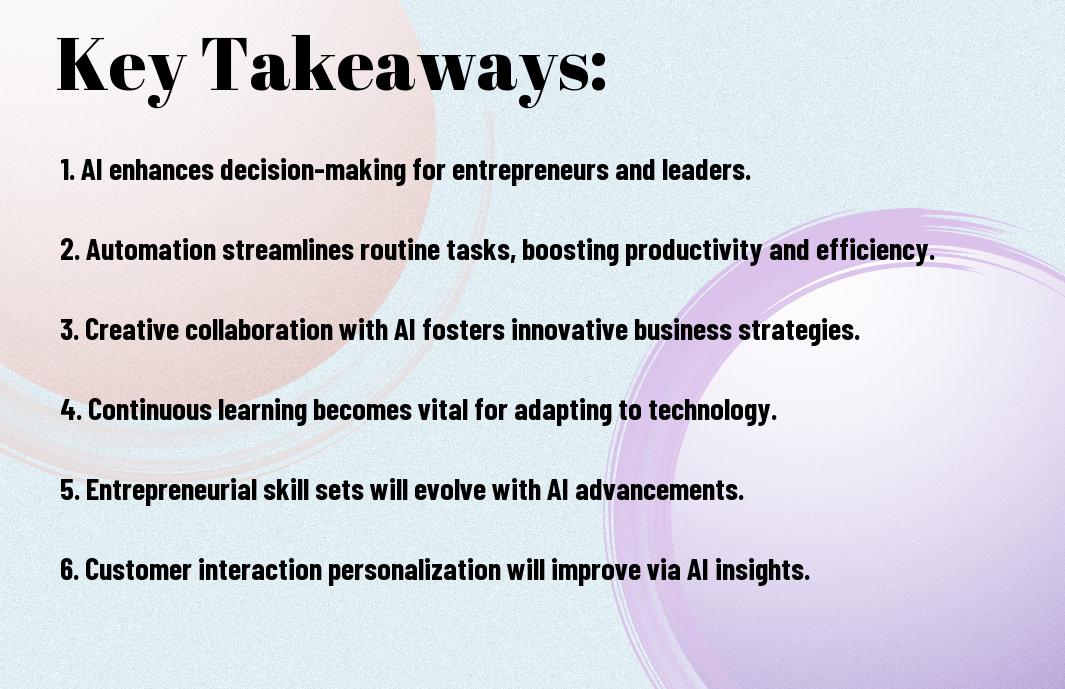
Key Takeaways:

  • Implementing AI techniques can significantly enhance business efficiency by automating repetitive tasks, allowing companies to focus on strategic decision-making and innovation, which in turn can lead to increased profitability.
  • AI-driven analytics can provide businesses with valuable insights into customer behavior, market trends, and operational performance, enabling data-driven decision-making and improved resource allocation.
  • AI-powered tools can help businesses optimize their supply chain management, predict demand, and manage inventory levels more effectively, resulting in reduced costs and improved customer satisfaction.
  • Investing in AI can also enhance customer experience through personalized marketing, chatbots, and virtual assistants, leading to increased customer loyalty and retention, which are key drivers of long-term business success.
  • To successfully integrate AI into their operations, businesses should develop a clear AI strategy, invest in employee training, and ensure that their technology infrastructure is capable of supporting AI applications, which will help them to maximize the benefits of AI adoption.

The Tipping Point of AI in Business

A significant shift is occurring in the business world, and you are likely to witness its impact on your operations. As AI technology advances, you can expect to see increased efficiency and profit optimization in your organization.

Data-Driven Decision Making

Businesses like yours are leveraging data to inform their decisions, and you can do the same by implementing AI-powered tools that analyze your data and provide valuable insights to drive your business forward.

Predictive Analytics for Market Trends

Analyzing market trends is an vital part of staying ahead of the competition, and you can use AI to predict future trends and make informed decisions about your business strategy, allowing you to stay one step ahead.

At this point, you may be wondering how to implement predictive analytics in your business, and you can start by identifying areas where you can collect and analyze data, such as customer behavior, market fluctuations, and economic indicators, and then use AI-powered tools to analyze this data and make predictions about future trends, enabling you to make data-driven decisions and optimize your business strategy for maximum profit and efficiency.

Small Changes, Big Differences

Now that you’re exploring ways to optimize your business, consider the impact of minor adjustments on your overall performance. By implementing AI techniques, you can streamline processes, enhance productivity, and increase profitability, ultimately leading to significant improvements in your business operations.

Operational Efficiency Through Automation

Following the initial assessment of your business, you’ll find that automation can significantly enhance your operational efficiency. You can automate repetitive tasks, freeing up resources for more strategic and creative endeavors, and allowing your team to focus on high-priority tasks that drive growth and innovation.

Cost Reduction Strategies

Beneath the surface of your business lies an opportunity to reduce costs and boost your bottom line. You can leverage AI to identify areas of inefficiency, optimize resource allocation, and implement cost-saving measures that have a direct impact on your profitability, enabling you to allocate resources more effectively and make informed decisions.

Hence, as you probe deeper into cost reduction strategies, you’ll discover that AI can help you analyze your spending patterns, identify trends, and predict potential areas of waste. By utilizing machine learning algorithms and data analytics, you can develop a more nuanced understanding of your business expenses, allowing you to make targeted adjustments and maximize your savings, ultimately leading to increased competitiveness and long-term success for your business.

AI Implementation Strategies

All businesses can benefit from AI implementation, and you can start by assessing your needs and goals. You will need to identify areas where AI can optimize profit and efficiency, and develop a strategy to integrate AI into your operations.

Selecting the Right AI Tools

On the path to AI adoption, you will need to choose the right tools for your business. You should consider factors such as scalability, security, and compatibility when selecting AI solutions to ensure they align with your goals.

Integration with Existing Systems

To ensure seamless AI implementation, you will need to integrate AI with your existing systems. You should assess your current infrastructure and identify potential integration points to minimize disruptions and maximize benefits.

Another key aspect of integration is ensuring that your AI systems can communicate effectively with your existing software and hardware. You will need to consider data formats, APIs, and other technical requirements to ensure a smooth integration process, allowing you to leverage the full potential of AI in your business.

Customer Experience Revolution

Despite the rise of automation, you can still deliver personalized experiences that drive customer loyalty and retention. By leveraging AI, you can analyze customer data and preferences to create tailored interactions that meet their unique needs.

Personalization at Scale

Besides traditional methods, AI-powered personalization enables you to cater to individual customers at scale, enhancing their overall experience and encouraging repeat business. You can use machine learning algorithms to analyze customer behavior and deliver targeted recommendations.

Responsive Service Models

With the help of AI, you can develop responsive service models that adapt to changing customer needs and preferences. You can use chatbots and virtual assistants to provide 24/7 support, ensuring that your customers receive timely and effective assistance.

Also, by implementing responsive service models, you can proactively address customer concerns and resolve issues before they escalate, leading to increased customer satisfaction and loyalty. You can use AI-powered analytics to monitor customer interactions and identify areas for improvement, enabling you to refine your service models and deliver exceptional customer experiences.

Competitive Edge Through Machine Learning

Keep ahead of the competition by leveraging machine learning techniques to optimize your business operations and improve profitability. You can utilize machine learning algorithms to analyze large datasets, identify trends, and make informed decisions to drive your business forward.

Pattern Recognition in Consumer Behavior

To tap into the power of machine learning, you can start by analyzing consumer behavior patterns, allowing you to tailor your marketing strategies and improve customer engagement, thereby increasing your chances of success in the market.

Adaptive Business Models

Behind every successful business is a flexible and adaptive approach, you can achieve this by incorporating machine learning into your business model, enabling you to respond quickly to changes in the market and stay ahead of the competition.

A key aspect of adaptive business models is the ability to continuously learn and improve, you can achieve this by using machine learning algorithms to analyze your business data and identify areas for improvement, allowing you to make data-driven decisions and drive your business forward, ultimately leading to increased efficiency and profitability for your business.

Measuring AI Success

Not all AI implementations are created equal, and you need to measure their success to optimize your business. You will want to track key metrics to determine the effectiveness of your AI solutions.

Key Performance Indicators

Following the implementation of AI, you will need to establish clear benchmarks to evaluate its impact on your business, and you can do this by setting specific key performance indicators that align with your goals.

ROI Calculation Methods

For your AI investment to be considered successful, you must be able to calculate its return on investment, and you can use various methods to determine the financial impact of your AI solutions on your business.

Considering the various ROI calculation methods, you will want to choose the one that best fits your business needs, taking into account factors such as cost savings, revenue growth, and increased efficiency, and you can use metrics like net present value, internal rate of return, or payback period to evaluate the financial performance of your AI investments, allowing you to make informed decisions about your business strategy.

To wrap up

With these considerations, you can now integrate AI techniques into your business strategy to optimize profit and efficiency. You will be able to streamline your operations, make informed decisions, and stay ahead of the competition. By leveraging AI, you can unlock your business’s full potential and achieve your goals, leading to increased success and growth for your company, and ultimately, a stronger bottom line for your business.

FAQ

Q: What are the primary benefits of implementing AI techniques in business operations to optimize profit and efficiency?

A: The primary benefits of implementing AI techniques in business operations include enhanced decision-making capabilities, improved operational efficiency, and increased profitability. AI can analyze vast amounts of data, identify patterns, and provide predictive insights that help businesses make informed decisions. Additionally, AI-powered automation can streamline processes, reduce manual errors, and free up resources for more strategic activities, ultimately leading to increased productivity and competitiveness.

Q: How can businesses leverage AI to gain a competitive edge in the market and drive growth?

A: Businesses can leverage AI to gain a competitive edge by adopting AI-powered tools and techniques that enable them to analyze customer behavior, preferences, and needs. AI-driven analytics can help businesses identify new market opportunities, develop targeted marketing campaigns, and create personalized customer experiences. Furthermore, AI can help businesses optimize their supply chain management, predict demand, and improve inventory management, leading to reduced costs and improved customer satisfaction. By embracing AI, businesses can stay ahead of the competition and drive sustainable growth.

Q: What are the key challenges that businesses may face when implementing AI techniques to optimize profit and efficiency, and how can they be addressed?

A: The key challenges that businesses may face when implementing AI techniques include data quality issues, lack of skilled talent, and integration with existing systems. To address these challenges, businesses should prioritize data quality and integrity, invest in employee training and development, and adopt a phased approach to AI implementation. Additionally, businesses should establish clear goals and objectives, define key performance indicators, and continuously monitor and evaluate the effectiveness of AI-powered solutions. By taking a strategic and incremental approach to AI adoption, businesses can mitigate potential risks and maximize the benefits of AI techniques to optimize profit and efficiency.

Unleashing the Power of AI – Entrepreneurial Tactics for a Digital World

As you navigate the ever-evolving digital landscape, you’re likely aware of the transformative potential of Artificial Intelligence (AI). You can harness AI to drive innovation, optimize operations, and gain a competitive edge. Your business can thrive in this new era by leveraging AI-driven solutions, and this post will guide you through the process, exploring the entrepreneurial tactics you need to succeed in a digital world where AI is increasingly dominant.

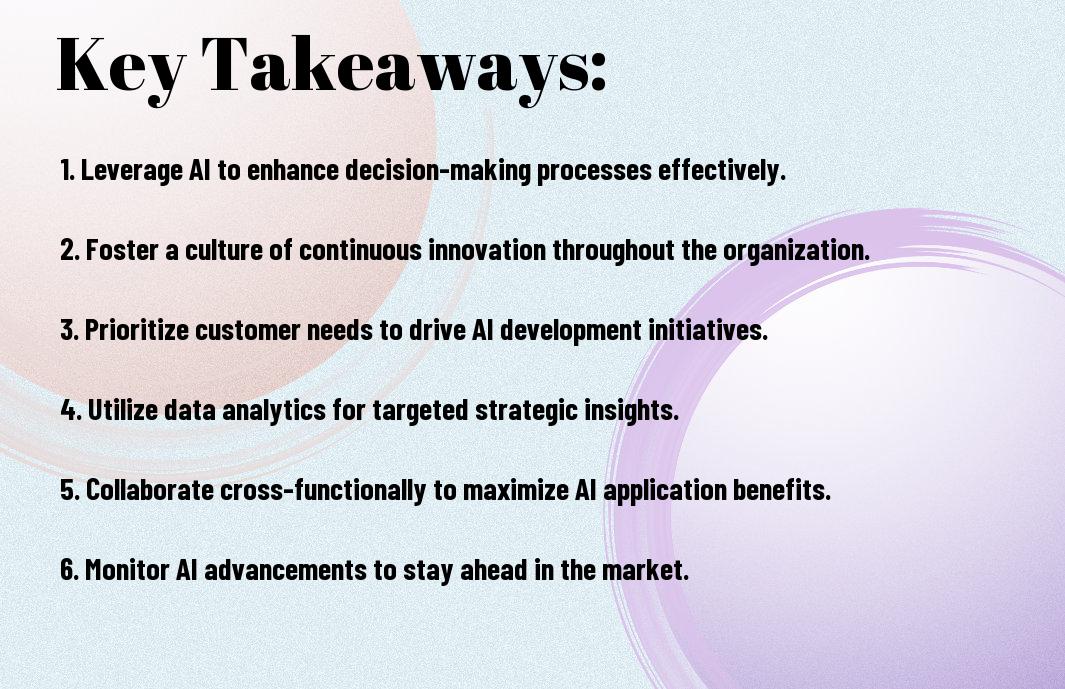
Key Takeaways:

  • Embracing AI technology can significantly enhance business operations, enabling entrepreneurs to make data-driven decisions, automate tasks, and improve overall efficiency in a rapidly changing digital landscape.
  • Developing a strategic AI roadmap is necessary for businesses to navigate the complexities of AI adoption, ensuring alignment with organizational goals and objectives.
  • Investing in AI talent and upskilling existing employees can help bridge the skills gap, enabling organizations to effectively leverage AI capabilities and drive innovation.
  • Entrepreneurs must prioritize ethical AI practices, ensuring transparency, accountability, and fairness in AI decision-making processes to maintain trust and credibility with customers and stakeholders.
  • By leveraging AI-driven insights and analytics, businesses can unlock new revenue streams, identify emerging trends, and create competitive advantages in an increasingly digital and interconnected world.

The AI Revolution in Business

Before exploring into the world of AI, you need to understand its impact on your business. The AI revolution is transforming the way you operate, making it important to adapt and evolve to stay competitive.

Current Landscape of AI Technologies

On the surface, AI technologies may seem complex, but you can leverage them to streamline your operations and improve efficiency. You can explore various AI tools and platforms to find the best fit for your business needs.

Disruption Across Industries

Along with the rise of AI, you are witnessing significant disruptions across various industries, and your business is no exception. You need to be prepared to adapt to these changes to stay ahead of the curve.

At the forefront of this disruption, you will find opportunities to innovate and improve your business processes. As you navigate the changing landscape, you can use AI to enhance customer experiences, optimize operations, and drive growth, ultimately giving you a competitive edge in the market.

Strategic Implementation of AI

Clearly, to stay ahead in the digital world, you need to implement AI strategically. You can learn more about Unleashing the Power of AI in Business to understand its applications.

Identifying Opportunities

Along with understanding AI, you identify areas where it can enhance your business, such as automating tasks or improving customer service, to maximize its benefits.

Resource Allocation and Investment

Along with planning, you allocate resources effectively to ensure a successful AI integration, considering both financial and human capital investments.

Investment in AI requires careful consideration of your budget, talent, and infrastructure to support its implementation and maintenance, enabling you to leverage its full potential and drive business growth.

Data-Driven Decision Making

Despite the abundance of data available, you need to know how to harness it to inform your business decisions. By leveraging data analytics, you can gain valuable insights into your operations, customers, and market trends, enabling you to make informed decisions that drive growth and success.

Analytics Infrastructure

Along with the right tools and technologies, you can build a robust analytics infrastructure that supports your data-driven decision making. You will be able to collect, store, and process large amounts of data, and extract meaningful insights that inform your business strategies.

Predictive Modeling

Around the concept of predictive modeling, you can forecast future outcomes and trends, allowing you to anticipate and prepare for potential challenges and opportunities. By applying advanced statistical techniques and machine learning algorithms, you can uncover hidden patterns and relationships in your data.

Understanding predictive modeling is key to unlocking its full potential. You can use it to identify high-value customer segments, optimize pricing and inventory, and predict demand for your products or services. By integrating predictive modeling into your decision-making process, you can stay ahead of the competition and drive business success in a rapidly changing market. As you explore predictive modeling, you will discover new ways to apply its insights to your business, from improving operational efficiency to driving innovation and growth.

Customer Experience Enhancement

Unlike traditional methods, AI-powered customer experience enhancement allows you to tailor your approach to individual preferences, leading to increased loyalty and satisfaction. You can leverage AI to analyze customer data, identify patterns, and create personalized experiences that meet their unique needs.

Personalization at Scale

Beneath the surface of generic marketing lies the potential for personalized connections with your customers. You can use AI to segment your audience, create targeted campaigns, and deliver relevant content that resonates with your customers, ultimately driving engagement and conversion.

Conversational Interfaces

Alongside traditional communication channels, conversational interfaces are emerging as a key component of customer experience enhancement. You can use chatbots, voice assistants, and other AI-powered tools to provide instant support, answer queries, and offer personalized recommendations to your customers.

With conversational interfaces, you can take your customer experience to the next level by providing 24/7 support, automating routine tasks, and freeing up human resources to focus on complex issues that require empathy and problem-solving skills. You can also use conversational interfaces to collect feedback, analyze sentiment, and make data-driven decisions to improve your products and services.

Operational Efficiency

All businesses strive for operational efficiency, and AI can help you achieve it by streamlining processes and reducing costs. You can leverage AI to enhance your operations and stay ahead of the competition.

Automation of Routine Tasks

The key to unlocking efficiency lies in automating routine tasks, allowing you to focus on high-value activities. You can use AI to automate tasks such as data entry, bookkeeping, and customer service, freeing up your time to concentrate on growth and innovation.

Supply Chain Optimization

To optimize your supply chain, you can utilize AI to analyze data and predict demand, enabling you to make informed decisions about production and distribution. You can use AI to identify bottlenecks and areas for improvement, allowing you to streamline your supply chain and reduce costs.

Also, by implementing AI-powered supply chain optimization, you can gain real-time visibility into your supply chain, enabling you to respond quickly to changes in demand or disruptions in the supply chain, and make data-driven decisions to drive your business forward, ultimately leading to increased efficiency and profitability for your business.

Ethical Considerations

Once again, you will encounter challenges as you research into the world of AI, and ethical considerations will be at the forefront. You must consider the implications of your AI-powered business on your customers and society as a whole.

Privacy and Security

Beneath the surface of AI’s benefits lies the issue of protecting your customers’ data. You need to ensure that your AI systems are secure and that you are transparent about how you collect and use data.

Bias and Fairness

Alongside other concerns, you should also think about the potential for bias in your AI systems. You must take steps to ensure that your AI is fair and unbiased, as this will impact how your customers perceive your business.

And as you work to mitigate bias in your AI, you will need to consider the data you use to train your systems, as well as the algorithms themselves. You should regularly audit your AI to identify and address any biases that may be present, and take steps to ensure that your AI is fair and transparent in its decision-making processes, which will help you build trust with your customers and maintain a positive reputation for your business.

Conclusion

Taking this into account, you now have the tools to harness the potential of AI in your entrepreneurial endeavors. You can leverage AI-driven strategies to propel your business forward in the digital world. By integrating AI into your operations, you will enhance your decision-making capabilities and stay ahead of the competition, ultimately driving your business towards success and maximizing your returns on investment in the ever-evolving digital landscape, shaping your future.

FAQ

Q: What are the key benefits of leveraging AI in my entrepreneurial ventures, and how can I get started with implementing AI-powered solutions?

A: Leveraging AI in your entrepreneurial ventures can bring numerous benefits, including enhanced efficiency, improved decision-making, and increased competitiveness. To get started, identify areas in your business where AI can have the most impact, such as customer service, marketing, or operations. Then, explore AI-powered tools and platforms that can help you automate tasks, analyze data, and gain valuable insights. Consider consulting with AI experts or taking online courses to develop your skills and knowledge in AI implementation.

Q: How can I ensure that my business stays ahead of the curve in terms of AI adoption, and what strategies can I use to mitigate potential risks and challenges associated with AI integration?

A: To stay ahead of the curve, it’s necessary to continuously monitor the latest AI trends and advancements, and attend industry conferences and workshops to network with other entrepreneurs and AI experts. You can also participate in online forums and communities to stay informed about best practices and potential pitfalls. In terms of mitigating risks, develop a comprehensive AI strategy that includes data protection, cybersecurity measures, and employee training. Additionally, consider establishing an AI ethics committee to ensure that your AI-powered solutions align with your business values and principles.

Q: What role can AI play in enhancing customer experience, and how can I use AI-powered tools to personalize and optimize my customer interactions?

A: AI can play a significant role in enhancing customer experience by enabling personalized interactions, streamlining customer support, and providing valuable insights into customer behavior. You can use AI-powered tools such as chatbots, virtual assistants, and predictive analytics to offer tailored recommendations, resolve customer queries, and improve response times. Additionally, AI-powered tools can help you analyze customer feedback, sentiment, and preferences, allowing you to refine your products and services to meet their evolving needs. By leveraging AI in this way, you can create a more engaging, intuitive, and satisfying customer experience that drives loyalty and retention.

The Future of Work – How AI Transforms Entrepreneurial Roles and Responsibilities

As you navigate the ever-changing landscape of entrepreneurship, you’re likely wondering how artificial intelligence (AI) will impact your business. You’ll need to adapt to new technologies and strategies to stay ahead. Your role as an entrepreneur is evolving, and understanding how AI transforms your responsibilities is imperative to success. You must consider how AI will change your daily operations, decision-making processes, and overall business model to thrive in this new era.

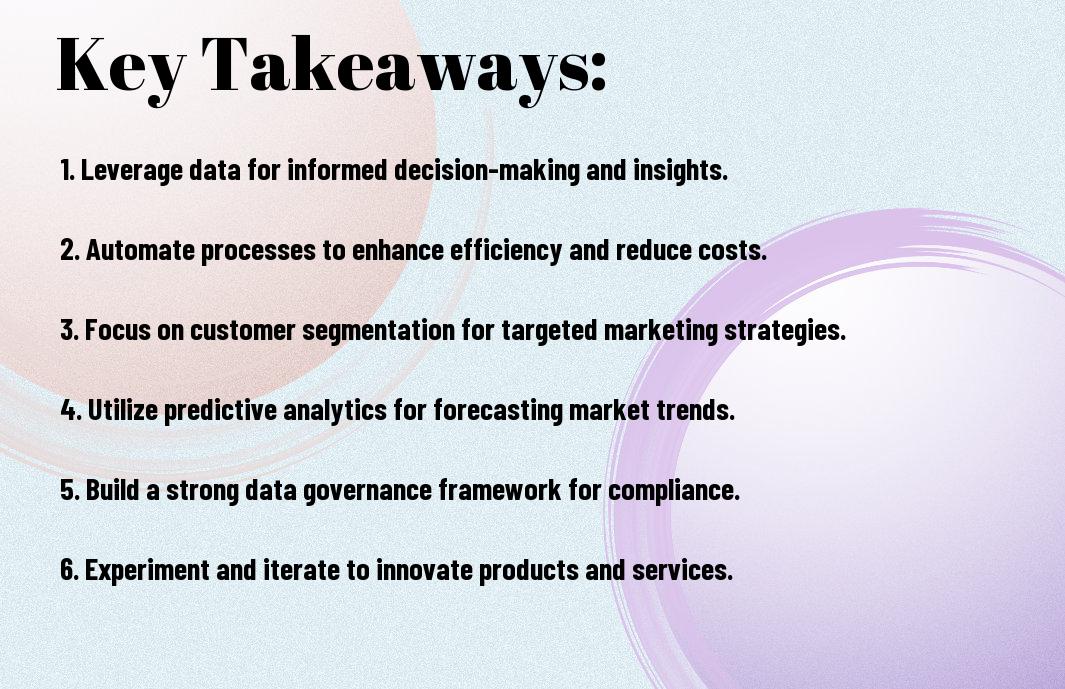
Key Takeaways:

  • The integration of AI in the workforce is revolutionizing entrepreneurial roles, enabling business owners to automate routine tasks and focus on strategic decision-making, innovation, and customer relationships.
  • AI-driven tools are transforming the way entrepreneurs approach marketing, sales, and customer service, allowing for more personalized and efficient interactions with clients and stakeholders.
  • The rise of AI is creating new opportunities for entrepreneurs to develop and offer innovative products and services, such as AI-powered solutions, data analytics, and digital consulting services.
  • As AI takes over routine and administrative tasks, entrepreneurs will need to develop new skills, such as data interpretation, critical thinking, and creativity, to remain competitive in the market.
  • The future of work will require entrepreneurs to be adaptable, resilient, and open to continuous learning, as AI continues to evolve and shape the business landscape, presenting both opportunities and challenges for entrepreneurial success.

The Evolution of Entrepreneurship

Your role as an entrepreneur is undergoing a significant transformation, driven by technological advancements and shifting market demands, leading to new opportunities and challenges in the business landscape.

Traditional Entrepreneurial Models

Previously, entrepreneurial success relied on traditional models, where you would invest time and resources into building a business from the ground up, managing every aspect, from production to marketing, and navigating the risks associated with each step.

Digital Transformation of Business Ownership

Unlike the past, today’s digital landscape presents you with unprecedented opportunities for growth, as you can now leverage technology to streamline operations, reach a broader audience, and innovate your products and services, thereby redefining the way you approach business ownership.

Models of business ownership are evolving, and you are now able to adopt more flexible and adaptable approaches, such as remote work, outsourcing, and partnerships, allowing you to focus on high-level strategy and decision-making, while automation and AI handle more mundane tasks, freeing up your time to drive innovation and growth.

AI as the New Business Partner

Some entrepreneurs are leveraging AI to transform their businesses, as seen in The Future of Work: How AI is Transforming Job Roles and Required Skills, to streamline operations and improve decision-making, allowing you to focus on high-level strategy and growth.

Algorithmic Decision-Making

Across various industries, you’re witnessing the rise of algorithmic decision-making, where AI analyzes data to inform business choices, enabling you to make more informed decisions and drive your business forward.

Automated Strategic Planning

Above all, automated strategic planning is becoming increasingly prevalent, allowing you to automate routine tasks and focus on high-level strategy, as AI takes care of analyzing market trends and predicting future outcomes.

The automated strategic planning process involves AI analyzing your business data, identifying areas of improvement, and providing recommendations for growth, enabling you to make data-driven decisions and drive your business forward, as you navigate the ever-changing landscape of your industry, you can rely on AI to provide valuable insights and support your strategic planning efforts.

The Shifting Skills Landscape

Now, as AI transforms the entrepreneurial landscape, you will need to adapt to new roles and responsibilities, and develop skills that complement automation, enabling you to stay ahead in the changing job market.

Technical Competencies for Tomorrow

To thrive in an AI-driven economy, you must acquire technical skills such as data analysis, programming, and digital literacy, which will enable you to effectively collaborate with AI systems and leverage their capabilities to drive your business forward.

Human Skills in an Automated Economy

Capabilities such as creativity, empathy, and problem-solving will become increasingly valuable in an automated economy, as you will need to focus on high-touch, high-value tasks that require a human touch, and that AI systems are not yet able to replicate.

Even as AI assumes more routine and repetitive tasks, you will need to develop your human skills to work effectively with machines, focusing on tasks that require imagination, innovation, and emotional intelligence, allowing you to create value and drive growth in your business, and stay competitive in a rapidly changing market.

Redefining Risk and Opportunity

Despite the uncertainty surrounding AI’s impact on entrepreneurial roles, you will need to adapt to the changing landscape. As AI transforms the way you work, your responsibilities will shift, and you must be prepared to redefine risk and opportunity in this new context.

AI-Driven Market Analysis

AIDriven technologies will enable you to analyze market trends and make data-driven decisions, allowing you to stay ahead of the competition and capitalize on new opportunities. You will be able to leverage AI-driven insights to inform your business strategy and drive growth.

Predictive Business Modeling

After implementing AI-powered predictive models, you will be able to forecast market fluctuations and make informed decisions about your business. You will have the ability to simulate different scenarios and predict outcomes, giving you a competitive edge in the market.

In fact, predictive business modeling will become an necessary tool for you as an entrepreneur, enabling you to anticipate and respond to changes in the market, and make strategic decisions that drive your business forward. You will be able to identify potential risks and opportunities, and develop strategies to mitigate or capitalize on them, ultimately leading to increased success and growth.

The Augmented Entrepreneur

To become a successful entrepreneur in the future, you will need to adapt to the changing landscape of work, where AI transforms your roles and responsibilities, enabling you to focus on high-level creative problem-solving and strategic decision-making.

Cognitive Enhancement Through AI

Bridging the gap between human and artificial intelligence, AI enhances your cognitive abilities, allowing you to process vast amounts of data, identify patterns, and make informed decisions, ultimately augmenting your entrepreneurial capabilities.

The New Division of Labor

For you, the new division of labor means redefining your role and responsibilities, as AI takes over routine and repetitive tasks, freeing you to focus on innovative and creative work that drives your business forward.

The new division of labor brings significant changes to your workflow, as you learn to collaborate with AI systems, delegate tasks, and prioritize high-value activities that leverage your unique skills and expertise, enabling you to achieve greater productivity and efficiency in your entrepreneurial endeavors.

Ethical Dimensions of AI Entrepreneurship

Unlike traditional entrepreneurship, AI-driven ventures raise unique ethical concerns that you must consider when building your business, as you navigate the complexities of automated decision-making and potential biases in AI systems.

Responsibility in Automated Systems

Toward the goal of creating trustworthy AI, you should prioritize transparency and accountability in your automated systems, ensuring that you can identify and address potential errors or biases that may impact your customers or stakeholders.

Building Values-Based AI Businesses

Building on the foundation of ethical principles, you can create AI-powered businesses that align with your values and promote a positive social impact, considering the potential consequences of your innovations on your customers and the broader community.

And as you develop your values-based AI business, you will need to consider the long-term implications of your technologies, ensuring that they contribute to the well-being of society and the environment, while also driving growth and innovation in your industry, and you will have to make informed decisions about the data you collect, how you use it, and the potential risks associated with your AI systems.

Summing up

Hence, as you navigate the future of work, you will witness AI transforming your entrepreneurial roles and responsibilities. You will need to adapt to new technologies and leverage AI to enhance your business operations. Your ability to innovate and lead will be key to success in this new landscape, and you must be prepared to evolve your skills to remain competitive. You will shape the future of work, and AI will be your catalyst.

FAQ

Q: How will AI impact the role of entrepreneurs in the future?

A: The integration of AI in the workplace will significantly transform the role of entrepreneurs, enabling them to focus on high-level strategic decision-making, innovation, and creative problem-solving. AI will automate routine and repetitive tasks, freeing up entrepreneurs to concentrate on developing new business models, building relationships, and driving growth. As AI takes over administrative and operational tasks, entrepreneurs will need to develop skills such as data analysis, digital literacy, and emotional intelligence to effectively collaborate with AI systems and lead their organizations.

Q: What new responsibilities will entrepreneurs have to take on as AI becomes more prevalent in the workplace?

A: As AI becomes more integrated into business operations, entrepreneurs will need to take on new responsibilities such as AI strategy development, AI ethics management, and workforce retraining. They will need to develop a deep understanding of AI technologies, including machine learning, natural language processing, and computer vision, to make informed decisions about AI adoption and implementation. Additionally, entrepreneurs will need to ensure that AI systems are transparent, accountable, and fair, and that they do not perpetuate biases or discriminate against certain groups. They will also need to invest in retraining and upskilling their workforce to work effectively with AI systems.

Q: How can entrepreneurs prepare themselves for the changes brought about by AI in the workplace?

A: To prepare themselves for the changes brought about by AI, entrepreneurs should focus on developing a range of skills, including data analysis, digital literacy, and emotional intelligence. They should also stay up-to-date with the latest developments in AI research and technology, and explore ways to apply AI to their business operations. Additionally, entrepreneurs should prioritize lifelong learning, seeking out training and education opportunities to enhance their skills and knowledge in areas such as AI, data science, and digital transformation. By being proactive and adaptable, entrepreneurs can position themselves for success in an AI-driven future and leverage the benefits of AI to drive innovation, growth, and competitiveness.

Strategic Innovation – Integrating AI for Maximum Business Impact

As you navigate the complex landscape of modern business, you’re likely exploring ways to leverage technology for a competitive edge. You understand that integrating Artificial Intelligence (AI) can revolutionize your operations, enhance customer experiences, and drive growth. Your goal is to harness AI’s potential to innovate strategically, maximizing impact and propelling your business forward. You’re about to discover how to effectively integrate AI into your strategy, unlocking new opportunities and transforming your organization from within.

Key Takeaways:

  • Embracing strategic innovation with AI integration can significantly enhance business operations, leading to increased efficiency and competitiveness in the market.
  • AI-driven solutions can facilitate data-driven decision-making, enabling companies to make informed choices and drive growth through targeted strategies.
  • Effective integration of AI requires a thorough understanding of the organization’s goals, challenges, and existing infrastructure to maximize its potential impact.
  • Strategic innovation with AI involves continuous learning and adaptation, as the technology is constantly evolving, and businesses must stay up-to-date to remain relevant.
  • By leveraging AI in strategic innovation, companies can unlock new opportunities, improve customer experiences, and create sustainable business models that drive long-term success.

The Tipping Point of AI in Business

Your business is on the cusp of a revolution with AI, and it’s time to harness its power for maximum impact. AI is transforming industries, and you must adapt to stay ahead.

When Technologies Reach Critical Mass

Whenever technologies converge, innovation accelerates, and AI is no exception. You’ll see exponential growth as AI adoption reaches critical mass, transforming your business landscape.

Identifying Your Organization’s AI Readiness

On the path to AI integration, you must assess your organization’s readiness. You need to evaluate your infrastructure, data, and talent to determine the best AI strategies for your business.

Organizations that successfully integrate AI typically have a clear understanding of their strengths, weaknesses, and goals. You will need to conduct a thorough analysis of your business to identify areas where AI can have the most significant impact, and then develop a tailored strategy to achieve your objectives, leveraging your unique strengths and addressing your weaknesses.

The Cognitive Revolution in Corporate Strategy

If you’re looking to integrate AI into your business, you’ll need to understand the cognitive revolution in corporate strategy, which is transforming the way you approach innovation and decision-making.

From Data Collection to Insight Generation

Alongside the rise of AI, you’re likely noticing a shift from mere data collection to insight generation, enabling you to make more informed decisions and drive business growth.

Decision-Making in the Age of Algorithms

Around the time you start leveraging AI, you’ll find that decision-making processes become more efficient, as algorithms help analyze vast amounts of data and provide actionable recommendations.

A key aspect of decision-making in the age of algorithms is that you will have access to predictive analytics, allowing you to anticipate market trends and make strategic decisions that drive your business forward, giving you a competitive edge in your industry, and enabling you to innovate and adapt to changing market conditions more effectively.

Small Changes, Massive Results

Many businesses have achieved significant gains by incorporating AI into their operations, and you can too by starting with small, strategic changes that add up to make a big impact on your bottom line.

Incremental AI Implementation Strategies

The key to successful AI integration lies in taking a gradual approach, allowing you to test and refine your strategies as you go, and make adjustments to maximize the benefits of AI for your business.

The Compounding Effect of Smart Automation

Smart investments in AI can lead to exponential growth, as automated processes free up resources for more strategic pursuits, enabling you to focus on high-value tasks that drive innovation and expansion in your organization.

Due to the nature of compounding effects, the benefits of smart automation can quickly multiply, allowing you to achieve greater efficiency, productivity, and profitability, and giving you a competitive edge in the market, as you continue to leverage AI to streamline and optimize your operations, you will be able to make more informed decisions and drive your business forward.

The Power of Context in AI Deployment

All successful AI deployments rely on understanding the context in which they will operate. To maximize impact, you must consider the environment and organizational climate.

Environmental Factors That Determine Success

To determine the success of AI deployment, you need to assess:

  • market conditions
  • customer needs
  • competitive landscape

Assume that your analysis will help you make informed decisions about AI integration.

Creating the Right Organizational Climate

Creating a supportive organizational culture is imperative for AI adoption. You should foster collaboration, encourage experimentation, and provide necessary training to your employees.

Context is key when creating the right organizational climate for AI deployment. You will need to consider your company’s values, goals, and existing infrastructure to ensure a smooth integration of AI solutions, allowing you to leverage your strengths and address potential weaknesses, ultimately driving your business forward with AI-powered innovation.

Connecting Human Intuition with Machine Precision

To maximize business impact, you can leverage AI by learning How to Use AI for Strategy and Strategic Management to inform your decision-making process, enhancing your strategic innovation.

The New Division of Labor

AFTER you integrate AI into your workflow, you’ll notice a shift in tasks, freeing you to focus on high-level creative problem-solving and strategic thinking.

Cultivating Complementary Intelligence

ONE key aspect of strategic innovation is developing a symbiotic relationship between human intuition and machine precision, allowing you to make more informed decisions.

But as you cultivate complementary intelligence, you’ll find that your ability to analyze complex data and identify patterns improves, enabling you to drive business growth and stay ahead of the competition, and you will be able to make the most of your strategic innovation efforts by combining the strengths of both human and machine intelligence.

The Stickiness Factor of AI Solutions

For your AI solutions to have a lasting impact, you need to focus on creating experiences that keep users engaged and invested in the technology. This involves understanding your target audience, identifying their pain points, and developing solutions that address these challenges in a meaningful way.

Creating Memorable and Indispensable AI Tools

About the development process, you should prioritize simplicity, intuitiveness, and user experience, as these factors will determine how often your AI tools are used and how much value they bring to your organization. You can achieve this by involving your users in the design process and gathering feedback to inform your development decisions.

Designing for Adoption and Engagement

Against the backdrop of rapid technological advancements, you must design your AI solutions with adoption and engagement in mind, taking into account the needs and preferences of your users, as well as the overall business goals and objectives. You should strive to create seamless and intuitive experiences that foster a sense of familiarity and comfort.

Considering the complexities of human behavior and the factors that influence adoption, you will need to develop a deep understanding of your users’ motivations, habits, and pain points to design AI solutions that meet their needs and expectations, and ultimately drive business success. You can achieve this by leveraging data analytics, user feedback, and testing to inform your design decisions and optimize your AI solutions for maximum impact.

Summing up

The integration of AI in your business strategy can significantly enhance your innovation capabilities, allowing you to make informed decisions and drive growth. By leveraging AI, you can unlock new opportunities, optimize operations, and gain a competitive edge. As you commence on this journey, you will be able to harness the full potential of AI to maximize your business impact and achieve your goals, ultimately transforming your organization into a more agile and innovative entity.

FAQ

Q: What is Strategic Innovation and how can it be applied to integrate AI for maximum business impact?

A: Strategic Innovation refers to the process of creating new or improving existing business models, products, and services by leveraging innovative technologies like Artificial Intelligence (AI). To integrate AI for maximum business impact, organizations should identify areas where AI can drive significant value, such as process automation, predictive analytics, or customer experience enhancement. By aligning AI initiatives with business objectives and fostering a culture of innovation, companies can unlock new revenue streams, improve operational efficiency, and gain a competitive edge in the market.

Q: How can businesses ensure successful AI integration and maximize the potential of Strategic Innovation?

A: To ensure successful AI integration, businesses should start by defining clear goals and objectives, assessing their current data infrastructure, and developing a robust AI strategy. It is also crucial to invest in employee upskilling and reskilling to build a workforce capable of working effectively with AI technologies. Furthermore, organizations should prioritize data quality, ethics, and governance to mitigate potential risks associated with AI adoption. By taking a structured approach to AI integration, companies can minimize disruption, optimize benefits, and achieve sustainable business growth through Strategic Innovation.

Q: What role does leadership play in driving Strategic Innovation and AI adoption within an organization?

A: Leadership plays a vital role in driving Strategic Innovation and AI adoption by setting the vision, tone, and direction for the organization. Effective leaders must be willing to challenge traditional business models, encourage experimentation, and foster a culture of innovation. They should also prioritize investment in AI research and development, collaborate with external partners and stakeholders, and ensure that AI initiatives are aligned with overall business strategy. By providing clear guidance, support, and resources, leaders can empower their teams to explore new AI-driven opportunities, drive digital transformation, and achieve long-term success through Strategic Innovation.

Skip to content