AI

From Concept to Capital – How AI Tools Turn Ideas into Wealth

You have an innovative idea, but turning it into a profitable venture can be daunting. With AI tools, you can bridge the gap between concept and capital. As you explore the possibilities of artificial intelligence, you’ll discover how to leverage your ideas into wealth. To get started, learn How to make money with AI: the digital gold rush, and unlock your potential to transform your ideas into successful businesses.

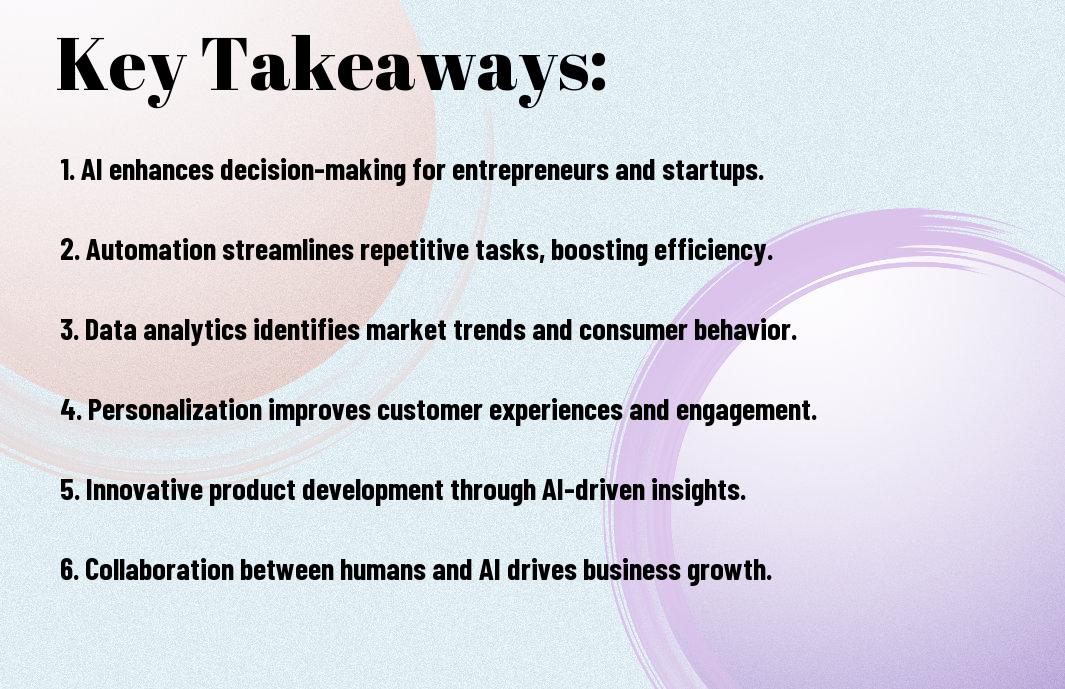
Key Takeaways:

  • AI tools can significantly accelerate the process of turning ideas into wealth by automating tasks, analyzing data, and providing valuable insights to inform decision-making.
  • The effective use of AI tools can help entrepreneurs and businesses validate their ideas, identify potential markets, and develop strategies to reach their target audience, ultimately leading to increased revenue and growth.
  • By leveraging AI tools, individuals can streamline their workflow, reduce costs, and focus on high-level creative thinking, allowing them to bring their ideas to life and achieve their financial goals more efficiently.

The Idea Economy

To succeed in the idea economy, you need to understand how to turn your concepts into capital. Your ability to generate and develop ideas will be the key to your success, and with the right tools, you can unlock your full potential.

Recognizing Valuable Concepts

Upon examining your ideas, you will begin to identify patterns and themes that can be developed into valuable concepts. Your task is to evaluate and refine these concepts to ensure they have the potential to generate wealth.

The Democratization of Innovation

Concepts like artificial intelligence and machine learning are becoming more accessible, allowing you to innovate and create new products and services. Your access to these tools will enable you to compete with larger companies and turn your ideas into successful ventures.

It is crucial to note that the democratization of innovation has leveled the playing field, allowing you to participate in the idea economy regardless of your background or resources. You can now use AI tools to develop and refine your concepts, and with the right strategy, you can turn your ideas into wealth, creating a successful and sustainable business that generates long-term value.
AI as the Modern Alchemist

One of the most significant advantages of AI tools is their ability to turn your ideas into wealth, and this process is revolutionizing the way you approach innovation and entrepreneurship, allowing you to transform your concepts into tangible assets.

Transformative Technologies

For instance, AI-powered technologies are enabling you to automate tasks, streamline processes, and gain valuable insights that can inform your decision-making, ultimately helping you to create more effective and efficient strategies for turning your ideas into wealth.

Acceleration of Development Cycles

During the development phase, your ability to iterate and refine your ideas is significantly enhanced with AI tools, allowing you to test and validate your concepts more quickly and effectively, which in turn enables you to bring your products or services to market faster.

Consequently, as you leverage AI to accelerate your development cycles, you’ll find that you’re able to respond more rapidly to changing market conditions and customer needs, giving you a competitive edge and enabling you to capitalize on new opportunities as they emerge, thereby turning your ideas into wealth more efficiently.

Building Your AI Toolkit

Despite the numerous AI tools available, you need to focus on those that align with your business goals. You will want to identify the tools that can help you turn your ideas into wealth, and then build a toolkit that supports your vision.

Essential AI Platforms for Entrepreneurs

The foundation of your AI toolkit will consist of platforms that provide a wide range of functionalities, such as data analysis, automation, and machine learning. These platforms will enable you to streamline your workflow, make data-driven decisions, and drive innovation in your business.

Selecting Tools for Your Specific Vision

Vision is key when selecting AI tools for your business. You need to consider your specific needs, goals, and industry requirements when choosing the tools that will help you achieve success. Your AI toolkit should be tailored to your unique vision and objectives.

Plus, as you explore the various AI tools available, you will want to evaluate their scalability, user interface, and integration capabilities. You should consider how each tool will fit into your overall workflow and whether it will help you achieve your desired outcomes, allowing you to make informed decisions and drive your business forward with confidence.

From Raw Concept to Refined Product

Once again, you find yourself at the forefront of innovation, poised to transform your idea into a tangible product. With AI tools, you can refine your concept, streamlining it into a viable solution that meets the needs of your target market.

Ideation Enhancement Through AI

Bridging the gap between your initial idea and a well-defined concept, AI-powered tools help you generate, develop, and evaluate your ideas, ensuring that your product is innovative and competitive.

Prototype Development and Testing

Around this stage, you begin to shape your refined concept into a prototype, using AI-driven design tools to create a functional model of your product, which you can then test and iterate upon.

Product development is an iterative process, and with AI tools, you can quickly test and refine your prototype, gathering feedback from users and making data-driven decisions to improve your product, ultimately creating a polished and market-ready solution that meets your customers’ needs and exceeds their expectations, helping you to turn your idea into wealth.

Monetization Strategies

Your ability to turn ideas into wealth relies heavily on effective monetization strategies, which involve leveraging AI tools to identify and capitalize on revenue streams.

AI-Driven Market Analysis

By utilizing AI-driven market analysis, you can gain valuable insights into consumer behavior, market trends, and competitor activity, enabling you to make informed decisions about your product or service.

Pricing and Value Proposition Optimization

Above all, optimizing your pricing and value proposition is vital to attracting and retaining customers, and AI tools can help you achieve this by analyzing market data and providing personalized recommendations.

Strategies for optimizing your pricing and value proposition include using AI to analyze customer feedback, track market fluctuations, and identify opportunities to offer premium services or bundles, allowing you to maximize your revenue and stay competitive in the market, and as you explore these strategies, you will be able to create a tailored approach that suits your business needs and goals.

Scaling with Artificial Intelligence

Keep in mind that AI tools can significantly accelerate your growth, allowing you to scale your business efficiently. You can leverage AI to streamline processes, enhance decision-making, and improve customer experiences, ultimately driving your success.

Automation of Growth Processes

Similarly, one of the key benefits of AI is its ability to automate repetitive tasks, freeing up your time to focus on high-level strategy and innovation, enabling you to expand your business rapidly.

Managing Expansion with Limited Resources

Resourcefully, you can manage your growth with limited resources by utilizing AI tools to optimize operations, prioritize tasks, and allocate resources effectively, ensuring your business expansion is sustainable and profitable.

Adeptly, you can navigate the challenges of managing expansion with limited resources by implementing AI-driven solutions that provide valuable insights, enabling you to make informed decisions and drive your business forward, even with restricted resources, you can achieve your goals and maintain a competitive edge.

Conclusion

With these considerations, you can now harness the power of AI tools to turn your ideas into wealth. You will be able to navigate the process of transforming concepts into successful ventures, leveraging AI-driven insights to inform your decisions. By utilizing these tools, you can optimize your approach, mitigate risks, and maximize your returns, ultimately turning your innovative ideas into tangible assets that generate wealth and drive your success. Your ability to capitalize on AI will be the key to unlocking your financial potential.

FAQ

Q: What is the role of AI tools in turning ideas into wealth, and how do they facilitate the concept-to-capital process?

A: AI tools play a significant role in transforming ideas into wealth by providing innovative solutions, automating tasks, and enhancing decision-making processes. They facilitate the concept-to-capital process by generating, evaluating, and refining ideas, as well as identifying potential markets and revenue streams. By leveraging AI tools, entrepreneurs and businesses can accelerate the development of their concepts, reduce costs, and increase the likelihood of success.

Q: How do AI-powered idea generation tools help in identifying profitable business opportunities, and what are their key features?

A: AI-powered idea generation tools utilize machine learning algorithms and natural language processing to analyze market trends, consumer behavior, and industry patterns. These tools help identify profitable business opportunities by providing insights into emerging markets, predicting demand, and suggesting innovative solutions. Key features of these tools include data analytics, trend forecasting, and idea ranking, which enable users to evaluate and prioritize their concepts based on potential returns and feasibility.

Q: What is the impact of AI-driven market research on the concept-to-capital process, and how does it influence investment decisions?

A: AI-driven market research significantly impacts the concept-to-capital process by providing actionable insights into consumer behavior, market trends, and competitor analysis. This research enables entrepreneurs and businesses to make informed decisions about their concepts, identify potential risks, and develop targeted marketing strategies. By leveraging AI-driven market research, investors can also assess the viability of projects, evaluate growth potential, and make more informed investment decisions, ultimately influencing the flow of capital into promising ventures.

Q: How do AI tools facilitate the prototyping and testing phases of the concept-to-capital process, and what benefits do they offer?

A: AI tools facilitate the prototyping and testing phases by enabling rapid prototyping, simulation, and virtual testing. These tools offer benefits such as reduced development time, lower costs, and improved product quality. AI-powered prototyping tools can also analyze user feedback, identify design flaws, and suggest optimizations, allowing for iterative refinement and improvement. By streamlining the prototyping and testing phases, AI tools help entrepreneurs and businesses accelerate the development of their concepts, mitigate risks, and increase the chances of success.

Q: What are the key challenges and limitations of using AI tools in the concept-to-capital process, and how can they be addressed?

A: Key challenges and limitations of using AI tools in the concept-to-capital process include data quality issues, algorithmic biases, and the need for human oversight. To address these challenges, it is vital to ensure high-quality data inputs, regularly update and refine AI models, and maintain human involvement in the decision-making process. Additionally, entrepreneurs and businesses should be aware of the potential risks and limitations of AI tools, such as job displacement and dependency on technology. By acknowledging these challenges and taking steps to mitigate them, users can effectively leverage AI tools to turn their ideas into wealth and achieve success in the concept-to-capital process.

The AI Revolution in Entrepreneurship – Pioneering Paths to Financial Success

As you navigate the ever-changing landscape of entrepreneurship, you’re likely aware of the significant impact artificial intelligence (AI) is having on your industry. You’re seeing AI transform business models, streamline operations, and unlock new revenue streams. Your ability to harness AI’s power will be key to staying ahead of the competition and achieving financial success. You’re about to discover how AI is revolutionizing entrepreneurship and how you can leverage it to pioneer your own path to prosperity.

Key Takeaways:

  • The AI revolution is transforming the entrepreneurial landscape by providing new opportunities for innovation and growth, enabling entrepreneurs to automate tasks, gain insights from data, and make informed decisions to drive their businesses forward.
  • Entrepreneurs who embrace AI can gain a competitive edge in the market by developing new products and services, improving operational efficiency, and enhancing customer experiences, ultimately leading to increased revenue and financial success.
  • As AI technology continues to evolve, entrepreneurs must stay adaptable and be willing to invest in ongoing education and training to leverage the latest advancements and stay ahead of the curve in the rapidly changing business environment.

The Tipping Point of AI in Business

Your business is on the cusp of a revolution with AI, and you can learn more about its potential by reading Pioneering AI-Driven Financial Inclusion Through Transformative Innovation, which explores the latest advancements.

When Algorithms Become Partners

By leveraging AI, you can create powerful partnerships that drive your business forward, enabling you to make data-driven decisions and stay ahead of the competition.

The Little Things That Make Big Differences

Beside the obvious benefits, AI can also help you optimize everyday tasks, freeing up time for more strategic endeavors and ultimately leading to increased productivity.

Make the most of AI’s capabilities by integrating them into your daily operations, and you will start to notice significant improvements in efficiency and profitability, allowing you to focus on growing your business and achieving your goals.

AI’s Cognitive Advantage

One of the key benefits of AI in entrepreneurship is its ability to process vast amounts of data, providing you with valuable insights to inform your business decisions. This cognitive advantage enables you to stay ahead of the competition and make informed decisions quickly.

Pattern Recognition Beyond Human Capacity

Around the concept of pattern recognition, AI can analyze large datasets to identify trends and patterns that may elude you, giving you a unique perspective on your business and industry, allowing you to make more accurate predictions and strategic decisions.

The Outlier Effect in Decision Making

Between the lines of data analysis and decision making, AI helps you identify outliers and anomalies that can significantly impact your business, enabling you to adjust your strategies accordingly and minimize potential risks, which can be beneficial for your entrepreneurial endeavors.

Consequently, as you investigate deeper into the outlier effect, you’ll discover that AI’s ability to detect these anomalies can be a game-changer for your business, allowing you to capitalize on unexpected opportunities and mitigate potential threats, ultimately leading to increased financial success and a competitive edge in the market, where you can leverage AI’s capabilities to drive your entrepreneurial vision forward.

Reimagining Traditional Business Models

Many entrepreneurs are leveraging AI to transform their businesses, and you can too. By embracing innovation, you can stay ahead of the competition and achieve financial success.

The Subscription Economy Revolution

Businesses are shifting towards subscription-based models, offering you new revenue streams and opportunities for growth. You can adopt this approach to increase customer loyalty and retention.

From Products to AI-Enhanced Experiences

At the forefront of this revolution, you can create immersive experiences that combine AI and human interaction. You will be able to offer personalized services, increasing customer satisfaction and loyalty.

From this perspective, you can focus on developing AI-enhanced experiences that cater to individual needs. You will be able to collect data, analyze preferences, and create tailored solutions, setting your business apart from the competition and driving your financial success.

The Human-AI Collaborative Framework

Despite the rise of AI, your success as an entrepreneur still depends on your ability to work with machines, creating a collaborative framework that amplifies your strengths and those of AI, leading to innovative solutions and financial growth.

Complementary Intelligence

Any analysis of human-AI collaboration highlights the benefits of combining your creative problem-solving skills with the analytical power of AI, enabling you to make more informed decisions and drive your business forward.

The New Division of Labor

For you to maximize the potential of AI, it’s important to redefine the roles within your organization, allocating tasks that play to the strengths of both humans and machines, and ensuring a seamless workflow that boosts productivity and efficiency.

Considering the new division of labor, you’ll need to focus on developing skills that complement AI capabilities, such as strategic thinking, creativity, and emotional intelligence, allowing you to oversee and direct AI-driven processes, and make strategic decisions that drive your business towards financial success.

Financial Landscapes Transformed

Unlike traditional business models, AI-driven entrepreneurship offers unprecedented opportunities for financial growth. You can leverage AI to optimize your financial operations, predict market trends, and make data-driven decisions to drive your business forward.

Predictive Analytics and Capital Allocation

Leveraging similar technologies, you can harness predictive analytics to allocate your capital more efficiently, identifying areas of high potential return and minimizing risk. This enables you to make informed decisions, maximizing your financial gains.

Risk Assessment in the Algorithm Age

Shifting landscapes of risk assessment are transforming the way you approach financial decision-making. You can utilize AI algorithms to analyze vast amounts of data, identifying potential risks and opportunities, and adjusting your strategy accordingly.

Even as you navigate the complexities of risk assessment in the algorithm age, you can trust that AI-driven tools will provide you with actionable insights to inform your decisions. You will be able to identify potential pitfalls, mitigate risks, and capitalize on emerging trends, ultimately driving your business towards financial success.

Ethical Considerations and Guardrails

Once again, as you navigate the AI revolution in entrepreneurship, you’ll encounter complex ethical dilemmas. For guidance, consider exploring resources like Make Cash With AI: Your Gateway to Profit in the AI Revolution, which can help you make informed decisions.

The Responsibility Equation

AFTER delving into the world of AI, you’ll need to consider the responsibility that comes with leveraging automated systems, and how you can ensure your business practices align with your values and the law.

Building Trust in Automated Systems

BETWEEN the lines of code and data analysis, you’ll find that building trust in automated systems is imperative for your business’s success, and it starts with transparency and accountability in your AI-driven decision-making processes.

Plus, as you work to establish trust in your automated systems, you’ll need to prioritize ongoing monitoring and evaluation to identify potential biases and areas for improvement, ensuring that your AI solutions are fair, reliable, and aligned with your business goals and values, allowing you to maintain your customers’ trust and confidence in your brand.

Conclusion

With these considerations, you now have a solid foundation to navigate the AI revolution in entrepreneurship. You can harness AI’s potential to pioneer your path to financial success, leveraging its power to drive innovation and growth in your business. As you commence on this journey, your ability to adapt and evolve will be key to unlocking your full potential and achieving your goals.

FAQ

Q: What is the AI Revolution in Entrepreneurship and how is it changing the business landscape?

A: The AI Revolution in Entrepreneurship refers to the integration of artificial intelligence technologies into various aspects of business, enabling entrepreneurs to innovate, automate, and optimize their operations. This revolution is transforming the business landscape by providing entrepreneurs with unprecedented opportunities for growth, improved decision-making, and enhanced customer experiences. With AI, entrepreneurs can analyze vast amounts of data, identify patterns, and make informed decisions, ultimately leading to increased efficiency, productivity, and financial success.

Q: How can entrepreneurs leverage AI to pioneer new paths to financial success?

A: Entrepreneurs can leverage AI in numerous ways to pioneer new paths to financial success. For instance, they can use AI-powered tools to analyze market trends, predict customer behavior, and identify new business opportunities. Additionally, AI can be used to automate routine tasks, freeing up time for entrepreneurs to focus on strategic decision-making and innovation. AI can also be used to develop personalized marketing campaigns, improve customer service, and optimize supply chain management, ultimately leading to increased revenue and profitability.

Q: What are some of the key challenges that entrepreneurs may face when adopting AI in their businesses?

A: While AI offers numerous benefits, entrepreneurs may face several challenges when adopting AI in their businesses. These challenges include the need for significant investments in AI infrastructure, the requirement for specialized skills and expertise, and the potential risks associated with data privacy and security. Moreover, entrepreneurs may also face challenges in integrating AI with existing systems and processes, as well as addressing potential job displacement and workforce transformation. However, with careful planning, strategic investment, and a focus on upskilling and reskilling, entrepreneurs can overcome these challenges and harness the full potential of AI.

Q: How can entrepreneurs ensure that their AI-powered businesses are ethical and socially responsible?

A: Ensuring that AI-powered businesses are ethical and socially responsible is crucial for building trust with customers, employees, and stakeholders. Entrepreneurs can achieve this by prioritizing transparency, accountability, and fairness in their AI systems. They should also ensure that their AI systems are designed and trained to avoid bias, discrimination, and other forms of unfairness. Furthermore, entrepreneurs should establish clear guidelines and regulations for the use of AI, invest in AI literacy and education, and engage in ongoing monitoring and evaluation to ensure that their AI systems are aligned with human values and societal norms.

Q: What is the future of AI in entrepreneurship, and how can entrepreneurs prepare themselves for the opportunities and challenges that lie ahead?

A: The future of AI in entrepreneurship is exciting and rapidly evolving. As AI technologies continue to advance, entrepreneurs can expect to see even more innovative applications of AI in areas such as natural language processing, computer vision, and predictive analytics. To prepare themselves for the opportunities and challenges that lie ahead, entrepreneurs should focus on developing a deep understanding of AI technologies, investing in ongoing education and training, and building a strong network of AI experts and partners. By staying ahead of the curve and embracing the potential of AI, entrepreneurs can unlock new paths to financial success, drive innovation, and create a better future for themselves, their customers, and society as a whole.

Data-Driven Wealth – How AI is Redefining Investment in Entrepreneurship

As you navigate the complex world of entrepreneurship, you’re likely aware that making informed investment decisions is key to your success. Your ability to analyze data and make strategic choices can significantly impact your wealth. With the advent of Artificial Intelligence (AI), you now have access to advanced tools that can help you optimize your investment strategies, providing you with a competitive edge in the market and enabling you to make more accurate predictions about your business’s future performance.

Key Takeaways:

  • AI-driven investment strategies are transforming the way entrepreneurs approach wealth creation, enabling them to make more informed decisions and optimize their portfolios with predictive analytics and machine learning algorithms.
  • The integration of AI in investment processes allows for real-time data analysis, providing entrepreneurs with a competitive edge in identifying emerging trends and opportunities, and enabling them to adapt quickly to changing market conditions.
  • By leveraging AI-powered tools and platforms, entrepreneurs can streamline their investment operations, reduce risk, and unlock new avenues for growth, ultimately redefining the landscape of investment in entrepreneurship and creating new pathways to wealth creation.

The AI Revolution in Investment Landscapes

For investors, the integration of artificial intelligence (AI) is transforming the way you approach wealth creation. You can now leverage AI-powered tools to make data-driven decisions, maximizing your returns and minimizing risks. This shift is redefining the investment landscape, enabling you to stay ahead of the curve.

Traditional Investment Models vs AI-Powered Decisions

To navigate the complexities of investment, you need to understand the differences between traditional models and AI-driven approaches. You will notice that AI-powered decisions offer more accuracy and speed, allowing you to respond quickly to market changes and make informed choices.

Machine Learning Algorithms in Market Analysis

On the forefront of this revolution are machine learning algorithms, which enable you to analyze vast amounts of market data and identify patterns that inform your investment strategies. You can use these algorithms to predict market trends and make decisions that drive your wealth creation goals.

Consequently, as you probe deeper into machine learning algorithms, you will discover their potential to analyze complex market data, identify trends, and provide insights that inform your investment decisions. You can apply these algorithms to various asset classes, from stocks to real estate, and optimize your portfolio to achieve your financial objectives, giving you a competitive edge in the investment landscape.

Predictive Analytics and Investment Opportunities

It is no secret that predictive analytics is revolutionizing the way you approach investment opportunities, and you can learn more about The Impact of AI in Wealth Management to make informed decisions. By leveraging AI, you can uncover hidden patterns and trends, giving you a competitive edge in the market.

Pattern Recognition in Startup Success

Against the backdrop of a rapidly changing entrepreneurial landscape, you can utilize AI-powered tools to identify successful startup patterns, allowing you to make more informed investment decisions and maximize your returns.

Risk Assessment Through Data Mining

Beside the potential for high returns, you must also consider the risks involved in investing in startups, and data mining can help you assess these risks by analyzing large datasets and identifying potential pitfalls.

Predictive analytics plays a significant role in risk assessment, enabling you to forecast potential outcomes and adjust your investment strategy accordingly, thereby protecting your assets and ensuring your financial security as you navigate the complex world of entrepreneurship and investment.

Digital Transformation of Venture Capital

To stay ahead in the investment game, you need to understand how AI is changing the landscape of venture capital, as seen in AI and the Future of Wealth Management: How AI is Redefining Investment Advice and Client Relationships, which is revolutionizing your approach to investment.

Automated Deal Flow Management

Deals are now being managed more efficiently with AI, allowing you to focus on high-potential investments and streamlining your workflow, making your investment process more effective.

AI-Driven Due Diligence Processes

Around the clock, AI-driven due diligence processes are analyzing vast amounts of data, helping you make informed decisions about your investments and minimizing your risk exposure.

Due to the advanced capabilities of AI, you can now conduct thorough due diligence processes, analyzing complex data sets and identifying potential issues before they become major problems, giving you a competitive edge in the investment landscape and allowing you to make smarter, data-driven decisions about your investments.

Entrepreneurial Success Metrics

Once again, you find yourself at the forefront of innovation, navigating the complex world of entrepreneurship, where data-driven decisions are key to your success. You need to understand the metrics that define your entrepreneurial journey, and how AI is transforming the way you approach investment and growth.

Data Points That Matter

Prior to making informed decisions, you must identify the data points that have a significant impact on your business, such as revenue growth, customer acquisition, and market trends, which will help you refine your investment strategy and drive your business forward.

Performance Indicators in the Digital Age

Indicative of a successful entrepreneurial venture, your performance indicators must be aligned with the digital landscape, incorporating metrics such as website traffic, social media engagement, and online customer reviews, to gauge your business’s overall health and make data-driven decisions.

Success in the digital age is contingent upon your ability to leverage these performance indicators to inform your investment decisions, and AI can help you analyze and interpret this data to optimize your business strategy, allowing you to make more informed decisions and drive your business towards long-term growth and profitability, ultimately leading to your entrepreneurial success.

The Human-AI Investment Partnership

Keep in mind that AI is not replacing human investors, but rather augmenting their capabilities. You can leverage AI to analyze vast amounts of data, identify patterns, and make predictions, freeing up your time to focus on high-level decision-making.

Balancing Algorithmic Insights with Human Judgment

By combining AI-driven insights with your own expertise, you can make more informed investment decisions. You will be able to identify potential biases in AI recommendations and adjust them according to your own risk tolerance and investment goals.

Building Trust in AI Investment Tools

By utilizing transparent and explainable AI models, you can gain a deeper understanding of how investment recommendations are generated, allowing you to trust the decisions made by these tools.

Judgment is key when it comes to building trust in AI investment tools. As you use these tools, you will begin to understand their strengths and limitations, and be able to adjust your investment strategy accordingly. You will be able to evaluate the performance of AI-driven investments and make adjustments to optimize your portfolio, ultimately leading to more effective investment decisions.

Future Investment Trends

Now, as you navigate the evolving landscape of entrepreneurship, you’ll notice that data-driven wealth is becoming increasingly prominent, with AI playing a key role in redefining investment strategies, enabling you to make more informed decisions.

Emerging Technologies in Investment Analysis

Besides the current tools, you’ll find that emerging technologies like machine learning and natural language processing are being integrated into investment analysis, allowing you to analyze vast amounts of data and identify trends that may not be immediately apparent, giving you a competitive edge.

Global Market Integration Through AI

About to revolutionize the way you invest, global market integration through AI is enabling you to access a broader range of investment opportunities, connecting you with investors and markets worldwide, and facilitating more efficient transactions.

Technologies such as blockchain and cloud computing are supporting this integration, providing you with secure, transparent, and scalable platforms to manage your investments, and allowing you to respond quickly to changing market conditions, thereby maximizing your returns and minimizing your risks, as you leverage the power of AI to drive your investment decisions.

Summing up

As a reminder, you now have insight into how AI is revolutionizing investment in entrepreneurship through data-driven wealth. You can leverage this knowledge to make informed decisions, maximizing your investment potential. Your understanding of AI’s role in shaping the future of entrepreneurship will help you navigate the evolving landscape and capitalize on emerging opportunities, ultimately transforming your approach to investment and wealth creation.

FAQ

Q: What is Data-Driven Wealth and how is it changing the investment landscape in entrepreneurship?

A: Data-Driven Wealth refers to the use of advanced data analytics and artificial intelligence (AI) to make informed investment decisions in entrepreneurial ventures. This approach is revolutionizing the investment landscape by providing a more accurate and efficient way to identify high-potential startups and optimize investment portfolios. With the help of AI, investors can analyze vast amounts of data, including market trends, financial performance, and industry benchmarks, to make data-driven decisions that minimize risk and maximize returns.

Q: How is AI being used in Data-Driven Wealth to support entrepreneurial investment decisions?

A: AI is being used in several ways to support Data-Driven Wealth, including predictive modeling, risk assessment, and portfolio optimization. For example, AI algorithms can analyze historical data and market trends to predict the likelihood of a startup’s success, allowing investors to make more informed decisions. Additionally, AI can help identify potential risks and opportunities, enabling investors to adjust their portfolios accordingly. Furthermore, AI can optimize investment portfolios by identifying the most promising startups and allocating resources effectively.

Q: What are the benefits of using Data-Driven Wealth in entrepreneurial investment, and how does it compare to traditional investment methods?

A: The benefits of using Data-Driven Wealth in entrepreneurial investment include increased accuracy, efficiency, and transparency. By leveraging AI and data analytics, investors can make more informed decisions, reduce the risk of human bias, and optimize their investment portfolios. Compared to traditional investment methods, Data-Driven Wealth offers a more systematic and data-driven approach, which can lead to higher returns and lower risk. Additionally, Data-Driven Wealth can help investors identify emerging trends and opportunities, allowing them to stay ahead of the competition.

Q: How can entrepreneurs prepare their startups for Data-Driven Wealth investment, and what are the key factors that investors look for in a data-driven investment opportunity?

A: To prepare their startups for Data-Driven Wealth investment, entrepreneurs should focus on collecting and analyzing relevant data, developing a robust financial model, and demonstrating a clear understanding of their market and industry. Investors look for startups with a strong data-driven approach, a clear value proposition, and a scalable business model. Additionally, investors consider factors such as market size, competitive landscape, and team experience when evaluating investment opportunities. By having a solid data-driven foundation, entrepreneurs can increase their chances of securing investment and achieving success.

Q: What is the future of Data-Driven Wealth in entrepreneurial investment, and how will it continue to evolve and shape the investment landscape?

A: The future of Data-Driven Wealth in entrepreneurial investment is promising, with AI and data analytics continuing to play a central role in investment decisions. As technology advances, we can expect to see even more sophisticated AI algorithms and data analytics tools being developed to support Data-Driven Wealth. Additionally, the increasing availability of data and the growing adoption of AI will lead to more efficient and effective investment processes. As a result, Data-Driven Wealth is likely to become the norm in entrepreneurial investment, enabling investors to make more informed decisions and driving innovation and growth in the startup ecosystem.

Entrepreneurial Agility – Using AI to Adapt and Thrive in Competitive Markets

As you navigate the ever-changing landscape of competitive markets, your ability to adapt and innovate is key to success. You face numerous challenges, from evolving consumer behaviors to emerging technologies, and leveraging artificial intelligence (AI) can be a game-changer. By harnessing the power of AI, you can enhance your decision-making, streamline operations, and drive growth, ultimately staying ahead of the curve in today’s fast-paced business environment.

Key Takeaways:

  • Embracing AI technology can significantly enhance entrepreneurial agility, allowing businesses to respond swiftly to market changes and stay competitive in a rapidly evolving landscape.
  • By leveraging AI-driven insights, entrepreneurs can make informed decisions, identify new opportunities, and develop innovative strategies to outmaneuver their competitors and drive growth.
  • Effective integration of AI into business operations enables entrepreneurs to streamline processes, improve efficiency, and foster a culture of adaptability, ultimately leading to increased resilience and long-term success in dynamic markets.

The Tipping Point of AI in Business

To stay ahead in competitive markets, you need to understand the role of AI in driving business success. As AI technology advances, you’ll see significant changes in how companies operate and adapt to new challenges.

When Technology Becomes Indispensable

Along with the increasing use of AI, you’ll find that technology becomes an integral part of your business strategy, enabling you to make data-driven decisions and improve efficiency. You’ll start to rely on AI to streamline processes and drive innovation.

The Few That Create Massive Change

When a small number of innovative companies leverage AI effectively, you’ll see a significant impact on the market, disrupting traditional business models and creating new opportunities. You’ll need to be prepared to adapt and evolve to stay competitive.

Considering the potential of AI to drive massive change, you should focus on developing a strategic approach to implementing AI in your business. You’ll need to identify areas where AI can have the greatest impact, invest in the right technologies, and develop the skills and expertise needed to harness its power. By doing so, you’ll be well-positioned to thrive in a rapidly changing market and stay ahead of the competition.

Competitive Intelligence Through AI

The ability to gather and analyze vast amounts of data is a key aspect of competitive intelligence, and AI can help you make sense of it all, providing valuable insights to inform your business decisions.

Reading Market Signals

Through the use of AI-powered tools, you can monitor market trends and identify patterns that may indicate changes in your industry, allowing you to stay ahead of the competition and make informed decisions about your business strategy.

Predictive Analytics for Decision Making

Reading the data and analytics provided by AI can help you anticipate future market fluctuations and make data-driven decisions to drive your business forward, giving you a competitive edge in the market.

Considering the predictive analytics for decision making, you can use AI to analyze historical data, identify trends, and forecast future outcomes, enabling you to make strategic decisions that drive growth and profitability for your business, and stay ahead of the competition in an ever-changing market landscape.

Agile Business Models

Keep your business ahead of the competition by adopting agile models that leverage AI to drive innovation and growth. You can achieve this by streamlining your operations, improving efficiency, and making data-driven decisions to stay competitive.

Flexibility in Product Development

To stay adaptable, you need to be able to pivot your product development strategy quickly in response to changing market conditions. You can achieve this by using AI to analyze customer feedback, identify trends, and make informed decisions about your product roadmap.

Responsive Customer Engagement

Along with agile product development, you also need to focus on responsive customer engagement to build strong relationships with your customers. You can use AI-powered chatbots and virtual assistants to provide 24/7 support, helping you to improve customer satisfaction and loyalty.

Hence, as you focus on responsive customer engagement, you will be able to gather valuable feedback and insights that can inform your product development strategy, allowing you to create products that meet the evolving needs of your customers, and ultimately driving business growth and success. You will be able to make data-driven decisions, anticipate customer needs, and stay ahead of the competition in a rapidly changing market.

AI Implementation Strategies

Unlike traditional approaches, AI implementation requires a flexible and iterative mindset, allowing you to adapt and refine your strategy as you navigate the complexities of AI adoption, and you will need to be prepared to pivot when necessary to ensure the successful integration of AI into your business.

Starting Small but Thinking Big

Thinking strategically about your AI implementation, you should begin with small, targeted projects that can deliver tangible results, enabling you to build momentum and confidence in your AI capabilities, and you will be able to scale up your efforts as you gain more experience and insight into the potential of AI to drive your business forward.

Building an AI-Ready Culture

Any successful AI implementation depends on a culture that is open to innovation and experimentation, and you will need to foster an environment that encourages collaboration, creativity, and continuous learning, allowing you to unlock the full potential of AI and drive meaningful business outcomes.

Considering the importance of building an AI-ready culture, you should focus on developing a workforce with the necessary skills and expertise to work effectively with AI systems, and you will need to establish clear governance and decision-making processes to ensure that AI is aligned with your business goals and values, ultimately enabling you to harness the power of AI to drive growth, innovation, and competitiveness in your organization.

Risk Management and Adaptation

Once again, you can leverage AI to enhance your risk management and adaptation strategies, allowing you to navigate competitive markets with confidence. By exploring the intersection of agile, AI, and strategic thinking, as discussed in When Agile, AI, and Strategic Thinking Converge, you can develop a robust framework for identifying and mitigating risks.

Identifying Blind Spots

Beneath the surface of your operations, potential risks may be lurking, waiting to disrupt your business. You can use AI-powered tools to analyze your market, competitors, and internal processes, helping you identify blind spots and areas for improvement.

Pivoting with Precision

Below the threshold of traditional risk management lies the ability to pivot with precision, using AI-driven insights to inform your strategic decisions and drive innovation. You can leverage AI to analyze market trends, customer behavior, and competitor activity, enabling you to make data-driven decisions and stay ahead of the curve.

Further, by combining AI with agile methodologies, you can create a flexible and responsive framework for pivoting with precision, allowing you to quickly adjust your strategy in response to changing market conditions, and stay focused on your core objectives, ensuring your business remains competitive and adaptable in an ever-changing landscape, and you can achieve your goals with confidence and precision.

Ethical Considerations

For entrepreneurs, incorporating AI into your business strategy raises important ethical questions, and you must consider the potential consequences of your actions on your customers, employees, and the environment.

Responsible AI Deployment

Along with the benefits of AI, you must also acknowledge the potential risks and take steps to mitigate them, ensuring that your AI systems are transparent, accountable, and fair, and that you are using them in a way that aligns with your values and principles.

Balancing Efficiency and Humanity

The key to successful AI adoption is finding a balance between efficiency and humanity, and you will need to consider how to use AI in a way that enhances the human experience, rather than replacing it, and that supports your business goals while also respecting the needs and rights of your stakeholders.

Balancing the benefits of AI with the need to protect human values and interests is a complex challenge, and you will need to carefully consider the potential impact of your AI systems on your customers, employees, and the wider community, and take steps to ensure that your use of AI is responsible, sustainable, and ethical, and that it supports your long-term success and your reputation as a responsible business leader.

Summing up

To wrap up, you now have the tools to leverage entrepreneurial agility and AI to adapt and thrive in competitive markets. You can harness AI to analyze your business, make informed decisions, and stay ahead of the curve. By embracing this approach, you will enhance your ability to navigate complex market landscapes and drive your business forward, ultimately achieving your goals and maintaining a competitive edge in today’s fast-paced environment, with your business thriving as a result of your informed decisions.

FAQ

Q: What is Entrepreneurial Agility and how does it relate to using AI in business?

A: Entrepreneurial Agility refers to the ability of a company to quickly adapt and respond to changes in the market, leveraging technologies like Artificial Intelligence (AI) to stay competitive. By integrating AI into their operations, businesses can analyze market trends, make data-driven decisions, and innovate rapidly, allowing them to thrive in fast-paced and competitive environments.

Q: How can AI be used to enhance business agility and what are the benefits of its implementation?

A: AI can be used in various ways to enhance business agility, such as automating routine tasks, providing predictive analytics, and personalizing customer experiences. The benefits of implementing AI include increased efficiency, improved decision-making, enhanced customer satisfaction, and the ability to innovate and stay ahead of competitors. By leveraging AI, businesses can respond more quickly to market changes and capitalize on new opportunities.

Q: What role does data play in enabling Entrepreneurial Agility through AI, and how can businesses ensure they are collecting and utilizing data effectively?

A: Data plays a central role in enabling Entrepreneurial Agility through AI, as it provides the insights necessary for informed decision-making and innovation. Businesses can ensure they are collecting and utilizing data effectively by implementing robust data collection systems, investing in data analytics tools, and fostering a culture that values data-driven decision-making. Additionally, ensuring data quality, security, and compliance with regulatory standards is important for trustworthy AI outputs.

Q: How can small and medium-sized enterprises (SMEs) adopt AI technologies to improve their Entrepreneurial Agility without significant upfront investments?

A: SMEs can adopt AI technologies through cloud-based services, which offer scalable and affordable solutions. They can also start by automating specific business processes or leveraging pre-built AI models that can be easily integrated into their existing systems. Collaborating with AI startups or consulting with AI experts can provide SMEs with the guidance they need to implement AI solutions effectively without requiring large initial investments.

Q: What skills and mindset are required for entrepreneurs and their teams to successfully leverage AI for Entrepreneurial Agility, and how can these be developed?

A: To successfully leverage AI for Entrepreneurial Agility, entrepreneurs and their teams need to develop a mindset that is open to innovation and change. They should possess skills in data analysis, understanding of AI technologies, and the ability to integrate AI solutions into business strategies. These skills can be developed through training programs, workshops, and continuous learning initiatives focused on AI, data science, and digital transformation. Encouraging experimentation, learning from failures, and fostering a culture of innovation are also key to successfully adopting AI and achieving Entrepreneurial Agility.

The Power of Disruption – How AI is Reshaping Wealth in Business

Key Takeaways:
  • AI is transforming the wealth management industry by providing personalized investment advice and automating routine tasks, allowing businesses to focus on high-value services and improve client relationships.
  • The integration of AI in business operations enables companies to analyze large datasets, identify patterns, and make data-driven decisions, leading to increased efficiency and competitiveness in the market.
  • As AI continues to reshape the business landscape, companies must adapt and innovate to stay ahead, leveraging AI-powered tools to enhance their services, reduce costs, and drive growth in a rapidly changing environment.

The Tipping Point of AI in Modern Business

A significant shift is occurring in the business world, driven by the rapid advancement of Artificial Intelligence (AI). As you navigate this new landscape, you’ll notice that AI is transforming the way companies operate, creating new opportunities for growth and innovation.

From Incremental to Exponential Change

Once you start to implement AI solutions, you’ll find that the impact is not just incremental, but exponential, leading to unprecedented levels of efficiency and productivity in your organization.

The Wealth Redistribution Effect

About to experience a significant impact on your business, you should consider how AI is redistributing wealth, creating new winners and losers in the market, and affecting your position within it.

Understanding the wealth redistribution effect of AI is important for your business strategy, as it can help you identify potential risks and opportunities, and make informed decisions about investments and resource allocation, ultimately determining your success in this new era of business.

Small Changes, Big Consequences

Any business can benefit from AI, and you may be surprised at the impact it can have on your wealth. By incorporating AI into your operations, you can streamline processes, reduce costs, and increase efficiency, leading to significant profits.

How Minor AI Implementations Create Major Profits

Moderate adjustments to your business strategy, such as implementing AI-powered tools, can have a substantial effect on your bottom line, allowing you to stay ahead of the competition and increase your wealth.

The Outliers Who Saw It Coming

After analyzing the market, you may have noticed that some businesses have successfully harnessed the power of AI to revolutionize their operations, and you can learn from their experiences to inform your own strategy.

With the benefit of hindsight, you can see that these outliers were able to anticipate the potential of AI and adapt their business models accordingly, resulting in significant financial gains and increased wealth, and you can apply these lessons to your own business to achieve similar success.

Historical Patterns of Technological Disruption

Unlike previous technological advancements, AI is transforming industries at an unprecedented pace, and you are witnessing its impact on your business and wealth. You see how AI is changing the way you operate, making some jobs obsolete while creating new ones, and you must adapt to stay ahead.

Lessons from the Industrial Revolution

Around the time of the Industrial Revolution, you began to notice significant changes in the way goods were produced and distributed, and you realized that similar patterns of disruption are emerging with AI, affecting your wealth and business in profound ways.

The Digital Parallel

One of the most significant aspects of AI disruption is its ability to parallel human thought processes, and you are seeing this play out in your own business as AI takes over routine tasks, freeing you to focus on higher-level decision-making.

Disruption in the digital age is happening at a much faster pace than you might have anticipated, and you need to be prepared to pivot your business strategy to take advantage of emerging trends and technologies, such as AI-powered analytics and automation, which can help you make more informed decisions and stay ahead of the competition, ultimately reshaping your wealth and business for the better.

The Counterintuitive Economics of AI Integration

Your business can benefit from AI integration, as seen in How artificial intelligence is reshaping the financial services industry, where innovative approaches lead to increased efficiency.

When Less Investment Yields Greater Returns

At the outset, you may find that minimal investment in AI can yield significant returns, allowing you to allocate resources more effectively and streamline operations.

The Sticky Factor in AI Adoption

On the surface, AI adoption appears straightforward, but you will soon discover that successful integration relies on various factors, including data quality and employee buy-in.

Another aspect to consider is the long-term commitment required for AI adoption, as you will need to continuously update and refine your systems to ensure they remain effective and aligned with your business goals, allowing you to maximize the potential of AI and drive sustainable growth.

Cognitive Biases in AI Investment Decisions

Not surprisingly, your investment decisions are influenced by cognitive biases when it comes to AI. You may overlook potential pitfalls or overestimate the benefits, leading to poor investment choices.

Why Traditional Business Leaders Miss the Signs

With the rise of AI, you will notice that traditional business leaders often fail to adapt, missing signs of disruption in their industry, and you must be aware of this to avoid similar mistakes.

The Psychology of Technological Resistance

For instance, you may experience resistance to new technologies, including AI, due to fear of change or lack of understanding, which can hinder your ability to make informed investment decisions.

At the heart of this resistance lies a complex mix of emotional and psychological factors, including your comfort with uncertainty and willingness to learn, which you must acknowledge and address in order to make the most of AI’s potential in your business and investment strategies.

The New Rules of Wealth Creation

Once again, you’re witnessing a significant shift in the way wealth is created and distributed, as AI continues to disrupt traditional business models, enabling you to rethink your approach to wealth creation and stay ahead of the curve.

Shifting from Ownership to Access Models

Above all, you need to understand that the rise of AI is driving a shift from ownership to access models, allowing you to access goods and services without the need for direct ownership, and you can leverage this trend to create new wealth opportunities.

The Democratization of Enterprise Tools

For instance, you can now access advanced enterprise tools and technologies that were previously only available to large corporations, enabling you to level the playing field and compete with bigger players in your industry.

Wealth creation is no longer the exclusive domain of large corporations, as you can now access a wide range of tools and technologies that enable you to build and grow your own business, and you can use these tools to create new products, services, and business models that generate wealth and drive growth.

Conclusion

Conclusively, as you navigate the evolving landscape of business, you will find that AI is revolutionizing your approach to wealth creation. You are witnessing a seismic shift in how businesses operate, and your ability to adapt will be key to unlocking new opportunities. By harnessing the power of disruption, you can stay ahead of the curve and reshape your wealth in the process, ultimately transforming your business and securing your place in the future.

FAQ

Q: What is the concept of “The Power of Disruption” in the context of AI and wealth in business?

A: The concept of “The Power of Disruption” refers to the significant impact that Artificial Intelligence (AI) is having on traditional business models and wealth creation. AI is disrupting industries and creating new opportunities for growth, innovation, and profit. This disruption is driven by the ability of AI to automate processes, analyze vast amounts of data, and make predictions, leading to increased efficiency, productivity, and competitiveness.

Q: How is AI reshaping wealth in business, and what are the key drivers of this change?

A: AI is reshaping wealth in business by creating new revenue streams, improving operational efficiency, and enabling businesses to make data-driven decisions. The key drivers of this change include the increasing availability of data, advances in machine learning algorithms, and the growing adoption of cloud computing. Additionally, AI is enabling businesses to personalize customer experiences, optimize supply chains, and develop new products and services, leading to increased revenue and profitability.

Q: What are the potential benefits of AI adoption for businesses, and how can they be realized?

A: The potential benefits of AI adoption for businesses include increased efficiency, improved decision-making, enhanced customer experiences, and new revenue opportunities. These benefits can be realized by investing in AI technologies such as machine learning, natural language processing, and computer vision. Businesses can also benefit from AI by automating routine tasks, analyzing large datasets, and identifying new business opportunities. Furthermore, AI can help businesses to improve their risk management, reduce costs, and increase their competitiveness in the market.

Q: What are the potential risks and challenges associated with AI adoption in business, and how can they be mitigated?

A: The potential risks and challenges associated with AI adoption in business include job displacement, data privacy concerns, and the potential for AI systems to perpetuate biases and errors. These risks can be mitigated by implementing robust governance and regulatory frameworks, investing in employee retraining and upskilling, and ensuring that AI systems are designed and deployed in a transparent and accountable manner. Additionally, businesses can mitigate these risks by conducting thorough risk assessments, implementing robust testing and validation protocols, and ensuring that AI systems are aligned with their overall business strategy and values.

Q: What is the future outlook for AI in business, and how will it continue to shape wealth creation and industry disruption?

A: The future outlook for AI in business is highly promising, with AI expected to continue to drive innovation, growth, and disruption across industries. As AI technologies continue to evolve and improve, we can expect to see increased adoption and deployment of AI in areas such as healthcare, finance, and education. AI will also continue to shape wealth creation by enabling businesses to develop new products and services, improve operational efficiency, and make data-driven decisions. Furthermore, AI will drive industry disruption by creating new business models, enabling new forms of entrepreneurship, and changing the way businesses interact with customers and stakeholders.

Skip to content