AI

Smart Investments – Using AI to Identify Lucrative Business Opportunities

As you navigate the complex world of investments, you’re constantly seeking ways to maximize your returns. Your goal is to make informed decisions that drive growth and profitability. With the advent of artificial intelligence (AI), you now have a powerful tool at your disposal to identify lucrative business opportunities. By leveraging AI, you can analyze vast amounts of data, uncover hidden patterns, and make data-driven decisions that propel your investments forward.

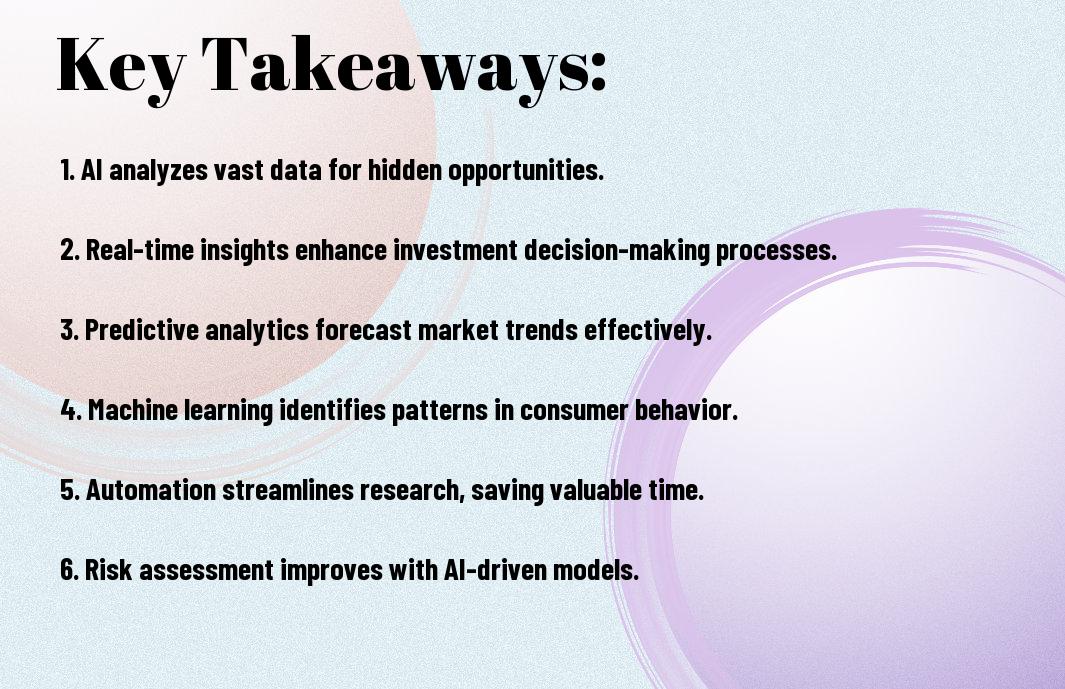
Key Takeaways:

  • Utilizing AI in investment decisions can significantly enhance the ability to identify lucrative business opportunities by analyzing vast amounts of data and recognizing patterns that may not be apparent to human analysts.
  • A key benefit of AI-driven investment strategies is their ability to process and analyze real-time data, allowing for more timely and informed investment decisions that can lead to higher returns.
  • AI can help diversify investment portfolios by identifying opportunities across various sectors and asset classes, reducing reliance on traditional investment avenues and potentially increasing overall portfolio performance.
  • Implementing AI in investment analysis can also help mitigate risks by identifying potential pitfalls and warning signs that may indicate a business or investment is likely to underperform.
  • As AI technology continues to evolve, it is likely to play an increasingly significant role in the investment landscape, making it vital for investors to understand and leverage its capabilities to stay ahead in the market.
The AI Revolution in Investment Analysis

The advent of AI has transformed the investment landscape, enabling you to make informed decisions with unprecedented accuracy. You can now leverage AI-powered tools to analyze vast amounts of data, identify trends, and predict market fluctuations.

Machine Learning Algorithms for Market Prediction

Predictive models are being used to forecast market trends, allowing you to stay ahead of the curve. You can utilize machine learning algorithms to analyze historical data and make informed investment decisions.

Natural Language Processing for Sentiment Analysis

Any investor can benefit from natural language processing, which analyzes market sentiment and provides valuable insights. You can use this technology to gauge public opinion and make informed decisions about your investments.

Plus, with natural language processing, you can analyze large volumes of text data from various sources, including news articles and social media posts, to determine the overall sentiment towards a particular stock or market trend, enabling you to adjust your investment strategy accordingly.

Data-Driven Decision Making

If you’re looking to make informed investment decisions, you can leverage AI to analyze market trends and identify opportunities. You can learn more about 7 Unexpected Ways AI Can Transform Your Investment Strategy to maximize your returns.

Big Data Analytics in Opportunity Identification

Any investment decision you make should be backed by data, and big data analytics can help you identify lucrative opportunities by analyzing market trends and consumer behavior, allowing you to make informed decisions.

Predictive Modeling for Investment Returns

Against the backdrop of market volatility, predictive modeling can help you forecast investment returns and minimize risk, enabling you to make strategic decisions that drive your portfolio’s growth.

Considering the complexity of predictive modeling, you can use machine learning algorithms to analyze historical data and identify patterns that inform your investment strategy, helping you to optimize your portfolio and achieve your financial goals.

AI-Powered Market Research

Many businesses are leveraging AI to gain valuable insights into their target markets, allowing you to make informed decisions about your investments. You can analyze large datasets, identify patterns, and uncover new opportunities with AI-powered market research.

Competitive Intelligence Automation

Alongside this, an added benefit of AI-powered market research is the ability to automate competitive intelligence, enabling you to stay ahead of your competitors and identify gaps in the market that you can capitalize on, tailoring your strategy to your unique strengths.

Trend Forecasting Capabilities

The ability to forecast trends is a key aspect of AI-powered market research, allowing you to anticipate changes in the market and adjust your investments accordingly, giving you a competitive edge and enabling you to make the most of emerging opportunities.

Hence, as you investigate deeper into trend forecasting capabilities, you will discover that AI algorithms can analyze historical data, seasonal fluctuations, and other factors to predict future market trends, enabling you to make informed decisions about your investments and stay ahead of the curve, maximizing your returns and minimizing your risks, allowing you to achieve your financial goals.

Risk Assessment Through Artificial Intelligence

Your investment decisions can be significantly improved by leveraging artificial intelligence (AI) to assess potential risks. AI algorithms can analyze vast amounts of data, identifying patterns and predicting outcomes that may not be apparent to human analysts.

Quantitative Risk Evaluation Models

By utilizing advanced statistical models, you can quantify potential risks and make more informed investment decisions. These models enable you to assess the likelihood and potential impact of various risk factors, allowing you to adjust your strategy accordingly.

Scenario Simulation and Stress Testing

Around the globe, investors are using AI-powered scenario simulation and stress testing to anticipate potential risks and opportunities. This approach enables you to simulate different market scenarios, testing your investment strategy against a range of possible outcomes.

With scenario simulation and stress testing, you can gain a deeper understanding of your investment’s potential vulnerabilities and develop strategies to mitigate them. You can simulate various market conditions, such as economic downturns or regulatory changes, and assess the potential impact on your investment, allowing you to make more informed decisions and minimize potential losses.

Sector-Specific AI Applications

Keep in mind that AI can be applied to various sectors, and understanding these applications is key to making informed investment decisions. You can leverage AI to identify opportunities in industries such as finance, real estate, and healthcare, allowing you to diversify your portfolio and maximize returns.

Fintech Innovations

Above all, fintech innovations are transforming the financial landscape, and you can capitalize on this trend by investing in AI-powered fintech companies that offer innovative solutions for payment processing, lending, and investment management.

Real Estate and Infrastructure Opportunities

Applications of AI in real estate and infrastructure are vast, and you can use AI to analyze market trends, identify lucrative investment opportunities, and optimize property management, enabling you to make data-driven decisions and increase your returns.

Further, as you explore real estate and infrastructure opportunities, you’ll find that AI can help you assess the potential of different projects, from residential and commercial developments to infrastructure initiatives, allowing you to mitigate risks and capitalize on emerging trends, ultimately growing your wealth and securing your financial future.

Implementation Strategies

Unlike traditional investment approaches, using AI to identify lucrative business opportunities requires a thoughtful and multi-step implementation process, allowing you to leverage data-driven insights and maximize your returns, as you navigate the complex landscape of investment opportunities.

Building an AI Investment Framework

Implementing a well-structured AI investment framework enables you to systematically evaluate and prioritize potential investments, using machine learning algorithms to analyze market trends and identify promising opportunities that align with your investment goals and risk tolerance.

Integration with Existing Business Processes

Among the key considerations for successful AI integration is ensuring seamless alignment with your existing business processes, allowing you to efficiently incorporate AI-driven insights into your investment decision-making, and streamline your overall investment strategy, as you work to optimize your portfolio and achieve your financial objectives.

Also, as you integrate AI into your existing business processes, you will be able to automate many routine tasks, freeing up more time for you to focus on higher-level strategic decision-making, and enabling you to respond more quickly to changing market conditions, ultimately giving you a competitive edge in the investment landscape, and allowing you to make more informed, data-driven decisions that drive your long-term success.

To wrap up

With these considerations, you can harness the power of AI to identify lucrative business opportunities, maximizing your returns on investment. By leveraging AI-driven insights, you will make informed decisions, driving your business forward. Your ability to analyze market trends and patterns will enable you to stay ahead of the competition, securing your position in the market and ensuring long-term success for your investments.

FAQ

Q: What is Smart Investment and how can AI help in identifying lucrative business opportunities?

A: Smart Investment refers to the use of advanced technologies, such as Artificial Intelligence (AI), to analyze and identify potentially profitable investment opportunities. AI can help in this process by quickly and efficiently analyzing large amounts of data, identifying patterns, and making predictions about future market trends. This allows investors to make informed decisions and maximize their returns. With AI-powered tools, investors can analyze various factors such as market trends, financial statements, and industry developments to identify lucrative business opportunities that may not be immediately apparent through traditional analysis methods.

Q: How does AI analyze data to identify lucrative business opportunities, and what types of data does it use?

A: AI analyzes data to identify lucrative business opportunities by using machine learning algorithms that can process and analyze large amounts of data from various sources, such as financial reports, market research, social media, and news articles. The AI system can analyze data on factors such as revenue growth, market size, competition, customer demographics, and industry trends. It can also analyze unstructured data, such as social media posts and customer reviews, to gauge market sentiment and identify emerging trends. By analyzing these various data points, AI can identify patterns and correlations that may indicate a lucrative business opportunity, and provide investors with actionable insights to inform their investment decisions.

Q: What are the benefits of using AI to identify lucrative business opportunities, and how can it help investors make better investment decisions?

A: The benefits of using AI to identify lucrative business opportunities include increased efficiency, improved accuracy, and enhanced decision-making capabilities. AI can quickly analyze large amounts of data, identify potential opportunities, and provide investors with real-time insights and recommendations. This can help investors to make more informed decisions, reduce the risk of investment losses, and maximize their returns. Additionally, AI can help investors to diversify their portfolios, identify emerging trends and industries, and stay ahead of the competition. By leveraging AI-powered investment tools, investors can gain a competitive edge in the market and achieve their investment goals more effectively.

The AI-Driven Revolution – New Business Models for the Digital Age

As you navigate the ever-changing landscape of the digital age, you’re likely aware that artificial intelligence (AI) is transforming the way businesses operate. You may be wondering how to leverage AI to drive innovation and stay ahead of the competition. Your organization’s ability to adapt to this shift will be key to its success, and understanding the new business models enabled by AI is vital to making informed decisions about your company’s future. You will learn how to harness AI’s power.

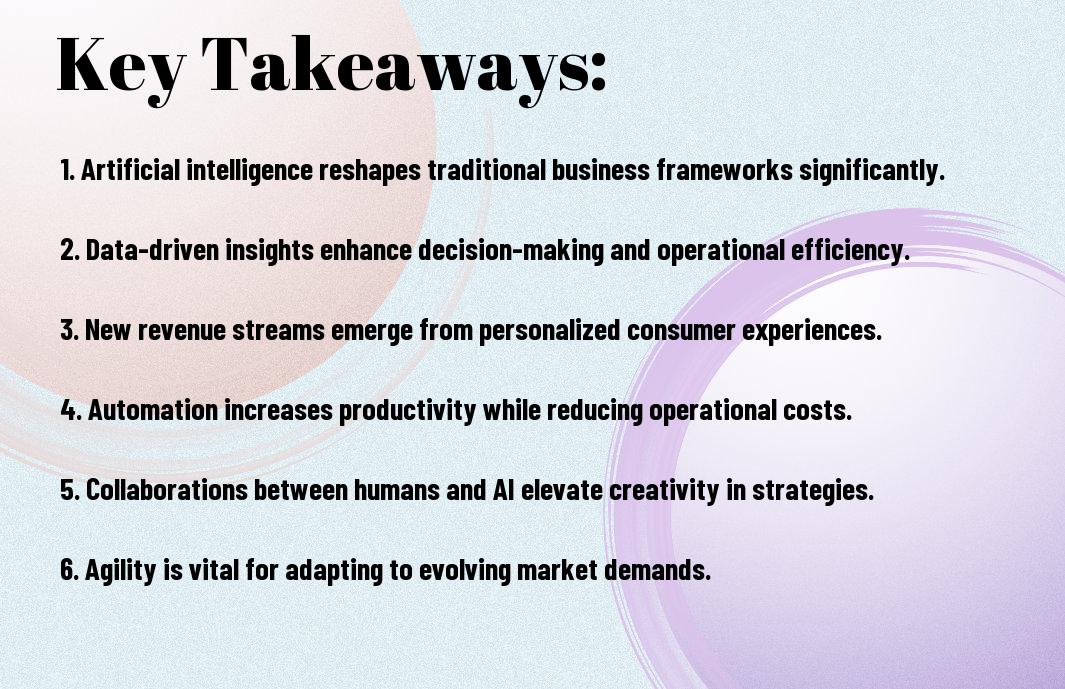
Key Takeaways:

  • The AI-driven revolution is transforming the business landscape by enabling companies to create new business models that are more efficient, agile, and customer-centric, leveraging technologies such as machine learning and natural language processing to drive innovation.
  • Successful companies in the digital age will be those that can harness the power of AI to develop new revenue streams, improve operational efficiency, and enhance customer experiences, thereby gaining a competitive edge in the market.
  • The integration of AI into business operations requires a fundamental shift in organizational culture, with a focus on data-driven decision-making, continuous learning, and collaboration between humans and machines to drive business outcomes.
  • AI-driven business models can take many forms, including subscription-based services, freemium models, and data-as-a-service, allowing companies to monetize their data and intellectual property in new and innovative ways.
  • As AI continues to evolve and improve, companies must prioritize ongoing investment in AI research and development, talent acquisition, and employee upskilling to stay ahead of the curve and capitalize on emerging opportunities in the digital age.

The Strategic Imperative of AI

The advent of AI is transforming the business landscape, and you must adapt to stay competitive. You will need to reassess your business models and strategies to leverage AI’s potential. Your ability to integrate AI into your operations will determine your success in the digital age.

Competitive Advantage Through Algorithmic Decision-Making

Above all, you should focus on developing algorithmic decision-making capabilities to drive your business forward. You can gain a competitive edge by using AI to analyze data, identify patterns, and make informed decisions. Your organization will become more agile and responsive to changing market conditions.

Value Chain Transformation

To fully harness the power of AI, you need to transform your value chain. You should identify areas where AI can streamline processes, improve efficiency, and reduce costs. Your value chain will become more resilient and better equipped to handle the challenges of the digital age.

Another key aspect of value chain transformation is the ability to create new revenue streams and business models. You can use AI to develop innovative products and services that meet the evolving needs of your customers. Your business will become more customer-centric, and you will be able to differentiate yourself from competitors. As you launch on this journey, you will discover new opportunities for growth and expansion.

Five Fundamental Business Models

Now that you’re exploring the AI-driven revolution, you’ll discover new opportunities for growth. You’ll find that these models are designed to help your business thrive in the digital age, leveraging AI to drive innovation and revenue.

AI-as-a-Service Providers

For instance, as you consider AI-as-a-Service providers, you’ll see how they offer scalable solutions, enabling your business to access AI capabilities without significant upfront investments, allowing you to focus on core operations.

Data Monetization Ecosystems

Business leaders like you are turning to data monetization ecosystems, which enable you to unlock the value of your data, creating new revenue streams and driving business growth through strategic partnerships and data-driven insights.

Ecosystems like these allow you to leverage your data assets, creating a competitive advantage in the market. You can develop targeted marketing campaigns, improve customer experiences, and drive innovation, all while maintaining control over your data and ensuring its security and integrity, which is vital for building trust with your customers and partners.

Cost Structure Realignment

Once again, you will need to reassess your business model as AI-driven technologies continue to advance, and this includes reevaluating your cost structure to remain competitive in the digital age.

Fixed to Variable Cost Shifting

Fixing your costs to variable expenses allows you to adapt to changing market conditions, and you can achieve this by adopting AI-driven solutions that reduce your fixed costs and increase your variable costs, enabling your business to scale more efficiently.

Scalability Economics

At the heart of AI-driven business models is the ability to scale quickly and efficiently, and you can achieve this by leveraging AI technologies that enable your business to grow without a corresponding increase in costs, allowing you to reap the benefits of scalability economics.

Realignment of your cost structure to take advantage of scalability economics will enable you to reduce your costs per unit as your business grows, and you can achieve this by investing in AI-driven technologies that automate processes, improve efficiency, and enable your business to scale quickly and efficiently, allowing you to stay competitive in the digital age and increase your profitability.

Market Entry Strategies

To succeed in the AI-driven revolution, you need to develop effective market entry strategies that set your business up for success. Your approach will depend on your goals, resources, and target market.

First-Mover Positioning

Entering a new market first can give you a competitive edge, allowing you to establish your brand and capture market share before others follow. Your early mover advantage can help you shape the market and influence consumer behavior.

Strategic Partnerships and Acquisitions

On the other hand, forming strategic partnerships or acquiring existing businesses can provide a faster and more cost-effective way to enter a new market. Your partnerships can bring new technologies, expertise, and customer bases to your business.

But as you explore strategic partnerships and acquisitions, you should carefully evaluate the potential benefits and risks, considering factors such as cultural fit, financial performance, and regulatory compliance. You will need to assess how these partnerships and acquisitions align with your overall business strategy and goals, and ensure that you have the necessary resources and expertise to integrate them successfully into your operations.

Organizational Architecture

After establishing your AI-driven business model, you need to design an organizational architecture that supports its implementation, enabling you to leverage technology and data to drive growth and innovation, and you must consider how your organization’s structure and processes will be impacted.

Talent Requirements and Knowledge Management

To effectively manage your AI-driven business, you will need to assess your talent requirements and develop a knowledge management strategy that ensures your team has the necessary skills and expertise to succeed in the digital age, and you should prioritize ongoing learning and development.

Governance Frameworks

Above all, you must establish governance frameworks that ensure accountability, transparency, and ethics in your AI-driven decision-making processes, and you should define clear roles and responsibilities for your team members, and you will need to establish a framework that ensures compliance with regulatory requirements.

Knowledge of governance frameworks is necessary for you to develop a comprehensive approach to managing your AI-driven business, and you should consider factors such as data privacy, security, and intellectual property protection when designing your governance framework, and you must ensure that your framework is flexible and adaptable to evolving regulatory requirements and technological advancements.

Measuring AI-Driven Performance

Unlike traditional business models, AI-driven performance requires a new set of metrics. You can learn more about How the Rise of AI Drives New Business Models and discover the latest trends in AI adoption.

Key Performance Indicators

Monitoring your AI-driven performance involves tracking key metrics that matter to your business. You will need to identify the most relevant indicators to measure the success of your AI initiatives.

Return on AI Investment Metrics

For your AI investments to pay off, you need to measure their impact on your bottom line. You should focus on metrics that show the direct financial benefits of your AI initiatives.

In addition, to get the most out of your AI investments, you will need to consider metrics such as customer acquisition costs, customer lifetime value, and revenue growth, which can help you evaluate the effectiveness of your AI-driven business models and make data-driven decisions to optimize your strategies.

Conclusion

So, as you commence on this journey of the AI-driven revolution, you will discover new business models that transform your operations and unlock unprecedented opportunities. You will leverage AI to create innovative products, services, and experiences that meet evolving customer needs. By embracing this digital age, you will stay ahead of the curve and drive your business forward, leveraging the power of AI to achieve your goals and succeed in a rapidly changing landscape. Your ability to adapt will be key to your success.

FAQ

Q: What is the main driving force behind the AI-driven revolution in the digital age?

A: The main driving force behind the AI-driven revolution is the rapid advancement and accessibility of artificial intelligence technologies. This has enabled businesses to leverage AI to automate processes, enhance customer experiences, and develop new business models that were previously unimaginable. As AI continues to evolve, it is transforming industries and creating new opportunities for innovation and growth.

Q: How are new business models emerging in the digital age as a result of AI-driven revolution?

A: New business models are emerging in various forms, including subscription-based services, data-as-a-service, and platform-based economies. For instance, companies are using AI to offer personalized products and services, creating new revenue streams and disrupting traditional industries. Additionally, AI-driven automation is enabling businesses to reduce costs and improve efficiency, allowing them to focus on high-value tasks and create new business opportunities. The AI-driven revolution is also giving rise to new forms of entrepreneurship and innovation, as startups and established companies alike are using AI to develop novel solutions and business models.

Q: What skills and strategies do businesses need to adopt to thrive in the AI-driven digital age?

A: To thrive in the AI-driven digital age, businesses need to adopt a range of skills and strategies. These include developing a deep understanding of AI technologies and their applications, investing in data analytics and digital infrastructure, and fostering a culture of innovation and experimentation. Businesses also need to develop strategies for managing and mitigating the risks associated with AI, such as job displacement and bias in decision-making. Furthermore, they need to prioritize continuous learning and upskilling, as the AI-driven revolution is creating new job categories and requiring workers to develop new skills to remain relevant in the digital economy.

Bridging the Gap – How AI Merges Traditional Entrepreneurship with Modern Tech

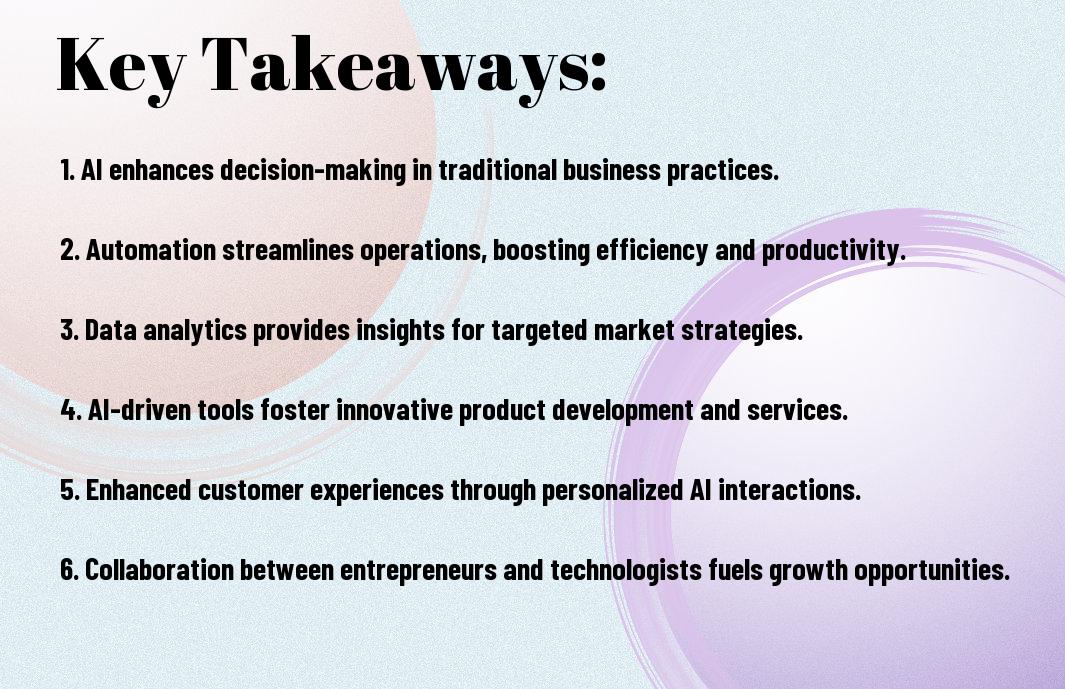
As you navigate the ever-evolving landscape of entrepreneurship, you’re likely aware of the growing intersection of traditional business practices and modern technology. You may be wondering how to effectively merge these two worlds to drive innovation and success. Your ability to adapt and leverage artificial intelligence (AI) will be key to staying ahead of the curve, and this post will explore the ways in which AI is revolutionizing traditional entrepreneurship, enabling you to make informed decisions about your own business strategy.

Key Takeaways:

  • Combining traditional entrepreneurship principles with modern AI technology can lead to innovative business models and increased efficiency, allowing entrepreneurs to stay competitive in a rapidly changing market.
  • AI-driven tools can automate routine tasks, freeing up entrepreneurs to focus on high-level strategy and creative problem-solving, enabling them to make more informed decisions and drive business growth.
  • The integration of AI in traditional entrepreneurship can also enhance customer experience, providing personalized services and improving customer engagement through data-driven insights and predictive analytics.
  • Entrepreneurs who effectively merge traditional entrepreneurship with AI technology can gain a significant advantage over their competitors, driving innovation and disrupting industries with new and innovative products or services.
  • The future of entrepreneurship will likely involve a seamless blend of human intuition and AI-driven insights, requiring entrepreneurs to develop a deep understanding of both traditional business principles and modern AI technologies to succeed.

    The Evolution of Entrepreneurship

    A look at the history of entrepreneurship shows that it has undergone significant transformations over the years, shaping the business landscape into what you see today, with various factors contributing to its growth and development, ultimately leading to the incorporation of modern technologies.

    Traditional Business Models

    By examining the past, you can see that traditional business models were often limited by their geographical location and market reach, restricting your ability to expand and connect with a broader audience, which in turn hindered your potential for growth and success.

    The Digital Revolution

    Digitally, the world has become more interconnected, allowing you to access a global market and leverage technology to streamline your business operations, making it easier for you to manage and scale your enterprise, and this shift has significantly impacted the way you approach entrepreneurship.

    Due to the advancements in technology and the rise of the digital age, you now have the opportunity to harness the power of artificial intelligence, data analytics, and other digital tools to drive innovation and stay competitive in the market, enabling you to make informed decisions and adapt to changing consumer needs and preferences, which is imperative for your business to thrive in today’s fast-paced environment.

    AI as the Bridge

    While navigating the intersection of traditional entrepreneurship and modern tech, you’ll find that AI plays a significant role in merging these two worlds, enabling you to leverage the best of both.

    Cognitive Tools for Ancient Problems

    Toward solving long-standing business challenges, you can utilize AI-powered cognitive tools that offer innovative solutions, allowing you to tackle complex issues with ease and efficiency, thereby enhancing your entrepreneurial endeavors.

    Algorithmic Decision-Making

    To make informed decisions, you can rely on algorithmic processes that analyze vast amounts of data, providing you with valuable insights that inform your business strategy and drive growth.

    This ability to make data-driven decisions is particularly significant, as it enables you to optimize your operations, mitigate risks, and capitalize on new opportunities, ultimately giving you a competitive edge in the market and allowing you to stay ahead of the curve in your industry, with your business reaping the benefits of AI-driven decision-making.

    The Human Element Preserved

    Despite the rise of AI, you can still maintain the human touch in your entrepreneurship endeavors. As you explore the possibilities of AI, consider reading about Bridging the execution gap – why AI is the new frontier for corporate strategy to understand how AI merges with traditional entrepreneurship.

    Intuition Meets Data

    Beneath the surface of AI-driven decision-making, you’ll find that your intuition still plays a significant role. As you navigate the intersection of human insight and machine learning, you’ll discover new ways to inform your business strategy.

    Values in the Machine Age

    Essentially, you’ll need to consider the values that drive your business in the age of AI. Your approach to ethics, transparency, and accountability will be more important than ever as you integrate AI into your operations.

    And as you probe deeper into the world of AI, you’ll find that your values are not only preserved but also amplified. You’ll have the opportunity to create a business that is more responsive, more responsible, and more aligned with your vision, allowing you to build a stronger connection with your customers and community.

    Implementation Strategies

    All successful entrepreneurs know that integrating AI into their business requires a well-thought-out plan. You need to consider your goals, resources, and current infrastructure to ensure a seamless transition. Your implementation strategy will serve as a roadmap, guiding you through the process and helping you avoid potential pitfalls.

    Gradual Integration Methods

    Implementing AI solutions gradually allows you to test and refine your approach as you go. You can start by automating simple tasks and then move on to more complex processes, ensuring that your systems and workforce are adapted to the new technology. Your business will benefit from a phased introduction of AI, minimizing disruptions and maximizing efficiency.

    Workforce Adaptation

    Before introducing AI to your business, you should assess your workforce’s readiness for the change. You need to consider the skills and training required for your employees to work effectively with AI systems. Your goal is to create a workforce that is not only comfortable with the new technology but also able to leverage its capabilities to drive innovation and growth.

    Methods for adapting your workforce to AI-driven systems include providing comprehensive training programs, encouraging a culture of innovation, and fostering a mindset of continuous learning. You can also consider hiring professionals with expertise in AI and machine learning to help guide your team through the transition. By investing in your workforce, you will be able to unlock the full potential of AI and drive long-term success for your business.

    Economic Implications

    Once again, you will notice that the integration of AI in traditional entrepreneurship has significant effects on the economy, transforming the way you conduct business and make financial decisions.

    Productivity Paradoxes

    Profitably, you can increase efficiency and output with AI, but this may also lead to job displacement and changes in your workforce dynamics.

    New Market Formations

    Any analysis of AI’s impact on your business will show that new market opportunities emerge, allowing you to expand your customer base and develop innovative products.

    Understanding the dynamics of these new markets is key to your success, as you will need to adapt your strategies to meet the evolving needs and preferences of your customers, and stay ahead of the competition in an increasingly tech-driven landscape.

    Ethical Considerations

    Not all AI applications are created equal, and as you begin on merging traditional entrepreneurship with modern tech, you must consider the ethical implications of your actions.

    Bias in Automated Systems

    The transparency of AI decision-making processes is crucial to identify and mitigate biases, and as you develop your AI-powered business, you should be aware of the potential for biased automated systems.

    Governance Frameworks

    For your AI-driven venture to succeed, you need to establish governance frameworks that ensure accountability and fairness, and you should prioritize the development of these frameworks from the outset.

    Frameworks like these will help you navigate the complex ethical landscape of AI and ensure that your business is aligned with your values and the values of your customers, allowing you to build trust and maintain a competitive edge in the market, and as you move forward, you will be able to adapt these frameworks to meet the evolving needs of your business and the regulatory environment.

    Conclusion

    Considering all points, you now understand how AI merges traditional entrepreneurship with modern tech, transforming your business. You can leverage AI to streamline operations, enhance decision-making, and drive innovation. By embracing this synergy, you will stay ahead of the curve, unlocking new opportunities and maximizing your potential in the ever-evolving entrepreneurial landscape, making your venture more efficient and competitive.

    FAQ

    Q: What is the main goal of bridging the gap between traditional entrepreneurship and modern technology?

    A: The primary objective of merging traditional entrepreneurship with modern tech is to leverage the strengths of both worlds, creating a harmonious blend of innovative ideas, cutting-edge technology, and time-tested business principles. By doing so, entrepreneurs can tap into new markets, streamline operations, and stay competitive in an ever-evolving business landscape. This integration enables businesses to adapt to changing consumer behaviors, improve customer experiences, and drive sustainable growth.

    Q: How can artificial intelligence (AI) enhance traditional entrepreneurial ventures?

    A: AI can significantly enhance traditional entrepreneurial ventures by automating routine tasks, providing data-driven insights, and enabling predictive decision-making. AI-powered tools can help entrepreneurs identify new business opportunities, optimize supply chains, and personalize customer interactions. Moreover, AI-driven analytics can facilitate market research, competitor analysis, and financial forecasting, allowing entrepreneurs to make informed decisions and mitigate risks. By embracing AI, traditional businesses can become more agile, efficient, and responsive to changing market conditions.

    Q: What skills do entrepreneurs need to acquire to successfully merge traditional entrepreneurship with modern technology?

    A: To successfully bridge the gap between traditional entrepreneurship and modern tech, entrepreneurs need to acquire a combination of skills, including digital literacy, data analysis, and strategic thinking. They should be familiar with emerging technologies like AI, blockchain, and the Internet of Things (IoT), and understand how to leverage these technologies to drive business growth. Additionally, entrepreneurs need to develop soft skills like adaptability, creativity, and collaboration to effectively work with cross-functional teams, including data scientists, software developers, and designers. By acquiring these skills, entrepreneurs can navigate the complexities of modern tech and create innovative, tech-enabled businesses that thrive in today’s fast-paced economy.

Decoding the AI Startup Ecosystem – Trends, Challenges, and Opportunities

As you navigate the rapidly evolving landscape of artificial intelligence, you’re likely aware of the significant impact AI startups are having on the industry. Your interest in this space is well-timed, as the AI startup ecosystem is experiencing unprecedented growth. You’re about to explore a world of innovative technologies, emerging trends, and untapped opportunities, where you’ll discover the challenges and successes of AI startups and how they’re reshaping the future of business and technology, with your understanding of this ecosystem being key to unlocking new possibilities.

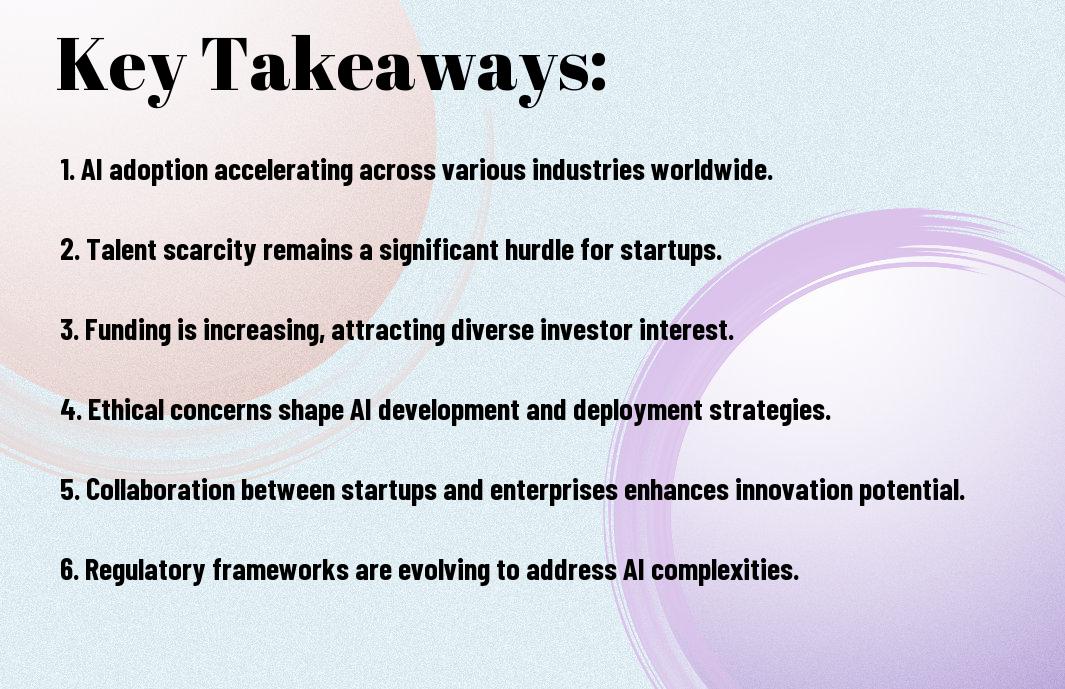
Key Takeaways:

  • The AI startup ecosystem is rapidly evolving, with increasing investments and innovations in areas such as natural language processing, computer vision, and predictive analytics, leading to new opportunities for growth and development.
  • One of the significant challenges faced by AI startups is the shortage of skilled talent, particularly in areas like machine learning and deep learning, which can hinder their ability to develop and implement effective AI solutions.
  • AI startups are leveraging emerging technologies like edge AI, explainable AI, and transfer learning to improve the efficiency, transparency, and adaptability of their AI models, enabling them to tackle complex real-world problems.
  • Collaboration and partnerships between AI startups, academia, and industry players are crucial for driving innovation, validating AI solutions, and addressing ethical concerns related to AI development and deployment.
  • The AI startup ecosystem is expected to continue growing, with potential applications in various industries, including healthcare, finance, and education, offering numerous opportunities for entrepreneurs, investors, and professionals to shape the future of AI and its impact on society.

The Current AI Startup Landscape

The AI startup landscape is evolving rapidly, with new innovations and investments emerging daily, and you are likely to see significant changes in the coming years as you navigate this space.

Market Segments and Concentration

Any analysis of the AI startup ecosystem will show you that it is divided into various segments, including natural language processing, computer vision, and predictive analytics, and you will notice that some of these segments are more concentrated than others.

Regional Distribution and Hubs

On observing the global AI startup landscape, you will find that certain regions have emerged as hubs for AI innovation, with cities like San Francisco, New York, and London leading the way, and you can explore these hubs to discover new opportunities.

Plus, as you investigate deeper into the regional distribution of AI startups, you will notice that governments and private organizations are investing heavily in creating AI-friendly ecosystems, providing you with access to resources, funding, and talent, which can help you succeed in this field.

Investment Patterns

You will notice that investment patterns in the AI startup ecosystem are evolving rapidly, with new trends and opportunities emerging every year, and as you explore this space, you will find that understanding these patterns is key to making informed decisions.

Venture Capital Flows

Against the backdrop of a rapidly changing landscape, venture capital flows into AI startups have increased significantly, and as you analyze these flows, you will see that they are driving innovation and growth in the sector.

Corporate Investment Strategies

Around the world, corporations are developing investment strategies that focus on AI, and as you consider your own approach, you will find that partnering with AI startups can be a key way to drive innovation and stay ahead of the curve.

Also, as you explore deeper into corporate investment strategies, you will discover that many companies are setting up dedicated AI investment funds, and you may want to consider how this approach could work for your own organization, allowing you to tap into the latest AI advancements and apply them to your business.

Technical Foundations

Despite the complexity of AI startups, understanding their technical foundations is vital for you to navigate this ecosystem. You need to grasp the underlying technologies and infrastructure that drive these startups forward.

Core Technologies Driving Growth

Gaining momentum in AI startups is often fueled by advancements in machine learning, natural language processing, and computer vision. You will notice that these technologies are driving innovation and growth in the industry, enabling you to develop more sophisticated solutions.

Infrastructure Requirements

Technologies such as cloud computing, data storage, and high-performance computing are necessary for you to support the development and deployment of AI models. You must consider these infrastructure requirements to ensure your AI startup can scale and perform efficiently.

Driving the success of your AI startup is heavily dependent on the infrastructure you put in place. You will need to consider factors such as data storage, processing power, and security to ensure your AI models can operate effectively. By understanding these infrastructure requirements, you can make informed decisions about your startup’s technical foundation and set yourself up for success in the competitive AI landscape.

Business Models

Keep in mind that AI startups often employ innovative business models, focusing on data-driven services and subscription-based offerings, allowing you to generate revenue through scalable and recurring payments.

Monetization Approaches

To maximize your revenue potential, you can explore various monetization approaches, such as freemium models, advertising, and data licensing, each with its own advantages and challenges that you need to consider.

Customer Acquisition Strategies

With a solid understanding of your target market, you can develop effective customer acquisition strategies, leveraging social media, content marketing, and partnerships to reach your audience and drive growth.

Further, as you refine your customer acquisition strategies, you will find that personalization and user experience play a significant role in converting leads into loyal customers, and you can achieve this by leveraging AI-driven insights to tailor your offerings and interactions to meet the unique needs of your clients.

Competitive Dynamics

Once again, you find yourself navigating the complex AI startup ecosystem, where competition is fierce and trends are constantly evolving, shaping your understanding of the landscape and informing your strategic decisions.

Established Players vs. Newcomers

Among the key factors influencing your success are the dynamics between established players and newcomers, as you consider how to position your own startup for growth and innovation in a crowded market.

Consolidation Trends

Between the lines of industry reports and market analyses, you notice a shift towards consolidation, as larger companies acquire or partner with smaller startups, impacting your own business strategy and potential for partnerships or acquisitions.

Dynamics of consolidation trends suggest that you will need to be adaptable and open to collaborations or acquisitions, as the AI startup ecosystem continues to evolve, and you must consider how these trends will affect your business model and competitive edge, ultimately informing your decisions as you navigate this complex landscape.

Regulatory Environment

Unlike other industries, the AI startup ecosystem operates in a complex regulatory environment that is still evolving. You need to understand the current landscape to navigate your business successfully.

Current Frameworks

Along with existing laws, you will find that various frameworks govern AI development and deployment, influencing your decisions as you build your startup.

Emerging Policy Directions

Against the backdrop of rapid AI advancements, you are likely to see new policy directions emerging, which will impact your business and require adaptability.

Plus, as you examine deeper into emerging policy directions, you will discover that governments are focusing on creating regulations that balance innovation with accountability, and you will need to stay informed to ensure your startup complies with these new guidelines, ultimately shaping your strategy and growth in the AI startup ecosystem.

To wrap up

Considering all points, you now have a comprehensive understanding of the AI startup ecosystem. You can identify trends, challenges, and opportunities that will inform your decisions. With this knowledge, you can navigate the landscape and make informed choices about your investments, partnerships, and strategies. Your grasp of the ecosystem will enable you to capitalize on emerging trends and overcome obstacles, ultimately driving your success in the AI startup space.

FAQ

Q: What are the current trends in the AI startup ecosystem, and how are they shaping the industry?

A: The AI startup ecosystem is currently witnessing significant trends such as the increasing adoption of deep learning, natural language processing, and computer vision. These trends are shaping the industry by enabling startups to develop more sophisticated AI-powered solutions, improving efficiency, and driving innovation. Additionally, the rise of edge AI, explainable AI, and AI for social good are also gaining traction, offering new opportunities for startups to make a positive impact. As the ecosystem continues to evolve, we can expect to see more startups leveraging these trends to create cutting-edge AI solutions that transform various sectors, including healthcare, finance, and education.

Q: What are the major challenges faced by AI startups, and how can they overcome them to achieve success?

A: AI startups face several challenges, including accessing high-quality data, attracting and retaining top talent, and navigating complex regulatory environments. To overcome these challenges, startups can focus on building strong partnerships with data providers, investing in employee development and retention strategies, and engaging with regulatory bodies to shape policies that support AI innovation. Furthermore, startups can also leverage cloud-based infrastructure, open-source tools, and collaborative communities to reduce costs, improve efficiency, and stay up-to-date with the latest advancements in AI research and development. By addressing these challenges proactively, AI startups can position themselves for success and drive growth in the ecosystem.

Q: What opportunities exist for AI startups to create social impact, and how can they balance business goals with social responsibility?

A: AI startups have numerous opportunities to create social impact by developing solutions that address pressing global challenges, such as climate change, healthcare disparities, and education inequality. To balance business goals with social responsibility, startups can prioritize transparency, accountability, and ethics in their AI development and deployment practices. This includes ensuring that AI systems are fair, unbiased, and respectful of human rights, as well as engaging with stakeholders to understand the potential social implications of their technologies. By embracing social responsibility and prioritizing positive impact, AI startups can not only drive business success but also contribute to a more equitable and sustainable future for all, while maintaining a strong reputation and building trust with customers, investors, and the broader community.

The Art of Pivoting – How AI Helps Entrepreneurs Adapt and Thrive

As you navigate the ever-changing landscape of entrepreneurship, your ability to adapt and pivot is key to success. You face numerous challenges, from shifting market trends to unexpected setbacks, and your capacity to respond effectively is vital. With the help of artificial intelligence (AI), you can now analyze data, identify patterns, and make informed decisions to drive your business forward, allowing you to stay ahead of the curve and thrive in a competitive environment.

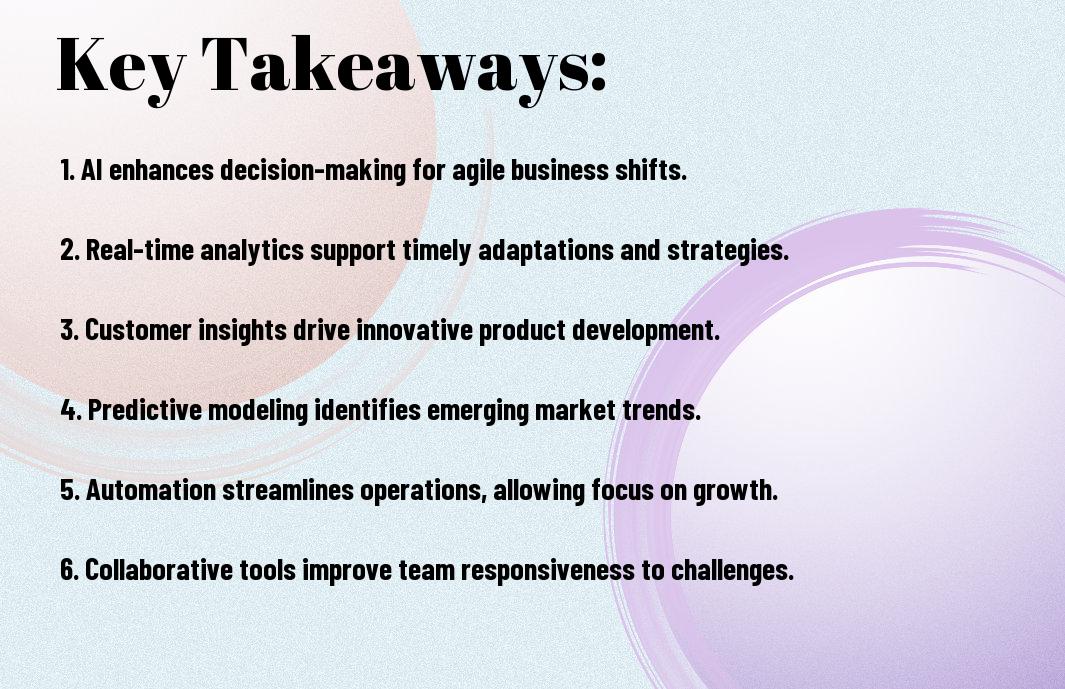
Key Takeaways:

  • The ability to pivot is a key factor in an entrepreneur’s success, and AI can play a significant role in identifying opportunities for adaptation and guiding the pivot process.
  • AI-powered tools can help entrepreneurs analyze market trends, customer behavior, and competitor activity, providing valuable insights that inform pivot decisions.
  • By leveraging AI-driven data analysis, entrepreneurs can test and validate new ideas quickly, reducing the risk associated with pivoting and increasing the likelihood of success.
  • AI can also facilitate communication and collaboration among team members, stakeholders, and customers, ensuring a smooth transition during a pivot and maintaining trust and support.
  • Embracing AI as a pivot enabler can give entrepreneurs a competitive edge, allowing them to respond rapidly to changing market conditions and stay ahead of the competition in a rapidly evolving business landscape.

    The Entrepreneurial Crossroads

    For entrepreneurs, navigating the ever-changing business landscape can be daunting, and you often find yourself at a crossroads, unsure of which path to take. Your ability to adapt and pivot will determine your success, and AI can be a valuable tool in this process.

    Recognizing Market Shifts

    Upon closer examination of your industry, you’ll notice subtle changes in market trends and consumer behavior, signaling a need to adjust your strategy. Your awareness of these shifts will enable you to make informed decisions and stay ahead of the competition.

    The Cost of Standing Still

    For your business to thrive, you must be willing to evolve and innovate, as standing still can lead to stagnation and decline. Your competitors are likely leveraging AI to drive growth, and you must consider the potential consequences of not doing the same.

    Market conditions are constantly evolving, and your failure to adapt can result in lost opportunities and revenue. You must be proactive in assessing your business and making adjustments as needed, using AI to inform your decisions and drive innovation, ultimately ensuring your long-term success.

    AI as the Modern Compass

    Any entrepreneur knows that navigating the business landscape can be challenging. AI serves as your guide, providing valuable insights to inform your decisions and drive growth.

    Predictive Analytics for Decision-Making

    Decisively, you can leverage AI-powered predictive analytics to make informed choices, anticipating market trends and optimizing your strategy for success.

    Competitive Intelligence Systems

    After implementing AI-driven competitive intelligence systems, you gain a deeper understanding of your market and competitors, enabling you to stay ahead of the curve.

    In addition, these systems allow you to analyze large amounts of data, identifying patterns and trends that might otherwise go unnoticed, and providing you with a competitive edge in your industry, enabling you to make strategic decisions and drive your business forward.

    Strategic Pivot Frameworks

    Not all pivots are created equal, and having a framework in place can help you navigate the process with ease, ensuring your business stays on track and adapts to changing market conditions.

    The 70/30 Principle

    Beneath the surface of a successful pivot lies a careful balance of resources, with 70% dedicated to core operations and 30% allocated to exploration and innovation, allowing you to test new ideas without jeopardizing your existing business.

    Minimum Viable Pivot

    Across various industries, entrepreneurs have found success by implementing a minimum viable pivot, which involves making small, incremental changes to your business model or product, allowing you to test and refine your approach before making larger investments.

    To execute a minimum viable pivot, you’ll need to identify areas of your business that are ripe for innovation, and then make targeted adjustments, gathering feedback and data to inform your next steps, this approach enables you to mitigate risk while still driving growth and innovation in your business, allowing you to stay agile and responsive to changing market conditions, and ultimately, achieve your goals.

    Technology Integration Points

    Keep in mind that integrating AI into your business operations can be a game-changer, allowing you to adapt and thrive in a rapidly changing market, and it’s imperative to identify the right technology integration points to maximize your benefits.

    Customer Feedback Automation

    Alongside your existing systems, you can leverage AI to automate customer feedback, enabling you to gather and analyze data more efficiently, and make informed decisions to improve your products and services, which will help you to better serve your customers and stay ahead of the competition.

    Rapid Prototype Testing

    Following your initial idea, you can utilize AI to rapidly test and validate your prototypes, allowing you to refine your products and services, and get them to market faster, which will give you a competitive edge and help you to achieve your business goals.

    It is worth noting that rapid prototype testing with AI enables you to simulate various scenarios, anticipate potential pitfalls, and make data-driven decisions, which will help you to de-risk your product development process and ensure that your final product meets your customers’ needs and expectations, allowing you to achieve greater success and growth in your business.

    Resource Reallocation

    Now that you’ve identified areas for improvement, it’s time to reallocate your resources. You can use AI to analyze your budget, talent, and operations to determine the best course of action. By leveraging AI-driven insights, you can make data-driven decisions to optimize your resources and drive growth.

    AI-Driven Budget Optimization

    About your budget, AI can help you identify areas of inefficiency and provide recommendations for optimization. You can use AI tools to analyze your spending patterns, identify trends, and make predictions about future expenses, allowing you to make informed decisions about your budget.

    Talent Redistribution Models

    Redistributing your talent effectively is key to successful pivoting. You can use AI to analyze your team’s skills and strengths, and identify areas where they can be better utilized. By doing so, you can ensure that your talent is being used efficiently and effectively.

    Considering your talent redistribution models, you can use AI to identify skills gaps and provide training recommendations to upskill your team. You can also use AI to analyze your team’s workload and identify areas where automation or outsourcing may be beneficial, allowing you to free up resources and focus on high-priority tasks. By leveraging AI-driven talent redistribution models, you can optimize your team’s performance and drive business growth.

    Measuring Pivot Success

    Your ability to measure the success of your pivot is necessary to understanding its impact on your business. You need to track key metrics to determine whether your pivot is working or if you need to make further adjustments.

    Key Performance Indicators

    Successfully identifying the right metrics is vital to evaluating your pivot’s effectiveness. You will need to monitor metrics such as revenue growth, customer acquisition, and retention rates to gauge the success of your pivot.

    Iteration Timelines

    Prior to establishing a timeline for your pivot, you should consider the complexity of the changes you are making and the resources required to implement them. You will need to set realistic deadlines and milestones to ensure a smooth transition.

    But as you work through your iteration timelines, you will likely encounter unexpected challenges and setbacks. You should be prepared to adapt your timeline as needed, and prioritize open communication with your team and stakeholders to ensure everyone is aligned with the revised plan, allowing you to adjust your strategy and make data-driven decisions to drive your business forward.

    Summing up

    On the whole, you now understand how AI helps your business adapt to changing circumstances. You can leverage AI to analyze your market, identify areas for improvement, and make data-driven decisions to pivot your strategy. By embracing AI, you can stay ahead of the competition and drive your business forward, increasing your chances of success in an ever-changing entrepreneurial landscape, and ultimately, achieving your goals with your adapted business strategy.

    FAQ

    Q: What is the concept of pivoting in entrepreneurship and how does AI play a role in it?

    A: The concept of pivoting in entrepreneurship refers to the ability of a business to adjust its strategy, product, or service in response to changes in the market, customer needs, or other external factors. AI helps entrepreneurs adapt and thrive by providing them with data-driven insights and predictive analytics, enabling them to make informed decisions about when and how to pivot. With AI-powered tools, entrepreneurs can analyze market trends, customer behavior, and competitor activity, identifying opportunities to pivot and stay ahead of the competition.

    Q: How can AI assist entrepreneurs in identifying areas where they need to pivot their business strategy?

    A: AI can assist entrepreneurs in identifying areas where they need to pivot their business strategy by analyzing large amounts of data from various sources, such as social media, customer feedback, and market research. AI-powered tools can help entrepreneurs identify patterns and trends that may indicate a need to pivot, such as declining sales, changing customer preferences, or emerging competitors. Additionally, AI can provide entrepreneurs with recommendations for potential pivot strategies based on industry benchmarks, best practices, and successful case studies.

    Q: What are some examples of how AI has helped entrepreneurs successfully pivot their businesses and achieve success?

    A: There are many examples of how AI has helped entrepreneurs successfully pivot their businesses and achieve success. For instance, AI-powered chatbots have enabled companies to pivot from traditional customer support models to more efficient and personalized online support systems. Similarly, AI-driven market analysis has helped entrepreneurs identify new business opportunities and pivot their product or service offerings to meet emerging customer needs. Furthermore, AI-powered predictive analytics has enabled entrepreneurs to anticipate and prepare for potential disruptions, such as changes in market trends or unexpected competitor activity, allowing them to pivot their strategy and stay ahead of the competition.

Skip to content