AI

The Wealth-Building Power of AI – Transformative Strategies for Entrepreneurs

As you navigate the ever-evolving landscape of entrepreneurship, you’re likely aware of the immense potential of Artificial Intelligence (AI) to propel your business forward. You’re on the cusp of unlocking new opportunities for growth, and AI can be the key to unlocking your wealth-building aspirations. Your ability to harness the power of AI will be the driving force behind your success, and this post will guide you in exploring transformative strategies to leverage AI and take your business to the next level.

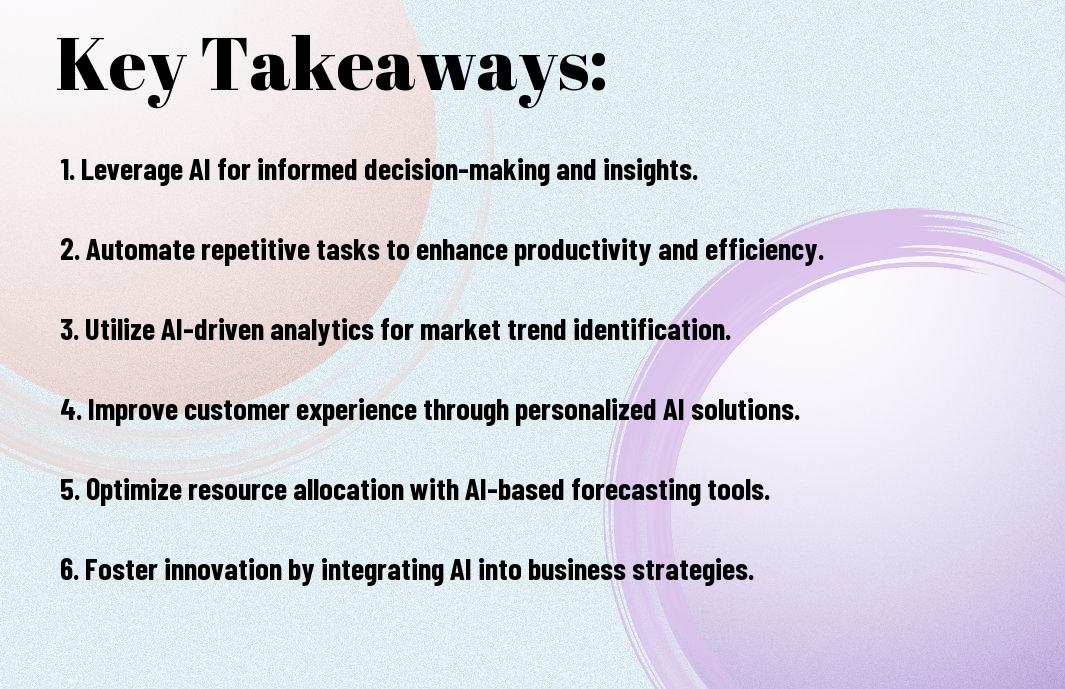
Key Takeaways:

  • Leveraging AI can significantly enhance business operations, allowing entrepreneurs to streamline processes, increase efficiency, and make data-driven decisions to drive growth and profitability.
  • AI-powered tools and technologies can help entrepreneurs identify new market opportunities, develop innovative products and services, and create personalized customer experiences that foster loyalty and retention.
  • By embracing AI and developing a strategic approach to its implementation, entrepreneurs can gain a competitive edge, drive long-term success, and build sustainable wealth in an increasingly complex and technology-driven business landscape.

    AI Fundamentals for Entrepreneurs

    Before plunging into the wealth-building power of AI, you need to understand the basics. You’ll learn how AI can transform your business and help you make informed decisions.

    Machine Learning Capabilities

    Mechanisms like machine learning enable your business to analyze data, identify patterns, and make predictions. You can leverage these capabilities to automate tasks and gain a competitive edge.

    Predictive Analytics Applications

    Any entrepreneur can benefit from predictive analytics, which helps you forecast trends and make data-driven decisions. You can use predictive analytics to optimize your operations and improve your bottom line.

    Also, as you explore predictive analytics applications, you’ll discover how to use data and statistical models to predict customer behavior, preferences, and needs. You can then use this information to develop targeted marketing campaigns, improve customer satisfaction, and increase your revenue. By leveraging predictive analytics, you can gain a deeper understanding of your business and make informed decisions to drive growth and success.
    Revenue Amplification Through AI

    While leveraging AI, you can significantly boost your revenue streams by identifying new opportunities and optimizing existing ones, allowing you to make data-driven decisions that drive growth and increase your bottom line.

    Customer Acquisition Optimization

    Around the clock, you can utilize AI to analyze customer behavior, preferences, and demographics, enabling you to create targeted marketing campaigns that attract high-value customers and maximize your return on investment.

    Pricing Strategy Automation

    Beside other benefits, AI-driven pricing strategies can help you adjust prices in real-time based on market conditions, demand, and competition, ensuring you stay competitive and profitable in a rapidly changing market.

    Pricing is a key aspect of your business, and with AI, you can automate and optimize your pricing strategy to respond to changing market conditions, ensuring you’re always charging the optimal price for your products or services, and thereby maximizing your revenue and profitability, as you navigate the complexities of the market, you can trust AI to help you make informed decisions that drive your business forward.

    Operational Efficiency Revolution

    Your business can benefit from AI-powered solutions, as seen in # The Power of AI: Transforming Businesses and Creating Wealth, to streamline processes and increase productivity.

    Workflow Automation Systems

    Systems like machine learning algorithms can automate repetitive tasks, freeing up your time to focus on high-priority tasks and decision-making.

    Resource Allocation Intelligence

    Revolutionizing your resource allocation with AI can help you make data-driven decisions and optimize your business operations.

    Indeed, by leveraging AI-driven resource allocation, you can identify areas of inefficiency and make adjustments to maximize your returns, allowing you to allocate your resources more effectively and drive business growth.

    Market Analysis Supremacy

    Once again, you find yourself at the forefront of innovation, leveraging AI to dominate the market. By harnessing its power, you can uncover hidden opportunities, anticipate shifts, and make informed decisions to propel your business forward.

    Competitive Intelligence Gathering

    Alongside your growth strategy, you’ll need to gather intelligence on your competitors, and AI can help you do just that. You can analyze their strengths, weaknesses, and market positioning to stay ahead of the curve.

    Trend Forecasting Mechanisms

    Insightfully, you can utilize AI-driven trend forecasting mechanisms to predict market fluctuations and identify emerging opportunities. You can then adjust your strategy to capitalize on these trends and stay competitive.

    Also, as you explore deeper into trend forecasting, you’ll discover that AI can help you identify patterns and correlations that may not be immediately apparent. You can then use this information to make data-driven decisions, optimize your operations, and drive business growth, ultimately giving you a competitive edge in the market.

    Product Development Acceleration

    Despite the complexity of product development, AI can significantly accelerate your process, enabling you to bring your products to market faster and more efficiently. By leveraging AI-powered tools, you can streamline your development workflow, reduce costs, and improve product quality.

    Rapid Prototyping Methods

    Alongside traditional methods, AI-driven approaches enable you to quickly test and validate your product ideas, allowing you to refine your designs and make data-driven decisions.

    Customer Feedback Processing

    To effectively utilize customer feedback, you can employ AI-powered analytics tools to process and analyze large amounts of data, providing you with valuable insights to inform your product development decisions.

    Acceleration of customer feedback processing enables you to respond quickly to changing market trends and customer needs, allowing you to make adjustments to your product development strategy and stay ahead of the competition, which is important for your business success, as you can continuously improve and refine your products to meet evolving customer expectations.

    Investment Strategy Enhancement

    After implementing AI in your investment strategy, you can expect significant improvements in your wealth-building endeavors. You will be able to make more informed decisions, backed by data-driven insights and predictive analytics, allowing you to stay ahead of the competition.

    Risk Assessment Algorithms

    Among the various benefits of AI in investment, you will find that risk assessment algorithms play a significant role in identifying potential threats to your portfolio, enabling you to take proactive measures to mitigate them and protect your assets.

    Portfolio Optimization Techniques

    Beside the ability to identify risks, AI also enables you to optimize your portfolio with precision, ensuring that your investments are aligned with your financial goals and risk tolerance, allowing you to maximize your returns.

    Further, by leveraging portfolio optimization techniques, you can continually monitor and adjust your investments to ensure they remain aligned with your objectives, giving you a competitive edge in the market and helping you achieve your long-term financial goals, as you navigate the complex world of investments with confidence and precision, using AI to inform your decisions.

    Final Words

    To wrap up, you now have the knowledge to harness the wealth-building power of AI. You can leverage AI to transform your business and stay ahead of the competition. For more insights, visit The Transformative Power of Artificial Intelligence to discover how you can apply AI strategies to boost your entrepreneurial success and maximize your wealth-building potential.

    FAQ

    Q: What is the main focus of “The Wealth-Building Power of AI” and how can it benefit entrepreneurs?

    A: The main focus of “The Wealth-Building Power of AI” is to provide entrepreneurs with transformative strategies to harness the potential of Artificial Intelligence (AI) to build wealth and drive business growth. By leveraging AI, entrepreneurs can automate tasks, gain data-driven insights, and make informed decisions to stay ahead of the competition and achieve long-term success.

    Q: How can AI be used to drive business innovation and what are some examples of successful AI-powered startups?

    A: AI can be used to drive business innovation by identifying new opportunities, improving operational efficiency, and enhancing customer experiences. Successful AI-powered startups include those in the fields of predictive analytics, natural language processing, and computer vision. For instance, AI-powered chatbots can help businesses provide 24/7 customer support, while AI-driven predictive analytics can help entrepreneurs identify new market trends and make data-driven decisions.

    Q: What are some common challenges that entrepreneurs may face when implementing AI in their businesses, and how can they overcome them?

    A: Common challenges that entrepreneurs may face when implementing AI include data quality issues, lack of technical expertise, and integration with existing systems. To overcome these challenges, entrepreneurs can start by identifying specific business problems that AI can solve, investing in employee training and development, and partnering with AI experts or vendors who can provide guidance and support. Additionally, entrepreneurs can start with small-scale AI pilots to test and refine their approaches before scaling up.

    Q: How can entrepreneurs measure the effectiveness of AI in their businesses, and what are some key performance indicators (KPIs) they should track?

    A: Entrepreneurs can measure the effectiveness of AI in their businesses by tracking KPIs such as revenue growth, customer acquisition costs, and operational efficiency gains. They should also monitor metrics such as data quality, model accuracy, and user adoption rates to ensure that their AI systems are functioning as intended. By regularly reviewing these KPIs, entrepreneurs can refine their AI strategies, identify areas for improvement, and make data-driven decisions to drive business growth.

    Q: What is the future of AI in business, and how can entrepreneurs prepare themselves to stay ahead of the curve?

    A: The future of AI in business is exciting and rapidly evolving, with advancements in areas such as machine learning, natural language processing, and computer vision. To stay ahead of the curve, entrepreneurs should prioritize ongoing learning and professional development, staying up-to-date with the latest AI trends and technologies. They should also focus on building a strong data foundation, investing in AI talent and infrastructure, and exploring new applications and use cases for AI in their businesses. By doing so, entrepreneurs can unlock the full potential of AI and drive long-term success and growth in their organizations.

Reshaping Industries – How AI Creates New Opportunities for Wealth

You are on the cusp of a revolution, as AI transforms industries and creates new avenues for wealth. As you navigate this shift, you’ll find that your understanding of wealth creation is evolving. You can learn more about this phenomenon by exploring resources like The Greatest Wealth Transfer in History: How AI, Passive Income and Strategic Investments Will Define the Future, which sheds light on the significant changes ahead, and how you can position yourself for success.

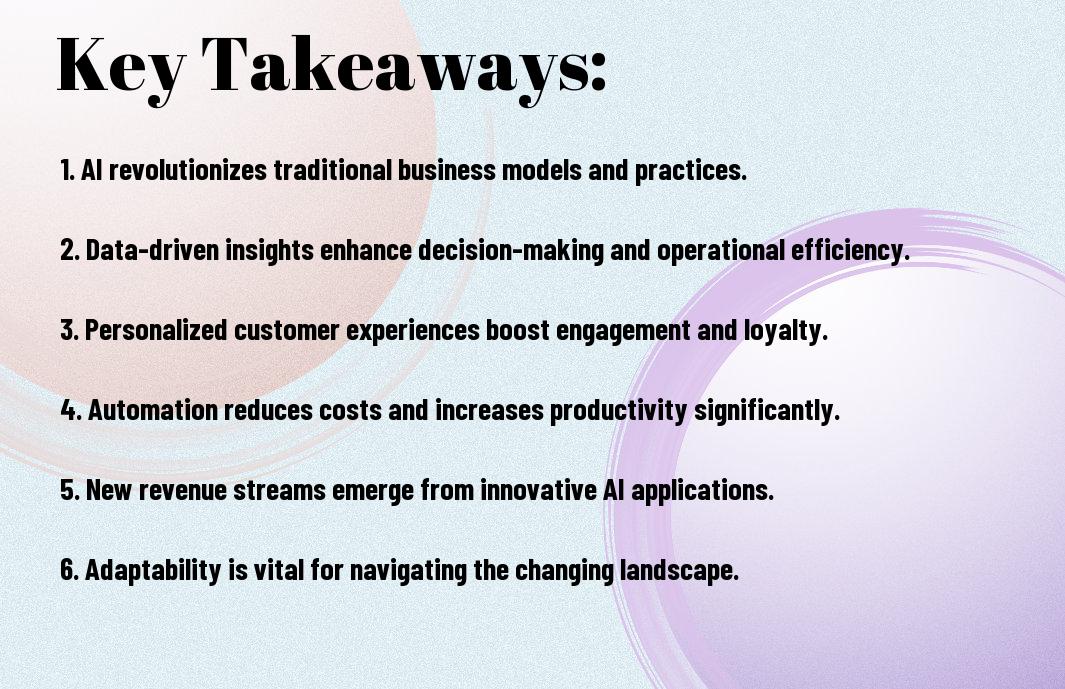
Key Takeaways:

  • American industries are experiencing significant transformations due to the integration of Artificial Intelligence (AI), leading to the creation of new opportunities for wealth generation and economic growth.
  • The application of AI in various sectors, such as healthcare and finance, is resulting in increased efficiency, improved decision-making, and enhanced customer experiences, ultimately driving business success and profitability.
  • As AI continues to reshape industries, it is likely to unlock new revenue streams, foster innovation, and create novel business models, thereby paving the way for sustained economic prosperity and wealth creation in the long term.

The AI Economic Revolution

While the rise of AI has sparked concerns about job displacement, it also presents unprecedented opportunities for wealth creation. You can leverage AI to automate tasks, gain insights, and make informed decisions, ultimately driving your business forward.

From Disruption to Creation

Between the lines of disruption, you’ll find opportunities for innovation and growth. You can harness AI to create new products, services, and experiences that transform your industry and capture new markets.

The New Wealth Equation

On the cusp of this revolution, you’ll discover a new equation for wealth creation. You can combine AI, data, and human ingenuity to unlock new revenue streams and drive your prosperity.

And as you explore the new wealth equation, you’ll find that AI enables you to optimize your operations, predict market trends, and make strategic decisions that drive your success. You can use AI to analyze vast amounts of data, identify patterns, and uncover new opportunities for growth, ultimately giving you a competitive edge in the market and enabling you to achieve your financial goals.

Industries in Transformation

Any industry can be transformed by AI, and you are likely to see significant changes in various sectors. As AI technologies advance, you will notice new opportunities emerging, and your understanding of these changes will be important to navigating the future of business.

Traditional Sectors Reimagined

Against the backdrop of technological advancements, you will find that traditional sectors are being reimagined with AI-driven innovations, allowing you to explore new avenues for growth and development in your own industry.

Entirely New Market Categories

Categorically, new market categories are emerging, and you will need to be aware of these developments to stay ahead of the curve, as your business may be impacted by the creation of entirely new industries and markets.

Understanding the potential of entirely new market categories created by AI is key to unlocking your business’s full potential. You will need to consider how these new markets can be leveraged to drive growth, innovation, and profitability, and how you can position your business to take advantage of these emerging opportunities.

The Human-AI Partnership

Now, as AI continues to advance, you’re likely wondering how it will impact your industry and career. The truth is, AI is not here to replace you, but to augment your abilities and create new opportunities for wealth. By leveraging AI, you can automate routine tasks, gain valuable insights, and make data-driven decisions to drive business growth.

Augmentation vs. Replacement

Above all, after considering the benefits of AI, you’ll find that it’s designed to enhance your capabilities, not replace them. By working together with AI, you can focus on high-value tasks that require creativity, empathy, and problem-solving skills, leading to increased productivity and innovation.

Skills for the AI Economy

Against the backdrop of rapid technological change, you’ll need to develop skills that complement AI, such as critical thinking, collaboration, and adaptability. By acquiring these skills, you’ll be well-equipped to thrive in an AI-driven economy and capitalize on new opportunities for wealth creation.

Indeed, as you develop skills for the AI economy, you’ll be able to work more effectively with AI systems, leveraging their capabilities to drive business success. You’ll learn to analyze complex data, identify patterns, and make informed decisions, enabling you to stay ahead of the curve and achieve your goals in a rapidly changing landscape. By investing in your skills and knowledge, you’ll be poised to unlock the full potential of AI and create new opportunities for wealth and growth.

Investment Landscapes

Once again, you’re witnessing the transformation of industries, and AI is at the forefront. You can explore how AI is reshaping global industries by visiting How is artificial intelligence reshaping global industries and workforce dynamics to gain insights into the evolving landscape.

Venture Capital’s New Frontiers

AFTER considering the potential of AI, you’ll find that venture capital is being redirected towards innovative startups, offering you new investment opportunities in emerging technologies.

Public Market Opportunities

BEFORE investing, you should consider the public market, where AI-driven companies are making waves, and you can capitalize on their growth and success.

Understanding the public market opportunities requires you to analyze the trends and identify companies that are leveraging AI to drive innovation and revenue growth, allowing you to make informed investment decisions and potentially reap significant returns on your investments.

Accessibility of AI-Generated Wealth

All aspects of your life are being transformed by AI, and wealth creation is no exception. You can now access AI-powered tools to generate wealth, regardless of your background or location.

Democratization of Tools

Behind the scenes, AI is making wealth creation more accessible to you through automated trading platforms and investment algorithms. You can now use these tools to make informed investment decisions and grow your wealth.

The Digital Divide Challenge

Accessibility to AI-generated wealth is not equal for everyone, and you may face challenges in accessing these opportunities. You need to be aware of the digital divide and its impact on your ability to generate wealth using AI.

Understanding the digital divide challenge is imperative to harnessing the full potential of AI-generated wealth. You need to consider the infrastructure, education, and skills required to access and utilize AI-powered tools, and how you can overcome these barriers to create wealth and achieve your financial goals.

Ethical Considerations

Despite the potential of AI to generate wealth, you must consider the ethical implications of its integration into various industries, as your decisions will impact not only your business but also society as a whole.

Distribution of Economic Benefits

By examining the effects of AI on economic distribution, you will notice that it can lead to significant changes in how wealth is allocated, and you should be aware of how your actions might influence this distribution, affecting your community and beyond.

Regulatory Frameworks

Before implementing AI solutions, you should consider the regulatory frameworks that govern their use, as your understanding of these frameworks will help you navigate the complex landscape of AI integration, ensuring you comply with existing laws and regulations that impact your business and your customers.

Benefits of establishing robust regulatory frameworks for AI include protection of your investments, mitigation of potential risks, and assurance that your use of AI contributes positively to your industry and society, allowing you to harness the full potential of AI while maintaining ethical standards and legal compliance, which is vital for your long-term success.

Summing up

Conclusively, as you explore the impact of AI on various industries, you will discover that it creates new opportunities for wealth by increasing efficiency and innovation. You can leverage AI to transform your business and stay ahead of the competition. By embracing AI, you will unlock new revenue streams and drive growth, ultimately reshaping your industry and creating a brighter financial future for yourself.

FAQ

Q: What role does Artificial Intelligence (AI) play in reshaping industries and creating new opportunities for wealth?

A: AI plays a significant role in reshaping industries by automating processes, enhancing efficiency, and driving innovation. It creates new opportunities for wealth by enabling businesses to develop new products and services, improve customer experiences, and explore new markets. With AI, companies can analyze vast amounts of data, identify patterns, and make informed decisions, leading to increased productivity and competitiveness.

Q: How does AI-driven automation impact the job market and what new job opportunities does it create?

A: AI-driven automation can lead to job displacement in certain sectors, but it also creates new job opportunities in fields such as AI development, deployment, and maintenance. As AI takes over routine and repetitive tasks, it frees up human resources for more strategic and creative work. New job opportunities emerge in areas like data science, machine learning engineering, and AI ethics, requiring workers to develop skills that complement AI capabilities.

Q: What are some examples of industries that have been significantly reshaped by AI, and what benefits have they seen?

A: Industries such as healthcare, finance, and transportation have been significantly reshaped by AI. In healthcare, AI-powered diagnostic tools have improved patient outcomes and reduced costs. In finance, AI-driven trading platforms have enhanced portfolio management and risk assessment. In transportation, AI-powered autonomous vehicles have increased safety and reduced congestion. These industries have seen benefits such as improved efficiency, enhanced customer experiences, and increased competitiveness.

Q: How can businesses and individuals prepare for the changes brought about by AI and capitalize on the new opportunities it creates?

A: To prepare for the changes brought about by AI, businesses and individuals should invest in education and training programs that focus on developing AI-related skills. They should also stay up-to-date with the latest AI trends and technologies, and explore ways to integrate AI into their operations. Additionally, they should prioritize data-driven decision-making, foster a culture of innovation, and encourage experimentation and learning. By doing so, they can capitalize on the new opportunities created by AI and stay ahead of the competition.

Q: What are the potential risks and challenges associated with AI, and how can they be mitigated to ensure that the benefits of AI are equitably distributed?

A: The potential risks and challenges associated with AI include job displacement, bias in AI decision-making, and cybersecurity threats. To mitigate these risks, it is crucial to develop and implement AI systems that are transparent, explainable, and fair. This can be achieved by investing in AI research and development that prioritizes ethics and responsibility, implementing regulations and standards for AI development and deployment, and promoting diversity and inclusion in the AI workforce. By doing so, we can ensure that the benefits of AI are equitably distributed and that its risks are minimized.

Scaling New Heights – Using AI to Accelerate Entrepreneurial Success

As you navigate the competitive landscape of entrepreneurship, you’re constantly seeking ways to stay ahead of the curve. Your business’s success relies on leveraging the latest technologies to drive growth and innovation. You’re likely aware of the transformative power of Artificial Intelligence (AI) and its potential to revolutionize your operations. By harnessing AI, you can streamline processes, enhance decision-making, and unlock new opportunities for expansion, ultimately taking your business to new heights.

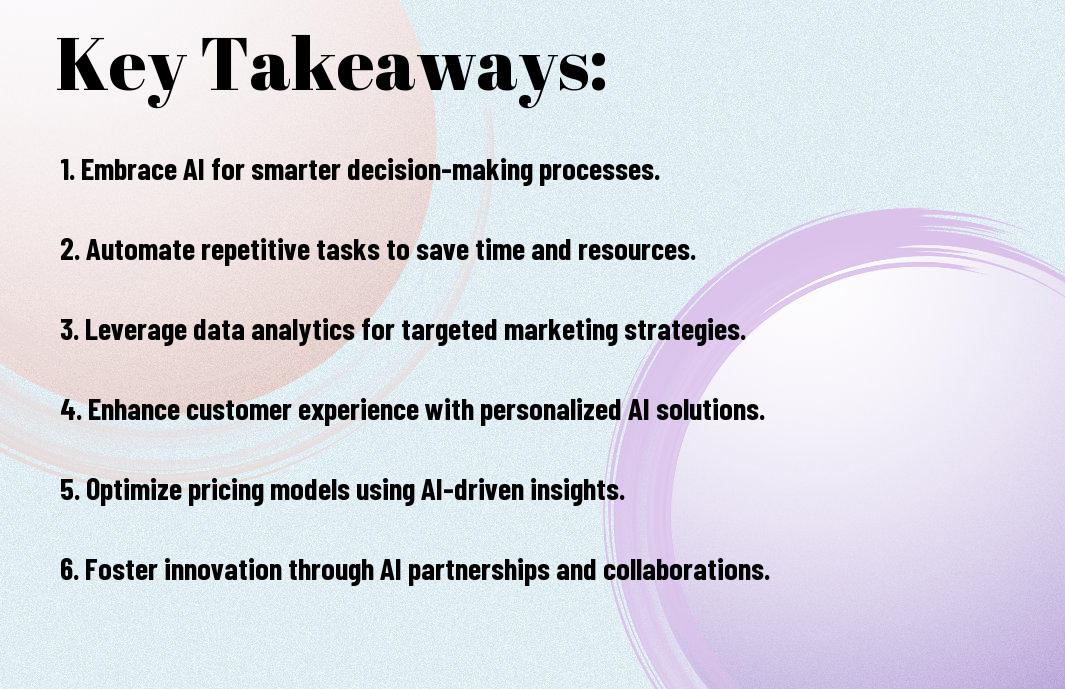
Key Takeaways:

  • Leveraging AI can significantly enhance entrepreneurial success by automating routine tasks, analyzing large datasets, and providing actionable insights to inform business decisions.
  • AI-driven tools can help entrepreneurs identify new market opportunities, optimize operations, and develop innovative products and services that meet evolving customer needs.
  • By embracing AI, entrepreneurs can accelerate their scaling process, improve efficiency, and gain a competitive edge in their respective industries, ultimately leading to faster growth and increased profitability.

    The Tipping Point of AI in Business

    While you navigate the landscape of entrepreneurship, you’ll notice the significant impact of AI on your business. AI is transforming the way you operate, making it important to understand its potential and limitations.

    When Algorithms Become Partners

    Similarly, one of the most significant advantages of AI is its ability to analyze vast amounts of data, providing you with valuable insights to inform your decisions and drive your business forward.

    The Small Changes That Spark Revolutions

    Parallel to this, partners like AI can help you identify areas where small changes can lead to significant improvements, allowing you to optimize your operations and stay ahead of the competition.

    Point to consider is that these small changes can have a profound impact on your business, and by leveraging AI, you can identify and implement them more efficiently, leading to increased productivity and revenue growth, and ultimately, driving your entrepreneurial success to new heights as you scale your business.

    AI as the Ultimate Entrepreneurial Outlier

    If you’re looking to revolutionize your business, AI can be the game-changer you need, offering unparalleled insights and capabilities to propel your entrepreneurial journey forward.

    The 10,000 Hour Shortcut

    About to launch on a new venture, you can leverage AI to accelerate your learning curve, gaining expertise in a fraction of the time it would take manually, thereby giving you a competitive edge.

    Pattern Recognition Beyond Human Capacity

    With access to vast amounts of data, AI can identify patterns that might elude you, providing your business with a unique advantage in the market, and enabling you to make informed decisions.

    For instance, you can utilize AI-powered tools to analyze customer behavior, market trends, and preferences, allowing you to tailor your products or services to meet the evolving needs of your target audience, and stay ahead of the competition, as you continue to scale your business to new heights.

    The Stickiness Factor of AI-Enhanced Businesses

    For entrepreneurs, leveraging AI can be a game-changer in making your business stand out. You can use AI to personalize customer interactions, streamline operations, and gain valuable insights to inform your decision-making.

    Creating Memorable Customer Experiences

    For instance, you can utilize AI-powered chatbots to provide your customers with 24/7 support, helping you build a loyal customer base. You will be able to offer personalized recommendations, improving customer satisfaction and driving sales.

    Data-Driven Decision Making That Resonates

    To take your business to the next level, you need to make informed decisions based on data analysis. You can use AI to analyze your customer data, identifying trends and patterns that will help you create effective marketing strategies.

    The ability to make data-driven decisions is what sets successful businesses apart. You will be able to track your progress, identify areas for improvement, and adjust your strategies accordingly, allowing you to stay ahead of the competition and achieve your goals.

    The Power of Context in AI Implementation

    Not all AI implementations are created equal, and you need to consider the context in which you’re deploying AI solutions. Your business goals, industry, and target audience all play a significant role in determining the success of your AI initiatives.

    Environmental Factors That Determine Success

    About the factors that influence AI adoption, you should consider the following:

    • Market conditions
    • Competitor activity

    Any successful AI implementation requires a deep understanding of these factors and how they impact your business.

    The Right Time and Place for AI Adoption

    Factors such as your business size, industry, and growth stage can affect the timing and location of AI adoption, and you should carefully evaluate these factors to ensure successful implementation.

    Hence, you need to assess your business readiness for AI adoption, considering factors like data quality, infrastructure, and talent availability, to determine the right time and place for AI implementation, and ensure that your AI initiatives align with your overall business strategy, allowing you to maximize the benefits of AI and drive your business forward.

    The Connector Effect

    Many entrepreneurs understand the value of connections in achieving success. You can leverage your network to access new markets, secure funding, and gain valuable insights. By harnessing the power of connections, you can propel your business forward and stay ahead of the competition.

    How AI Bridges Human Networks

    Beneath the surface of traditional networking lies a complex web of relationships that AI can help you navigate. You can utilize AI-driven tools to identify key connections, analyze network patterns, and optimize your outreach strategy, allowing you to build a stronger, more effective network.

    Leveraging Algorithms for Relationship Building

    For instance, you can use algorithms to analyze your network and identify potential connections that can help you achieve your goals. You can then use this information to tailor your approach and build meaningful relationships with your target audience.

    It is through the strategic use of algorithms that you can unlock the full potential of your network, creating a robust and dynamic web of relationships that drive your business forward. You can use AI to personalize your interactions, predict potential partnerships, and streamline your communication, ultimately leading to stronger, more profitable relationships that propel your entrepreneurial success.

    Cognitive Load Reduction

    Once again, you’ll find that AI can be a game-changer in reducing the mental effort you expend on tasks, allowing you to focus on high-level decision-making and strategy. By automating routine tasks and providing insights, AI helps you manage your workload more efficiently.

    Freeing the Entrepreneurial Mind

    Besides the obvious benefits of automation, AI also frees your mind to explore new ideas and opportunities, enabling you to think creatively and make innovative decisions that drive your business forward.

    Automation of the Mundane

    Beside the benefits of increased productivity, automating mundane tasks with AI enables you to allocate your time and resources more effectively, allowing you to concentrate on core business activities.

    Entrepreneurial success often hinges on your ability to prioritize tasks and manage your time effectively. When you automate mundane tasks, you can devote more time to high-leverage activities, such as building relationships, developing new products, or exploring new markets, which can lead to significant growth and increased profitability for your business, allowing you to achieve your goals more efficiently.

    Summing up

    With this in mind, you now have the tools to leverage AI and propel your entrepreneurial ventures to new heights. You can harness the power of AI to streamline your operations, enhance your products, and make data-driven decisions. By embracing AI, you will unlock your full potential and drive your business forward, achieving your goals and surpassing your expectations, ultimately leading to your success.

    FAQ

    Q: What is the main goal of using AI in entrepreneurial ventures, as discussed in “Scaling New Heights – Using AI to Accelerate Entrepreneurial Success”?

    A: The primary objective of leveraging AI in entrepreneurial endeavors is to harness its potential to automate processes, enhance decision-making, and drive innovation, ultimately leading to accelerated business growth and increased competitiveness in the market. By integrating AI into their strategies, entrepreneurs can streamline operations, improve customer experiences, and unlock new opportunities for expansion and success.

    Q: How can AI be used to improve decision-making in entrepreneurial ventures, as outlined in the concept of “Scaling New Heights”?

    A: AI can significantly enhance decision-making in entrepreneurial ventures by providing data-driven insights, predictive analytics, and real-time market intelligence. By analyzing vast amounts of data, AI algorithms can identify patterns, trends, and potential risks, enabling entrepreneurs to make informed decisions, mitigate uncertainties, and capitalize on emerging opportunities. This data-driven approach can help entrepreneurs navigate complex business landscapes and make strategic choices that drive growth and profitability.

    Q: What role does AI play in enhancing customer experiences, as discussed in the context of “Scaling New Heights – Using AI to Accelerate Entrepreneurial Success”?

    A: AI plays a vital role in elevating customer experiences by enabling personalized interactions, streamlining customer service, and offering tailored solutions. Through AI-powered chatbots, virtual assistants, and recommendation engines, entrepreneurs can provide 24/7 support, address customer queries, and deliver customized products and services that meet individual needs and preferences. By leveraging AI, entrepreneurs can build strong customer relationships, foster loyalty, and drive business growth through positive word-of-mouth and online reviews.

    Q: How can entrepreneurs ensure the responsible and ethical use of AI in their ventures, as emphasized in “Scaling New Heights”?

    A: To ensure the responsible and ethical use of AI, entrepreneurs should prioritize transparency, accountability, and fairness in their AI-powered systems. This involves being open about data collection and usage, implementing robust security measures, and avoiding biases in AI algorithms. Entrepreneurs should also establish clear guidelines and regulations for AI development and deployment, ensuring that these technologies align with human values and respect customer privacy. By adopting a responsible and ethical approach to AI, entrepreneurs can maintain trust, mitigate risks, and promote positive social impacts.

    Q: What skills and knowledge do entrepreneurs need to acquire to effectively leverage AI and achieve success, as outlined in the concept of “Scaling New Heights – Using AI to Accelerate Entrepreneurial Success”?

    A: To effectively leverage AI and drive entrepreneurial success, entrepreneurs should acquire a combination of technical, business, and soft skills. This includes developing a basic understanding of AI concepts, such as machine learning and natural language processing, as well as familiarity with AI tools and platforms. Entrepreneurs should also cultivate business acumen, including strategic thinking, market analysis, and financial management. Additionally, soft skills like creativity, adaptability, and collaboration are crucial for effectively integrating AI into business operations and leading teams in an AI-driven environment. By acquiring these skills and knowledge, entrepreneurs can unlock the full potential of AI and drive innovation, growth, and success in their ventures.

Digital Disruption – AI Innovations Driving Wealth and Business Growth

As you navigate the ever-changing business landscape, you’re likely aware of the significant impact artificial intelligence (AI) is having on various industries. You may be wondering how AI innovations can drive growth and wealth for your business. With AI transforming the way companies operate, you have the opportunity to leverage these advancements to stay ahead of the competition and boost your bottom line. Your ability to adapt and innovate will be key to unlocking new opportunities and achieving success in this digital era.

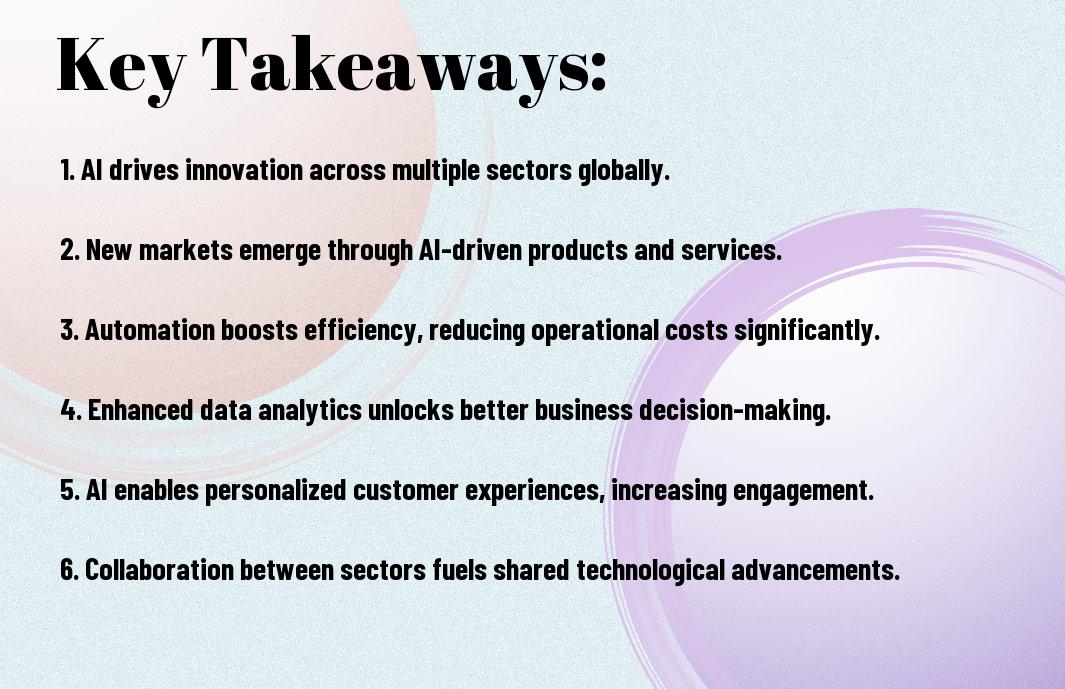
Key Takeaways:

  • Digital disruption driven by AI innovations is transforming the business landscape, creating new opportunities for wealth and growth through increased efficiency, improved decision-making, and enhanced customer experiences.
  • AI-powered technologies such as machine learning, natural language processing, and computer vision are enabling businesses to automate processes, gain valuable insights, and develop innovative products and services that drive competitive advantage.
  • Embracing AI innovations can help businesses stay ahead of the curve, drive innovation, and achieve sustainable growth, but it also requires a strategic approach to implementation, talent acquisition, and continuous learning to maximize the benefits of digital disruption.

The AI Revolution in Business

For businesses, embracing AI innovations is no longer a choice, but a necessity to stay competitive. You will notice significant improvements in efficiency and productivity as AI automates routine tasks, freeing up your resources for strategic decision-making.

Machine Learning Applications

Contrary to traditional methods, machine learning applications enable your business to analyze vast amounts of data, identifying patterns and making predictions that inform your decisions. You can leverage this technology to personalize customer experiences, enhancing engagement and loyalty.

Predictive Analytics

Beneath the surface of AI lies predictive analytics, a powerful tool that helps you forecast market trends and customer behavior. You can use this insight to make informed decisions, mitigating risks and capitalizing on opportunities.

In addition, as you investigate deeper into predictive analytics, you will discover its potential to optimize your operations, from supply chain management to financial planning. You can use predictive models to simulate different scenarios, testing strategies and identifying the most effective approaches to drive your business forward.

Wealth Creation Through Automation

There’s no denying that automation is a key driver of wealth creation in today’s digital age. By leveraging AI innovations, you can streamline your business operations, increase productivity, and ultimately drive growth.

Cost Reduction Strategies

With the help of automation, you can identify areas where costs can be reduced, and implement strategies to minimize waste and optimize resources, leading to significant savings and increased profitability for your business.

Efficiency Optimization

An important aspect of automation is its ability to optimize efficiency, allowing you to focus on high-value tasks and improve overall performance, which in turn can lead to increased competitiveness and revenue growth for your business.

Cost savings achieved through automation can be reinvested in your business, enabling you to explore new opportunities, develop new products or services, and expand into new markets, ultimately driving your business forward and increasing your wealth.

Transformative Business Models

To stay ahead in the digital age, you need to adopt innovative business models that drive growth and wealth. This involves leveraging AI to create new revenue streams and enhance customer experiences, allowing you to stay competitive in a rapidly changing market.

Platform Economies

Businesses like yours are leveraging platform economies to create new opportunities for growth and expansion. By connecting buyers and sellers, or offering services through a platform, you can increase your reach and revenue, while also providing value to your customers.

Subscription-Based Services

Platform owners like you are turning to subscription-based services to generate recurring revenue and build loyal customer bases. This model allows you to offer ongoing value to your customers, while also providing a predictable income stream for your business.

A key aspect of subscription-based services is the ability to collect and analyze customer data, allowing you to refine your offerings and improve customer satisfaction. As you consider implementing a subscription-based model, you should think about how you can use data to drive growth and enhance your customers’ experiences, ultimately leading to increased loyalty and revenue for your business.

Data as Currency

Your business’s data is a valuable asset, and leveraging it effectively can drive growth and wealth. By harnessing the power of data, you can gain insights, make informed decisions, and stay ahead of the competition.

Big Data Monetization

Above all, big data monetization is about turning your data into a revenue stream. You can achieve this by analyzing and processing large datasets to uncover hidden patterns and trends, and then using this information to develop new products or services.

Privacy Considerations

On the other hand, as you collect and utilize more data, you must consider the privacy implications. You need to ensure that your data collection and usage practices are transparent and secure, and that you are complying with relevant regulations.

Due to the sensitive nature of personal data, you must prioritize its protection and handle it with care. You should implement robust security measures to prevent data breaches and unauthorized access, and be prepared to respond quickly in case of an incident, to maintain trust with your customers and protect your reputation.

Investment Opportunities

All signs point to AI as a key driver of business growth, and you can capitalize on this trend by exploring investment opportunities in AI-driven companies. You can learn more about How AI Can Drive Innovation in Your Industry | HBS Online to gain insights into the potential of AI innovations.

AI Startups

Along with the rise of AI, you’ll find numerous AI startups that are revolutionizing various industries, and you can consider investing in these innovative companies to diversify your portfolio and potentially reap significant returns.

Legacy Company Transformations

Against the backdrop of digital disruption, you’ll notice that many legacy companies are transforming their business models to incorporate AI, and you can invest in these companies as they navigate this transition and potentially uncover new opportunities for growth.

Plus, as you consider investing in legacy company transformations, you’ll want to look for companies that are not only adopting AI technologies but also fostering a culture of innovation, allowing them to stay competitive in a rapidly changing business landscape, and you can position yourself for long-term success by investing in these forward-thinking companies.

Competitive Edge Factors

Once again, you need to focus on key elements that drive your business forward. Some of these factors include:

  • AI-driven insights
  • Innovative marketing strategies

Perceiving these elements as vital to your growth will help you stay ahead of the competition.

Speed to Market

For your business to thrive, you must be able to quickly adapt to changing market conditions and get your products or services to market faster than your competitors, allowing you to capitalize on new opportunities and stay ahead.

Adaptability Metrics

By monitoring your adaptability metrics, you can gauge your ability to pivot when necessary, and make data-driven decisions to drive your business forward, ensuring you stay competitive in a rapidly changing landscape.

Considering your adaptability metrics, you can identify areas where you need to improve, such as response time to customer feedback or the speed of implementing new technologies, and make targeted changes to increase your agility and responsiveness, ultimately driving your business growth and success.

Summing up

Summing up, you now understand how digital disruption and AI innovations are transforming your business landscape, driving wealth and growth. You can leverage these advancements to stay ahead, enhancing your operations and decision-making. Your ability to adapt and innovate will be key to unlocking new opportunities and achieving success in this rapidly evolving environment, enabling you to thrive in a future driven by technology and innovation.

FAQ

Q: What is digital disruption and how is it impacting businesses today?

A: Digital disruption refers to the transformation of traditional business models and processes through the adoption of digital technologies, such as artificial intelligence (AI), blockchain, and the Internet of Things (IoT). This disruption is impacting businesses in various ways, including changing consumer behavior, creating new revenue streams, and increasing operational efficiency. As a result, companies must adapt to these changes to stay competitive and drive growth.

Q: How is AI driving wealth and business growth in the digital age?

A: AI is driving wealth and business growth by automating processes, enhancing customer experiences, and providing data-driven insights to inform business decisions. AI-powered technologies, such as machine learning and natural language processing, are being used to improve operational efficiency, reduce costs, and create new products and services. Additionally, AI is enabling businesses to tap into new markets and customer segments, leading to increased revenue and profitability.

Q: What are some of the key AI innovations that are driving digital disruption in various industries?

A: Some of the key AI innovations driving digital disruption include chatbots and virtual assistants, predictive analytics and machine learning, computer vision and image recognition, and natural language processing and speech recognition. These innovations are being applied in various industries, such as healthcare, finance, retail, and manufacturing, to improve efficiency, reduce costs, and enhance customer experiences. For example, chatbots are being used in customer service to provide 24/7 support, while predictive analytics is being used in healthcare to diagnose diseases earlier and more accurately.

Q: How can businesses harness the power of AI to drive growth and stay ahead of the competition?

A: To harness the power of AI, businesses should start by identifying areas where AI can add value, such as improving operational efficiency or enhancing customer experiences. They should then invest in AI technologies and talent, and develop a strategy for implementing AI solutions. Additionally, businesses should focus on building a culture of innovation and experimentation, and be willing to take calculated risks to stay ahead of the competition. It’s also imperative to consider the ethical implications of AI and ensure that AI systems are transparent, explainable, and fair.

Q: What are the potential risks and challenges associated with adopting AI and how can businesses mitigate them?

A: The potential risks and challenges associated with adopting AI include job displacement, bias in AI decision-making, and cybersecurity threats. To mitigate these risks, businesses should invest in employee retraining and upskilling programs, ensure that AI systems are designed and tested to avoid bias, and implement robust cybersecurity measures to protect against AI-powered attacks. Additionally, businesses should establish clear governance and oversight structures to ensure that AI systems are aligned with business goals and values, and that their use is transparent and accountable. By being aware of these risks and taking steps to mitigate them, businesses can minimize the potential downsides of AI adoption and maximize its benefits.

Digital Disruption – AI Innovations Driving Wealth and Business Growth

As you navigate the ever-changing business landscape, you’re likely aware of the significant impact artificial intelligence (AI) is having on various industries. You may be wondering how AI innovations can drive growth and wealth for your business. With AI transforming the way companies operate, you have the opportunity to leverage these advancements to stay ahead of the competition and boost your bottom line. Your ability to adapt and innovate will be key to unlocking new opportunities and achieving success in this digital era.

Key Takeaways:

  • Digital disruption driven by AI innovations is transforming the business landscape, creating new opportunities for wealth and growth through increased efficiency, improved decision-making, and enhanced customer experiences.
  • AI-powered technologies such as machine learning, natural language processing, and computer vision are enabling businesses to automate processes, gain valuable insights, and develop innovative products and services that drive competitive advantage.
  • Embracing AI innovations can help businesses stay ahead of the curve, drive innovation, and achieve sustainable growth, but it also requires a strategic approach to implementation, talent acquisition, and continuous learning to maximize the benefits of digital disruption.

The AI Revolution in Business

For businesses, embracing AI innovations is no longer a choice, but a necessity to stay competitive. You will notice significant improvements in efficiency and productivity as AI automates routine tasks, freeing up your resources for strategic decision-making.

Machine Learning Applications

Contrary to traditional methods, machine learning applications enable your business to analyze vast amounts of data, identifying patterns and making predictions that inform your decisions. You can leverage this technology to personalize customer experiences, enhancing engagement and loyalty.

Predictive Analytics

Beneath the surface of AI lies predictive analytics, a powerful tool that helps you forecast market trends and customer behavior. You can use this insight to make informed decisions, mitigating risks and capitalizing on opportunities.

In addition, as you investigate deeper into predictive analytics, you will discover its potential to optimize your operations, from supply chain management to financial planning. You can use predictive models to simulate different scenarios, testing strategies and identifying the most effective approaches to drive your business forward.

Wealth Creation Through Automation

There’s no denying that automation is a key driver of wealth creation in today’s digital age. By leveraging AI innovations, you can streamline your business operations, increase productivity, and ultimately drive growth.

Cost Reduction Strategies

With the help of automation, you can identify areas where costs can be reduced, and implement strategies to minimize waste and optimize resources, leading to significant savings and increased profitability for your business.

Efficiency Optimization

An important aspect of automation is its ability to optimize efficiency, allowing you to focus on high-value tasks and improve overall performance, which in turn can lead to increased competitiveness and revenue growth for your business.

Cost savings achieved through automation can be reinvested in your business, enabling you to explore new opportunities, develop new products or services, and expand into new markets, ultimately driving your business forward and increasing your wealth.

Transformative Business Models

To stay ahead in the digital age, you need to adopt innovative business models that drive growth and wealth. This involves leveraging AI to create new revenue streams and enhance customer experiences, allowing you to stay competitive in a rapidly changing market.

Platform Economies

Businesses like yours are leveraging platform economies to create new opportunities for growth and expansion. By connecting buyers and sellers, or offering services through a platform, you can increase your reach and revenue, while also providing value to your customers.

Subscription-Based Services

Platform owners like you are turning to subscription-based services to generate recurring revenue and build loyal customer bases. This model allows you to offer ongoing value to your customers, while also providing a predictable income stream for your business.

A key aspect of subscription-based services is the ability to collect and analyze customer data, allowing you to refine your offerings and improve customer satisfaction. As you consider implementing a subscription-based model, you should think about how you can use data to drive growth and enhance your customers’ experiences, ultimately leading to increased loyalty and revenue for your business.

Data as Currency

Your business’s data is a valuable asset, and leveraging it effectively can drive growth and wealth. By harnessing the power of data, you can gain insights, make informed decisions, and stay ahead of the competition.

Big Data Monetization

Above all, big data monetization is about turning your data into a revenue stream. You can achieve this by analyzing and processing large datasets to uncover hidden patterns and trends, and then using this information to develop new products or services.

Privacy Considerations

On the other hand, as you collect and utilize more data, you must consider the privacy implications. You need to ensure that your data collection and usage practices are transparent and secure, and that you are complying with relevant regulations.

Due to the sensitive nature of personal data, you must prioritize its protection and handle it with care. You should implement robust security measures to prevent data breaches and unauthorized access, and be prepared to respond quickly in case of an incident, to maintain trust with your customers and protect your reputation.

Investment Opportunities

All signs point to AI as a key driver of business growth, and you can capitalize on this trend by exploring investment opportunities in AI-driven companies. You can learn more about How AI Can Drive Innovation in Your Industry | HBS Online to gain insights into the potential of AI innovations.

AI Startups

Along with the rise of AI, you’ll find numerous AI startups that are revolutionizing various industries, and you can consider investing in these innovative companies to diversify your portfolio and potentially reap significant returns.

Legacy Company Transformations

Against the backdrop of digital disruption, you’ll notice that many legacy companies are transforming their business models to incorporate AI, and you can invest in these companies as they navigate this transition and potentially uncover new opportunities for growth.

Plus, as you consider investing in legacy company transformations, you’ll want to look for companies that are not only adopting AI technologies but also fostering a culture of innovation, allowing them to stay competitive in a rapidly changing business landscape, and you can position yourself for long-term success by investing in these forward-thinking companies.

Competitive Edge Factors

Once again, you need to focus on key elements that drive your business forward. Some of these factors include:

  • AI-driven insights
  • Innovative marketing strategies

Perceiving these elements as vital to your growth will help you stay ahead of the competition.

Speed to Market

For your business to thrive, you must be able to quickly adapt to changing market conditions and get your products or services to market faster than your competitors, allowing you to capitalize on new opportunities and stay ahead.

Adaptability Metrics

By monitoring your adaptability metrics, you can gauge your ability to pivot when necessary, and make data-driven decisions to drive your business forward, ensuring you stay competitive in a rapidly changing landscape.

Considering your adaptability metrics, you can identify areas where you need to improve, such as response time to customer feedback or the speed of implementing new technologies, and make targeted changes to increase your agility and responsiveness, ultimately driving your business growth and success.

Summing up

Summing up, you now understand how digital disruption and AI innovations are transforming your business landscape, driving wealth and growth. You can leverage these advancements to stay ahead, enhancing your operations and decision-making. Your ability to adapt and innovate will be key to unlocking new opportunities and achieving success in this rapidly evolving environment, enabling you to thrive in a future driven by technology and innovation.

FAQ

Q: What is digital disruption and how is it impacting businesses today?

A: Digital disruption refers to the transformation of traditional business models and processes through the adoption of digital technologies, such as artificial intelligence (AI), blockchain, and the Internet of Things (IoT). This disruption is impacting businesses in various ways, including changing consumer behavior, creating new revenue streams, and increasing operational efficiency. As a result, companies must adapt to these changes to stay competitive and drive growth.

Q: How is AI driving wealth and business growth in the digital age?

A: AI is driving wealth and business growth by automating processes, enhancing customer experiences, and providing data-driven insights to inform business decisions. AI-powered technologies, such as machine learning and natural language processing, are being used to improve operational efficiency, reduce costs, and create new products and services. Additionally, AI is enabling businesses to tap into new markets and customer segments, leading to increased revenue and profitability.

Q: What are some of the key AI innovations that are driving digital disruption in various industries?

A: Some of the key AI innovations driving digital disruption include chatbots and virtual assistants, predictive analytics and machine learning, computer vision and image recognition, and natural language processing and speech recognition. These innovations are being applied in various industries, such as healthcare, finance, retail, and manufacturing, to improve efficiency, reduce costs, and enhance customer experiences. For example, chatbots are being used in customer service to provide 24/7 support, while predictive analytics is being used in healthcare to diagnose diseases earlier and more accurately.

Q: How can businesses harness the power of AI to drive growth and stay ahead of the competition?

A: To harness the power of AI, businesses should start by identifying areas where AI can add value, such as improving operational efficiency or enhancing customer experiences. They should then invest in AI technologies and talent, and develop a strategy for implementing AI solutions. Additionally, businesses should focus on building a culture of innovation and experimentation, and be willing to take calculated risks to stay ahead of the competition. It’s also imperative to consider the ethical implications of AI and ensure that AI systems are transparent, explainable, and fair.

Q: What are the potential risks and challenges associated with adopting AI and how can businesses mitigate them?

A: The potential risks and challenges associated with adopting AI include job displacement, bias in AI decision-making, and cybersecurity threats. To mitigate these risks, businesses should invest in employee retraining and upskilling programs, ensure that AI systems are designed and tested to avoid bias, and implement robust cybersecurity measures to protect against AI-powered attacks. Additionally, businesses should establish clear governance and oversight structures to ensure that AI systems are aligned with business goals and values, and that their use is transparent and accountable. By being aware of these risks and taking steps to mitigate them, businesses can minimize the potential downsides of AI adoption and maximize its benefits.

Skip to content