As you navigate the ever-changing business landscape, you’re likely aware that artificial intelligence (AI) is revolutionizing the way companies operate. You’re probably wondering how to leverage AI to drive growth and increase your wealth. Your search for answers ends here, as you’re about to discover the latest AI-driven business models that are transforming industries and generating substantial profits. You will learn how to harness the power of AI to stay ahead of the curve and build a prosperous future for your business.
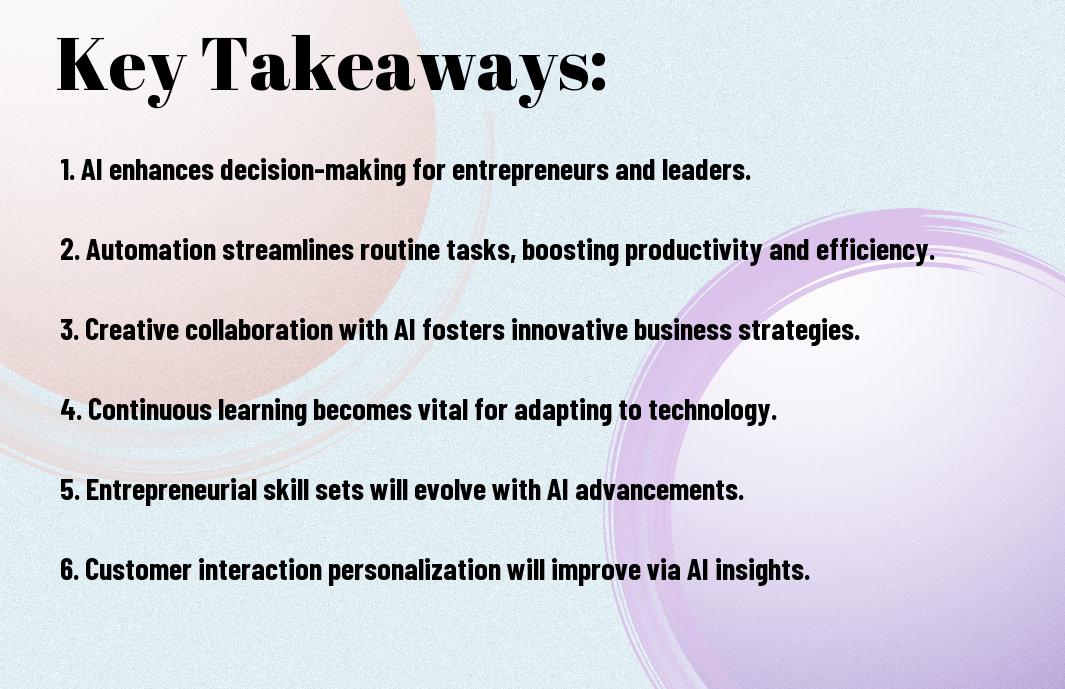
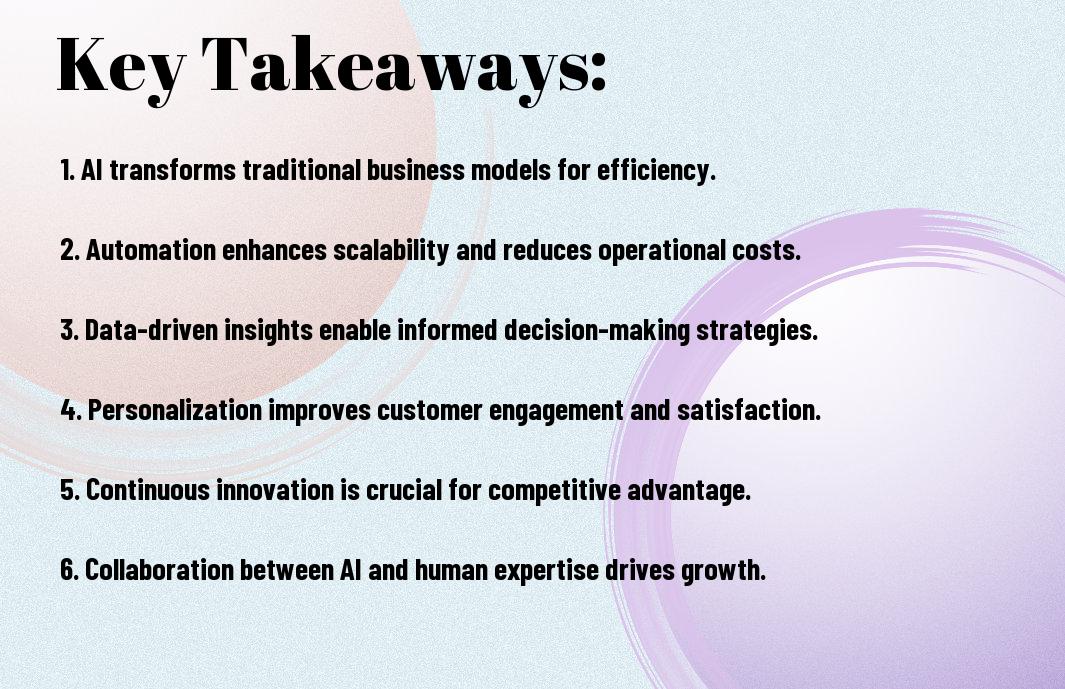
Key Takeaways:
- The integration of AI into business models can significantly enhance operational efficiency and drive innovation, leading to increased profitability and competitiveness in the market.
- AI-driven business models can unlock new revenue streams and create unique value propositions, allowing companies to differentiate themselves and build sustainable wealth over time.
- Embracing AI-driven business models requires a strategic approach, including investments in data infrastructure, talent acquisition, and continuous learning, to stay ahead of the curve and maximize the potential of AI technologies.
The AI Economic Revolution
The advent of AI is transforming the way you do business, and it’s imperative to understand the implications of this revolution on your wealth creation strategies. As you navigate this new landscape, you’ll need to adapt to the changing economic dynamics and leverage AI-driven models to stay ahead.
From Industrial to Intelligence Economy
Intelligently, you’ll need to shift your focus from traditional industrial models to intelligence-driven economies, where data and information are the primary drivers of growth. As you make this transition, you’ll discover new opportunities for innovation and expansion, enabling you to stay competitive in a rapidly evolving market.
The Wealth Creation Paradigm Shift
Economically, you’ll need to rethink your approach to wealth creation, as AI-driven models offer new avenues for growth and investment. You’ll need to be strategic in your approach, identifying areas where AI can add value to your business and drive profitability.
Creation of new wealth streams is now more accessible than ever, as you can leverage AI to identify opportunities, optimize operations, and make data-driven decisions. You’ll be able to automate routine tasks, freeing up resources to focus on high-value activities that drive growth and innovation, ultimately leading to increased profitability and success in your business ventures.
Core AI Business Models
Some of the most successful AI-driven business models are those that leverage machine learning and data analytics to drive growth and innovation, allowing you to stay ahead of the competition and build wealth in the process, as you explore these models, you will find that they offer a range of benefits.
Predictive Analytics Enterprises
Beneath the surface of traditional business models, predictive analytics enterprises are emerging, enabling you to make data-driven decisions and drive your business forward with precision, as you examine into this space, you will discover new opportunities for growth and revenue generation.
Automation-as-a-Service
Following the trend of outsourcing non-core functions, Automation-as-a-Service is becoming increasingly popular, allowing you to streamline your operations and focus on high-value tasks, as you consider adopting this model, you will find that it offers a range of benefits, including increased efficiency and reduced costs.
Models like Automation-as-a-Service are particularly useful for businesses looking to scale quickly and efficiently, as you implement this model, you will be able to automate repetitive tasks, freeing up your team to focus on strategic initiatives and driving growth, ultimately, this will enable you to build wealth and stay competitive in a rapidly changing market.
Data as the New Oil
Unlike traditional business models, your ability to collect and utilize data will be the key to unlocking new revenue streams. As you explore the potential of AI-driven business models, consider the role of data in driving your success, and learn more about The future of wealth management is now, and it’s AI – Backbase to stay ahead of the curve.
Data Refinement Strategies
By developing a robust data refinement strategy, you can ensure that your data is accurate, reliable, and actionable, allowing you to make informed decisions and drive business growth.
Privacy-Conscious Monetization
Beside the need for data refinement, you must also consider the importance of privacy-conscious monetization, as your customers expect you to protect their sensitive information while still delivering personalized experiences.
In fact, as you probe deeper into privacy-conscious monetization, you will find that it is not only a moral obligation, but also a key differentiator in the market, allowing you to build trust with your customers and establish a competitive edge, ultimately driving long-term growth and profitability for your business.
AI Augmentation vs. Replacement
All businesses will need to consider how AI fits into their operations, and whether it will augment or replace existing roles. You will need to think about how AI can enhance your business, and what benefits it can bring to your operations.
Human-AI Collaboration Frameworks
Cooperation between humans and AI systems is key to unlocking the full potential of AI. You can develop frameworks that allow your employees to work alongside AI, leveraging its strengths to improve productivity and efficiency in your business.
Jobs Transformed, Not Eliminated
Across various industries, you will see jobs changing as AI takes over routine tasks. You will need to adapt to these changes, and consider how your role may evolve as AI becomes more prevalent in your field.
Also, as AI transforms jobs, you will have the opportunity to develop new skills and take on more strategic and creative roles. You will be able to focus on high-value tasks that require human skills like empathy, problem-solving, and innovation, allowing you to drive growth and success in your business.
Accessibility and Democratization
Once again, you’re at the forefront of a revolution, as AI-driven business models make wealth-building more accessible than ever. You can now leverage AI to streamline operations, enhance customer experiences, and gain a competitive edge.
Small Business AI Adoption
Following the trend, you’ll notice that small businesses are adopting AI at an unprecedented rate, allowing you to stay ahead of the curve and capitalize on new opportunities. You can now utilize AI-powered tools to optimize your business operations and make data-driven decisions.
Lowering Barriers to Entry
Blocking your path to success are fewer obstacles, as AI-driven business models lower the barriers to entry, enabling you to start and grow your business with greater ease. You can now access advanced technologies and expertise without significant upfront investments.
Democratization of AI-driven business models means you have unparalleled access to the tools and resources you need to succeed. You can now focus on developing your unique value proposition, building your brand, and delivering exceptional customer experiences, while AI handles the heavy lifting, freeing you to concentrate on high-level strategy and growth. As you navigate this new landscape, you’ll find that your business is more agile, adaptable, and poised for long-term success.

Ethical Considerations in AI Wealth
Keep in mind that as you explore AI-driven business models, ethical considerations must be a top priority to ensure your success and integrity in the market.
Distributional Effects
On the path to building wealth with AI, you will encounter various distributional effects that impact different groups in diverse ways, and you must consider these effects to make informed decisions.
Sustainability Metrics
Across your AI-driven business, you will need to establish sustainability metrics to measure the environmental and social impact of your operations, allowing you to make adjustments and improvements as needed.
At the heart of sustainability metrics is the ability to track and analyze your AI system’s performance in terms of energy consumption, data usage, and social responsibility, enabling you to optimize your business model for long-term success and positive impact, which is necessary for you to maintain a strong reputation and build trust with your customers and stakeholders.
To wrap up
Drawing together the concepts discussed, you now have a comprehensive understanding of AI-driven business models that build wealth. You can leverage this knowledge to transform your business, driving innovation and growth. As you move forward, your ability to adapt and integrate AI will be key to staying ahead of the curve, enabling you to make informed decisions and capitalize on emerging opportunities, ultimately securing your place in the future of business.
FAQ
Q: What are AI-driven business models and how do they generate wealth?
A: AI-driven business models leverage artificial intelligence technologies to create innovative products, services, and processes that drive revenue growth and profitability. These models utilize machine learning algorithms, natural language processing, and data analytics to optimize operations, improve customer experiences, and uncover new business opportunities. By harnessing the power of AI, companies can automate tasks, enhance decision-making, and develop personalized solutions that meet the evolving needs of their customers, ultimately leading to increased wealth and competitiveness in the market.
Q: How can businesses implement AI-driven models to stay ahead of the competition?
A: To implement AI-driven models, businesses should start by identifying areas where AI can add the most value, such as customer service, marketing, or supply chain management. They should then invest in AI technologies, including machine learning platforms, data analytics tools, and natural language processing software. It’s also necessary to develop a skilled workforce with expertise in AI and data science, and to foster a culture of innovation and experimentation. Additionally, businesses should prioritize data quality and governance, ensuring that their AI systems are fed with accurate and relevant data to make informed decisions.
Q: What are the benefits of adopting AI-driven business models, and how can they impact a company’s bottom line?
A: The benefits of adopting AI-driven business models are numerous and can have a significant impact on a company’s bottom line. AI can help businesses increase efficiency, reduce costs, and enhance customer experiences, leading to improved revenue growth and profitability. AI-driven models can also enable companies to make data-driven decisions, anticipate market trends, and identify new business opportunities, giving them a competitive edge in the market. Furthermore, AI can help businesses automate routine tasks, freeing up resources for more strategic and creative work, and enabling them to innovate and adapt to changing market conditions.
Q: How can businesses ensure that their AI-driven models are transparent, explainable, and fair?
A: To ensure that their AI-driven models are transparent, explainable, and fair, businesses should prioritize model interpretability, testing, and validation. They should use techniques such as feature attribution, model explainability, and sensitivity analysis to understand how their AI systems make decisions and identify potential biases. Businesses should also establish clear guidelines and regulations for AI development and deployment, and ensure that their AI systems are aligned with human values and ethical principles. Additionally, they should regularly monitor and audit their AI systems to detect and address any potential issues or biases, and be transparent with stakeholders about their AI-driven decision-making processes.
Q: What is the future of AI-driven business models, and how will they continue to evolve and shape the business landscape?
A: The future of AI-driven business models is exciting and rapidly evolving. As AI technologies continue to advance, we can expect to see even more innovative and sophisticated applications of AI in business, such as the use of edge AI, explainable AI, and human-AI collaboration. AI-driven models will become increasingly ubiquitous, transforming industries and revolutionizing the way businesses operate, create value, and interact with customers. To stay ahead of the curve, businesses should continue to invest in AI research and development, foster a culture of innovation and experimentation, and prioritize lifelong learning and upskilling to ensure that their workforce is equipped to work effectively with AI systems and leverage their full potential.