Startups

Building a Legacy – How AI Transforms Startups into Wealth-Generating Enterprises

As you launch on your entrepreneurial journey, you’re likely thinking about how to turn your startup into a successful, wealth-generating enterprise. You’re aware that leveraging technology is key to achieving your goals. With Artificial Intelligence (AI) revolutionizing the business landscape, you can now harness its power to transform your startup into a legacy-building venture. Your ability to adapt and innovate with AI will be the driving force behind your success, enabling you to stay ahead of the competition and achieve long-term prosperity.

Key Takeaways:

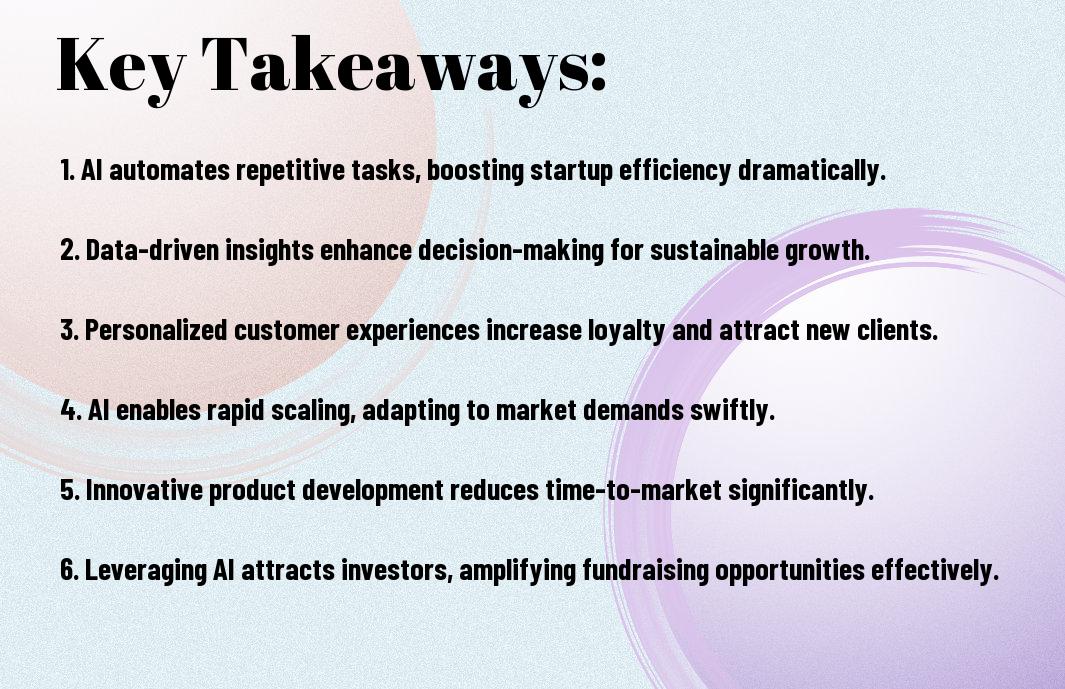
  • AI integration can significantly accelerate a startup’s growth, enabling it to evolve into a wealth-generating enterprise by enhancing operational efficiency, improving decision-making, and driving innovation.
  • By leveraging AI, startups can unlock new revenue streams, expand their customer base, and gain a competitive edge in the market, ultimately leading to increased profitability and long-term sustainability.
  • Effective implementation of AI requires a strategic approach, including identifying areas where AI can add the most value, investing in the right talent and technology, and fostering a culture that embraces continuous learning and adaptation.

    The Entrepreneurial Landscape

    While navigating the complex world of startups, you’ll encounter numerous challenges that can make or break your business. As you strive to build a legacy, it’s imperative to understand the transformative power of AI in driving growth and success.

    Startups in the Digital Era

    Alongside the rapid evolution of technology, you’re likely to find that your startup operates in a highly competitive and ever-changing environment. As you adapt to these shifts, you’ll need to leverage AI to stay ahead of the curve and capitalize on emerging opportunities.

    The Wealth Creation Imperative

    Besides the obvious benefits of innovation, you’ll discover that AI-driven startups are more likely to generate significant wealth and achieve long-term sustainability. As you prioritize wealth creation, you’ll need to develop a strategic approach that integrates AI into your business model and decision-making processes.

    For instance, as you explore the potential of AI in your startup, you’ll find that it can help you optimize operations, enhance customer experiences, and drive revenue growth. By harnessing the power of AI, you can create a robust foundation for wealth generation, setting your business up for success and establishing a lasting legacy that reflects your vision and entrepreneurial spirit.
    AI as the Modern Alchemist

    Some of the most successful startups have leveraged AI to transform their businesses into wealth-generating enterprises, and you can do the same by harnessing its power.

    Transforming Data into Gold

    Into the world of AI, your data is converted into valuable insights that can inform your business decisions and drive growth, enabling you to make informed choices that propel your startup forward.

    Automating the Path to Prosperity

    Any entrepreneur can benefit from AI’s automation capabilities, which streamline processes and free up resources, allowing you to focus on high-level strategy and innovation, and you will see your startup thrive as a result.

    Modern technologies like machine learning and natural language processing are key to automating the path to prosperity, and as you explore these tools, you’ll discover how they can help you optimize operations, enhance customer experiences, and ultimately drive revenue growth, taking your startup to new heights and establishing a lasting legacy in your industry.

    Strategic Implementation

    Many startups struggle to effectively implement AI solutions, but with a clear strategy, you can overcome common obstacles and achieve your goals. By leveraging AI, you can streamline operations, enhance customer experiences, and drive business growth.

    Identifying AI Opportunities

    One of the first steps in implementing AI is to identify areas where it can add value to your business, and you should start by assessing your operations and customer needs to determine where AI can make the greatest impact.

    Building the Technological Framework

    Identifying the right technological framework is imperative for successful AI implementation, and you should consider factors such as scalability, security, and integration with existing systems to ensure a seamless transition.

    In fact, building a robust technological framework requires careful planning and execution, and you will need to consider factors such as data management, algorithm selection, and model training to ensure that your AI system is accurate and reliable, and as you move forward, you will be able to refine and improve your framework to drive even greater business success.

    Financial Metamorphosis

    Unlike traditional businesses, your startup can undergo a significant transformation with AI, revolutionizing your financial landscape. You can explore how Investment companies can use AI responsibly to gain an edge and apply similar strategies to your own business.

    Cost Reduction Mechanisms

    Approximately, at this stage, you will identify areas where AI can help minimize expenses, streamlining your operations and maximizing efficiency, allowing you to allocate resources more effectively.

    Revenue Amplification Strategies

    Regarding your revenue, you will discover new opportunities to increase your earnings through AI-driven innovations, enabling you to make data-informed decisions and stay ahead of the competition.

    Metamorphosis in your revenue streams will occur as you leverage AI to identify untapped markets, personalize customer experiences, and develop targeted marketing campaigns, ultimately leading to increased profitability and sustainable growth for your business, allowing you to achieve your long-term goals and establish a lasting legacy.

    Scaling with Artificial Intelligence

    Once again, you can leverage AI to propel your startup’s growth, as seen in How AI is transforming venture building and venture capital. This technology helps you streamline operations, making it easier to expand your business.

    From Startup to Empire

    Between the initial stages and maturity, you’ll notice significant changes in your startup’s dynamics, and AI will be instrumental in this transformation, enabling you to make data-driven decisions and drive growth.

    Sustainable Growth Patterns

    Sustainably, you’ll want to focus on establishing a strong foundation for your business, and AI can help you identify areas for improvement, optimizing your strategies for long-term success.

    With a solid understanding of sustainable growth patterns, you can use AI to analyze your market, identify trends, and make informed decisions to drive your business forward, ensuring that your startup becomes a wealth-generating enterprise that stands the test of time, and you can achieve your goals with confidence and precision.

    The Human Element

    For any startup, the human element is what sets the foundation for success, and as you integrate AI into your business, you’ll find that it’s crucial to balance technology with the skills and expertise of your team.

    Leadership in the Age of Machines

    Towards the goal of building a legacy, you must adapt your leadership style to effectively manage both human and artificial intelligence, ensuring that you’re leveraging the strengths of each to drive your startup forward.

    Cultivating Talent Alongside Technology

    Humans are the driving force behind innovation, and as you grow your startup, you’ll need to focus on developing the skills of your team to work in tandem with AI, creating a symbiotic relationship that fuels your business’s success.

    Element of your strategy should involve identifying the areas where your team’s skills complement AI capabilities, and investing in training and development to enhance those skills, allowing you to unlock the full potential of your team and drive your startup’s growth, as you navigate the ever-changing landscape of entrepreneurship, you’ll find that cultivating talent alongside technology is key to building a lasting legacy.

    Summing up

    So, as you begin on building a legacy, you’ll find that AI transforms your startup into a wealth-generating enterprise by streamlining operations and driving innovation. You’ll leverage AI to make data-driven decisions, optimize processes, and create new opportunities. By harnessing the power of AI, you’ll position your business for long-term success and create a lasting impact, ultimately securing your legacy as a visionary entrepreneur. Your ability to adapt and innovate with AI will be the key to your enduring success.

    FAQ

    Q: What role does AI play in transforming startups into successful enterprises?

    A: AI plays a significant role in transforming startups into successful enterprises by automating processes, enhancing decision-making, and driving innovation. By leveraging AI technologies such as machine learning and natural language processing, startups can analyze vast amounts of data, identify patterns, and make informed decisions to drive business growth. Additionally, AI-powered tools can help startups streamline operations, improve customer engagement, and develop new products and services, ultimately leading to increased revenue and competitiveness.

    Q: How can startups effectively integrate AI into their business strategy?

    A: To effectively integrate AI into their business strategy, startups should start by identifying areas where AI can have the most impact, such as customer service, marketing, or product development. They should then invest in AI-powered tools and technologies, and develop a team with the necessary skills to implement and manage AI solutions. It’s also important to establish clear goals and metrics to measure the success of AI initiatives and ensure that AI is aligned with the company’s overall mission and vision.

    Q: What are the key benefits of using AI in startup development?

    A: The key benefits of using AI in startup development include increased efficiency, improved decision-making, and enhanced customer experience. AI can help startups automate routine tasks, freeing up resources for more strategic and creative work. Additionally, AI-powered analytics can provide startups with valuable insights into customer behavior and market trends, enabling them to make data-driven decisions and stay ahead of the competition. Furthermore, AI-powered chatbots and virtual assistants can help startups provide 24/7 customer support, improving customer satisfaction and loyalty.

    Q: How can startups ensure that their AI systems are transparent and accountable?

    A: To ensure that their AI systems are transparent and accountable, startups should prioritize explainability and fairness in their AI decision-making processes. This can be achieved by using techniques such as model interpretability, which provides insights into how AI models make decisions, and bias detection, which identifies and mitigates potential biases in AI systems. Startups should also establish clear guidelines and regulations for AI development and deployment, and ensure that AI systems are regularly audited and tested for transparency and accountability.

    Q: What is the future of AI in startup development, and how can startups prepare for it?

    A: The future of AI in startup development is expected to be shaped by emerging technologies such as edge AI, transfer learning, and explainable AI. To prepare for this future, startups should invest in ongoing education and training for their teams, staying up-to-date with the latest AI trends and technologies. They should also prioritize flexibility and adaptability, being open to experimenting with new AI-powered solutions and pivoting their strategies as needed. By embracing a culture of innovation and continuous learning, startups can stay ahead of the curve and harness the full potential of AI to drive growth and success.

AI-Powered Startups – How Intelligent Automation is Changing the Business Landscape

As you navigate the ever-evolving business world, you’re likely noticing the significant impact of artificial intelligence on startups. Your business operations are being transformed by intelligent automation, enabling you to streamline processes, enhance efficiency, and drive innovation. You’re witnessing how AI-powered startups are revolutionizing industries, and you may be wondering how to leverage this technology to stay ahead of the curve. This post will explore the ways in which AI is changing the business landscape and what it means for your company’s future.

Key Takeaways:

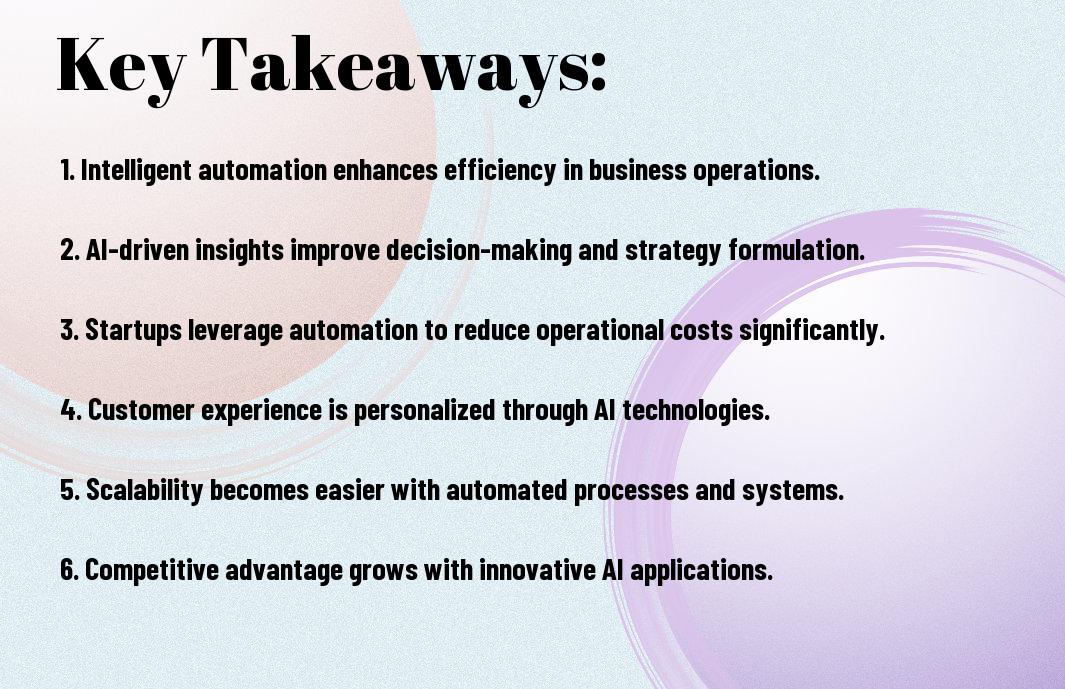
  • AI-powered startups are revolutionizing industries by leveraging intelligent automation to streamline processes, enhance efficiency, and drive innovation, leading to significant improvements in productivity and competitiveness.
  • The integration of AI and machine learning is enabling startups to analyze vast amounts of data, gain valuable insights, and make informed decisions, thereby reducing the risk of human error and improving overall performance.
  • Intelligent automation is also facilitating the development of new business models, such as subscription-based services and pay-per-use models, which are transforming the way companies interact with customers and generate revenue.
  • AI-powered startups are creating new job opportunities in areas like AI development, deployment, and maintenance, while also augmenting existing roles by automating routine tasks and freeing up human resources for more strategic and creative work.
  • The increasing adoption of AI-powered automation is driving a shift towards a more agile and adaptable business landscape, where companies must be able to quickly respond to changing market conditions and customer needs in order to remain competitive.

    The Foundation of AI in Modern Startups

    For your startup to thrive in today’s competitive landscape, understanding the role of AI is imperative. You need to recognize how AI-powered technologies are transforming industries and creating new opportunities for growth and innovation.

    Evolution of Machine Learning Applications

    Almost any industry you can think of is being impacted by machine learning, and you are likely to see its applications in your own business. You will notice how machine learning algorithms can analyze data, identify patterns, and make predictions, helping you make informed decisions.

    Core Technologies Driving the Revolution

    Applications of AI in your business can be vast, and you will find that core technologies such as natural language processing and computer vision are driving this revolution. You can leverage these technologies to automate tasks, enhance customer experience, and gain a competitive edge.

    Modern technologies like deep learning and neural networks are enabling your startup to tackle complex problems and create innovative solutions. You can use these technologies to analyze large datasets, identify trends, and make predictions, helping you stay ahead of the curve and drive business success. As you explore the potential of AI, you will discover new ways to streamline operations, improve efficiency, and create new products and services that meet the evolving needs of your customers.

    Market Disruption Through Automation

    Any business leader knows that automation is revolutionizing the way you operate, making it important to adapt to stay competitive. As you navigate this shift, you’ll notice significant changes in various sectors, leading to new opportunities and challenges.

    Traditional Industries Transformed

    Around the globe, you see traditional industries transforming due to automation, with you being at the forefront of this change, leveraging technology to improve efficiency and reduce costs, and as you do, you’re redefining the way business is done.

    New Business Models Emerging

    Along with the rise of automation, you’re witnessing the emergence of innovative business models that you can capitalize on, enabling you to create new revenue streams and stay ahead of the curve, and as you explore these models, you’ll find opportunities to disrupt markets and create new value.

    Due to the proliferation of automation, you’re seeing the creation of new business models that are more agile, flexible, and responsive to changing market conditions, allowing you to pivot quickly and capitalize on emerging trends, and as you embrace these models, you’ll be able to drive growth, improve customer satisfaction, and establish a strong competitive edge in the market.

    Capital Investment Patterns

    After analyzing the current market trends, you can see that AI-powered startups are attracting significant investments from venture capitalists and angel investors. Your investment decisions can greatly impact the growth and success of these startups.

    Venture Funding Trends

    Funding for AI-powered startups has increased exponentially, with you having access to various funding options, including seed funding, series funding, and crowdfunding, to support your business ideas.

    Return on Investment Metrics

    For your investment to yield significant returns, you need to track key performance indicators such as revenue growth, customer acquisition, and retention rates to measure the success of your AI-powered startup.

    Also, as you examine deeper into the world of AI-powered startups, you will discover that return on investment metrics play a significant role in determining the viability of your business. You can use data analytics tools to monitor your startup’s performance and make informed decisions to optimize your investment returns, ultimately leading to the growth and success of your business.

    Workforce Transformation

    Many organizations are leveraging AI-powered automation to streamline processes, enhancing your productivity and efficiency. This transformation is redefining the way you work, making your business more agile and competitive.

    Human-AI Collaboration

    By embracing AI, you can augment your capabilities, freeing up time for strategic decision-making and innovation, allowing you to focus on high-value tasks that drive growth.

    New Skill Requirements

    After implementing AI solutions, you’ll need to develop skills that complement AI, such as data analysis, problem-solving, and creativity, to maximize the benefits of automation and stay ahead in the market.

    And as you adapt to this new landscape, you’ll find that your role is evolving to work in tandem with AI systems, requiring you to develop a deeper understanding of AI-driven technologies and their applications, enabling you to make informed decisions and drive business success.

    Competitive Advantage Factors

    Despite the challenges, you can gain a competitive edge with AI-powered startups. Key factors include:

    • Efficient operations
    • Innovative products
    • The ability to leverage these factors will set your business apart.

      Data as the New Currency

      For instance, you can utilize data to drive decision-making and improve your startup’s performance, enabling you to make informed choices.

      Scalability and Adaptability

      The ability to scale and adapt quickly is vital for your AI-powered startup’s success, allowing you to respond to changing market conditions.

      Currency in the form of data and expertise will be vital as you navigate the landscape of scalability and adaptability, and you will need to prioritize investments in these areas to ensure your startup remains competitive and agile in a rapidly evolving business environment, enabling you to make the most of your AI-powered startup’s potential.

      Regulatory Landscape

      Keep in mind that the regulatory landscape for AI-powered startups is evolving rapidly. As you navigate this landscape, you’ll need to stay informed about the latest developments and updates.

      Current Governance Frameworks

      Frameworks such as data protection laws and industry standards are being developed to regulate AI-powered startups. You should familiarize yourself with these frameworks to ensure your business is compliant.

      Ethical Considerations

      With the increasing use of AI, ethical considerations are becoming more prominent. You need to consider the potential impact of your AI-powered startup on society and ensure that your business practices are transparent and fair.

      To address ethical considerations, you should establish clear guidelines and principles for the development and deployment of AI in your startup. This includes ensuring that your AI systems are transparent, accountable, and unbiased, and that they prioritize human well-being and safety. As you develop your AI-powered startup, you should also consider the potential risks and consequences of your actions, and take steps to mitigate them.

      Final Words

      Considering all points, you now understand how AI-powered startups are transforming the business landscape. As you look to the future, you can explore more about Artificial Intelligence in the Business Landscape: 2025 and Beyond to stay ahead. Your business can leverage intelligent automation to drive growth and innovation, and by embracing this technology, you can position your company for success in an increasingly competitive market.

      FAQ

      Q: What is the role of AI-powered startups in the current business landscape?

      A: AI-powered startups are revolutionizing the business landscape by leveraging intelligent automation to streamline processes, enhance customer experiences, and drive innovation. These startups utilize machine learning algorithms, natural language processing, and computer vision to develop cutting-edge solutions that improve operational efficiency, reduce costs, and unlock new revenue streams. By harnessing the power of AI, these startups are able to disrupt traditional industries and create new markets, ultimately changing the way businesses operate and compete.

      Q: How is intelligent automation impacting the workforce in AI-powered startups?

      A: Intelligent automation is transforming the workforce in AI-powered startups by augmenting human capabilities, freeing up resources, and enabling employees to focus on high-value tasks. While automation may replace some routine and repetitive jobs, it also creates new opportunities for workers to develop skills in areas like AI development, deployment, and maintenance. Moreover, AI-powered startups are creating new job categories, such as AI ethicists, data scientists, and machine learning engineers, which are in high demand. As a result, the workforce in AI-powered startups is becoming more agile, adaptable, and skilled, with a focus on human-AI collaboration.

      Q: What are the key benefits of investing in AI-powered startups, and how can investors identify promising opportunities?

      A: The key benefits of investing in AI-powered startups include potential for high returns, access to innovative technologies, and the opportunity to shape the future of various industries. To identify promising opportunities, investors should look for startups with strong AI talent, a clear value proposition, and a scalable business model. They should also evaluate the startup’s ability to address real-world problems, its competitive landscape, and its potential for growth and expansion. Additionally, investors should consider the startup’s commitment to ethical AI development, data privacy, and social responsibility, as these factors will become increasingly important in the AI-powered economy.

Monetizing Machine Learning – Unlocking New Revenue Streams for Startups

As you navigate the landscape of startup innovation, you’re likely exploring ways to leverage machine learning to drive growth. Your ability to harness the power of machine learning can be a game-changer, enabling you to unlock new revenue streams and stay ahead of the competition. By understanding how to effectively monetize machine learning, you can transform your business and create new opportunities for success, which is exactly what this post will guide you through.

Key Takeaways:

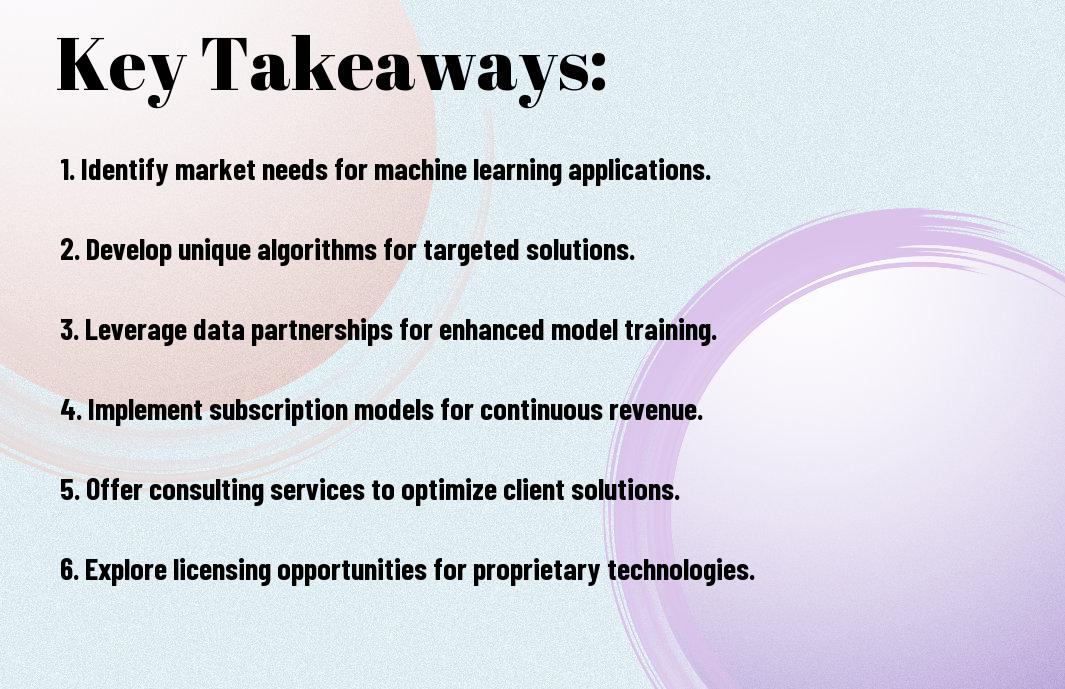
  • Startups can leverage machine learning to create new revenue streams by developing and licensing proprietary algorithms, models, and data sets to other companies, generating significant income through royalties and licensing fees.
  • Machine learning can be used to improve existing products and services, making them more attractive to customers and increasing their value proposition, which can lead to higher sales and revenue growth for startups.
  • Startups can utilize machine learning to offer data-driven services, such as predictive analytics and insights, to customers, providing them with valuable information to inform their business decisions and creating a new source of revenue.
  • Monetizing machine learning models through subscription-based services, where customers pay for access to the models and their outputs, can provide a steady stream of revenue for startups and help them scale their businesses.
  • Startups can also generate revenue by using machine learning to reduce costs and improve operational efficiency, and then passing these savings on to customers in the form of lower prices, making their offerings more competitive and attractive in the market.

The Value Proposition of Machine Learning

To unlock new revenue streams, you need to understand the value proposition of machine learning. You can leverage machine learning to drive business growth, improve customer experiences, and gain a competitive edge. By integrating machine learning into your startup, you can create new opportunities and increase your bottom line.

Identifying Profitable ML Applications

About the most effective way to monetize machine learning, you should focus on identifying profitable applications that align with your business goals. You can explore various use cases, such as predictive maintenance, customer segmentation, or personalized recommendations, to find the most promising opportunities for your startup.

Assessing Market Readiness

Profitably deploying machine learning models requires assessing market readiness. You need to evaluate whether your target market is prepared to adopt your machine learning-based solutions and whether there is a demand for them. You should conduct market research to determine the potential revenue streams and growth opportunities.

But as you assess market readiness, you will need to consider factors such as regulatory compliance, data privacy, and security. You should also evaluate the competitive landscape and assess the potential barriers to entry. By carefully evaluating these factors, you can determine whether your machine learning-based solutions are ready for market launch and whether they will generate significant revenue for your startup. You can then develop a go-to-market strategy that effectively addresses the needs of your target market and drives business growth.

Revenue Models for ML-Driven Startups

Clearly, developing a robust revenue model is necessary for your startup’s success. You need to consider various strategies to monetize your machine learning capabilities and unlock new revenue streams.

Subscription-Based Services

Around this concept, you can offer your customers access to exclusive machine learning-driven features and tools for a recurring fee, providing a steady stream of revenue for your startup.

Usage-Based Pricing Strategies

On the other hand, you can adopt usage-based pricing, where your customers pay based on their actual usage of your machine learning services, allowing you to generate revenue based on the value delivered.

Services like predictive analytics, natural language processing, and computer vision can be offered under usage-based pricing, enabling you to charge your customers based on the number of predictions, text processed, or images analyzed, giving you a flexible and scalable revenue stream.

Data Monetization Frameworks

After establishing a solid foundation in machine learning, you can leverage data monetization frameworks to unlock new revenue streams for your startup, enabling you to turn your data into a valuable asset that drives business growth.

Ethical Considerations

Along with the potential benefits of data monetization, you must consider the ethical implications of collecting, processing, and selling data, ensuring that your practices align with regulatory requirements and respect your customers’ privacy.

Privacy-Preserving Techniques

Beside the ethical considerations, you should also explore privacy-preserving techniques that allow you to protect sensitive information while still extracting value from your data, providing a secure and trustworthy environment for your customers.

PrivacyPreserving techniques are necessary for your startup, as they enable you to balance the need to monetize your data with the need to protect your customers’ sensitive information, you can use methods such as data anonymization, encryption, and secure multi-party computation to ensure that your data is handled responsibly and in compliance with regulations, allowing you to build trust with your customers and establish a strong reputation in the market.

Building ML Products That Sell

Once again, you’ll need to focus on creating machine learning products that meet the needs of your target market. Your goal is to develop solutions that solve real problems and provide tangible value to your customers.

User Experience Design

After considering your product’s functionality, you’ll want to prioritize user experience design. You should create an intuitive and seamless interface that makes it easy for your customers to interact with your machine learning product.

Technical Scalability

Products like yours require robust technical infrastructure to handle large volumes of data and user traffic. You must ensure that your machine learning product is scalable and can handle growth without compromising performance.

Understanding the technical requirements of your machine learning product is imperative to its success. You need to consider factors such as data storage, processing power, and network bandwidth to ensure that your product can handle increasing demand and provide reliable service to your customers.

Go-to-Market Strategies

For startups looking to monetize machine learning, developing effective go-to-market strategies is crucial. You need to consider your target audience, unique value proposition, and competitive landscape to successfully launch your product or service.

Positioning Against Competitors

Around the time you’re preparing to launch, you should assess your competitors’ strengths and weaknesses to position your product or service uniquely in the market, allowing you to differentiate your offerings and attract your target audience, helping you stand out from the competition.

Customer Acquisition Channels

Channels such as social media, content marketing, and paid advertising can be effective for acquiring customers, and you should consider which channels align best with your target audience and marketing goals, enabling you to reach and engage with potential customers.

Due to the complexity of machine learning solutions, you may need to invest in educational content and thought leadership initiatives to establish your authority in the market and build trust with potential customers, which can help drive conversions and ultimately, revenue growth for your startup.

Measuring ML Business Success

Unlike traditional business metrics, measuring the success of machine learning (ML) initiatives requires a unique set of benchmarks. You need to track key metrics that reflect the impact of ML on your business, such as revenue growth, customer engagement, and model accuracy.

Key Performance Indicators

One of the first steps in measuring ML success is identifying the right key performance indicators (KPIs) for your business. You will need to select metrics that align with your business goals, such as model precision, recall, or F1 score, to evaluate the effectiveness of your ML models.

Iterative Improvement Cycles

Performance metrics will help you refine your ML models over time. You can use these metrics to identify areas for improvement, retrain your models, and deploy updated versions, creating a cycle of continuous improvement that drives business value.

Further, as you iterate on your ML models, you will be able to refine your understanding of what drives business success, allowing you to make data-driven decisions and unlock new revenue streams for your startup, and you will be able to measure the impact of these improvements on your bottom line.

To wrap up

On the whole, you now have a comprehensive understanding of monetizing machine learning, enabling you to unlock new revenue streams for your startup. You can leverage your data to create innovative products and services, driving business growth and increasing your competitive edge. By applying these strategies, you will be able to capitalize on the vast potential of machine learning, transforming your business and securing your position in the market, with your unique offerings and solutions.

FAQ

Q: What are the primary ways startups can monetize machine learning models to unlock new revenue streams?

A: Startups can monetize machine learning models through various strategies, including offering predictive analytics as a service, creating and selling machine learning-powered products, licensing their models to other companies, and providing consulting services to help other businesses implement machine learning solutions. Additionally, startups can also generate revenue by offering subscription-based access to their machine learning-powered platforms, providing data labeling and enrichment services, and creating machine learning-based marketplaces. By exploring these avenues, startups can effectively unlock new revenue streams and maximize the potential of their machine learning investments.

Q: How can startups measure the effectiveness of their machine learning monetization strategies and identify areas for improvement?

A: To measure the effectiveness of their machine learning monetization strategies, startups should track key performance indicators (KPIs) such as revenue growth, customer acquisition costs, customer lifetime value, and model performance metrics like accuracy and precision. They should also conduct regular market research and gather feedback from customers to identify areas for improvement and optimize their strategies accordingly. Moreover, startups can leverage data analytics and visualization tools to gain insights into their machine learning models’ performance and make data-driven decisions to refine their monetization approaches. By continuously monitoring and evaluating their strategies, startups can refine their approaches and ensure they are maximizing their revenue potential.

Q: What are the common challenges startups face when trying to monetize their machine learning models, and how can they overcome them?

A: Startups often face challenges such as data quality issues, lack of skilled talent, regulatory compliance, and intense competition when trying to monetize their machine learning models. To overcome these challenges, startups should prioritize data quality and invest in data preprocessing and validation, attract and retain top talent by offering competitive compensation and benefits, and stay up-to-date with changing regulatory requirements. Additionally, startups can collaborate with other companies, research institutions, or industry experts to access new data sources, technologies, and expertise, and differentiate their offerings through innovative applications of machine learning. By being aware of these potential challenges and taking proactive steps to address them, startups can successfully navigate the process of monetizing their machine learning models and achieve their revenue goals.

Smart Scaling – How AI Helps Startups Navigate Rapid Growth

As you navigate the challenges of rapid growth, your startup faces unique obstacles. You must balance expanding operations with maintaining efficiency, all while keeping costs in check. Fortunately, you can leverage artificial intelligence (AI) to streamline processes, optimize resources, and make data-driven decisions, enabling your business to scale smarter, not just faster. By harnessing the power of AI, you can overcome growth hurdles and set your startup up for long-term success.

Key Takeaways:

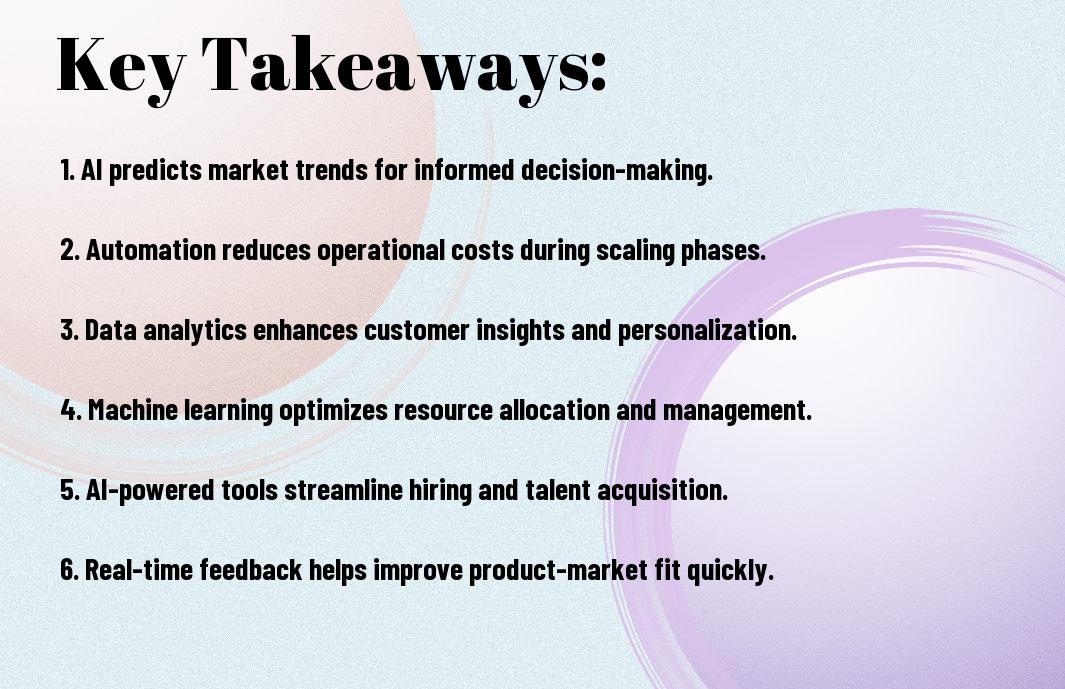
  • AI-powered tools can help startups scale efficiently by automating repetitive tasks, analyzing large datasets, and providing actionable insights to inform business decisions.
  • Smart scaling involves leveraging AI to optimize operations, streamline processes, and enhance customer experiences, ultimately driving revenue growth and competitiveness.
  • AI-driven analytics can help startups identify areas of improvement, predict market trends, and make data-driven decisions to mitigate risks associated with rapid growth.
  • Implementing AI solutions can enable startups to adapt quickly to changing market conditions, innovate continuously, and stay ahead of the competition in a rapidly evolving business landscape.
  • By embracing AI, startups can unlock new opportunities for growth, improve operational efficiency, and build a strong foundation for long-term success and sustainability.

    The AI Advantage in Startup Ecosystems

    For startups, leveraging AI can be a game-changer, enabling you to scale rapidly and efficiently. You can automate tasks, gain valuable insights, and make data-driven decisions, giving you a competitive edge in the market.

    Automating Operational Bottlenecks

    Among the many benefits of AI, automating repetitive tasks is a significant advantage, allowing you to free up resources and focus on high-value activities, such as strategy and innovation, to drive your startup’s growth.

    Predictive Analytics for Decision-Making

    Operationally, AI-powered predictive analytics helps you make informed decisions by analyzing large datasets and identifying patterns, enabling you to anticipate and respond to market trends, customer needs, and potential challenges.

    Hence, as you explore predictive analytics for decision-making, you’ll discover that AI algorithms can help you forecast revenue, optimize pricing, and identify new business opportunities, giving you the confidence to make strategic decisions that drive your startup’s success, and you can trust the data-driven insights to inform your choices, ultimately leading to better outcomes for your business.

    Data-Driven Customer Acquisition

    Even as your startup grows, acquiring new customers is vital. AI helps you analyze data to identify target audiences, creating personalized experiences that drive engagement and conversion.

    Personalization at Scale

    Along with AI-powered tools, you can tailor your marketing efforts to individual preferences, increasing the likelihood of attracting and retaining customers.

    Behavioral Pattern Recognition

    Among the many benefits of AI in customer acquisition, recognizing behavioral patterns stands out, enabling you to anticipate and respond to customer needs effectively.

    With behavioral pattern recognition, you can gain a deeper understanding of your customers’ actions and decision-making processes, allowing you to refine your marketing strategies and improve customer satisfaction, ultimately driving your startup’s growth and success, as you leverage AI to make data-driven decisions that propel your business forward.

    AI-Powered Resource Allocation

    Now that your startup is growing rapidly, you need to allocate resources efficiently to sustain this growth. AI helps you make data-driven decisions, ensuring your resources are utilized optimally.

    Smart Budgeting Systems

    Following the initial growth phase, afterwards, you’ll need to implement smart budgeting systems to manage your finances effectively. AI-powered tools help you create personalized budgets, track expenses, and forecast revenue, enabling you to make informed decisions about your financial resources.

    Talent Optimization Algorithms

    Alongside financial management, another aspect to consider is talent optimization. Accordingly, you can leverage AI-driven algorithms to identify the most skilled candidates, streamline your hiring process, and develop training programs tailored to your team’s needs.

    Due to the complexity of managing a rapidly growing team, you can use talent optimization algorithms to analyze your workforce’s performance, identifying areas where additional training or support is needed, and providing you with actionable insights to enhance your team’s overall productivity and job satisfaction.

    Scaling Without Infrastructure Bloat

    Many startups face the challenge of scaling their infrastructure to keep up with rapid growth, but this can often lead to unnecessary bloat and wasted resources. You need to find a way to scale efficiently, without sacrificing performance or breaking the bank.

    Cloud-Based AI Solutions

    Solutions like cloud-based AI platforms can help you navigate this challenge, providing the scalability and flexibility you need to grow your business without being tied to expensive hardware or infrastructure investments.

    Pay-As-You-Grow Technologies

    By leveraging pay-as-you-grow technologies, you can ensure that your infrastructure scales in line with your business needs, avoiding unnecessary costs and complexity.

    Considering pay-as-you-grow technologies can be a game-changer for your startup, as you only pay for the resources you use, allowing you to allocate your budget more efficiently and focus on driving growth and innovation, you can optimize your infrastructure to meet the evolving needs of your business, and make data-driven decisions to inform your scaling strategy.

    Risk Management Through Machine Learning

    To effectively navigate rapid growth, you need to leverage machine learning to identify potential risks and opportunities. This enables you to make informed decisions and stay ahead of the competition.

    Early Warning Systems

    Managing your startup’s growth requires proactive measures, such as implementing early warning systems that detect anomalies and alert you to potential issues, allowing you to take corrective action.

    Competitive Intelligence Gathering

    Among the key benefits of machine learning is its ability to gather competitive intelligence, providing you with valuable insights into your competitors’ strategies and market trends, enabling you to adjust your approach accordingly.

    Hence, as you probe deeper into competitive intelligence gathering, you’ll discover that machine learning algorithms can analyze vast amounts of data, including social media, customer reviews, and market reports, to identify patterns and trends that can inform your business decisions, giving you a competitive edge in the market and allowing you to make strategic decisions that drive your startup’s growth and success.

    Ethical Considerations in AI-Driven Growth

    Unlike traditional growth strategies, AI-driven scaling requires careful consideration of ethical implications. As you navigate rapid growth, you must prioritize ethical concerns to maintain trust and integrity.

    Privacy Safeguards

    After implementing AI solutions, you’ll need to ensure your customers’ data is protected. You should establish robust privacy safeguards to prevent unauthorized access and misuse of sensitive information.

    Algorithmic Transparency

    Above all, transparency is key to building trust in AI-driven decision-making. You should be able to explain how your algorithms work and make decisions, ensuring fairness and accountability in your processes.

    Another aspect of algorithmic transparency is understanding how your AI systems learn and adapt. As you scale, you’ll need to monitor your algorithms’ performance and adjust them to prevent bias and errors, ensuring your AI-driven growth is fair, reliable, and trustworthy, and that you can maintain control over your decision-making processes.

    Summing up

    Upon reflecting on the role of AI in startup growth, you can see how it enables your business to scale efficiently. As you navigate rapid expansion, AI helps you maintain high service standards. To learn more about leveraging AI for growth, visit From Startups to Scaleups: How AI Supports Growth Without Sacrificing Service, and discover how to take your business to the next level.

    FAQ

    Q: What is Smart Scaling and how does it benefit startups navigating rapid growth?

    A: Smart Scaling refers to the strategic use of artificial intelligence (AI) and data analytics to manage and optimize the growth of startups. By leveraging AI, startups can streamline operations, predict market trends, and make informed decisions, ultimately leading to sustainable and efficient growth. This approach enables startups to adapt quickly to changing market conditions, mitigate risks, and capitalize on new opportunities, thereby ensuring a strong foundation for long-term success.

    Q: How does AI contribute to the smart scaling of startups, particularly in terms of resource allocation and talent management?

    A: AI plays a significant role in smart scaling by providing startups with actionable insights that inform resource allocation and talent management decisions. For instance, AI-powered tools can analyze market data to identify areas of high demand, allowing startups to allocate resources more effectively. Additionally, AI-driven talent management systems can help startups identify, attract, and retain top talent by analyzing candidate data, predicting skill gaps, and recommending personalized development plans. This enables startups to build a high-performing team that can drive growth and innovation.

    Q: What are some common challenges that startups may face when implementing AI-driven smart scaling strategies, and how can they overcome these obstacles?

    A: Startups may face several challenges when implementing AI-driven smart scaling strategies, including data quality issues, lack of AI expertise, and integration with existing systems. To overcome these challenges, startups can invest in high-quality data infrastructure, partner with AI experts or consultants, and prioritize incremental implementation to ensure seamless integration with existing systems. Furthermore, startups should focus on building a culture of data-driven decision-making, providing training and upskilling programs for employees, and continuously monitoring and evaluating the effectiveness of their AI-driven smart scaling strategies to ensure they are achieving their intended goals.

Bonza training Skip to content