Wealth

Scaling Your Startup with Intelligent Automation – A Wealth Guide

As you navigate the challenges of growing your startup, you’re likely looking for ways to increase efficiency and drive growth. Your business is unique, and you need a tailored approach to scale successfully. You’ll discover how intelligent automation can help you streamline processes, reduce costs, and boost productivity, ultimately leading to increased revenue and competitiveness. By leveraging automation, you can take your startup to the next level and achieve your goals.

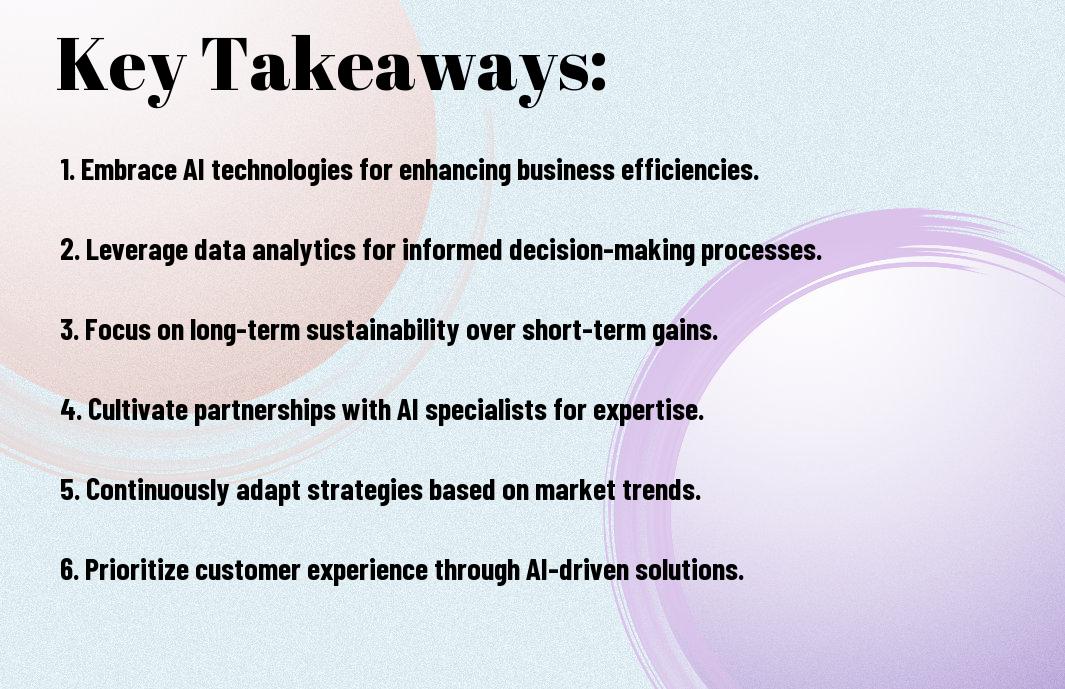
Key Takeaways:

  • Intelligent automation can significantly enhance the efficiency and productivity of startup operations, allowing businesses to scale more rapidly and effectively by streamlining processes and reducing manual labor.
  • Implementing intelligent automation requires a strategic approach, including identifying areas where automation can add the most value, selecting the right technologies, and developing a roadmap for implementation and integration.
  • Startups can leverage intelligent automation to improve customer experiences through personalized services, enhanced responsiveness, and round-the-clock support, which can be a key differentiator in competitive markets.
  • Intelligent automation also offers opportunities for startups to innovate and create new business models, products, and services, driving growth and expansion into new markets and sectors.
  • Effective adoption of intelligent automation involves ongoing monitoring and evaluation to ensure that automated systems continue to align with business objectives, adapt to changing conditions, and deliver expected outcomes and return on investment.
The Automation Imperative

The ability to scale your startup efficiently is dependent on your ability to automate tasks. You will need to identify areas where automation can help your business and implement intelligent systems to streamline processes. This will enable you to focus on high-level tasks and drive growth.

Why Startups Must Automate Early

Around the time you launch your startup, you should consider automating tasks to increase productivity. You can automate repetitive tasks, freeing up your time to focus on strategy and growth. This will help you establish a strong foundation for your business.

The Economic Case for Intelligent Systems

Systems that use artificial intelligence and machine learning can help you make data-driven decisions. You can use these systems to analyze your business performance and identify areas for improvement. This will enable you to optimize your operations and increase efficiency.

Automation allows you to take your business to the next level by reducing manual errors and increasing productivity. You can use automation to streamline tasks such as customer service, data entry, and bookkeeping. By automating these tasks, you can focus on high-level tasks such as strategy and growth, and make your business more competitive in the market. You will be able to respond quickly to changes in the market and make informed decisions about your business.

Identifying Automation Opportunities

Clearly, identifying areas where automation can have the greatest impact is imperative for your startup’s growth. You need to assess your operations, pinpointing tasks that are repetitive, time-consuming, or prone to errors, and prioritize them for automation.

Process Mapping for Scalability

Scalably, you should map out your processes to identify bottlenecks and areas where automation can enhance efficiency. You will be able to visualize your workflows and pinpoint opportunities for automation, enabling your startup to scale more effectively.

Low-Hanging Fruit vs. Strategic Automation

To tackle automation, you should differentiate between quick fixes and long-term strategic decisions. You will need to weigh the benefits of automating simple tasks against the potential of transforming your entire business model through strategic automation.

Understanding the difference between low-hanging fruit and strategic automation is key to making informed decisions about your startup’s automation journey. You will be able to prioritize initiatives that drive the most value, whether it’s streamlining everyday tasks or revolutionizing your core operations, and make deliberate choices that align with your overall business goals, allowing your startup to scale intelligently and efficiently.

Technology Selection Framework

Your technology selection framework is crucial for scaling your startup with intelligent automation, as it enables you to evaluate and choose the best solutions for your business needs.

Build vs. Buy Considerations

Any decision to build or buy automation technology depends on your specific requirements, resources, and expertise, and you should weigh the pros and cons of each option carefully.

Integration Requirements

Framework for integration is vital to ensure seamless interaction between different systems and tools, and you should consider your existing infrastructure and potential future needs when selecting automation technology.

Also, when evaluating integration requirements, you should consider the scalability and flexibility of the technology, as well as its ability to integrate with other systems and tools, to ensure that it can adapt to your growing business needs and evolving landscape.

Implementation Roadmap

Keep in mind that a well-planned implementation roadmap is important for scaling your startup with intelligent automation. You will need to consider various factors, including your business goals, existing infrastructure, and potential roadblocks. By doing so, you can ensure a smooth transition and maximize the benefits of automation.

Phased Deployment Strategy

One key aspect of a successful implementation is a phased deployment strategy, which allows you to test and refine your automation solutions before full-scale deployment. You can start by automating a single process or department, and then gradually expand to other areas of your business, allowing you to assess and adjust as needed.

Resource Allocation Principles

Principally, your resource allocation strategy should prioritize areas of high impact and efficiency. You should focus on allocating resources to processes that will yield the greatest returns, and ensure that your team has the necessary skills and support to implement and maintain automation solutions.

It is important to consider your specific business needs and goals when allocating resources for intelligent automation. You should assess your current infrastructure, identify potential bottlenecks, and allocate resources accordingly, ensuring that your automation solutions are tailored to your unique requirements and maximize your return on investment.

Human Capital Optimization

Now that you’re scaling your startup, it’s crucial to optimize your human capital to maximize efficiency and productivity. You need to align your workforce with your automation strategy to achieve your business goals.

Reskilling Your Workforce

Across various industries, you’ll need to upskill your employees to work alongside automation technologies, enabling them to focus on high-value tasks that drive business growth.

Creating Automation Champions

By empowering your team members to take ownership of automation initiatives, you can drive innovation and increase adoption across your organization, leading to improved productivity and efficiency.

Hence, as you create automation champions, you’ll be able to leverage their expertise to identify areas where automation can have the most significant impact, and develop strategies to implement and optimize automation solutions, ultimately driving your business forward and achieving your goals.

Measuring Automation ROI

Unlike manual processes, automation provides you with a clear picture of your return on investment. You can track the efficiency and productivity gains achieved through automation, allowing you to make data-driven decisions to optimize your operations.

Key Performance Indicators

One of the first steps in measuring automation ROI is identifying the key performance indicators that matter most to your business. You will need to determine which metrics to track, such as cost savings, productivity gains, or error reduction, to evaluate the success of your automation efforts.

Iteration Methodologies

About the most effective way to measure automation ROI, you will find that iterative methodologies are crucial. You can refine your approach by continuously monitoring and adjusting your automation strategies to achieve better results.

Indicators such as cycle time, throughput, and defect rate can help you assess the effectiveness of your automation efforts. You can use these metrics to identify areas for improvement and make adjustments to your automation strategies, allowing you to optimize your operations and achieve greater ROI over time. As you continue to refine your approach, you will be able to make more informed decisions about your automation investments and drive greater value for your business.

Summing up

Upon reflecting on the strategies outlined, you now have a comprehensive understanding of how to scale your startup with intelligent automation. You can leverage automation to streamline your operations, enhance efficiency, and drive growth. By implementing these tactics, you will be able to optimize your business processes, making your startup more competitive and increasing your chances of success. Your ability to adapt and innovate will be key to achieving your goals and taking your startup to the next level.

FAQ

Q: What is Intelligent Automation and how can it help my startup scale?

A: Intelligent Automation refers to the use of advanced technologies such as artificial intelligence, machine learning, and robotic process automation to automate business processes. It can help your startup scale by increasing efficiency, reducing costs, and improving productivity. By automating repetitive and mundane tasks, you can free up resources to focus on high-value tasks such as strategy, innovation, and customer engagement. Additionally, Intelligent Automation can help you make data-driven decisions, improve customer experience, and gain a competitive edge in the market.

Q: What are the key benefits of implementing Intelligent Automation in my startup?

A: The key benefits of implementing Intelligent Automation in your startup include increased efficiency and productivity, improved accuracy and quality, enhanced customer experience, and reduced costs. Intelligent Automation can also help you to improve decision-making, reduce the risk of errors, and increase agility and responsiveness to changing market conditions. Furthermore, it can help you to scale your business quickly and efficiently, without having to proportionally increase your workforce. By leveraging Intelligent Automation, you can achieve significant benefits and drive business growth.

Q: How can I get started with implementing Intelligent Automation in my startup, and what are the key steps to ensure a successful implementation?

A: To get started with implementing Intelligent Automation in your startup, you should first identify areas of your business that can be automated, such as data entry, customer service, or bookkeeping. Next, you should assess your current processes and systems to determine where automation can have the greatest impact. You should then select the right automation tools and technologies for your business, and develop a clear implementation plan and timeline. It’s also important to train your staff on the new automated processes and systems, and to monitor and evaluate the effectiveness of the automation implementation. Additionally, you should consider seeking the advice of experts and consultants who have experience with Intelligent Automation implementations to ensure a successful rollout and to minimize potential risks and challenges.

The Wealth-Building Impact of AI – Insights from Leading Entrepreneurs

As you navigate the ever-evolving landscape of business and technology, you’re likely aware of the significant role artificial intelligence (AI) plays in shaping your financial future. Your ability to leverage AI can be a key differentiator in achieving long-term success. You’ll discover how AI is transforming the way entrepreneurs build wealth, and gain valuable insights from leading entrepreneurs who have successfully harnessed its power to drive growth and profitability.

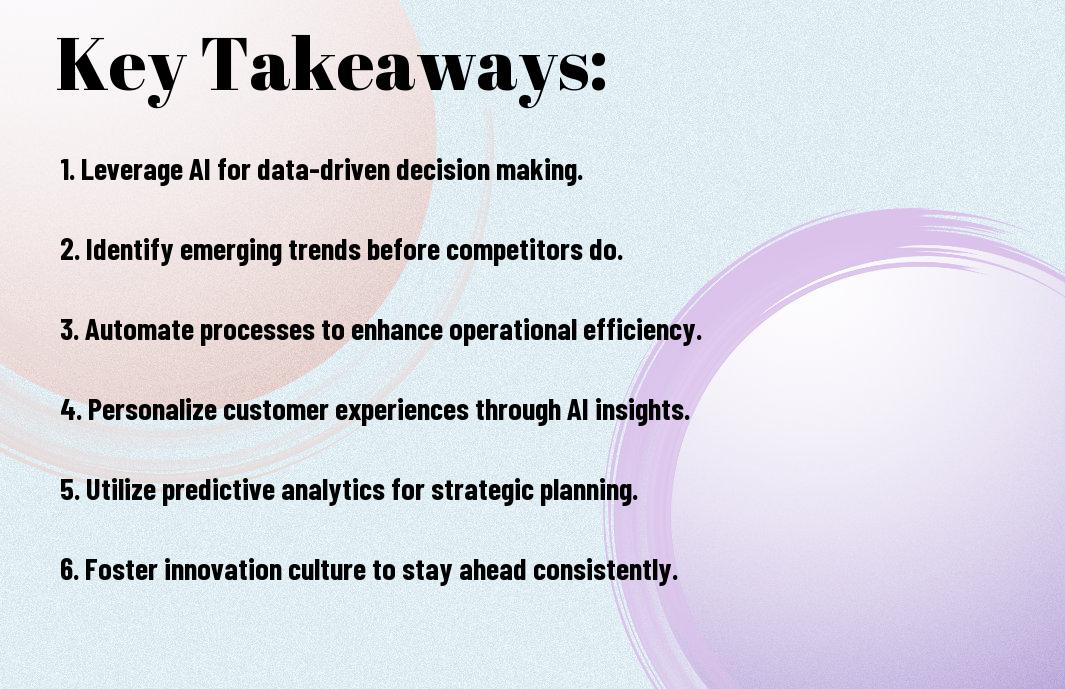
Key Takeaways:

  • Artificial intelligence (AI) is transforming the way businesses operate, creating new opportunities for wealth creation and growth, as highlighted by leading entrepreneurs who have successfully leveraged AI to drive innovation and profitability.
  • The integration of AI in business models can lead to significant increases in efficiency, productivity, and competitiveness, enabling companies to stay ahead of the curve in today’s fast-paced digital landscape.
  • Leading entrepreneurs emphasize the importance of investing in AI research and development to stay competitive, as well as fostering a culture of innovation and experimentation within their organizations.
  • AI-driven technologies, such as machine learning and natural language processing, are being used to develop new products and services, and to improve customer experiences, leading to increased revenue and market share.
  • The effective use of AI can also lead to the creation of new business models and revenue streams, such as data-driven services and AI-powered consulting, providing entrepreneurs with new opportunities for wealth-building and growth.

    AI as the New Gold Rush

    Your ability to capitalize on AI’s potential will depend on your willingness to adapt and innovate, as this technology is transforming industries and creating new opportunities for wealth creation.

    Early Adopters and Their Fortunes

    Gaining an early advantage in the AI space can lead to significant financial gains, as seen with pioneers who have successfully leveraged AI to disrupt markets and create new business models.

    Barriers to Entry in the AI Economy

    Entering the AI economy can be challenging due to the high costs of development, the need for specialized talent, and the complexity of integrating AI into existing systems, which can hinder your progress.

    Their inability to overcome these barriers can limit your potential for growth and profitability in the AI-driven market, making it vital for you to carefully plan and execute your AI strategy to stay competitive.

    The Democratization of AI Wealth

    It is now possible for you to access AI technologies that were previously exclusive to large corporations, allowing you to build wealth and grow your business like never before.

    How Small Entrepreneurs Leverage AI

    Any aspiring entrepreneur can now utilize AI-powered tools to streamline operations, making it easier for you to focus on growing your business and increasing your wealth.

    Subscription Models and Passive Income

    Wealth creation through AI-driven subscription models is becoming increasingly popular, enabling you to generate passive income and build a sustainable financial future.

    Another key aspect of subscription models is that they provide you with a predictable revenue stream, allowing you to plan and invest in your business with confidence, and ultimately, increase your wealth over time as you continue to leverage the power of AI in your business endeavors.

    AI’s Impact on Traditional Business Models

    After analyzing the effects of AI on various sectors, you can see how it’s changing the game. You can learn more about The Impact of Artificial Intelligence on Wealth Creation and its significance in your business.

    Industries Transformed

    Industry leaders are witnessing a significant shift in their operations, and you are likely to experience it too. You will notice changes in the way businesses function, making it important to adapt to the new landscape.

    The New Rules of Competitive Advantage

    Impact of AI on your business can be substantial, and you need to understand the new rules. You will have to rethink your strategy to stay ahead of the competition.

    Competitive advantage in the AI era requires you to be agile and innovative, leveraging technology to enhance your operations and customer experience. You will need to focus on developing a unique value proposition that sets you apart from others, and AI can be a key differentiator in achieving this goal.

    Building Wealth Through AI Automation

    All successful entrepreneurs understand that automation is key to building wealth, and AI is at the forefront of this revolution. You can leverage AI to streamline your business operations, reduce costs, and increase efficiency, ultimately leading to increased profits and wealth creation.

    Labor Arbitrage and Scaling

    Besides the cost savings, AI automation also enables you to scale your business quickly and efficiently, allowing you to take advantage of new opportunities and stay ahead of the competition. You can use AI to automate repetitive tasks, freeing up your time to focus on high-leverage activities that drive growth and wealth creation.

    The Compounding Effect of AI Investments

    For instance, when you invest in AI, you can expect a significant return on investment, which can be reinvested to generate even more wealth. You can use AI to identify new investment opportunities, optimize your portfolio, and make data-driven decisions to maximize your returns.

    But as you continue to invest in AI, you’ll find that the compounding effect can be staggering, with your wealth growing exponentially over time. You’ll be able to leverage AI to identify new trends, anticipate market shifts, and make strategic decisions that drive long-term wealth creation, allowing you to achieve your financial goals and build a lasting legacy.

    Ethical Considerations in AI Wealth Creation

    Once again, you will encounter complex issues as you examine into the world of AI-driven wealth creation, and ethical considerations will play a significant role in shaping your approach, as you navigate the potential benefits and drawbacks of this technology, considering its impact on your business and society.

    Addressing Inequality

    Construction of a more equitable system is key to ensuring that AI wealth creation benefits everyone, as you consider the potential consequences of AI on your workforce and the broader social landscape, you must think about how to mitigate any negative effects on your community.

    Responsible Innovation Practices

    Contemplation of the potential risks and benefits of AI is imperative, as you develop your strategy for AI wealth creation, you will need to prioritize responsible innovation practices, considering the long-term implications of your actions on your business and the world at large, and thinking about how to align your goals with societal values.

    But as you implement responsible innovation practices, you will have to balance competing demands, such as the need for profit and the need for social responsibility, and you will have to consider the potential trade-offs between these competing interests, thinking carefully about how to create a framework that supports both your business goals and the well-being of your stakeholders, and ensuring that your approach to AI wealth creation is both sustainable and ethical, reflecting your values and priorities as a business leader.

    Future Trends in AI-Driven Wealth

    Keep an eye on the future of AI-driven wealth, as it continues to evolve and transform the way you build and manage your wealth. You will see significant advancements in AI technology, leading to new opportunities and challenges.

    Emerging Opportunities

    Prior to the current trends, you may have thought that AI was only for large corporations, but now you can leverage AI to identify new investment opportunities and optimize your portfolio. You will be able to make data-driven decisions, giving you a competitive edge.

    Preparing for the Next Wave

    For your wealth-building strategy to succeed, you need to stay ahead of the curve and adapt to the changing landscape of AI-driven wealth. You should focus on developing a deep understanding of AI and its applications, allowing you to make informed decisions about your investments.

    Plus, as you prepare for the next wave of AI-driven wealth, you will need to consider the potential risks and challenges associated with AI, such as job displacement and cybersecurity threats. You should develop a comprehensive strategy to mitigate these risks and ensure that your wealth-building efforts are sustainable and resilient in the long term.

    Summing up

    Drawing together the insights from leading entrepreneurs, you now have a clearer understanding of the wealth-building impact of AI on your business. You can leverage AI to drive innovation, optimize operations, and create new revenue streams, ultimately transforming your enterprise. As you move forward, your ability to adapt and harness AI’s potential will be key to unlocking your company’s full potential and staying ahead in a rapidly evolving market.

    FAQ

    Q: What is the current state of AI adoption among entrepreneurs, and how is it impacting their wealth-building strategies?

    A: According to leading entrepreneurs, AI adoption is on the rise, with many leveraging its potential to automate tasks, gain data-driven insights, and drive innovation. This shift is significantly impacting their wealth-building strategies, as AI enables them to make more informed decisions, optimize operations, and create new revenue streams. By harnessing the power of AI, entrepreneurs can streamline their businesses, reduce costs, and increase efficiency, ultimately leading to increased profitability and wealth creation.

    Q: How are entrepreneurs using AI to drive business growth and stay competitive in their respective markets?

    A: Entrepreneurs are utilizing AI in various ways to drive business growth, including using machine learning algorithms to analyze customer data and personalize marketing efforts, implementing chatbots to enhance customer service, and leveraging predictive analytics to forecast market trends. Additionally, AI-powered tools are being used to automate routine tasks, freeing up time for entrepreneurs to focus on high-level strategy and innovation. By embracing AI, entrepreneurs can gain a competitive edge, improve customer engagement, and drive business expansion.

    Q: What skills and knowledge do entrepreneurs need to acquire to effectively harness the wealth-building potential of AI and stay ahead of the curve?

    A: To effectively leverage AI for wealth-building, entrepreneurs should acquire skills in data analysis, machine learning, and programming. They should also stay up-to-date with the latest AI trends, technologies, and applications, and be willing to invest in AI-powered tools and platforms. Furthermore, entrepreneurs need to develop a deep understanding of their customers’ needs and preferences, as well as the ability to integrate AI solutions into their existing business models. By acquiring these skills and knowledge, entrepreneurs can unlock the full potential of AI and drive sustainable wealth creation in their businesses.

The AI Playbook for Entrepreneurs – Tactics for Sustainable Wealth Creation

As you navigate the ever-evolving landscape of entrepreneurship, you’re likely aware of the significant impact artificial intelligence (AI) can have on your business. You’re looking to harness the power of AI to drive growth and create sustainable wealth. Your goal is to stay ahead of the curve and make informed decisions that propel your business forward. This guide will provide you with the imperative tactics and strategies to leverage AI and achieve long-term success, helping you unlock your full potential as an entrepreneur.

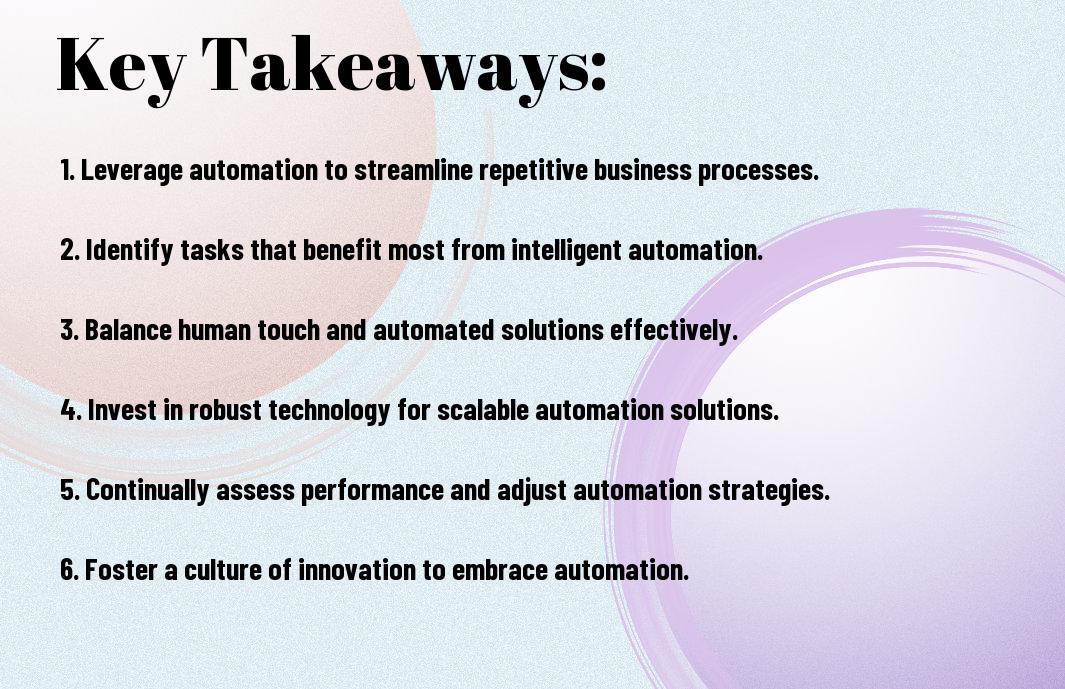
Key Takeaways:

  • The book provides a comprehensive guide for entrepreneurs to leverage AI in their businesses, focusing on strategies that drive sustainable wealth creation and long-term success.
  • It highlights the importance of understanding AI technologies, such as machine learning and deep learning, and how they can be applied to various industries and business models.
  • Entrepreneurs can gain insights into how to identify opportunities for AI adoption, assess their business’s readiness for AI implementation, and develop a roadmap for integration.
  • The book also explores the potential risks and challenges associated with AI adoption, including data privacy concerns, job displacement, and the need for ongoing education and training.
  • By applying the tactics and strategies outlined in the book, entrepreneurs can harness the power of AI to drive innovation, improve efficiency, and create sustainable wealth, ultimately gaining a competitive edge in their respective markets.

Identifying AI Opportunities

A key step in leveraging AI for sustainable wealth creation is identifying opportunities that align with your business goals. You will need to analyze your industry, competitors, and target market to determine where AI can add value.

Market Gap Analysis

Matching your AI strategy to market needs is vital, you must assess the current landscape to pinpoint areas where AI can fill gaps and improve existing solutions, allowing you to capitalize on untapped opportunities.

Value Creation Assessment

After identifying potential AI applications, you should evaluate their potential to create value for your business, considering factors such as cost savings, revenue growth, and competitive advantage, to ensure that your AI investments yield meaningful returns.

In fact, conducting a thorough value creation assessment enables you to prioritize AI projects, allocate resources effectively, and measure the success of your AI initiatives, allowing you to refine your strategy and make data-driven decisions that drive your business forward, helping you to achieve your goals and create sustainable wealth.

Building AI-Enhanced Business Models

Any entrepreneur looking to create sustainable wealth must consider the role of AI in their business. You will need to assess your current models and identify areas where AI can enhance your operations, improve efficiency, and increase revenue.

Recurring Revenue Structures

AI-Driven business models enable you to create recurring revenue streams, allowing your business to generate consistent income. You can leverage AI to develop subscription-based services, offering your customers ongoing value and support, which in turn, provides your business with a predictable revenue stream.

Scalability Frameworks

Across various industries, AI-enhanced scalability frameworks enable you to expand your business rapidly and efficiently. You can use AI to automate processes, analyze data, and make informed decisions, allowing your business to scale quickly and effectively.

But as you develop your scalability frameworks, you will need to consider the complexity of your operations and the potential challenges that come with rapid growth. You must ensure that your AI systems can handle increased traffic, data, and customer demand, and that your team is equipped to manage the expanded operations, allowing your business to scale sustainably and maintain its competitive edge.

Capital Efficiency in AI Ventures

For entrepreneurs, capital efficiency is key to sustainable wealth creation in AI ventures, as it enables you to maximize returns while minimizing costs and risks, allowing your business to scale and thrive in a competitive market.

Bootstrap Strategies

Economizing on resources, you can adopt bootstrap strategies to reduce your startup costs, such as leveraging open-source AI tools and outsourcing non-core functions, which enables you to allocate more resources to high-priority areas of your business.

Strategic Investment Allocation

Allocating your resources wisely, an informed investment approach is vital to drive growth and profitability in your AI venture, as you need to balance short-term needs with long-term goals, and prioritize investments that will generate the highest returns.

In fact, as you develop your strategic investment allocation plan, you will need to consider various factors, including your business objectives, risk tolerance, and market trends, to ensure that your investments are aligned with your overall vision and strategy, and that you are maximizing your returns while minimizing waste and inefficiency, which will ultimately contribute to the success and sustainability of your AI venture.

Risk Management for AI Entrepreneurs

Keep your AI venture on track by prioritizing risk management, as it directly impacts your sustainable wealth creation goals. You must consider various factors, including technical, regulatory, and financial risks, to ensure your business thrives in the long term.

Technical Debt Considerations

For instance, your AI systems’ technical debt can quickly accumulate, leading to increased maintenance costs and decreased efficiency. You should regularly assess your technology stack and address any issues promptly to avoid significant problems down the line.

Regulatory Navigation

On the regulatory front, you face a complex landscape of laws and guidelines that govern AI development and deployment. You must stay informed about relevant regulations and ensure your business complies with them to avoid potential penalties and reputational damage.

This regulatory navigation requires ongoing effort and attention, as laws and regulations are continually evolving. You should establish a process to monitor changes in the regulatory environment and adjust your business strategies accordingly, ensuring you remain compliant and competitive in the market. You can achieve this by setting up a dedicated team or partnering with experts who specialize in AI regulation, allowing you to focus on your core business while staying ahead of regulatory requirements.

AI Competitive Advantage

Now that you’re exploring AI, you’ll discover that harnessing its power can significantly enhance your business’s competitive edge. By leveraging AI, you can automate tasks, gain valuable insights, and make data-driven decisions to stay ahead of the competition.

Proprietary Data Moats

On the path to establishing a strong AI competitive advantage, you’ll need to focus on building proprietary data moats that protect your business from competitors. You can achieve this by collecting and analyzing unique data sets that are exclusive to your company.

Network Effect Amplification

To amplify your AI competitive advantage, you’ll want to tap into the power of network effects. You can do this by creating AI-driven platforms that become more valuable to users as more people use them, thereby increasing your market share and reinforcing your competitive position.

Plus, as you continue to leverage network effects, you’ll find that your AI systems become increasingly sophisticated, allowing you to refine your products and services, and further differentiate yourself from competitors, ultimately leading to sustainable wealth creation and long-term success for your business.

Long-term Value Creation

Once again, you’ll find that creating sustainable wealth is about making strategic decisions that benefit your business in the long run, rather than just focusing on short-term gains. You need to prioritize investments that will generate returns over time, and be patient as your business grows and matures.

Customer Retention Economics

Valuing your existing customers is key to driving revenue and reducing acquisition costs. You can achieve this by offering personalized experiences, loyalty programs, and exceptional customer service, which will encourage customers to stay with your business and become repeat customers.

Sustainable Growth Metrics

On the path to sustainable growth, you’ll need to track metrics that indicate your business’s overall health and potential for long-term success. You should focus on metrics such as customer lifetime value, retention rates, and return on investment, which will give you a clear picture of your business’s performance.

Growth is a continuous process, and you’ll need to regularly assess and adjust your strategies to ensure you’re on track to meet your goals. As you monitor your sustainable growth metrics, you’ll be able to identify areas for improvement and make data-driven decisions that will drive your business forward, helping you achieve sustainable wealth creation and long-term success.

Final Words

So, as you conclude your journey through “The AI Playbook for Entrepreneurs – Tactics for Sustainable Wealth Creation”, you now possess the knowledge to harness AI’s potential. You can apply these strategies to your business, driving innovation and growth. Your path to sustainable wealth creation is clearer, and with AI by your side, you are equipped to make informed decisions and stay ahead in the competitive landscape.

FAQ

Q: What is “The AI Playbook for Entrepreneurs – Tactics for Sustainable Wealth Creation” and how can it benefit my business?

A: “The AI Playbook for Entrepreneurs – Tactics for Sustainable Wealth Creation” is a comprehensive guide designed to help entrepreneurs leverage Artificial Intelligence (AI) to create sustainable wealth. This playbook offers practical strategies and tactics to integrate AI into various aspects of business operations, from marketing and customer service to product development and financial management. By following the playbook, entrepreneurs can enhance efficiency, reduce costs, improve customer satisfaction, and ultimately drive business growth and profitability.

Q: How does “The AI Playbook for Entrepreneurs” address the challenge of implementing AI solutions in a small to medium-sized enterprise (SME) with limited resources?

A: The playbook is tailored to cater to the needs of SMEs, providing actionable advice on how to implement AI solutions with limited resources. It outlines cost-effective strategies for AI adoption, including the use of open-source tools, cloud-based services, and collaborative partnerships. Additionally, it offers guidance on prioritizing AI projects, building a skilled team, and measuring the return on investment (ROI) of AI initiatives, ensuring that SMEs can make the most of their resources and achieve significant benefits from AI adoption.

Q: What kind of support or community resources are available for entrepreneurs who are using “The AI Playbook for Entrepreneurs – Tactics for Sustainable Wealth Creation” to transform their businesses with AI?

A: To support entrepreneurs in their AI journey, “The AI Playbook for Entrepreneurs” is complemented by a range of community resources and support mechanisms. These include online forums where entrepreneurs can share their experiences, ask questions, and get feedback from peers and AI experts. Furthermore, regular webinars, workshops, and updates on the latest AI trends and technologies are provided to ensure that entrepreneurs stay ahead of the curve. Access to a network of mentors and AI specialists is also available, offering personalized guidance and consulting services to help entrepreneurs overcome specific challenges and achieve their business goals.

Disrupting Markets – AI Strategies for Outpacing Competitors and Building Wealth

You are on the cusp of a revolution in business, where artificial intelligence (AI) is transforming the landscape. As you navigate this new terrain, you can leverage AI to outmaneuver your competitors and build wealth. Your ability to adapt and innovate will be key to staying ahead, and with the right AI strategies, you can disrupt markets and achieve unparalleled success. You will learn how to harness AI’s power to drive your business forward.

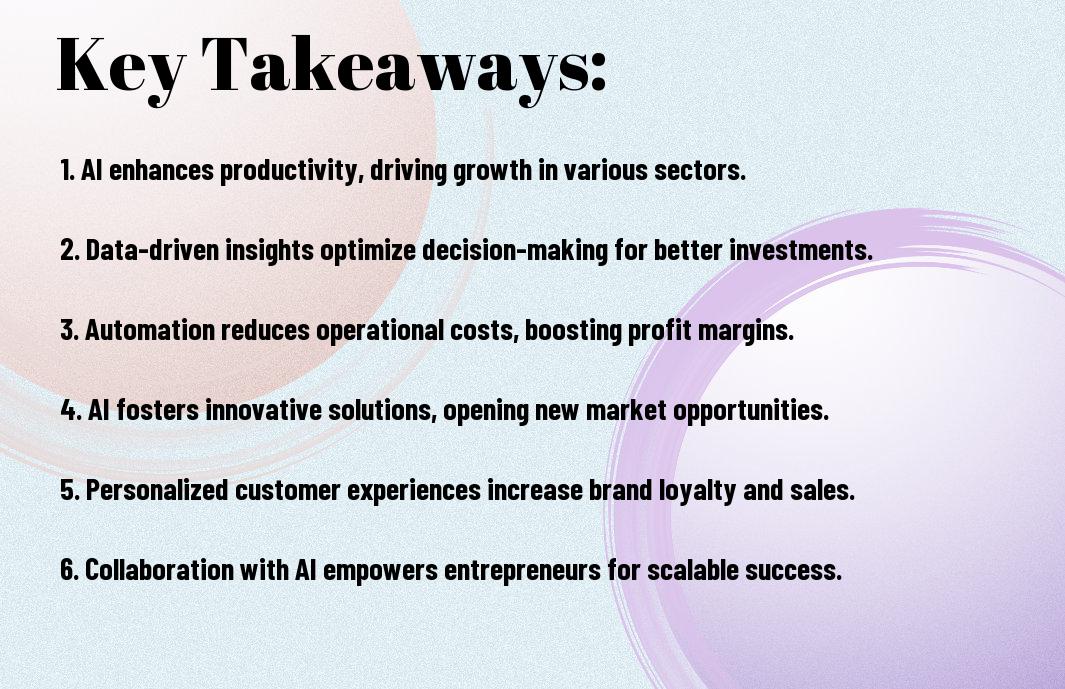
Key Takeaways:

  • Embracing AI can be a significant factor in outpacing competitors, as it enables businesses to innovate and improve their operations, leading to increased efficiency and profitability.
  • Implementing AI strategies requires a deep understanding of the technology and its potential applications, as well as a willingness to experiment and adapt to changing market conditions.
  • AI can help businesses identify and capitalize on new market opportunities, such as emerging trends and untapped customer needs, allowing them to stay ahead of the competition.
  • Effective AI strategies involve integrating the technology into existing business processes, rather than treating it as a separate entity, to maximize its potential impact and create a competitive advantage.
  • By leveraging AI, businesses can build wealth and drive long-term growth, but this requires a strategic and sustained commitment to innovation and investment in the technology.

The AI Revolution in Market Dynamics

To stay ahead in today’s fast-paced business landscape, you need to understand the impact of AI on market dynamics. You will learn how AI strategies can help you outpace competitors and build wealth.

Creative Destruction and Market Inefficiencies

Revamping traditional market structures, AI introduces new opportunities for growth. You can leverage AI to identify and capitalize on market inefficiencies, giving you a competitive edge.

The Exponential Advantage

Accelerating your business growth, AI provides an exponential advantage. You can utilize AI to analyze vast amounts of data, make informed decisions, and drive innovation.

It is necessary to recognize that the exponential advantage of AI is not just about technology, but about how you choose to apply it to your business. You can use AI to automate routine tasks, freeing up resources for more strategic initiatives, and enabling you to focus on high-value activities that drive growth and profitability. By harnessing the power of AI, you can unlock new opportunities, disrupt markets, and build wealth.

Strategic AI Implementation

Any successful AI strategy begins with a clear understanding of your business goals and objectives. You need to identify areas where AI can have the greatest impact and develop a roadmap for implementation. This involves assessing your current infrastructure, data assets, and talent pool to determine the best approach for integrating AI into your operations.

Algorithmic Decision-Making Frameworks

Around the development of AI, you’ll need to establish frameworks that support algorithmic decision-making. You should consider how AI will inform your business decisions and develop processes to ensure that AI-driven insights are integrated into your decision-making workflows.

Predictive Analytics as Competitive Moat

Between the various AI strategies you can employ, predictive analytics stands out as a key differentiator. You can use predictive analytics to forecast market trends, anticipate customer behavior, and identify new business opportunities, giving you a significant edge over your competitors.

Moat of predictive analytics is what sets your business apart from others, providing a sustainable competitive advantage. You can leverage predictive analytics to optimize your operations, improve customer engagement, and drive revenue growth, making it an necessary component of your AI strategy. As you develop your predictive analytics capabilities, you’ll be able to make more informed decisions and stay ahead of the competition.

Data as the New Capital

Keep in mind that data is the lifeblood of any successful AI strategy, and having access to the right information can be a major differentiator in outpacing your competitors.

Proprietary Data Ecosystems

Driven by the need for unique insights, you will need to develop proprietary data ecosystems that provide your business with a competitive edge, enabling you to make informed decisions and drive growth.

Mining Behavioral Insights

Albeit complex, mining behavioral insights from your data can help you better understand your customers and develop targeted strategies to meet their needs, ultimately driving business success.

Even as you probe deeper into the world of data analysis, you will find that mining behavioral insights can help you identify patterns and trends that may not be immediately apparent, allowing you to refine your approach and make more informed decisions about your business, giving you a significant advantage over your competitors and enabling you to build wealth in the process.

AI-Driven Business Models

Unlike traditional business models, AI-driven models focus on leveraging artificial intelligence to create new revenue streams and disrupt markets, allowing you to outpace your competitors and build wealth.

Platform Economics and Network Effects

Akin to a snowball effect, platform economics and network effects can help your business grow exponentially, as more users join your platform, increasing its value and attracting even more users, ultimately benefiting your bottom line.

Subscription and Recurring Revenue Structures

At the heart of many successful AI-driven businesses are subscription and recurring revenue structures, which provide you with a steady stream of income and encourage customer loyalty, allowing you to focus on innovating and expanding your offerings.

Effects of implementing subscription and recurring revenue structures can be significant, as you’ll be able to better predict your cash flow, invest in new technologies, and respond to changing market conditions, giving you a competitive edge and enabling you to achieve your business goals more efficiently.

Risk Management in AI Deployment

Once again, you will need to consider the potential risks associated with AI deployment, as they can have a significant impact on your business. You must assess and mitigate these risks to ensure successful AI integration and maintain a competitive edge.

Technical Debt and System Vulnerabilities

Along with the benefits of AI, you will also encounter technical challenges that can lead to system vulnerabilities. You should be aware of these potential issues and take steps to address them, ensuring the security and reliability of your AI systems.

Regulatory Navigation and Ethical Considerations

Risky AI deployments can lead to regulatory issues and ethical concerns. You must navigate these complexities to avoid potential pitfalls and ensure your AI systems are compliant with relevant laws and regulations.

Ethical considerations are paramount when deploying AI, as you will be dealing with sensitive data and making decisions that can impact your customers and business. You should prioritize transparency, fairness, and accountability in your AI systems, ensuring that they align with your values and principles, and those of your stakeholders, to build trust and maintain a positive reputation.

Talent Acquisition and Development

For businesses seeking to outpace competitors, acquiring and developing top AI talent is necessary. You need to attract and retain skilled professionals who can drive innovation and growth in your organization.

Building High-Performance AI Teams

Alongside assembling a talented team, you should focus on creating an environment that fosters collaboration and creativity, allowing your team to thrive and drive your AI strategy forward.

Cultivating Institutional Knowledge

Developing a deep understanding of AI and its applications within your organization is vital. You can achieve this by investing in training and development programs that enhance your team’s skills and knowledge.

Talent acquisition is just the first step in building a successful AI team. As you cultivate institutional knowledge, you will be able to leverage your team’s expertise to drive business growth, improve decision-making, and stay ahead of the competition, allowing you to make the most of your AI investments and achieve your business goals.

Final Words

Considering all points, you now have the tools to disrupt markets and outpace competitors. You can leverage AI strategies to build wealth and stay ahead. To succeed, you must prioritize speed and agility, as In the age of AI: Speed matters more, scale matters less. By embracing this mindset, you will be well-equipped to drive innovation and achieve your business goals.

FAQ

Q: What is the main concept of “Disrupting Markets – AI Strategies for Outpacing Competitors and Building Wealth” and how can it help businesses?

A: The main concept of “Disrupting Markets – AI Strategies for Outpacing Competitors and Building Wealth” revolves around leveraging Artificial Intelligence (AI) to innovate and disrupt existing market dynamics, thereby outpacing competitors and creating new wealth opportunities. This approach focuses on utilizing AI technologies to analyze market trends, predict consumer behavior, and develop innovative products and services that meet evolving customer needs. By adopting AI strategies, businesses can enhance their competitiveness, improve operational efficiency, and unlock new revenue streams, ultimately leading to sustained growth and wealth creation.

Q: How can small and medium-sized enterprises (SMEs) implement AI strategies to disrupt markets and compete with larger corporations?

A: SMEs can implement AI strategies to disrupt markets by starting with accessible and affordable AI solutions that address specific business challenges. This can include adopting cloud-based AI services, leveraging open-source AI tools, and collaborating with AI startups or research institutions. SMEs should focus on developing a clear understanding of their customer needs and market trends, and then apply AI to enhance customer engagement, improve operational efficiency, and develop innovative products or services. Additionally, SMEs can explore emerging AI technologies like machine learning and natural language processing to analyze customer data, predict market trends, and make informed business decisions. By taking a strategic and incremental approach to AI adoption, SMEs can effectively compete with larger corporations and disrupt markets.

Q: What are the potential risks and challenges associated with implementing AI strategies to disrupt markets, and how can businesses mitigate them?

A: The potential risks and challenges associated with implementing AI strategies to disrupt markets include data privacy and security concerns, job displacement, and the need for significant investments in AI talent and infrastructure. To mitigate these risks, businesses should prioritize transparency and accountability in their AI adoption, ensuring that they comply with relevant data protection regulations and maintain the trust of their customers and stakeholders. Businesses should also invest in retraining and upskilling their workforce to work effectively with AI systems, and develop strategies to address potential job displacement. Furthermore, businesses should adopt a phased approach to AI adoption, starting with small-scale pilots and gradually scaling up their AI initiatives to minimize risks and maximize returns on investment. By being aware of these challenges and taking proactive steps to address them, businesses can successfully navigate the risks associated with AI adoption and achieve their goals of disrupting markets and building wealth.

How does compound interest contribute to wealth building

There’s a powerful concept in personal finance that can help you grow your wealth steadily over time – compound interest. When you invest your money, the interest you earn gets reinvested, allowing your investment to grow exponentially. This means that the longer you keep your money invested, the more it can work for you, helping you build significant wealth in the long run. Understanding how compound interest works is key to achieving your financial goals.

Key Takeaways:

  • Power of compounding: Compound interest allows your money to grow exponentially over time as you earn interest not only on your initial investment but also on the interest that has been previously added.
  • Long-term perspective is crucial: The longer your money compounds, the greater the wealth accumulation. Starting to invest early and consistently contributing to your investments can significantly increase your wealth over time.
  • Patience and discipline are key: Investing regularly, avoiding withdrawing funds prematurely, and allowing your investments to grow over time are necessary factors in leveraging the power of compound interest for building wealth.

The Power of Compound Interest

Defining Compound Interest

On your journey to building wealth, understanding compound interest is crucial. Compound interest is the interest calculated on the initial principal, which also includes all the accumulated interest from previous periods on a deposit or loan. In simple terms, it allows you to earn interest on your interest, making your money grow exponentially over time.

How Compound Interest Works

With compound interest, the interest you earn each period is added to your principal sum, and the next interest calculation will be based on this larger amount. This compounding effect snowballs your money’s growth, especially over long periods. For example, a small amount invested today can grow significantly over the years due to compound interest working its magic.

Defining how compound interest works in your financial journey is vital. Keep in mind, the more time you give your money to grow with compound interest, the greater the effect it will have on building your wealth. Starting early and being consistent with your investments can lead to substantial financial gains down the road.

The Magic of Time

For the full understanding of how compound interest contributes to wealth building, one must grasp the concept of time. Compound interest works in your favor as time progresses. Assuming you are not familiar with how compound interest works, take a moment to read more about it How Does Compound Interest Work?.

The Earlier You Start, the Better

For every year you delay investing, you are missing out on potential growth. Starting to invest early allows your money more time to compound. Even small contributions made consistently over a long period can lead to significant wealth accumulation. The power of compounding is truly unleashed when you give it time to work its magic.

The Impact of Time on Compound Interest

Start investing now to take advantage of time. The longer your money stays invested, the more it can grow. Compound interest is not just about the initial investment; it’s about the continuous growth of your money over time. As your investment grows, the interest it earns also increases. This creates a snowball effect where your wealth can multiply exponentially over the years.

Better late than never, but better early than late. The impact of time on compound interest cannot be overstated. Even if you feel like you are starting small, the longer you allow your investments to grow, the more you will benefit in the long run. Making the decision to start investing now will set you on the path to building substantial wealth through the power of compound interest.

The Role of Interest Rates

How Interest Rates Affect Compound Interest

Interest rates play a crucial role in how your wealth grows over time through compound interest. When you invest or save money, the interest rate determines how fast your initial investment will grow. Higher interest rates accelerate the growth of your money, allowing you to earn more through compounding over time. On the other hand, lower interest rates can slow down the growth of your wealth, impacting the overall amount you accumulate.

High-Interest Rates vs. Low-Interest Rates

High-interest rates can significantly boost your wealth-building efforts. If you invest or save money in accounts with high-interest rates, you will see substantial growth in your initial investment over time. This growth is further amplified by the power of compounding, as your interest earnings also earn interest. In contrast, low-interest rates can hinder your wealth-building journey, as the growth of your money may not keep up with inflation, potentially decreasing the real value of your savings or investments.

It’s imperative to seek out investment opportunities or savings accounts with competitive interest rates to maximize the benefits of compound interest. By carefully considering the interest rates offered and choosing the options that provide higher returns, you can accelerate your wealth-building process and achieve your financial goals more efficiently.

The Importance of Consistency

Despite the power of compound interest in growing your wealth, it is crucial to understand its full potential. If you want to examine deeper into the concept of compound interest and its impact on wealth building, you can read more about it in this informative article: What is compound interest, and how does it work?

Regular Deposits and Withdrawals

Consistency is key when it comes to maximizing the benefits of compound interest. By making regular deposits into your investment accounts, you allow your money to grow more effectively over time. Similarly, avoiding frequent withdrawals helps to keep your principal amount intact, ensuring that your interest earnings can compound at a steady rate.

Avoiding Fees and Penalties

Any fees or penalties incurred on your investments can have a detrimental effect on your overall returns. It is vital to be mindful of the fees associated with your investment products and strive to minimize them as much as possible. By avoiding unnecessary fees and penalties, you can ensure that a larger portion of your earnings goes towards accelerating your wealth accumulation.

Plus, staying informed about the terms and conditions of your investment accounts can help you steer clear of potential penalties that may hinder the growth of your wealth over time. By maintaining consistency in your investment strategy and being vigilant about avoiding fees and penalties, you can make the most of compound interest and achieve your long-term financial goals.

Compound Interest in Action

All successful wealth-building journeys have one thing in common: the power of compound interest. With compound interest, your money grows exponentially over time, thanks to the interest earned on both your initial investment and the interest it accumulates. Let’s explore how compound interest works in action through different accounts.

Examples of Compound Interest in Different Accounts

With a high-yield savings account, you can see compound interest in action as your interest is calculated on your balance and the interest you’ve already earned. Similarly, in a retirement account like a 401(k) or an IRA, your contributions, gains, and dividends all work together to grow your nest egg exponentially over the years. These examples illustrate how starting early and letting your money compound can lead to significant wealth accumulation.

Real-Life Scenarios of Wealth Building

One real-life scenario where compound interest plays a significant role in wealth building is investing in the stock market. By reinvesting your dividends and allowing your investments to grow over time, you can benefit from the power of compounding. For example, investing a set amount regularly in a diversified portfolio can lead to substantial wealth accumulation over decades due to the compounding effect.

Compound interest is not just a concept; it is the secret weapon to building wealth over time. By harnessing the power of compound interest through smart investment choices and consistent contributions, you can set yourself up for a financially secure future. Be mindful of, the key is to start early, stay committed, and let time work its magic on your investments.

Overcoming Obstacles

Many people understand the concept of compound interest and its potential to build wealth over time. If you want to dive deeper into how compound interest can help you grow your wealth, check out our blog post on How to Use Compound Interest to Build Wealth. However, despite the benefits of compound interest, there can be challenges along the way as you work towards building your wealth.

Common Challenges to Wealth Building

The journey to building wealth through compound interest may come with obstacles. One of the common challenges is the temptation to spend rather than save. It can be difficult to resist the allure of instant gratification when you could be investing for your future. Another hurdle is the fluctuation of the market, which can make it hard to stay committed to your long-term investment strategy when faced with short-term losses.

Strategies for Staying on Track

To overcome these challenges, it’s imperative to have a solid financial plan in place. Setting clear goals and creating a budget that includes regular contributions to your savings and investment accounts can help you stay on track. Additionally, diversifying your investments can help mitigate risks associated with market fluctuations and provide more stability to your portfolio.

Track:
It’s important to regularly review your financial goals and track your progress towards them. By staying informed about your investments and making adjustments as needed, you can navigate obstacles and continue on the path to building wealth through compound interest.

Final Words

Upon reflecting on the role of compound interest in wealth building, it becomes evident that this powerful financial concept can significantly impact your financial future. By allowing your money to grow over time through compound interest, you can accelerate wealth accumulation and secure a more stable financial future for yourself and your loved ones.

Note, the key to harnessing the full potential of compound interest is to start early, be consistent in your contributions, and allow your investments to grow over time. By prioritizing long-term savings and investments, you can take advantage of the magic of compound interest and set yourself on a path towards financial independence and prosperity.

Q: What is compound interest?

A: Compound interest is the interest calculated on the initial principal amount as well as the accumulated interest of previous periods. It allows your investments to grow exponentially over time, as the interest is added to the principal each period, resulting in a higher amount of interest earned in subsequent periods.

Q: How does compound interest contribute to wealth building?

A: Compound interest plays a crucial role in wealth building by accelerating the growth of your investments. By reinvesting the interest earned, your money has the potential to grow at a much faster rate than simple interest. Over a long period of time, compound interest can turn a modest investment into a substantial sum.

Q: What are some strategies to maximize the benefits of compound interest for wealth building?

A: To maximize the benefits of compound interest, it is important to start investing early, regularly contribute to your investments, and reinvest the returns to allow your money to grow exponentially. Additionally, choosing investments with higher interest rates and compounding frequencies can further boost your wealth building efforts through compound interest.

Skip to content