Wealth

How does financial education impact an individual’s ability to build wealth

With the right financial education, you can truly pave the way towards building wealth and securing your financial future. This article probes into the crucial role that understanding finances plays in accumulating wealth over time. By gaining insights on budgeting, savings, investments, and smart financial decisions, you can empower yourself to make informed choices that fuel your journey towards prosperity. Let’s explore how equipping yourself with financial knowledge can lead to long-term financial success and stability.

Key Takeaways:

  • Increased financial literacy: Financial education helps individuals understand how to manage money effectively, make informed financial decisions, and avoid pitfalls that could hinder wealth accumulation.
  • Improved savings and investment habits: Individuals with financial education are more likely to save regularly, invest wisely, and take advantage of wealth-building opportunities such as retirement accounts, stocks, and real estate.
  • Ability to set and achieve financial goals: With a solid understanding of personal finance principles, individuals can set clear financial goals, create a realistic plan to achieve them, and track their progress over time, leading to greater wealth accumulation.

The Current State of Financial Literacy

A crucial aspect of building wealth is having a strong foundation in financial literacy. Research has shown that How Financial Literacy Affects Household Wealth and individual financial outcomes. Understanding the current state of financial literacy is imperative for making informed decisions about your financial future.

The prevalence of financial illiteracy

Illiteracy in financial matters is a widespread issue that impacts individuals of all ages and backgrounds. Many people lack basic knowledge of topics such as budgeting, saving, investing, and managing debt. This lack of understanding can lead to poor financial decision-making and hinder wealth-building potential.

The consequences of poor financial decision-making

An important consequence of poor financial decision-making is the detrimental impact it can have on your long-term financial well-being. Making uninformed choices about saving, investing, or borrowing can result in debt, limited savings, and missed opportunities for growth. For instance, failing to create a budget or overspending without a plan can lead to financial instability and prevent you from achieving your wealth-building goals.

The Benefits of Financial Education

Improved budgeting and saving habits

You can benefit greatly from financial education by improving your budgeting and saving habits. Learning how to create and stick to a budget will help you track your expenses, identify areas where you can cut back, and save more effectively. With a better understanding of your financial situation, you can set realistic savings goals and work towards achieving them.

Increased investment knowledge and confidence

By investing the time to educate yourself financially, you will gain valuable knowledge and confidence in making investment decisions. Understanding the different investment options available, such as stocks, bonds, and real estate, will empower you to make informed choices that align with your financial goals. This knowledge will also give you the confidence to take calculated risks and grow your wealth over time.

Budgeting

Increased investment knowledge and confidence can lead to better decision-making when it comes to growing your wealth. When you have a solid understanding of the various investment vehicles and strategies, you can make informed choices that have the potential to yield higher returns. This confidence can also help you navigate the ups and downs of the market with a level head, avoiding impulsive decisions that could negatively impact your financial future.

Better debt management and credit scores

Financial education can also help you better manage your debts and improve your credit scores. By understanding how interest rates work, the impact of making minimum payments, and the importance of paying off high-interest debt first, you can develop a strategic debt repayment plan. Improving your credit scores through responsible debt management will open up more opportunities for favorable loan terms and lower interest rates in the future.

scores

The knowledge gained from financial education can empower you to take control of your debts and ultimately improve your credit scores. By implementing effective debt management strategies, such as prioritizing high-interest debt and making consistent payments, you can work towards reducing your overall debt burden and demonstrating to creditors that you are a responsible borrower. This, in turn, can lead to a higher credit score, making it easier for you to access credit when needed at better terms.

How Financial Education Affects Wealth Creation

Now, let’s investigate into how financial education can impact an individual’s ability to build wealth. One key factor is understanding the role of compound interest in wealth accumulation.

The role of compound interest in wealth accumulation

On the journey to building wealth, compound interest plays a crucial role. By earning interest on both the initial principal and the accumulated interest, your money can grow exponentially over time. The earlier you start investing and saving, the more time your investments have to compound, allowing your wealth to snowball and reach substantial levels.

The importance of starting early in investing and saving

One of the most critical aspects of wealth creation is starting early. The power of compounding works best over long periods. By taking advantage of this principle and starting to invest and save as soon as possible, you give your money more time to grow. Time is your greatest asset when it comes to accumulating wealth, and starting early can significantly impact the final amount you accumulate.

Starting early is akin to giving your money more time to work for you. The longer your investments have to grow, the more you can benefit from the compounding effect. This underscores the importance of beginning your financial journey as soon as you can, even if it’s with small amounts. The habits you develop early on can set the foundation for long-term financial success.

The impact of financial education on long-term financial goals

An important aspect of financial education is understanding how to set and achieve long-term financial goals. Whether it’s saving for retirement, buying a home, or starting a business, having a solid understanding of financial principles and strategies can help you navigate your way towards achieving these milestones.

Financial education empowers you to make informed decisions about your money, enabling you to align your everyday choices with your long-term financial goals. By learning about budgeting, investing, and different asset classes, you can build a robust financial plan that propels you towards wealth creation and financial security.

The Impact of Financial Education on Career Advancement

How financial literacy affects career choices and advancement

Financial education plays a crucial role in shaping your career choices and advancement. By understanding concepts such as budgeting, investing, and debt management, you can make informed decisions about your career path. For example, with financial literacy, you can evaluate job offers not just based on salary but also on benefits such as retirement plans and healthcare coverage. This knowledge empowers you to negotiate for better compensation packages and seek opportunities for career growth.

The correlation between financial knowledge and earning potential

On your journey to building wealth, having financial knowledge can significantly impact your earning potential. Studies have shown that individuals with higher levels of financial literacy tend to earn more over their lifetime compared to those with limited understanding of personal finance. This correlation highlights the importance of continuously educating yourself about money management to increase your income and build long-term wealth.

Affects

Improving your financial knowledge can lead to better job performance, increased chances of promotions, and access to higher-paying opportunities. Employers value employees who demonstrate financial acumen as they are often more responsible, strategic, and capable of contributing to the company’s success. By investing in your financial education, you are investing in your career growth and financial future.

The role of financial education in entrepreneurship and business success

Career advancement is not limited to climbing the corporate ladder. Financial education also plays a vital role in entrepreneurship and business success. When starting a business, having a solid understanding of financial principles is crucial for managing cash flow, budgeting effectively, and making strategic investment decisions. This knowledge can set you apart as a savvy entrepreneur and increase your chances of building a successful and profitable business.

Financial

Overcoming Barriers to Financial Education

Addressing the lack of access to financial education resources

For access to financial education resources is a crucial first step in building your wealth. Many individuals, especially those in underserved communities, face barriers when it comes to accessing the necessary knowledge and tools to make informed financial decisions. Lack of awareness about available resources, limited availability of financial education programs, and a lack of financial literacy within communities can all contribute to this challenge.

One way to address this barrier is by increasing the availability of financial education programs in schools, community centers, and online platforms. By making these resources more accessible, individuals can equip themselves with the knowledge and skills needed to make sound financial choices and ultimately build wealth for themselves and their families.

Breaking down cultural and socio-economic barriers to financial literacy

To break down cultural and socio-economic barriers to financial literacy, it is necessary to recognize and understand the diverse backgrounds and experiences of individuals. Different cultures may have varying beliefs and attitudes towards money, savings, and investments, which can impact how financial education is received. Socio-economic factors such as income levels, access to banking services, and historical disparities in wealth distribution can also influence one’s ability to engage with financial education.

Breaking these barriers involves tailoring financial education programs to be culturally sensitive and inclusive of people from all socio-economic backgrounds. By recognizing the unique circumstances and challenges that individuals face, financial educators can better connect with their audience and deliver information in a way that is relatable and impactful.

The importance of financial education in underserved communities

For barriers to building wealth are often more pronounced in underserved communities, making financial education even more critical. In these communities, individuals may face challenges such as limited access to traditional banking services, higher levels of debt, and a lack of exposure to financial planning concepts. By providing comprehensive and accessible financial education, individuals in underserved communities can gain the knowledge and confidence needed to take control of their financial futures and work towards building wealth.

Implementing Effective Financial Education Strategies

Integrating financial education into school curricula

Despite the importance of financial education, many school curricula have yet to incorporate these imperative lessons. Strategies to promote financial literacy in schools include integrating concepts like budgeting, saving, and investing into subjects like math and economics. By starting financial education at a young age, students can develop good money habits early on, setting them up for future financial success.

Utilizing online resources and financial literacy apps

Curricula can be enhanced by utilizing online resources and financial literacy apps. These tools offer interactive lessons, budgeting simulations, and investment trackers that make learning about finances engaging and practical. By incorporating technology into financial education, students can learn at their own pace and practice real-life money management skills in a controlled environment.

To further support financial education, consider recommending popular financial literacy apps like Mint, Acorns, or YNAB (You Need A Budget) to your students or children. These apps provide hands-on experience in budgeting, investing, and tracking expenses, empowering individuals to take control of their financial futures.

The role of financial advisors and mentors in promoting financial education

Integrating the expertise of financial advisors and mentors into financial education programs can provide invaluable guidance and insight. These professionals can offer personalized advice, answer specific questions, and share real-world experiences to help individuals navigate complex financial decisions. By establishing mentorship programs or inviting financial advisors to speak at workshops, you can inspire others to take proactive steps towards financial literacy and wealth-building.

Financial advisors and mentors play a crucial role in promoting financial education by offering tailored guidance and support. Their expertise can help demystify complex financial concepts, provide customized strategies for wealth accumulation, and empower individuals to make informed decisions about their money. By building relationships with knowledgeable mentors in the financial field, you can gain the confidence and skills needed to secure your financial future.

Conclusion

The article has shown you the significant impact of financial education on your ability to build wealth. By understanding key financial concepts, making informed decisions, and practicing good money habits, you can set yourself on the path to financial success. Do not forget, financial literacy is crucial for everyone, regardless of age or income level. It equips you with the knowledge and skills needed to secure your financial future and achieve your long-term goals. To learn more about why financial literacy is important for everyone, you can read the article Why Financial Literacy is Important for Everyone.

Q: How does financial education impact an individual’s ability to build wealth?

A: Financial education plays a crucial role in helping individuals make informed decisions about managing their money, investments, and assets. With the right knowledge and skills, individuals can create and execute effective financial plans to grow their wealth over time.

Q: What are the benefits of having financial education when it comes to building wealth?

A: Financial education empowers individuals to understand key financial concepts such as budgeting, saving, investing, and managing debt. By having a strong foundation in financial literacy, individuals are better equipped to make sound financial decisions that can lead to long-term wealth accumulation.

How can someone improve their financial education to enhance their ability to build wealth?

A: There are various ways individuals can improve their financial education, such as taking courses or workshops on personal finance, reading books on investing and wealth-building strategies, seeking advice from financial advisors, and actively practicing good financial habits like budgeting and saving. Continuous learning and application of financial knowledge are key to building wealth effectively.


What are the common mistakes to avoid when trying to build wealth

With your goal of building wealth, it is crucial to steer clear of common financial pitfalls that can hinder your progress. In this informative blog post, we will discuss key mistakes to avoid on your wealth-building journey. By understanding and sidestepping these errors, you can set yourself up for a successful financial future and reach your wealth accumulation goals more efficiently. Let’s dive in and learn how to navigate these potential roadblocks on your path to financial independence.

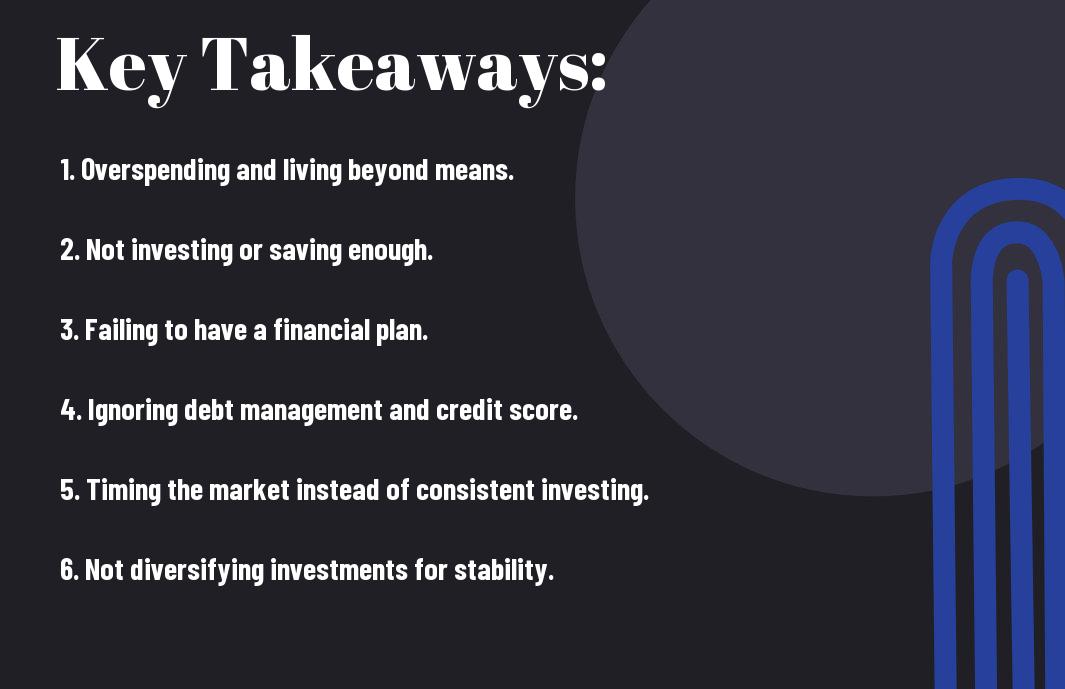
Key Takeaways:

  • Not Saving and Investing Early: Delaying saving and investing can significantly impact your wealth-building potential due to the power of compound interest.
  • Ignoring Diversification: Putting all your eggs in one basket can be risky. Diversifying your investments helps spread the risk and can lead to better long-term returns.
  • Living Beyond Your Means: Spending more than you earn can hinder your ability to build wealth. It’s crucial to live within your means and prioritize saving and investing for the future.

Lack of Clear Financial Goals

The 6 Investing Mistakes the Ultra Wealthy Don’t Make article highlights the importance of having clear financial goals when building wealth. Without a clear vision of where you want to be financially, it’s easy to get off track and make decisions that may not align with your objectives.

Not Defining What Wealth Means to You

An crucial first step in building wealth is to define what wealth means to you personally. Is it early retirement, financial independence, or the ability to afford certain luxuries? By understanding your own definition of wealth, you can set meaningful and achievable goals that will guide your financial decisions and keep you focused on what truly matters to you.

Failing to Set Specific, Measurable Objectives

With a lack of specific and measurable objectives, it’s challenging to track your progress and make necessary adjustments along the way. Setting clear goals, such as saving a specific amount by a certain deadline or increasing your investment portfolio by a certain percentage, gives you a roadmap to follow and a way to measure your success.

Lack of clear financial goals can lead to aimless financial decisions and missed opportunities for growth. By taking the time to define what wealth means to you and setting specific, measurable objectives, you can avoid this common mistake and put yourself on the path to building sustainable wealth.

Poor Budgeting Habits

There’s a reason why budgeting is considered the cornerstone of financial success. Yet, many people fall into the common trap of poor budgeting habits that hinder their ability to build wealth effectively.

Not Tracking Expenses

With every purchase you make, it’s crucial to track your expenses diligently. Failing to do so can lead to overspending and losing sight of where your money is going. By not monitoring your expenses, you may find yourself in a situation where you’re constantly living paycheck to paycheck without making any progress towards your financial goals.

Failing to Prioritize Needs Over Wants

On your journey to building wealth, it’s imperative to distinguish between your needs and wants. While it’s tempting to indulge in luxurious items or experiences, prioritizing your needs over wants is crucial for long-term financial stability. When you consistently prioritize wants over needs, you risk overspending and neglecting imperative aspects such as saving for emergencies or investing for your future.

Understanding the difference between needs and wants can significantly impact your financial health. Needs are imperative for maintaining a basic standard of living, including food, shelter, utilities, and healthcare. On the other hand, wants are non-imperative items or services that bring enjoyment or convenience but are not necessary for survival.

Ignoring the 50/30/20 Rule

Wants are important, but they should be balanced with your needs and savings. Ignoring the 50/30/20 rule, which suggests allocating 50% of your income to needs, 30% to wants, and 20% to savings or debt repayment, can lead to financial instability. By neglecting to save a portion of your income, you may miss out on opportunities to grow your wealth and secure your financial future.

Plus, adhering to the 50/30/20 rule not only helps you manage your current expenses but also allows you to build a financial cushion for unexpected emergencies or future investments. By following this guideline, you can develop healthy budgeting habits that support your long-term financial goals and set you on the path to building wealth successfully.

High-Interest Debt and Credit Mismanagement

Despite the best intentions to build wealth, many individuals fall into the trap of high-interest debt and credit mismanagement. According to Nine Common Wealth-Building Mistakes You Might Be …, these common errors can significantly hinder your financial progress and make it harder to achieve your wealth-building goals.

Accumulating Credit Card Debt

An all-too-common mistake is accumulating credit card debt without a clear plan to pay it off. It can be tempting to swipe your card for purchases, especially when rewards and cashback offers are enticing. However, failing to pay off your credit card balance in full each month can lead to high-interest charges that quickly snowball into a significant financial burden.

Not Paying Off High-Interest Loans Quickly

One critical mistake that can impede your wealth-building efforts is not paying off high-interest loans quickly. Whether it’s a personal loan, payday loan, or any other form of high-interest debt, letting it linger can eat away at your finances. The longer you take to pay off these loans, the more money you end up losing to interest payments that could have been better utilized for building your wealth.

Debt is a burden that can hold you back from reaching your financial goals. By tackling high-interest loans promptly and efficiently, you can free up more of your income to invest and grow your wealth over time. Don’t let debt weigh you down; prioritize paying off high-interest loans to set yourself on a path towards financial freedom.

Failing to Monitor Credit Reports

Quickly falling into a common mistake that can harm your financial health is failing to monitor your credit reports regularly. Your credit report contains vital information that lenders, landlords, and even potential employers use to evaluate your financial responsibility. By neglecting to check your credit reports for errors or signs of fraud, you could be missing out on opportunities to improve your credit score and secure better financial deals.

Loans play an necessary role in shaping your financial profile. By staying proactive in monitoring your credit reports and addressing any discrepancies promptly, you can maintain a healthy credit score and access favorable loan terms when needed. Regularly reviewing your credit reports is a simple yet effective way to safeguard your financial future and ensure that you’re on the right track towards building wealth.

Remember that avoiding high-interest debt and credit mismanagement is crucial for your wealth-building journey. By being mindful of these common mistakes and taking proactive steps to address them, you can set yourself up for long-term financial success and reach your wealth accumulation goals faster.

Inadequate Savings and Emergency Funds

Once again, when it comes to building wealth, one of the most critical mistakes you can make is not having adequate savings and emergency funds in place. These financial safety nets are necessary to protect you from unexpected expenses and financial emergencies that could derail your progress towards financial security.

Not Building an Emergency Fund

Emergency funds are your first line of defense against unforeseen events like medical emergencies, car repairs, or sudden job loss. If you do not have an emergency fund, you may be forced to rely on high-interest debt or liquidate your investments to cover these expenses, setting you back on your wealth-building journey.

Failing to Save for Long-Term Goals

On the other hand, failing to save for long-term goals, such as retirement, buying a home, or starting a business, can limit your financial growth. By not setting aside money specifically for these objectives, you run the risk of not having enough funds when the time comes to pursue these goals.

It is crucial to prioritize saving for the future by setting specific financial goals and creating a saving plan to achieve them. By consistently contributing to your savings account or investment portfolio, you can ensure that you are prepared for significant life milestones and have the financial stability to support your dreams.

Ignoring the Importance of Liquidity

One common pitfall in wealth-building is overlooking the importance of liquidity. While investing in assets like real estate or stocks can offer long-term growth potential, having all your money tied up in illiquid assets can pose a challenge during unexpected financial needs. It’s necessary to strike a balance between long-term investments and maintaining enough liquid assets to cover short-term expenses.

Another aspect of liquidity to consider is having quick access to cash or easily sellable assets in case of emergencies or opportunities that require immediate funds. By keeping a portion of your wealth in liquid assets, you can safeguard yourself against financial hardships and take advantage of investment prospects that may arise unexpectedly.

Investment Mistakes

Many common mistakes can hinder your efforts to build wealth through investing. It’s crucial to be aware of these pitfalls to safeguard your financial future.

Lack of Diversification

On the path to building wealth, one of the most critical mistakes you can make is failing to diversify your investments. Putting all your money into one type of asset or one market sector exposes you to a higher level of risk. If that particular investment underperforms or encounters a downturn, you could face significant losses. Diversification helps spread risk across various investments, reducing the impact of poor performance in any single investment.

Failing to Start Investing Early

To truly maximize your wealth-building potential, it’s vital to start investing as early as possible. Time is a powerful ally when it comes to investing due to the compounding effect. The earlier you begin investing, the more time your money has to grow and multiply. By postponing your investment journey, you miss out on valuable opportunities to increase your wealth over the long term.

Start your investment journey early to take advantage of the power of compounding. Even small contributions made consistently over time can grow into a significant sum due to the effect of compounding returns. Don’t underestimate the impact of starting early on your path to financial independence.

Chasing Hot Investments

Mistakes in investing often include chasing hot investments based on recent trends or media hype. While it can be tempting to invest in the latest fad or get-rich-quick scheme, these investments typically come with high risks. Market timing is challenging, and trying to predict short-term fluctuations can lead to poor investment decisions. Instead of chasing hot investments, focus on building a well-rounded and diversified portfolio that aligns with your financial goals and risk tolerance.

For instance, rather than investing in a speculative asset solely because it’s currently popular, take a disciplined approach by focusing on the long-term performance of an investment. Remember that consistency, diversification, and patience are key principles that lead to sustainable wealth building.

Procrastination and Lack of Discipline

Putting Off Financial Planning

After all, you’ve probably heard the saying “failing to plan is planning to fail.” This is especially true when it comes to building wealth. The longer you put off creating a solid financial plan, the more you delay your ability to grow your wealth effectively. It’s crucial to take the time to outline your financial goals, establish a budget, and set up a strategy for saving and investing.

Failing to Automate Savings and Investments

Discipline is crucial when it comes to growing your wealth. If you fail to automate your savings and investments, you may find it challenging to stay consistent with your financial goals. By setting up automatic transfers from your checking account to your savings or investment accounts, you remove the temptation to spend that money elsewhere. This simple habit can help you steadily grow your wealth over time.

Automating your savings and investments ensures that you consistently put money aside for your future, without needing to rely on willpower or memory. It’s a practical way to make sure you prioritize your financial goals and avoid the risk of neglecting your savings in favor of discretionary expenses.

Giving in to Impulse Purchases

Discipline plays a significant role in wealth-building, and giving in to impulse purchases can hinder your financial progress. Those spontaneous buys may provide instant gratification, but they often derail your budget and savings plan. To build wealth effectively, you need to resist the urge to splurge on unnecessary items and instead focus on long-term financial stability.

By practicing self-control and making thoughtful spending decisions, you can redirect those funds towards investments or savings that will help you reach your wealth-building objectives. Be mindful of, every dollar you save today is a step closer to achieving your financial goals tomorrow.

Final Words

Taking this into account, it is crucial to avoid common mistakes when trying to build wealth. Some of these errors include not having a clear financial plan, spending more than you earn, not investing for the future, and failing to consistently save money. By addressing these pitfalls, you can set yourself up for financial success and secure your future.

FAQ

Q: What are the common mistakes people make when trying to build wealth?

A: Some common mistakes to avoid when trying to build wealth include not having a clear financial plan, not saving and investing consistently, and trying to get rich quick through risky investments.

Q: How important is budgeting when it comes to building wealth?

A: Budgeting is crucial in building wealth as it helps track expenses, identify areas where you can save money, and allocate funds towards savings and investments. Without a budget, it’s easy to overspend and hinder wealth-building efforts.

Q: Is it necessary to have an emergency fund when trying to build wealth?

A: Yes, having an emergency fund is crucial when building wealth. An emergency fund acts as a financial safety net, helping you avoid going into debt in case of unexpected expenses or job loss, thereby protecting your long-term wealth-building goals.

How can one set and achieve financial goals to build wealth

There’s a powerful force within you that, when harnessed correctly, can lead you to financial abundance. By setting clear and specific financial goals, you can pave the path towards building wealth. In this blog post, you will learn practical strategies and tips inspired by Napoleon Hill to help you set and achieve your financial goals, ultimately unlocking your potential for financial success and prosperity.

Key Takeaways:

  • Set clear and specific financial goals: Clearly define your financial goals with specific details such as the amount you want to save or invest, timeframe, and reasons for wanting to achieve them.
  • Create a detailed plan: Develop a comprehensive plan outlining the steps you need to take to reach your financial goals. This plan should include budgeting, saving, investing, and tracking progress regularly.
  • Stay disciplined and focused: Stick to your plan, remain disciplined in your financial habits, and stay focused on your long-term objectives to build wealth effectively over time.

Identifying Your Financial Goals

Assessing Your Current Financial Situation

The first step in setting and achieving financial goals to build wealth is assessing your current financial situation. This involves taking a detailed look at your income, expenses, assets, and liabilities. By understanding where you stand financially, you can better determine where you want to go and how to get there. Take stock of your savings, investments, debts, and monthly cash flow to get a clear picture of your financial health.

Determining Your Short-Term and Long-Term Objectives

An important part of identifying your financial goals is determining your short-term and long-term objectives. Short-term goals are those you aim to achieve within the next year, such as building an emergency fund or paying off credit card debt. Long-term goals, on the other hand, are those you hope to accomplish over several years, like buying a home, retiring comfortably, or starting a business. By defining both short-term and long-term objectives, you can create a roadmap for your financial journey.

Objectives serve as milestones along the path to your ultimate financial goals. They help you break down your aspirations into manageable steps, making it easier to track your progress and stay motivated. Setting specific, measurable, achievable, relevant, and time-bound (SMART) objectives can guide you in making informed financial decisions and keeping you on course towards building wealth.

Setting SMART Financial Goals

If you want to build wealth, setting specific, measurable, achievable, relevant, and time-bound (SMART) financial goals is key. According to Financial Goal-Setting: The Key to Building Wealth, having clearly defined objectives can keep you focused and motivated on your journey to financial success.

Making Your Goals Specific and Measurable

Setting specific and measurable financial goals is crucial. When your goals are specific, such as saving a certain amount for a down payment on a house or reducing your credit card debt by a certain percentage, you have a clear target to work towards. Measurable goals allow you to track your progress and see how far you’ve come, which can be incredibly motivating.

Creating a Timeline for Achieving Your Goals

Goals without a timeline are merely wishes. By setting a timeline for each financial goal, you create a sense of urgency and accountability. This timeframe will help you stay disciplined and dedicated to achieving your objectives. Whether it’s saving a specific amount within a year or paying off a loan in a certain number of months, having a deadline pushes you to take action and make consistent progress towards your financial aspirations.

Having a clear timeline also allows you to break down your goals into smaller, manageable tasks, making the overall objective less daunting and more achievable. Do not forget, each small step you take towards your financial goals is a step closer to building the wealth you desire.

Creating a Budget That Supports Your Goals

Once again, setting financial goals is vital to building wealth. However, to achieve these goals, you must create a budget that supports your objectives. By tracking your income and expenses and allocating your resources effectively, you can take control of your finances and work towards financial freedom.

Tracking Your Income and Expenses

Any successful budget starts with understanding your income and expenses. Begin by tracking all sources of income, including your salary, side hustles, and passive income. Next, meticulously record your expenses, categorizing them into necessities like rent and groceries, and discretionary spending like entertainment and dining out. This detailed tracking will give you a clear picture of where your money is going and where you can make adjustments to meet your financial goals.

Allocating Your Resources Effectively

Your financial goals will dictate how you allocate your resources. Once you have a clear understanding of your income and expenses, you can start assigning specific amounts to different categories such as savings, investments, debt payments, and discretionary spending. By prioritizing your goals and distributing your money accordingly, you can ensure that you are making progress towards building wealth.

For instance, if your goal is to save for a down payment on a house, you may need to allocate a significant portion of your income to your savings account each month. On the other hand, if you are focused on paying off high-interest debt, you may need to reduce your discretionary spending to free up more funds for debt repayment. By aligning your budget with your financial goals, you can optimize your resources and accelerate your journey to financial success.

Investing for Wealth Creation

Not everyone knows how to invest their money wisely to build wealth effectively. Investing is a crucial step towards achieving your financial goals and creating long-term wealth. It’s necessary to have a solid understanding of different investment options available to you.

Understanding Different Investment Options

For those looking to build wealth through investing, it’s important to familiarize yourself with various investment options such as stocks, bonds, real estate, and mutual funds. Each of these options has its risks and potential rewards, so it’s crucial to assess your risk tolerance and investment goals before deciding where to allocate your funds.

Developing a Diversified Investment Strategy

Understanding the importance of diversification is key to developing a successful investment strategy. Diversifying your investments across different asset classes can help reduce risk and protect your portfolio from market fluctuations. By spreading your investments across various sectors and industries, you can potentially increase your chances of earning consistent returns over time.

Investment in different sectors such as technology, healthcare, and consumer goods can help you create a well-rounded portfolio that is less susceptible to volatility. By diversifying your investments, you can build a resilient financial foundation that paves the way for long-term wealth creation.

Managing Debt and Building Credit

Paying Off High-Interest Debts

All successful financial journeys begin with managing debt effectively. Prioritize paying off high-interest debts such as credit card balances, personal loans, or payday loans. These debts can quickly spiral out of control due to accruing interest, making it harder for you to save and invest for the future. By systematically paying off these high-interest debts, you can free up more of your income to put towards building wealth.

Establishing a Good Credit Score

One of the pillars of solid financial health is establishing and maintaining a good credit score. A good credit score not only gives you access to better loan terms and interest rates but also reflects your ability to manage credit responsibly. This is crucial when it comes to major life milestones such as buying a home or starting a business. The higher your credit score, the more financial opportunities and flexibility you will have.

The key to establishing a good credit score is to use credit responsibly. Make timely payments, keep your credit card balances low, and avoid opening multiple new accounts at once. A good credit score demonstrates to lenders that you are a reliable borrower and can be trusted with larger amounts of credit.

Building Multiple Income Streams

Now that you are setting financial goals to build wealth, it’s vital to consider diversifying your income sources to ensure stability and maximize earning potential. By spreading your income across various channels, you can protect yourself against financial downturns or job loss, while also opening up opportunities for increased earnings.

Diversifying Your Income Sources

Your first step in building multiple income streams should involve evaluating your current skills, interests, and resources. Identify potential side hustles or freelance opportunities that align with your strengths and can bring in additional income. This could include starting a small business, investing in the stock market, or offering consulting services in your field.

Creating Passive Income Opportunities

Any successful wealth-building strategy should include creating passive income opportunities. Passive income is money earned with little to no effort on your part, such as rental income from properties, dividends from investments, or royalties from creative work. By setting up passive income streams, you can generate money while you sleep, helping you move closer to your financial goals without trading time for money.

Creating passive income opportunities requires an initial investment of time and resources but can provide long-term financial benefits. Consider investing in rental properties, writing an e-book, or starting a blog that generates advertising revenue. These passive income streams can supplement your active income and accelerate your journey towards building wealth.

Overcoming Obstacles and Staying Motivated

Your journey to financial success will undoubtedly come across obstacles and challenges that may test your commitment to your goals. It’s crucial to stay motivated and focused during these times. To help you navigate these hurdles, refer back to the steps outlined in How to Set Financial Goals: 6 Steps for guidance and inspiration.

Dealing with Financial Setbacks

One key aspect of setting and achieving financial goals is learning how to deal with setbacks. No matter how well you plan, unexpected expenses or economic downturns may throw you off course. In these moments, it’s important not to lose sight of your long-term objectives. Take the setback as a learning opportunity, reassess your strategy if needed, and stay committed to your financial plan.

Celebrating Your Progress and Staying Focused

Obstacles may arise on your journey to financial independence, but celebrating your victories along the way can help you stay motivated and focused. Acknowledge and reward yourself for reaching milestones, whether big or small. This positive reinforcement can boost your confidence and energy to continue pursuing your financial goals with determination.

Overcoming challenges and staying motivated is important when building wealth. By staying resilient, adaptable, and focused on your objectives, you can navigate setbacks and celebrate your progress, ultimately moving closer to your financial aspirations.

Final Words

So, by setting clear financial goals, creating a detailed plan, staying disciplined, and continuously educating yourself about personal finance, you can achieve wealth and financial stability. Remember that building wealth is a journey that requires patience, commitment, and perseverance. Keep your goals in mind, stay focused, and make adjustments as needed to reach your desired financial objectives. With dedication and the right mindset, you can pave the way for a prosperous financial future.

FAQ

Q: What are financial goals?

A: Financial goals are specific objectives or targets that one sets to achieve a desired financial outcome. These goals can relate to saving, investing, budgeting, debt reduction, retirement planning, or any other aspect of personal finance.

Q: Why is it important to set financial goals?

A: Setting financial goals is important because it provides a roadmap for achieving financial success. By defining clear objectives, individuals can stay focused, motivated, and disciplined in managing their money. Financial goals also help track progress, make informed financial decisions, and ultimately build wealth over time.

How can one set and achieve financial goals to build wealth?

A: To set and achieve financial goals to build wealth, follow these steps:
1. Define Your Goals: Clearly articulate what you want to achieve, whether it’s buying a house, saving for retirement, or starting a business.
2. Make Your Goals Specific, Measurable, Achievable, Relevant, and Time-bound (SMART): Break down your goals into smaller, actionable steps with deadlines.
3. Create a Budget: Establish a budget that aligns with your goals and helps you track income, expenses, and savings.
4. Save and Invest Regularly: Set aside a portion of your income for savings and investments. Consider diversifying your investments to maximize returns.
5. Monitor and Adjust: Regularly review your progress, make adjustments as needed, and celebrate milestones along the way.
By consistently following these steps, you can set and achieve financial goals that pave the way for long-term wealth building.

What are the best practices for managing and growing wealth over time

Growth is necessary when it comes to managing and growing your wealth over time. To ensure long-term financial success, you must follow strategic practices that will help you accumulate and preserve your assets. By incorporating methods such as diversification, regular saving, smart investing, and staying informed about financial markets, you can steadily build your wealth for the future. For more tips on how to build wealth, check out this How to build wealth guide on CNN Underscored. Be mindful of, the key to financial well-being lies in prudent and informed decision-making.

Key Takeaways:

  • Diversify Investments: Spread wealth across various asset classes to reduce risk and increase potential returns.
  • Regularly Review Financial Plan: Monitor and adjust investment strategies, goals, and risk tolerance to align with changing financial situations.
  • Seek Professional Advice: Consult with financial advisors or wealth managers to create a personalized financial plan and receive guidance on managing and growing wealth effectively.

Setting Financial Goals

The Principles of Building Wealth can guide you in setting your financial goals. By defining your objectives clearly and with purpose, you set the foundation for a successful wealth management strategy.

Defining Wealth Objectives

Financial goal setting is crucial in managing and growing your wealth over time. When defining your wealth objectives, it’s important to consider both short-term and long-term goals. Short-term goals can include building an emergency fund or paying off debt, while long-term goals may involve saving for retirement or investing in assets.

Assessing Current Financial Situation

Setting your financial goals also requires assessing your current financial situation. It involves taking stock of your income, expenses, debts, and investments. By understanding where you currently stand financially, you can make more informed decisions when setting objectives and creating a financial plan to achieve them.

It is important to have a clear understanding of your current financial status before you can effectively map out your path to wealth creation. By analyzing your assets, liabilities, income, and expenses, you can identify areas where you may need to make adjustments or improvements to reach your financial goals.

Investing Wisely

You may already be familiar with the importance of saving money for building wealth over time. If you haven’t already, consider exploring 7 Savings Strategies to Build Wealth Over Time to kickstart your journey towards financial success. However, once you have some savings accumulated, it’s crucial to make wise investment decisions to help grow your wealth further.

Diversification Strategies

To mitigate risks and potentially enhance returns, diversification is key. Spread your investments across different asset classes such as stocks, bonds, real estate, and commodities. This way, if one sector underperforms, you have others that may offset the losses and maintain overall portfolio stability. Regularly review your portfolio to ensure it remains diversified and aligned with your financial goals.

Asset Allocation Techniques

On your journey to building wealth through investments, mastering asset allocation techniques is paramount. By strategically dividing your investment portfolio among various asset classes based on your risk tolerance, time horizon, and financial goals, you can optimize returns while managing risk. Consider factors such as your age, income, and financial obligations when determining the ratio of stocks, bonds, and other investments in your portfolio.

This careful balance can help you achieve long-term financial success by ensuring that your investments align with your unique financial situation and objectives. Regularly reassess your asset allocation to adapt to changing market conditions and personal circumstances, ensuring your portfolio remains well-positioned for your financial future.

Managing Risk

Identifying Potential Risks

Your first step in managing risk should be to identify the potential risks that could impact your wealth over time. These risks could include market volatility, inflation, economic downturns, geopolitical events, or even personal factors such as health issues or job loss. By understanding the various risks that you face, you can better prepare and protect your wealth.

Hedging and Mitigating Strategies

Strategies for hedging and mitigating risk are vital tools in managing your wealth effectively. Diversification of your portfolio across asset classes, industries, and geographical regions can help reduce the impact of market volatility. Additionally, using instruments such as options, futures, and insurance can provide protection against specific risks. It’s important to regularly reassess and adjust your hedging strategies as your financial goals and market conditions evolve.

Managing risk is a dynamic process that requires regular review and adjustment. Stay informed about the changing economic and market landscape, and be prepared to make necessary changes to your investment and risk management strategies. By staying proactive and vigilant, you can navigate through uncertainties and safeguard your wealth over the long term.

Building Multiple Income Streams

Once again, as you focus on managing and growing your wealth over time, diversification is key. Building multiple income streams can help you achieve financial stability and security for the long term. By spreading your investments across different asset classes, you can minimize risks and take advantage of various opportunities in the market.

Dividend Investing

The idea behind dividend investing is simple yet powerful. When you invest in dividend-paying stocks, you not only have the potential for capital appreciation but also receive regular income in the form of dividends. This can provide you with a steady stream of passive income that can help support your financial goals over time.

Real Estate Investing

Multiple income streams can also be built through real estate investing. Investing in rental properties can provide you with rental income on a monthly basis. Additionally, real estate has the potential for long-term appreciation, allowing you to build wealth through property value appreciation over time.

It is imperative to conduct thorough research and due diligence before venturing into real estate investing to ensure that you are making informed decisions. Understanding the local real estate market, property management, and financing options are crucial aspects to consider when building this income stream.

Peer-to-Peer Lending

Peer-to-peer lending platforms offer another avenue for building multiple income streams. By lending money to individuals or small businesses through these online platforms, you can earn interest income on your loan principal. This can be a relatively passive way to generate additional income and diversify your investment portfolio.

Understanding the risks involved, such as potential default by borrowers, is important when engaging in peer-to-peer lending. By diversifying your loans across different borrowers and loan types, you can help mitigate some of these risks and potentially enhance your overall returns.

Minimizing Taxes and Fees

Tax-Efficient Investing

After diligently working to grow your wealth over time, it is crucial to be mindful of minimizing taxes to ensure that more of your money stays in your pocket. One way to achieve this is through tax-efficient investing strategies. By investing in tax-efficient funds and accounts, you can decrease the amount of taxes you owe, leaving you with more capital to reinvest and compound over time.

Low-Cost Index Funds

Minimizing fees is another key aspect of managing and growing your wealth. One effective way to achieve this is by investing in low-cost index funds. These funds typically have lower expense ratios compared to actively managed funds, which means you get to keep more of your investment returns. By choosing low-cost index funds, you can benefit from broad market exposure at a fraction of the cost of traditional funds.

Index funds are designed to replicate a specific market index, such as the S&P 500, by holding the same securities in the same proportions as the index. This passive investment approach helps keep costs low since there is minimal active management involved. By investing in index funds, you can achieve diversification and market returns while minimizing fees and expenses.

Avoiding Unnecessary Fees

Fees can eat into your investment returns over time, hindering the growth of your wealth. To avoid unnecessary fees, you should carefully review and understand all the fees associated with your investments. Look out for high management fees, administrative fees, and any other hidden costs that can significantly impact your bottom line. Opt for investment options with transparent fee structures and consider lower-cost alternatives to maximize your returns.

Monitoring and Adjusting

Regular Portfolio Rebalancing

Keep a close eye on your investment portfolio and regularly rebalance it to ensure that your asset allocation aligns with your financial goals and risk tolerance. Portfolio rebalancing involves periodically buying or selling assets to maintain your desired mix of investments. By rebalancing, you can manage risk and potentially enhance returns over the long term.

Staying Informed without Emotional Bias

Monitoring the performance of your investments is crucial, but it’s vital to do so without letting emotions cloud your judgment. Market volatility and fluctuations can trigger emotional reactions that may lead to impulsive decisions. To avoid making costly mistakes, focus on gathering objective information, consulting with financial advisors, and sticking to your long-term investment strategy.

Plus: Emotions like fear and greed can influence your investment decisions. To stay informed without emotional bias, consider setting up specific criteria or rules for when to buy or sell investments. This disciplined approach can help you make rational choices based on your financial objectives rather than succumbing to emotional impulses.

Adapting to Market Changes

The financial markets are dynamic, and it’s crucial to adapt to changing market conditions. Continuously assess your investment strategy and make adjustments as needed to optimize your portfolio’s performance. Whether it’s shifting economic trends, regulatory changes, or global events impacting markets, staying flexible and proactive can help you navigate uncertainties and seize opportunities.

The ability to adapt to market changes requires staying informed about macroeconomic indicators, industry developments, and geopolitical events that could affect your investments. Keeping a watchful eye on market trends and maintaining a diversified portfolio can help you position yourself for success in different market environments.

Final Words

Now that you have learned about the best practices for managing and growing wealth over time, remember that consistency is key. Make sure to establish a budget, save and invest wisely, diversify your portfolio, and regularly review and adjust your financial plan. By staying disciplined and patient, you can build and preserve wealth for the long term.

Keep in mind that financial success is not achieved overnight but rather through steady and strategic actions. Stay informed, seek advice when needed, and always be prepared to adapt to changes in the financial landscape. With dedication and commitment to your financial goals, you can work towards a secure and prosperous future.

FAQ

Q: What is the first step in managing and growing wealth over time?

A: The first step is to establish clear financial goals and develop a comprehensive financial plan. This plan should outline your long-term objectives, as well as short-term goals and strategies for achieving them.

Q: What are some key best practices for managing wealth effectively?

A: Some key best practices include diversifying your investments to spread risk, regularly reviewing and adjusting your financial plan as needed, staying informed about market trends, avoiding high-risk investments, and working with a trusted financial advisor.

Q: How can one ensure sustainable wealth growth over time?

A: To ensure sustainable wealth growth, it is important to save and invest consistently, avoid impulsive financial decisions, reinvest dividends and returns, plan for retirement and unexpected expenses, and stay disciplined in sticking to your financial plan.

How can lifestyle choices impact one's ability to build and sustain wealth

There’s a direct correlation between the lifestyle choices you make and your financial well-being. Your daily habits, spending patterns, and long-term decisions all play a crucial role in determining your ability to build and sustain wealth. Making conscious choices about saving, investing wisely, avoiding debt, and prioritizing your financial goals can set you on the path to financial success. By understanding how your lifestyle impacts your finances, you can make informed decisions that will benefit your wealth-building journey in the long run.

Key Takeaways:

  • Healthy habits: Making healthy lifestyle choices, such as eating well, exercising regularly, and getting enough sleep can lead to better overall well-being and productivity. This can positively impact one’s ability to focus on building and sustaining wealth.
  • Frugal living: Practicing frugality by budgeting, avoiding unnecessary expenses, and saving money can help individuals increase their savings and investments, leading to better financial stability and wealth accumulation over time.
  • Educational pursuits: Investing in education, continuous learning, and skill development can open up opportunities for higher paying jobs and career advancement, contributing to long-term financial success and wealth-building potential.

The Foundation of Wealth Building

Before delving into the intricacies of wealth building, it’s crucial to establish a solid foundation. This foundation is built on the fundamental principle of living below your means. Simply put, this means that you are spending less than you earn. By keeping your expenses below your income, you create a surplus that can be channeled into savings and investments, paving the way for long-term wealth accumulation.

Living Below Your Means

The key to living below your means is to practice financial discipline. This involves distinguishing between needs and wants, prioritizing imperative expenses, and cutting back on unnecessary spending. By adopting a frugal mindset and making conscious choices to limit your expenditures, you can free up resources to build wealth for the future.

Creating a Budget That Works

An imperative tool in the journey toward financial stability and wealth creation is creating a budget that aligns with your income and goals. An effective budget should account for all income sources and expenses, including savings and investments. By setting realistic spending limits for different categories and tracking your progress regularly, you gain better control over your finances and ensure that your money is being allocated purposefully.

For instance, you can use budgeting apps or spreadsheets to monitor your cash flow and identify areas where you can further trim expenses. By creating a detailed budget that reflects your financial priorities and aspirations, you equip yourself with the necessary framework to make informed decisions and steer your financial future in the right direction.

The Impact of Spending Habits

The Dangers of Impulse Buying

While it’s tempting to give in to impulse purchases, especially with the convenience of online shopping, these buying decisions can have a detrimental effect on your ability to build wealth. Impulse buying often leads to overspending on items that you don’t necessarily need or truly value. These purchases can add up quickly and eat into your savings, preventing you from reaching your financial goals.

The Benefits of Delayed Gratification

To truly build and sustain wealth, it’s necessary to practice delayed gratification. By delaying immediate wants and focusing on long-term financial objectives, you can make more mindful spending choices that align with your wealth-building goals. This discipline allows you to prioritize saving and investing over instant gratification, leading to a more secure financial future.

For instance, instead of purchasing the latest gadget as soon as it’s released, you can choose to wait until it goes on sale or consider if it’s a necessary investment. By practicing delayed gratification, you can allocate your resources more efficiently and ensure that your money is working for you in the long run.

The Power of Savings

Not prioritizing savings in your budget can significantly impact your ability to build and sustain wealth. One of the key components of wealth building is consistently saving a portion of your income. By setting aside money regularly, you create a safety net for unexpected expenses and lay the foundation for future financial growth.

Building an Emergency Fund

For building an emergency fund, you should aim to save at least three to six months’ worth of living expenses. This fund serves as a buffer against financial emergencies like medical bills, car repairs, or unexpected job loss. By having this safety net in place, you can avoid going into debt and protect your long-term financial stability.

Investing for the Future

Future financial security is built through smart investing. By putting your money to work through investments like stocks, bonds, or real estate, you have the potential to grow your wealth significantly over time. Investing allows your money to earn more money through compound interest, helping you reach your long-term financial goals.

The key to successful investing is starting early and staying consistent. Even small contributions to your investment accounts can add up over time, thanks to the power of compounding. By staying disciplined and focusing on long-term growth, you can set yourself up for a financially secure future.

The Role of Debt in Wealth Building

Now, when it comes to building wealth, understanding the role of debt is crucial. Debt can either be a tool to help you leverage your finances and grow your wealth, or it can be a burden that hinders your financial progress. According to the Principles of Building Wealth, managing debt effectively is a key aspect of financial success.

The Weight of High-Interest Debt

High-interest debt, such as credit card debt or payday loans, can quickly spiral out of control and eat away at your wealth-building efforts. These types of debt carry high-interest rates, making it challenging to pay off the balance. When you have a significant amount of high-interest debt, a substantial portion of your income goes towards servicing these debts, leaving you with less money to save, invest, or enjoy.

Strategies for Paying Off Debt Quickly

Debt can be a significant roadblock on your path to wealth if not managed properly. To tackle your debt effectively, consider strategies for paying it off quickly. Start by creating a budget that allows you to allocate extra funds towards debt repayment. You can also explore debt consolidation options to lower your interest rates and make repayment more manageable. Additionally, prioritizing debts with the highest interest rates first can help you save money in the long run and accelerate your journey to financial freedom.

Plus, making consistent and timely payments on your debts not only reduces the total amount you owe but also improves your credit score, setting you up for future financial success. By taking control of your debt and implementing smart repayment strategies, you can free up more resources to invest in your future wealth-building goals.

The Importance of Financial Education

Your financial education plays a crucial role in your ability to build and sustain wealth. According to “Are You Leveraging Your Health To Build Wealth?”, understanding how to manage your money effectively can lead to long-term financial success. By educating yourself on topics such as budgeting, investing, and debt management, you can make informed decisions that positively impact your financial well-being.

Learning from Financial Mistakes

Education is key when it comes to learning from financial mistakes. By understanding why certain decisions led to negative outcomes, you can avoid repeating those errors in the future. Whether it’s overspending, taking on excessive debt, or not saving enough, acknowledging and learning from these mistakes can help you course-correct and make better financial choices moving forward.

Staying Informed About Personal Finance

Education is a lifelong journey, especially when it comes to staying informed about personal finance. This includes keeping up to date with changes in the economy, tax laws, investment strategies, and personal finance trends. By dedicating time to expand your financial knowledge through books, workshops, online resources, and financial advisors, you can equip yourself with the tools necessary to make sound financial decisions and build wealth effectively.

Learning about personal finance allows you to take control of your financial future. By staying informed and continuously educating yourself on various financial topics, you can navigate the complex world of money management with confidence and clarity. Be mindful of, the more you know, the better equipped you are to make informed decisions that will positively impact your financial well-being in the long run.

Lifestyle Choices That Support Wealth Building

Once again, lifestyle choices play a significant role in your ability to build and sustain wealth. By making smart decisions and adopting behaviors that support your financial well-being, you can set yourself up for long-term success. If you’re wondering how money impacts your lifestyle choices and standard of living, check out this insightful Quora discussion.

Developing a Long-Term Perspective

One of the key aspects of building wealth is developing a long-term perspective. This means looking beyond immediate gratification and making decisions that align with your financial goals in the future. By prioritizing saving and investing for the long term, you are setting yourself up for financial stability and growth.

Avoiding Lifestyle Inflation

The danger of lifestyle inflation is real and can hinder your wealth-building efforts. Lifestyle inflation occurs when you increase your spending as your income rises, leading to a cycle of never feeling financially secure. The key is to resist the temptation to upgrade your lifestyle every time you receive a raise or windfall. Instead, focus on saving and investing these extra funds to secure your financial future.

Avoiding lifestyle inflation allows you to allocate more resources towards building wealth rather than simply maintaining a higher standard of living. By living below your means and being mindful of your spending habits, you can increase your savings rate and accelerate your journey towards financial independence.

Final Words

Summing up, it’s important to recognize that your lifestyle choices play a significant role in your ability to build and sustain wealth. By making smart decisions like budgeting, saving, investing wisely, and avoiding unnecessary debt, you can set yourself up for financial success. Remember that every choice you make, from your spending habits to your career decisions, can either propel you towards your financial goals or set you back. It’s up to you to take control of your finances and make choices that will lead to long-term wealth and stability.

FAQ

Q: How do lifestyle choices impact one’s ability to build and sustain wealth?

A: Lifestyle choices can impact wealth-building in various ways. For example, spending habits, such as overspending on unnecessary items, can hinder one’s ability to save and invest money effectively. On the other hand, making wise decisions like budgeting, investing, and living below your means can contribute to building and sustaining wealth over time.

Q: Can poor lifestyle choices affect one’s financial health?

A: Yes, poor lifestyle choices can have a significant impact on one’s financial health. Engaging in habits like excessive spending, accruing high levels of debt, or neglecting to save for the future can lead to financial instability and prevent individuals from building wealth or achieving financial goals.

Q: How can healthy lifestyle choices contribute to wealth building?

A: Healthy lifestyle choices, such as prioritizing saving, investing wisely, and maintaining a balanced approach to spending, can positively impact wealth-building efforts. By cultivating habits like regular saving, creating diversified investment portfolios, and avoiding unnecessary debt, individuals can increase their financial well-being and work towards long-term wealth accumulation.

Skip to content