simon weiner

Entrepreneurial Success in the AI Era – Lessons from the Front Lines

As you navigate the rapidly evolving business landscape, you’re likely wondering how to leverage artificial intelligence to drive your venture forward. Your ability to adapt and innovate will be key to staying ahead of the curve. You’ll need to understand how AI is transforming industries and identify opportunities to harness its power. In this post, you’ll gain valuable insights from entrepreneurs who have successfully integrated AI into their businesses, and learn how to apply these lessons to achieve your own success.

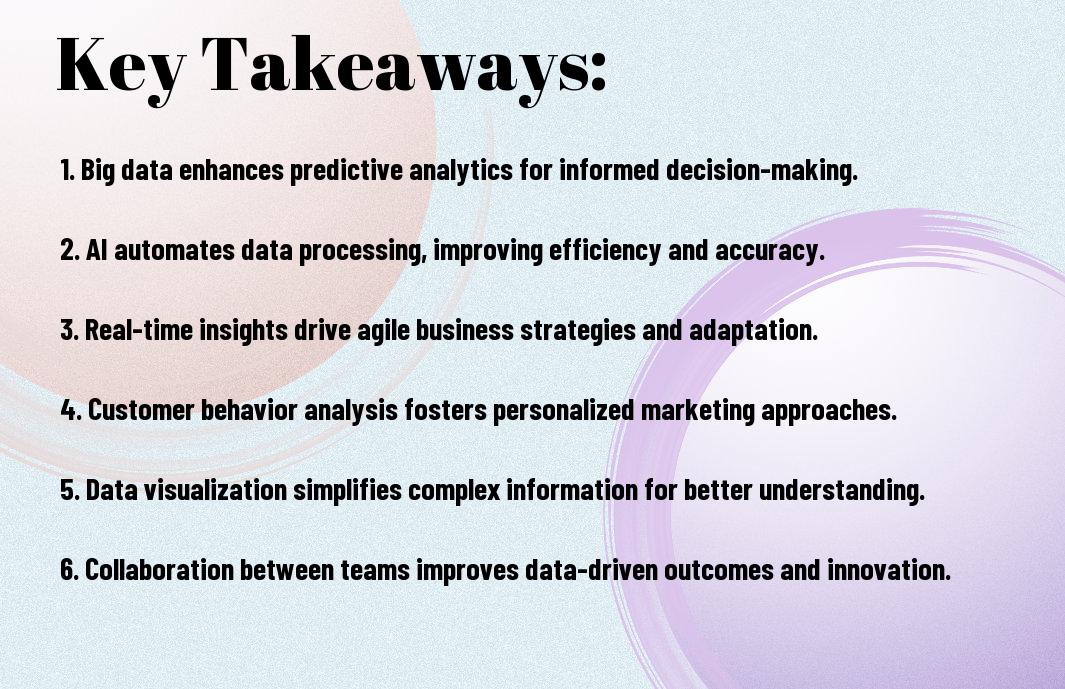
Key Takeaways:

  • Embracing AI technology is important for entrepreneurs to stay competitive in today’s fast-paced business landscape, as it enables them to automate tasks, gain insights, and make data-driven decisions.
  • Developing a deep understanding of AI and its applications is vital for entrepreneurs to identify opportunities and challenges, and to create innovative solutions that leverage AI capabilities.
  • Building a strong team with diverse skills, including AI expertise, is necessary for entrepreneurs to successfully develop and implement AI-powered products and services.
  • Entrepreneurs must prioritize ethics and responsibility when developing and deploying AI systems, ensuring that they are transparent, fair, and respectful of user data and privacy.
  • Staying adaptable and agile is key for entrepreneurs to navigate the rapidly evolving AI landscape, as they must be prepared to pivot and adjust their strategies in response to new technologies and market trends.
    The New Entrepreneurial Landscape

    Before entering the entrepreneurial arena, you need to understand the shifting dynamics of the business world. The AI era has brought about significant changes, and you must be prepared to adapt and innovate to succeed.

    AI as the Great Equalizer

    Generally, AI has leveled the playing field, allowing small businesses and startups to compete with larger corporations. You can now access advanced technologies and tools, enabling you to scale and grow your business more efficiently.

    The Velocity of Change

    Against the backdrop of rapid technological advancements, you must be agile and responsive to changing market conditions. You need to stay ahead of the curve, anticipating and adapting to new trends and innovations.

    This velocity of change requires you to be highly adaptable and open to new ideas and strategies. You must be willing to pivot your business model, products, or services to stay relevant in a rapidly evolving market. By doing so, you can capitalize on new opportunities and stay ahead of the competition, ultimately driving your entrepreneurial success in the AI era.

    First-Principles Thinking

    Now, as you navigate the AI era, you’ll need to adopt a mindset that allows you to challenge conventional wisdom and think creatively. This involves breaking down complex problems into their fundamental components and solving them from the ground up.

    Questioning Assumptions

    For instance, you should constantly question the assumptions that underlie your business model and be willing to pivot when necessary. By doing so, you’ll be able to identify new opportunities and stay ahead of the competition.

    Building from the Ground Up

    On the other hand, building from the ground up allows you to create a solid foundation for your business, unencumbered by legacy systems or outdated thinking. You can design and optimize each component to work seamlessly together, creating a more efficient and effective whole.

    Plus, when you build from the ground up, you have the opportunity to incorporate AI and other emerging technologies into the very fabric of your business, enabling you to innovate and adapt more quickly to changing market conditions, and ultimately, driving your entrepreneurial success.

    Adaptation Over Perfection

    Not every entrepreneurial venture will be a perfect, polished product from the start. You will encounter setbacks and make adjustments as you navigate the AI era.

    The Minimum Viable Product Philosophy

    Among the strategies you can employ is launching a minimum viable product, allowing you to test and refine your offering based on user feedback, helping you to adapt quickly to changing market conditions.

    Iterative Growth Cycles

    By embracing iterative growth cycles, you can continuously evaluate and improve your product or service, ensuring it meets the evolving needs of your customers and stays competitive in the market.

    In addition, as you progress through these cycles, you will gather valuable insights and data, enabling you to make informed decisions about your business, and driving your entrepreneurial success in the AI era, allowing you to stay ahead of the curve and achieve your goals.

    Data as the New Currency

    Many entrepreneurs are now recognizing the value of data in driving business decisions and gaining a competitive edge. You can leverage data to inform your strategy, optimize operations, and create new opportunities for growth. As you navigate the AI era, your ability to collect, analyze, and apply data will be important to your success.

    Harvesting Meaningful Insights

    Upon closer examination, you’ll find that data holds the key to unlocking meaningful insights that can transform your business. You can use data analytics tools to identify trends, patterns, and correlations that inform your decision-making and drive innovation. By doing so, you’ll be able to refine your strategy and stay ahead of the curve.

    Ethical Considerations

    Any entrepreneur operating in the AI era must consider the ethical implications of data collection and usage. You need to ensure that your data practices are transparent, secure, and respectful of users’ privacy. As you develop your data strategy, you should prioritize ethical considerations to maintain trust and avoid potential pitfalls.

    Hence, as you probe deeper into the world of data-driven decision-making, you’ll need to balance the benefits of data analysis with the potential risks and consequences. You should establish clear guidelines and protocols for data collection, storage, and usage, and invest in robust security measures to protect sensitive information. By doing so, you’ll be able to harness the power of data while maintaining the trust and integrity of your business.

    The Human Element

    Unlike other factors that contribute to entrepreneurial success, the human element is often overlooked in the AI era. You must prioritize your team’s skills and abilities to stay competitive.

    Emotional Intelligence in the AI Age

    Along with technological advancements, you need to develop emotional intelligence to effectively lead and manage your team in this new landscape, ensuring you make informed decisions that balance human and artificial intelligence.

    Building Teams That Complement Technology

    With the rise of AI, you should focus on building teams that complement technology, rather than replacing it, to maximize efficiency and innovation in your organization.

    Complement your technology with a team that possesses skills such as creativity, problem-solving, and adaptability, allowing you to leverage AI’s capabilities while maintaining a human touch, and you will be able to drive your business forward in the AI era, making the most of the unique strengths that both humans and machines bring to the table.

    Funding in the AI Ecosystem

    Once again, you find yourself at the forefront of innovation, navigating the complex landscape of funding in the AI era, where traditional models are being disrupted and new opportunities are emerging, allowing you to capitalize on your vision.

    New Venture Capital Paradigms

    To succeed, you need to understand the evolving venture capital landscape, where AI-focused funds and investors are looking for startups that can leverage AI to drive growth and returns, and you must be prepared to demonstrate your AI strategy to secure funding.

    Alternative Financing Routes

    Along with traditional venture capital, you can explore alternative financing options, such as crowdfunding, angel investors, and corporate venture arms, which can provide the necessary capital to fuel your AI-driven venture, and you should consider these options to fund your growth.

    In fact, alternative financing routes can offer you more flexibility and control over your business, allowing you to maintain equity and make strategic decisions without external pressure, and you should carefully evaluate these options to determine the best fit for your AI startup, considering factors such as investment size, valuation, and investor expectations, to ensure that you secure the funding you need to drive your business forward.

    To wrap up

    On the whole, you now have a deeper understanding of what it takes to achieve entrepreneurial success in the AI era. You have learned valuable lessons from the front lines, and you can apply these insights to your own business ventures. As you move forward, you will be able to leverage AI to drive innovation and growth, and your ability to adapt will be key to staying ahead of the curve and achieving your goals in this rapidly evolving landscape.

    FAQ

    Q: What are the key characteristics of successful entrepreneurs in the AI era?

    A: Successful entrepreneurs in the AI era are those who are able to adapt quickly to changing market conditions, leverage AI technologies to drive innovation, and foster a culture of experimentation and continuous learning within their organizations. They are also able to identify and capitalize on new opportunities created by AI, such as the development of new products and services, and the creation of new business models. Additionally, they are able to navigate the ethical and societal implications of AI, and prioritize transparency, accountability, and fairness in their use of AI technologies.

    Q: How can entrepreneurs effectively integrate AI into their business strategy to drive growth and competitiveness?

    A: Entrepreneurs can effectively integrate AI into their business strategy by starting with a clear understanding of their business goals and identifying areas where AI can add value. They should then develop a roadmap for AI adoption, which includes assessing their current data infrastructure, identifying potential AI applications, and developing a plan for implementing and scaling AI solutions. It’s also important to invest in employee education and training, to ensure that they have the skills needed to work effectively with AI technologies. Furthermore, entrepreneurs should prioritize ongoing evaluation and monitoring of AI systems, to ensure that they are delivering the expected benefits and to identify areas for improvement.

    Q: What are some common pitfalls that entrepreneurs should avoid when navigating the AI landscape, and how can they mitigate potential risks?

    A: Common pitfalls that entrepreneurs should avoid when navigating the AI landscape include underestimating the complexity of AI technologies, overestimating their potential benefits, and failing to consider the potential risks and downsides of AI adoption. To mitigate these risks, entrepreneurs should take a nuanced and informed approach to AI adoption, which includes conducting thorough research and due diligence, developing a clear understanding of the potential benefits and risks of AI, and prioritizing transparency, accountability, and fairness in their use of AI technologies. They should also invest in ongoing monitoring and evaluation, to ensure that AI systems are delivering the expected benefits and to identify areas for improvement. By taking a thoughtful and informed approach to AI adoption, entrepreneurs can minimize the risks and maximize the benefits of AI for their businesses.

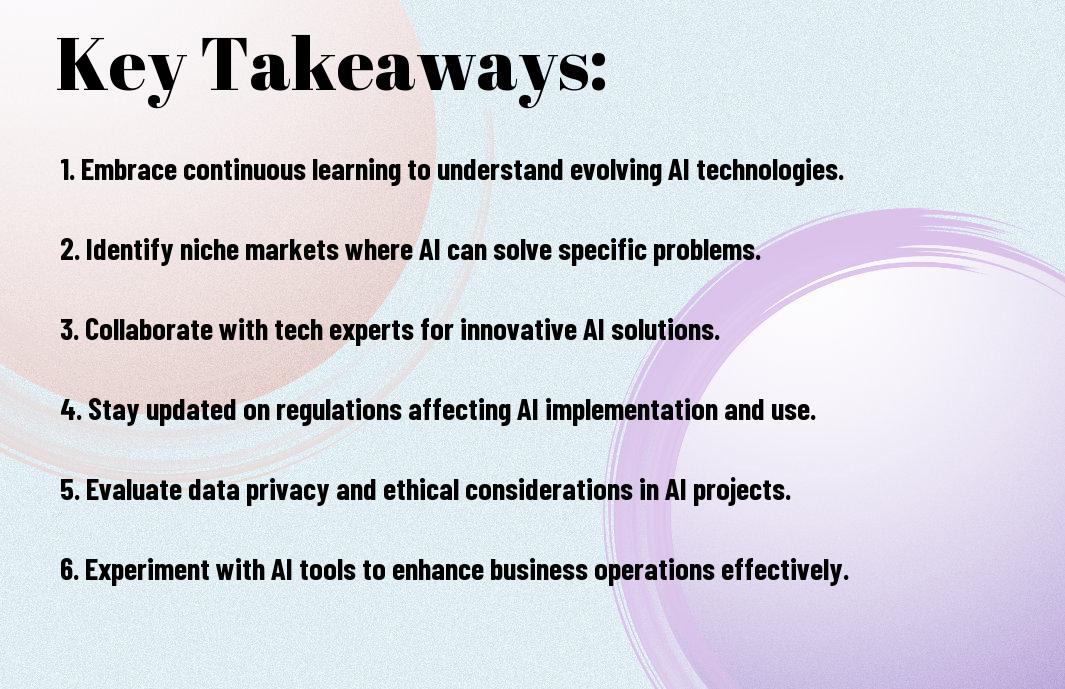
Capitalizing on AI Trends – How Entrepreneurs Can Stay Ahead of the Curve

As you navigate the ever-evolving landscape of artificial intelligence, you’re likely aware of the vast opportunities it presents for your business. Your ability to adapt and leverage AI trends will significantly impact your competitiveness in the market. You can position your company for success by understanding the latest developments and advancements in AI, allowing you to make informed decisions and drive innovation in your industry, ultimately staying ahead of the curve.

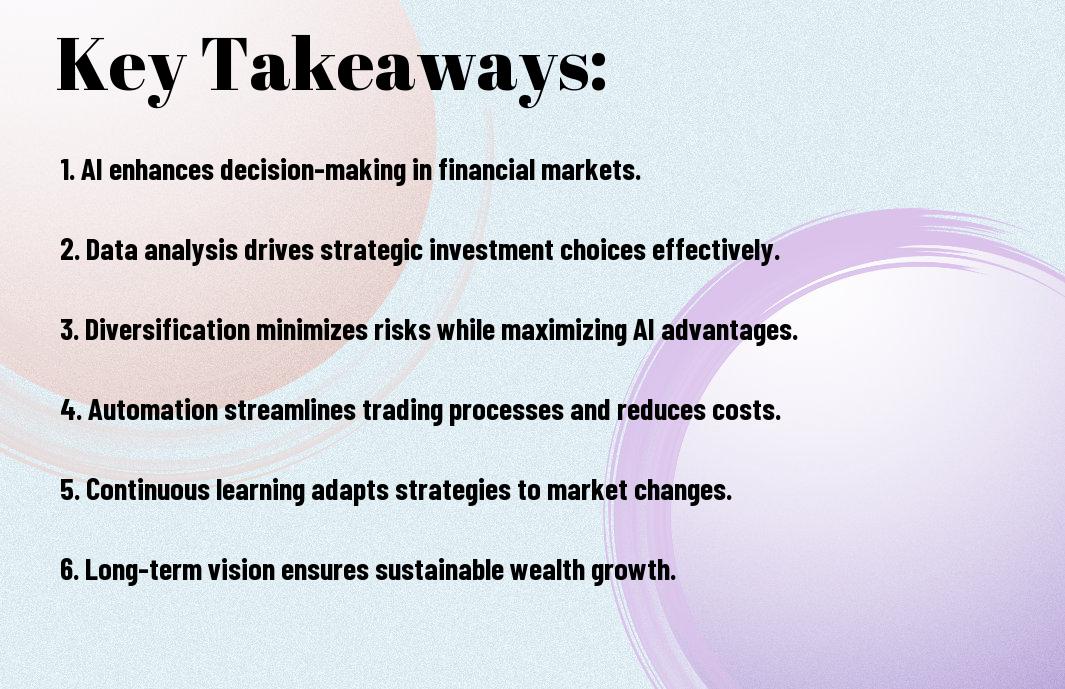
Key Takeaways:

  • Staying informed about the latest AI trends and advancements is vital for entrepreneurs to identify potential business opportunities and stay competitive in their respective markets.
  • Entrepreneurs can leverage AI to automate routine tasks, enhance customer experiences, and gain valuable insights from data analysis, ultimately driving business growth and innovation.
  • Investing in AI-powered tools and technologies can help entrepreneurs streamline their operations, reduce costs, and improve productivity, allowing them to focus on high-value tasks and strategic decision-making.
  • Building a team with AI expertise or partnering with AI-focused companies can provide entrepreneurs with the necessary skills and knowledge to develop and implement effective AI strategies.
  • By embracing AI and its applications, entrepreneurs can unlock new revenue streams, expand their customer base, and establish themselves as leaders in their industries, ultimately driving long-term success and sustainability.

The AI Revolution in Business

To stay ahead of the curve, you need to understand the impact of AI on your business. AI is transforming industries, and you must adapt to remain competitive. Your ability to leverage AI will determine your success in the market.

Current Market Landscape

At this point, you are likely aware that AI is changing the business landscape. Your competitors are already using AI to improve efficiency and customer experience, and you must do the same to keep up. Your market landscape is evolving, and AI is driving this evolution.

Disruptive Technologies

For you to capitalize on AI trends, you need to understand the disruptive technologies that are driving change. Your business can benefit from technologies like machine learning and natural language processing, which are transforming industries and creating new opportunities.

Understanding how disruptive technologies work is key to unlocking their potential. You can use machine learning to analyze customer data and improve your marketing efforts, while natural language processing can help you build chatbots that enhance customer experience. By embracing these technologies, you can stay ahead of the curve and drive innovation in your business, giving you a competitive edge in the market.

Identifying Profitable AI Niches

Some of the most successful entrepreneurs in the AI space have found their niche by exploring emerging trends and technologies. You can do the same by conducting market research and analyzing consumer needs. This will help you identify areas where AI can be applied to create innovative solutions and products.

Market Gap Analysis

Around the time you start exploring AI niches, you’ll notice gaps in the market where existing solutions are lacking. You can capitalize on these gaps by developing AI-powered products or services that meet the unmet needs of your target audience, setting your business up for success.

Trend Forecasting Techniques

At the forefront of AI innovation, you’ll find various trend forecasting techniques that can help you predict future trends and stay ahead of the curve. You can use methods like social media listening, industry reports, and market analysis to forecast trends and make informed decisions about your business.

Further, as you investigate deeper into trend forecasting techniques, you’ll discover that it’s not just about predicting trends, but also about understanding how they’ll impact your business and the industry as a whole. You can use this knowledge to develop strategic plans, allocate resources effectively, and make data-driven decisions that drive growth and innovation in your AI-powered business, allowing you to stay competitive and achieve your goals.

Building AI-Enhanced Products

Your ability to leverage AI trends will depend on your capacity to develop products that seamlessly integrate artificial intelligence, thereby enhancing user experience and driving business growth.

Development Frameworks

Alongside existing technologies, adopting the right frameworks is important for building AI-enhanced products, allowing you to streamline development and focus on innovation.

Integration Strategies

Deploying effective integration strategies enables you to embed AI capabilities into your products, making them more competitive in the market and appealing to your target audience.

This approach to integration involves careful planning and execution, as you will need to consider factors such as data quality, algorithmic complexity, and user interface design to ensure a cohesive and intuitive user experience, ultimately allowing you to capitalize on AI trends and stay ahead of the curve in your industry.

Securing Investment for AI Ventures

Once again, you’ll need to demonstrate the potential of your AI venture to secure investment, highlighting its unique value proposition and competitive advantage in the market.

Venture Capital Approaches

Investing time in building relationships with venture capital firms can help you secure funding for your AI venture, as you showcase your vision and growth potential to investors.

Alternative Funding Models

Alternatively, you can explore crowdfunding, grants, or incubators to fund your AI venture, offering you more flexibility and control over your business.

The alternative funding models available to you can provide a more accessible and less restrictive way to secure investment, allowing you to maintain ownership and direction of your AI venture while still accessing the necessary funds to drive growth and innovation, and you can consider what works best for your specific needs and goals.

Scaling AI Businesses

For entrepreneurs looking to scale their AI businesses, it’s important to focus on strategic growth and development. You need to identify areas where AI can drive innovation and revenue, and invest in those areas to stay ahead of the competition.

Growth Hacking with AI

To tap into the power of AI for growth, you can leverage machine learning algorithms to analyze customer data and create personalized marketing campaigns. You can also use AI-powered tools to automate tasks and streamline your sales process, allowing you to focus on high-level strategy and growth.

Operational Efficiency

Efficiently managing your AI operations is key to scaling your business. You can achieve this by implementing AI-powered automation tools that optimize your workflows, reduce costs, and improve productivity. Your goal is to create a seamless and efficient operation that allows you to focus on growth and innovation.

With operational efficiency in place, you can focus on higher-level tasks such as strategy and innovation, driving your business forward and staying ahead of the competition. You can also use AI to analyze your operations and identify areas for improvement, allowing you to make data-driven decisions and optimize your business for success.

Navigating Ethical Considerations

Keep in mind that as you capitalize on AI trends, you must consider the ethical implications of your actions. You need to ensure that your use of AI is fair, transparent, and respectful of users’ rights.

Responsible AI Implementation

Upon implementing AI solutions, you should prioritize responsible practices, such as data protection and algorithmic accountability, to maintain trust with your customers and stakeholders.

Regulatory Compliance

Navigating the complex regulatory landscape is crucial to avoid potential pitfalls. You must stay informed about relevant laws and regulations, such as data protection and AI-specific laws, to ensure your business remains compliant.

Responsible entrepreneurs like you must prioritize regulatory compliance to avoid legal and reputational risks. You should consult with experts and stay up-to-date with the latest developments in AI regulations to ensure your business is aligned with the evolving legal landscape, protecting both your customers and your business.

Conclusion

As a reminder, you must stay informed to capitalize on AI trends. You can position your business for success by understanding your industry’s AI landscape and investing in emerging technologies. By doing so, you will enhance your ability to innovate and stay ahead of the curve, ultimately driving your business forward and increasing your competitiveness in the market, allowing you to make the most of your investments and achieve your goals.

FAQ

Q: What are the current AI trends that entrepreneurs should be aware of to stay ahead of the curve?

A: Entrepreneurs should be aware of trends such as the increasing use of machine learning, natural language processing, and computer vision. These technologies are being applied in various industries, including healthcare, finance, and customer service, to improve efficiency and decision-making. Staying informed about the latest developments in these areas can help entrepreneurs identify opportunities to innovate and differentiate their businesses.

Q: How can entrepreneurs effectively leverage AI to drive business growth and innovation?

A: Entrepreneurs can leverage AI by identifying areas where automation can improve operational efficiency, such as data analysis, customer service, and marketing. They can also use AI to gain insights from large datasets, make informed decisions, and develop new products and services that meet evolving customer needs. Additionally, entrepreneurs can explore partnerships with AI startups or invest in AI research and development to stay at the forefront of innovation.

Q: What skills and resources do entrepreneurs need to develop to successfully capitalize on AI trends and stay competitive in the market?

A: Entrepreneurs need to develop skills such as data analysis, programming, and critical thinking to effectively work with AI technologies. They should also invest in resources such as AI-powered tools, data storage, and cybersecurity measures to protect their businesses from potential risks. Furthermore, entrepreneurs can benefit from attending industry conferences, workshops, and online courses to stay updated on the latest AI trends and best practices, and to network with other professionals and potential partners in the field.

Harnessing the Power of Big Data – AI for Smarter Business Decisions

As you navigate the complex landscape of modern business, you’re constantly seeking ways to make informed decisions that drive growth and success. Your ability to analyze and interpret vast amounts of data is key to unlocking new opportunities and staying ahead of the competition. With the advent of artificial intelligence (AI), you can now harness the power of big data to gain valuable insights and make smarter business decisions that propel your organization forward.

Key Takeaways:

  • Big Data analytics, combined with Artificial Intelligence (AI), enables businesses to make informed decisions by uncovering hidden patterns and insights from large datasets, leading to improved operational efficiency and strategic planning.
  • AI-powered tools can process vast amounts of data quickly, providing real-time analytics and facilitating swift decision-making, which is vital for staying competitive in today’s fast-paced business environment.
  • By leveraging Big Data and AI, organizations can enhance customer experiences through personalized marketing, improved customer service, and tailored product offerings, ultimately driving business growth and revenue.
  • Integrating AI into Big Data analytics helps mitigate risks by identifying potential threats and vulnerabilities, allowing businesses to take proactive measures to prevent data breaches and maintain data integrity.
  • Effective implementation of Big Data and AI solutions requires a skilled workforce, ongoing training, and a culture that embraces data-driven decision-making, ensuring that businesses can maximize the benefits of these technologies and achieve long-term success.

The Data Revolution

Before the advent of big data, your business decisions were likely based on limited information and intuition. With the exponential growth of data, you now have the opportunity to make informed decisions, driving your business forward.

From Information Overload to Strategic Asset

Overwhelming amounts of data can be transformed into a valuable resource, helping you to identify trends, patterns, and insights that inform your business strategy, enabling you to stay ahead of the competition.

The Tipping Point in Data Utilization

Any organization can leverage big data to gain a competitive edge, and you are no exception, as you can harness the power of data to optimize operations, improve customer experiences, and drive innovation.

Indeed, as you reach the tipping point in data utilization, you will begin to see significant returns on investment, from increased efficiency to enhanced decision-making capabilities, ultimately leading to improved business outcomes and a stronger market position, allowing you to make the most of your data-driven strategy.

AI as the Modern Business Interpreter

While navigating the complexities of big data, you’ll find that AI plays a significant role in interpreting insights that inform your business decisions, enabling you to make smarter choices.

Machine Learning Fundamentals

About the basics of machine learning, you’ll discover that it involves training algorithms on your data to identify trends and patterns, ultimately enhancing your decision-making process.

Pattern Recognition in Business Contexts

After applying machine learning to your business, you’ll begin to see patterns emerge that can be leveraged to optimize operations, predict customer behavior, and drive growth.

Indeed, as you research deeper into pattern recognition, you’ll find that it allows you to uncover hidden relationships between variables, forecast market shifts, and make data-driven decisions that propel your business forward, giving you a competitive edge in the market and enabling you to achieve your goals more effectively.

Decision-Making Reimagined

Not only does big data provide you with vast amounts of information, but it also enables you to make informed decisions. With AI, your business can analyze complex data sets, identify patterns, and predict outcomes, leading to smarter decision-making.

From Intuition to Algorithm-Assisted Choices

Behind the scenes, AI algorithms process vast amounts of data, providing you with actionable insights that inform your choices. You can now make decisions based on data-driven evidence, rather than relying solely on intuition.

The Human-AI Partnership

About to revolutionize your decision-making process, the collaboration between humans and AI enables you to leverage the strengths of both. You bring expertise and context, while AI provides data-driven insights, resulting in more accurate and informed decisions.

Due to the complementary nature of human and AI capabilities, you can focus on high-level strategic thinking, while AI handles complex data analysis, freeing up your time to drive business growth and innovation. As you navigate the complexities of big data, your partnership with AI will become increasingly vital to making smarter, more informed decisions that drive your business forward.

Implementation Challenges

Despite the potential benefits of big data and AI, you will face several challenges when implementing these technologies in your business. You need to consider the technical, organizational, and cultural hurdles that can hinder the successful adoption of big data and AI solutions.

Technical Hurdles and Solutions

Challenging as it may seem, integrating big data and AI into your existing infrastructure can be overcome with the right strategies and tools. You can leverage cloud-based services, data integration platforms, and AI-powered software to streamline your data management and analysis processes.

Organizational Resistance

With the introduction of new technologies, you may encounter resistance from your employees, particularly those who are accustomed to traditional methods. You should address their concerns and provide training to help them adapt to the changes and understand the benefits of big data and AI.

Also, as you implement big data and AI solutions, you will need to establish clear goals, define new roles and responsibilities, and foster a culture of innovation and experimentation within your organization. You should encourage your employees to explore new ideas and approaches, and provide them with the necessary support and resources to succeed.

Ethical Considerations

Once again, you face a dilemma in using big data and AI, as ethical concerns arise, and you must address them to maintain your business’s integrity and trust with your customers.

Privacy Concerns in the Data Age

Prior to implementing any big data or AI solution, you should consider the potential risks to your customers’ privacy, as their personal data is being collected and analyzed, and you must ensure that you handle it securely and transparently.

Responsible AI Deployment

Around the time you decide to deploy AI in your business, you should think about the potential consequences of your actions, and strive to use AI in a way that benefits both your business and society as a whole, by being mindful of the potential biases and ensuring that your AI systems are fair and transparent.

Considering the potential impact of AI on your business and the world, you should take a proactive approach to responsible AI deployment, by establishing clear guidelines and principles that prioritize fairness, accountability, and transparency, and by continuously monitoring and evaluating the performance of your AI systems to ensure that they align with your values and goals, and you can achieve this by investing in AI solutions that are designed with ethics and social responsibility in mind, and by fostering a culture of accountability and transparency within your organization.

Measuring Impact

After implementing AI-driven decision making, you can assess its effectiveness by checking out Harnessing the Power of Big Data Analytics for Smarter Business Decisions to learn more about the benefits of big data analytics.

ROI of AI-Driven Decision Making

Alongside the implementation, you will notice significant improvements in your business, as AI-driven decision making enhances your ability to make informed decisions, leading to increased efficiency and productivity.

Key Performance Indicators

Beneath the surface of your business operations, you will find that key performance indicators (KPIs) play a significant role in measuring the success of AI-driven decision making, allowing you to track progress and make adjustments as needed.

Decision makers like you rely on KPIs to evaluate the effectiveness of their strategies, and with AI-driven decision making, you can set and track KPIs that align with your business goals, enabling you to make data-driven decisions and drive growth.

To wrap up

Conclusively, you now have the tools to harness the power of big data and AI for smarter business decisions. You can leverage this technology to analyze your data, identify patterns, and make informed decisions that drive your business forward. By utilizing big data and AI, you will be able to optimize your operations, enhance customer experiences, and stay ahead of the competition, ultimately leading to increased success and growth for your business.

FAQ

Q: What is Big Data and how can it be leveraged to make smarter business decisions?

A: Big Data refers to the vast amounts of structured and unstructured data that organizations generate and collect on a daily basis. By harnessing the power of Big Data, businesses can gain valuable insights into customer behavior, market trends, and operational efficiency. With the help of Artificial Intelligence (AI), this data can be analyzed and interpreted to inform strategic decision-making, drive innovation, and optimize business processes. By leveraging Big Data and AI, companies can uncover hidden patterns, predict future outcomes, and make data-driven decisions that drive growth and profitability.

Q: How can AI be used to analyze and interpret Big Data for business insights?

A: AI technologies such as machine learning, natural language processing, and deep learning can be applied to Big Data to uncover insights and patterns that would be impossible for humans to detect. These AI algorithms can process vast amounts of data in real-time, identify correlations and anomalies, and provide predictive analytics that enable businesses to anticipate and respond to changing market conditions. Additionally, AI-powered tools can help to automate data processing, reduce manual errors, and provide scalable solutions for handling large volumes of data. By combining Big Data with AI, businesses can unlock new levels of insight and intelligence that drive informed decision-making.

Q: What are the benefits of using Big Data and AI for business decision-making, and how can organizations get started with implementation?

A: The benefits of using Big Data and AI for business decision-making include improved accuracy, increased efficiency, and enhanced competitiveness. By leveraging these technologies, businesses can gain a deeper understanding of their customers, optimize their operations, and drive innovation. To get started with implementation, organizations should first identify their business goals and objectives, and then assess their current data infrastructure and analytics capabilities. They should also consider investing in AI-powered tools and technologies, such as data management platforms, machine learning algorithms, and data visualization software. Additionally, businesses should develop a data-driven culture that encourages collaboration, experimentation, and continuous learning, and provides the necessary training and support for employees to work effectively with Big Data and AI.

From Algorithms to Assets – Building a Fortune with AI-Driven Strategies

As you navigate the complex world of finance, you’re likely aware of the significant impact artificial intelligence (AI) is having on investment strategies. You may be wondering how to leverage AI-driven approaches to grow your wealth. By harnessing the power of algorithms, you can make data-driven decisions and unlock new opportunities for financial growth, transforming your investments into valuable assets that drive long-term success and increase your net worth. Your path to building a fortune starts here.

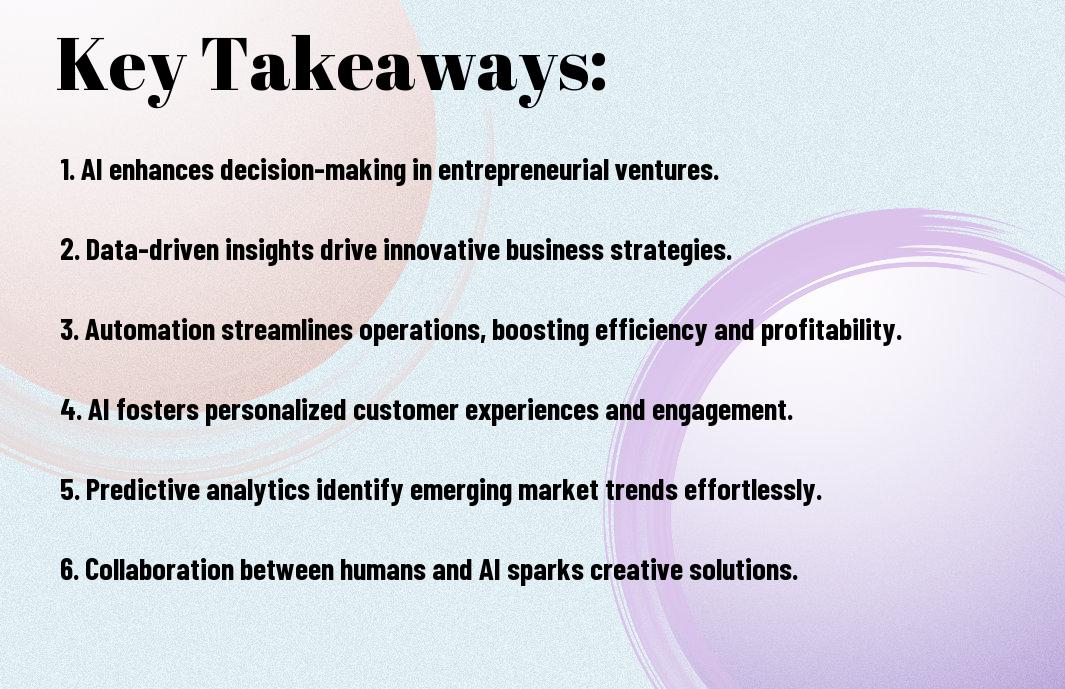
Key Takeaways:

  • Developing AI-driven strategies can significantly enhance investment decisions and portfolio management, leading to potentially higher returns and more efficient risk management.
  • AI algorithms can process vast amounts of data, identify patterns, and make predictions, allowing for more informed decision-making in the financial sector.
  • Implementing AI-driven approaches requires a deep understanding of both financial markets and artificial intelligence, making it crucial to have a team with diverse expertise.
  • AI can help in automating routine tasks, freeing up human capital to focus on higher-value tasks such as strategy development and relationship management.
  • Continuous monitoring and adaptation of AI-driven strategies are necessary due to the dynamic nature of financial markets and the rapid evolution of AI technologies.

The Mathematical Foundations of AI

Your understanding of AI-driven strategies begins with the mathematical foundations that power them, enabling you to make informed decisions and build a fortune.

Probability Theory in Trading Algorithms

Foundational to your success is the application of probability theory, which helps you navigate the complexities of trading algorithms and make predictions about market trends.

Statistical Models That Generate Wealth

An arsenal of statistical models at your disposal can help you identify profitable opportunities and minimize risk, giving you a competitive edge in the market.

Hence, as you explore deeper into statistical models, you’ll discover how they can be tailored to your investment goals, allowing you to generate wealth through data-driven decision making, and ultimately, building a fortune that reflects your financial aspirations.

Computational Infrastructure

One of the most significant factors in building a fortune with AI-driven strategies is having the right computational infrastructure in place, as you will need powerful machines to process and analyze large amounts of data, and this will be the foundation of your success.

Hardware Requirements for Profitable AI

Requiring significant investments in hardware, you will need to consider the specifications of your machines, including processing power, memory, and storage, to ensure they can handle the demands of AI algorithms and provide you with the necessary insights to make informed decisions.

Cloud Computing Economics

Before committing to a particular cloud computing solution, you should carefully evaluate the costs and benefits, considering factors such as scalability, security, and data storage, to ensure that your choice aligns with your business goals and provides you with the best possible return on investment.

In fact, cloud computing can be a highly effective way to access the computational resources you need, without having to make large upfront investments in hardware and infrastructure, allowing you to focus on developing and implementing your AI-driven strategies, and giving you the flexibility to scale up or down as your needs change, which can be a significant advantage as you build your fortune with AI.

Machine Learning Paradigms for Wealth Creation

Keep in mind that machine learning is a key component in building a fortune with AI-driven strategies, enabling you to make data-driven decisions and maximize your returns.

Supervised Learning in Market Prediction

Learning from historical data, you can train models to predict market trends, allowing you to make informed investment decisions and stay ahead of the curve, with your portfolio benefiting from accurate forecasts.

Reinforcement Learning for Portfolio Optimization

Wealth creation is within your reach when you leverage reinforcement learning to optimize your portfolio, as this approach enables you to identify the most profitable strategies and adjust your investments accordingly, with your wealth growing over time.

Portfolio optimization is a complex task, but with reinforcement learning, you can automate the process, allowing you to focus on other aspects of your investment strategy, as the AI system continuously learns and adapts to market conditions, ensuring your portfolio remains optimized for maximum returns, and you can enjoy the benefits of a well-diversified and high-performing investment portfolio.

Data: The New Oil

Many investors are now turning to data-driven approaches to inform their investment decisions, and for good reason. You can leverage data to gain valuable insights and make more informed decisions, ultimately driving your investment strategy forward.

Alternative Data Sources for Market Advantage

To tap into the full potential of data, you’ll want to explore alternative sources, such as social media and sensor data, which can provide you with a unique edge in the market, helping you stay ahead of the competition.

Data Processing Pipelines

Any effective data strategy relies on a robust processing pipeline, enabling you to efficiently collect, process, and analyze large datasets, which is important for uncovering hidden patterns and trends that can inform your investment decisions.

Indeed, as you research deeper into data processing pipelines, you’ll discover that they involve a series of complex steps, from data ingestion and cleaning to transformation and analysis, all of which are important for extracting actionable insights from your data, and you’ll need to carefully design and implement your pipeline to ensure it meets your specific needs and goals.

Risk Management Algorithms

After developing a solid understanding of AI-driven strategies, you can focus on implementing risk management algorithms to protect your investments. These algorithms help you navigate complex markets and make informed decisions to minimize losses and maximize gains.

Quantifying Uncertainty

The key to effective risk management lies in quantifying uncertainty, which involves analyzing market trends and predicting potential outcomes. You can use various statistical models and machine learning techniques to estimate the likelihood of different scenarios and adjust your investment portfolio accordingly.

Hedging Strategies Through AI

Among the various risk management techniques, hedging strategies are particularly effective in reducing potential losses. You can use AI-powered tools to identify hedging opportunities and optimize your portfolio to minimize risk.

Also, as you research deeper into hedging strategies through AI, you’ll discover that these algorithms can help you identify correlations between different assets and develop a diversified portfolio that spreads risk across various markets. By leveraging AI-driven insights, you can make more informed decisions and protect your investments from unexpected market fluctuations, ultimately building a more resilient and profitable portfolio.

Regulatory Navigation

Once again, you’ll need to consider the regulatory landscape as you build your AI-driven strategies. You must ensure your approaches comply with existing laws and regulations to avoid potential pitfalls and penalties.

Algorithmic Trading Compliance

Above all, you should prioritize compliance with algorithmic trading regulations, which vary by jurisdiction. You need to understand the specific requirements for your region to implement your strategies effectively.

International Considerations

Among the key factors to consider are the differences in regulatory frameworks across countries. You should be aware of the unique requirements and restrictions that apply to your international operations.

Trading in international markets requires a deep understanding of the local regulations and laws. You will need to navigate complex rules and ensure your AI-driven strategies are adapted to each market, taking into account factors such as data privacy, security, and taxation, to successfully expand your operations globally.

Conclusion

Hence, you now have the foundation to build your fortune with AI-driven strategies. You can leverage your knowledge to create a profitable portfolio. To further enhance your understanding, visit From Algorithms to Assets: Making Money with AI | 01 and discover how to maximize your returns. With your newfound expertise, you can make informed decisions and grow your assets effectively.

FAQ

Q: What is the main concept of “From Algorithms to Assets – Building a Fortune with AI-Driven Strategies” and how can it help me in my investment journey?

A: The main concept of “From Algorithms to Assets – Building a Fortune with AI-Driven Strategies” revolves around leveraging artificial intelligence (AI) and machine learning (ML) to develop and implement investment strategies that can lead to significant financial gains. By utilizing AI-driven tools and techniques, individuals can analyze vast amounts of market data, identify patterns, and make informed investment decisions. This approach can help investors navigate complex financial markets, minimize risks, and maximize returns, ultimately building a fortune over time. With the power of AI on their side, investors can stay ahead of the curve and make data-driven decisions that drive their investment portfolios forward.

Q: How do AI-driven strategies differ from traditional investment approaches, and what benefits do they offer to investors?

A: AI-driven strategies differ from traditional investment approaches in their ability to process and analyze vast amounts of data in real-time, identifying trends and patterns that may not be visible to human analysts. This enables investors to make more accurate predictions and informed decisions, reducing the risk of human bias and emotion-driven choices. The benefits of AI-driven strategies include enhanced portfolio performance, improved risk management, and increased efficiency. Additionally, AI can automate many routine tasks, freeing up time for investors to focus on higher-level strategic decisions. By harnessing the power of AI, investors can gain a competitive edge in the market and achieve their financial goals more effectively.

Q: What kind of skills or knowledge do I need to have to successfully implement AI-driven strategies and build a fortune with “From Algorithms to Assets – Building a Fortune with AI-Driven Strategies”?

A: To successfully implement AI-driven strategies, you don’t necessarily need to be an expert in artificial intelligence or machine learning. However, having a basic understanding of investing and financial markets is important. The book “From Algorithms to Assets – Building a Fortune with AI-Driven Strategies” is designed to provide readers with a comprehensive guide to getting started with AI-driven investing, including the necessary tools, techniques, and strategies. As you progress through the book, you’ll learn how to work with AI-powered tools, interpret data, and make informed investment decisions. With dedication and practice, you can develop the skills and knowledge needed to build a fortune using AI-driven strategies, even if you’re new to investing or AI.

The Synergy of AI and Entrepreneurship – Unlocking Wealth Creation Secrets

As you navigate the ever-evolving landscape of business and technology, you’re likely aware of the transformative power of artificial intelligence (AI) and entrepreneurship. You may be wondering how to harness the potential of AI to drive your entrepreneurial ventures forward. By combining these two forces, you can unlock new avenues for wealth creation, streamline your operations, and gain a competitive edge in the market. Your ability to leverage AI will be the key to unlocking unprecedented growth and success.

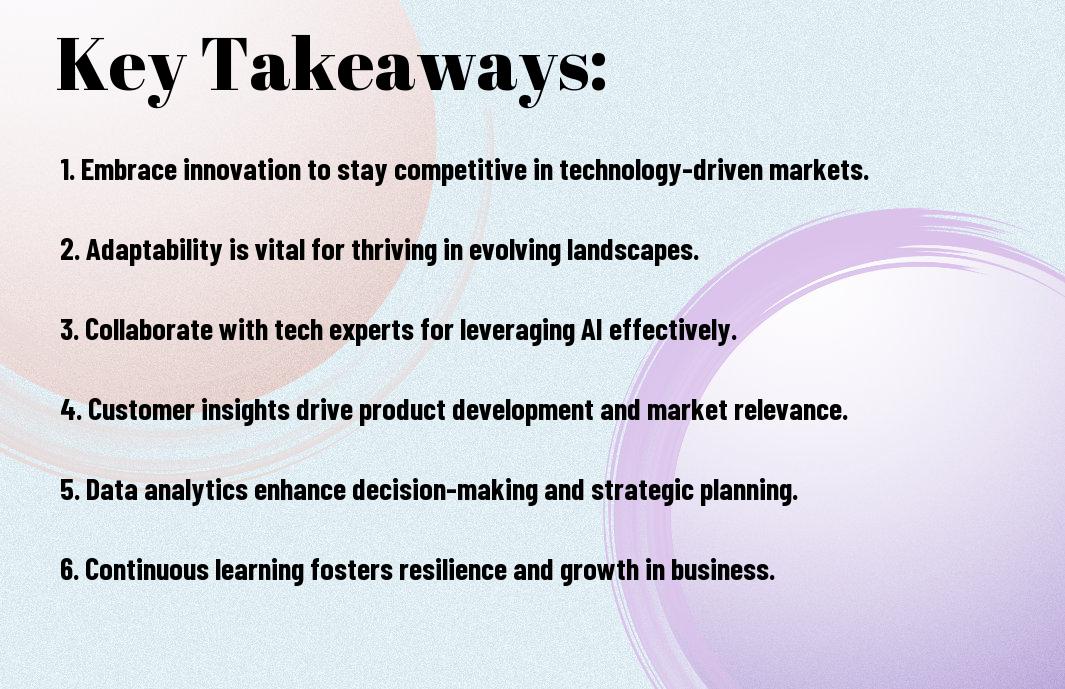
Key Takeaways:

  • The combination of AI and entrepreneurship has the potential to unlock new wealth creation opportunities by automating processes, enhancing decision-making, and driving innovation, leading to increased efficiency and competitiveness in the market.
  • AI-powered tools can help entrepreneurs identify and capitalize on emerging trends, analyze vast amounts of data, and develop targeted marketing strategies to reach their target audience more effectively.
  • Entrepreneurs who leverage AI can create new business models, products, and services that solve real-world problems, leading to the creation of new industries and job opportunities, and contributing to economic growth.
  • The synergy between AI and entrepreneurship also enables the development of more personalized and adaptive customer experiences, allowing businesses to build stronger relationships with their customers and create lasting brand loyalty.
  • As AI technology continues to evolve, entrepreneurs who embrace this synergy will be better positioned to stay ahead of the curve, drive growth, and achieve long-term success in an increasingly competitive and rapidly changing business landscape.

The AI Revolution in Business

To stay ahead in the business world, you need to understand the impact of AI on your industry. The AI revolution is transforming the way you operate, making it crucial to adapt and innovate. You can leverage AI to streamline processes, enhance decision-making, and drive growth.

From Automation to Intelligence

Revamping your business with AI means moving beyond automation to intelligence. You will be able to analyze data, identify patterns, and make informed decisions, giving you a competitive edge. Your business will become more efficient and effective, allowing you to focus on strategic growth.

The Entrepreneurial Advantage

Any entrepreneur can benefit from AI, as it provides a unique opportunity to disrupt markets and create new opportunities. You can use AI to develop innovative products, services, and business models, setting you apart from the competition. Your ability to adapt and innovate will be key to success.

Understanding the entrepreneurial advantage of AI requires you to think creatively about how you can apply AI to your business. You should consider how AI can help you solve real-world problems, improve customer experiences, and drive revenue growth. By doing so, you will be able to unlock new wealth creation opportunities and stay ahead of the curve in your industry, making your business more resilient and successful in the long run.

Identifying AI-Driven Market Opportunities

Assuming you have a solid understanding of AI’s potential, you can begin to identify lucrative market opportunities. You’ll need to analyze trends, consumer behavior, and industry shifts to uncover areas where AI can drive growth and innovation.

Pattern Recognition in Emerging Markets

AFTER conducting thorough research, you’ll be able to spot patterns in emerging markets, enabling you to make informed decisions about where to invest your time and resources. You’ll identify gaps in the market and opportunities to create AI-driven solutions that meet the needs of your target audience.

The Tipping Point for AI Adoption

PRECISELY at the moment when AI technology becomes accessible and affordable, you’ll witness a surge in adoption rates. You’ll see more businesses and individuals leveraging AI to streamline processes, improve efficiency, and drive innovation.

To fully capitalize on the tipping point for AI adoption, you’ll need to stay ahead of the curve, continually updating your knowledge and skills to remain competitive. You’ll need to assess your business model, identifying areas where AI can be integrated to drive growth, improve customer experience, and increase revenue. By doing so, you’ll be well-positioned to unlock new wealth creation opportunities and stay ahead in the market.

Building AI-Enhanced Business Models

Your ability to integrate AI into your business model can be a game-changer, enabling you to automate processes, enhance customer experiences, and uncover new revenue streams.

The Sticky Factor in AI Solutions

Upon implementing AI solutions, you’ll notice that they can significantly improve customer engagement, leading to increased loyalty and retention, which is crucial for your long-term success.

Scalability Through Algorithmic Thinking

Prior to developing your AI-enhanced business model, you need to consider how algorithmic thinking can help you scale your operations efficiently, making it possible to handle increased demand without sacrificing performance.

Solutions that leverage algorithmic thinking enable you to analyze vast amounts of data, identify patterns, and make informed decisions, allowing you to refine your business strategy and stay ahead of the competition, which is crucial for your growth and profitability as you scale your business.

The Capital Efficiency Paradox

All entrepreneurs face the challenge of managing capital efficiently to drive growth and profitability. You will discover how AI can help optimize your resources and maximize returns on investment.

Reduced Entry Costs

Above all, the integration of AI in your business model can significantly lower entry barriers, enabling you to launch and scale your venture with minimal upfront costs, allowing you to allocate your resources more effectively.

The New Funding Landscape

About the time you start exploring funding options, you will find that AI has transformed the landscape, offering you innovative and accessible ways to secure capital, such as crowdfunding and AI-powered investment platforms.

Paradoxically, as you examine deeper into the new funding landscape, you will realize that AI not only provides you with more funding opportunities but also helps you make informed decisions about your investments, ensuring that your capital is allocated efficiently and effectively, ultimately leading to increased wealth creation and business success.

Human-AI Collaborative Leadership

Many entrepreneurs are leveraging AI to enhance their decision-making capabilities, and you can do the same by embracing this synergy. You will be able to make more informed decisions, drive innovation, and stay ahead of the competition.

Cognitive Augmentation

By combining human intuition with AI-driven insights, you can augment your cognitive abilities and unlock new levels of productivity. You will be able to analyze complex data, identify patterns, and make predictions that inform your business strategy.

The Outlier Advantage

Beneath the surface of traditional leadership lies a new paradigm, where you can harness the power of AI to drive exceptional results. You will be able to identify opportunities that others miss, and capitalize on them to gain a competitive edge.

Also, as you investigate deeper into the outlier advantage, you will discover that it’s not just about using AI to analyze data, but also about using it to challenge your assumptions and biases. You will be able to develop a more nuanced understanding of your business, and make decisions that are more informed and effective, ultimately leading to greater success and wealth creation.

Navigating Ethical Considerations

Now, as you explore into the world of AI and entrepreneurship, you must consider the ethical implications of your actions, and for more insights, you can check out How Generative AI is Unlocking the Greatest Wealth Opportunity of the 21st Century, which sheds light on the potential of AI in wealth creation.

Trust as Currency

On the path to success, you’ll find that trust is a valuable asset, and as you build your brand, you must prioritize transparency and accountability to foster trust with your audience and stakeholders.

Designing for Responsible Growth

On the journey to designing responsible growth, you’ll need to consider the long-term effects of your actions and prioritize sustainability, ensuring that your business model is both profitable and ethical.

And as you design for responsible growth, you’ll need to consider the potential risks and benefits of AI integration, weighing the potential for increased efficiency and innovation against the potential for job displacement and bias, and by doing so, you’ll be able to create a business that is both successful and responsible, ultimately contributing to your long-term success and the well-being of your stakeholders.

Conclusion

So, as you explore the synergy of AI and entrepreneurship, you will unlock wealth creation secrets that can transform your business. You will discover how AI can amplify your entrepreneurial spirit, driving innovation and growth. By harnessing the power of AI, you can make informed decisions, optimize operations, and create new opportunities, ultimately leading to increased prosperity and success in your endeavors.

FAQ

Q: What is the relationship between Artificial Intelligence (AI) and entrepreneurship, and how do they contribute to wealth creation?

A: The synergy of AI and entrepreneurship is a powerful combination that unlocks wealth creation secrets by leveraging technological advancements to innovate, automate, and optimize business processes. AI enables entrepreneurs to analyze vast amounts of data, identify patterns, and make informed decisions, thereby enhancing their ability to develop innovative products and services that meet the evolving needs of the market. By integrating AI into their business strategies, entrepreneurs can streamline operations, reduce costs, and improve efficiency, ultimately leading to increased productivity and profitability.

Q: How can entrepreneurs harness the potential of AI to drive business growth and stay competitive in the market?

A: Entrepreneurs can harness the potential of AI by adopting a strategic approach to its integration. This involves identifying areas where AI can add value, such as customer service, marketing, or supply chain management, and investing in the necessary infrastructure and talent to support its implementation. Additionally, entrepreneurs should focus on developing a culture of innovation, encouraging experimentation, and continuous learning to stay up-to-date with the latest AI trends and technologies. By doing so, entrepreneurs can unlock new opportunities, drive business growth, and stay ahead of the competition in an increasingly digital landscape.

Q: What are the key challenges that entrepreneurs may face when integrating AI into their business, and how can they overcome these obstacles to achieve successful outcomes?

A: Entrepreneurs may face several challenges when integrating AI into their business, including data quality issues, talent acquisition and retention, and the need for significant upfront investment. To overcome these obstacles, entrepreneurs should prioritize data management, ensuring that their data is accurate, complete, and accessible. They should also invest in talent development, either by hiring experts in AI or upskilling existing employees. Furthermore, entrepreneurs should adopt a phased approach to AI implementation, starting with small-scale pilots and gradually scaling up to larger initiatives. By taking a thoughtful and strategic approach to AI integration, entrepreneurs can mitigate risks, overcome challenges, and achieve successful outcomes that drive business growth and wealth creation.

Skip to content