Entrepreneurship

Entrepreneurial Success in the AI Era – Lessons from the Front Lines

As you navigate the rapidly evolving business landscape, you’re likely wondering how to leverage artificial intelligence to drive your venture forward. Your ability to adapt and innovate will be key to staying ahead of the curve. You’ll need to understand how AI is transforming industries and identify opportunities to harness its power. In this post, you’ll gain valuable insights from entrepreneurs who have successfully integrated AI into their businesses, and learn how to apply these lessons to achieve your own success.

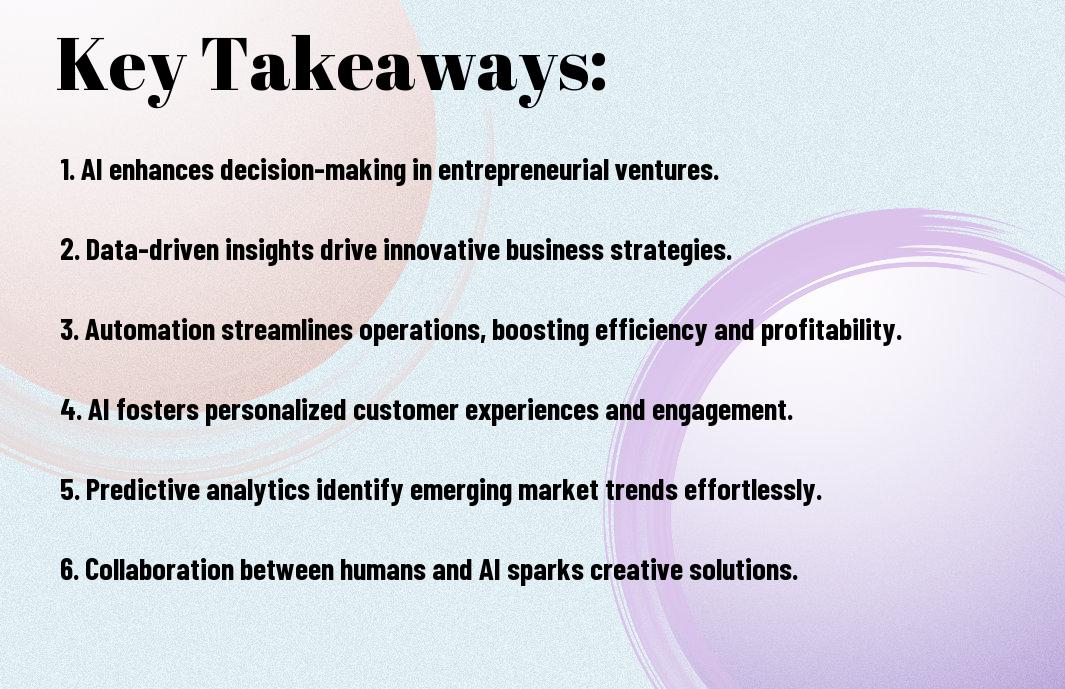
Key Takeaways:

  • Embracing AI technology is important for entrepreneurs to stay competitive in today’s fast-paced business landscape, as it enables them to automate tasks, gain insights, and make data-driven decisions.
  • Developing a deep understanding of AI and its applications is vital for entrepreneurs to identify opportunities and challenges, and to create innovative solutions that leverage AI capabilities.
  • Building a strong team with diverse skills, including AI expertise, is necessary for entrepreneurs to successfully develop and implement AI-powered products and services.
  • Entrepreneurs must prioritize ethics and responsibility when developing and deploying AI systems, ensuring that they are transparent, fair, and respectful of user data and privacy.
  • Staying adaptable and agile is key for entrepreneurs to navigate the rapidly evolving AI landscape, as they must be prepared to pivot and adjust their strategies in response to new technologies and market trends.
    The New Entrepreneurial Landscape

    Before entering the entrepreneurial arena, you need to understand the shifting dynamics of the business world. The AI era has brought about significant changes, and you must be prepared to adapt and innovate to succeed.

    AI as the Great Equalizer

    Generally, AI has leveled the playing field, allowing small businesses and startups to compete with larger corporations. You can now access advanced technologies and tools, enabling you to scale and grow your business more efficiently.

    The Velocity of Change

    Against the backdrop of rapid technological advancements, you must be agile and responsive to changing market conditions. You need to stay ahead of the curve, anticipating and adapting to new trends and innovations.

    This velocity of change requires you to be highly adaptable and open to new ideas and strategies. You must be willing to pivot your business model, products, or services to stay relevant in a rapidly evolving market. By doing so, you can capitalize on new opportunities and stay ahead of the competition, ultimately driving your entrepreneurial success in the AI era.

    First-Principles Thinking

    Now, as you navigate the AI era, you’ll need to adopt a mindset that allows you to challenge conventional wisdom and think creatively. This involves breaking down complex problems into their fundamental components and solving them from the ground up.

    Questioning Assumptions

    For instance, you should constantly question the assumptions that underlie your business model and be willing to pivot when necessary. By doing so, you’ll be able to identify new opportunities and stay ahead of the competition.

    Building from the Ground Up

    On the other hand, building from the ground up allows you to create a solid foundation for your business, unencumbered by legacy systems or outdated thinking. You can design and optimize each component to work seamlessly together, creating a more efficient and effective whole.

    Plus, when you build from the ground up, you have the opportunity to incorporate AI and other emerging technologies into the very fabric of your business, enabling you to innovate and adapt more quickly to changing market conditions, and ultimately, driving your entrepreneurial success.

    Adaptation Over Perfection

    Not every entrepreneurial venture will be a perfect, polished product from the start. You will encounter setbacks and make adjustments as you navigate the AI era.

    The Minimum Viable Product Philosophy

    Among the strategies you can employ is launching a minimum viable product, allowing you to test and refine your offering based on user feedback, helping you to adapt quickly to changing market conditions.

    Iterative Growth Cycles

    By embracing iterative growth cycles, you can continuously evaluate and improve your product or service, ensuring it meets the evolving needs of your customers and stays competitive in the market.

    In addition, as you progress through these cycles, you will gather valuable insights and data, enabling you to make informed decisions about your business, and driving your entrepreneurial success in the AI era, allowing you to stay ahead of the curve and achieve your goals.

    Data as the New Currency

    Many entrepreneurs are now recognizing the value of data in driving business decisions and gaining a competitive edge. You can leverage data to inform your strategy, optimize operations, and create new opportunities for growth. As you navigate the AI era, your ability to collect, analyze, and apply data will be important to your success.

    Harvesting Meaningful Insights

    Upon closer examination, you’ll find that data holds the key to unlocking meaningful insights that can transform your business. You can use data analytics tools to identify trends, patterns, and correlations that inform your decision-making and drive innovation. By doing so, you’ll be able to refine your strategy and stay ahead of the curve.

    Ethical Considerations

    Any entrepreneur operating in the AI era must consider the ethical implications of data collection and usage. You need to ensure that your data practices are transparent, secure, and respectful of users’ privacy. As you develop your data strategy, you should prioritize ethical considerations to maintain trust and avoid potential pitfalls.

    Hence, as you probe deeper into the world of data-driven decision-making, you’ll need to balance the benefits of data analysis with the potential risks and consequences. You should establish clear guidelines and protocols for data collection, storage, and usage, and invest in robust security measures to protect sensitive information. By doing so, you’ll be able to harness the power of data while maintaining the trust and integrity of your business.

    The Human Element

    Unlike other factors that contribute to entrepreneurial success, the human element is often overlooked in the AI era. You must prioritize your team’s skills and abilities to stay competitive.

    Emotional Intelligence in the AI Age

    Along with technological advancements, you need to develop emotional intelligence to effectively lead and manage your team in this new landscape, ensuring you make informed decisions that balance human and artificial intelligence.

    Building Teams That Complement Technology

    With the rise of AI, you should focus on building teams that complement technology, rather than replacing it, to maximize efficiency and innovation in your organization.

    Complement your technology with a team that possesses skills such as creativity, problem-solving, and adaptability, allowing you to leverage AI’s capabilities while maintaining a human touch, and you will be able to drive your business forward in the AI era, making the most of the unique strengths that both humans and machines bring to the table.

    Funding in the AI Ecosystem

    Once again, you find yourself at the forefront of innovation, navigating the complex landscape of funding in the AI era, where traditional models are being disrupted and new opportunities are emerging, allowing you to capitalize on your vision.

    New Venture Capital Paradigms

    To succeed, you need to understand the evolving venture capital landscape, where AI-focused funds and investors are looking for startups that can leverage AI to drive growth and returns, and you must be prepared to demonstrate your AI strategy to secure funding.

    Alternative Financing Routes

    Along with traditional venture capital, you can explore alternative financing options, such as crowdfunding, angel investors, and corporate venture arms, which can provide the necessary capital to fuel your AI-driven venture, and you should consider these options to fund your growth.

    In fact, alternative financing routes can offer you more flexibility and control over your business, allowing you to maintain equity and make strategic decisions without external pressure, and you should carefully evaluate these options to determine the best fit for your AI startup, considering factors such as investment size, valuation, and investor expectations, to ensure that you secure the funding you need to drive your business forward.

    To wrap up

    On the whole, you now have a deeper understanding of what it takes to achieve entrepreneurial success in the AI era. You have learned valuable lessons from the front lines, and you can apply these insights to your own business ventures. As you move forward, you will be able to leverage AI to drive innovation and growth, and your ability to adapt will be key to staying ahead of the curve and achieving your goals in this rapidly evolving landscape.

    FAQ

    Q: What are the key characteristics of successful entrepreneurs in the AI era?

    A: Successful entrepreneurs in the AI era are those who are able to adapt quickly to changing market conditions, leverage AI technologies to drive innovation, and foster a culture of experimentation and continuous learning within their organizations. They are also able to identify and capitalize on new opportunities created by AI, such as the development of new products and services, and the creation of new business models. Additionally, they are able to navigate the ethical and societal implications of AI, and prioritize transparency, accountability, and fairness in their use of AI technologies.

    Q: How can entrepreneurs effectively integrate AI into their business strategy to drive growth and competitiveness?

    A: Entrepreneurs can effectively integrate AI into their business strategy by starting with a clear understanding of their business goals and identifying areas where AI can add value. They should then develop a roadmap for AI adoption, which includes assessing their current data infrastructure, identifying potential AI applications, and developing a plan for implementing and scaling AI solutions. It’s also important to invest in employee education and training, to ensure that they have the skills needed to work effectively with AI technologies. Furthermore, entrepreneurs should prioritize ongoing evaluation and monitoring of AI systems, to ensure that they are delivering the expected benefits and to identify areas for improvement.

    Q: What are some common pitfalls that entrepreneurs should avoid when navigating the AI landscape, and how can they mitigate potential risks?

    A: Common pitfalls that entrepreneurs should avoid when navigating the AI landscape include underestimating the complexity of AI technologies, overestimating their potential benefits, and failing to consider the potential risks and downsides of AI adoption. To mitigate these risks, entrepreneurs should take a nuanced and informed approach to AI adoption, which includes conducting thorough research and due diligence, developing a clear understanding of the potential benefits and risks of AI, and prioritizing transparency, accountability, and fairness in their use of AI technologies. They should also invest in ongoing monitoring and evaluation, to ensure that AI systems are delivering the expected benefits and to identify areas for improvement. By taking a thoughtful and informed approach to AI adoption, entrepreneurs can minimize the risks and maximize the benefits of AI for their businesses.


Entrepreneurial Success in the AI Era – Lessons from the Front Lines

As you navigate the rapidly evolving business landscape, you’re likely wondering how to leverage artificial intelligence to drive your venture forward. Your ability to adapt and innovate will be key to staying ahead of the curve. You’ll need to understand how AI is transforming industries and identify opportunities to harness its power. In this post, you’ll gain valuable insights from entrepreneurs who have successfully integrated AI into their businesses, and learn how to apply these lessons to achieve your own success.

Key Takeaways:

  • Embracing AI technology is important for entrepreneurs to stay competitive in today’s fast-paced business landscape, as it enables them to automate tasks, gain insights, and make data-driven decisions.
  • Developing a deep understanding of AI and its applications is vital for entrepreneurs to identify opportunities and challenges, and to create innovative solutions that leverage AI capabilities.
  • Building a strong team with diverse skills, including AI expertise, is necessary for entrepreneurs to successfully develop and implement AI-powered products and services.
  • Entrepreneurs must prioritize ethics and responsibility when developing and deploying AI systems, ensuring that they are transparent, fair, and respectful of user data and privacy.
  • Staying adaptable and agile is key for entrepreneurs to navigate the rapidly evolving AI landscape, as they must be prepared to pivot and adjust their strategies in response to new technologies and market trends.

    The New Entrepreneurial Landscape

    Before entering the entrepreneurial arena, you need to understand the shifting dynamics of the business world. The AI era has brought about significant changes, and you must be prepared to adapt and innovate to succeed.

    AI as the Great Equalizer

    Generally, AI has leveled the playing field, allowing small businesses and startups to compete with larger corporations. You can now access advanced technologies and tools, enabling you to scale and grow your business more efficiently.

    The Velocity of Change

    Against the backdrop of rapid technological advancements, you must be agile and responsive to changing market conditions. You need to stay ahead of the curve, anticipating and adapting to new trends and innovations.

    This velocity of change requires you to be highly adaptable and open to new ideas and strategies. You must be willing to pivot your business model, products, or services to stay relevant in a rapidly evolving market. By doing so, you can capitalize on new opportunities and stay ahead of the competition, ultimately driving your entrepreneurial success in the AI era.

    First-Principles Thinking

    Now, as you navigate the AI era, you’ll need to adopt a mindset that allows you to challenge conventional wisdom and think creatively. This involves breaking down complex problems into their fundamental components and solving them from the ground up.

    Questioning Assumptions

    For instance, you should constantly question the assumptions that underlie your business model and be willing to pivot when necessary. By doing so, you’ll be able to identify new opportunities and stay ahead of the competition.

    Building from the Ground Up

    On the other hand, building from the ground up allows you to create a solid foundation for your business, unencumbered by legacy systems or outdated thinking. You can design and optimize each component to work seamlessly together, creating a more efficient and effective whole.

    Plus, when you build from the ground up, you have the opportunity to incorporate AI and other emerging technologies into the very fabric of your business, enabling you to innovate and adapt more quickly to changing market conditions, and ultimately, driving your entrepreneurial success.

    Adaptation Over Perfection

    Not every entrepreneurial venture will be a perfect, polished product from the start. You will encounter setbacks and make adjustments as you navigate the AI era.

    The Minimum Viable Product Philosophy

    Among the strategies you can employ is launching a minimum viable product, allowing you to test and refine your offering based on user feedback, helping you to adapt quickly to changing market conditions.

    Iterative Growth Cycles

    By embracing iterative growth cycles, you can continuously evaluate and improve your product or service, ensuring it meets the evolving needs of your customers and stays competitive in the market.

    In addition, as you progress through these cycles, you will gather valuable insights and data, enabling you to make informed decisions about your business, and driving your entrepreneurial success in the AI era, allowing you to stay ahead of the curve and achieve your goals.

    Data as the New Currency

    Many entrepreneurs are now recognizing the value of data in driving business decisions and gaining a competitive edge. You can leverage data to inform your strategy, optimize operations, and create new opportunities for growth. As you navigate the AI era, your ability to collect, analyze, and apply data will be important to your success.

    Harvesting Meaningful Insights

    Upon closer examination, you’ll find that data holds the key to unlocking meaningful insights that can transform your business. You can use data analytics tools to identify trends, patterns, and correlations that inform your decision-making and drive innovation. By doing so, you’ll be able to refine your strategy and stay ahead of the curve.

    Ethical Considerations

    Any entrepreneur operating in the AI era must consider the ethical implications of data collection and usage. You need to ensure that your data practices are transparent, secure, and respectful of users’ privacy. As you develop your data strategy, you should prioritize ethical considerations to maintain trust and avoid potential pitfalls.

    Hence, as you probe deeper into the world of data-driven decision-making, you’ll need to balance the benefits of data analysis with the potential risks and consequences. You should establish clear guidelines and protocols for data collection, storage, and usage, and invest in robust security measures to protect sensitive information. By doing so, you’ll be able to harness the power of data while maintaining the trust and integrity of your business.

    The Human Element

    Unlike other factors that contribute to entrepreneurial success, the human element is often overlooked in the AI era. You must prioritize your team’s skills and abilities to stay competitive.

    Emotional Intelligence in the AI Age

    Along with technological advancements, you need to develop emotional intelligence to effectively lead and manage your team in this new landscape, ensuring you make informed decisions that balance human and artificial intelligence.

    Building Teams That Complement Technology

    With the rise of AI, you should focus on building teams that complement technology, rather than replacing it, to maximize efficiency and innovation in your organization.

    Complement your technology with a team that possesses skills such as creativity, problem-solving, and adaptability, allowing you to leverage AI’s capabilities while maintaining a human touch, and you will be able to drive your business forward in the AI era, making the most of the unique strengths that both humans and machines bring to the table.

    Funding in the AI Ecosystem

    Once again, you find yourself at the forefront of innovation, navigating the complex landscape of funding in the AI era, where traditional models are being disrupted and new opportunities are emerging, allowing you to capitalize on your vision.

    New Venture Capital Paradigms

    To succeed, you need to understand the evolving venture capital landscape, where AI-focused funds and investors are looking for startups that can leverage AI to drive growth and returns, and you must be prepared to demonstrate your AI strategy to secure funding.

    Alternative Financing Routes

    Along with traditional venture capital, you can explore alternative financing options, such as crowdfunding, angel investors, and corporate venture arms, which can provide the necessary capital to fuel your AI-driven venture, and you should consider these options to fund your growth.

    In fact, alternative financing routes can offer you more flexibility and control over your business, allowing you to maintain equity and make strategic decisions without external pressure, and you should carefully evaluate these options to determine the best fit for your AI startup, considering factors such as investment size, valuation, and investor expectations, to ensure that you secure the funding you need to drive your business forward.

    To wrap up

    On the whole, you now have a deeper understanding of what it takes to achieve entrepreneurial success in the AI era. You have learned valuable lessons from the front lines, and you can apply these insights to your own business ventures. As you move forward, you will be able to leverage AI to drive innovation and growth, and your ability to adapt will be key to staying ahead of the curve and achieving your goals in this rapidly evolving landscape.

    FAQ

    Q: What are the key characteristics of successful entrepreneurs in the AI era?

    A: Successful entrepreneurs in the AI era are those who are able to adapt quickly to changing market conditions, leverage AI technologies to drive innovation, and foster a culture of experimentation and continuous learning within their organizations. They are also able to identify and capitalize on new opportunities created by AI, such as the development of new products and services, and the creation of new business models. Additionally, they are able to navigate the ethical and societal implications of AI, and prioritize transparency, accountability, and fairness in their use of AI technologies.

    Q: How can entrepreneurs effectively integrate AI into their business strategy to drive growth and competitiveness?

    A: Entrepreneurs can effectively integrate AI into their business strategy by starting with a clear understanding of their business goals and identifying areas where AI can add value. They should then develop a roadmap for AI adoption, which includes assessing their current data infrastructure, identifying potential AI applications, and developing a plan for implementing and scaling AI solutions. It’s also important to invest in employee education and training, to ensure that they have the skills needed to work effectively with AI technologies. Furthermore, entrepreneurs should prioritize ongoing evaluation and monitoring of AI systems, to ensure that they are delivering the expected benefits and to identify areas for improvement.

    Q: What are some common pitfalls that entrepreneurs should avoid when navigating the AI landscape, and how can they mitigate potential risks?

    A: Common pitfalls that entrepreneurs should avoid when navigating the AI landscape include underestimating the complexity of AI technologies, overestimating their potential benefits, and failing to consider the potential risks and downsides of AI adoption. To mitigate these risks, entrepreneurs should take a nuanced and informed approach to AI adoption, which includes conducting thorough research and due diligence, developing a clear understanding of the potential benefits and risks of AI, and prioritizing transparency, accountability, and fairness in their use of AI technologies. They should also invest in ongoing monitoring and evaluation, to ensure that AI systems are delivering the expected benefits and to identify areas for improvement. By taking a thoughtful and informed approach to AI adoption, entrepreneurs can minimize the risks and maximize the benefits of AI for their businesses.

The Synergy of AI and Entrepreneurship – Unlocking Wealth Creation Secrets

As you navigate the ever-evolving landscape of business and technology, you’re likely aware of the transformative power of artificial intelligence (AI) and entrepreneurship. You may be wondering how to harness the potential of AI to drive your entrepreneurial ventures forward. By combining these two forces, you can unlock new avenues for wealth creation, streamline your operations, and gain a competitive edge in the market. Your ability to leverage AI will be the key to unlocking unprecedented growth and success.

Key Takeaways:

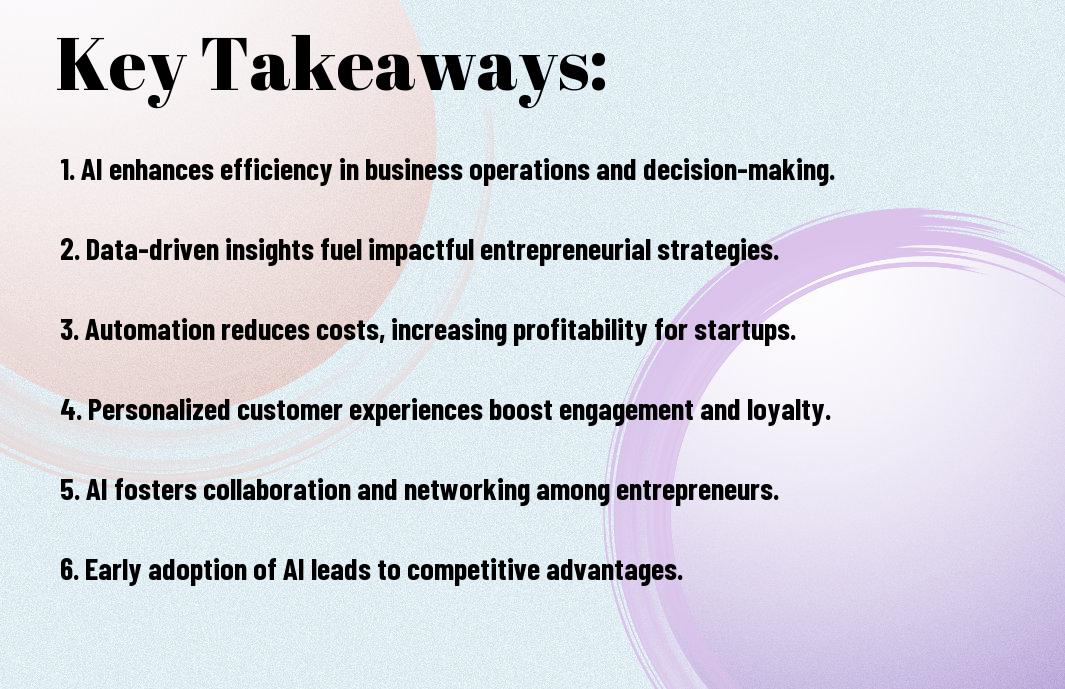
  • The combination of AI and entrepreneurship has the potential to unlock new wealth creation opportunities by automating processes, enhancing decision-making, and driving innovation, leading to increased efficiency and competitiveness in the market.
  • AI-powered tools can help entrepreneurs identify and capitalize on emerging trends, analyze vast amounts of data, and develop targeted marketing strategies to reach their target audience more effectively.
  • Entrepreneurs who leverage AI can create new business models, products, and services that solve real-world problems, leading to the creation of new industries and job opportunities, and contributing to economic growth.
  • The synergy between AI and entrepreneurship also enables the development of more personalized and adaptive customer experiences, allowing businesses to build stronger relationships with their customers and create lasting brand loyalty.
  • As AI technology continues to evolve, entrepreneurs who embrace this synergy will be better positioned to stay ahead of the curve, drive growth, and achieve long-term success in an increasingly competitive and rapidly changing business landscape.

The AI Revolution in Business

To stay ahead in the business world, you need to understand the impact of AI on your industry. The AI revolution is transforming the way you operate, making it crucial to adapt and innovate. You can leverage AI to streamline processes, enhance decision-making, and drive growth.

From Automation to Intelligence

Revamping your business with AI means moving beyond automation to intelligence. You will be able to analyze data, identify patterns, and make informed decisions, giving you a competitive edge. Your business will become more efficient and effective, allowing you to focus on strategic growth.

The Entrepreneurial Advantage

Any entrepreneur can benefit from AI, as it provides a unique opportunity to disrupt markets and create new opportunities. You can use AI to develop innovative products, services, and business models, setting you apart from the competition. Your ability to adapt and innovate will be key to success.

Understanding the entrepreneurial advantage of AI requires you to think creatively about how you can apply AI to your business. You should consider how AI can help you solve real-world problems, improve customer experiences, and drive revenue growth. By doing so, you will be able to unlock new wealth creation opportunities and stay ahead of the curve in your industry, making your business more resilient and successful in the long run.

Identifying AI-Driven Market Opportunities

Assuming you have a solid understanding of AI’s potential, you can begin to identify lucrative market opportunities. You’ll need to analyze trends, consumer behavior, and industry shifts to uncover areas where AI can drive growth and innovation.

Pattern Recognition in Emerging Markets

AFTER conducting thorough research, you’ll be able to spot patterns in emerging markets, enabling you to make informed decisions about where to invest your time and resources. You’ll identify gaps in the market and opportunities to create AI-driven solutions that meet the needs of your target audience.

The Tipping Point for AI Adoption

PRECISELY at the moment when AI technology becomes accessible and affordable, you’ll witness a surge in adoption rates. You’ll see more businesses and individuals leveraging AI to streamline processes, improve efficiency, and drive innovation.

To fully capitalize on the tipping point for AI adoption, you’ll need to stay ahead of the curve, continually updating your knowledge and skills to remain competitive. You’ll need to assess your business model, identifying areas where AI can be integrated to drive growth, improve customer experience, and increase revenue. By doing so, you’ll be well-positioned to unlock new wealth creation opportunities and stay ahead in the market.

Building AI-Enhanced Business Models

Your ability to integrate AI into your business model can be a game-changer, enabling you to automate processes, enhance customer experiences, and uncover new revenue streams.

The Sticky Factor in AI Solutions

Upon implementing AI solutions, you’ll notice that they can significantly improve customer engagement, leading to increased loyalty and retention, which is crucial for your long-term success.

Scalability Through Algorithmic Thinking

Prior to developing your AI-enhanced business model, you need to consider how algorithmic thinking can help you scale your operations efficiently, making it possible to handle increased demand without sacrificing performance.

Solutions that leverage algorithmic thinking enable you to analyze vast amounts of data, identify patterns, and make informed decisions, allowing you to refine your business strategy and stay ahead of the competition, which is crucial for your growth and profitability as you scale your business.

The Capital Efficiency Paradox

All entrepreneurs face the challenge of managing capital efficiently to drive growth and profitability. You will discover how AI can help optimize your resources and maximize returns on investment.

Reduced Entry Costs

Above all, the integration of AI in your business model can significantly lower entry barriers, enabling you to launch and scale your venture with minimal upfront costs, allowing you to allocate your resources more effectively.

The New Funding Landscape

About the time you start exploring funding options, you will find that AI has transformed the landscape, offering you innovative and accessible ways to secure capital, such as crowdfunding and AI-powered investment platforms.

Paradoxically, as you examine deeper into the new funding landscape, you will realize that AI not only provides you with more funding opportunities but also helps you make informed decisions about your investments, ensuring that your capital is allocated efficiently and effectively, ultimately leading to increased wealth creation and business success.

Human-AI Collaborative Leadership

Many entrepreneurs are leveraging AI to enhance their decision-making capabilities, and you can do the same by embracing this synergy. You will be able to make more informed decisions, drive innovation, and stay ahead of the competition.

Cognitive Augmentation

By combining human intuition with AI-driven insights, you can augment your cognitive abilities and unlock new levels of productivity. You will be able to analyze complex data, identify patterns, and make predictions that inform your business strategy.

The Outlier Advantage

Beneath the surface of traditional leadership lies a new paradigm, where you can harness the power of AI to drive exceptional results. You will be able to identify opportunities that others miss, and capitalize on them to gain a competitive edge.

Also, as you investigate deeper into the outlier advantage, you will discover that it’s not just about using AI to analyze data, but also about using it to challenge your assumptions and biases. You will be able to develop a more nuanced understanding of your business, and make decisions that are more informed and effective, ultimately leading to greater success and wealth creation.

Navigating Ethical Considerations

Now, as you explore into the world of AI and entrepreneurship, you must consider the ethical implications of your actions, and for more insights, you can check out How Generative AI is Unlocking the Greatest Wealth Opportunity of the 21st Century, which sheds light on the potential of AI in wealth creation.

Trust as Currency

On the path to success, you’ll find that trust is a valuable asset, and as you build your brand, you must prioritize transparency and accountability to foster trust with your audience and stakeholders.

Designing for Responsible Growth

On the journey to designing responsible growth, you’ll need to consider the long-term effects of your actions and prioritize sustainability, ensuring that your business model is both profitable and ethical.

And as you design for responsible growth, you’ll need to consider the potential risks and benefits of AI integration, weighing the potential for increased efficiency and innovation against the potential for job displacement and bias, and by doing so, you’ll be able to create a business that is both successful and responsible, ultimately contributing to your long-term success and the well-being of your stakeholders.

Conclusion

So, as you explore the synergy of AI and entrepreneurship, you will unlock wealth creation secrets that can transform your business. You will discover how AI can amplify your entrepreneurial spirit, driving innovation and growth. By harnessing the power of AI, you can make informed decisions, optimize operations, and create new opportunities, ultimately leading to increased prosperity and success in your endeavors.

FAQ

Q: What is the relationship between Artificial Intelligence (AI) and entrepreneurship, and how do they contribute to wealth creation?

A: The synergy of AI and entrepreneurship is a powerful combination that unlocks wealth creation secrets by leveraging technological advancements to innovate, automate, and optimize business processes. AI enables entrepreneurs to analyze vast amounts of data, identify patterns, and make informed decisions, thereby enhancing their ability to develop innovative products and services that meet the evolving needs of the market. By integrating AI into their business strategies, entrepreneurs can streamline operations, reduce costs, and improve efficiency, ultimately leading to increased productivity and profitability.

Q: How can entrepreneurs harness the potential of AI to drive business growth and stay competitive in the market?

A: Entrepreneurs can harness the potential of AI by adopting a strategic approach to its integration. This involves identifying areas where AI can add value, such as customer service, marketing, or supply chain management, and investing in the necessary infrastructure and talent to support its implementation. Additionally, entrepreneurs should focus on developing a culture of innovation, encouraging experimentation, and continuous learning to stay up-to-date with the latest AI trends and technologies. By doing so, entrepreneurs can unlock new opportunities, drive business growth, and stay ahead of the competition in an increasingly digital landscape.

Q: What are the key challenges that entrepreneurs may face when integrating AI into their business, and how can they overcome these obstacles to achieve successful outcomes?

A: Entrepreneurs may face several challenges when integrating AI into their business, including data quality issues, talent acquisition and retention, and the need for significant upfront investment. To overcome these obstacles, entrepreneurs should prioritize data management, ensuring that their data is accurate, complete, and accessible. They should also invest in talent development, either by hiring experts in AI or upskilling existing employees. Furthermore, entrepreneurs should adopt a phased approach to AI implementation, starting with small-scale pilots and gradually scaling up to larger initiatives. By taking a thoughtful and strategic approach to AI integration, entrepreneurs can mitigate risks, overcome challenges, and achieve successful outcomes that drive business growth and wealth creation.

Innovation and Wealth – The Role of AI in Driving Entrepreneurial Success

As you navigate the ever-changing landscape of entrepreneurship, you’re likely aware that innovation is key to staying ahead of the curve. Your ability to leverage cutting-edge technology, such as Artificial Intelligence (AI), can significantly impact your success. You’re probably wondering how AI can drive your business forward, and what benefits it can bring to your entrepreneurial endeavors. This post will explore the role of AI in driving innovation and wealth, and how you can harness its power to achieve your goals.

Key Takeaways:

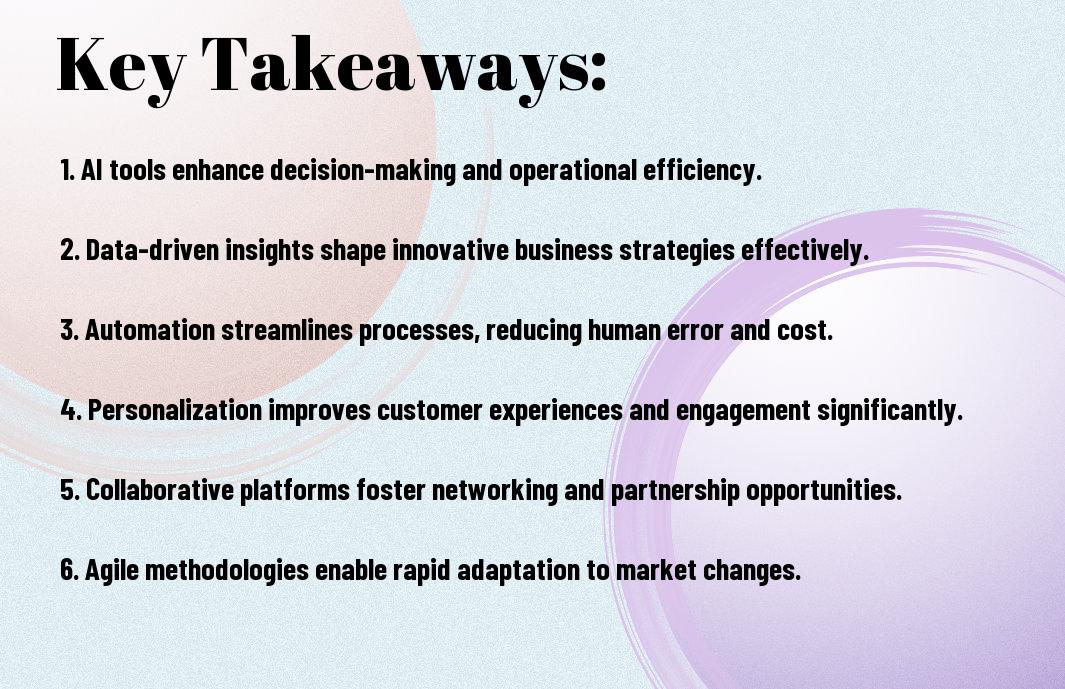
  • Artificial Intelligence (AI) plays a significant role in driving entrepreneurial success by automating processes, enhancing decision-making, and improving productivity, ultimately leading to increased wealth creation.
  • AI-powered tools and technologies can help entrepreneurs identify new business opportunities, develop innovative products and services, and gain a competitive edge in the market.
  • The integration of AI in business operations can lead to improved efficiency, reduced costs, and enhanced customer experience, resulting in increased revenue and profitability.
  • Entrepreneurs who leverage AI effectively can gain valuable insights from data analysis, enabling them to make informed decisions and drive business growth through strategic innovation.
  • As AI continues to evolve, it is likely to have a profound impact on the entrepreneurial landscape, creating new opportunities for innovation and wealth creation, and transforming the way businesses operate and succeed.

The Tipping Point of AI in Business

Before you can harness the power of AI, it’s crucial to understand its role in driving entrepreneurial success, as it has become a key factor in business innovation, enabling you to make data-driven decisions and stay ahead of the competition.

When Algorithms Become Competitive Advantages

On the path to success, you’ll find that algorithms can become a significant competitive advantage, allowing you to automate tasks, optimize processes, and gain valuable insights that inform your business strategy, giving you an edge over your competitors.

The Stickiness Factor of AI Solutions

Factoring in the long-term benefits, you’ll discover that AI solutions can have a significant impact on your business, as they can lead to increased efficiency, improved customer satisfaction, and ultimately, increased revenue, making them a valuable investment for your company.

And as you research deeper into the world of AI, you’ll find that the stickiness factor of AI solutions lies in their ability to learn and adapt to your business needs, allowing you to refine your strategy and make adjustments as needed, ensuring that you stay on track to achieve your goals, and enabling you to measure the effectiveness of your AI investments, making adjustments to optimize your returns.

Outliers in AI Entrepreneurship

Any entrepreneur looking to leverage AI for success must understand the unique challenges and opportunities that come with it. You will need to navigate complex technologies and adapt to rapid changes in the market to stay ahead of the competition.

The 10,000-Hour Rule Reimagined

Above all, you should focus on developing a deep understanding of AI and its applications, as this will be key to driving your entrepreneurial success. You can achieve this by dedicating time to learning and experimenting with different AI technologies.

Opportunity and Timing in AI Ventures

Hour after hour, you will be faced with decisions that can make or break your AI venture, and it is your ability to seize opportunities and time your moves correctly that will set you apart from others. You must be able to identify emerging trends and capitalize on them quickly.

Outliers in AI entrepreneurship are those who can balance their technical expertise with business acumen, allowing them to identify opportunities and time their ventures perfectly. You can join their ranks by staying informed about the latest developments in AI and being prepared to adapt your strategy as the landscape evolves, ensuring your venture stays ahead of the curve and achieves long-term success.

Blink Decisions in AI-Driven Markets

Your ability to make swift decisions is vital in today’s fast-paced entrepreneurial landscape, where AI-driven markets demand agility and adaptability to stay ahead of the competition.

Intuition versus Data-Driven Decision Making

Prior to relying solely on intuition, you should consider the benefits of data-driven decision making, which enables you to make informed choices backed by concrete evidence and insights.

The Power of Thin-Slicing Customer Needs

Driven by the need for precision, you can leverage AI to thin-slice customer needs, uncovering patterns and preferences that inform your business strategy and drive innovation.

It is through this process that you can develop a deeper understanding of your target audience, allowing you to create tailored solutions that meet their evolving needs and preferences, ultimately driving your entrepreneurial success in AI-driven markets.

The AI Entrepreneurial Mindset

Unlike traditional entrepreneurs, you will need to develop a unique mindset that combines creativity with technical expertise to succeed in an AI-driven environment. You must be open to new ideas and willing to invest time in understanding the capabilities and limitations of AI technologies. This mindset will enable you to harness the power of AI and drive your entrepreneurial ventures forward.

Adaptability and Continuous Learning

The ability to adapt quickly to changing market conditions and technological advancements is vital for your success as an AI entrepreneur. You will need to stay up-to-date with the latest developments in AI and be willing to pivot your business strategy as needed. This will enable you to stay ahead of the competition and capitalize on new opportunities.

Risk Assessment in Automated Environments

For you to effectively navigate the risks associated with AI, you must develop a deep understanding of the potential pitfalls and challenges. You will need to carefully evaluate the potential risks and benefits of implementing AI solutions in your business and take steps to mitigate any potential downsides. This will enable you to minimize losses and maximize gains.

Due to the complexity of AI systems, you will need to carefully consider the potential risks and consequences of automating certain business processes. You should assess the potential impact on your business, including the potential for job displacement, data breaches, and other unintended consequences. By taking a thoughtful and informed approach to risk assessment, you can ensure that your use of AI drives business success while minimizing potential downsides.

Wealth Creation Through AI Implementation

Despite the initial investment required, AI can significantly enhance your business operations, leading to increased efficiency and revenue. By automating tasks and providing valuable insights, AI helps you make informed decisions, driving your entrepreneurial success.

Scaling Without Proportional Cost Increases

Prior to expanding your business, you can leverage AI to streamline processes, allowing you to scale without incurring proportional cost increases, thus maximizing your returns on investment.

Value Extraction from Data Assets

Cost effectively, you can utilize AI to analyze your data assets, uncovering hidden patterns and trends that inform your business strategies, enabling you to make data-driven decisions.

Wealth generated from AI-driven insights can be substantial, as you can identify new opportunities, optimize operations, and create innovative products or services, ultimately leading to increased revenue and competitiveness in the market, allowing you to achieve your business goals and expand your entrepreneurial pursuits.

Ethical Considerations and Social Impact

To ensure that AI-driven innovation benefits society as a whole, you must consider the ethical implications of your entrepreneurial endeavors. As you harness the power of AI to drive your business forward, you need to be aware of the potential social impact of your actions.

Responsible Innovation Frameworks

For instance, you can establish guidelines that prioritize transparency, accountability, and fairness in your AI development and deployment. By doing so, you can mitigate potential risks and ensure that your innovative solutions align with your values and principles.

Distributional Effects of AI-Generated Wealth

Responsibly, you should consider how AI-generated wealth will be distributed among stakeholders, including employees, customers, and the broader community. As you navigate the complex landscape of AI-driven entrepreneurship, you need to think critically about the potential consequences of your actions on different groups.

And as you research deeper into the distributional effects of AI-generated wealth, you will realize that the benefits of innovation are not always evenly distributed. You may notice that certain groups, such as those with limited access to education or technological resources, may be left behind, exacerbating existing social and economic inequalities. You must consider these dynamics and develop strategies to address them, ensuring that your AI-driven entrepreneurial success contributes to a more equitable and just society.

Conclusion

Conclusively, as you commence on your entrepreneurial journey, you will find that innovation and wealth are closely tied to the effective utilization of AI. You can leverage AI to drive your success by automating tasks, analyzing data, and making informed decisions. By embracing AI, you can stay ahead of the competition and achieve your business goals, ultimately leading to increased wealth and prosperity for your venture.

FAQ

Q: What is the impact of Artificial Intelligence on entrepreneurship and wealth creation?

A: Artificial Intelligence (AI) has a significant impact on entrepreneurship and wealth creation. AI-driven technologies can help entrepreneurs automate tasks, gain insights from data, and make informed decisions, leading to increased efficiency and productivity. Additionally, AI can facilitate the development of new products and services, enabling entrepreneurs to tap into new markets and create new revenue streams. By leveraging AI, entrepreneurs can drive innovation, improve customer experiences, and ultimately, create wealth.

Q: How can AI be used to drive entrepreneurial success, particularly in terms of innovation and wealth generation?

A: AI can be used to drive entrepreneurial success in several ways. For instance, AI-powered tools can help entrepreneurs identify market trends, analyze customer behavior, and develop personalized marketing strategies. AI can also be used to optimize business operations, such as supply chain management and logistics, leading to cost savings and increased profitability. Furthermore, AI can facilitate the development of new business models, such as subscription-based services and freemium models, which can help entrepreneurs generate new revenue streams and create wealth. By embracing AI, entrepreneurs can stay ahead of the competition, drive innovation, and achieve long-term success.

Q: What are the key challenges and opportunities that entrepreneurs face when leveraging AI to drive innovation and wealth creation, and how can they overcome these challenges?

A: Entrepreneurs face several challenges when leveraging AI to drive innovation and wealth creation, including the need for significant investments in AI infrastructure, talent acquisition, and data management. Additionally, entrepreneurs must navigate complex regulatory environments and address concerns around data privacy and ethics. However, these challenges also present opportunities for entrepreneurs to develop new AI-powered solutions, create new markets, and establish themselves as leaders in their industries. To overcome these challenges, entrepreneurs can focus on building strategic partnerships, investing in AI education and training, and prioritizing data-driven decision making. By doing so, entrepreneurs can harness the power of AI to drive innovation, create wealth, and achieve long-term success.

Reinventing Entrepreneurship – AI Technologies Redefining Success

As you navigate the ever-changing landscape of entrepreneurship, you’re likely aware that artificial intelligence (AI) is transforming the way you do business. Your ability to adapt to these advancements will be key to your success. With AI technologies on the rise, you have the opportunity to revolutionize your approach to entrepreneurship, streamlining processes and unlocking new possibilities. You will discover how AI is redefining the path to success and what this means for your entrepreneurial journey.

Key Takeaways:

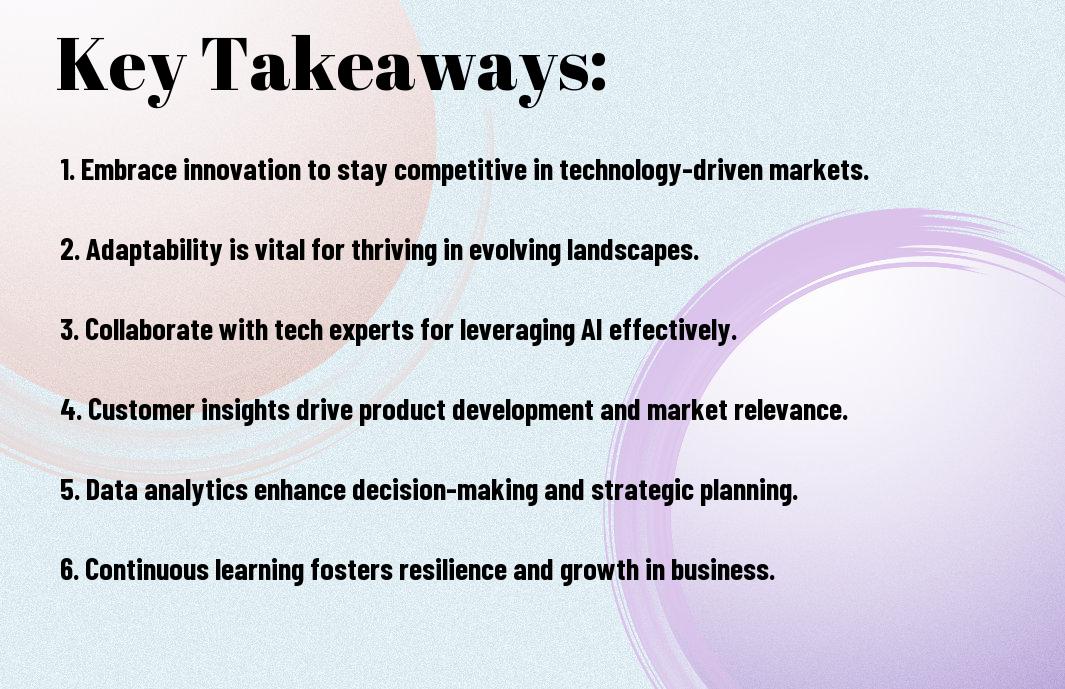
  • AI technologies are transforming the entrepreneurial landscape by automating tasks, enhancing decision-making, and providing data-driven insights to drive business growth and innovation.
  • The integration of AI in entrepreneurship enables founders to focus on high-level strategic thinking, creativity, and human-centric aspects of business, leading to increased productivity and competitiveness.
  • AI-powered tools and platforms are democratizing access to entrepreneurship, allowing more people to start and scale businesses, and bridging the gap between traditional industries and emerging technologies.
  • The rise of AI-driven entrepreneurship requires a new set of skills, including data literacy, technical expertise, and adaptability, to effectively leverage AI technologies and stay ahead in the market.
  • As AI continues to redefine the entrepreneurial landscape, it is vital for entrepreneurs to prioritize ethical considerations, transparency, and accountability in the development and deployment of AI-powered solutions to ensure long-term success and positive impact.

    The Tipping Point of AI in Business

    While you navigate the ever-changing landscape of entrepreneurship, you’ll notice that AI technologies are revolutionizing the way you do business, making it crucial to adapt and evolve your strategies to stay ahead of the curve.

    From Automation to Augmentation

    Beneath the surface of AI implementation, you’ll find that it’s not just about automating tasks, but also about augmenting your capabilities, enabling you to make more informed decisions and drive innovation in your business.

    Breaking Traditional Entrepreneurial Barriers

    Bursting through the constraints of traditional entrepreneurship, you’ll discover that AI technologies are democratizing access to resources, expertise, and markets, allowing you to compete on a level playing field and achieve your goals more efficiently.

    In addition, as you break traditional entrepreneurial barriers, you’ll have the opportunity to tap into new revenue streams, explore uncharted markets, and create innovative products and services that cater to the evolving needs of your customers, ultimately redefining the trajectory of your business and setting you up for long-term success.

    The AI Entrepreneur’s Toolkit

    Even as you launch on your entrepreneurial journey, you’ll need to leverage AI technologies to stay ahead of the curve. Your toolkit should include a range of innovative solutions that streamline operations, enhance decision-making, and drive growth.

    Decision Intelligence Systems

    Prior to making any key decisions, you’ll want to utilize decision intelligence systems that provide data-driven insights, enabling you to make informed choices that propel your business forward. Your ability to analyze complex data sets will be significantly enhanced, allowing you to optimize your strategy.

    Predictive Market Analysis

    Alongside other tools, you’ll find that predictive market analysis is necessary for anticipating trends and staying competitive. Your business will benefit from forecasts that help you navigate uncertain markets and make strategic decisions.

    Systems like predictive market analysis enable you to analyze large datasets, identify patterns, and forecast future market trends, allowing you to adjust your business strategy accordingly. You can use this information to optimize your product offerings, pricing, and marketing efforts, ultimately driving revenue growth and increasing your market share.

    Outliers: AI-Native Business Models

    Many entrepreneurs are leveraging AI to create innovative business models that disrupt traditional industries, and you can do the same by exploring new opportunities and technologies.

    Platform Ecosystems

    Outstanding examples of AI-native business models can be seen in platform ecosystems, where you can create value by connecting buyers and sellers, and generating revenue through transaction fees or advertising.

    Data-as-Currency Ventures

    Around the globe, data-as-currency ventures are emerging, and you can participate by collecting, analyzing, and monetizing data to create new revenue streams and gain a competitive edge.

    Considering the potential of data-as-currency ventures, you can develop a business model that focuses on collecting and analyzing data to provide valuable insights to customers, and as you investigate deeper into this space, you will discover new opportunities to create innovative products and services that meet the evolving needs of your target market, ultimately driving your business forward and achieving success in the AI-driven economy.

    The 10,000 Hours Myth Revisited

    Keep in mind that the traditional notion of dedicating 10,000 hours to master a skill is being challenged by AI technologies. You can now accelerate your learning and achieve expertise in a fraction of the time, thanks to AI-powered tools and platforms that provide personalized feedback and guidance.

    Accelerated Learning Through AI

    Above all, AI-driven learning systems enable you to learn at an unprecedented pace, allowing you to acquire new skills and knowledge in a highly efficient manner. You can leverage AI-powered adaptive learning platforms to tailor your learning experience to your needs and abilities.

    New Metrics of Mastery

    Between the lines of traditional metrics, you’ll find that AI is redefining what it means to be an expert. You’ll need to reassess your understanding of mastery, as AI technologies enable you to achieve high levels of proficiency in a shorter amount of time.

    Indeed, as you explore the new metrics of mastery, you’ll discover that AI provides you with a more nuanced understanding of your strengths and weaknesses. You’ll be able to track your progress, identify areas for improvement, and adjust your learning strategy accordingly, ultimately achieving a higher level of expertise and success in your entrepreneurial endeavors.

    Blink: Intuition Versus Algorithm

    Not surprisingly, the debate between intuition and algorithm has sparked intense discussion among entrepreneurs. You are faced with the challenge of balancing your instincts with the precision of AI technologies, and this dilemma is redefining the way you approach decision-making.

    Merging Human Instinct with Machine Precision

    Mechanically, you will need to integrate your human intuition with the accuracy of machine learning models to make informed decisions. You can leverage AI to analyze vast amounts of data, providing you with valuable insights to support your business strategies.

    The New Decision-Making Framework

    Behind the scenes, a new paradigm is emerging, one that combines the best of human judgment with the power of AI-driven analytics. You are now able to make more accurate predictions and optimize your business operations like never before.

    Algorithmic thinking is becoming an important skill for you as an entrepreneur, enabling you to navigate the complex landscape of data-driven decision-making. You will need to understand how to harness the potential of AI to augment your decision-making processes, and in doing so, you will unlock new opportunities for growth and innovation in your business.

    Social Contagion of AI Success

    Your business can thrive in a world where AI technologies are redefining success, and understanding the social aspects of this phenomenon is key to your growth.

    Network Effects in AI-Powered Businesses

    Above all, you’ll notice that AI-powered businesses often exhibit network effects, where your value increases as more users join, creating a self-reinforcing cycle that drives your success.

    Viral Scaling Mechanisms

    Contagious by nature, viral scaling mechanisms in AI-powered businesses allow you to reach a wider audience, with your message spreading quickly and your user base growing exponentially, fueling your business’s rapid expansion.

    Further, as you explore deeper into viral scaling mechanisms, you’ll discover that they rely on your ability to create engaging experiences that encourage users to share your content, invite others to join, and participate in your ecosystem, ultimately driving your business’s growth and reinforcing your position in the market, allowing you to stay ahead of the competition and achieve unparalleled success.

    Conclusion

    With this in mind, you can see how AI technologies are transforming your approach to entrepreneurship. As you initiate on your journey, you’ll find that your understanding of success is redefined by the integration of AI. To learn more about the future of entrepreneurship, visit AI and Entrepreneurship: Redefining Success for Startups in 2025 to discover how you can leverage AI to drive your business forward.

    FAQ

    Q: What role does Artificial Intelligence (AI) play in reinventing entrepreneurship, and how is it redefining success in the business world?

    A: AI technologies are revolutionizing the entrepreneurial landscape by automating processes, enhancing decision-making, and providing innovative solutions to complex problems. Through AI, entrepreneurs can gain valuable insights into market trends, customer behavior, and operational efficiency, allowing them to make data-driven decisions and stay ahead of the competition. This shift towards AI-driven entrepreneurship is redefining success by prioritizing adaptability, innovation, and technological integration as key performance indicators.

    Q: How can entrepreneurs leverage AI technologies to drive innovation and growth in their businesses, and what are the potential benefits of adopting AI solutions?

    A: Entrepreneurs can leverage AI technologies by integrating machine learning algorithms, natural language processing, and predictive analytics into their business operations. This can help streamline processes, improve customer engagement, and identify new market opportunities. The potential benefits of adopting AI solutions include increased efficiency, enhanced customer experience, and improved competitiveness. Additionally, AI can help entrepreneurs identify and mitigate risks, optimize resource allocation, and make informed strategic decisions, ultimately driving growth and innovation in their businesses.

    Q: What skills and knowledge do entrepreneurs need to acquire to effectively harness the power of AI technologies and navigate the changing landscape of entrepreneurship?

    A: To effectively harness the power of AI technologies, entrepreneurs need to acquire a combination of technical, business, and soft skills. This includes understanding the fundamentals of AI and machine learning, as well as developing skills in data analysis, programming, and digital literacy. Additionally, entrepreneurs need to stay up-to-date with the latest trends and advancements in AI, and be able to apply this knowledge to drive business innovation and growth. They also need to develop strong critical thinking, problem-solving, and collaboration skills to effectively work with AI systems and lead their organizations through the digital transformation.

Skip to content