Entrepreneurship

Automated Success – How AI Streamlines Business Processes for Entrepreneurs

As you navigate the complex world of entrepreneurship, you’re constantly seeking ways to optimize your operations and boost efficiency. You can leverage artificial intelligence (AI) to streamline your business processes, freeing up time to focus on growth and innovation. To learn more about the benefits of AI in enhancing your workflow, visit AI in streamlining business processes: How frontline managers can benefit and discover how you can automate tasks, improve productivity, and take your business to the next level.

Key Takeaways:

  • Automating business processes with AI can significantly increase efficiency and productivity, allowing entrepreneurs to focus on high-level decision-making and strategy development.
  • AI-powered tools can help streamline tasks such as data entry, customer service, and marketing, freeing up time and resources for more creative and innovative pursuits.
  • By leveraging AI, entrepreneurs can gain valuable insights into their business operations, enabling them to make data-driven decisions and drive growth.
  • AI-driven automation can also help reduce errors and improve accuracy, leading to enhanced customer satisfaction and loyalty.
  • Implementing AI solutions can be a key differentiator for entrepreneurs, enabling them to stay competitive in a rapidly evolving business landscape and achieve long-term success.
    The Tipping Point of AI in Business

    For entrepreneurs, the integration of AI in business processes marks a significant milestone, transforming the way you operate and make decisions, ultimately leading to increased efficiency and productivity in your organization.

    From Manual to Automated: The Shift

    Shifting from manual to automated processes, you’ll notice a substantial reduction in time and resources spent on repetitive tasks, allowing you to focus on strategic growth and development of your business.

    When Technology Becomes Indispensable

    Across various industries, you’re likely to find that AI-powered tools have become an imperative component of daily operations, enabling you to streamline tasks, enhance customer experience, and gain a competitive edge in the market.

    Tipping the scales in favor of AI adoption, you’ll discover that the benefits of automation extend beyond mere efficiency, as you’re able to make data-driven decisions, identify new opportunities, and drive innovation in your business, ultimately leading to sustained growth and success.

    Small Changes, Remarkable Results

    Any entrepreneur knows that streamlining business processes can have a significant impact on productivity and efficiency. By implementing AI solutions, you can automate tasks, freeing up time to focus on growth and development, and ultimately, driving your business forward.

    Repetitive Task Elimination

    Across various industries, you can leverage AI to eliminate repetitive tasks, allowing your team to concentrate on high-value activities. You can automate tasks such as data entry, bookkeeping, and customer service, enabling your business to run more smoothly and efficiently.

    Decision-Making Acceleration

    Across the board, AI can accelerate your decision-making process by providing you with real-time data and insights. You can use AI-powered tools to analyze market trends, customer behavior, and sales data, enabling you to make informed decisions quickly and confidently.

    To take full advantage of AI-driven decision-making acceleration, you need to integrate AI solutions into your existing systems and processes. You can start by identifying areas where AI can have the most impact, such as marketing, sales, or customer service, and then implement AI-powered tools to analyze data and provide actionable insights, allowing you to make data-driven decisions and drive your business forward.

    The Psychology of Technological Adaptation

    Unlike other business tools, AI integration requires a deep understanding of your company’s needs and goals. You must consider how AI will impact your operations and make informed decisions about implementation.

    Overcoming Resistance to AI

    The transition to AI can be challenging, but you can overcome obstacles by educating yourself and your team about the benefits of automation. You will be better equipped to address concerns and make a smooth transition.

    Creating a Culture of Innovation

    For your business to thrive, you need to foster an environment that encourages experimentation and learning. You should prioritize innovation and provide your team with the resources they need to succeed.

    Creating a culture of innovation involves empowering your team to take calculated risks and explore new ideas. You can achieve this by providing ongoing training and support, and by celebrating successes and learning from failures. As you embrace AI and automation, you will be able to streamline your business processes and achieve greater efficiency, allowing you to focus on growth and development.

    AI Tools That Transform Daily Operations

    Despite the initial investment, AI tools can significantly streamline your business processes, freeing up time for more strategic activities. You can automate tasks, analyze data, and make informed decisions with the help of AI-powered tools.

    Customer Service Revolution

    That being said, AI-powered chatbots can revolutionize your customer service, providing 24/7 support and helping you respond to customer inquiries promptly. You can use these tools to enhance your customer experience and build a loyal customer base.

    Administrative Task Elimination

    Tools like AI-powered virtual assistants can help you eliminate mundane administrative tasks, such as data entry and bookkeeping. You can use these tools to automate routine tasks and focus on high-priority activities.

    In addition, by automating administrative tasks, you can reduce errors, increase productivity, and save time. You can then allocate your resources to more strategic activities, such as business development and growth, allowing you to take your business to the next level.

    The Subtle Art of AI Implementation

    Keep in mind that AI implementation is a process that requires careful consideration and planning. You need to assess your business needs and identify areas where AI can bring the most value to your operations. By doing so, you can ensure a seamless integration of AI solutions into your existing workflows, setting your business up for success.

    Starting Small: The Pilot Approach

    Among the most effective strategies for introducing AI to your business is to start with a small pilot project. You can test the waters, so to speak, by implementing AI in a limited capacity and evaluating its impact before scaling up. This approach allows you to refine your strategy and make adjustments as needed, ensuring a more successful rollout.

    Scaling Success Across Departments

    Across your organization, you’ll find numerous opportunities to apply AI and streamline processes. You can use AI to automate tasks, analyze data, and improve decision-making, leading to increased efficiency and productivity. As you explore these opportunities, you’ll begin to see the full potential of AI in transforming your business.

    Small changes can add up to make a significant impact when it comes to scaling AI across your departments. You can begin by identifying areas where AI can augment the work of your teams, freeing them up to focus on higher-value tasks. As you expand AI adoption, you’ll need to ensure that your infrastructure and workflows are adapted to support these new technologies, allowing you to fully leverage their benefits and drive your business forward.

    The Cost-Benefit Analysis

    All entrepreneurs consider the financial implications of implementing AI in their business. You need to weigh the costs of investment against the potential benefits to make an informed decision.

    Investment vs. Return Calculations

    Above all, you should calculate the return on investment (ROI) to determine the viability of AI integration. You can expect significant returns, as AI streamlines processes and increases efficiency, leading to cost savings and revenue growth.

    Hidden Value Beyond Numbers

    Above the financial benefits, you will find additional value in AI implementation. You can expect improved decision-making, enhanced customer experience, and increased competitiveness, which can have a significant impact on your business’s long-term success.

    CostBenefit analysis is not just about numbers; it’s also about the intangible benefits that AI brings to your business. You will experience improved productivity, reduced errors, and enhanced innovation, which can lead to new business opportunities and growth. As you consider AI implementation, you should factor in these hidden values to get a comprehensive understanding of the potential benefits and make a more informed decision about investing in AI technology for your business.

    To wrap up

    From above, you can see how AI streamlines your business processes, making you more efficient. You’ll save time and resources by automating tasks, allowing you to focus on growth. Your business will become more agile, responsive, and competitive. By embracing AI, you’ll unlock new opportunities and drive success, taking your entrepreneurship to the next level. You’ll achieve your goals faster, with AI handling repetitive and complex tasks, freeing you to make strategic decisions.

    FAQ

    Q: What is Automated Success and how does it relate to AI in business processes?

    A: Automated Success refers to the implementation of Artificial Intelligence (AI) technologies to streamline and optimize business processes for entrepreneurs. By leveraging AI, entrepreneurs can automate repetitive and mundane tasks, freeing up time and resources to focus on high-level decision-making and strategy. This integration of AI in business processes enables entrepreneurs to increase efficiency, reduce costs, and improve overall productivity, ultimately leading to increased success and competitiveness in their respective markets.

    Q: How can AI streamline business processes for entrepreneurs, and what specific areas can be improved?

    A: AI can streamline business processes for entrepreneurs in various areas, including customer service, data analysis, marketing, and operations. For instance, AI-powered chatbots can handle customer inquiries and provide 24/7 support, while machine learning algorithms can analyze large datasets to provide valuable insights and inform business decisions. Additionally, AI can automate tasks such as bookkeeping, invoicing, and scheduling, allowing entrepreneurs to focus on core business activities. By implementing AI in these areas, entrepreneurs can improve customer engagement, make data-driven decisions, and increase operational efficiency.

    Q: What are the benefits of implementing AI in business processes, and how can entrepreneurs get started with Automated Success?

    A: The benefits of implementing AI in business processes include increased efficiency, improved accuracy, and enhanced customer experience. By automating routine tasks and leveraging AI-driven insights, entrepreneurs can reduce costs, improve productivity, and gain a competitive edge in their industry. To get started with Automated Success, entrepreneurs can begin by identifying areas in their business where AI can add value, such as customer service or data analysis. They can then explore AI-powered tools and platforms, such as machine learning software or automation platforms, and consult with experts or vendors to determine the best solutions for their specific business needs. By taking these steps, entrepreneurs can initiate on the journey to Automated Success and start reaping the benefits of AI-driven business process optimization.

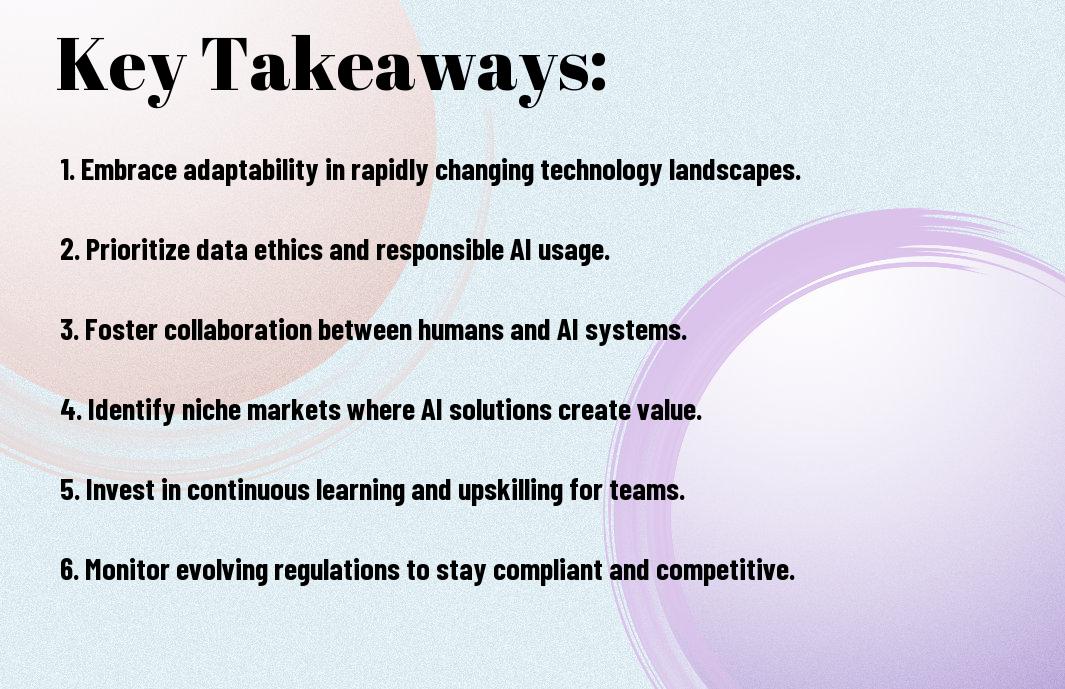
Navigating the AI Revolution – Key Lessons for Modern Entrepreneurs

As you commence on your entrepreneurial journey, you’re likely to encounter the impact of artificial intelligence on your business. You will need to understand how AI is transforming industries and changing the way companies operate. Your ability to adapt to these changes will be vital to your success. You will learn how to harness the power of AI to drive innovation, improve efficiency, and stay ahead of the competition in this rapidly evolving landscape.

Key Takeaways:

  • Embracing AI can significantly enhance business operations, from automating routine tasks to providing insights that inform strategic decisions, allowing entrepreneurs to focus on innovation and growth.
  • Understanding the ethical implications of AI integration is vital, as it involves considerations around data privacy, job displacement, and bias in algorithmic decision-making, which can impact a company’s reputation and social responsibility.
  • Investing in AI literacy across the organization is important for modern entrepreneurs, enabling them to make informed decisions about AI adoption, manage AI-driven projects effectively, and foster a culture that leverages AI for competitive advantage.
  • Collaboration between humans and AI systems can lead to breakthroughs in problem-solving and innovation, suggesting that entrepreneurs should focus on designing work processes that complement AI capabilities with human skills like creativity, empathy, and critical thinking.
  • Staying adaptable and agile in the face of rapid AI advancements is key for entrepreneurs, requiring continuous learning, experimentation, and a willingness to pivot business models or strategies as new AI technologies emerge and mature.

The Current State of AI in Business

The integration of artificial intelligence (AI) in business is becoming increasingly prevalent, and you will notice its impact across various industries. As you explore the current state of AI, you will find that it is being used to automate tasks, analyze data, and make informed decisions. Your understanding of AI’s capabilities will help you navigate its applications in your own business.

Transformative Technologies

Revolutionary technologies like machine learning and natural language processing are changing the way you approach business operations. You can leverage these technologies to streamline processes, enhance customer experience, and gain a competitive edge. Your ability to adapt to these technologies will determine your success in the AI-driven market.

Industry Adoption Rates

Towards the end of adopting AI, you will notice varying rates of implementation across different industries. You can observe that some sectors are more receptive to AI solutions, while others are still in the early stages of adoption. Your awareness of these trends will help you make informed decisions about AI integration in your business.

State of the art technologies are being adopted at different rates, and you will see that some industries are more open to innovation. You can analyze the adoption rates to identify opportunities for growth and stay ahead of the competition. Your business can benefit from AI adoption, and understanding the current state of industry adoption will help you create a successful implementation strategy.

Strategic Integration of AI

Some of the most successful entrepreneurs have already begun leveraging AI to streamline their operations and gain a competitive edge. You can do the same by understanding how to integrate AI into your business strategy, which will enable you to make more informed decisions and drive growth.

Assessment of Business Needs

Beneath the surface of your business operations, there are areas where AI can bring significant improvements. You will need to assess your business needs to identify these areas and determine how AI can be used to address them, ensuring that your investments in AI technology are targeted and effective.

Implementation Frameworks

On the path to integrating AI into your business, you will need to establish a clear framework for implementation. You should consider factors such as data quality, algorithmic transparency, and employee training to ensure a smooth transition and maximize the benefits of AI adoption.

In addition to establishing a framework, you will also need to consider the ongoing maintenance and evaluation of your AI systems. You should regularly assess the performance of your AI tools, update them as necessary, and make adjustments to your strategy to ensure that you are achieving your desired outcomes and staying ahead of the competition.

Data as the New Currency

After understanding the significance of data in the AI revolution, you’ll realize its potential to transform your business. You’ll learn how to harness its power to drive innovation and growth.

Collection and Management

Among the various aspects of data, collecting and managing it effectively is key to unlocking its value. You’ll need to develop strategies to gather, store, and analyze data to inform your business decisions.

Privacy and Ethical Considerations

Driven by data, your business must prioritize privacy and ethical considerations. You’ll need to ensure that your data collection and usage practices are transparent and respectful of your customers’ rights.

And as you research deeper into the world of data, you’ll encounter complex issues surrounding privacy and ethics. You’ll need to consider how to balance your business needs with the need to protect your customers’ personal information, and develop policies that address these concerns in a way that maintains trust and credibility in your brand.

Workforce Evolution

Many entrepreneurs are aware that the AI revolution will significantly impact their workforce. You will need to adapt to these changes to stay competitive, and this involves understanding the shifting landscape of skills and job roles.

New Skill Requirements

Following the introduction of AI, you will need to acquire new skills to work effectively with these technologies, and you should focus on developing skills that complement AI, such as creativity, empathy, and problem-solving.

Human-AI Collaboration Models

For your business to thrive, you should explore different human-AI collaboration models, and you will need to design workflows that leverage the strengths of both humans and AI systems, enabling you to make the most of their combined capabilities.

But as you investigate deeper into human-AI collaboration, you will find that the key to success lies in striking the right balance between automation and human judgment, and you should be prepared to invest time and effort into training your teams to work effectively with AI, ensuring that they understand its limitations and potential biases, and can intervene when necessary to correct errors or make strategic decisions.

Competitive Advantage Through AI

Unlike traditional business strategies, leveraging AI can give you a significant edge in the market, enabling you to make data-driven decisions and automate tasks with precision and speed.

Market Differentiation Strategies

Beneath the surface of AI adoption lies a wealth of opportunities for market differentiation, allowing you to tailor your services and products to meet the unique needs of your customers, setting you apart from competitors.

Scalability Opportunities

Alongside the benefits of AI, you’ll find numerous scalability opportunities, enabling you to expand your business rapidly and efficiently, without compromising on quality or performance, and allowing you to reach a wider audience.

In addition, as you explore scalability opportunities, you’ll discover that AI can help you optimize your operations, streamline processes, and make predictions about future market trends, giving you the agility to adapt and evolve your business strategy in response to changing circumstances, and ultimately driving your growth and success.

Risk Management

All entrepreneurs must consider the potential risks associated with adopting AI technologies in their businesses, as this can impact your operations and bottom line.

Technical Limitations

With the current state of AI, you need to be aware of its technical limitations and how they may affect your business, including data quality issues and algorithmic biases that can impact your decision-making.

Regulatory Landscape

On the regulatory front, you must stay informed about the evolving laws and guidelines that govern AI development and deployment, as non-compliance can lead to significant fines and reputational damage.

To navigate the regulatory landscape effectively, you should regularly review and update your policies to ensure they align with the latest regulations, and consider consulting with experts to mitigate potential risks and ensure your business remains compliant, protecting your investments and reputation in the process, as you integrate AI into your operations.

To wrap up

With these considerations, you now have a solid foundation to navigate the AI revolution. You will be able to harness its power to drive your business forward, leveraging AI to enhance your operations and decision-making. As you move forward, your ability to adapt and innovate will be key to staying ahead of the curve, ensuring your business remains competitive in an increasingly AI-driven landscape, and ultimately, achieving your goals.

FAQ

Q: What are the most significant challenges that entrepreneurs face when navigating the AI revolution, and how can they overcome them?

A: Entrepreneurs face numerous challenges when navigating the AI revolution, including the need to develop new skills, adapt to changing market conditions, and manage the ethical implications of AI adoption. To overcome these challenges, entrepreneurs can invest in ongoing education and training, foster a culture of innovation and experimentation, and prioritize transparency and accountability in their AI development and deployment practices. By taking a proactive and strategic approach to AI adoption, entrepreneurs can position their businesses for success in a rapidly changing technological landscape.

Q: How can entrepreneurs effectively integrate AI into their business operations, and what are the key considerations for ensuring a successful implementation?

A: To effectively integrate AI into their business operations, entrepreneurs should start by identifying areas where AI can add the most value, such as automating routine tasks, enhancing customer service, or improving decision-making. They should also develop a clear understanding of their data assets and how they can be leveraged to support AI-powered insights and innovation. Additionally, entrepreneurs should prioritize collaboration between technical and non-technical teams, ensure that AI systems are aligned with business objectives, and establish robust testing and evaluation protocols to measure the impact and effectiveness of AI initiatives.

Q: What role will human skills and judgment play in an AI-driven business environment, and how can entrepreneurs balance the benefits of automation with the need for human intuition and creativity?

A: While AI will undoubtedly automate many routine and repetitive tasks, human skills and judgment will continue to play a vital role in an AI-driven business environment. Entrepreneurs should focus on developing and leveraging human capabilities that are complementary to AI, such as creativity, empathy, and complex problem-solving. By balancing the benefits of automation with the need for human intuition and creativity, entrepreneurs can create a hybrid approach that combines the efficiency and scalability of AI with the unique strengths and perspectives of human beings. This will enable businesses to drive innovation, build strong relationships with customers and stakeholders, and make more informed and nuanced decisions.

Harnessing Data Science for Entrepreneurial Wealth – AI Best Practices

As you navigate the complex landscape of entrepreneurship, you’re likely aware of the vast potential of data science to drive your business forward. You understand that leveraging data can help you make informed decisions, optimize operations, and unlock new opportunities for growth. By applying AI best practices, you can harness the power of data science to propel your entrepreneurial ventures towards unprecedented success, and this blog post will guide you through the process, providing you with actionable insights to enhance your business acumen and drive wealth creation.

Key Takeaways:

  • Effective use of data science can significantly enhance entrepreneurial ventures by providing valuable insights that inform strategic business decisions, drive innovation, and optimize operations for maximum profitability.
  • Implementing AI best practices, such as leveraging machine learning algorithms and natural language processing, can help entrepreneurs automate tasks, predict market trends, and personalize customer experiences, thereby gaining a competitive edge in the market.
  • Data-driven decision making is crucial for entrepreneurial success, as it enables entrepreneurs to measure the effectiveness of their strategies, identify areas of improvement, and make data-informed decisions that mitigate risks and capitalize on opportunities.
  • Entrepreneurs should prioritize data quality and integrity, ensuring that their data management systems are robust, secure, and compliant with regulatory requirements, to maintain the trust of their customers and stakeholders.
  • Staying up-to-date with the latest advancements in AI and data science is vital for entrepreneurs to remain competitive, as new technologies and techniques can provide innovative solutions to complex business problems and create new opportunities for growth and expansion.

The Entrepreneur’s Data Advantage

To gain a competitive edge, you can leverage data science to inform your business decisions, as discussed in Harnessing AI for Entrepreneurs: Big Data’s Role in Social Innovation. This will enable you to make data-driven decisions and drive your business forward.

Identifying Market Gaps

With access to vast amounts of data, you can identify market gaps and opportunities to innovate and differentiate your business from competitors, ultimately driving your growth and success.

Customer Behavior Analytics

Below the surface of customer interactions, you can uncover valuable insights that inform your marketing strategies and improve customer satisfaction, allowing you to tailor your approach to meet their evolving needs.

A key aspect of customer behavior analytics is understanding the complexities of your customers’ decision-making processes, which enables you to develop targeted marketing campaigns and personalized experiences, increasing the likelihood of conversion and loyalty, and ultimately, driving your business’s revenue and growth, as you continue to refine your strategies based on data-driven insights.

AI Implementation Fundamentals

One of the key aspects of harnessing data science for entrepreneurial wealth is understanding the fundamentals of AI implementation. You will need to consider how AI can be integrated into your business model to drive growth and increase efficiency. By doing so, you can unlock new opportunities and stay ahead of the competition.

Cost-Effective AI Solutions

At this stage, you should be looking for AI solutions that are cost-effective and align with your business goals. You can explore various options, such as cloud-based services or open-source tools, to find the most suitable solution for your needs.

Technical Requirements

Against the backdrop of rapid technological advancements, you must ensure that your technical infrastructure can support AI implementation. You will need to assess your current systems and identify any gaps that need to be addressed to ensure seamless integration.

A thorough evaluation of your technical requirements is imperative to successful AI implementation. As you probe into the specifics, you will need to consider factors such as data storage, processing power, and security protocols to ensure that your systems can handle the demands of AI-driven applications, and that you can effectively leverage your data to drive business growth and inform your decision-making process.

Predictive Models for Business Growth

Keep in mind that predictive models are important for your business growth, as they enable you to make informed decisions and stay ahead of the competition. You can leverage these models to identify opportunities, mitigate risks, and drive your business forward.

Sales Forecasting Systems

Among the various predictive models, sales forecasting systems are particularly useful for your business, as they help you anticipate demand and optimize your resources accordingly. You can use these systems to analyze historical data, identify patterns, and make accurate predictions about future sales.

Trend Analysis Techniques

For your business to stay competitive, you need to stay on top of the latest trends, and trend analysis techniques can help you do just that. You can use these techniques to identify emerging trends, analyze their impact, and adjust your strategy accordingly.

Due to the complexity of trend analysis, you will need to invest time and effort into developing your skills and expertise. You can start by exploring various techniques, such as regression analysis and time series analysis, and then apply them to your business data to gain valuable insights and make informed decisions.

Data-Driven Decision Making

For entrepreneurs, making informed decisions is key to success. You can leverage data science to analyze market trends, customer behavior, and financial performance, enabling you to make strategic decisions that drive your business forward.

Risk Assessment Frameworks

Contrary to intuition, you should consider risk assessment frameworks to identify potential pitfalls and opportunities. You can use data science to develop frameworks that help you evaluate risks and make informed decisions to mitigate them.

Opportunity Scoring Methods

Counterintuitively, you should use opportunity scoring methods to evaluate potential investments and partnerships. You can use data science to develop scoring models that help you assess opportunities and make informed decisions.

At the heart of opportunity scoring methods is the ability to analyze large datasets and identify patterns. You can use techniques such as clustering and decision trees to develop models that score opportunities based on their potential return on investment, market demand, and competitive landscape, allowing you to make informed decisions that drive your business forward.

Competitive Intelligence Through AI

Now, you can leverage AI to gather insights about your competitors, enabling you to make informed decisions and stay ahead in the market. By utilizing AI-powered tools, you can analyze vast amounts of data, identify trends, and gain a deeper understanding of your competitors’ strengths and weaknesses.

Market Positioning Tools

Technologies such as natural language processing and machine learning enable you to analyze your competitors’ market positioning, allowing you to identify gaps in the market and opportunities to differentiate your business. You can use these tools to analyze your competitors’ marketing strategies and adjust your own approach accordingly.

Competitor Strategy Mapping

Any analysis of your competitors’ strategies can help you anticipate their next moves and adjust your own strategy to stay competitive. You can use AI to map your competitors’ strategies, identifying patterns and trends that can inform your own decision-making.

In fact, by mapping your competitors’ strategies, you can identify potential vulnerabilities and opportunities to gain a competitive edge. You can use this information to adjust your pricing, product development, and marketing strategies, enabling you to stay ahead of the competition and drive business growth.

Scaling With Automated Systems

Many entrepreneurs struggle to scale their businesses efficiently, but with automated systems, you can streamline your operations and increase productivity. By leveraging data science and AI, you can identify areas for improvement and implement solutions that drive growth.

Workflow Optimization

Behind every successful business is a well-optimized workflow, and you can achieve this by analyzing your processes and eliminating bottlenecks. By doing so, you can reduce costs, enhance customer experience, and gain a competitive edge.

Resource Allocation Models

Automatically allocating resources is key to efficient business operations, and you can achieve this by developing models that predict demand and optimize supply. By using data science and AI, you can make informed decisions about resource allocation, reducing waste and improving profitability.

Further, by implementing resource allocation models, you can dynamically adjust to changing market conditions, ensuring that your business remains agile and competitive. You can use machine learning algorithms to analyze historical data, identify patterns, and predict future demand, enabling you to make data-driven decisions about resource allocation and drive business growth.

To wrap up

The application of data science and AI best practices can significantly boost your entrepreneurial endeavors, leading to increased wealth and success. You can leverage data-driven insights to inform your business decisions, optimize operations, and drive innovation. By following AI best practices, you will be able to harness the full potential of data science, ultimately elevating your business to new heights and securing your position in the market, allowing you to achieve your goals and maximize your returns.

FAQ

Q: What are the key benefits of harnessing data science for entrepreneurial wealth, and how can AI best practices be applied to achieve success?

A: Harnessing data science for entrepreneurial wealth offers numerous benefits, including enhanced decision-making, improved operational efficiency, and increased revenue growth. By leveraging AI best practices such as machine learning, natural language processing, and predictive analytics, entrepreneurs can gain valuable insights into customer behavior, market trends, and business operations. This enables them to make data-driven decisions, optimize resources, and stay ahead of the competition. Additionally, AI-powered tools can automate routine tasks, freeing up time for strategic planning and innovation, ultimately leading to increased profitability and entrepreneurial wealth.

Q: How can entrepreneurs effectively integrate data science and AI into their business strategy, and what skills or expertise are required to implement these technologies?

A: To effectively integrate data science and AI into their business strategy, entrepreneurs should start by identifying areas where data-driven insights can have the most impact, such as customer segmentation, marketing, or supply chain management. They should then invest in building a skilled team with expertise in data analysis, machine learning, and programming languages like Python or R. It’s also important to develop a data-driven culture within the organization, where data is used to inform decision-making at all levels. Furthermore, entrepreneurs should stay up-to-date with the latest AI trends and best practices, and consider partnering with data science consultants or AI vendors to accelerate implementation and minimize costs.

Q: What are some common challenges that entrepreneurs may face when implementing data science and AI in their business, and how can these challenges be overcome with AI best practices?

A: Common challenges that entrepreneurs may face when implementing data science and AI include data quality issues, lack of skilled talent, and integration with existing systems. To overcome these challenges, entrepreneurs can adopt AI best practices such as data preprocessing and validation, investing in employee training and development, and using cloud-based AI platforms that offer seamless integration with existing infrastructure. Additionally, entrepreneurs should prioritize transparency and explainability in AI decision-making, ensure compliance with data privacy regulations, and continuously monitor and evaluate the performance of AI systems to prevent bias and errors. By addressing these challenges proactively, entrepreneurs can unlock the full potential of data science and AI to drive business growth and entrepreneurial wealth.

Unleashing the Power of AI – Entrepreneurial Tactics for a Digital World

As you navigate the ever-evolving digital landscape, you’re likely aware of the transformative potential of Artificial Intelligence (AI). You can harness AI to drive innovation, optimize operations, and gain a competitive edge. Your business can thrive in this new era by leveraging AI-driven solutions, and this post will guide you through the process, exploring the entrepreneurial tactics you need to succeed in a digital world where AI is increasingly dominant.

Key Takeaways:

  • Embracing AI technology can significantly enhance business operations, enabling entrepreneurs to make data-driven decisions, automate tasks, and improve overall efficiency in a rapidly changing digital landscape.
  • Developing a strategic AI roadmap is necessary for businesses to navigate the complexities of AI adoption, ensuring alignment with organizational goals and objectives.
  • Investing in AI talent and upskilling existing employees can help bridge the skills gap, enabling organizations to effectively leverage AI capabilities and drive innovation.
  • Entrepreneurs must prioritize ethical AI practices, ensuring transparency, accountability, and fairness in AI decision-making processes to maintain trust and credibility with customers and stakeholders.
  • By leveraging AI-driven insights and analytics, businesses can unlock new revenue streams, identify emerging trends, and create competitive advantages in an increasingly digital and interconnected world.

The AI Revolution in Business

Before exploring into the world of AI, you need to understand its impact on your business. The AI revolution is transforming the way you operate, making it important to adapt and evolve to stay competitive.

Current Landscape of AI Technologies

On the surface, AI technologies may seem complex, but you can leverage them to streamline your operations and improve efficiency. You can explore various AI tools and platforms to find the best fit for your business needs.

Disruption Across Industries

Along with the rise of AI, you are witnessing significant disruptions across various industries, and your business is no exception. You need to be prepared to adapt to these changes to stay ahead of the curve.

At the forefront of this disruption, you will find opportunities to innovate and improve your business processes. As you navigate the changing landscape, you can use AI to enhance customer experiences, optimize operations, and drive growth, ultimately giving you a competitive edge in the market.

Strategic Implementation of AI

Clearly, to stay ahead in the digital world, you need to implement AI strategically. You can learn more about Unleashing the Power of AI in Business to understand its applications.

Identifying Opportunities

Along with understanding AI, you identify areas where it can enhance your business, such as automating tasks or improving customer service, to maximize its benefits.

Resource Allocation and Investment

Along with planning, you allocate resources effectively to ensure a successful AI integration, considering both financial and human capital investments.

Investment in AI requires careful consideration of your budget, talent, and infrastructure to support its implementation and maintenance, enabling you to leverage its full potential and drive business growth.

Data-Driven Decision Making

Despite the abundance of data available, you need to know how to harness it to inform your business decisions. By leveraging data analytics, you can gain valuable insights into your operations, customers, and market trends, enabling you to make informed decisions that drive growth and success.

Analytics Infrastructure

Along with the right tools and technologies, you can build a robust analytics infrastructure that supports your data-driven decision making. You will be able to collect, store, and process large amounts of data, and extract meaningful insights that inform your business strategies.

Predictive Modeling

Around the concept of predictive modeling, you can forecast future outcomes and trends, allowing you to anticipate and prepare for potential challenges and opportunities. By applying advanced statistical techniques and machine learning algorithms, you can uncover hidden patterns and relationships in your data.

Understanding predictive modeling is key to unlocking its full potential. You can use it to identify high-value customer segments, optimize pricing and inventory, and predict demand for your products or services. By integrating predictive modeling into your decision-making process, you can stay ahead of the competition and drive business success in a rapidly changing market. As you explore predictive modeling, you will discover new ways to apply its insights to your business, from improving operational efficiency to driving innovation and growth.

Customer Experience Enhancement

Unlike traditional methods, AI-powered customer experience enhancement allows you to tailor your approach to individual preferences, leading to increased loyalty and satisfaction. You can leverage AI to analyze customer data, identify patterns, and create personalized experiences that meet their unique needs.

Personalization at Scale

Beneath the surface of generic marketing lies the potential for personalized connections with your customers. You can use AI to segment your audience, create targeted campaigns, and deliver relevant content that resonates with your customers, ultimately driving engagement and conversion.

Conversational Interfaces

Alongside traditional communication channels, conversational interfaces are emerging as a key component of customer experience enhancement. You can use chatbots, voice assistants, and other AI-powered tools to provide instant support, answer queries, and offer personalized recommendations to your customers.

With conversational interfaces, you can take your customer experience to the next level by providing 24/7 support, automating routine tasks, and freeing up human resources to focus on complex issues that require empathy and problem-solving skills. You can also use conversational interfaces to collect feedback, analyze sentiment, and make data-driven decisions to improve your products and services.

Operational Efficiency

All businesses strive for operational efficiency, and AI can help you achieve it by streamlining processes and reducing costs. You can leverage AI to enhance your operations and stay ahead of the competition.

Automation of Routine Tasks

The key to unlocking efficiency lies in automating routine tasks, allowing you to focus on high-value activities. You can use AI to automate tasks such as data entry, bookkeeping, and customer service, freeing up your time to concentrate on growth and innovation.

Supply Chain Optimization

To optimize your supply chain, you can utilize AI to analyze data and predict demand, enabling you to make informed decisions about production and distribution. You can use AI to identify bottlenecks and areas for improvement, allowing you to streamline your supply chain and reduce costs.

Also, by implementing AI-powered supply chain optimization, you can gain real-time visibility into your supply chain, enabling you to respond quickly to changes in demand or disruptions in the supply chain, and make data-driven decisions to drive your business forward, ultimately leading to increased efficiency and profitability for your business.

Ethical Considerations

Once again, you will encounter challenges as you research into the world of AI, and ethical considerations will be at the forefront. You must consider the implications of your AI-powered business on your customers and society as a whole.

Privacy and Security

Beneath the surface of AI’s benefits lies the issue of protecting your customers’ data. You need to ensure that your AI systems are secure and that you are transparent about how you collect and use data.

Bias and Fairness

Alongside other concerns, you should also think about the potential for bias in your AI systems. You must take steps to ensure that your AI is fair and unbiased, as this will impact how your customers perceive your business.

And as you work to mitigate bias in your AI, you will need to consider the data you use to train your systems, as well as the algorithms themselves. You should regularly audit your AI to identify and address any biases that may be present, and take steps to ensure that your AI is fair and transparent in its decision-making processes, which will help you build trust with your customers and maintain a positive reputation for your business.

Conclusion

Taking this into account, you now have the tools to harness the potential of AI in your entrepreneurial endeavors. You can leverage AI-driven strategies to propel your business forward in the digital world. By integrating AI into your operations, you will enhance your decision-making capabilities and stay ahead of the competition, ultimately driving your business towards success and maximizing your returns on investment in the ever-evolving digital landscape, shaping your future.

FAQ

Q: What are the key benefits of leveraging AI in my entrepreneurial ventures, and how can I get started with implementing AI-powered solutions?

A: Leveraging AI in your entrepreneurial ventures can bring numerous benefits, including enhanced efficiency, improved decision-making, and increased competitiveness. To get started, identify areas in your business where AI can have the most impact, such as customer service, marketing, or operations. Then, explore AI-powered tools and platforms that can help you automate tasks, analyze data, and gain valuable insights. Consider consulting with AI experts or taking online courses to develop your skills and knowledge in AI implementation.

Q: How can I ensure that my business stays ahead of the curve in terms of AI adoption, and what strategies can I use to mitigate potential risks and challenges associated with AI integration?

A: To stay ahead of the curve, it’s necessary to continuously monitor the latest AI trends and advancements, and attend industry conferences and workshops to network with other entrepreneurs and AI experts. You can also participate in online forums and communities to stay informed about best practices and potential pitfalls. In terms of mitigating risks, develop a comprehensive AI strategy that includes data protection, cybersecurity measures, and employee training. Additionally, consider establishing an AI ethics committee to ensure that your AI-powered solutions align with your business values and principles.

Q: What role can AI play in enhancing customer experience, and how can I use AI-powered tools to personalize and optimize my customer interactions?

A: AI can play a significant role in enhancing customer experience by enabling personalized interactions, streamlining customer support, and providing valuable insights into customer behavior. You can use AI-powered tools such as chatbots, virtual assistants, and predictive analytics to offer tailored recommendations, resolve customer queries, and improve response times. Additionally, AI-powered tools can help you analyze customer feedback, sentiment, and preferences, allowing you to refine your products and services to meet their evolving needs. By leveraging AI in this way, you can create a more engaging, intuitive, and satisfying customer experience that drives loyalty and retention.

The Future of Work – How AI Transforms Entrepreneurial Roles and Responsibilities

As you navigate the ever-changing landscape of entrepreneurship, you’re likely wondering how artificial intelligence (AI) will impact your business. You’ll need to adapt to new technologies and strategies to stay ahead. Your role as an entrepreneur is evolving, and understanding how AI transforms your responsibilities is imperative to success. You must consider how AI will change your daily operations, decision-making processes, and overall business model to thrive in this new era.

Key Takeaways:

  • The integration of AI in the workforce is revolutionizing entrepreneurial roles, enabling business owners to automate routine tasks and focus on strategic decision-making, innovation, and customer relationships.
  • AI-driven tools are transforming the way entrepreneurs approach marketing, sales, and customer service, allowing for more personalized and efficient interactions with clients and stakeholders.
  • The rise of AI is creating new opportunities for entrepreneurs to develop and offer innovative products and services, such as AI-powered solutions, data analytics, and digital consulting services.
  • As AI takes over routine and administrative tasks, entrepreneurs will need to develop new skills, such as data interpretation, critical thinking, and creativity, to remain competitive in the market.
  • The future of work will require entrepreneurs to be adaptable, resilient, and open to continuous learning, as AI continues to evolve and shape the business landscape, presenting both opportunities and challenges for entrepreneurial success.

The Evolution of Entrepreneurship

Your role as an entrepreneur is undergoing a significant transformation, driven by technological advancements and shifting market demands, leading to new opportunities and challenges in the business landscape.

Traditional Entrepreneurial Models

Previously, entrepreneurial success relied on traditional models, where you would invest time and resources into building a business from the ground up, managing every aspect, from production to marketing, and navigating the risks associated with each step.

Digital Transformation of Business Ownership

Unlike the past, today’s digital landscape presents you with unprecedented opportunities for growth, as you can now leverage technology to streamline operations, reach a broader audience, and innovate your products and services, thereby redefining the way you approach business ownership.

Models of business ownership are evolving, and you are now able to adopt more flexible and adaptable approaches, such as remote work, outsourcing, and partnerships, allowing you to focus on high-level strategy and decision-making, while automation and AI handle more mundane tasks, freeing up your time to drive innovation and growth.

AI as the New Business Partner

Some entrepreneurs are leveraging AI to transform their businesses, as seen in The Future of Work: How AI is Transforming Job Roles and Required Skills, to streamline operations and improve decision-making, allowing you to focus on high-level strategy and growth.

Algorithmic Decision-Making

Across various industries, you’re witnessing the rise of algorithmic decision-making, where AI analyzes data to inform business choices, enabling you to make more informed decisions and drive your business forward.

Automated Strategic Planning

Above all, automated strategic planning is becoming increasingly prevalent, allowing you to automate routine tasks and focus on high-level strategy, as AI takes care of analyzing market trends and predicting future outcomes.

The automated strategic planning process involves AI analyzing your business data, identifying areas of improvement, and providing recommendations for growth, enabling you to make data-driven decisions and drive your business forward, as you navigate the ever-changing landscape of your industry, you can rely on AI to provide valuable insights and support your strategic planning efforts.

The Shifting Skills Landscape

Now, as AI transforms the entrepreneurial landscape, you will need to adapt to new roles and responsibilities, and develop skills that complement automation, enabling you to stay ahead in the changing job market.

Technical Competencies for Tomorrow

To thrive in an AI-driven economy, you must acquire technical skills such as data analysis, programming, and digital literacy, which will enable you to effectively collaborate with AI systems and leverage their capabilities to drive your business forward.

Human Skills in an Automated Economy

Capabilities such as creativity, empathy, and problem-solving will become increasingly valuable in an automated economy, as you will need to focus on high-touch, high-value tasks that require a human touch, and that AI systems are not yet able to replicate.

Even as AI assumes more routine and repetitive tasks, you will need to develop your human skills to work effectively with machines, focusing on tasks that require imagination, innovation, and emotional intelligence, allowing you to create value and drive growth in your business, and stay competitive in a rapidly changing market.

Redefining Risk and Opportunity

Despite the uncertainty surrounding AI’s impact on entrepreneurial roles, you will need to adapt to the changing landscape. As AI transforms the way you work, your responsibilities will shift, and you must be prepared to redefine risk and opportunity in this new context.

AI-Driven Market Analysis

AIDriven technologies will enable you to analyze market trends and make data-driven decisions, allowing you to stay ahead of the competition and capitalize on new opportunities. You will be able to leverage AI-driven insights to inform your business strategy and drive growth.

Predictive Business Modeling

After implementing AI-powered predictive models, you will be able to forecast market fluctuations and make informed decisions about your business. You will have the ability to simulate different scenarios and predict outcomes, giving you a competitive edge in the market.

In fact, predictive business modeling will become an necessary tool for you as an entrepreneur, enabling you to anticipate and respond to changes in the market, and make strategic decisions that drive your business forward. You will be able to identify potential risks and opportunities, and develop strategies to mitigate or capitalize on them, ultimately leading to increased success and growth.

The Augmented Entrepreneur

To become a successful entrepreneur in the future, you will need to adapt to the changing landscape of work, where AI transforms your roles and responsibilities, enabling you to focus on high-level creative problem-solving and strategic decision-making.

Cognitive Enhancement Through AI

Bridging the gap between human and artificial intelligence, AI enhances your cognitive abilities, allowing you to process vast amounts of data, identify patterns, and make informed decisions, ultimately augmenting your entrepreneurial capabilities.

The New Division of Labor

For you, the new division of labor means redefining your role and responsibilities, as AI takes over routine and repetitive tasks, freeing you to focus on innovative and creative work that drives your business forward.

The new division of labor brings significant changes to your workflow, as you learn to collaborate with AI systems, delegate tasks, and prioritize high-value activities that leverage your unique skills and expertise, enabling you to achieve greater productivity and efficiency in your entrepreneurial endeavors.

Ethical Dimensions of AI Entrepreneurship

Unlike traditional entrepreneurship, AI-driven ventures raise unique ethical concerns that you must consider when building your business, as you navigate the complexities of automated decision-making and potential biases in AI systems.

Responsibility in Automated Systems

Toward the goal of creating trustworthy AI, you should prioritize transparency and accountability in your automated systems, ensuring that you can identify and address potential errors or biases that may impact your customers or stakeholders.

Building Values-Based AI Businesses

Building on the foundation of ethical principles, you can create AI-powered businesses that align with your values and promote a positive social impact, considering the potential consequences of your innovations on your customers and the broader community.

And as you develop your values-based AI business, you will need to consider the long-term implications of your technologies, ensuring that they contribute to the well-being of society and the environment, while also driving growth and innovation in your industry, and you will have to make informed decisions about the data you collect, how you use it, and the potential risks associated with your AI systems.

Summing up

Hence, as you navigate the future of work, you will witness AI transforming your entrepreneurial roles and responsibilities. You will need to adapt to new technologies and leverage AI to enhance your business operations. Your ability to innovate and lead will be key to success in this new landscape, and you must be prepared to evolve your skills to remain competitive. You will shape the future of work, and AI will be your catalyst.

FAQ

Q: How will AI impact the role of entrepreneurs in the future?

A: The integration of AI in the workplace will significantly transform the role of entrepreneurs, enabling them to focus on high-level strategic decision-making, innovation, and creative problem-solving. AI will automate routine and repetitive tasks, freeing up entrepreneurs to concentrate on developing new business models, building relationships, and driving growth. As AI takes over administrative and operational tasks, entrepreneurs will need to develop skills such as data analysis, digital literacy, and emotional intelligence to effectively collaborate with AI systems and lead their organizations.

Q: What new responsibilities will entrepreneurs have to take on as AI becomes more prevalent in the workplace?

A: As AI becomes more integrated into business operations, entrepreneurs will need to take on new responsibilities such as AI strategy development, AI ethics management, and workforce retraining. They will need to develop a deep understanding of AI technologies, including machine learning, natural language processing, and computer vision, to make informed decisions about AI adoption and implementation. Additionally, entrepreneurs will need to ensure that AI systems are transparent, accountable, and fair, and that they do not perpetuate biases or discriminate against certain groups. They will also need to invest in retraining and upskilling their workforce to work effectively with AI systems.

Q: How can entrepreneurs prepare themselves for the changes brought about by AI in the workplace?

A: To prepare themselves for the changes brought about by AI, entrepreneurs should focus on developing a range of skills, including data analysis, digital literacy, and emotional intelligence. They should also stay up-to-date with the latest developments in AI research and technology, and explore ways to apply AI to their business operations. Additionally, entrepreneurs should prioritize lifelong learning, seeking out training and education opportunities to enhance their skills and knowledge in areas such as AI, data science, and digital transformation. By being proactive and adaptable, entrepreneurs can position themselves for success in an AI-driven future and leverage the benefits of AI to drive innovation, growth, and competitiveness.

Skip to content