Innovation

AI and Entrepreneurial Innovation – Turning Disruption into Opportunity

As you navigate the ever-changing landscape of business, you’re likely aware that artificial intelligence (AI) is transforming industries and creating new opportunities for growth. You can learn more about the impact of AI on work and innovation by reading about The AI Disruption: How Automation is Redefining Work and Unlocking New Opportunities. By understanding AI’s potential, you can turn disruption into a catalyst for your entrepreneurial innovation and stay ahead of the curve.

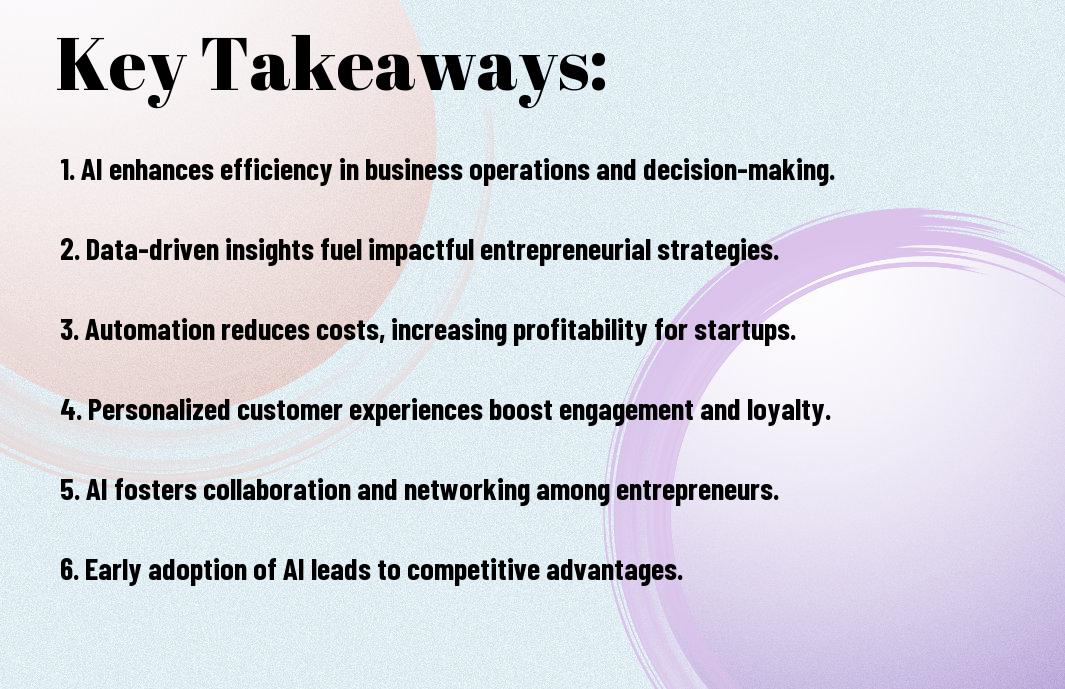
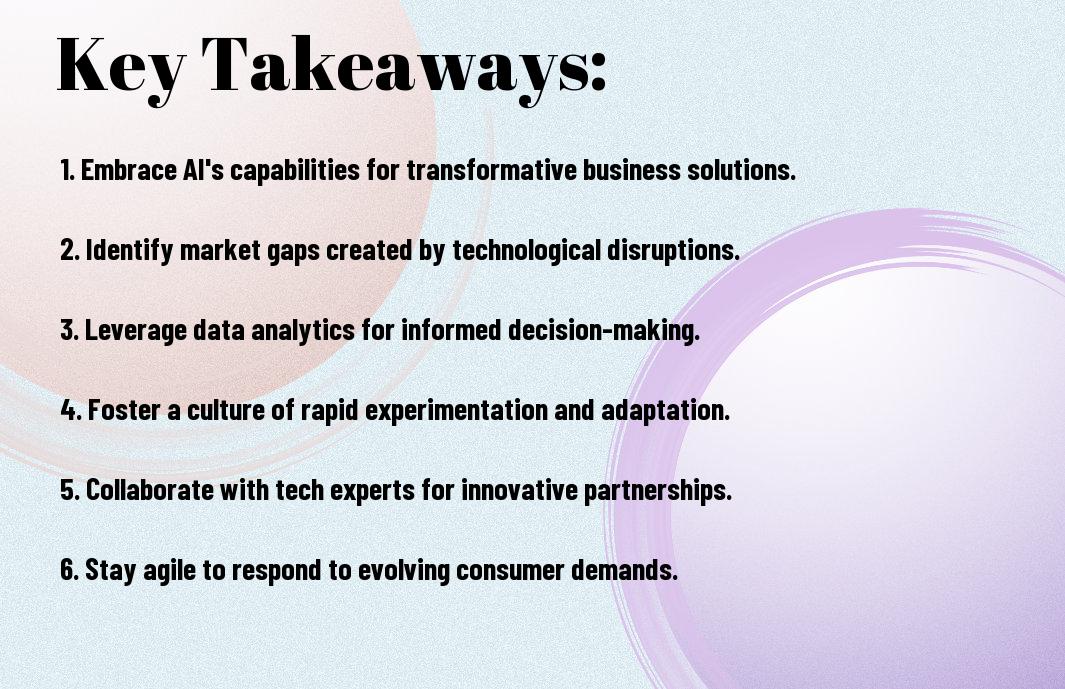
Key Takeaways:

  • Embracing AI can be a significant catalyst for entrepreneurial innovation, enabling businesses to identify and capitalize on new opportunities, improve operational efficiency, and drive growth.
  • AI-driven disruption can be turned into opportunity by fostering a culture of innovation, encouraging experimentation, and leveraging AI technologies such as machine learning and natural language processing.
  • Entrepreneurs can harness AI to develop new products, services, and business models that address emerging customer needs, creating new revenue streams and competitive advantages.
  • Effective integration of AI into business operations requires a strategic approach, including investment in AI talent, data infrastructure, and ongoing training to ensure successful adoption and deployment.
  • By leveraging AI, entrepreneurs can unlock new possibilities for innovation, drive business transformation, and stay ahead of the competition in an increasingly complex and rapidly changing market landscape.

    The AI Revolution in Business

    While navigating the ever-changing landscape of entrepreneurship, you’re likely aware that artificial intelligence (AI) is transforming the way businesses operate, creating new opportunities for growth and innovation, and you must be prepared to adapt to these changes to stay ahead.

    Defining the New Technological Frontier

    Beyond the current state of technology, you’ll find that AI is redefining the boundaries of what’s possible, and as you explore this new frontier, you’ll discover novel ways to apply AI to your business, enhancing your operations and decision-making processes.

    Disruption as a Catalyst for Innovation

    Amidst the upheaval caused by AI, you’ll find that disruption can be a powerful catalyst for innovation, forcing you to rethink your business models and strategies, and as you do, you’ll uncover new avenues for growth and development.

    This ability to innovate in the face of disruption is key to your success in the AI-driven business landscape, and as you learn to harness the power of AI, you’ll be able to turn potential disruptions into opportunities, driving your business forward and staying ahead of the competition, which will ultimately depend on your ability to adapt and evolve in response to the changing technological landscape.
    Entrepreneurial Mindset in the Age of AI

    Now, as you navigate the landscape of AI-driven innovation, you can turn disruption into opportunity by embracing a mindset that is open to change and agile in response. You can learn more about Disruption as an Opportunity – Navigating Industry Changes to stay ahead of the curve.

    Cognitive Flexibility and Adaptation

    Before you can harness the power of AI for your business, you need to develop cognitive flexibility and adaptability, allowing you to pivot quickly in response to new information and changing circumstances, which will enable you to stay competitive in a rapidly evolving market.

    Risk Assessment in Uncharted Territory

    Uncharted territories often come with unforeseen challenges, and as you venture into the unknown, you must be prepared to assess and mitigate risks that could impact your business, using data-driven insights to inform your decision-making process.

    Risk is an inherent part of innovation, and as you explore new opportunities in the age of AI, you will need to develop a keen sense of risk assessment, weighing potential rewards against potential downsides, and using this information to make informed decisions that drive your business forward, helping you to navigate the complexities of AI-driven disruption and turn it into a catalyst for growth and success.

    Identifying Market Gaps Through AI

    Many entrepreneurs are leveraging AI to identify market gaps and stay ahead of the competition. You can use AI-powered tools to analyze industry trends, customer needs, and market demands, enabling you to make informed decisions about your business strategy.

    Pattern Recognition and Predictive Analytics

    Gaps in the market can be filled by utilizing AI’s ability to recognize patterns and predict future trends. You can use machine learning algorithms to analyze large datasets and identify areas where your business can innovate and disrupt the market.

    Consumer Behavior Insights

    By analyzing consumer behavior, you can gain valuable insights into their needs and preferences, allowing you to tailor your products and services to meet their demands. You can use AI-powered tools to collect and analyze data on consumer behavior, enabling you to make data-driven decisions.

    Even more importantly, you can use these insights to anticipate changes in consumer behavior and stay ahead of the curve. You can use AI to analyze social media trends, online searches, and purchase history to identify emerging trends and preferences, enabling you to adjust your business strategy accordingly and capitalize on new opportunities.

    Building AI-Enhanced Business Models

    Your ability to leverage AI in your business model can be a key differentiator, enabling you to innovate and stay ahead of the competition. By integrating AI into your operations, you can unlock new revenue streams and improve efficiency.

    Scalability Through Automation

    Any business looking to expand its operations can benefit from automation, which enables you to process large volumes of data quickly and accurately, freeing up resources for more strategic activities.

    Personalization at Scale

    Against the backdrop of increasing consumer expectations, you can use AI to deliver personalized experiences that meet the unique needs of your customers, driving loyalty and retention.

    Automation allows you to take personalization to the next level, analyzing vast amounts of customer data to create tailored offerings that resonate with your target audience, helping you to build stronger relationships and drive business growth.

    Resource Optimization Strategies

    All entrepreneurs can leverage AI to optimize resources, as seen in Thriving in 2025: Your Blueprint for Turning Disruption Into Opportunity, to streamline operations and increase efficiency, allowing you to focus on innovation.

    Capital Allocation in AI Ventures

    Against the backdrop of rapid technological change, you must strategically allocate capital to AI initiatives that drive growth and profitability, ensuring your investments yield substantial returns.

    Talent and Technological Integration

    About the integration of talent and technology, you should prioritize hiring professionals with expertise in AI development and implementation to ensure seamless integration into your business operations.

    Further, as you probe into talent and technological integration, you will find that having the right team in place allows you to harness the full potential of AI, driving innovation and staying ahead of the competition, which is imperative for your success in today’s fast-paced entrepreneurial landscape.

    Ethical Considerations and Responsible Innovation

    Keep in mind that as you navigate the intersection of AI and entrepreneurial innovation, ethical considerations are paramount. You must prioritize responsible innovation to ensure that your endeavors have a positive impact on society.

    Transparency in AI Implementation

    Ethically, you should prioritize transparency in AI implementation, ensuring that your stakeholders understand how AI is being used and what benefits it brings to your organization, allowing you to build trust with your audience.

    Balancing Progress with Social Impact

    With great power comes great responsibility, and as you leverage AI to drive innovation, you must balance progress with social impact, considering how your actions will affect the community and the environment, and striving to create positive outcomes.

    Another aspect to consider when balancing progress with social impact is the potential for AI to exacerbate existing social inequalities, and you should take steps to mitigate these effects, such as implementing fairness and accountability measures in your AI systems, to ensure that your innovation benefits everyone, not just a select few.

    Final Words

    Drawing together the threads of AI and entrepreneurial innovation, you now have the tools to turn disruption into opportunity. You can harness the power of AI to drive your business forward, creating new products, services, and markets. Your ability to adapt and innovate will be key to success in this rapidly changing landscape, and by embracing AI, you will be well-positioned to thrive in the years to come, unlocking your full potential and achieving your goals.

    FAQ

    Q: What role does Artificial Intelligence (AI) play in driving entrepreneurial innovation, and how can businesses leverage it to stay ahead of the curve?

    A: AI plays a significant role in driving entrepreneurial innovation by automating processes, enhancing decision-making, and unlocking new business models. Businesses can leverage AI by integrating it into their operations, using machine learning algorithms to analyze data, and developing AI-powered products and services that solve real-world problems. By embracing AI, entrepreneurs can turn disruption into opportunity, creating new revenue streams, improving customer experiences, and gaining a competitive edge in the market.

    Q: How can entrepreneurs identify and capitalize on opportunities for innovation in the age of AI, and what skills do they need to develop to succeed in this landscape?

    A: Entrepreneurs can identify opportunities for innovation in the age of AI by staying up-to-date with the latest technological advancements, monitoring industry trends, and engaging with customers to understand their needs and pain points. To succeed, entrepreneurs need to develop skills such as data analysis, programming, and critical thinking, as well as the ability to collaborate with AI experts and adapt to rapid changes in the market. By developing these skills and being open to experimentation and learning, entrepreneurs can unlock new opportunities for growth and innovation.

    Q: What are the potential risks and challenges associated with AI-driven innovation, and how can entrepreneurs mitigate them to ensure sustainable and responsible growth?

    A: The potential risks and challenges associated with AI-driven innovation include job displacement, data privacy concerns, and the potential for AI systems to perpetuate biases and inequalities. To mitigate these risks, entrepreneurs can prioritize transparency and accountability in their AI development processes, ensure that AI systems are designed with diversity and inclusivity in mind, and invest in retraining and upskilling programs for workers who may be displaced by automation. By taking a responsible and sustainable approach to AI-driven innovation, entrepreneurs can minimize the risks and maximize the benefits of AI, creating a brighter future for their businesses and society as a whole.

Innovation and Wealth – The Role of AI in Driving Entrepreneurial Success

As you navigate the ever-changing landscape of entrepreneurship, you’re likely aware that innovation is key to staying ahead of the curve. Your ability to leverage cutting-edge technology, such as Artificial Intelligence (AI), can significantly impact your success. You’re probably wondering how AI can drive your business forward, and what benefits it can bring to your entrepreneurial endeavors. This post will explore the role of AI in driving innovation and wealth, and how you can harness its power to achieve your goals.

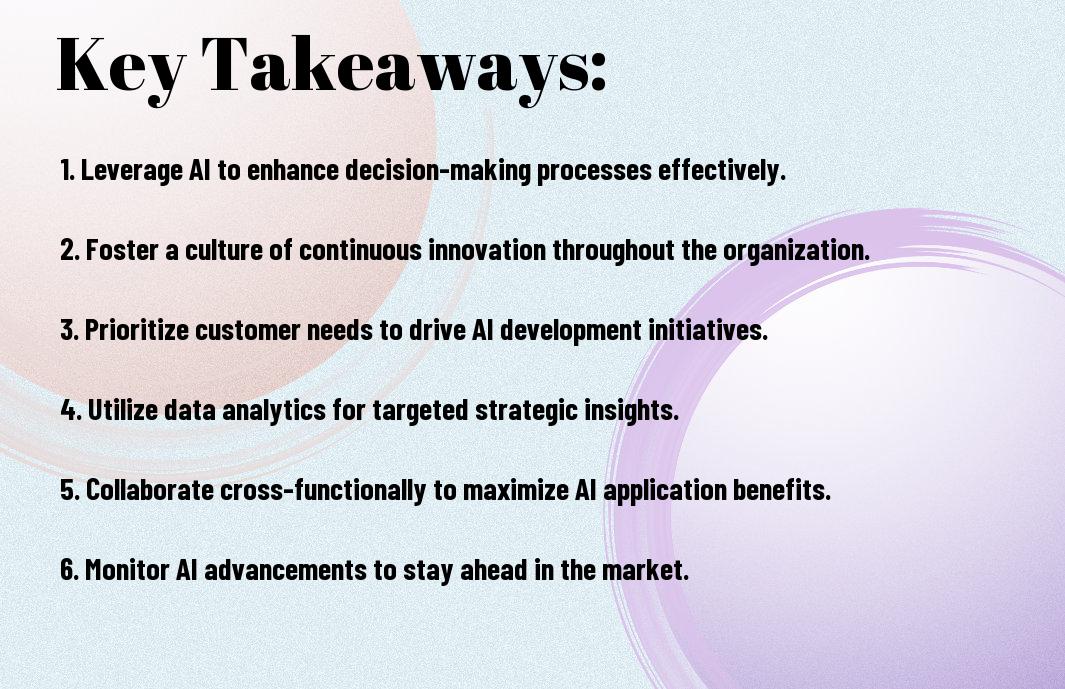
Key Takeaways:

  • Artificial Intelligence (AI) plays a significant role in driving entrepreneurial success by automating processes, enhancing decision-making, and improving productivity, ultimately leading to increased wealth creation.
  • AI-powered tools and technologies can help entrepreneurs identify new business opportunities, develop innovative products and services, and gain a competitive edge in the market.
  • The integration of AI in business operations can lead to improved efficiency, reduced costs, and enhanced customer experience, resulting in increased revenue and profitability.
  • Entrepreneurs who leverage AI effectively can gain valuable insights from data analysis, enabling them to make informed decisions and drive business growth through strategic innovation.
  • As AI continues to evolve, it is likely to have a profound impact on the entrepreneurial landscape, creating new opportunities for innovation and wealth creation, and transforming the way businesses operate and succeed.

The Tipping Point of AI in Business

Before you can harness the power of AI, it’s crucial to understand its role in driving entrepreneurial success, as it has become a key factor in business innovation, enabling you to make data-driven decisions and stay ahead of the competition.

When Algorithms Become Competitive Advantages

On the path to success, you’ll find that algorithms can become a significant competitive advantage, allowing you to automate tasks, optimize processes, and gain valuable insights that inform your business strategy, giving you an edge over your competitors.

The Stickiness Factor of AI Solutions

Factoring in the long-term benefits, you’ll discover that AI solutions can have a significant impact on your business, as they can lead to increased efficiency, improved customer satisfaction, and ultimately, increased revenue, making them a valuable investment for your company.

And as you research deeper into the world of AI, you’ll find that the stickiness factor of AI solutions lies in their ability to learn and adapt to your business needs, allowing you to refine your strategy and make adjustments as needed, ensuring that you stay on track to achieve your goals, and enabling you to measure the effectiveness of your AI investments, making adjustments to optimize your returns.

Outliers in AI Entrepreneurship

Any entrepreneur looking to leverage AI for success must understand the unique challenges and opportunities that come with it. You will need to navigate complex technologies and adapt to rapid changes in the market to stay ahead of the competition.

The 10,000-Hour Rule Reimagined

Above all, you should focus on developing a deep understanding of AI and its applications, as this will be key to driving your entrepreneurial success. You can achieve this by dedicating time to learning and experimenting with different AI technologies.

Opportunity and Timing in AI Ventures

Hour after hour, you will be faced with decisions that can make or break your AI venture, and it is your ability to seize opportunities and time your moves correctly that will set you apart from others. You must be able to identify emerging trends and capitalize on them quickly.

Outliers in AI entrepreneurship are those who can balance their technical expertise with business acumen, allowing them to identify opportunities and time their ventures perfectly. You can join their ranks by staying informed about the latest developments in AI and being prepared to adapt your strategy as the landscape evolves, ensuring your venture stays ahead of the curve and achieves long-term success.

Blink Decisions in AI-Driven Markets

Your ability to make swift decisions is vital in today’s fast-paced entrepreneurial landscape, where AI-driven markets demand agility and adaptability to stay ahead of the competition.

Intuition versus Data-Driven Decision Making

Prior to relying solely on intuition, you should consider the benefits of data-driven decision making, which enables you to make informed choices backed by concrete evidence and insights.

The Power of Thin-Slicing Customer Needs

Driven by the need for precision, you can leverage AI to thin-slice customer needs, uncovering patterns and preferences that inform your business strategy and drive innovation.

It is through this process that you can develop a deeper understanding of your target audience, allowing you to create tailored solutions that meet their evolving needs and preferences, ultimately driving your entrepreneurial success in AI-driven markets.

The AI Entrepreneurial Mindset

Unlike traditional entrepreneurs, you will need to develop a unique mindset that combines creativity with technical expertise to succeed in an AI-driven environment. You must be open to new ideas and willing to invest time in understanding the capabilities and limitations of AI technologies. This mindset will enable you to harness the power of AI and drive your entrepreneurial ventures forward.

Adaptability and Continuous Learning

The ability to adapt quickly to changing market conditions and technological advancements is vital for your success as an AI entrepreneur. You will need to stay up-to-date with the latest developments in AI and be willing to pivot your business strategy as needed. This will enable you to stay ahead of the competition and capitalize on new opportunities.

Risk Assessment in Automated Environments

For you to effectively navigate the risks associated with AI, you must develop a deep understanding of the potential pitfalls and challenges. You will need to carefully evaluate the potential risks and benefits of implementing AI solutions in your business and take steps to mitigate any potential downsides. This will enable you to minimize losses and maximize gains.

Due to the complexity of AI systems, you will need to carefully consider the potential risks and consequences of automating certain business processes. You should assess the potential impact on your business, including the potential for job displacement, data breaches, and other unintended consequences. By taking a thoughtful and informed approach to risk assessment, you can ensure that your use of AI drives business success while minimizing potential downsides.

Wealth Creation Through AI Implementation

Despite the initial investment required, AI can significantly enhance your business operations, leading to increased efficiency and revenue. By automating tasks and providing valuable insights, AI helps you make informed decisions, driving your entrepreneurial success.

Scaling Without Proportional Cost Increases

Prior to expanding your business, you can leverage AI to streamline processes, allowing you to scale without incurring proportional cost increases, thus maximizing your returns on investment.

Value Extraction from Data Assets

Cost effectively, you can utilize AI to analyze your data assets, uncovering hidden patterns and trends that inform your business strategies, enabling you to make data-driven decisions.

Wealth generated from AI-driven insights can be substantial, as you can identify new opportunities, optimize operations, and create innovative products or services, ultimately leading to increased revenue and competitiveness in the market, allowing you to achieve your business goals and expand your entrepreneurial pursuits.

Ethical Considerations and Social Impact

To ensure that AI-driven innovation benefits society as a whole, you must consider the ethical implications of your entrepreneurial endeavors. As you harness the power of AI to drive your business forward, you need to be aware of the potential social impact of your actions.

Responsible Innovation Frameworks

For instance, you can establish guidelines that prioritize transparency, accountability, and fairness in your AI development and deployment. By doing so, you can mitigate potential risks and ensure that your innovative solutions align with your values and principles.

Distributional Effects of AI-Generated Wealth

Responsibly, you should consider how AI-generated wealth will be distributed among stakeholders, including employees, customers, and the broader community. As you navigate the complex landscape of AI-driven entrepreneurship, you need to think critically about the potential consequences of your actions on different groups.

And as you research deeper into the distributional effects of AI-generated wealth, you will realize that the benefits of innovation are not always evenly distributed. You may notice that certain groups, such as those with limited access to education or technological resources, may be left behind, exacerbating existing social and economic inequalities. You must consider these dynamics and develop strategies to address them, ensuring that your AI-driven entrepreneurial success contributes to a more equitable and just society.

Conclusion

Conclusively, as you commence on your entrepreneurial journey, you will find that innovation and wealth are closely tied to the effective utilization of AI. You can leverage AI to drive your success by automating tasks, analyzing data, and making informed decisions. By embracing AI, you can stay ahead of the competition and achieve your business goals, ultimately leading to increased wealth and prosperity for your venture.

FAQ

Q: What is the impact of Artificial Intelligence on entrepreneurship and wealth creation?

A: Artificial Intelligence (AI) has a significant impact on entrepreneurship and wealth creation. AI-driven technologies can help entrepreneurs automate tasks, gain insights from data, and make informed decisions, leading to increased efficiency and productivity. Additionally, AI can facilitate the development of new products and services, enabling entrepreneurs to tap into new markets and create new revenue streams. By leveraging AI, entrepreneurs can drive innovation, improve customer experiences, and ultimately, create wealth.

Q: How can AI be used to drive entrepreneurial success, particularly in terms of innovation and wealth generation?

A: AI can be used to drive entrepreneurial success in several ways. For instance, AI-powered tools can help entrepreneurs identify market trends, analyze customer behavior, and develop personalized marketing strategies. AI can also be used to optimize business operations, such as supply chain management and logistics, leading to cost savings and increased profitability. Furthermore, AI can facilitate the development of new business models, such as subscription-based services and freemium models, which can help entrepreneurs generate new revenue streams and create wealth. By embracing AI, entrepreneurs can stay ahead of the competition, drive innovation, and achieve long-term success.

Q: What are the key challenges and opportunities that entrepreneurs face when leveraging AI to drive innovation and wealth creation, and how can they overcome these challenges?

A: Entrepreneurs face several challenges when leveraging AI to drive innovation and wealth creation, including the need for significant investments in AI infrastructure, talent acquisition, and data management. Additionally, entrepreneurs must navigate complex regulatory environments and address concerns around data privacy and ethics. However, these challenges also present opportunities for entrepreneurs to develop new AI-powered solutions, create new markets, and establish themselves as leaders in their industries. To overcome these challenges, entrepreneurs can focus on building strategic partnerships, investing in AI education and training, and prioritizing data-driven decision making. By doing so, entrepreneurs can harness the power of AI to drive innovation, create wealth, and achieve long-term success.

Strategic Innovation – Integrating AI for Maximum Business Impact

As you navigate the complex landscape of modern business, you’re likely exploring ways to leverage technology for a competitive edge. You understand that integrating Artificial Intelligence (AI) can revolutionize your operations, enhance customer experiences, and drive growth. Your goal is to harness AI’s potential to innovate strategically, maximizing impact and propelling your business forward. You’re about to discover how to effectively integrate AI into your strategy, unlocking new opportunities and transforming your organization from within.

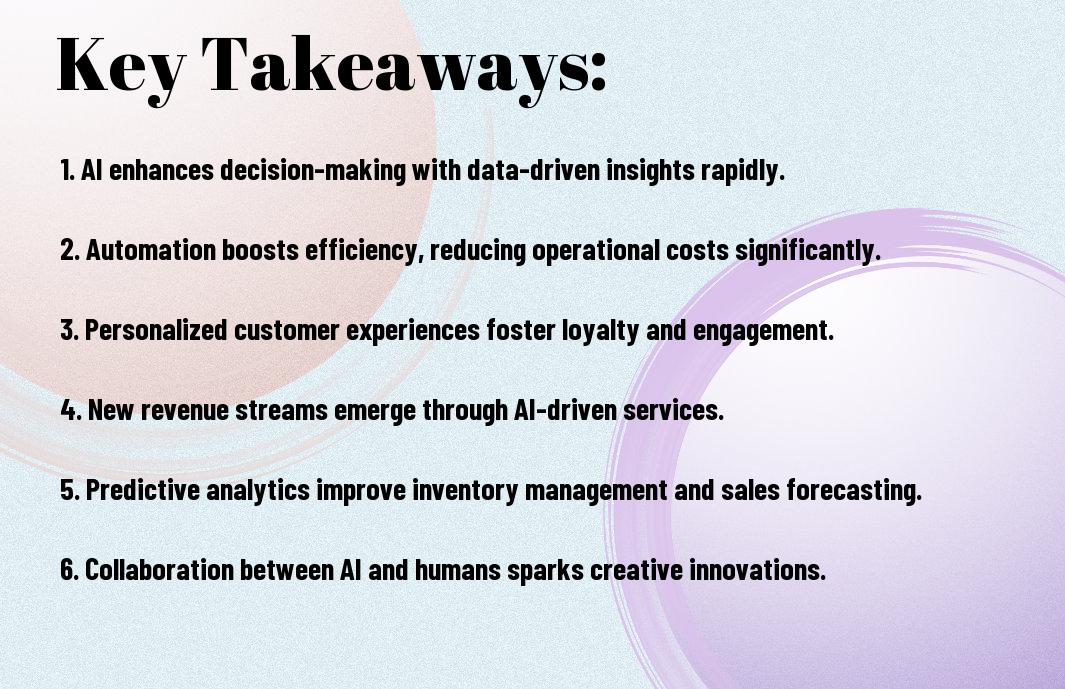
Key Takeaways:

  • Embracing strategic innovation with AI integration can significantly enhance business operations, leading to increased efficiency and competitiveness in the market.
  • AI-driven solutions can facilitate data-driven decision-making, enabling companies to make informed choices and drive growth through targeted strategies.
  • Effective integration of AI requires a thorough understanding of the organization’s goals, challenges, and existing infrastructure to maximize its potential impact.
  • Strategic innovation with AI involves continuous learning and adaptation, as the technology is constantly evolving, and businesses must stay up-to-date to remain relevant.
  • By leveraging AI in strategic innovation, companies can unlock new opportunities, improve customer experiences, and create sustainable business models that drive long-term success.

The Tipping Point of AI in Business

Your business is on the cusp of a revolution with AI, and it’s time to harness its power for maximum impact. AI is transforming industries, and you must adapt to stay ahead.

When Technologies Reach Critical Mass

Whenever technologies converge, innovation accelerates, and AI is no exception. You’ll see exponential growth as AI adoption reaches critical mass, transforming your business landscape.

Identifying Your Organization’s AI Readiness

On the path to AI integration, you must assess your organization’s readiness. You need to evaluate your infrastructure, data, and talent to determine the best AI strategies for your business.

Organizations that successfully integrate AI typically have a clear understanding of their strengths, weaknesses, and goals. You will need to conduct a thorough analysis of your business to identify areas where AI can have the most significant impact, and then develop a tailored strategy to achieve your objectives, leveraging your unique strengths and addressing your weaknesses.

The Cognitive Revolution in Corporate Strategy

If you’re looking to integrate AI into your business, you’ll need to understand the cognitive revolution in corporate strategy, which is transforming the way you approach innovation and decision-making.

From Data Collection to Insight Generation

Alongside the rise of AI, you’re likely noticing a shift from mere data collection to insight generation, enabling you to make more informed decisions and drive business growth.

Decision-Making in the Age of Algorithms

Around the time you start leveraging AI, you’ll find that decision-making processes become more efficient, as algorithms help analyze vast amounts of data and provide actionable recommendations.

A key aspect of decision-making in the age of algorithms is that you will have access to predictive analytics, allowing you to anticipate market trends and make strategic decisions that drive your business forward, giving you a competitive edge in your industry, and enabling you to innovate and adapt to changing market conditions more effectively.

Small Changes, Massive Results

Many businesses have achieved significant gains by incorporating AI into their operations, and you can too by starting with small, strategic changes that add up to make a big impact on your bottom line.

Incremental AI Implementation Strategies

The key to successful AI integration lies in taking a gradual approach, allowing you to test and refine your strategies as you go, and make adjustments to maximize the benefits of AI for your business.

The Compounding Effect of Smart Automation

Smart investments in AI can lead to exponential growth, as automated processes free up resources for more strategic pursuits, enabling you to focus on high-value tasks that drive innovation and expansion in your organization.

Due to the nature of compounding effects, the benefits of smart automation can quickly multiply, allowing you to achieve greater efficiency, productivity, and profitability, and giving you a competitive edge in the market, as you continue to leverage AI to streamline and optimize your operations, you will be able to make more informed decisions and drive your business forward.

The Power of Context in AI Deployment

All successful AI deployments rely on understanding the context in which they will operate. To maximize impact, you must consider the environment and organizational climate.

Environmental Factors That Determine Success

To determine the success of AI deployment, you need to assess:

  • market conditions
  • customer needs
  • competitive landscape

Assume that your analysis will help you make informed decisions about AI integration.

Creating the Right Organizational Climate

Creating a supportive organizational culture is imperative for AI adoption. You should foster collaboration, encourage experimentation, and provide necessary training to your employees.

Context is key when creating the right organizational climate for AI deployment. You will need to consider your company’s values, goals, and existing infrastructure to ensure a smooth integration of AI solutions, allowing you to leverage your strengths and address potential weaknesses, ultimately driving your business forward with AI-powered innovation.

Connecting Human Intuition with Machine Precision

To maximize business impact, you can leverage AI by learning How to Use AI for Strategy and Strategic Management to inform your decision-making process, enhancing your strategic innovation.

The New Division of Labor

AFTER you integrate AI into your workflow, you’ll notice a shift in tasks, freeing you to focus on high-level creative problem-solving and strategic thinking.

Cultivating Complementary Intelligence

ONE key aspect of strategic innovation is developing a symbiotic relationship between human intuition and machine precision, allowing you to make more informed decisions.

But as you cultivate complementary intelligence, you’ll find that your ability to analyze complex data and identify patterns improves, enabling you to drive business growth and stay ahead of the competition, and you will be able to make the most of your strategic innovation efforts by combining the strengths of both human and machine intelligence.

The Stickiness Factor of AI Solutions

For your AI solutions to have a lasting impact, you need to focus on creating experiences that keep users engaged and invested in the technology. This involves understanding your target audience, identifying their pain points, and developing solutions that address these challenges in a meaningful way.

Creating Memorable and Indispensable AI Tools

About the development process, you should prioritize simplicity, intuitiveness, and user experience, as these factors will determine how often your AI tools are used and how much value they bring to your organization. You can achieve this by involving your users in the design process and gathering feedback to inform your development decisions.

Designing for Adoption and Engagement

Against the backdrop of rapid technological advancements, you must design your AI solutions with adoption and engagement in mind, taking into account the needs and preferences of your users, as well as the overall business goals and objectives. You should strive to create seamless and intuitive experiences that foster a sense of familiarity and comfort.

Considering the complexities of human behavior and the factors that influence adoption, you will need to develop a deep understanding of your users’ motivations, habits, and pain points to design AI solutions that meet their needs and expectations, and ultimately drive business success. You can achieve this by leveraging data analytics, user feedback, and testing to inform your design decisions and optimize your AI solutions for maximum impact.

Summing up

The integration of AI in your business strategy can significantly enhance your innovation capabilities, allowing you to make informed decisions and drive growth. By leveraging AI, you can unlock new opportunities, optimize operations, and gain a competitive edge. As you commence on this journey, you will be able to harness the full potential of AI to maximize your business impact and achieve your goals, ultimately transforming your organization into a more agile and innovative entity.

FAQ

Q: What is Strategic Innovation and how can it be applied to integrate AI for maximum business impact?

A: Strategic Innovation refers to the process of creating new or improving existing business models, products, and services by leveraging innovative technologies like Artificial Intelligence (AI). To integrate AI for maximum business impact, organizations should identify areas where AI can drive significant value, such as process automation, predictive analytics, or customer experience enhancement. By aligning AI initiatives with business objectives and fostering a culture of innovation, companies can unlock new revenue streams, improve operational efficiency, and gain a competitive edge in the market.

Q: How can businesses ensure successful AI integration and maximize the potential of Strategic Innovation?

A: To ensure successful AI integration, businesses should start by defining clear goals and objectives, assessing their current data infrastructure, and developing a robust AI strategy. It is also crucial to invest in employee upskilling and reskilling to build a workforce capable of working effectively with AI technologies. Furthermore, organizations should prioritize data quality, ethics, and governance to mitigate potential risks associated with AI adoption. By taking a structured approach to AI integration, companies can minimize disruption, optimize benefits, and achieve sustainable business growth through Strategic Innovation.

Q: What role does leadership play in driving Strategic Innovation and AI adoption within an organization?

A: Leadership plays a vital role in driving Strategic Innovation and AI adoption by setting the vision, tone, and direction for the organization. Effective leaders must be willing to challenge traditional business models, encourage experimentation, and foster a culture of innovation. They should also prioritize investment in AI research and development, collaborate with external partners and stakeholders, and ensure that AI initiatives are aligned with overall business strategy. By providing clear guidance, support, and resources, leaders can empower their teams to explore new AI-driven opportunities, drive digital transformation, and achieve long-term success through Strategic Innovation.

Innovative Business Models – How AI is Changing the Game for Entrepreneurs

As you navigate the ever-evolving landscape of entrepreneurship, you’re likely aware that artificial intelligence (AI) is revolutionizing the way businesses operate. Your ability to adapt to these changes will be key to staying ahead of the competition. With AI-driven innovations, you can streamline processes, enhance customer experiences, and unlock new revenue streams. You’ll discover how AI is transforming traditional business models, enabling you to make informed decisions and capitalize on emerging opportunities.

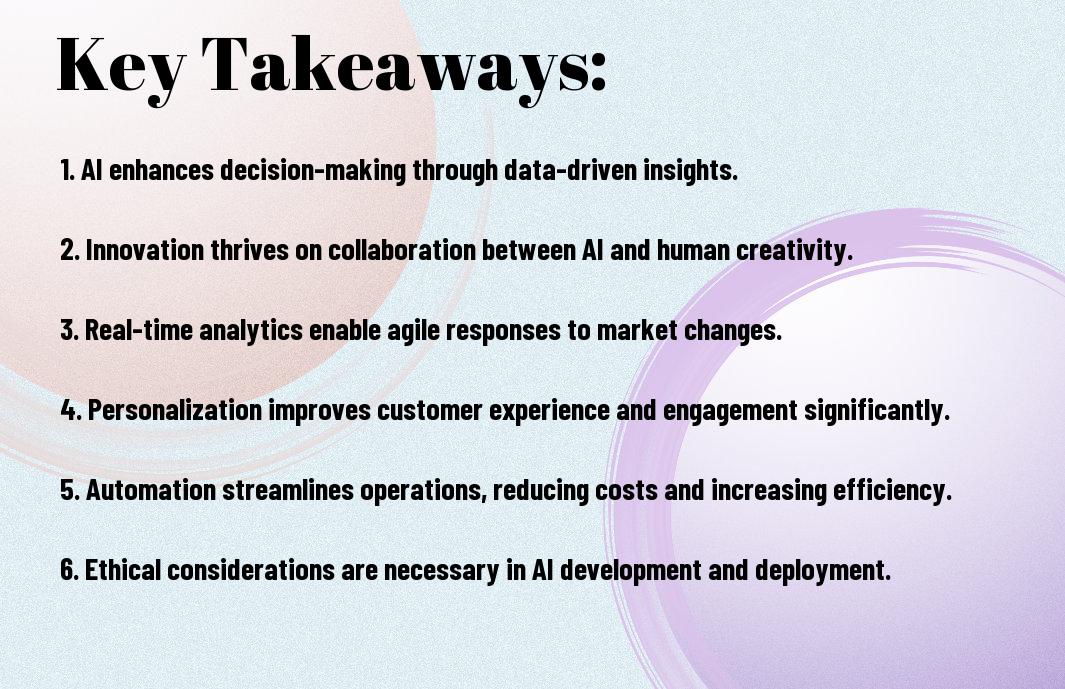
Key Takeaways:

  • AI-driven business models are transforming the entrepreneurial landscape by enabling companies to offer personalized products and services, thereby enhancing customer experience and loyalty.
  • The integration of AI in business models allows for real-time data analysis, facilitating informed decision-making and strategic planning for entrepreneurs.
  • AI-powered automation is streamlining business operations, reducing costs, and increasing efficiency, thus enabling entrepreneurs to allocate resources more effectively.
  • The emergence of AI-based business models is creating new revenue streams and opportunities for entrepreneurs to innovate and disrupt traditional industries.
  • Entrepreneurs who adopt AI-driven business models can gain a competitive edge in the market, driving growth and scalability, and staying ahead of the curve in today’s fast-paced business environment.

    The AI Revolution in Business

    A new era of innovation is unfolding, and you are at the forefront of this change, as AI transforms the business landscape, enabling you to make more informed decisions and drive growth.

    From Automation to Augmentation

    Businesses like yours are leveraging AI to move beyond automation, enhancing your capabilities and augmenting your workforce, allowing you to focus on high-value tasks and strategic decision-making.

    The Economics of AI Implementation

    One of the key considerations for you is the economic impact of AI on your business, as you weigh the costs and benefits of implementation, and consider how AI can optimize your operations and improve your bottom line.

    Understanding the economics of AI implementation is imperative for you to make informed decisions about how to integrate AI into your business, as you consider factors such as the cost of AI solutions, the potential return on investment, and the impact on your workforce, and you will need to develop a strategic plan for AI adoption that aligns with your business goals and objectives.

    Disruption Across Industries

    If you’re an entrepreneur, you’re likely aware that AI is transforming the business landscape. You see its impact across various sectors, from healthcare to finance, and its potential to disrupt traditional models is vast. As you explore innovative business models, consider how AI can help you stay ahead of the curve.

    Traditional Models Reimagined

    Beneath the surface of traditional industries, you’ll find opportunities for AI-driven innovation. You can leverage AI to streamline processes, enhance customer experiences, and create new revenue streams, ultimately redefining your business model and gaining a competitive edge.

    Emerging Sectors Born from AI

    With the rise of AI, you’re witnessing the birth of new sectors and industries that were previously unimaginable. You can explore opportunities in areas like AI-powered consulting, virtual assistance, and data analytics, and position your business for success in these emerging markets.

    Also, as you explore deeper into emerging sectors born from AI, you’ll discover new avenues for growth and innovation. You can develop AI-driven products and services that cater to evolving customer needs, and establish your business as a pioneer in these new markets, setting yourself up for long-term success and profitability.

    Data as the New Currency

    For entrepreneurs, data has become a valuable asset, driving business decisions and informing strategy. You can leverage data to create new revenue streams, improve operations, and enhance customer experiences, making it a key component of your business model.

    Monetizing Information Flows

    Prior to the advent of AI, you may have struggled to extract value from your data. You can now utilize AI-powered tools to analyze and monetize your data, creating new opportunities for growth and innovation in your business.

    Privacy Concerns and Ethical Boundaries

    For your business to succeed, you must navigate the complex landscape of data privacy and ethics. You need to ensure that your data collection and usage practices are transparent and respectful of your customers’ rights, maintaining trust and avoiding potential pitfalls.

    Concerns about data privacy and ethics are paramount as you develop your business model. You should consider implementing robust safeguards to protect your customers’ data, such as encryption, secure storage, and clear consent mechanisms, to mitigate risks and ensure compliance with regulations, ultimately protecting your business’s reputation and building trust with your customers.

    The Human-AI Partnership

    After embracing AI, you’ll discover new opportunities for growth and innovation in your business, as AI enhances your capabilities and automates routine tasks, allowing you to focus on high-level strategy and decision-making.

    Redefining Entrepreneurial Skills

    About the skills you need to succeed, you’ll find that AI is changing the landscape, and you must adapt by developing skills that complement AI, such as creativity, empathy, and complex problem-solving.

    Building Teams Around Technology

    Entrepreneurially, you’ll need to assemble a team that can effectively work with AI systems, and you should consider hiring professionals with expertise in AI development, deployment, and maintenance to support your business goals.

    And as you build your team, you’ll need to consider how AI will impact your organizational structure, communication, and workflows, ensuring that your team is aligned with your AI strategy and can effectively leverage its capabilities to drive business success, which will enable you to make the most of your investment in AI and stay ahead of the competition.

    Scaling Without Traditional Constraints

    Keep in mind that AI-powered business models enable you to scale your business without being held back by traditional constraints, such as limited resources or geographical boundaries, allowing your company to grow exponentially.

    The End of Linear Growth

    Anything that hinders your growth is a thing of the past, as AI-driven models facilitate exponential expansion, enabling you to reach new heights and break free from the shackles of traditional growth limitations, giving you the freedom to explore new opportunities.

    Global Reach from Day One

    Likewise, leveraging AI allows you to achieve a global reach from the outset, connecting you with a vast customer base and providing you with unparalleled opportunities for growth and expansion, making your business a global entity from day one.

    Constraints that once limited your business’s potential are now a thing of the past, as you can now access a global market, bypassing traditional barriers to entry, and you can use AI to personalize your offerings, tailor your marketing efforts, and optimize your operations to meet the needs of your diverse customer base, thereby increasing your chances of success in the global marketplace.

    Investment Landscapes

    Once again, you find yourself at the forefront of innovation, and AI is revolutionizing the way you approach investment. As you navigate this new landscape, you’ll discover fresh opportunities and challenges that will impact your business model.

    Venture Capital’s New Thesis

    Toward a more nuanced understanding of AI’s potential, you’ll see venture capital firms adapting their investment strategies to focus on AI-driven startups, offering you a chance to secure funding for your innovative business model.

    Alternative Funding Mechanisms

    Leveraging the power of AI, you can explore alternative funding mechanisms that offer more flexibility and accessibility, enabling you to secure the capital you need to bring your vision to life.

    In addition, as you probe deeper into alternative funding mechanisms, you’ll find that AI-powered platforms can connect you with a broader range of investors, provide more accurate valuations, and streamline the funding process, giving you the freedom to focus on growing your business and staying ahead of the competition.

    Summing up

    On the whole, you now have a deeper understanding of how innovative business models are leveraging AI to drive growth. As you explore your own entrepreneurial ventures, you’ll find that AI can help you streamline operations, enhance customer experiences, and uncover new opportunities. By embracing AI, you can stay ahead of the competition and propel your business forward, making your vision a reality and transforming your industry in the process. Your ability to adapt and innovate will be key to your success.

    FAQ

    Q: What are the key benefits of incorporating AI into innovative business models for entrepreneurs?

    A: The integration of Artificial Intelligence (AI) into business models offers numerous benefits for entrepreneurs, including enhanced efficiency, improved decision-making, and the ability to personalize customer experiences. AI can automate routine tasks, analyze vast amounts of data to provide insights that inform strategic decisions, and enable businesses to offer tailored products and services that meet the specific needs of their clients. This not only boosts customer satisfaction but also can lead to increased loyalty and retention, ultimately driving business growth.

    Q: How are AI-powered business models changing the competitive landscape for entrepreneurs, and what strategies can they use to stay ahead?

    A: AI-powered business models are significantly altering the competitive landscape by introducing new avenues for innovation, disruption, and differentiation. Entrepreneurs can leverage AI to create unique value propositions, such as predictive maintenance, intelligent supply chain management, and AI-driven marketing strategies. To stay ahead, entrepreneurs should focus on developing a deep understanding of their customers’ evolving needs, investing in AI talent and technology, and fostering a culture of innovation within their organizations. Additionally, embracing a data-driven approach and continuously monitoring market trends can help entrepreneurs identify opportunities for AI integration that can set them apart from competitors.

    Q: What are some of the challenges entrepreneurs might face when implementing AI into their business models, and how can these challenges be overcome?

    A: Entrepreneurs may encounter several challenges when integrating AI into their business models, including the high cost of AI technologies, the need for specialized talent to develop and implement AI solutions, and ethical concerns related to data privacy and bias in AI decision-making. To overcome these challenges, entrepreneurs can consider collaborating with AI startups or technology partners, investing in employee training and development to build in-house AI capabilities, and establishing clear ethical guidelines and transparency in their AI practices. Furthermore, starting with small-scale AI pilots and gradually scaling up can help manage costs and risks, allowing entrepreneurs to adapt to the changing technological landscape while minimizing potential disruptions to their operations.

Unlocking the Secrets of AI-Driven Business Innovation

Unlocking the power of AI in organizations: Insights for CXOs to discover the potential of AI in driving business growth and innovation, and how you can harness its power to stay ahead.

Key Takeaways:

  • AI-driven business innovation is transforming industries by leveraging machine learning, natural language processing, and data analytics to drive growth, improve efficiency, and enhance customer experiences.
  • Companies that successfully integrate AI into their operations can gain a competitive edge by automating processes, predicting market trends, and making data-driven decisions.
  • Effective AI adoption requires a strategic approach, including identifying areas where AI can add value, developing a robust data infrastructure, and fostering a culture of innovation and experimentation.
  • AI-driven innovation can also raise important ethical and societal considerations, such as job displacement, bias in decision-making, and data privacy, which must be carefully managed and addressed.
  • By embracing AI-driven business innovation, organizations can unlock new opportunities for revenue growth, improved customer engagement, and sustainable competitive advantage in a rapidly changing business landscape.

The Foundation of AI in Modern Business

For your business to thrive in today’s competitive landscape, understanding the role of Artificial Intelligence (AI) is vital. You need to grasp how AI transforms operations, enhances customer experience, and drives innovation.

Core Technologies Driving the Revolution

Any analysis of AI’s impact on business must consider the core technologies involved, such as machine learning and natural language processing, which enable your systems to learn from data and interact with customers more effectively.

The Cognitive Leap: From Data to Intelligence

For you to harness the full potential of AI, it’s vital to understand the transition from mere data collection to actionable intelligence, which allows your business to make informed decisions and stay ahead of the competition.

Due to the complexity of this transition, you will need to invest in developing a robust data strategy that not only collects and processes large volumes of data but also interprets it in a way that drives meaningful business outcomes, enabling you to leverage AI’s capabilities to their fullest extent and propel your business forward in an increasingly digital world.

Disruption Vectors Across Industries

Even as you explore the potential of AI-driven business innovation, you’ll notice that various sectors are being transformed in unique ways, leading to new opportunities and challenges that you must navigate to stay ahead.

Traditional Sectors Reimagined

Above all, you’ll find that traditional industries like healthcare, finance, and education are being redefined by AI, forcing you to rethink your approach and adapt to the changing landscape in order to remain competitive.

Emerging Business Models

Similar to other areas, sectors like transportation and energy are giving rise to innovative business models that you can leverage to drive growth and improve efficiency, making it imperative for you to understand these developments.

Hence, as you research deeper into emerging business models, you’ll discover that AI is enabling new forms of collaboration, product development, and customer engagement, allowing you to create novel solutions that meet evolving customer needs and stay ahead of the curve in your industry.

The Economics of AI Implementation

Many businesses are turning to AI to drive innovation, but you need to consider the economic implications. You must weigh the costs and benefits of AI implementation to make informed decisions about your business strategy.

Cost-Benefit Analysis Framework

Between the potential benefits and drawbacks of AI, you will find a delicate balance. You should develop a framework to evaluate the costs and benefits of AI implementation, considering factors such as investment, return on investment, and potential risks.

Resource Allocation Strategies

After allocating resources for AI implementation, you will need to prioritize your investments. You should focus on the areas that will drive the most value for your business, such as talent acquisition, infrastructure development, and process optimization.

At this stage, you will need to consider your resource allocation strategies in more detail. You should assess your current resources, identify gaps, and develop a plan to allocate your resources effectively, ensuring that you have the right talent, technology, and infrastructure to support your AI-driven innovation strategy, and that you are using your resources in a way that maximizes your return on investment.

Human-Machine Collaboration Paradigms

Unlike traditional business models, AI-driven innovation relies on the synergy between humans and machines, enabling you to leverage the strengths of both to drive growth and success.

Workforce Evolution

With the advent of AI, you will witness a significant shift in your workforce dynamics, as machines take over routine tasks, freeing your employees to focus on high-value tasks that require creativity and problem-solving skills.

Skill Transition Management

Paralleling the rise of AI, you will need to manage the transition of skills within your organization, ensuring that your employees are equipped to work effectively with machines and leverage their capabilities to drive innovation.

Consequently, as you commence on this journey, you will need to invest in retraining and upskilling your workforce, enabling them to develop the skills required to collaborate with AI systems, such as data analysis, interpretation, and decision-making, ultimately driving your business forward.

Ethical Considerations and Governance

After implementing AI-driven innovations, you must consider the ethical implications of your business practices. You need to ensure that your AI systems are transparent, fair, and accountable to maintain trust with your customers and stakeholders.

Responsible AI Development

Responsibly, you should prioritize the development of AI systems that align with your organization’s values and principles. You should consider the potential risks and benefits of AI and develop strategies to mitigate any negative consequences.

Regulatory Horizons

By understanding the regulatory landscape, you can navigate the complex rules and guidelines surrounding AI development. You should stay informed about emerging regulations and standards to ensure your AI systems comply with legal requirements.

Consequently, as you explore the regulatory horizons, you will discover that governments and organizations are establishing guidelines to ensure AI is developed and used responsibly. You can expect to see more emphasis on transparency, explainability, and accountability in AI decision-making processes, which will impact your business innovation strategies and require you to adapt to the evolving regulatory environment.

Strategic Implementation Roadmap

Keep in mind that a well-structured roadmap is crucial for successful AI-driven business innovation, allowing you to navigate the complexities of implementation and maximize your returns on investment.

Assessment and Planning Methodologies

By leveraging established frameworks and tools, you can effectively assess your organization’s readiness for AI adoption and develop a tailored plan that addresses your unique needs and goals.

Integration and Scaling Approaches

For seamless integration, you should focus on developing a phased approach that aligns with your overall business strategy, enabling you to scale your AI initiatives efficiently and effectively.

Hence, as you research into integration and scaling, you will need to consider factors such as data management, talent acquisition, and change management, ensuring that your AI solutions are fully aligned with your organization’s objectives and that you have the necessary resources to support long-term growth and success.

Summing up

Hence, as you examine into the world of AI-driven business innovation, you will discover new opportunities to transform your organization. You will learn to leverage AI to drive growth, improve efficiency, and enhance your decision-making capabilities. By embracing AI, you can unlock new revenue streams, optimize your operations, and stay ahead of the competition, ultimately taking your business to the next level and achieving your goals.

FAQ

Q: What is AI-Driven Business Innovation and how is it transforming industries?

A: AI-Driven Business Innovation refers to the integration of artificial intelligence technologies into business operations to drive innovation, improve efficiency, and enhance decision-making. This transformation is happening across various sectors, including healthcare, finance, and retail, where AI is being used to analyze vast amounts of data, automate processes, and predict customer behavior. By leveraging AI, businesses can unlock new revenue streams, improve customer experiences, and gain a competitive edge in the market.

Q: How can businesses harness the power of AI to drive innovation and stay ahead of the competition?

A: To harness the power of AI, businesses should start by identifying areas where AI can add the most value, such as improving operational efficiency, enhancing customer engagement, or developing new products and services. They should then invest in AI technologies, such as machine learning and natural language processing, and develop a skilled workforce to implement and manage these technologies. Additionally, businesses should foster a culture of innovation, encourage experimentation, and collaborate with AI experts and startups to stay up-to-date with the latest advancements in the field.

Q: What are the potential risks and challenges associated with implementing AI-Driven Business Innovation, and how can they be mitigated?

A: The implementation of AI-Driven Business Innovation can pose several risks and challenges, including data privacy concerns, job displacement, and the potential for AI systems to perpetuate biases and errors. To mitigate these risks, businesses should prioritize transparency and accountability in their AI systems, ensure that they have robust data governance and security measures in place, and invest in ongoing training and education for their workforce. They should also establish clear guidelines and regulations for the development and deployment of AI, and engage with stakeholders to address concerns and build trust in AI technologies.

Bonza training Skip to content