Innovation

Turning Innovation into Income – How AI Fuels Entrepreneurial Growth

As you navigate the ever-changing landscape of entrepreneurship, you’re likely looking for ways to turn your innovative ideas into tangible revenue streams. You understand that staying ahead of the curve is necessary to your business’s success. With the rapid advancement of Artificial Intelligence (AI), you now have access to powerful tools that can fuel your entrepreneurial growth, helping you to streamline operations, enhance customer experiences, and drive profits. You can leverage AI to unlock new opportunities and take your business to the next level.

Key Takeaways:

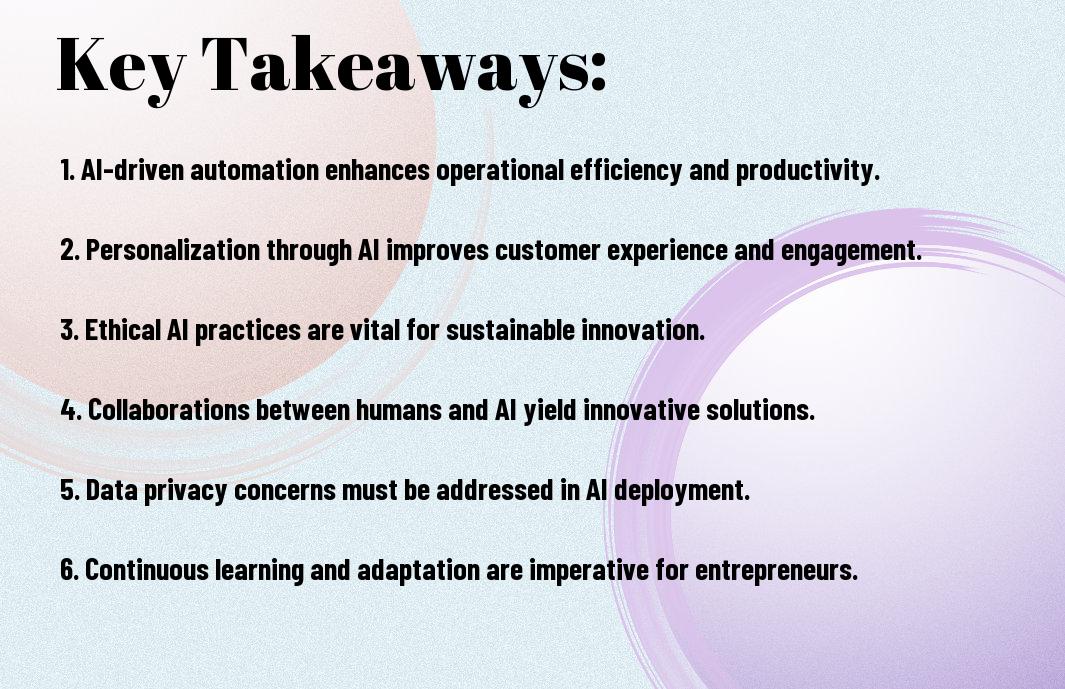
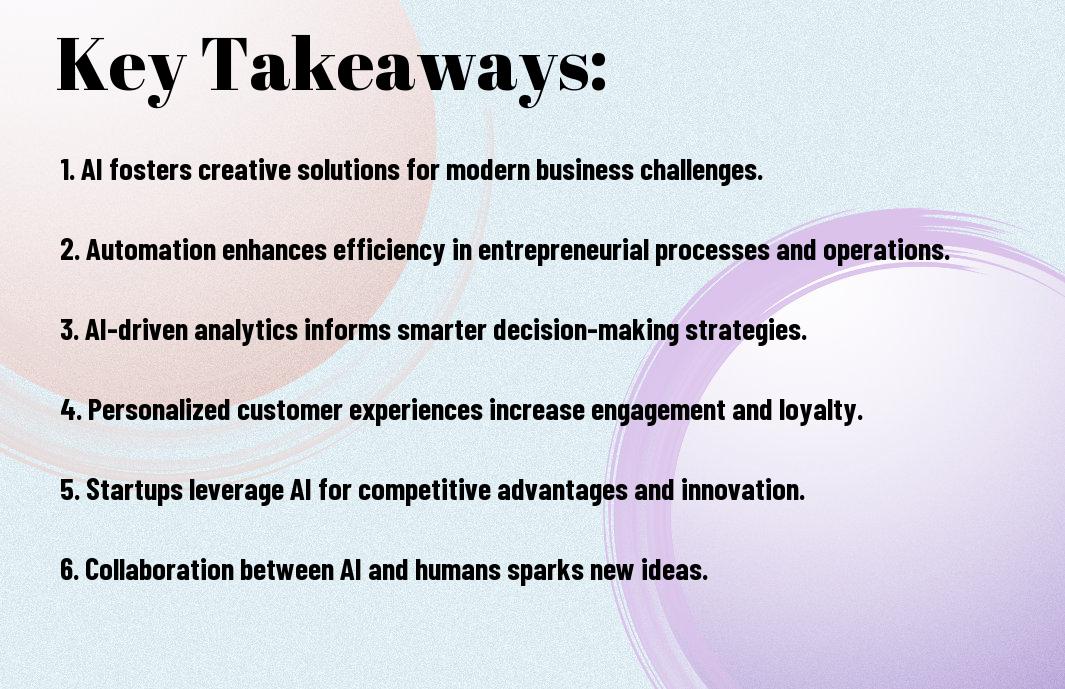
  • AI-driven innovation can significantly accelerate entrepreneurial growth by automating processes, enhancing decision-making, and improving customer experiences, ultimately leading to increased revenue and competitiveness.
  • Entrepreneurs can leverage AI to identify new business opportunities, develop innovative products and services, and create more effective marketing strategies, resulting in sustainable business growth.
  • AI-powered tools and technologies, such as machine learning and natural language processing, can help entrepreneurs streamline operations, reduce costs, and improve efficiency, allowing them to focus on high-value tasks and strategic decision-making.
  • The integration of AI in business models can also enable entrepreneurs to make data-driven decisions, predict market trends, and mitigate risks, giving them a competitive edge in the market.
  • By embracing AI and innovation, entrepreneurs can create new revenue streams, expand into new markets, and build scalable businesses that drive economic growth and job creation, contributing to the overall development of the economy.
    The AI Revolution in Business

    While navigating the ever-changing landscape of entrepreneurship, you’ll notice that artificial intelligence (AI) is transforming the way businesses operate, creating new opportunities for growth and innovation, and you can leverage this technology to stay ahead of the curve.

    Defining Artificial Intelligence for Entrepreneurs

    Prior to exploring the potential of AI, you need to understand what it entails, and as you examine into this technology, you’ll discover that AI refers to the development of computer systems that can perform tasks that typically require human intelligence, such as learning, problem-solving, and decision-making.

    The Technological Watershed Moment

    Delving into the concept of AI, you’ll find that this technological watershed moment has brought about significant advancements in various industries, and as you consider the implications, you’ll see that AI is revolutionizing the way you approach business, enabling you to automate tasks, gain valuable insights, and make data-driven decisions.

    Considering the vast potential of AI, you can harness its power to drive your business forward, and as you explore the various applications of this technology, you’ll discover that AI can help you streamline operations, enhance customer experiences, and uncover new revenue streams, ultimately fueling your entrepreneurial growth and turning innovation into income, and you can start by identifying areas where AI can have the most impact on your business.

    Monetization Pathways

    If you’re looking to turn innovation into income, exploring various monetization pathways is vital. You can learn more about how AI can help startups by visiting How A.I. Can Help Start Small Businesses to discover new opportunities.

    Direct AI Product Development

    Along with the rise of AI, you can develop and sell AI-powered products, creating a new revenue stream for your business, and expanding your customer base.

    AI-Enhanced Service Models

    Models of service delivery are evolving, and you can leverage AI to enhance your services, making them more efficient and attractive to customers.

    Consequently, as you integrate AI into your service models, you’ll be able to offer personalized experiences, automate tasks, and increase customer satisfaction, ultimately driving your business growth and increasing your revenue.

    Market Analysis and Opportunity Identification

    Despite the complexity of market analysis, you can leverage AI to identify opportunities and make informed decisions. By analyzing large datasets, you can gain valuable insights into your target audience and stay ahead of the competition.

    Data-Driven Decision Making

    On the path to entrepreneurial growth, you will encounter numerous decisions that require data-driven insights. You can use AI to analyze your data and make informed decisions that drive your business forward.

    Predictive Market Trends

    Behind every successful business is a deep understanding of market trends. You can use AI-powered tools to analyze market data and predict future trends, giving you a competitive edge.

    Consequently, as you explore deeper into predictive market trends, you will discover that AI can help you identify patterns and anomalies in market data, enabling you to make predictions about future market shifts and adjust your business strategy accordingly, allowing you to stay ahead of the curve and drive your business towards success.

    Building the AI-Powered Startup

    All entrepreneurs know that turning innovation into income requires a solid foundation. You need to understand how AI can fuel your growth and develop a strategy to implement it effectively in your startup.

    Technical Infrastructure Requirements

    Behind every successful AI-powered startup is a robust technical infrastructure. You will need to invest in high-performance computing, data storage, and software that can support your AI systems, enabling you to process and analyze large amounts of data efficiently.

    Talent Acquisition Strategies

    Building a team with the right skills is necessary for your AI-powered startup. You should focus on hiring professionals with expertise in AI, machine learning, and data science to help you develop and implement your AI strategy.

    At this stage, you will need to assess your talent needs and develop a recruitment plan that attracts top talent in the industry. You should consider partnering with universities, research institutions, and other organizations to access a pool of skilled professionals who can help you drive your AI-powered startup forward, and you will need to create a work environment that fosters innovation and collaboration, allowing your team to thrive and make the most of their skills.

    Scaling with Intelligent Automation

    Your business can reach new heights with the power of artificial intelligence, streamlining processes and amplifying growth, allowing you to focus on strategy and innovation.

    Operational Efficiencies

    Beyond manual labor, automating tasks frees up your resources, enabling you to allocate them more effectively and make data-driven decisions to drive your entrepreneurial venture forward.

    Customer Experience Enhancement

    Optimally, you can leverage AI to personalize interactions, offering tailored solutions and support, thereby fostering loyalty and satisfaction among your clientele, which is vital for long-term success.

    Indeed, as you enhance customer experience through AI-driven insights, you gain a deeper understanding of their needs and preferences, allowing you to develop targeted marketing campaigns, improve product development, and ultimately, drive revenue growth and expansion, putting your business at the forefront of the industry.

    Ethical Considerations and Responsible Growth

    Not all AI-driven innovations are created equal, and you must consider the ethical implications of your entrepreneurial endeavors to ensure responsible growth.

    Privacy and Data Protection

    Betwixt the lines of code and data collection, you need to prioritize your users’ privacy and adhere to data protection regulations to maintain trust and avoid potential backlash.

    Algorithmic Transparency

    Any AI system you develop should be transparent in its decision-making processes, allowing you to understand and explain how it arrives at its conclusions, which is vital for building trust with your users.

    Plus, as you explore deeper into algorithmic transparency, you will find that it not only helps you identify biases and errors but also enables you to refine your AI systems, making them more accurate and reliable, which in turn, can lead to increased user satisfaction and loyalty, ultimately driving your entrepreneurial growth.

    Summing up

    With this in mind, you can now harness the power of AI to drive your entrepreneurial growth. You will be able to turn innovation into income by leveraging AI’s capabilities, thereby boosting your business. As you integrate AI into your strategy, you will unlock new opportunities, enhancing your competitiveness and ultimately, your bottom line. Your ability to adapt and innovate with AI will be key to your success, enabling you to stay ahead in today’s fast-paced market.

    FAQ

    Q: What role does Artificial Intelligence (AI) play in turning innovation into income for entrepreneurs?

    A: AI plays a significant role in turning innovation into income for entrepreneurs by automating processes, enhancing decision-making, and providing insights that can lead to the development of new products and services. Through machine learning algorithms, AI can analyze vast amounts of data, identify patterns, and predict market trends, enabling entrepreneurs to make informed decisions and create innovative solutions that meet the needs of their target audience. Additionally, AI-powered tools can help entrepreneurs streamline their operations, reduce costs, and improve efficiency, allowing them to allocate more resources to innovation and growth.

    Q: How can entrepreneurs leverage AI to drive entrepreneurial growth and stay competitive in their respective markets?

    A: Entrepreneurs can leverage AI to drive growth by integrating AI-powered technologies into their business operations, such as chatbots for customer service, predictive analytics for market forecasting, and natural language processing for sentiment analysis. AI can also be used to develop new business models, create personalized customer experiences, and improve supply chain management. Furthermore, entrepreneurs can utilize AI to analyze their competitors, identify market gaps, and develop strategies to stay ahead of the competition. By embracing AI, entrepreneurs can unlock new opportunities, drive innovation, and achieve sustainable growth in their businesses.

    Q: What are the potential challenges and limitations that entrepreneurs may face when using AI to turn innovation into income, and how can they overcome them?

    A: Entrepreneurs may face several challenges when using AI to turn innovation into income, including data quality issues, lack of AI expertise, and the need for significant upfront investment in AI technologies. Additionally, there may be concerns around data privacy, security, and the potential for AI to displace human jobs. To overcome these challenges, entrepreneurs can start by investing in AI education and training, building a team with diverse skill sets, and developing a clear AI strategy that aligns with their business goals. They can also prioritize data quality, ensure transparency and accountability in AI decision-making, and implement measures to mitigate the risks associated with AI adoption. By being aware of these challenges and taking proactive steps to address them, entrepreneurs can harness the power of AI to drive innovation and growth in their businesses.


Entrepreneurship 0 – How AI is Driving the Next Wave of Innovation

As you navigate the ever-evolving landscape of entrepreneurship, you’re likely aware that artificial intelligence (AI) is revolutionizing the way you approach innovation. Your ability to leverage AI will be key to staying ahead of the curve, and this emerging technology is poised to transform your business. You’ll discover how AI is empowering entrepreneurs like you to develop novel solutions, streamline operations, and unlock new opportunities for growth, setting the stage for a new era of entrepreneurial success.

Key Takeaways:

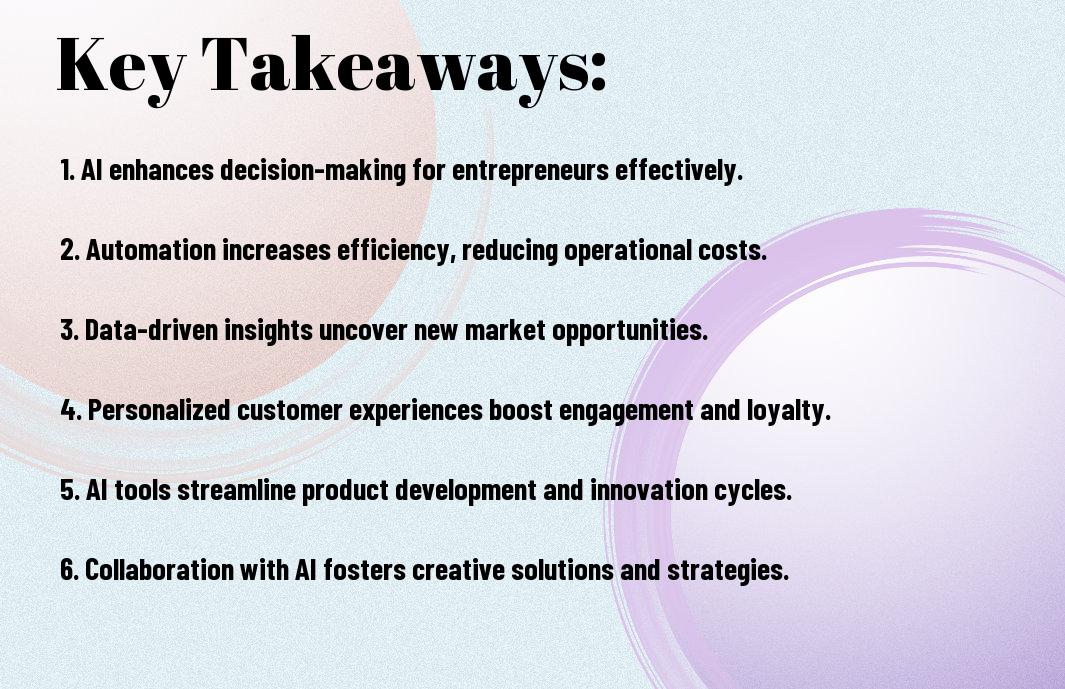
  • AI is transforming the entrepreneurial landscape by enabling businesses to automate tasks, gain insights from large datasets, and make data-driven decisions, leading to increased efficiency and innovation.
  • The integration of AI in entrepreneurship is giving rise to new business models, products, and services that were previously unimaginable, and is expected to drive significant economic growth.
  • Entrepreneurs who leverage AI effectively will have a competitive advantage in the market, as they will be able to respond quickly to changing customer needs and preferences.
  • AI is also democratizing access to entrepreneurship, as it provides tools and resources that can be used by anyone with an internet connection, regardless of their location or background.
  • The future of entrepreneurship will be shaped by the symbiotic relationship between human creativity and AI-driven innovation, leading to the creation of new industries, jobs, and opportunities that we cannot yet anticipate.

    The AI Revolution in Business

    A new era of innovation is unfolding, and you are at the forefront of this transformation, as AI-driven technologies revolutionize the way you approach entrepreneurship, enabling you to make data-driven decisions and stay ahead of the competition.

    Machine Learning as a Competitive Edge

    Acquiring insights from machine learning algorithms, you can develop a unique competitive edge, enabling your business to adapt and evolve in response to changing market conditions, and you can leverage this technology to drive growth and innovation.

    Predictive Analytics and Market Disruption

    Beneath the surface of traditional business models, predictive analytics is creating new opportunities for disruption, and you can harness this power to anticipate market trends, identify untapped opportunities, and make informed decisions that drive your business forward.

    For instance, by leveraging predictive analytics, you can forecast customer behavior, optimize your operations, and develop targeted marketing strategies that resonate with your audience, ultimately giving you a competitive advantage in the market and enabling you to stay ahead of the curve.

    Startup Ecosystems in the Age of AI

    Some of the most significant advancements in AI are happening within startup ecosystems, where you can witness the fusion of innovative ideas and technological expertise, driving the next wave of innovation and transforming your understanding of what is possible.

    Funding Landscapes for AI Ventures

    Landscape of investment opportunities for AI startups is evolving rapidly, offering you a wide range of options to secure funding, from venture capital to crowdfunding, and enabling you to turn your AI-powered ideas into successful businesses.

    Silicon Valley to Global Innovation Hubs

    Above the traditional hubs like Silicon Valley, you now have access to a global network of innovation centers, where you can collaborate, share knowledge, and leverage resources to develop your AI-driven projects and take them to the next level.

    Hence, as you explore the shift from Silicon Valley to global innovation hubs, you’ll discover that these emerging ecosystems offer a unique blend of talent, infrastructure, and investment opportunities, allowing you to tap into local expertise and connect with a broader community of innovators, ultimately enhancing your chances of success in the AI-driven landscape.

    The Entrepreneur’s AI Toolkit

    Once again, you’re looking to leverage AI to drive innovation in your business, and there are many resources available to help you get started, such as learning How AI Can Drive Innovation in Your Industry | HBS Online to explore the possibilities.

    Essential Technologies for Modern Founders

    Entrepreneurs like you need to stay up-to-date with the latest technologies to remain competitive, and AI is no exception, as it can help you streamline processes and make data-driven decisions to grow your business.

    Low-Code Solutions and Democratized Development

    Across various industries, you’re seeing a shift towards low-code solutions, which enable you to develop and deploy applications without extensive coding knowledge, making it easier for you to get started with AI.

    With low-code solutions, you can quickly build and test AI-powered prototypes, reducing the time and cost associated with traditional development methods, and allowing you to focus on refining your business model and strategy to drive growth and innovation.

    Ethical Considerations for AI Entrepreneurs

    Unlike other technologies, AI raises unique ethical concerns that you must address as an entrepreneur. You need to consider the potential impact of your AI-powered products on society and ensure that they align with your values and principles.

    Privacy Concerns and Data Governance

    Among the key issues you will face is protecting user data and ensuring that your AI systems comply with relevant regulations. You must implement robust data governance policies to safeguard sensitive information and maintain transparency in your data collection and usage practices.

    Building Responsible AI Systems

    Ethically, you have a responsibility to design AI systems that are fair, transparent, and accountable. You should prioritize building systems that can explain their decisions and actions, and that are aligned with human values and principles.

    This involves considering the potential biases and risks associated with your AI systems and taking steps to mitigate them. You can achieve this by implementing robust testing and validation protocols, as well as establishing clear guidelines and standards for the development and deployment of your AI-powered products. As you build your AI systems, you should prioritize transparency, explainability, and accountability to ensure that your products are trustworthy and beneficial to society.

    AI-Powered Business Models

    Keep in mind that AI is revolutionizing the way you approach business, enabling you to create innovative models that drive growth and profitability. You can leverage AI to develop unique value propositions, streamline operations, and enhance customer experiences.

    Subscription and SaaS Transformations

    Subscribing to AI-powered services allows you to access cutting-edge technologies, reducing upfront costs and increasing flexibility. You can scale your business more efficiently, focusing on core competencies while leaving non-core functions to specialized providers.

    Platform Economics and Network Effects

    Before exploring into platform economics, you should understand how AI-driven networks can create self-reinforcing cycles of growth. You can design platforms that attract users, generate data, and improve AI models, ultimately driving more value for your business.

    Consequently, as you explore platform economics and network effects, you’ll discover how AI can help you build robust, scalable businesses that thrive on user engagement and data exchange. You can create virtuous cycles where AI improves your platform, attracting more users, who in turn generate more data, further enhancing your AI capabilities.

    Navigating Regulatory Challenges

    Your ability to navigate regulatory challenges will be vital as you initiate on your entrepreneurial journey in the AI-driven landscape. You must stay informed about the latest developments and adapt your business strategies accordingly.

    Global AI Governance Frameworks

    Around the globe, governments and organizations are establishing frameworks to regulate AI. About these frameworks, it’s vital to understand their implications on your business and how you can leverage them to your advantage.

    Compliance Strategies for Startups

    Strategically, you will need to develop a comprehensive approach to ensure compliance with existing and emerging regulations. You should prioritize transparency, accountability, and ethics in your AI development and deployment.

    Regulatory compliance is an ongoing process that requires your attention and effort. You will need to stay up-to-date with the latest regulations and adjust your strategies to ensure you are meeting the necessary standards, thereby avoiding potential risks and reputational damage to your startup.

    Conclusion

    Upon reflecting on the impact of AI on entrepreneurship, you can see how it’s driving the next wave of innovation. You now have the tools to harness AI’s power, transforming your business and creating new opportunities. Your ability to adapt and innovate will be key to staying ahead in this rapidly changing landscape, and with AI by your side, you’ll be well-equipped to shape the future of entrepreneurship.

    FAQ

    Q: What role is AI playing in driving the next wave of innovation in entrepreneurship?

    A: AI is revolutionizing the entrepreneurial landscape by providing unprecedented opportunities for innovation. Through machine learning algorithms and data analytics, AI is enabling entrepreneurs to identify new business opportunities, automate processes, and make data-driven decisions. This is leading to the development of new products, services, and business models that are transforming industries and creating new markets. With AI, entrepreneurs can now analyze vast amounts of data, identify patterns, and make predictions, allowing them to stay ahead of the competition and drive growth.

    Q: How are entrepreneurs leveraging AI to create new business opportunities and stay competitive?

    A: Entrepreneurs are leveraging AI in various ways to create new business opportunities and stay competitive. For instance, they are using AI-powered chatbots to enhance customer service, AI-driven marketing tools to personalize customer experiences, and AI-based predictive analytics to forecast market trends. Additionally, AI is enabling entrepreneurs to develop new products and services, such as virtual assistants, smart home devices, and personalized healthcare solutions. By embracing AI, entrepreneurs can streamline operations, improve efficiency, and create new revenue streams, ultimately driving business growth and success.

    Q: What skills and knowledge do entrepreneurs need to acquire to effectively harness the power of AI in their businesses?

    A: To effectively harness the power of AI, entrepreneurs need to acquire a range of skills and knowledge. These include understanding the fundamentals of AI and machine learning, data analysis and interpretation, and programming skills such as Python and R. Entrepreneurs also need to stay up-to-date with the latest AI trends and technologies, such as natural language processing, computer vision, and deep learning. Furthermore, they need to develop a strategic mindset to identify opportunities for AI adoption and integrate AI into their business models. By acquiring these skills and knowledge, entrepreneurs can unlock the full potential of AI and drive innovation and growth in their businesses.
The Future of Innovation – AI Trends Every Entrepreneur Should Watch

As you navigate the ever-changing landscape of business, you’re likely aware that artificial intelligence (AI) is revolutionizing industries. Your ability to adapt to these advancements will be key to staying ahead. You’ll need to understand the latest AI trends to drive your innovation forward. By exploring the current state of AI, you’ll be better equipped to make informed decisions about your business’s future, leveraging the power of AI to propel your success.

Key Takeaways:

  • Artificial intelligence (AI) is transforming the innovation landscape, and entrepreneurs should be aware of the latest trends to stay ahead of the curve, including the increasing use of machine learning and natural language processing.
  • AI-powered automation is expected to revolutionize industries such as healthcare, finance, and transportation, creating new opportunities for entrepreneurs to develop innovative solutions and business models.
  • The rise of explainable AI (XAI) is becoming more prominent, enabling entrepreneurs to build trust and transparency into their AI systems, which is imperative for widespread adoption and regulatory compliance.
  • Entrepreneurs should focus on developing AI solutions that augment human capabilities, rather than replacing them, to create more efficient and effective workflows, and to improve customer experiences.
  • The future of innovation will be shaped by the convergence of AI with other emerging technologies, such as blockchain, Internet of Things (IoT), and quantum computing, creating new possibilities for entrepreneurs to develop groundbreaking products and services.

The Evolution of Machine Learning

Your understanding of machine learning is likely rooted in its early applications, but the field has undergone significant transformations, paving the way for more advanced AI trends.

Supervised to Unsupervised Learning

Beneath the surface of traditional machine learning lies a shift from supervised to unsupervised learning, enabling your models to discover patterns and make decisions without labeled data.

Democratization of AI Tools

Against the backdrop of increasing complexity, AI tools are becoming more accessible, allowing you to develop and implement machine learning models without extensive expertise.

Indeed, the democratization of AI tools has opened up new opportunities for you to leverage machine learning in your business, from automating routine tasks to driving innovation and growth, and you can expect to see more user-friendly platforms and interfaces emerge in the future, making it easier for you to get started with AI.

Natural Language Processing Revolution

Any entrepreneur looking to stay ahead of the curve should be aware of the rapid advancements in natural language processing (NLP). You will see significant improvements in how machines understand and generate human-like language, enabling more efficient interactions between humans and computers.

Conversational AI for Business

Among the various applications of NLP, conversational AI is particularly relevant to your business, as it allows for more natural and intuitive interactions with customers, enhancing their overall experience and improving your customer service.

Content Creation and Analysis

About to revolutionize the way you approach content, NLP-powered tools will enable you to generate high-quality content, such as articles and social media posts, and analyze large amounts of data to gain valuable insights into your audience’s preferences and behaviors.

The ability to analyze and generate content using NLP will have a significant impact on your business, as you will be able to automate tasks such as content creation, sentiment analysis, and language translation, freeing up more time for you to focus on strategic decision-making and driving growth, and enabling you to make data-driven decisions to optimize your content strategy and improve your overall marketing efforts.

Computer Vision Breakthroughs

To stay ahead in the innovation curve, you need to keep an eye on computer vision breakthroughs, which are transforming industries and revolutionizing the way you interact with technology.

Visual Recognition in Industry

Across various sectors, you will find visual recognition being used to improve efficiency and accuracy, enabling you to make better decisions and drive your business forward.

Augmented Reality Applications

Along with advancements in computer vision, you can expect to see more augmented reality applications that will change the way you experience and interact with your surroundings.

Another significant aspect of augmented reality applications is their potential to enhance your customer experience, allowing you to provide immersive and engaging experiences that set your business apart from the competition, and as you explore these applications, you will discover new ways to leverage them to drive growth and innovation in your industry.

AI Ethics and Governance

Keep in mind that as you explore AI trends, you should also consider the ethical implications, and for more insights, you can check out What Every Entrepreneur Should Prepare for in 2025 to stay ahead.

Regulatory Landscapes

Along with the growth of AI, you will need to navigate the evolving regulatory landscapes that impact your business, ensuring your AI systems comply with new laws and standards.

Building Responsible AI Systems

Between the lines of code and data, you must consider the human impact, designing AI systems that prioritize transparency, fairness, and accountability, reflecting your values and mission.

Ethics play a significant role in building responsible AI systems, and as you develop your AI strategy, you should prioritize fairness, transparency, and accountability, considering the potential consequences of your AI systems on your customers, employees, and the broader community, and by doing so, you can ensure that your AI systems align with your values and mission, ultimately enhancing your reputation and building trust with your stakeholders.

AI-Human Collaboration Models

Many entrepreneurs are now exploring AI-human collaboration models to drive innovation in their businesses. You can leverage these models to enhance your decision-making processes and improve overall efficiency.

Augmented Decision Making

Alongside human intuition, AI can provide valuable insights, enabling you to make more informed decisions. You will be able to analyze complex data and identify patterns that may have gone unnoticed otherwise.

Workflow Automation Strategies

Any effective workflow automation strategy should prioritize tasks that are repetitive or time-consuming, allowing you to focus on higher-value tasks. You can use AI to streamline your workflows and increase productivity.

Due to the advancements in AI technology, you can now automate various aspects of your business, from data entry to customer service. You will be able to allocate your resources more efficiently and achieve your goals faster, making your business more competitive in the market.

Investment Trends in AI

Not surprisingly, investment in AI is on the rise, and you should be aware of the latest trends to stay ahead. You’ll notice a significant increase in funding for AI startups, and you can expect this trend to continue in the coming years.

Venture Capital Priorities

Following the surge in AI adoption, you’ll find that venture capital firms are prioritizing investments in AI-powered startups, and you should consider this when planning your own investments.

Corporate AI Integration Costs

Above the initial investment, you’ll need to consider the costs of integrating AI into your existing infrastructure, and you should factor this into your budget to avoid unexpected expenses.

With the cost of corporate AI integration in mind, you’ll want to carefully plan your implementation strategy to maximize your return on investment, and you should consider seeking guidance from AI experts to ensure a smooth transition and minimize costs, as you navigate the complex process of integrating AI into your business.

Final Words

Hence, as you begin on your entrepreneurial journey, you will witness the AI landscape evolving rapidly. You should stay informed about the latest AI trends to leverage their potential and drive your business forward. By doing so, you will be able to harness the power of AI and shape your company’s future, ultimately giving you a competitive edge in the market and enabling you to make informed decisions about your business’s innovation strategy.

FAQ

Q: What are the most significant AI trends that entrepreneurs should watch in the future of innovation?

A: The most significant AI trends that entrepreneurs should watch include the integration of Artificial General Intelligence (AGI), the rise of Explainable AI (XAI), and the increasing use of AI in cybersecurity. AGI has the potential to revolutionize industries by enabling machines to learn and apply knowledge across a wide range of tasks. XAI, on the other hand, focuses on making AI decision-making processes more transparent and understandable. Meanwhile, AI-powered cybersecurity solutions are becoming important for protecting businesses from sophisticated threats. By keeping an eye on these trends, entrepreneurs can stay ahead of the curve and leverage AI to drive innovation and growth.

Q: How can entrepreneurs apply AI trends to their businesses to drive innovation and stay competitive?

A: Entrepreneurs can apply AI trends to their businesses by identifying areas where AI can automate processes, enhance customer experiences, and improve decision-making. For instance, they can use machine learning algorithms to analyze customer data and develop personalized marketing strategies. They can also leverage natural language processing (NLP) to build chatbots and virtual assistants that provide 24/7 customer support. Additionally, entrepreneurs can use AI-powered predictive analytics to forecast market trends and make data-driven decisions. By embracing AI, entrepreneurs can streamline operations, reduce costs, and create new revenue streams, ultimately driving innovation and staying competitive in their respective markets.

Q: What are the potential challenges and limitations that entrepreneurs may face when adopting AI trends in their businesses?

A: Entrepreneurs may face several challenges and limitations when adopting AI trends, including the need for significant investments in infrastructure and talent, the risk of job displacement, and the potential for AI bias and errors. Moreover, ensuring the transparency and accountability of AI decision-making processes can be a challenge. To overcome these challenges, entrepreneurs should prioritize AI education and training, develop strategies for upskilling and reskilling their workforce, and implement robust testing and validation protocols to ensure AI systems are fair, reliable, and secure. By being aware of these challenges and taking proactive steps to address them, entrepreneurs can successfully navigate the adoption of AI trends and unlock their full potential for driving innovation and growth.

Innovative Revenue Models – How AI is Changing the Way Entrepreneurs Earn

As you navigate the ever-evolving landscape of entrepreneurship, you’re likely aware that traditional revenue models are becoming increasingly outdated. Your business needs to adapt to stay ahead, and that’s where Artificial Intelligence (AI) comes in. You can leverage AI to unlock new revenue streams and transform your earning potential. By embracing innovative revenue models powered by AI, you can revolutionize your approach to generating income and stay competitive in today’s fast-paced market.

Key Takeaways:

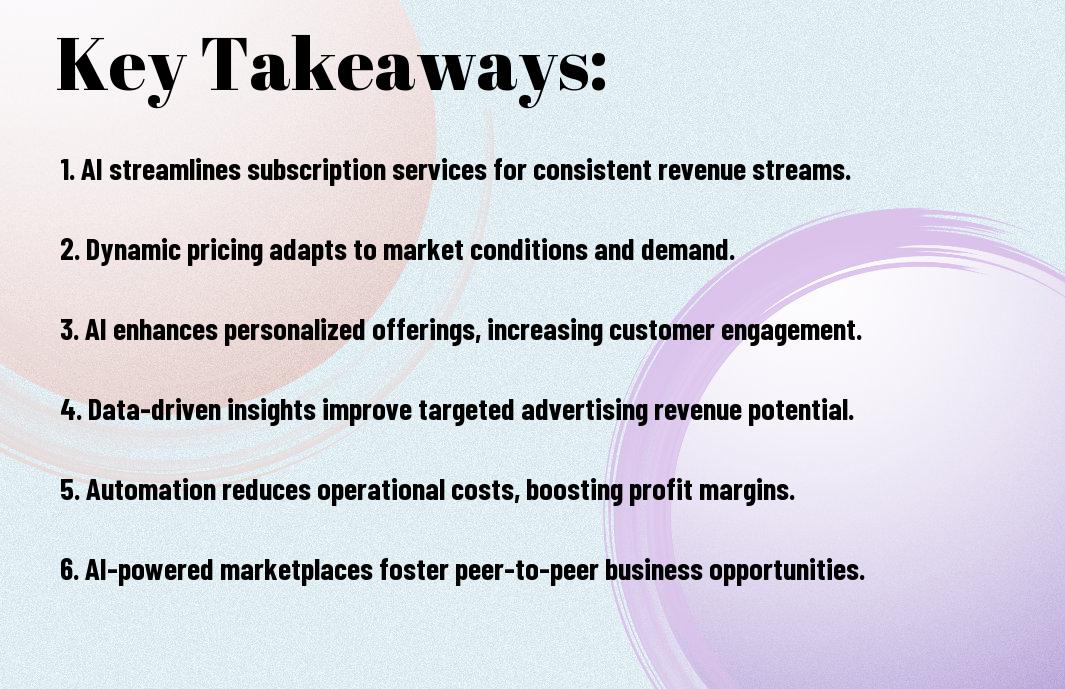
  • AI-driven revenue models are transforming the entrepreneurial landscape by enabling businesses to monetize their data, creating new income streams and increasing profitability.
  • Entrepreneurs can leverage AI to develop subscription-based services, offering personalized experiences and tailored solutions to customers, leading to recurring revenue and customer loyalty.
  • AI-powered marketplaces and platforms are emerging, connecting buyers and sellers in innovative ways, and providing new opportunities for entrepreneurs to earn revenue through commission-based models.
  • The use of AI in revenue modeling allows for predictive analytics and real-time insights, enabling entrepreneurs to make data-driven decisions and optimize their pricing strategies for maximum revenue potential.
  • As AI continues to evolve, entrepreneurs must adapt and innovate their revenue models to stay competitive, exploring new avenues such as AI-generated content, virtual products, and experiential services to drive growth and revenue.

    The Subscription Revolution

    While embracing AI, you can explore innovative revenue models, such as subscription-based services, to earn recurring revenue and foster customer loyalty, allowing you to focus on delivering value to your subscribers.

    AI-Powered Personalization

    Alongside this, you can leverage AI to offer personalized experiences, tailoring your services to meet individual needs, thereby increasing user engagement and retention, which can lead to increased revenue for your business.

    Dynamic Pricing Models

    Among the various applications of AI in revenue models, dynamic pricing stands out, enabling you to adjust prices in real-time based on demand, supply, and other factors, allowing you to maximize your earnings and stay competitive in the market.

    Hence, as you probe deeper into dynamic pricing models, you’ll discover that AI helps you analyze vast amounts of data, including customer behavior, market trends, and seasonal fluctuations, to determine optimal prices for your products or services, ensuring you earn the highest possible revenue while maintaining customer satisfaction, and enabling you to make data-driven decisions to drive your business forward.

    Data as Currency

    One of the most significant ways AI is changing revenue models is by turning data into a valuable asset. You can leverage your data to create new revenue streams, and AI helps you make the most of it.

    Monetizing User Insights

    Any entrepreneur can benefit from understanding their users’ behavior, and AI-driven analytics tools help you gain valuable insights. You can use these insights to create targeted marketing campaigns, improving your overall revenue.

    Predictive Analytics for Revenue

    Analytically-minded entrepreneurs use AI-powered predictive analytics to forecast revenue and make informed decisions. You can optimize your pricing, inventory, and resource allocation to maximize your earnings.

    With predictive analytics, you can identify trends and patterns in your data, allowing you to anticipate and prepare for changes in the market. You can use this information to adjust your strategy, minimizing risks and maximizing opportunities for growth, and ultimately increasing your revenue and competitiveness in the market.

    Automation of Service Delivery

    All entrepreneurs know that automation is key to efficient service delivery. You can now use AI to automate tasks, freeing up time for more strategic activities. This enables you to focus on growing your business and increasing revenue.

    Chatbots and Customer Engagement

    Behind the scenes, chatbots are revolutionizing customer engagement. You can use them to provide 24/7 support, helping you to build stronger relationships with your customers and ultimately drive sales.

    Scaling Without Proportional Costs

    AFTER you’ve automated your service delivery, you can scale your business without incurring proportional costs. You can handle increased demand without having to hire more staff, making your business more profitable.

    Further, as you scale, you’ll find that your AI systems can handle increased complexity with ease. You can use data analytics to optimize your operations, identify new opportunities, and make informed decisions to drive your business forward. This enables you to stay ahead of the competition and achieve your revenue goals.

    AI-Enhanced Product Creation

    Unlike traditional methods, AI-enhanced product creation enables you to develop innovative products quickly and efficiently. You can learn more about How Is AI Revolutionizing the Way Businesses Innovate? and discover new opportunities for your business.

    Generative Design Economics

    Among the benefits of AI-enhanced product creation is the ability to generate multiple design options, allowing you to choose the best one for your business, and with the help of AI, you can optimize your product design for better performance and cost-effectiveness.

    Rapid Prototyping and Market Testing

    About the speed of product development, AI enables you to quickly create and test prototypes, reducing the time and cost associated with traditional methods, and you can validate your product ideas with your target audience.

    Creation of a minimum viable product (MVP) is now faster and more efficient with AI, you can test your product with a small group of users, gather feedback, and make data-driven decisions to improve your product, ultimately leading to a successful product launch and increased revenue for your business.

    Platform Economics in the AI Era

    Your business can thrive in the AI era by leveraging platform economics, which enables you to create and capture value in new ways, disrupting traditional revenue models and opening up fresh opportunities for growth and innovation.

    Network Effects Amplification

    By harnessing the power of AI, you can amplify network effects, creating a self-reinforcing cycle of value that attracts more users, generates more data, and improves your platform’s overall performance, allowing you to stay ahead of the competition.

    Marketplace Optimization

    On the platform, AI-driven optimization enables you to streamline processes, reduce costs, and enhance user experience, making your marketplace more efficient and attractive to participants, which in turn drives your revenue and profitability.

    Effects of AI on marketplace optimization are far-reaching, allowing you to analyze user behavior, predict demand, and personalize offerings, resulting in increased customer satisfaction and loyalty, which ultimately contributes to your long-term success and competitive advantage in the market.

    Micropayment Ecosystems

    For entrepreneurs, micropayment ecosystems are revolutionizing the way you earn revenue, enabling you to capitalize on small, frequent transactions that add up to significant profits. This innovative model allows you to monetize your digital content, services, or products in a more flexible and consumer-friendly way.

    Granular Value Capture

    Ecosystems like these enable you to capture value at a granular level, allowing you to charge for specific features, functions, or pieces of content, giving you more control over your pricing strategy and enabling you to target your customers more effectively.

    Consumption-Based Revenue

    Valuing each interaction, you can generate revenue based on actual consumption, rather than relying on traditional subscription or one-time payment models, giving you a more accurate picture of your customers’ needs and preferences.

    Understanding consumption-based revenue models, you can optimize your pricing and packaging to maximize your earnings, as you gain insights into how your customers interact with your products or services, and adjust your strategy accordingly to meet their evolving needs and preferences, ultimately driving your business growth and success.

    Summing up

    Conclusively, you now understand how AI is transforming your revenue streams. You can leverage AI-driven models to diversify your earnings, making your business more resilient. By embracing these innovations, you will unlock new opportunities, increasing your potential for growth and profitability. Your ability to adapt will be key to staying ahead in this evolving landscape, enabling you to capitalize on the vast possibilities that AI presents.

    FAQ

    Q: What are innovative revenue models and how is AI impacting them?

    A: Innovative revenue models refer to new and creative ways in which entrepreneurs can earn money from their products or services. AI is changing the way entrepreneurs earn by introducing data-driven approaches to pricing, personalized customer experiences, and automated sales processes. With AI, businesses can analyze large amounts of data to identify new revenue streams, optimize their pricing strategies, and create tailored experiences for their customers, leading to increased revenue and competitiveness.

    Q: How can AI-powered revenue models help entrepreneurs to increase their earnings?

    A: AI-powered revenue models can help entrepreneurs to increase their earnings in several ways. For instance, AI-driven predictive analytics can help businesses to forecast demand and adjust their pricing accordingly, maximizing revenue. Additionally, AI-powered chatbots and virtual assistants can enhance customer engagement, leading to increased sales and customer loyalty. Furthermore, AI-driven affiliate marketing and influencer marketing platforms can help entrepreneurs to reach their target audience more effectively, resulting in higher conversion rates and revenue.

    Q: What are some examples of AI-driven innovative revenue models that entrepreneurs can adopt?

    A: There are several examples of AI-driven innovative revenue models that entrepreneurs can adopt. One example is subscription-based services, where AI is used to personalize content and offers to customers, increasing the likelihood of subscription renewal. Another example is pay-per-use models, where AI is used to track usage and charge customers accordingly. Additionally, AI-driven marketplaces and platforms can connect buyers and sellers, earning revenue through transaction fees. Other examples include AI-powered advertising and sponsorship models, where AI is used to match advertisers with their target audience, increasing the effectiveness of ads and revenue for entrepreneurs.

Disruptive Innovation – AI as a Catalyst for Entrepreneurial Transformation

As you navigate the ever-changing landscape of entrepreneurship, you’re likely aware that staying ahead of the curve is key to success. You’re constantly looking for ways to innovate and transform your business, and artificial intelligence (AI) is poised to be a major catalyst for this change. You may be wondering how AI can disrupt traditional industries and create new opportunities for growth, and this post will explore the ways in which AI can revolutionize your entrepreneurial endeavors, helping you stay competitive in a rapidly evolving market.

Key Takeaways:

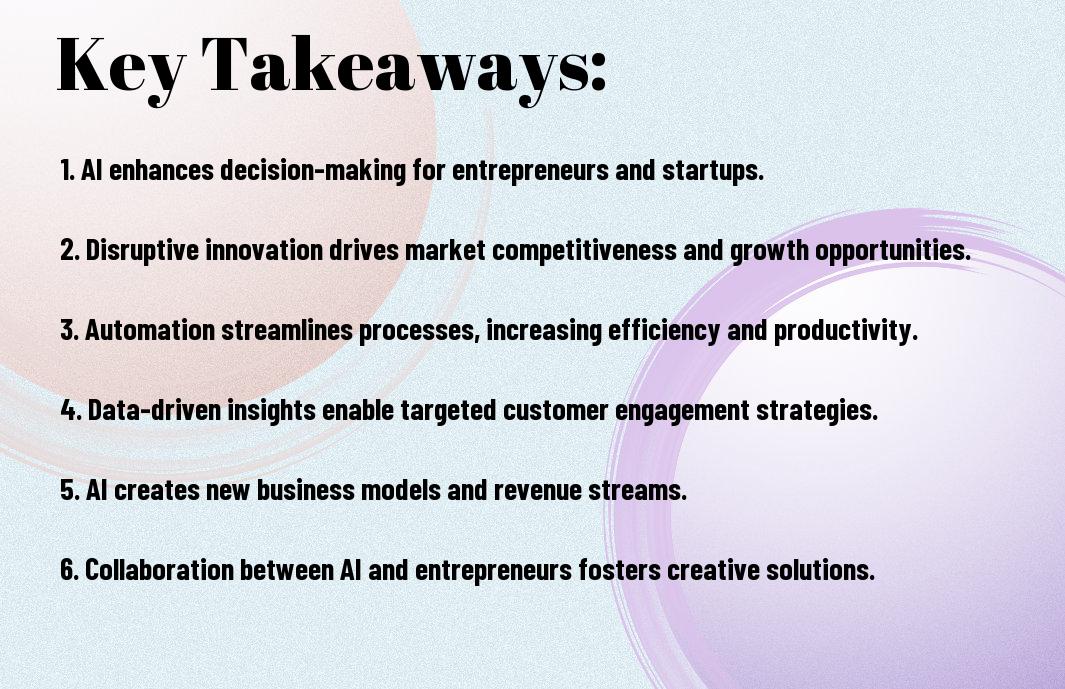
  • AI-driven disruptive innovation has the potential to transform traditional industries and create new markets, enabling entrepreneurs to develop novel business models and gain a competitive edge.
  • The integration of AI in entrepreneurial ventures can significantly enhance operational efficiency, reduce costs, and improve decision-making processes, leading to increased productivity and profitability.
  • AI-powered technologies, such as machine learning and natural language processing, can facilitate the development of innovative products and services that cater to evolving customer needs and preferences.
  • Entrepreneurs who leverage AI as a catalyst for transformation must prioritize strategic planning, talent acquisition, and continuous learning to stay ahead of the curve and adapt to the rapidly changing business landscape.
  • The successful adoption of AI-driven innovation requires a culture of experimentation, collaboration, and risk-taking, allowing entrepreneurs to navigate uncertainty and unlock new opportunities for growth and success.

    The Evolution of AI in Business

    To understand the impact of AI on entrepreneurship, you need to consider how it has transformed the business landscape. You will see that AI has come a long way, and its applications are becoming increasingly prevalent in various industries.

    Historical Context

    About a decade ago, AI was still in its infancy, and you might have thought of it as a futuristic concept. You were just beginning to explore its potential, and it was not yet integrated into your daily business operations.

    Present Landscape

    The current state of AI in business is characterized by rapid growth and adoption, and you are now witnessing its widespread implementation. You can see AI-powered tools and technologies being used in your industry, and it’s changing the way you approach your business.

    Even as you navigate this new landscape, you are likely to encounter more advanced AI applications that will continue to disrupt traditional business models. You will need to adapt and evolve your strategies to stay competitive, and leveraging AI will be vital to your success. You can expect AI to play an increasingly important role in your decision-making processes, and it will likely become a key driver of innovation in your organization.

    Fundamental Disruption Mechanisms

    Now that you’re exploring the concept of disruptive innovation, you’ll discover that AI plays a significant role in transforming your business. It enables you to rethink your approach and create new opportunities, allowing your company to stay ahead of the competition.

    Value Chain Reconfiguration

    To effectively leverage AI, you need to consider how it can reconfigure your value chain, enabling you to streamline processes and improve efficiency, ultimately enhancing your overall business performance and allowing you to better serve your customers.

    Market Creation Dynamics

    Behind the success of many innovative companies lies their ability to create new markets, and you can do the same by harnessing the power of AI to identify and capitalize on untapped opportunities, driving growth and expansion in your industry.

    At the heart of market creation dynamics is your ability to use AI to analyze market trends, identify gaps, and develop innovative solutions that meet the evolving needs of your customers, enabling you to stay ahead of the curve and establish your company as a leader in your industry, allowing you to drive growth and increase your market share.

    AI-Driven Entrepreneurial Opportunities

    Many entrepreneurs are leveraging AI to create innovative businesses, and you can too. You can use AI to automate tasks, gain insights, and make data-driven decisions, giving you a competitive edge in the market.

    Low-hanging Fruit

    On the path to entrepreneurial transformation, you’ll find opportunities that are easily accessible and profitable. You can start by identifying areas where AI can improve existing processes, making your business more efficient and cost-effective.

    Blue Ocean Territories

    Any entrepreneur looking to make a significant impact can explore uncharted territories with AI. You can create new markets, products, or services that didn’t exist before, giving you a unique advantage.

    Plus, as you venture into blue ocean territories, you’ll have the opportunity to create new demand and establish yourself as a pioneer in your industry. You can use AI to identify gaps in the market, develop innovative solutions, and disrupt traditional business models, allowing you to stay ahead of the competition and achieve long-term success.

    Implementation Challenges

    Keep in mind that integrating AI into your business is not without its challenges, and you will need to navigate these obstacles to achieve successful implementation.

    Technical Barriers

    After overcoming initial hurdles, you will encounter technical barriers, such as data quality issues and system integration, which can hinder your AI adoption and you must address these challenges proactively.

    Organizational Resistance

    The biggest challenge you may face is organizational resistance, as your employees may be hesitant to adopt new technologies and processes, and you need to develop strategies to mitigate this resistance.

    Resistance to change is natural, and you should expect it when introducing AI-powered innovations in your organization, so you must develop a clear communication plan to educate your employees about the benefits of AI and involve them in the implementation process to ensure a smoother transition.

    Competitive Advantage Framework

    For entrepreneurs, understanding the competitive advantage framework is important to leverage AI for transformative growth, as you navigate the complexities of innovation and disruption in your industry.

    First-mover Positioning

    Adeptly, you can seize the first-mover advantage by embracing AI-powered solutions, allowing you to establish a strong market presence and set the stage for your competitors to follow.

    Sustainable Differentiation

    Against the backdrop of intense competition, you can create sustainable differentiation by harnessing AI to develop unique products, services, or business models that set you apart from your rivals and capture your target market’s attention.

    The key to sustainable differentiation lies in your ability to continuously innovate and improve your AI-driven offerings, ensuring that you stay ahead of the curve and maintain a competitive edge in the market, as you adapt to changing customer needs and preferences, and capitalize on new opportunities for growth and expansion.

    Ethical Considerations

    Not all AI innovations are created equal, and as you consider implementing AI in your business, you must think about the potential consequences of your actions.

    Societal Impact

    Any significant shift in technology can have far-reaching effects on society, and as you develop your AI strategy, you should consider how your actions may impact the world around you.

    Responsible Innovation Practices

    To ensure that your AI innovations are both effective and ethical, you should prioritize responsible innovation practices, such as transparency and accountability, in your development process.

    Understanding the complexities of AI and its potential impact on your business and society is key to developing responsible innovation practices. As you move forward with your AI strategy, you will need to consider factors such as data privacy, bias, and job displacement, and develop strategies to mitigate any negative consequences, ensuring that your use of AI is both beneficial and ethical, and aligns with your values and goals.

    Conclusion

    Ultimately, you now understand how AI drives entrepreneurial transformation through disruptive innovation. You see that your business can leverage AI to create new markets, products, and services. As you move forward, your ability to adapt and innovate with AI will be key to staying ahead in a rapidly changing landscape, enabling you to unlock new opportunities and drive growth in your organization.

    FAQ

    Q: What is Disruptive Innovation and how does AI contribute to it?

    A: Disruptive innovation refers to the process of introducing new products, services, or business models that significantly alter the market landscape, often rendering existing ones obsolete. AI acts as a catalyst for this transformation by providing entrepreneurs with the tools to analyze vast amounts of data, automate processes, and create personalized experiences. This enables them to develop innovative solutions that disrupt traditional industries and create new markets, thereby driving entrepreneurial transformation.

    Q: How can entrepreneurs leverage AI to drive Disruptive Innovation in their businesses?

    A: Entrepreneurs can leverage AI in several ways to drive disruptive innovation. Firstly, they can use machine learning algorithms to analyze customer data and preferences, allowing them to develop tailored products and services that meet specific needs. Secondly, AI-powered automation can help streamline business operations, reducing costs and increasing efficiency. Lastly, AI-driven technologies like natural language processing and computer vision can enable the development of innovative products and services that were previously unimaginable, such as chatbots and virtual assistants, thereby driving entrepreneurial transformation.

    Q: What are the potential risks and challenges associated with using AI as a catalyst for Disruptive Innovation, and how can entrepreneurs mitigate them?

    A: While AI can be a powerful catalyst for disruptive innovation, it also poses several risks and challenges, including job displacement, data privacy concerns, and the potential for biased decision-making. To mitigate these risks, entrepreneurs should prioritize transparency and accountability in their AI systems, invest in employee retraining and upskilling, and ensure that their AI systems are designed with ethics and fairness in mind. Additionally, entrepreneurs should stay up-to-date with the latest AI regulations and guidelines to avoid potential legal and reputational risks, thereby ensuring that their use of AI drives sustainable and responsible entrepreneurial transformation.

Bonza training Skip to content