Innovation

Building a Culture of Innovation – Integrating AI into Your Business DNA

As you navigate the ever-evolving business landscape, you’re likely aware of the transformative power of artificial intelligence (AI). You understand that embracing AI is no longer a choice, but a necessity to stay competitive. By integrating AI into your business, you can unlock new opportunities, drive growth, and foster a culture of innovation that sets you apart from the rest. You will learn how to harness the potential of AI to revolutionize your operations and stay ahead of the curve.

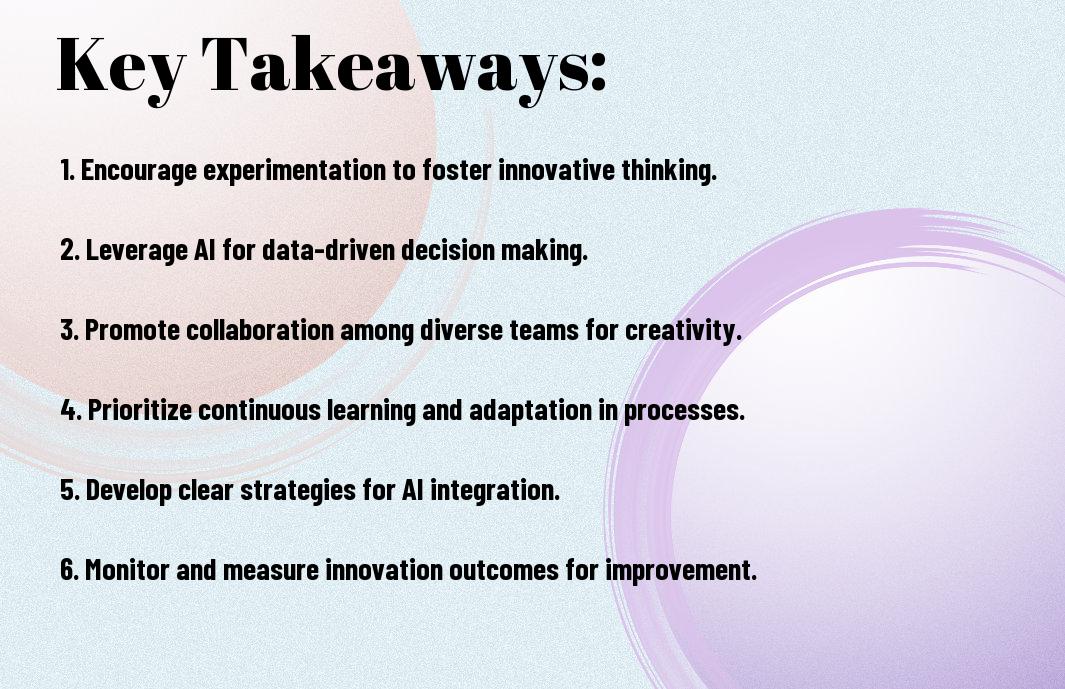
Key Takeaways:

  • Embracing a culture of innovation is necessary for businesses to stay competitive in today’s fast-paced digital landscape, and integrating AI into core operations can be a key driver of this culture.
  • AI adoption requires a strategic approach, starting with identifying areas where AI can add significant value, such as process automation, data analysis, and customer experience enhancement.
  • Effective integration of AI into business DNA involves developing a workforce with the necessary skills to work alongside AI systems, including data science, machine learning, and critical thinking.
  • Leadership plays a significant role in fostering a culture of innovation, by encouraging experimentation, learning from failures, and promoting a mindset that is open to new ideas and technologies.
  • Continuous monitoring and evaluation of AI initiatives is necessary to ensure they align with business objectives and to identify areas for improvement, allowing for adaptive strategies that maximize the benefits of AI integration.
    The Current AI Landscape

    Your business operates in a world where artificial intelligence (AI) is increasingly prevalent, transforming industries and revolutionizing the way you work. AI is no longer a novelty, but a necessity for staying competitive.

    Technological Disruption

    Any organization looking to innovate must consider the impact of AI on their operations, as it can significantly disrupt traditional business models and create new opportunities for growth and development, allowing you to streamline processes and improve efficiency.

    Market Transformation

    For your business to thrive, you need to understand the market transformation driven by AI, which is changing the way you interact with customers, develop products, and deliver services, enabling you to make data-driven decisions and stay ahead of the competition.

    But as you explore deeper into the market transformation aspect, you will find that AI is not just a tool, but a strategic partner that can help you identify new revenue streams, improve customer experience, and create a sustainable competitive advantage, ultimately driving your business forward and allowing you to achieve your goals.

    Assessing Your Organization’s AI Readiness

    Any organization looking to integrate AI into its DNA must first assess its readiness. You need to evaluate your current infrastructure, skills, and processes to determine how well you can support AI adoption.

    Digital Infrastructure Evaluation

    Digitally transforming your organization requires a robust infrastructure. You will need to assess your data management capabilities, IT systems, and cybersecurity to ensure they can support AI technologies.

    Skills Gap Analysis

    Before you begin your AI journey, you need to assess the skills of your workforce. You should evaluate the expertise of your employees in areas such as data science, machine learning, and programming to identify gaps that need to be filled.

    Skills are a key component of successful AI adoption. You will need to consider the skills required for AI development, deployment, and maintenance, and develop a plan to address any gaps. This may involve training your existing staff or hiring new employees with the necessary expertise to support your AI initiatives.

    Designing an AI Integration Strategy

    Not every business is ready to integrate AI into their operations, but you can start by assessing your current infrastructure and identifying areas where AI can bring the most value.

    Identifying High-Value Applications

    To determine which areas of your business can benefit from AI, you need to analyze your operations and look for opportunities to automate repetitive tasks or gain insights from data analysis, allowing you to make informed decisions about where to focus your AI integration efforts.

    Establishing Ethical Guidelines

    Applications of AI in your business must be aligned with your values and principles, so you should establish clear guidelines for the development and use of AI systems, ensuring that they are fair, transparent, and respectful of your customers’ and employees’ rights.

    HighValue applications of AI require careful consideration of ethical implications, and you should prioritize transparency, accountability, and fairness in your AI systems, ensuring that they are designed and deployed in ways that benefit both your business and society as a whole, and that you are prepared to address any potential risks or challenges that may arise from their use.

    Fostering an Innovation Mindset

    All organizations strive to innovate, but it requires a mindset shift. You need to encourage experimentation, learning, and creativity within your company to stay ahead of the competition.

    Breaking Organizational Silos

    Bridging departmental gaps is necessary for innovation. You can achieve this by promoting cross-functional teams and collaboration, allowing your employees to share ideas and expertise freely.

    Rewarding Experimentation

    With a culture that encourages risk-taking, you can foster innovation. You should acknowledge and reward your employees’ efforts to experiment and try new approaches, even if they don’t always succeed.

    Mindset shifts are necessary for your organization to embrace a culture of experimentation. You can achieve this by leading by example, celebrating failures as learning opportunities, and providing your employees with the autonomy to make decisions and try new things. This will help your company stay adaptable and innovative in a rapidly changing business landscape, allowing you to stay ahead of the competition and drive growth.

    Implementing AI Solutions

    Now that you have a solid foundation for AI integration, it’s time to start implementing AI solutions within your organization, focusing on areas that can drive the most value for your business, and aligning them with your overall strategy.

    Pilot Programs and Scalability

    After identifying the right opportunities, you can launch pilot programs to test and refine your AI solutions, ensuring they meet your needs and are scalable for broader implementation across your organization.

    Measuring Impact and ROI

    Behind every successful AI integration is a thorough measurement and evaluation process, allowing you to assess the effectiveness of your AI solutions and make data-driven decisions to optimize your strategy and maximize your return on investment.

    At this stage, you will need to establish clear metrics and benchmarks to evaluate the performance of your AI solutions, considering factors such as increased efficiency, cost savings, and revenue growth, and use this data to refine your approach and make adjustments as needed to ensure your AI investments are generating the desired outcomes for your business.

    Overcoming Resistance to Change

    Unlike other business initiatives, integrating AI into your organization requires a thoughtful approach to overcome resistance to change. You need to address the concerns and fears of your employees to ensure a smooth transition.

    Addressing Fear and Misconceptions

    By educating your workforce about the benefits and limitations of AI, you can alleviate concerns and misconceptions that may be hindering adoption. You should provide your employees with the necessary information to understand how AI will impact their roles and the organization as a whole.

    Creating AI Champions

    Changing the mindset of your employees is important to driving AI adoption. You can start by identifying and empowering AI champions within your organization to promote the benefits of AI and encourage others to embrace the technology.

    Plus, as you create AI champions, you will notice a significant shift in your organization’s culture, with more employees becoming open to innovation and willing to experiment with new ideas, ultimately driving business growth and success. You will be able to leverage their enthusiasm and expertise to develop AI-powered solutions that address specific business challenges and improve overall efficiency.

    Final Words

    From above, you can see that integrating AI into your business DNA requires a strategic approach. You will need to assess your organization’s readiness and develop a plan to foster a culture of innovation. To learn more, visit 3 Steps to Building a Culture of Learning and Innovation with AI to discover how you can drive growth and success in your business by embracing AI-driven innovation. You can then apply these insights to transform your organization.

    FAQ

    Q: What are the key steps to integrate AI into our company’s DNA to build a culture of innovation?

    A: To integrate AI into your business DNA, start by identifying areas where AI can bring significant value, such as improving operational efficiency, enhancing customer experience, or driving new revenue streams. Next, develop a strategic roadmap that outlines how AI will be used to achieve these goals, including the necessary investments in technology, talent, and training. It’s also important to foster a culture that encourages experimentation, learning from failures, and continuous improvement. This can be achieved by setting up cross-functional teams, providing resources for AI education and development, and recognizing and rewarding innovative achievements. Lastly, ensure that AI integration is aligned with your company’s overall mission and values, and that its implementation is transparent and accountable.

    Q: How can we ensure that our employees are prepared to work effectively with AI systems and contribute to a culture of innovation?

    A: Preparing your workforce for an AI-driven environment involves a combination of training, upskilling, and reskilling. Start by offering workshops and courses that introduce AI fundamentals, including machine learning, data science, and AI ethics. It’s also vital to provide hands-on experience with AI tools and technologies, allowing employees to apply their knowledge in practical scenarios. Furthermore, encourage a mindset shift towards lifelong learning, emphasizing the importance of adaptability and continuous professional development in an AI-centric world. Leadership should lead by example, demonstrating a commitment to learning and innovation, and fostering an environment where employees feel empowered to explore new ideas and collaborate with AI systems effectively.

    Q: What role does leadership play in building and sustaining a culture of innovation with AI integration, and how can leaders measure the success of such initiatives?

    A: Leadership plays a pivotal role in building and sustaining a culture of innovation with AI integration. Leaders must champion the vision for AI adoption, ensuring it aligns with the company’s strategic objectives and is communicated clearly across the organization. They should foster an environment that encourages creativity, experimentation, and calculated risk-taking, and prioritize the development of a diverse and inclusive workforce that can leverage AI to drive innovation. To measure the success of AI integration initiatives, leaders can track key performance indicators (KPIs) such as the number of AI-powered projects, the ROI of AI investments, employee engagement and skill development metrics, and customer satisfaction ratings. Regular feedback loops, both internally and from external stakeholders, are also critical for assessing the impact of AI on the business and making necessary adjustments to the innovation strategy.

What role does entrepreneurship play in wealth building

It’s necessary to understand the crucial role entrepreneurship plays in building wealth. By taking the initiative to start your own business, you can create multiple streams of income and leverage your skills and expertise to generate wealth. Your ability to innovate, take calculated risks, and adapt to market changes directly impacts your financial success. Entrepreneurship empowers you to build equity in your business, scale your operations, and ultimately secure your financial future.

Key Takeaways:

  • Entrepreneurship as a wealth-building tool: Entrepreneurship provides individuals with the opportunity to create wealth through starting and growing their own businesses.
  • Risk and reward in entrepreneurship: Entrepreneurship involves taking risks, but successful ventures can lead to significant financial rewards and wealth accumulation.
  • Importance of innovation and scalability: Successful entrepreneurs often focus on innovation to differentiate their products or services, and scalability to grow their businesses rapidly and increase wealth.

The Wealth Gap

While entrepreneurship can be a powerful tool for wealth building, it is necessary to understand the current state of wealth distribution to appreciate its significance. According to a study on the 67.ROLE OF ENTREPRENEUR IN THE ECONOMY, wealth inequality is a significant issue in society today. The top 1% of households own more wealth than the bottom 90% combined, indicating a widening wealth gap.

The Current State of Wealth Distribution

To address the wealth gap, it is crucial to acknowledge the disparities that exist in wealth distribution. The concentration of wealth among a small percentage of the population can lead to social and economic instability, hindering overall prosperity. This imbalance highlights the urgent need for mechanisms that can help redistribute wealth more equitably and create opportunities for wealth accumulation for a broader segment of the population.

The Role of Entrepreneurship in Bridging the Gap

Role You may wonder how entrepreneurship plays a role in bridging this wealth gap. Entrepreneurship offers a unique opportunity for individuals to create wealth independently. By starting and growing their businesses, entrepreneurs can generate income, create jobs, and contribute to economic growth. This process not only benefits the entrepreneurs themselves but also has a ripple effect on the larger community, empowering others to pursue their entrepreneurial dreams and potentially narrowing the wealth gap.

State

State Entrepreneurship serves as a catalyst for change by introducing innovative products and services, disrupting traditional markets, and fostering competition. By fostering a culture of entrepreneurship and providing resources and support to aspiring entrepreneurs, we can foster an environment where wealth creation is more inclusive and accessible to a diverse range of individuals. This shift towards a more entrepreneurial society can help address the current wealth disparities and pave the way for a more equitable and prosperous future for all.

Entrepreneurial Mindset

It is imperative for entrepreneurs to cultivate a mindset that embraces risk-taking, innovation, resilience, adaptability, visionary thinking, and strategic planning. These qualities are critical in navigating the challenges and uncertainties of the business world and are key to wealth building.

Risk-Taking and Innovation

Entrepreneurial success often stems from the willingness to take risks and think innovatively. By stepping outside your comfort zone and exploring new ideas, you can uncover innovative solutions that set you apart from competitors. Embracing risk-taking and fostering a culture of innovation can lead to groundbreaking advancements and lucrative opportunities for wealth creation.

Resilience and Adaptability

An entrepreneurial mindset includes resilience and adaptability, as setbacks and failures are inevitable in the business world. Your ability to bounce back from challenges, learn from mistakes, and adapt to changing circumstances is vital for long-term success. By maintaining a positive outlook and a flexible approach, you can overcome obstacles and keep moving towards your wealth-building goals.

For instance, during periods of economic downturn or market volatility, your resilience and adaptability will be tested. By staying agile and open to change, you can pivot your business strategies, explore new opportunities, and emerge stronger from challenging situations.

Visionary Thinking and Strategic Planning

Maintaining a visionary outlook and engaging in strategic planning are imperative components of an entrepreneurial mindset. By envisioning the future landscape of your industry and setting ambitious goals, you can chart a course for long-term success. Strategic planning allows you to map out the steps needed to achieve your vision, identify potential roadblocks, and proactively address challenges along the way.

It is imperative to combine visionary thinking with practical strategic planning to turn your innovative ideas into tangible wealth-building opportunities. By setting clear objectives, creating detailed action plans, and monitoring your progress, you can effectively execute your vision and achieve sustainable growth in your entrepreneurial endeavors.

Wealth Creation through Entrepreneurship

All successful entrepreneurs understand the path to wealth creation through entrepreneurship. If you want to learn more about how entrepreneurship can lead to wealth building, check out our blog post on Creating Wealth Through Entrepreneurship. This guide dives deeper into the strategies and mindset needed for entrepreneurial success.

Job Creation and Economic Growth

To foster wealth creation through entrepreneurship, job creation and economic growth play a vital role. As you build your business, you’re not just creating wealth for yourself, but you’re also providing opportunities for others, stimulating economic activity, and contributing to overall prosperity.

Innovation and Disruption

Economic growth through entrepreneurship is often driven by innovation and disruption. By introducing new ideas, products, or services to the market, you can create value, attract customers, and differentiate yourself from the competition. Embracing change and being willing to disrupt existing industries can lead to significant wealth creation opportunities.

With technological advancements and changing consumer preferences, the business landscape is continually evolving. As an entrepreneur, your ability to adapt to these changes, innovate, and disrupt the status quo can open up new avenues for wealth creation. By staying ahead of the curve and anticipating market shifts, you can position yourself as a leader in your industry and capitalize on emerging opportunities.

Building Valuable Assets

Valuable assets are key to wealth creation through entrepreneurship. As you grow your business, you’re not just generating income – you’re also building valuable assets such as customer relationships, intellectual property, brand reputation, and strategic alliances. These assets can increase the value of your business, attract investors, and provide long-term stability and growth opportunities.

Creation of valuable assets is a strategic approach that can propel your entrepreneurial journey towards wealth building. By focusing on building and leveraging assets effectively, you can create a strong foundation for sustainable growth and financial success. As you continue to invest in and nurture these assets, you’ll position yourself for long-term wealth creation and prosperity.

Entrepreneurial Skills for Wealth Building

Financial Literacy and Management

An important skill for wealth building as an entrepreneur is having a firm grasp of financial literacy and management. You need to not only understand basic financial concepts such as budgeting, cash flow, and profit margins but also be able to effectively manage your finances to ensure long-term success. By keeping track of your income and expenses, setting financial goals, and making informed decisions about investments and expenses, you can position yourself for sustainable wealth building.

Marketing and Sales Strategies

Entrepreneurial success often hinges on your ability to effectively market your products or services and close sales. You must be able to identify your target market, differentiate your offering from competitors, and communicate the value of what you offer to potential customers. Effective marketing strategies coupled with strong sales skills can help you attract and retain customers, ultimately leading to increased revenue and profit for your business.

For instance, you may need to learn how to use social media and digital marketing to reach a wider audience, or refine your sales pitch to address the specific needs and pain points of your customers. By continuously honing your marketing and sales strategies, you can increase your competitiveness in the market and drive business growth.

Networking and Partnerships

Building a strong network of contacts and forming strategic partnerships can greatly benefit your wealth-building efforts as an entrepreneur. By connecting with other professionals in your industry, potential customers, and like-minded individuals, you can gain valuable insights, access new opportunities, and unlock resources that can help propel your business forward. Collaborating with partners who complement your strengths and fill in your weaknesses can also lead to mutually beneficial outcomes and pave the way for business growth.

A robust network and strategic partnerships provide you with a support system, opportunities for collaboration, and access to resources that you may not have on your own. By actively cultivating relationships and seeking out opportunities to collaborate with others, you can leverage the power of networking and partnerships to accelerate your wealth-building journey.

Overcoming Obstacles

Fear of Failure and Perseverance

Overcoming the fear of failure is a crucial step in the journey of entrepreneurship. It’s natural to feel apprehensive about the unknown, but remember that every successful entrepreneur has faced setbacks and failures along the way. The key is to persevere through these challenges, learn from your mistakes, and keep moving forward towards your goals. By embracing failure as a learning opportunity, you can strengthen your resilience and ultimately increase your chances of success.

Access to Capital and Resources

Obtaining access to capital and resources can be one of the most significant obstacles for aspiring entrepreneurs. Securing funding for your business idea is often a daunting task, but there are various options available to you. From traditional bank loans to crowdfunding and angel investors, exploring different avenues for financing can help you overcome this hurdle. Additionally, leveraging resources such as mentorship programs, networking opportunities, and online tools can provide valuable support and guidance as you navigate the entrepreneurship landscape.

Remember that building a successful business requires careful planning and strategic decision-making. It’s important to research and understand your financing options, create a solid business plan, and seek out mentorship from industry experts. By proactively addressing the challenges of access to capital and resources, you can position yourself for long-term growth and sustainability.

Regulatory Hurdles and Bureaucratic Challenges

Bureaucratic red tape and regulatory hurdles can pose significant challenges for entrepreneurs. Navigating complex legal requirements, licensing processes, and compliance standards can be overwhelming, but it’s important to prioritize regulatory compliance from the outset. Seeking assistance from legal professionals, consultants, or small business resources can help you understand and adhere to the necessary regulations governing your industry.

Remember that compliance with laws and regulations is non-negotiable when it comes to running a business. By staying informed, seeking guidance, and maintaining transparency in your operations, you can mitigate the risks associated with regulatory hurdles and ensure the long-term success of your venture.

Plus

When faced with obstacles on your entrepreneurial journey, remember that every challenge presents an opportunity for growth and development. By approaching setbacks with a positive mindset, seeking support from mentors and peers, and continuously refining your business strategy, you can overcome hurdles and achieve your wealth-building goals. Stay determined, stay focused, and don’t let obstacles deter you from pursuing your entrepreneurial dreams.

Successful Entrepreneurial Models

Not all entrepreneurial ventures are created equal. Different models cater to different skillsets, passions, and goals. Understanding the various successful entrepreneurial models can help you identify which one aligns best with your strengths and aspirations.

Scalable Business Models

On your entrepreneurial journey, you may come across scalable business models that have the potential for rapid growth and expansion. These models often involve technology, innovation, and the ability to reach a wide audience quickly. If you have a product or service with mass appeal and scalability, this model could be a game-changer in your wealth-building journey.

Social Entrepreneurship and Impact Investing

Impact investing and social entrepreneurship focus on creating positive change in society while generating financial returns. By aligning your business goals with social or environmental causes, you can make a difference in the world while also building wealth. These models appeal to those who are passionate about addressing pressing global challenges through innovative business solutions.

Social entrepreneurship involves using business principles to solve social or environmental issues, while impact investing refers to investing in companies, organizations, and funds with the intention of generating a measurable, beneficial social or environmental impact alongside a financial return.

E-commerce and Digital Entrepreneurship

An e-commerce and digital entrepreneurship model can be a lucrative option for those looking to tap into the vast opportunities offered by the online world. With the rise of digital technologies and the increasing shift toward online shopping, this model allows you to reach customers globally and operate with lower overhead costs. If you have a knack for digital marketing and a passion for online innovation, this model could be your pathway to wealth creation.

Models in e-commerce and digital entrepreneurship encompass various online business opportunities, including dropshipping, affiliate marketing, and creating digital products or services. These models offer flexibility, scalability, and the ability to adapt to changing market trends, making them attractive options for aspiring entrepreneurs.

Final Words

Presently, entrepreneurship plays a crucial role in wealth building as it allows individuals like yourself to take control of their financial future. By starting your own business, you have the opportunity to create multiple income streams, build assets, and potentially achieve financial independence. Entrepreneurship also provides you with the flexibility to scale your business, adapt to market changes, and leverage various opportunities for growth. Overall, engaging in entrepreneurship can be a powerful tool for accumulating wealth and securing your financial stability in the long run.

Q: How does entrepreneurship contribute to wealth building?

A: Entrepreneurship provides opportunities for individuals to create their own businesses and generate income streams. Successful entrepreneurs have the potential to scale their businesses, create employment opportunities, and generate wealth through profitable ventures.

Q: What are some key factors that influence wealth building through entrepreneurship?

A: Factors such as innovation, market demand, effective business strategies, financial management, and continuous learning play crucial roles in wealth building through entrepreneurship. Additionally, networking, mentorship, and resilience in the face of challenges are also important for long-term success.

Q: Can anyone become a successful entrepreneur and build wealth?

A: While anyone can technically start a business and try their hand at entrepreneurship, success in wealth building through entrepreneurship requires a combination of skills, determination, market understanding, and a willingness to take calculated risks. Not everyone may achieve the same level of success, but with dedication and strategic planning, many can work towards building wealth through entrepreneurship.

Bonza training Skip to content