Success

Data-Driven Decisions – How AI Fuels Entrepreneurial Success and Wealth

As you navigate the complex landscape of entrepreneurship, you’re likely aware of the significance of informed decision-making. Your ability to make data-driven decisions can be the difference between success and failure. With the advent of Artificial Intelligence (AI), you now have the tools to analyze vast amounts of data and gain valuable insights. To learn more about AI’s Impact on Future Data-Driven Decisions, and discover how you can leverage AI to drive your business forward.

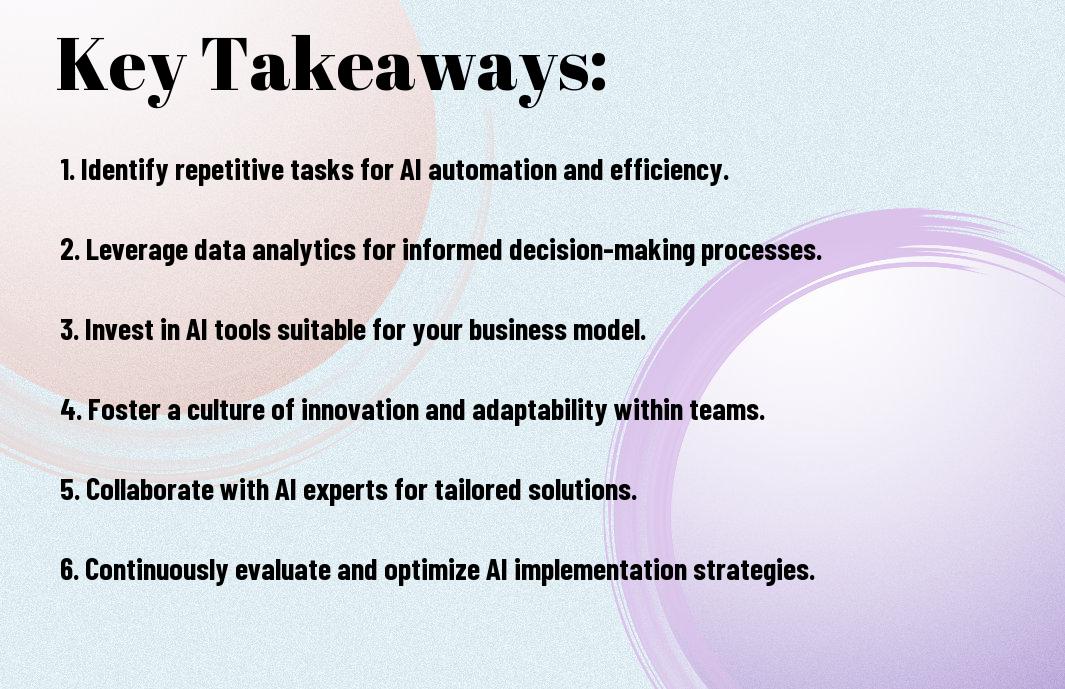
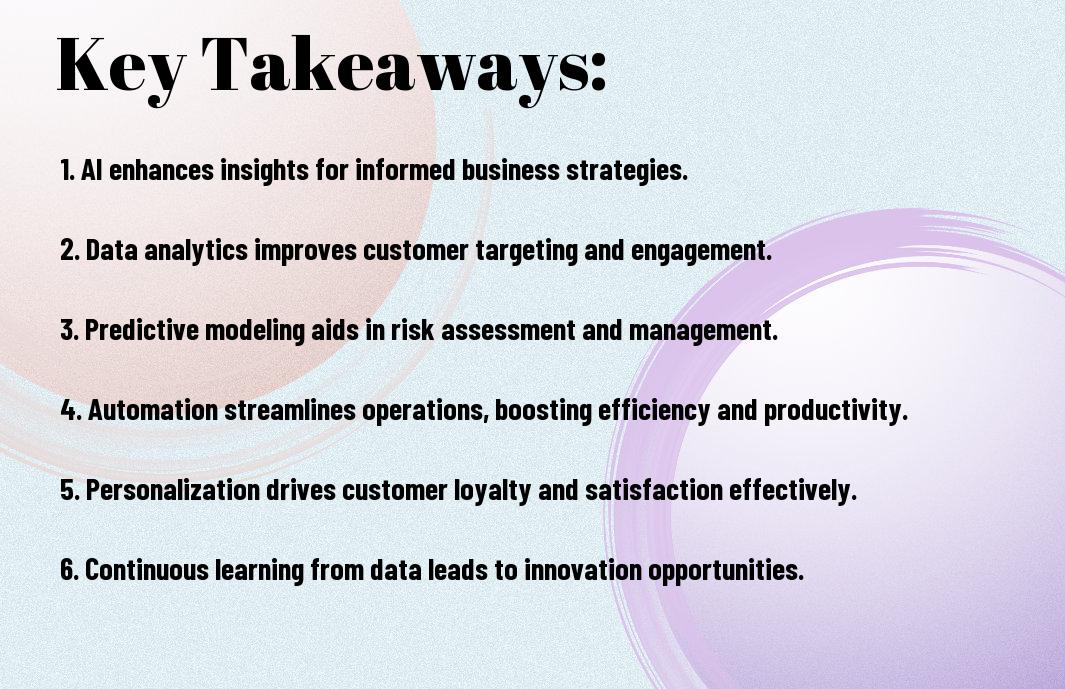
Key Takeaways:

  • Utilizing AI in decision-making processes enables entrepreneurs to make informed choices, driven by data analysis and insights, which can lead to increased efficiency and profitability in their ventures.
  • AI-powered tools provide entrepreneurs with the ability to process and analyze large amounts of data, identify patterns, and predict trends, giving them a competitive edge in the market and facilitating innovative solutions.
  • By leveraging AI-driven data analysis, entrepreneurs can optimize their business strategies, mitigate risks, and capitalize on new opportunities, ultimately driving entrepreneurial success and wealth creation.

The Tipping Point of AI in Business

For entrepreneurs, understanding the impact of AI on business is vital for making informed decisions. You can leverage AI to analyze vast amounts of data, identify trends, and optimize operations, ultimately driving your business forward.

When Algorithms Become Game-Changers

Along with the rise of AI, you’ll notice significant improvements in your business’s efficiency and decision-making processes. You can utilize algorithms to automate tasks, predict customer behavior, and gain a competitive edge in the market.

The Small Data That Makes Big Differences

Differing from traditional data analysis, small data can provide valuable insights into your business’s specific needs and challenges. You can use this data to make targeted adjustments and improvements, leading to increased productivity and profitability.

Even with limited resources, you can still harness the power of small data to drive your business forward. You can start by collecting and analyzing data from various sources, such as customer feedback, sales reports, and website analytics, to identify areas for improvement and optimization, allowing you to make data-driven decisions that propel your business towards success.
The Entrepreneurial AI Mindset

There’s a significant shift in your approach when you adopt an AI-driven mindset, enabling you to make informed decisions and drive your business forward with data-backed insights, ultimately leading to entrepreneurial success and wealth.

Pattern Recognition and Outlier Advantage

Beneath the surface of your business operations, AI helps you identify patterns and outliers, giving you a unique advantage in the market, allowing you to capitalize on opportunities that might have otherwise gone unnoticed, and make adjustments to optimize your strategy.

Decision Velocity as Competitive Edge

Among the key benefits of leveraging AI in your decision-making process is the ability to act swiftly, as you can analyze vast amounts of data in real-time, making it possible for you to respond to changes in the market faster than your competitors.

In addition, as you develop your decision velocity, you’ll find that your ability to adapt and evolve becomes a significant competitive edge, enabling you to stay ahead of the curve and make strategic decisions that drive your business forward, while your competitors are still analyzing the data, you’ll be executing and achieving your goals.

Wealth Creation Through Predictive Intelligence

Your ability to make informed decisions is significantly enhanced by AI-driven predictive intelligence, enabling you to identify opportunities and mitigate risks, ultimately leading to increased wealth creation.

From Reactive to Anticipatory Business Models

Besides traditional methods, you can now adopt anticipatory business models that leverage AI to forecast market trends and customer behavior, allowing you to stay ahead of the competition.

The New Economics of AI-Powered Ventures

Along with the rise of AI, you are witnessing a shift in the way businesses operate, with AI-powered ventures offering new revenue streams and unprecedented growth opportunities.

With the new economics of AI-powered ventures, you can scale your business more efficiently, reducing costs and increasing productivity, which in turn, can lead to significant returns on investment and long-term success, allowing you to achieve your entrepreneurial goals and create lasting wealth.

The Paradox of Automation and Human Insight

Many entrepreneurs are leveraging AI to drive business success, but you must understand the interplay between automation and human intuition to make informed decisions.

Where Machines Fall Short

Against the backdrop of increasing automation, you’ll find that machines lack the creativity and empathy that you bring to your business, making your insight invaluable.

The Symbiotic Relationship

Short of replacing human judgment entirely, AI augments your capabilities, freeing you to focus on high-level strategy and innovation, as you work together with machines to drive growth.

But as you research deeper into this symbiotic relationship, you’ll discover that AI can analyze vast amounts of data, providing you with actionable insights that inform your decision-making, while your expertise and experience help to contextualize and refine these insights, ultimately leading to more informed and effective decisions that drive your business forward.

AI Tools Reshaping Entrepreneurial Landscapes

Once again, you’re on the cusp of a significant shift in how you approach your business, as AI tools continue to revolutionize the entrepreneurial landscape, offering unprecedented opportunities for growth and innovation, enabling you to make data-driven decisions that drive your success.

Customer Acquisition Revolution

Revitalizing your approach to customer acquisition, AI-powered tools help you identify and target high-value customers, personalize your marketing efforts, and optimize your sales funnel, allowing you to reach new heights in your business, as you leverage these tools to fuel your entrepreneurial journey, you’ll find that your customer acquisition costs decrease while your conversion rates soar.

Operational Excellence Through Machine Learning

Around every corner, machine learning is transforming the way you operate your business, streamlining processes, and enhancing efficiency, as you harness the power of AI, you’ll be able to automate routine tasks, predict market trends, and make informed decisions that drive your business forward.

And as you probe deeper into the world of machine learning, you’ll discover that it’s not just about automation, but about gaining valuable insights into your business, allowing you to optimize your operations, reduce costs, and improve your bottom line, with machine learning, you’ll be able to analyze vast amounts of data, identify patterns, and make predictions that inform your strategic decisions, giving you a competitive edge in the market.

Ethical Considerations and Sustainable Growth

Not every entrepreneur considers the ethical implications of using AI in their business, but you must prioritize responsible practices to ensure long-term success.

Responsible AI Implementation

For instance, you should develop and implement AI systems that align with your values and promote transparency, allowing you to maintain control over your business decisions.

Building Trust in Automated Systems

Alike human relationships, you need to establish trust in your automated systems, which can be achieved by ensuring accountability and explainability in AI-driven decision-making processes.

At the core of building trust in automated systems is your ability to understand how AI algorithms make decisions and take actions, enabling you to identify potential biases and errors, and make adjustments accordingly, which ultimately leads to more reliable and sustainable business outcomes for you.

Summing up

With these considerations, you can harness the power of AI to drive your entrepreneurial success and wealth. By leveraging data-driven decisions, you will make informed choices, minimize risks, and maximize your returns. Your business will thrive as you capitalize on the insights and patterns uncovered by AI, giving you a competitive edge in the market and setting you up for long-term prosperity. You will be well on your way to achieving your goals and reaping the rewards of your endeavors.

FAQ

Q: What is the role of data-driven decisions in entrepreneurial success and wealth creation?

A: Data-driven decisions play a significant role in entrepreneurial success and wealth creation by enabling businesses to make informed decisions based on facts and trends, rather than intuition or guesswork. With the help of Artificial Intelligence (AI), entrepreneurs can analyze large amounts of data to identify patterns, predict market trends, and optimize their business strategies, ultimately leading to increased efficiency, productivity, and profitability.

Q: How does AI fuel data-driven decision making in entrepreneurship?

A: AI fuels data-driven decision making in entrepreneurship by providing advanced analytics and machine learning capabilities that can process and analyze vast amounts of data quickly and accurately. AI-powered tools can help entrepreneurs identify key performance indicators, detect anomalies, and predict future trends, enabling them to make data-driven decisions that drive business growth and success. Additionally, AI can automate routine tasks, freeing up entrepreneurs to focus on high-level strategic decision making.

Q: What are the benefits of using AI in data-driven decision making for entrepreneurs?

A: The benefits of using AI in data-driven decision making for entrepreneurs include improved accuracy and speed of decision making, enhanced customer insights, and increased operational efficiency. AI can also help entrepreneurs identify new business opportunities, optimize their marketing strategies, and improve their competitive edge. Furthermore, AI can provide entrepreneurs with real-time feedback and monitoring, enabling them to adjust their strategies and make adjustments as needed.

Q: How can entrepreneurs leverage AI to drive business growth and wealth creation?

A: Entrepreneurs can leverage AI to drive business growth and wealth creation by integrating AI-powered tools and technologies into their business operations. This can include using AI-powered chatbots to enhance customer service, implementing AI-driven marketing automation to optimize marketing campaigns, and utilizing AI-based predictive analytics to forecast sales and revenue. Additionally, entrepreneurs can use AI to identify new business opportunities, such as developing new products or services, or expanding into new markets.

Q: What are the potential challenges and limitations of using AI in data-driven decision making for entrepreneurs?

A: The potential challenges and limitations of using AI in data-driven decision making for entrepreneurs include the need for high-quality data, the risk of bias in AI algorithms, and the potential for over-reliance on technology. Additionally, entrepreneurs may face challenges in integrating AI into their existing business operations, and may require significant investment in AI infrastructure and talent. However, by being aware of these challenges and taking steps to address them, entrepreneurs can harness the power of AI to drive business growth, success, and wealth creation.

Scaling Your Business with AI – A Roadmap for Entrepreneurial Success

As you navigate the complexities of growing your business, you’re likely exploring ways to leverage artificial intelligence (AI) for exponential growth. You can learn from experts who have successfully implemented AI solutions, such as those discussed in Scaling enterprise AI for business value, to inform your strategy. By understanding how to effectively integrate AI into your operations, you can unlock new efficiencies, drive innovation, and stay ahead of the competition, ultimately achieving your entrepreneurial goals.

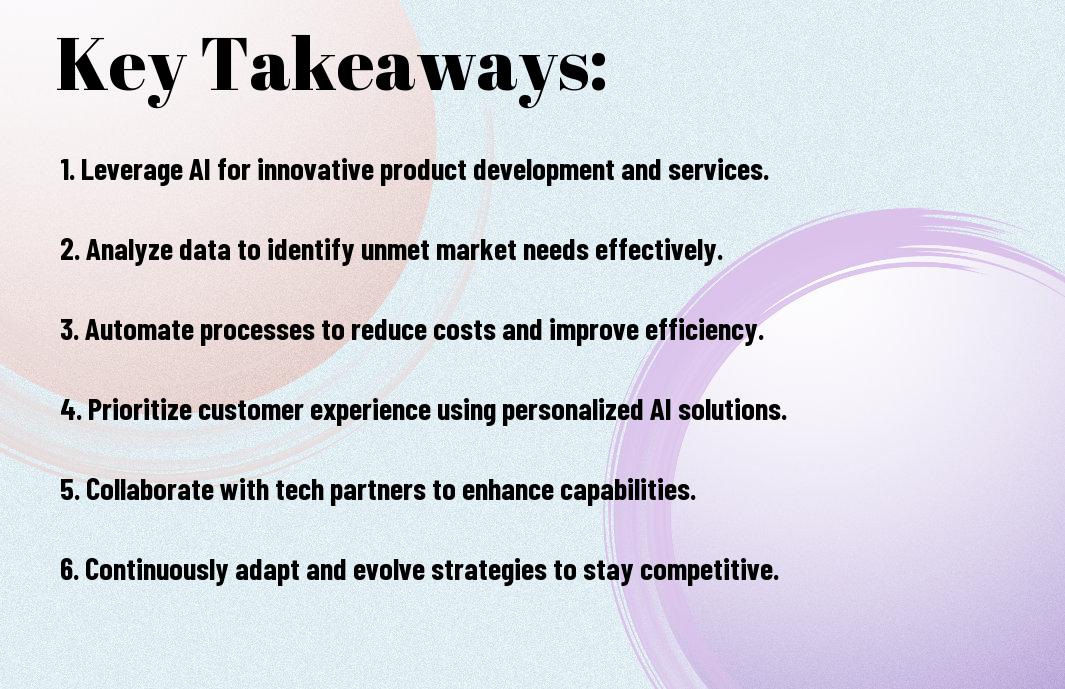
Key Takeaways:

  • Implementing AI solutions can significantly enhance business efficiency and productivity, allowing entrepreneurs to streamline operations, automate tasks, and make data-driven decisions to drive growth and expansion.
  • A well-planned AI integration strategy is vital for entrepreneurial success, involving the identification of areas where AI can add value, the development of a tailored implementation roadmap, and the establishment of key performance indicators to measure progress.
  • By leveraging AI technologies, businesses can unlock new opportunities for innovation and scalability, enabling them to stay competitive in a rapidly evolving market landscape and achieve long-term sustainability and success.

    The Tipping Point of AI in Business

    Your business is on the cusp of a revolution with AI, and understanding its potential is key to unlocking growth and success. As you navigate this new landscape, you’ll discover how AI can transform your operations and propel you forward.

    Identifying AI-Ready Operations

    For instance, you’ll need to assess your current processes and identify areas where AI can have the most impact, streamlining your workflow and enhancing productivity. By doing so, you’ll be able to make informed decisions about where to implement AI solutions.

    The Small Changes That Make Big Differences

    Differing from traditional approaches, AI-driven solutions can bring about significant improvements with minimal adjustments, allowing you to test and refine your strategies. You’ll find that even small changes can have a profound effect on your business.

    The key to leveraging these small changes is to focus on high-impact areas, such as customer service or supply chain management, where AI can help you optimize processes and improve efficiency. As you implement these changes, you’ll begin to see the benefits of AI firsthand, and you can continue to build upon these successes to drive further growth and innovation in your business.

    AI Implementation Strategy

    If you’re looking to scale your business with AI, developing a comprehensive implementation strategy is imperative. You’ll need to assess your current infrastructure, identify areas for improvement, and determine which AI solutions will have the greatest impact on your operations.

    Low-Hanging Fruit vs. Transformative Projects

    By prioritizing projects that offer the quickest returns, you can build momentum and establish a strong foundation for future AI initiatives. You’ll need to weigh the benefits of tackling low-hanging fruit against the potential of more transformative projects that may require greater investment.

    Building Your AI Ecosystem

    Strategically, you’ll want to focus on creating a cohesive AI ecosystem that integrates with your existing systems and processes. You’ll need to consider the roles and responsibilities of various stakeholders, as well as the technical requirements for implementing and maintaining AI solutions.

    Even as you begin to build your AI ecosystem, you’ll want to keep your long-term goals in mind, considering how each new implementation will contribute to your overall vision for AI-driven growth and innovation, and how you can continually evaluate and refine your approach to ensure maximum ROI and impact on your business.

    Data as Your Business Currency

    Many businesses today are recognizing the value of data in driving growth and informed decision-making. You need to understand how to harness your data to unlock new opportunities and stay ahead of the competition. Your ability to collect, analyze, and act on data will be the key to your success.

    Creating Data Collection Systems

    Besides having a solid business strategy, you need to establish effective data collection systems to gather relevant information about your customers, operations, and market trends. You should identify the types of data that are most relevant to your business and develop systems to collect and store this data securely.

    Turning Raw Data into Business Intelligence

    Any successful business relies on its ability to turn raw data into actionable insights. You can achieve this by investing in analytics tools and techniques that help you to extract meaningful patterns and trends from your data, enabling you to make informed decisions about your business.

    In addition, as you research deeper into turning raw data into business intelligence, you will discover that it involves not only the use of technology but also the development of a data-driven culture within your organization. You will need to ensure that your team is equipped with the skills to analyze and interpret data, and that data insights are integrated into your decision-making processes to drive business outcomes.

    Automation and Workforce Evolution

    Unlike traditional methods, AI-driven automation enables you to streamline your business operations, enhancing efficiency and productivity. As you integrate AI, your workforce will undergo a significant evolution, requiring you to reassess tasks, jobs, and skills.

    Tasks vs. Jobs: What to Automate

    Before automating, you need to identify tasks that can be optimized with AI, distinguishing between tasks that can be automated and jobs that require human expertise, allowing you to make informed decisions about your workforce.

    Reskilling for the AI-Augmented Workplace

    Among the key considerations for your business is preparing your workforce for an AI-driven environment, where you will need to reskill and upskill your employees to work effectively with AI systems, ensuring they can leverage AI capabilities to enhance their productivity.

    AIAugmented workplaces require you to invest in your employees’ development, providing them with the necessary training and resources to work alongside AI systems, enabling you to unlock the full potential of AI and achieve greater efficiency, innovation, and growth in your business, as you navigate the evolving landscape of work and technology, you will be able to position your business for long-term success.

    Customer Experience Enhancement

    Keep your customers at the forefront of your business by leveraging AI to enhance their experience, as outlined in AI for Entrepreneurs: A Roadmap for Success, to drive loyalty and growth.

    Personalization at Scale

    By utilizing AI-powered tools, you can tailor your customer interactions to meet individual needs, fostering a sense of connection and increasing satisfaction with your brand.

    Predictive Customer Service

    By anticipating customer inquiries and concerns, you can proactively address issues, reducing wait times and improving overall experience.

    Hence, as you implement predictive customer service, you will be able to analyze customer data and behavior, identifying patterns and potential pain points, allowing you to develop targeted solutions and improve your support services, ultimately leading to increased customer loyalty and retention, and driving long-term growth for your business.

    Measuring AI ROI

    Once again, you’ll need to assess the financial impact of AI on your business, but this time with a focus on return on investment (ROI). You must evaluate how AI solutions generate revenue, reduce costs, and improve efficiency to make informed decisions about your AI strategy.

    Beyond Cost Savings: New Value Metrics

    Saving time and resources is just the beginning; you should also consider new value metrics such as customer satisfaction, employee productivity, and innovation. You can use these metrics to measure the effectiveness of your AI solutions and identify areas for improvement.

    Iterative Implementation and Adjustment

    For your AI implementation to be successful, you need to adopt an iterative approach, continuously monitoring and adjusting your strategy as you gather more data and insights. You should be prepared to make changes and adaptations to ensure your AI solutions meet your evolving business needs.

    Further, as you refine your AI strategy, you’ll need to stay flexible and open to new opportunities and challenges. You should regularly assess your AI solutions’ performance, gather feedback from stakeholders, and make data-driven decisions to optimize your AI investments and maximize your ROI. This iterative process will help you unlock the full potential of AI and drive long-term success for your business.

    Conclusion

    So, as you launch on scaling your business with AI, you will unlock new opportunities for growth and efficiency. You will be able to automate tasks, gain valuable insights, and make data-driven decisions to drive your business forward. By following a well-planned roadmap, you can harness the power of AI to achieve your entrepreneurial goals and stay ahead of the competition, ultimately leading your business to success.

    FAQ

    Q: What is the role of AI in scaling a business, and how can entrepreneurs leverage it for success?

    A: Artificial intelligence (AI) plays a significant role in scaling a business by automating processes, enhancing decision-making, and improving operational efficiency. Entrepreneurs can leverage AI by integrating it into their business strategy, using tools such as machine learning algorithms, natural language processing, and predictive analytics to drive growth, reduce costs, and gain a competitive edge in the market.

    Q: How can entrepreneurs determine which areas of their business can benefit from AI implementation, and what are the key considerations for successful integration?

    A: Entrepreneurs can identify areas that can benefit from AI by assessing their business operations, identifying pain points, and evaluating opportunities for automation and process improvement. Key considerations for successful integration include defining clear goals and objectives, selecting the right AI technologies, ensuring data quality and availability, and developing a robust implementation plan that addresses potential risks and challenges.

    Q: What are the potential risks and challenges associated with scaling a business using AI, and how can entrepreneurs mitigate them?

    A: The potential risks and challenges associated with scaling a business using AI include data privacy and security concerns, job displacement, and the need for significant upfront investment in technology and talent. Entrepreneurs can mitigate these risks by implementing robust data governance policies, investing in employee retraining and upskilling, and adopting a phased approach to AI implementation that allows for testing, evaluation, and refinement of AI systems.

    Q: How can entrepreneurs measure the effectiveness of AI in driving business growth and scaling, and what are the key performance indicators (KPIs) to track?

    A: Entrepreneurs can measure the effectiveness of AI in driving business growth and scaling by tracking KPIs such as revenue growth, customer acquisition and retention rates, operational efficiency gains, and return on investment (ROI). Additional KPIs to track include AI system accuracy and reliability, data quality and availability, and employee adoption and engagement with AI technologies.

    Q: What are the future trends and developments in AI that entrepreneurs should be aware of, and how can they stay ahead of the curve in terms of AI adoption and innovation?

    A: Future trends and developments in AI include the increasing use of edge AI, explainable AI, and human-AI collaboration. Entrepreneurs can stay ahead of the curve by staying informed about the latest AI research and breakthroughs, participating in industry conferences and workshops, and investing in ongoing education and training for themselves and their employees. Additionally, entrepreneurs should prioritize building a culture of innovation and experimentation within their organization, encouraging experimentation and risk-taking in AI adoption and development.

How to Disrupt Your Industry with AI and Achieve Financial Success

You are on the cusp of revolutionizing your industry with the power of artificial intelligence. As you consider leveraging AI, you’ll discover new opportunities to streamline processes, enhance customer experiences, and drive growth. Your business can thrive by adopting AI-driven strategies, and this post will guide you through the process of harnessing AI to achieve financial success and stay ahead of the competition.

Key Takeaways:

  • Embracing AI technology can be a significant factor in disrupting your industry, as it enables businesses to automate processes, enhance customer experiences, and gain valuable insights from data analysis, ultimately leading to increased efficiency and financial success.
  • Successful implementation of AI requires a strategic approach, including identifying areas where AI can add the most value, investing in the right talent and technology, and fostering a culture of innovation and continuous learning within the organization.
  • By leveraging AI to drive innovation and improve operations, businesses can achieve significant financial benefits, such as reduced costs, increased revenue, and improved profitability, allowing them to stay ahead of the competition and achieve long-term financial success.

The Current State of Industry Disruption

A growing number of businesses are turning to AI to drive innovation and stay ahead of the competition, as you can learn more about in a post on How To Accelerate Business Success With AI, to achieve financial success.

Traditional Business Models Under Threat

By embracing AI, you can identify areas where traditional business models are under threat and adapt your strategy to stay competitive, allowing you to make informed decisions about your business’s future.

AI as the Ultimate Disruptor

Along with the rise of AI, you are witnessing a significant shift in the way businesses operate, with AI-powered solutions transforming industries and creating new opportunities for growth and innovation, enabling you to stay ahead.

In fact, as you investigate deeper into the world of AI, you will discover that its potential to disrupt industries is vast, and by leveraging AI, you can unlock new revenue streams, improve operational efficiency, and enhance customer experiences, ultimately driving your business towards financial success and giving you a competitive edge in the market.

Identifying AI Opportunities in Your Industry

While exploring your industry, you’ll uncover numerous areas where AI can be applied to drive innovation and growth, enabling you to stay ahead of the competition and achieve financial success.

Data-Rich Areas Ripe for Transformation

With access to vast amounts of data, you can identify sectors that are primed for AI-driven disruption, allowing you to make informed decisions and capitalize on emerging trends.

Competitor Vulnerabilities to Exploit

Your competitors’ weaknesses can be a significant opportunity for you to gain a competitive edge, and by analyzing their strategies, you can pinpoint areas where AI can be leveraged to outmaneuver them.

Areas where your competitors are struggling with manual processes, inefficient systems, or limited resources are particularly vulnerable to AI-driven disruption, and by targeting these weaknesses, you can develop innovative solutions that set you apart and drive business growth, ultimately leading to increased financial success and a stronger market position.

Building Your AI Disruption Strategy

Unlike traditional business strategies, building an AI disruption strategy requires a deep understanding of your industry and the potential applications of AI. You will need to identify areas where AI can bring significant value and develop a plan to leverage these opportunities to drive growth and innovation in your business.

Assembling the Right Team

Against the backdrop of rapid technological change, you will need to assemble a team with the right mix of skills and expertise to develop and implement your AI strategy. You should look for individuals with experience in AI, data science, and software development to help you navigate the complexities of AI adoption.

Securing Funding and Resources

Across the entire organization, you will need to secure the necessary funding and resources to support your AI initiatives. You should develop a comprehensive budget and resource plan that takes into account the costs of AI talent, technology, and infrastructure.

In fact, securing funding and resources for AI initiatives can be a significant challenge, but you can overcome this by developing a strong business case that highlights the potential return on investment and aligns with your overall business strategy. You should also consider partnering with investors, vendors, or other organizations to access the resources and expertise you need to drive your AI strategy forward.

Implementing AI Solutions for Maximum Impact

Many businesses are turning to AI to drive innovation and growth, and you can too by identifying areas where AI can have the greatest impact on your operations and customer experience.

Scaling Gradually Yet Decisively

Among the key considerations as you implement AI is to start small and scale up gradually, allowing you to test and refine your approach before making significant investments, ensuring that you can adapt to changing circumstances and make adjustments as needed to achieve your goals.

Measuring ROI and Performance Metrics

Measuring the effectiveness of your AI solutions is vital to understanding their impact on your business, and you will need to track key performance indicators such as revenue growth, customer engagement, and operational efficiency to determine the return on investment and make data-driven decisions.

Solutions to measuring ROI and performance metrics involve setting clear goals and objectives, establishing a baseline for measurement, and using data analytics tools to track and analyze the performance of your AI solutions, enabling you to identify areas for improvement and optimize your approach to achieve greater financial success and stay ahead of the competition, as you continue to innovate and expand your use of AI in your business, you will be able to make more informed decisions and drive greater value from your investments.

Overcoming Resistance to Your AI Revolution

Now that you’re on the path to AI adoption, you’ll need to address potential roadblocks. To achieve success, consider following Five Steps to AI Success to guide your journey.

Managing Stakeholder Concerns

Against the backdrop of uncertainty, you must address concerns from stakeholders, including employees, customers, and investors, to ensure a smooth transition to AI-driven operations.

Navigating Regulatory Challenges

After launching your AI initiative, you’ll need to comply with relevant laws and regulations, which can be complex and nuanced, requiring careful consideration to avoid potential pitfalls.

Another aspect of navigating regulatory challenges involves staying up-to-date with evolving laws and guidelines, as you continue to develop and refine your AI strategy, ensuring your organization remains compliant and competitive in the market, while you achieve your financial goals with AI.

Monetizing Your AI Disruption

After developing an AI-powered solution, you need to focus on generating revenue from your innovation, which can be achieved by creating a solid business model that showcases the value of your AI-enhanced offerings to potential customers.

Pricing Models for AI-Enhanced Offerings

At this stage, you will need to determine the optimal pricing strategy for your AI-driven products or services, considering factors such as development costs, market demand, and competition to ensure your pricing is competitive and profitable.

Creating New Revenue Streams

About leveraging AI to expand your revenue streams, you should explore various opportunities, such as subscription-based models, data-as-a-service, or AI-powered consulting services, to diversify your income sources and stay ahead of the competition.

Offerings that incorporate AI can open up new avenues for revenue generation, allowing you to target new customer segments, improve customer retention, and increase average deal sizes, ultimately leading to significant financial gains and a stronger market position for your business.

Final Words

Considering all points, you now have the tools to disrupt your industry with AI and achieve financial success. You can leverage AI to innovate, optimize operations, and drive growth. By applying these strategies, you will stay ahead of the competition and increase your revenue. Your ability to adapt and innovate with AI will be key to your success, enabling you to make informed decisions and capitalize on new opportunities.

FAQ

Q: What are the key steps to disrupt my industry with AI and achieve financial success?

A: To disrupt your industry with AI and achieve financial success, you need to start by identifying areas where AI can bring significant value to your business. This involves assessing your current operations, understanding your customers’ needs, and determining how AI can help you innovate and improve your products or services. Next, you should develop a clear strategy for AI adoption, including setting specific goals, allocating necessary resources, and building a team with the right skills. It’s also imperative to stay up-to-date with the latest AI trends and technologies, such as machine learning, natural language processing, and computer vision, to ensure you’re leveraging the most effective tools for your industry.

Q: How can I determine which AI technologies are best suited for my business and industry?

A: Determining the most suitable AI technologies for your business involves a thorough analysis of your industry, market, and specific business needs. Start by researching the AI solutions that are currently being used in your industry and assess their impact. You should also consult with AI experts, attend industry conferences, and participate in workshops to gain a deeper understanding of the various AI technologies available. Additionally, consider conducting pilot projects or proof-of-concept trials to test different AI solutions and evaluate their potential return on investment (ROI) for your business.

Q: What are the most significant challenges companies face when implementing AI, and how can they be overcome?

A: Companies often face several challenges when implementing AI, including data quality issues, lack of skilled talent, and integrating AI with existing systems. To overcome these challenges, it’s imperative to prioritize data quality and develop a robust data management strategy. This includes ensuring that your data is accurate, complete, and well-organized. You should also invest in employee training and development to build a team with the necessary AI skills. Furthermore, consider partnering with AI vendors or consultants who can help you navigate the implementation process and ensure seamless integration with your existing systems.

Q: How can AI help my business achieve financial success and what are the potential ROI benefits?

A: AI can help your business achieve financial success in several ways, including increasing efficiency, enhancing customer experience, and driving innovation. By automating routine tasks, AI can help reduce operational costs and improve productivity. AI-powered chatbots and virtual assistants can also improve customer engagement and retention, leading to increased revenue. Moreover, AI can help you develop new products and services, enter new markets, and stay ahead of the competition, resulting in significant revenue growth. According to various studies, businesses that adopt AI can expect to see an average ROI of 20-30% or more, depending on the specific use case and industry.

Q: What are the potential risks and ethical considerations associated with AI adoption, and how can they be mitigated?

A: The adoption of AI raises several potential risks and ethical considerations, including bias in decision-making, job displacement, and data privacy concerns. To mitigate these risks, it’s imperative to develop and implement responsible AI practices, such as ensuring transparency and explainability in AI decision-making, providing training and upskilling programs for employees, and prioritizing data protection and security. You should also establish clear guidelines and regulations for AI development and deployment, and engage with stakeholders, including customers, employees, and regulators, to ensure that AI is used in a way that is fair, transparent, and beneficial to all parties involved.

Redefining Success – How AI is Changing the Landscape of Wealth

As you navigate the evolving financial landscape, you’re likely aware that traditional notions of success are being rewritten. Your understanding of wealth management is about to undergo a significant shift, thanks to the integration of Artificial Intelligence (AI). You can learn more about How AI Is Dramatically Transforming the Wealth-Management Landscape, and discover how AI is revolutionizing your approach to achieving financial goals, redefining what success means to you.

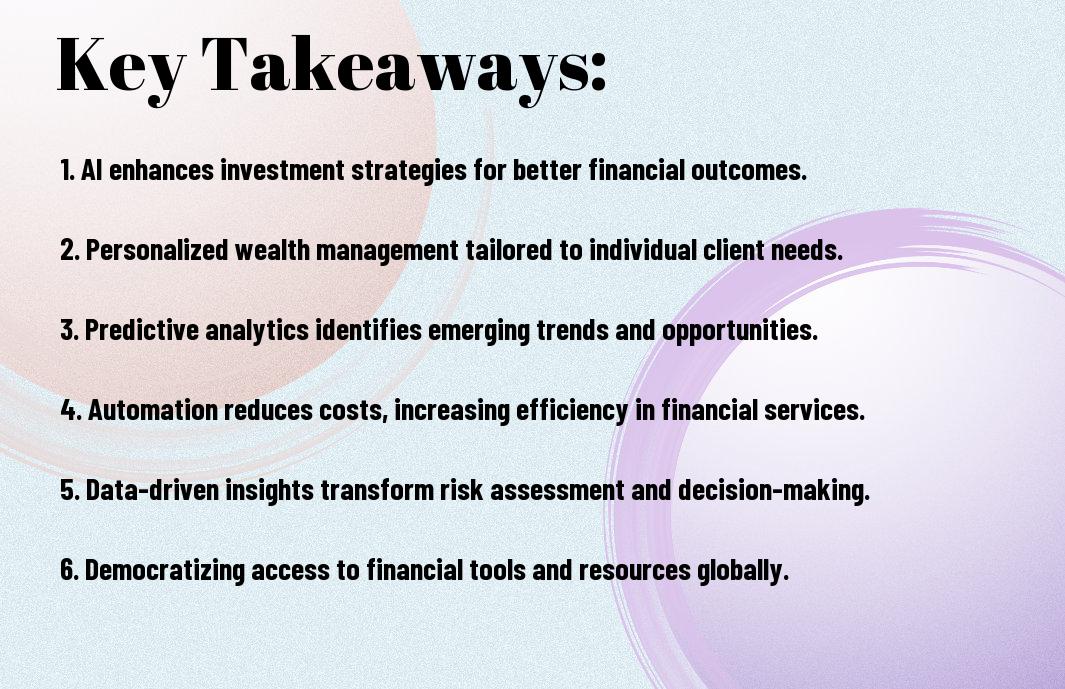
Key Takeaways:

  • The integration of AI in financial systems is transforming the concept of wealth, enabling individuals to redefine success beyond traditional metrics such as income and net worth, and focusing on personal fulfillment and happiness.
  • AI-driven technologies are creating new opportunities for wealth creation, such as investing in AI-powered startups and participating in the gig economy, which are redefining the way people accumulate and manage wealth.
  • The increasing use of AI in financial decision-making is also raising important questions about the role of human values and ethics in the pursuit of wealth, highlighting the need for a more nuanced and multidimensional understanding of success that balances financial gain with social and environmental responsibility.

    The Evolution of Wealth in the Digital Age

    Your understanding of wealth is likely to change as technology advances, and AI is at the forefront of this transformation, redefining what it means to be successful in today’s economy.

    Traditional Wealth Metrics

    Akin to traditional measures, your perception of wealth has been tied to financial assets, but the digital age is introducing new metrics that go beyond monetary value, allowing you to reassess your priorities.

    AI’s Impact on Value Creation

    Beneath the surface of AI’s capabilities lies a profound impact on how value is created, and you are likely to see a shift in the way wealth is generated and distributed, with AI-driven innovations creating new opportunities for you to accumulate wealth.

    Also, as AI continues to advance, you will have access to more sophisticated tools and platforms that enable you to create value in unprecedented ways, such as through data-driven investments and AI-powered entrepreneurship, allowing you to redefine your approach to building wealth and achieving success in the digital age.

    The New Currency of Success

    It is becoming increasingly clear that traditional measures of success are no longer sufficient in today’s fast-paced, technology-driven world. You are likely to find that your definition of success is evolving, and AI is playing a significant role in this shift. As you navigate this new landscape, you will need to adapt and redefine what success means to you.

    Data as Modern Capital

    Similarly, to achieving success, securing valuable data is now a key aspect of your professional and personal life. You will find that having access to relevant data can give you a competitive edge, and you will need to learn how to leverage it effectively to achieve your goals.

    Algorithm-Driven Opportunities

    By embracing the power of AI, you can unlock new opportunities that were previously unimaginable. You will be able to automate tasks, gain insights, and make informed decisions, all of which will contribute to your success in this new era.

    Further, as you explore the possibilities of algorithm-driven opportunities, you will discover that AI can help you identify patterns, predict outcomes, and optimize your strategies. You will be able to use these insights to make data-driven decisions, drive innovation, and stay ahead of the curve in your pursuit of success.

    AI Wealth Generators

    After exploring the concept of redefining success, you’ll discover that AI wealth generators are revolutionizing the way you approach wealth creation, offering innovative solutions to maximize your returns and minimize risks.

    Automated Trading Systems

    Beneath the surface of traditional trading, automated systems are emerging, enabling you to execute trades at unprecedented speeds and accuracy, giving you a competitive edge in the market.

    Predictive Analytics in Investment

    On the forefront of investment strategies, predictive analytics is empowering you to make informed decisions, leveraging historical data and machine learning algorithms to forecast market trends and identify lucrative opportunities.

    Automated predictive models are helping you to analyze vast amounts of data, identifying patterns and correlations that may elude human analysts, allowing you to refine your investment portfolio and optimize your returns, ultimately giving you greater control over your financial future.

    Human Capital in the AI Era

    For you, understanding the impact of AI on your career and wealth is vital. As AI transforms industries, your skills and adaptability will be key to success. You will need to navigate a new landscape where AI-driven technologies are redefining the nature of work and wealth creation.

    Skills Transformation

    Besides the need for technical skills, you will also require skills like creativity, empathy, and problem-solving to remain relevant in the AI era. Your ability to learn and adapt will be vital as AI continues to evolve and change the job market.

    Adaptive Career Paths

    Among the many changes AI is bringing, the concept of a single, lifelong career is becoming obsolete. You will need to be open to new career paths and opportunities as AI creates new industries and job roles.

    In fact, as you navigate your career in the AI era, you will have the opportunity to explore multiple career paths and industries, allowing you to create a more diverse and resilient portfolio of skills and experiences. You will be able to leverage AI-driven tools and platforms to identify new opportunities, develop new skills, and connect with other professionals in your field, enabling you to stay ahead of the curve and achieve your goals.

    Democratization of Wealth

    Keep in mind that AI is revolutionizing the way you perceive wealth, and you can learn more about it by visiting Decoding Transformations Led by AI in Wealth Management. This shift is making wealth management more accessible to you.

    AI-Powered Financial Tools

    Towards a more efficient financial management, you can leverage AI-powered tools to make informed decisions about your investments and wealth.

    Access to Market Intelligence

    Tapping into the vast amounts of market data, you can gain valuable insights to navigate the complex world of wealth management with ease.

    Consequently, as you research deeper into the world of AI-driven market intelligence, you will discover that it provides you with real-time data and analysis, enabling you to make swift and informed decisions about your investments, ultimately giving you a competitive edge in the market.

    Ethical Implications

    Not surprisingly, the integration of AI in wealth creation raises important questions about fairness and accountability, as you consider the potential consequences of relying on automated systems to manage your assets.

    Wealth Distribution

    For example, as AI-driven investments become more prevalent, you may wonder how this will affect the distribution of wealth, potentially exacerbating existing inequalities or creating new ones that you will need to navigate.

    Societal Impact

    Similarly, societal structures are likely to be influenced by the increasing use of AI in wealth management, as you consider the broader implications of this technology on your community and the world at large.

    For instance, as AI assumes more control over financial decision-making, you may see significant changes in the job market, with certain roles becoming obsolete, while new ones emerge, requiring you to adapt and acquire new skills to remain relevant in this shifting landscape.

    To wrap up

    Drawing together the various threads of AI’s impact on wealth, you can see how your understanding of success is being redefined. As AI continues to shape the landscape, you will need to adapt your strategies to stay ahead. By embracing this shift, you can unlock new opportunities and redefine what wealth means to you, ultimately achieving a more fulfilling and prosperous future, with AI as your catalyst for growth and success.

    FAQ

    Q: What is the current state of wealth creation and how is AI impacting it?

    A: The current state of wealth creation is undergoing a significant transformation with the integration of Artificial Intelligence (AI). AI is changing the landscape of wealth by providing new opportunities for investment, improving financial decision-making, and increasing efficiency in wealth management. With AI, individuals and organizations can now access advanced data analytics, automated trading platforms, and personalized financial planning tools, enabling them to make more informed decisions and achieve their financial goals more effectively.

    Q: How is AI redefining traditional notions of success in the context of wealth creation?

    A: AI is redefining traditional notions of success in wealth creation by shifting the focus from solely accumulating wealth to achieving a more holistic and sustainable form of prosperity. With AI, success is no longer just about accumulating wealth, but also about creating a positive impact on society and the environment. AI is enabling individuals and organizations to prioritize social and environmental responsibility alongside financial returns, leading to a more nuanced and multifaceted definition of success.

    Q: What are some of the key benefits of using AI in wealth management and creation?

    A: The key benefits of using AI in wealth management and creation include improved investment returns, enhanced risk management, and increased efficiency. AI can analyze vast amounts of data, identify patterns, and make predictions, enabling individuals and organizations to make more informed investment decisions. Additionally, AI can automate many routine tasks, freeing up time and resources for more strategic and high-value activities. Overall, AI is helping to democratize access to wealth creation opportunities and improve financial outcomes for individuals and organizations.

    Q: How is AI changing the way we think about work and wealth creation in the future?

    A: AI is changing the way we think about work and wealth creation in the future by enabling new forms of entrepreneurship, innovation, and collaboration. With AI, individuals can now create wealth through a variety of means, including freelancing, consulting, and creating digital products and services. AI is also enabling the creation of new industries and job opportunities, such as AI development, data science, and sustainability consulting. Furthermore, AI is facilitating the growth of the gig economy and remote work, providing individuals with more flexibility and autonomy in their work arrangements.

    Q: What are some of the potential risks and challenges associated with AI-driven wealth creation, and how can they be mitigated?

    A: Some of the potential risks and challenges associated with AI-driven wealth creation include job displacement, increased income inequality, and cybersecurity threats. To mitigate these risks, it is important to invest in education and retraining programs that help workers develop the skills needed to thrive in an AI-driven economy. Additionally, policymakers and business leaders must prioritize transparency, accountability, and ethics in AI development and deployment, ensuring that the benefits of AI are shared equitably and that the risks are managed effectively. By taking a proactive and responsible approach to AI development, we can harness its potential to create a more prosperous and sustainable future for all.

Scaling New Heights – Using AI to Accelerate Entrepreneurial Success

As you navigate the competitive landscape of entrepreneurship, you’re constantly seeking ways to stay ahead of the curve. Your business’s success relies on leveraging the latest technologies to drive growth and innovation. You’re likely aware of the transformative power of Artificial Intelligence (AI) and its potential to revolutionize your operations. By harnessing AI, you can streamline processes, enhance decision-making, and unlock new opportunities for expansion, ultimately taking your business to new heights.

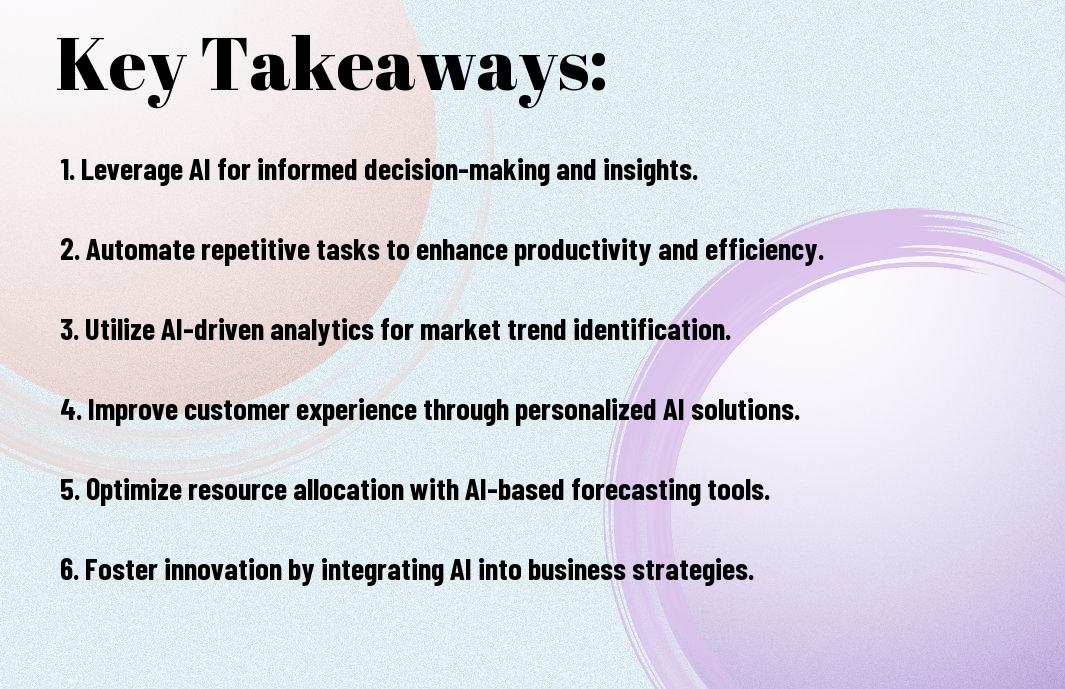
Key Takeaways:

  • Leveraging AI can significantly enhance entrepreneurial success by automating routine tasks, analyzing large datasets, and providing actionable insights to inform business decisions.
  • AI-driven tools can help entrepreneurs identify new market opportunities, optimize operations, and develop innovative products and services that meet evolving customer needs.
  • By embracing AI, entrepreneurs can accelerate their scaling process, improve efficiency, and gain a competitive edge in their respective industries, ultimately leading to faster growth and increased profitability.

    The Tipping Point of AI in Business

    While you navigate the landscape of entrepreneurship, you’ll notice the significant impact of AI on your business. AI is transforming the way you operate, making it important to understand its potential and limitations.

    When Algorithms Become Partners

    Similarly, one of the most significant advantages of AI is its ability to analyze vast amounts of data, providing you with valuable insights to inform your decisions and drive your business forward.

    The Small Changes That Spark Revolutions

    Parallel to this, partners like AI can help you identify areas where small changes can lead to significant improvements, allowing you to optimize your operations and stay ahead of the competition.

    Point to consider is that these small changes can have a profound impact on your business, and by leveraging AI, you can identify and implement them more efficiently, leading to increased productivity and revenue growth, and ultimately, driving your entrepreneurial success to new heights as you scale your business.

    AI as the Ultimate Entrepreneurial Outlier

    If you’re looking to revolutionize your business, AI can be the game-changer you need, offering unparalleled insights and capabilities to propel your entrepreneurial journey forward.

    The 10,000 Hour Shortcut

    About to launch on a new venture, you can leverage AI to accelerate your learning curve, gaining expertise in a fraction of the time it would take manually, thereby giving you a competitive edge.

    Pattern Recognition Beyond Human Capacity

    With access to vast amounts of data, AI can identify patterns that might elude you, providing your business with a unique advantage in the market, and enabling you to make informed decisions.

    For instance, you can utilize AI-powered tools to analyze customer behavior, market trends, and preferences, allowing you to tailor your products or services to meet the evolving needs of your target audience, and stay ahead of the competition, as you continue to scale your business to new heights.

    The Stickiness Factor of AI-Enhanced Businesses

    For entrepreneurs, leveraging AI can be a game-changer in making your business stand out. You can use AI to personalize customer interactions, streamline operations, and gain valuable insights to inform your decision-making.

    Creating Memorable Customer Experiences

    For instance, you can utilize AI-powered chatbots to provide your customers with 24/7 support, helping you build a loyal customer base. You will be able to offer personalized recommendations, improving customer satisfaction and driving sales.

    Data-Driven Decision Making That Resonates

    To take your business to the next level, you need to make informed decisions based on data analysis. You can use AI to analyze your customer data, identifying trends and patterns that will help you create effective marketing strategies.

    The ability to make data-driven decisions is what sets successful businesses apart. You will be able to track your progress, identify areas for improvement, and adjust your strategies accordingly, allowing you to stay ahead of the competition and achieve your goals.

    The Power of Context in AI Implementation

    Not all AI implementations are created equal, and you need to consider the context in which you’re deploying AI solutions. Your business goals, industry, and target audience all play a significant role in determining the success of your AI initiatives.

    Environmental Factors That Determine Success

    About the factors that influence AI adoption, you should consider the following:

    • Market conditions
    • Competitor activity

    Any successful AI implementation requires a deep understanding of these factors and how they impact your business.

    The Right Time and Place for AI Adoption

    Factors such as your business size, industry, and growth stage can affect the timing and location of AI adoption, and you should carefully evaluate these factors to ensure successful implementation.

    Hence, you need to assess your business readiness for AI adoption, considering factors like data quality, infrastructure, and talent availability, to determine the right time and place for AI implementation, and ensure that your AI initiatives align with your overall business strategy, allowing you to maximize the benefits of AI and drive your business forward.

    The Connector Effect

    Many entrepreneurs understand the value of connections in achieving success. You can leverage your network to access new markets, secure funding, and gain valuable insights. By harnessing the power of connections, you can propel your business forward and stay ahead of the competition.

    How AI Bridges Human Networks

    Beneath the surface of traditional networking lies a complex web of relationships that AI can help you navigate. You can utilize AI-driven tools to identify key connections, analyze network patterns, and optimize your outreach strategy, allowing you to build a stronger, more effective network.

    Leveraging Algorithms for Relationship Building

    For instance, you can use algorithms to analyze your network and identify potential connections that can help you achieve your goals. You can then use this information to tailor your approach and build meaningful relationships with your target audience.

    It is through the strategic use of algorithms that you can unlock the full potential of your network, creating a robust and dynamic web of relationships that drive your business forward. You can use AI to personalize your interactions, predict potential partnerships, and streamline your communication, ultimately leading to stronger, more profitable relationships that propel your entrepreneurial success.

    Cognitive Load Reduction

    Once again, you’ll find that AI can be a game-changer in reducing the mental effort you expend on tasks, allowing you to focus on high-level decision-making and strategy. By automating routine tasks and providing insights, AI helps you manage your workload more efficiently.

    Freeing the Entrepreneurial Mind

    Besides the obvious benefits of automation, AI also frees your mind to explore new ideas and opportunities, enabling you to think creatively and make innovative decisions that drive your business forward.

    Automation of the Mundane

    Beside the benefits of increased productivity, automating mundane tasks with AI enables you to allocate your time and resources more effectively, allowing you to concentrate on core business activities.

    Entrepreneurial success often hinges on your ability to prioritize tasks and manage your time effectively. When you automate mundane tasks, you can devote more time to high-leverage activities, such as building relationships, developing new products, or exploring new markets, which can lead to significant growth and increased profitability for your business, allowing you to achieve your goals more efficiently.

    Summing up

    With this in mind, you now have the tools to leverage AI and propel your entrepreneurial ventures to new heights. You can harness the power of AI to streamline your operations, enhance your products, and make data-driven decisions. By embracing AI, you will unlock your full potential and drive your business forward, achieving your goals and surpassing your expectations, ultimately leading to your success.

    FAQ

    Q: What is the main goal of using AI in entrepreneurial ventures, as discussed in “Scaling New Heights – Using AI to Accelerate Entrepreneurial Success”?

    A: The primary objective of leveraging AI in entrepreneurial endeavors is to harness its potential to automate processes, enhance decision-making, and drive innovation, ultimately leading to accelerated business growth and increased competitiveness in the market. By integrating AI into their strategies, entrepreneurs can streamline operations, improve customer experiences, and unlock new opportunities for expansion and success.

    Q: How can AI be used to improve decision-making in entrepreneurial ventures, as outlined in the concept of “Scaling New Heights”?

    A: AI can significantly enhance decision-making in entrepreneurial ventures by providing data-driven insights, predictive analytics, and real-time market intelligence. By analyzing vast amounts of data, AI algorithms can identify patterns, trends, and potential risks, enabling entrepreneurs to make informed decisions, mitigate uncertainties, and capitalize on emerging opportunities. This data-driven approach can help entrepreneurs navigate complex business landscapes and make strategic choices that drive growth and profitability.

    Q: What role does AI play in enhancing customer experiences, as discussed in the context of “Scaling New Heights – Using AI to Accelerate Entrepreneurial Success”?

    A: AI plays a vital role in elevating customer experiences by enabling personalized interactions, streamlining customer service, and offering tailored solutions. Through AI-powered chatbots, virtual assistants, and recommendation engines, entrepreneurs can provide 24/7 support, address customer queries, and deliver customized products and services that meet individual needs and preferences. By leveraging AI, entrepreneurs can build strong customer relationships, foster loyalty, and drive business growth through positive word-of-mouth and online reviews.

    Q: How can entrepreneurs ensure the responsible and ethical use of AI in their ventures, as emphasized in “Scaling New Heights”?

    A: To ensure the responsible and ethical use of AI, entrepreneurs should prioritize transparency, accountability, and fairness in their AI-powered systems. This involves being open about data collection and usage, implementing robust security measures, and avoiding biases in AI algorithms. Entrepreneurs should also establish clear guidelines and regulations for AI development and deployment, ensuring that these technologies align with human values and respect customer privacy. By adopting a responsible and ethical approach to AI, entrepreneurs can maintain trust, mitigate risks, and promote positive social impacts.

    Q: What skills and knowledge do entrepreneurs need to acquire to effectively leverage AI and achieve success, as outlined in the concept of “Scaling New Heights – Using AI to Accelerate Entrepreneurial Success”?

    A: To effectively leverage AI and drive entrepreneurial success, entrepreneurs should acquire a combination of technical, business, and soft skills. This includes developing a basic understanding of AI concepts, such as machine learning and natural language processing, as well as familiarity with AI tools and platforms. Entrepreneurs should also cultivate business acumen, including strategic thinking, market analysis, and financial management. Additionally, soft skills like creativity, adaptability, and collaboration are crucial for effectively integrating AI into business operations and leading teams in an AI-driven environment. By acquiring these skills and knowledge, entrepreneurs can unlock the full potential of AI and drive innovation, growth, and success in their ventures.

Bonza training Skip to content