AI

The Wealth Equation – AI + Entrepreneurship = Success

As you navigate the ever-evolving landscape of business and technology, you’re likely aware that your success depends on staying ahead of the curve. You understand that leveraging artificial intelligence can catapult your entrepreneurial ventures to new heights. By combining AI with your entrepreneurial spirit, you can unlock unprecedented opportunities for growth and profit. Your ability to harness the power of AI will be the key to unlocking your full potential and achieving unparalleled success in the business world.

Key Takeaways:

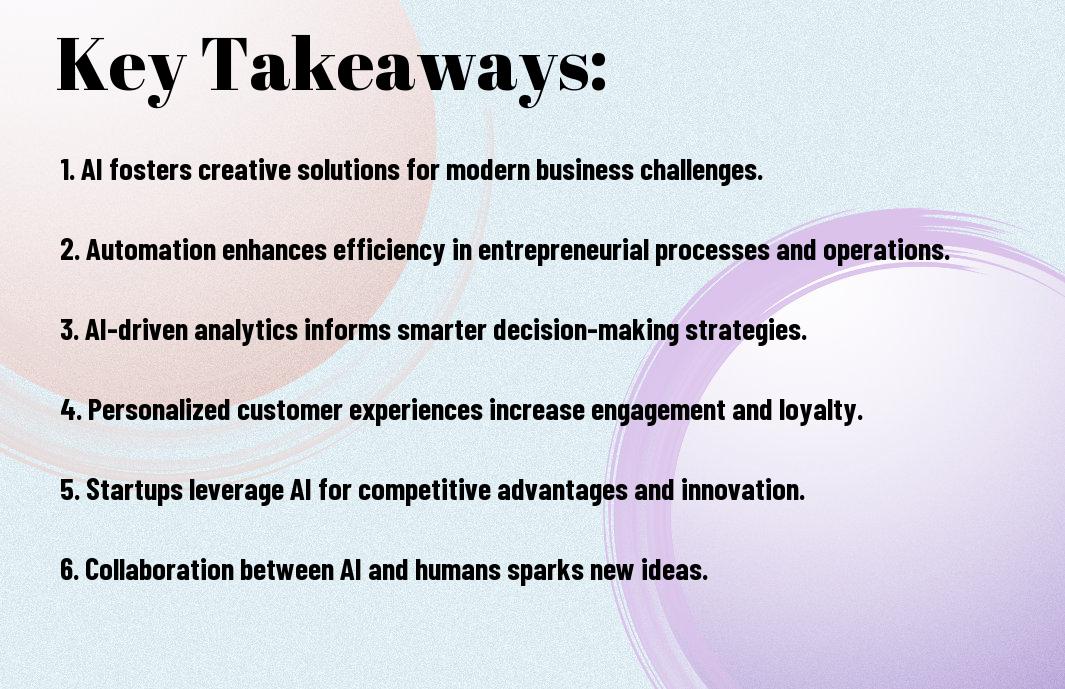
  • The combination of Artificial Intelligence (AI) and entrepreneurship can lead to significant success, as AI can help entrepreneurs make data-driven decisions, automate tasks, and gain a competitive edge in the market.
  • AI can be used to identify new business opportunities, optimize operations, and improve customer experiences, ultimately driving revenue growth and increasing profitability.
  • Entrepreneurs who leverage AI effectively can gain a first-mover advantage, setting themselves apart from competitors and establishing a strong market presence.
  • The integration of AI in entrepreneurship also enables the development of innovative products and services, which can disrupt traditional industries and create new markets.
  • By embracing AI and entrepreneurship, individuals can create scalable and sustainable businesses that have the potential to generate significant wealth and make a lasting impact on the economy and society.
The Convergence Factor

For you to achieve success, understanding the intersection of AI and entrepreneurship is key. This convergence is revolutionizing the way you approach business, creating new opportunities and challenges. As you navigate this landscape, you’ll find that the combination of these two elements can catapult your endeavors to unprecedented heights.

When Technology Meets Ambition

Upon examining the relationship between AI and entrepreneurship, you’ll notice that the fusion of these two elements sparks innovation. This synergy enables you to automate tasks, analyze data, and make informed decisions, ultimately driving your business forward.

The New Economic Paradigm

Between the lines of traditional business models and emerging technologies, a new economic landscape is unfolding. You are now part of a global network where AI-driven entrepreneurship is redefining the rules of success, offering you unparalleled opportunities to grow and thrive.

Ambition is what drives you to harness the potential of this new paradigm, where AI and entrepreneurship intersect. As you explore this territory, you’ll discover that the boundaries of what’s possible are expanding, and your ability to adapt and innovate will be the determining factors in your success. You’ll need to stay ahead of the curve, leveraging AI to enhance your entrepreneurial ventures and create a competitive edge in the market. By doing so, you’ll be well on your way to achieving prosperity and making your mark in this new economic era.

AI as the Modern Multiplier

If you’re looking to amplify your entrepreneurial endeavors, AI is the key. By leveraging AI, you can streamline processes, enhance decision-making, and drive innovation, ultimately leading to increased success.

Scaling Without Traditional Constraints

Typically, traditional business growth is hindered by limited resources and infrastructure. However, with AI, you can scale your business without these constraints, allowing you to reach new heights and expand your market reach more efficiently.

The Automation Advantage

With the power of automation, you can offload repetitive tasks and focus on high-leverage activities, freeing up your time to strategize and grow your business. This advantage enables you to optimize operations and make data-driven decisions.

Automation allows you to process vast amounts of data, identify patterns, and make predictions, giving you a competitive edge in the market. As you harness the power of automation, you’ll be able to refine your business model, improve customer experiences, and drive revenue growth, ultimately leading to increased success and profitability for your entrepreneurial ventures.

The Entrepreneurial Mindset

Keep in mind that developing an entrepreneurial mindset is key to unlocking your potential in the AI-driven landscape. You will need to be adaptable, innovative, and willing to learn from your mistakes to stay ahead of the curve.

Risk Calibration in the AI Era

Across various industries, you will encounter numerous opportunities to leverage AI for growth, but it’s imperative to assess the risks involved and calibrate your approach accordingly, ensuring that you make informed decisions that align with your business goals.

Vision Beyond the Algorithm

Beyond the technical aspects of AI, you need to have a clear vision for how you want to utilize this technology to drive your business forward, focusing on the value it can bring to your customers and the unique solutions it can provide.

Further, as you develop your vision, you will need to consider how AI can be integrated into your overall business strategy, enhancing your operations, and enabling you to make data-driven decisions that drive innovation and success, allowing you to stay competitive in a rapidly evolving market, and ultimately, achieving your goals.

Capital and Computation

Despite the complexities of combining AI and entrepreneurship, you can achieve success by understanding the interplay between capital and computation. Your ability to leverage these elements will significantly impact your business’s growth and profitability.

New Investment Landscapes

Around the globe, you are witnessing the emergence of new investment opportunities, driven by the convergence of AI and entrepreneurship. Your investment strategy should take into account the shifting landscapes and the potential for high returns on investment in AI-driven startups.

Resource Allocation Reimagined

Alongside the integration of AI, you are experiencing a significant shift in how resources are allocated within your organization. Your resource allocation strategy should be reevaluated to ensure that it is optimized for the new landscape of AI-driven entrepreneurship.

Allocation of resources is a key aspect of your business strategy, and with the integration of AI, you need to consider how to optimize your resource allocation to maximize returns. You should focus on allocating resources to areas that can benefit from AI-driven automation, such as data analysis and customer service, allowing you to free up resources for more strategic and creative endeavors, ultimately driving your business forward.

The Human Element

Once again, you will find that the key to success lies in your ability to leverage AI and entrepreneurship effectively, and this is where the human element comes into play, as you need to understand how to work with technology to achieve your goals.

Skills That Complement AI

Around the same time, you will need to develop skills that complement AI, such as creativity, problem-solving, and critical thinking, which will enable you to work effectively with AI systems and maximize their potential to drive your business forward.

Building Teams Around Technology

Similarly, you will need to focus on building teams around technology, assembling a group of individuals with diverse skills and expertise who can work together to develop and implement AI solutions that drive your business forward and help you achieve your objectives.

The team you build around your technology will be instrumental in helping you to navigate the complexities of AI and entrepreneurship, and you will need to ensure that you have the right people in place to support your vision and help you to drive success, as you work to integrate AI into your business and achieve your goals.

Market Disruption Mechanics

All successful entrepreneurs know that market disruption is key to achieving success. You can leverage AI to disrupt traditional markets and create new opportunities for your business. By understanding the mechanics of market disruption, you can position your company for growth and success.

Identifying AI-Ready Sectors

Following an analysis of the market, you can identify sectors that are ripe for AI-driven disruption. You will be able to pinpoint areas where AI can bring significant value and help your business gain a competitive edge. Your ability to identify these sectors will be necessary in developing a successful strategy.

Creating Value Through Transformation

Creating new business models and revenue streams is a key aspect of market disruption. You can use AI to transform your business and create new value for your customers. By leveraging AI, you can develop innovative solutions that meet the evolving needs of your market.

Identifying areas where AI can drive transformation is necessary to creating value in your business. You need to consider how AI can improve your operations, enhance customer experience, and drive revenue growth. By doing so, you can develop a clear strategy for leveraging AI to transform your business and achieve success in the market. As you explore the potential of AI, you will discover new opportunities for growth and innovation, enabling you to stay ahead of the competition and achieve your goals.

Final Words

Now, as you initiate on your journey to achieve success, you understand that The Wealth Equation – AI + Entrepreneurship = Success – holds the key to unlocking your financial future. You can leverage AI to amplify your entrepreneurial endeavors, and by doing so, you will be well on your way to achieving prosperity. For more insights, you can explore AI As The New Wealth Frontier: Mosaic Method’s Mission To Future-Proof Careers And Businesses, and discover how your unique approach can lead to your success.

FAQ

Q: What is The Wealth Equation and how does it relate to AI and entrepreneurship?

A: The Wealth Equation, represented as AI + Entrepreneurship = Success, is a concept that highlights the powerful combination of artificial intelligence and entrepreneurial spirit in achieving financial prosperity. By leveraging AI technologies, entrepreneurs can automate tasks, gain valuable insights, and make data-driven decisions, thereby amplifying their business potential and paving the way for success. This equation signifies the symbiotic relationship between technological innovation and entrepreneurial vision, suggesting that when harnessed together, they can lead to unprecedented growth and wealth creation.

Q: How can AI contribute to entrepreneurial success in the context of The Wealth Equation?

A: AI contributes to entrepreneurial success in several ways. Firstly, it enables businesses to process and analyze vast amounts of data quickly and efficiently, providing insights that can inform strategic decisions. Secondly, AI-powered automation can streamline operations, reducing manual labor and increasing productivity. Additionally, AI-driven tools can enhance customer experience through personalized services and predictive analytics, helping entrepreneurs to better understand and cater to their market. By integrating AI into their business models, entrepreneurs can innovate, scale, and adapt to market changes more effectively, thereby driving their journey towards success as outlined by The Wealth Equation.

Q: What skills or knowledge do entrepreneurs need to acquire to effectively apply The Wealth Equation and benefit from the combination of AI and entrepreneurship?

A: To effectively apply The Wealth Equation, entrepreneurs should acquire a combination of technical, business, and soft skills. Technically, they need a basic understanding of AI and its applications, including machine learning, data analysis, and automation. From a business perspective, entrepreneurs must have a solid grasp of market dynamics, financial management, and strategic planning. Soft skills such as adaptability, creativity, and leadership are also imperative for navigating the challenges and opportunities presented by AI integration. Moreover, the ability to continuously learn and update their knowledge is vital in the rapidly evolving landscape of AI and entrepreneurship. By possessing these skills, entrepreneurs can harness the full potential of The Wealth Equation and achieve success in their ventures.

Navigating Risk with AI – Tools for Smarter Entrepreneurial Decisions

As you launch on your entrepreneurial journey, you face numerous risks that can impact your business. You need to make informed decisions to mitigate these risks and ensure your venture’s success. With the advent of Artificial Intelligence (AI), you now have access to powerful tools that can help you navigate risk more effectively. You can leverage AI-driven solutions to analyze data, identify potential threats, and make smarter decisions that drive your business forward.

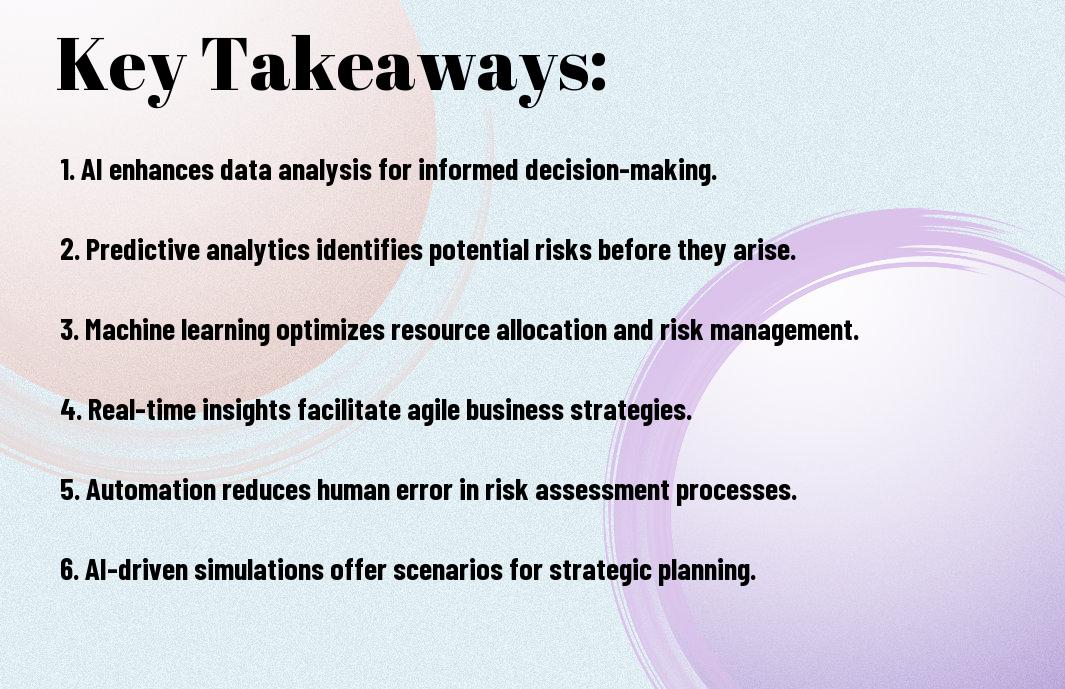
Key Takeaways:

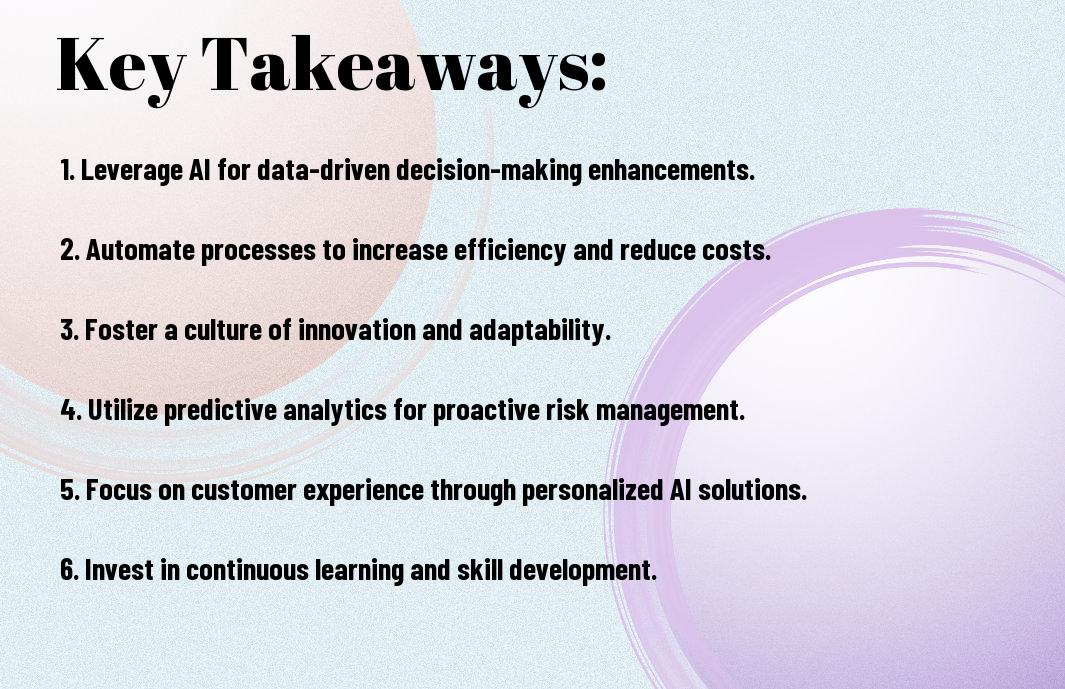
  • Entrepreneurs can leverage AI to analyze market trends, identify potential risks, and make informed decisions to mitigate them, ultimately leading to smarter business choices.
  • AI-powered tools can help assess the likelihood of various outcomes, allowing entrepreneurs to develop strategies that balance risk and opportunity.
  • By integrating AI into their decision-making processes, entrepreneurs can enhance their ability to adapt to changing market conditions and stay ahead of the competition.
  • AI-driven risk assessment can also facilitate more effective resource allocation, enabling entrepreneurs to focus on high-priority areas and minimize potential losses.
  • Embracing AI as a decision-support tool can lead to more confident and proactive entrepreneurial decision-making, driving business growth and innovation in an increasingly complex and uncertain environment.

Risk Assessment in Modern Business

To effectively navigate the complexities of modern business, you need to understand the role of risk assessment in informing your decisions. As you evaluate opportunities and challenges, you must consider the potential risks and rewards, using data and analytics to guide your choices.

Traditional Risk Models

By leveraging established frameworks and methodologies, you can identify and mitigate potential risks, protecting your business from unforeseen threats. You will use these models to analyze historical data and industry trends, providing a foundation for your decision-making process.

AI-Enhanced Risk Detection

The integration of artificial intelligence (AI) into your risk assessment toolkit enables you to analyze vast amounts of data, identifying patterns and anomalies that may indicate potential risks. You can use AI-powered tools to monitor your business in real-time, responding quickly to emerging threats.

Risk management is an ongoing process, and AI-enhanced risk detection allows you to refine your approach over time, incorporating new data and insights into your decision-making. As you continue to leverage AI in your risk assessment, you will be able to identify potential risks more effectively, taking proactive steps to mitigate them and protect your business from potential threats, ultimately informing your entrepreneurial decisions with data-driven confidence.

Machine Learning for Market Analysis

While leveraging machine learning for market analysis, you can make more informed decisions by utilizing data-driven insights. This approach enables you to analyze large datasets, identify trends, and predict market fluctuations, ultimately giving your business a competitive edge.

Pattern Recognition Systems

Among the various machine learning techniques, pattern recognition systems are particularly useful for identifying trends and anomalies in market data, allowing you to adjust your strategies accordingly and stay ahead of the competition.

Predictive Analytics Tools

Behind the success of many businesses lies the effective use of predictive analytics tools, which enable you to forecast market trends and make data-driven decisions, thereby minimizing risks and maximizing opportunities for your entrepreneurial ventures.

The predictive analytics tools at your disposal can be used to analyze customer behavior, market trends, and other factors that impact your business, providing you with actionable insights to drive growth and profitability. By harnessing the power of predictive analytics, you can optimize your business strategies, mitigate potential risks, and achieve your goals more efficiently.

Decision Support Systems

Now, as an entrepreneur, you can leverage decision support systems to make informed decisions with the help of AI. These systems analyze data and provide recommendations, enabling you to navigate risk and uncertainty in your business.

Real-Time Data Processing

Decisively, you can process data in real-time, allowing you to respond quickly to changes in the market and make timely decisions that drive your business forward.

Scenario Modeling Frameworks

With the ability to model different scenarios, you can anticipate potential outcomes and develop strategies to mitigate risk, giving you a competitive edge in the market.

Support for scenario modeling frameworks is important for your business, as it enables you to test hypotheses and predict the impact of different decisions on your operations, allowing you to refine your strategy and make more informed choices that drive growth and success.

AI-Powered Financial Forecasting

Unlike traditional methods, AI-powered financial forecasting provides you with accurate and data-driven insights to inform your business decisions. You can leverage AI tools to analyze market trends, predict revenue, and identify potential risks, enabling you to make smarter entrepreneurial decisions.

Cash Flow Prediction

Following a steady stream of financial data, you can use AI to predict your cash flow and make informed decisions about investments and resource allocation. You will be able to anticipate and prepare for fluctuations in your cash flow, ensuring your business remains stable and profitable.

Investment Return Analysis

Fluent in analyzing large datasets, AI can help you evaluate investment opportunities and predict potential returns. You can use AI tools to assess the viability of different investments and make data-driven decisions that align with your business goals.

With investment return analysis, you can optimize your investment portfolio and maximize your returns. You will be able to identify the most profitable investments and allocate your resources accordingly, ensuring your business achieves its financial objectives. By leveraging AI-powered investment return analysis, you can minimize risks and make informed decisions that drive your business forward.

Customer Behavior Analytics

Despite the complexity of understanding your customers, you can leverage AI tools to make informed decisions, as discussed in Navigating the Risks of Artificial Intelligence: A Strategic Approach. This helps you navigate risks and opportunities in your business.

Demand Forecasting

For your business to thrive, you need to accurately predict customer demand, and AI-powered analytics can help you achieve this by analyzing historical data and market trends.

Loyalty Pattern Recognition

Around the clock, your customers are interacting with your brand, and AI can help you identify loyalty patterns, allowing you to tailor your marketing strategies to retain loyal customers.

And as you probe deeper into loyalty pattern recognition, you’ll discover that AI can help you identify the most effective channels to reach your loyal customers, enabling you to personalize your marketing efforts and strengthen your relationship with them, ultimately driving business growth and increasing customer retention rates, which is important for your business success.

Operational Risk Management

All businesses face operational risks that can impact their bottom line. You can mitigate these risks by leveraging AI tools to identify and manage potential threats, ensuring your business runs smoothly and efficiently.

Supply Chain Optimization

Any disruption to your supply chain can have significant consequences. You can use AI to analyze your supply chain, predict potential disruptions, and optimize your logistics to minimize risks and ensure timely delivery of products.

Resource Allocation Systems

Among the most significant operational risks is the inefficient allocation of resources. You can use AI-powered resource allocation systems to optimize your resource utilization, reducing waste and improving productivity.

At the heart of effective resource allocation is data-driven decision making. You can use AI to analyze your resource utilization patterns, identify areas of inefficiency, and make informed decisions about resource allocation, ensuring that your business is running at optimal levels. This enables you to maximize your returns on investment and stay ahead of the competition.

To wrap up

Following this exploration of navigating risk with AI, you now have the knowledge to make smarter entrepreneurial decisions. You can leverage AI tools to analyze your business and identify potential risks, allowing you to take proactive measures to mitigate them. With your newfound understanding, you can harness the power of AI to drive your business forward, making informed decisions that minimize risk and maximize returns on your investments, ultimately leading to greater success for your venture.

FAQ

Q: What are the key benefits of using AI tools for navigating risk in entrepreneurial decision-making?

A: The key benefits of using AI tools for navigating risk in entrepreneurial decision-making include enhanced predictive analytics, improved data-driven insights, and the ability to simulate various scenarios to forecast potential outcomes. By leveraging AI, entrepreneurs can make more informed decisions, minimize potential risks, and maximize opportunities for growth and success. Additionally, AI tools can help entrepreneurs identify patterns and trends that may not be immediately apparent, allowing them to adjust their strategies and stay ahead of the competition.

Q: How can AI tools help entrepreneurs assess and mitigate potential risks in their business ventures?

A: AI tools can help entrepreneurs assess and mitigate potential risks by providing advanced risk assessment models, real-time monitoring, and predictive analytics. These tools can analyze large datasets, including market trends, customer behavior, and financial performance, to identify potential risks and provide recommendations for mitigation. Furthermore, AI-powered tools can help entrepreneurs develop contingency plans, identify potential blind spots, and optimize their risk management strategies to ensure business continuity and resilience. By leveraging AI, entrepreneurs can proactively manage risk and make more informed decisions to drive business success.

Q: What are some best practices for entrepreneurs to effectively integrate AI tools into their decision-making processes and navigate risk?

A: To effectively integrate AI tools into their decision-making processes and navigate risk, entrepreneurs should start by identifying areas where AI can add the most value, such as predictive analytics or risk assessment. They should also ensure that their AI tools are aligned with their business goals and objectives, and that they have a clear understanding of the data and insights being generated. Additionally, entrepreneurs should establish a culture of continuous learning and experimentation, staying up-to-date with the latest AI trends and technologies, and being willing to adapt and adjust their strategies as needed. By taking a strategic and informed approach to AI adoption, entrepreneurs can harness the power of AI to drive smarter decision-making and navigate risk with confidence.

Entrepreneurship 0 – How AI is Driving the Next Wave of Innovation

As you navigate the ever-evolving landscape of entrepreneurship, you’re likely aware that artificial intelligence (AI) is revolutionizing the way you approach innovation. Your ability to leverage AI will be key to staying ahead of the curve, and this emerging technology is poised to transform your business. You’ll discover how AI is empowering entrepreneurs like you to develop novel solutions, streamline operations, and unlock new opportunities for growth, setting the stage for a new era of entrepreneurial success.

Key Takeaways:

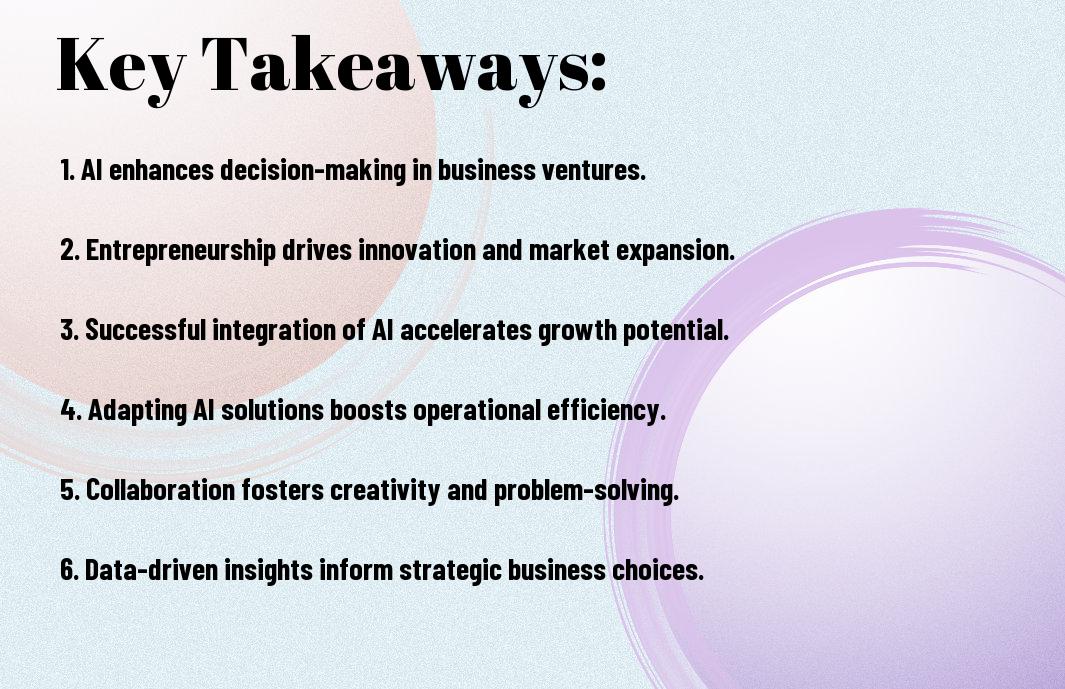
  • AI is transforming the entrepreneurial landscape by enabling businesses to automate tasks, gain insights from large datasets, and make data-driven decisions, leading to increased efficiency and innovation.
  • The integration of AI in entrepreneurship is giving rise to new business models, products, and services that were previously unimaginable, and is expected to drive significant economic growth.
  • Entrepreneurs who leverage AI effectively will have a competitive advantage in the market, as they will be able to respond quickly to changing customer needs and preferences.
  • AI is also democratizing access to entrepreneurship, as it provides tools and resources that can be used by anyone with an internet connection, regardless of their location or background.
  • The future of entrepreneurship will be shaped by the symbiotic relationship between human creativity and AI-driven innovation, leading to the creation of new industries, jobs, and opportunities that we cannot yet anticipate.

    The AI Revolution in Business

    A new era of innovation is unfolding, and you are at the forefront of this transformation, as AI-driven technologies revolutionize the way you approach entrepreneurship, enabling you to make data-driven decisions and stay ahead of the competition.

    Machine Learning as a Competitive Edge

    Acquiring insights from machine learning algorithms, you can develop a unique competitive edge, enabling your business to adapt and evolve in response to changing market conditions, and you can leverage this technology to drive growth and innovation.

    Predictive Analytics and Market Disruption

    Beneath the surface of traditional business models, predictive analytics is creating new opportunities for disruption, and you can harness this power to anticipate market trends, identify untapped opportunities, and make informed decisions that drive your business forward.

    For instance, by leveraging predictive analytics, you can forecast customer behavior, optimize your operations, and develop targeted marketing strategies that resonate with your audience, ultimately giving you a competitive advantage in the market and enabling you to stay ahead of the curve.

    Startup Ecosystems in the Age of AI

    Some of the most significant advancements in AI are happening within startup ecosystems, where you can witness the fusion of innovative ideas and technological expertise, driving the next wave of innovation and transforming your understanding of what is possible.

    Funding Landscapes for AI Ventures

    Landscape of investment opportunities for AI startups is evolving rapidly, offering you a wide range of options to secure funding, from venture capital to crowdfunding, and enabling you to turn your AI-powered ideas into successful businesses.

    Silicon Valley to Global Innovation Hubs

    Above the traditional hubs like Silicon Valley, you now have access to a global network of innovation centers, where you can collaborate, share knowledge, and leverage resources to develop your AI-driven projects and take them to the next level.

    Hence, as you explore the shift from Silicon Valley to global innovation hubs, you’ll discover that these emerging ecosystems offer a unique blend of talent, infrastructure, and investment opportunities, allowing you to tap into local expertise and connect with a broader community of innovators, ultimately enhancing your chances of success in the AI-driven landscape.

    The Entrepreneur’s AI Toolkit

    Once again, you’re looking to leverage AI to drive innovation in your business, and there are many resources available to help you get started, such as learning How AI Can Drive Innovation in Your Industry | HBS Online to explore the possibilities.

    Essential Technologies for Modern Founders

    Entrepreneurs like you need to stay up-to-date with the latest technologies to remain competitive, and AI is no exception, as it can help you streamline processes and make data-driven decisions to grow your business.

    Low-Code Solutions and Democratized Development

    Across various industries, you’re seeing a shift towards low-code solutions, which enable you to develop and deploy applications without extensive coding knowledge, making it easier for you to get started with AI.

    With low-code solutions, you can quickly build and test AI-powered prototypes, reducing the time and cost associated with traditional development methods, and allowing you to focus on refining your business model and strategy to drive growth and innovation.

    Ethical Considerations for AI Entrepreneurs

    Unlike other technologies, AI raises unique ethical concerns that you must address as an entrepreneur. You need to consider the potential impact of your AI-powered products on society and ensure that they align with your values and principles.

    Privacy Concerns and Data Governance

    Among the key issues you will face is protecting user data and ensuring that your AI systems comply with relevant regulations. You must implement robust data governance policies to safeguard sensitive information and maintain transparency in your data collection and usage practices.

    Building Responsible AI Systems

    Ethically, you have a responsibility to design AI systems that are fair, transparent, and accountable. You should prioritize building systems that can explain their decisions and actions, and that are aligned with human values and principles.

    This involves considering the potential biases and risks associated with your AI systems and taking steps to mitigate them. You can achieve this by implementing robust testing and validation protocols, as well as establishing clear guidelines and standards for the development and deployment of your AI-powered products. As you build your AI systems, you should prioritize transparency, explainability, and accountability to ensure that your products are trustworthy and beneficial to society.

    AI-Powered Business Models

    Keep in mind that AI is revolutionizing the way you approach business, enabling you to create innovative models that drive growth and profitability. You can leverage AI to develop unique value propositions, streamline operations, and enhance customer experiences.

    Subscription and SaaS Transformations

    Subscribing to AI-powered services allows you to access cutting-edge technologies, reducing upfront costs and increasing flexibility. You can scale your business more efficiently, focusing on core competencies while leaving non-core functions to specialized providers.

    Platform Economics and Network Effects

    Before exploring into platform economics, you should understand how AI-driven networks can create self-reinforcing cycles of growth. You can design platforms that attract users, generate data, and improve AI models, ultimately driving more value for your business.

    Consequently, as you explore platform economics and network effects, you’ll discover how AI can help you build robust, scalable businesses that thrive on user engagement and data exchange. You can create virtuous cycles where AI improves your platform, attracting more users, who in turn generate more data, further enhancing your AI capabilities.

    Navigating Regulatory Challenges

    Your ability to navigate regulatory challenges will be vital as you initiate on your entrepreneurial journey in the AI-driven landscape. You must stay informed about the latest developments and adapt your business strategies accordingly.

    Global AI Governance Frameworks

    Around the globe, governments and organizations are establishing frameworks to regulate AI. About these frameworks, it’s vital to understand their implications on your business and how you can leverage them to your advantage.

    Compliance Strategies for Startups

    Strategically, you will need to develop a comprehensive approach to ensure compliance with existing and emerging regulations. You should prioritize transparency, accountability, and ethics in your AI development and deployment.

    Regulatory compliance is an ongoing process that requires your attention and effort. You will need to stay up-to-date with the latest regulations and adjust your strategies to ensure you are meeting the necessary standards, thereby avoiding potential risks and reputational damage to your startup.

    Conclusion

    Upon reflecting on the impact of AI on entrepreneurship, you can see how it’s driving the next wave of innovation. You now have the tools to harness AI’s power, transforming your business and creating new opportunities. Your ability to adapt and innovate will be key to staying ahead in this rapidly changing landscape, and with AI by your side, you’ll be well-equipped to shape the future of entrepreneurship.

    FAQ

    Q: What role is AI playing in driving the next wave of innovation in entrepreneurship?

    A: AI is revolutionizing the entrepreneurial landscape by providing unprecedented opportunities for innovation. Through machine learning algorithms and data analytics, AI is enabling entrepreneurs to identify new business opportunities, automate processes, and make data-driven decisions. This is leading to the development of new products, services, and business models that are transforming industries and creating new markets. With AI, entrepreneurs can now analyze vast amounts of data, identify patterns, and make predictions, allowing them to stay ahead of the competition and drive growth.

    Q: How are entrepreneurs leveraging AI to create new business opportunities and stay competitive?

    A: Entrepreneurs are leveraging AI in various ways to create new business opportunities and stay competitive. For instance, they are using AI-powered chatbots to enhance customer service, AI-driven marketing tools to personalize customer experiences, and AI-based predictive analytics to forecast market trends. Additionally, AI is enabling entrepreneurs to develop new products and services, such as virtual assistants, smart home devices, and personalized healthcare solutions. By embracing AI, entrepreneurs can streamline operations, improve efficiency, and create new revenue streams, ultimately driving business growth and success.

    Q: What skills and knowledge do entrepreneurs need to acquire to effectively harness the power of AI in their businesses?

    A: To effectively harness the power of AI, entrepreneurs need to acquire a range of skills and knowledge. These include understanding the fundamentals of AI and machine learning, data analysis and interpretation, and programming skills such as Python and R. Entrepreneurs also need to stay up-to-date with the latest AI trends and technologies, such as natural language processing, computer vision, and deep learning. Furthermore, they need to develop a strategic mindset to identify opportunities for AI adoption and integrate AI into their business models. By acquiring these skills and knowledge, entrepreneurs can unlock the full potential of AI and drive innovation and growth in their businesses.

Building a Resilient Business with AI – Strategies for Long-Term Wealth

You are likely aware that artificial intelligence (AI) is transforming the business landscape, and your company’s ability to adapt will determine its success. As you navigate this new era, you need to develop strategies that harness AI’s power to drive growth and sustainability. Your business can thrive with the right approach, and this post will guide you in building a resilient enterprise that leverages AI for long-term wealth and prosperity. You will discover key tactics to future-proof your organization.

Key Takeaways:

  • Implementing AI solutions can help businesses build resilience by automating processes, enhancing decision-making, and improving operational efficiency, ultimately leading to long-term wealth and sustainability.
  • Developing a strategic AI roadmap is important to ensure alignment with business goals and objectives, and to maximize the benefits of AI adoption, such as increased productivity and competitiveness.
  • Investing in AI-powered data analytics can provide businesses with valuable insights and predictive capabilities, enabling them to anticipate and respond to market changes, mitigate risks, and capitalize on new opportunities.
  • Building a resilient business with AI requires a culture of innovation and continuous learning, where employees are empowered to develop new skills and adapt to emerging technologies, ensuring the organization stays ahead of the curve.
  • Effective integration of AI into business operations demands a balanced approach, considering both the benefits and potential risks, such as job displacement and bias, to ensure that AI adoption supports the well-being of both the business and its stakeholders.

Identifying AI Opportunities for Business Resilience

For businesses seeking to build resilience, AI offers a wealth of opportunities. You can leverage AI to enhance operational efficiency, improve decision-making, and drive innovation, ultimately leading to long-term wealth and sustainability.

Assessing Your Current Business Vulnerabilities

With a thorough understanding of your business, you can identify areas where AI can mitigate risks and improve resilience. You will need to evaluate your current systems, processes, and infrastructure to determine where AI solutions can be effectively integrated.

Matching AI Solutions to Core Business Needs

Beside your business goals, AI solutions can be tailored to address specific challenges and opportunities. You should consider how AI can be applied to your core business functions, such as customer service, supply chain management, or financial planning, to drive growth and resilience.

It is necessary to align AI solutions with your business objectives, ensuring that they support your overall strategy and drive meaningful outcomes. You should consider factors such as data quality, scalability, and integration with existing systems when selecting AI solutions, and prioritize those that offer the greatest potential for impact and return on investment.

Financial Frameworks for AI Investment

Any business looking to invest in AI needs a solid financial framework to ensure long-term wealth. You must consider the costs and benefits of AI implementation, as well as the potential return on investment.

Capital Allocation Principles for AI Projects

Behind every successful AI project is a well-planned capital allocation strategy. You should prioritize your AI investments based on your business goals and allocate your resources accordingly, ensuring that your investments align with your overall business strategy.

Measuring Return on AI Investments

Investing in AI requires a clear understanding of how to measure the return on your investments. You need to establish key performance indicators (KPIs) to evaluate the success of your AI projects and make data-driven decisions to optimize your investments.

Projects that incorporate AI can be complex and challenging to evaluate, but you can start by tracking metrics such as revenue growth, cost savings, and customer engagement. You should also consider using advanced analytics tools to help you measure the impact of your AI investments and make adjustments to your strategy as needed, allowing you to maximize your returns and achieve your business goals.

Risk Management Through Predictive Analytics

To effectively manage risk in your business, you can leverage predictive analytics to forecast potential threats and opportunities. This enables you to make informed decisions and mitigate risks, ensuring your business remains resilient in the face of uncertainty.

Market Volatility Forecasting Systems

Alongside other tools, advanced market volatility forecasting systems can help you anticipate and prepare for market fluctuations, allowing you to adjust your strategy accordingly and protect your investments.

Supply Chain Resilience Modeling

Meanwhile, management of your supply chain is vital to your business’s overall resilience, and predictive analytics can help you identify potential vulnerabilities and develop strategies to address them, ensuring that your supply chain remains robust and adaptable.

Considering the complexities of modern supply chains, you will need to develop a comprehensive understanding of the various factors that can impact your operations, from logistics and transportation to supplier relationships and inventory management. By using predictive analytics to model different scenarios and identify potential risks, you can develop proactive strategies to mitigate these risks and ensure that your supply chain remains resilient in the face of disruption, ultimately protecting your business’s long-term wealth and stability.

Customer Relationship Enhancement via AI

After implementing AI in your business, you can significantly enhance customer relationships, leading to increased loyalty and retention. You can leverage AI to analyze customer data, preferences, and behavior, allowing you to tailor your services to meet their needs.

Personalization at Scale

By utilizing AI-powered tools, you can personalize your customer interactions at scale, enabling you to provide a unique experience for each customer, thereby strengthening your bond with them.

Retention Strategy Automation

Above all, automating your retention strategy with AI helps you identify and address potential issues before they lead to customer churn, allowing you to proactively retain your customers.

Retention is a key aspect of your business, and with AI, you can develop targeted strategies to retain your customers, such as offering personalized loyalty programs, sending timely notifications, and providing exceptional customer support, ultimately leading to long-term wealth and growth for your business as you continue to meet the evolving needs of your customers.

Operational Efficiency Transformation

Your business can benefit from AI-driven operational efficiency transformation, learn more about How to Build a Resilient Business in an Ever-Changing Economy to stay ahead.

Process Automation Selection Criteria

Among the key factors to consider when selecting process automation, you should evaluate the potential return on investment and the impact on your workforce.

Workforce Augmentation Strategies

To effectively implement AI, you need to develop strategies that augment your workforce, enhancing their capabilities and productivity.

Even as you adopt AI, your focus should be on upskilling your employees, enabling them to work alongside AI systems and maximize the benefits of automation, leading to increased efficiency and long-term wealth for your business.

Competitive Advantage Through Data Assets

Keep in mind that your business’s ability to collect, analyze, and act on data is key to gaining a competitive edge in the market, and leveraging AI can help you make the most of your data assets.

Building Proprietary Data Moats

Alongside your existing data collection efforts, acquiring and utilizing unique data sources can help you build a proprietary data moat that sets your business apart from competitors and provides a foundation for long-term success.

Turning Data into Strategic Decisions

Among the most effective ways to drive business growth, using data to inform your strategic decisions enables you to make informed choices that drive your business forward, and AI can help you uncover hidden insights in your data.

Data drives your ability to make strategic decisions, and by leveraging AI-powered analytics, you can uncover patterns and trends in your data that might otherwise go unnoticed, allowing you to adjust your business strategy and stay ahead of the competition, ultimately leading to increased efficiency and profitability for your business.

Summing up

Now that you have explored the strategies for building a resilient business with AI, you can apply these insights to secure your company’s long-term wealth. You will be able to leverage AI to drive growth, mitigate risks, and stay competitive. By implementing these approaches, you will strengthen your business and ensure its prosperity, ultimately achieving your goals and protecting your investments. Your ability to adapt and innovate with AI will be key to your success.

FAQ

Q: What are the key benefits of incorporating AI into my business strategy for long-term wealth creation?

A: Incorporating AI into your business strategy can bring numerous benefits, including enhanced operational efficiency, improved decision-making, and increased competitiveness. AI can help automate routine tasks, analyze large datasets, and provide valuable insights, enabling you to make informed decisions and stay ahead of the competition. Additionally, AI can help you identify new business opportunities, optimize resource allocation, and mitigate potential risks, ultimately contributing to long-term wealth creation and business resilience.

Q: How can I ensure that my business is prepared to adapt to the changing landscape of AI technology and its applications?

A: To ensure your business is prepared to adapt to the changing landscape of AI technology, it’s vital to stay informed about the latest developments and advancements in the field. This can be achieved by attending industry conferences, participating in online forums, and engaging with AI experts and thought leaders. Furthermore, you should prioritize investing in employee training and development, focusing on building a workforce with the necessary skills to effectively leverage AI technologies. By fostering a culture of innovation and experimentation, you can encourage your team to explore new AI-powered solutions and identify opportunities for growth and improvement.

Q: What role does data quality play in building a resilient business with AI, and how can I ensure that my business has access to high-quality data?

A: Data quality plays a vital role in building a resilient business with AI, as high-quality data is vital for training accurate AI models and generating reliable insights. To ensure access to high-quality data, it’s vital to establish robust data management practices, including data collection, storage, and processing protocols. This can involve implementing data validation and verification processes, as well as investing in data cleansing and normalization tools. Additionally, you should prioritize data security and compliance, ensuring that your business adheres to relevant data protection regulations and standards. By prioritizing data quality, you can trust the insights generated by your AI systems and make informed decisions to drive long-term business success.

The Intersection of AI and Venture Capital – Investing in the Future

As you navigate the evolving landscape of investment opportunities, you’re likely considering the role of artificial intelligence in shaping the future of venture capital. Your investments have the potential to revolutionize industries and transform the way businesses operate. With AI-driven innovations on the rise, you’re poised to capitalize on the tremendous growth potential that this intersection of technologies presents, and this blog post will guide you through the key aspects to consider when investing in this exciting space.

Key Takeaways:

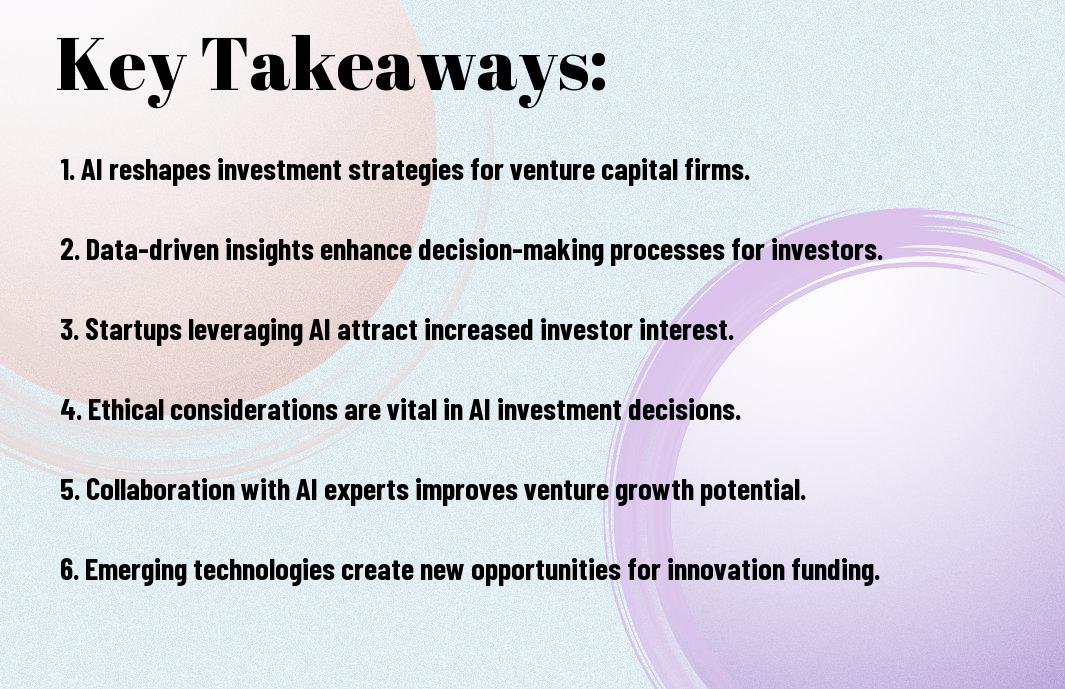
  • The integration of Artificial Intelligence (AI) in venture capital is transforming the investment landscape by enhancing deal sourcing, due diligence, and portfolio management, leading to more informed investment decisions.
  • AI-driven tools are being utilized to analyze vast amounts of data, identify patterns, and predict market trends, allowing venture capital firms to uncover promising startups and investment opportunities more efficiently.
  • The use of machine learning algorithms in venture capital enables the assessment of startup potential based on quantitative metrics, reducing the reliance on traditional methods that often involve personal biases and intuition.
  • As AI continues to evolve, venture capital firms are adapting by developing specialized AI-focused investment strategies, such as investing in AI startups and companies that leverage AI to drive innovation and growth.
  • The intersection of AI and venture capital also raises important considerations around ethics, transparency, and accountability, highlighting the need for investors to prioritize responsible AI development and deployment in their investment portfolios.

The AI Revolution in Investment Landscapes

While the integration of AI in venture capital is still in its early stages, you are likely to see significant changes in the way investments are made. AI-driven tools are being used to analyze vast amounts of data, identify patterns, and make predictions about investment outcomes.

Algorithmic Decision-Making

Landscaping the future of investments, you will find that algorithmic decision-making is becoming increasingly prevalent. You can expect to see more AI-powered systems being used to inform investment decisions, allowing for faster and more accurate analysis of potential investments.

Risk Assessment Paradigms

With the advent of AI, you are witnessing a shift in risk assessment paradigms. You can use AI-driven tools to analyze complex data sets and identify potential risks, allowing you to make more informed investment decisions.

This ability to assess risk more accurately is particularly valuable in the venture capital space, where you are often dealing with high-risk, high-reward investments. You can use AI to analyze market trends, financial data, and other factors to determine the potential risks and returns on an investment, helping you to make more informed decisions and maximize your returns.

Venture Capital’s Evolution in the Digital Age

It is evident that the venture capital landscape has undergone significant changes with the advent of digital technologies, and you are now witnessing a new era of investment opportunities. You can see how AI is transforming the way you invest in startups, and your approach to venture capital is evolving rapidly.

Traditional Models Disrupted

Before the digital age, you relied on traditional models of venture capital, but now you are experiencing a shift towards more innovative and tech-driven approaches. Your investment strategies are being redefined, and you are adapting to the new landscape.

New Metrics of Value

Evolving alongside the digital age, you are seeing new metrics of value emerge, and your assessment of startup potential is becoming more sophisticated. You are considering factors such as user engagement, data-driven insights, and AI-powered growth projections to inform your investment decisions.

Indeed, as you investigate deeper into the new metrics of value, you will discover that they offer a more nuanced understanding of a startup’s potential for success. You will be able to evaluate factors such as the quality of a startup’s data, the effectiveness of its AI algorithms, and the potential for scalability, allowing you to make more informed investment decisions and maximize your returns in the rapidly evolving venture capital landscape.

The Technical Underpinnings of AI in VC

Now, as you explore into the world of AI in venture capital, it’s crucial to understand the technical aspects that drive this intersection. You’ll encounter various technologies that enable AI-driven decision-making, and it’s vital to grasp these concepts to navigate this space effectively.

Machine Learning Applications

Beneath the surface of AI lies machine learning, which enables systems to learn from data and make predictions. You’ll find that machine learning applications are being used to analyze large datasets, identify patterns, and make informed investment decisions, allowing you to make more accurate predictions about your investments.

Predictive Analytics Frameworks

Among the key technologies used in AI-driven venture capital are predictive analytics frameworks, which provide a structured approach to analyzing data and making predictions. You’ll use these frameworks to identify trends, forecast outcomes, and optimize your investment strategies, giving you a competitive edge in the market.

And as you explore predictive analytics frameworks in more depth, you’ll discover that they rely on complex algorithms and statistical models to analyze large datasets, identify patterns, and make predictions about future outcomes. You can use these frameworks to analyze market trends, assess the potential of startups, and make informed investment decisions, ultimately helping you to maximize your returns and achieve your investment goals.

Capital Allocation Strategies

After determining your investment goals, you’ll need to develop a capital allocation strategy that balances risk and potential returns. You’ll want to consider how to distribute your investments across various AI-focused sectors, from healthcare to finance, to maximize your portfolio’s growth potential.

Sector-Specific Approaches

Across different industries, you’ll find unique opportunities for AI-driven growth, and you should tailor your investment approach to each sector’s specific needs and trends. You’ll need to assess the competitive landscape, market demand, and potential for disruption in each sector to make informed investment decisions.

Growth Stage Considerations

Against the backdrop of a rapidly evolving AI landscape, you’ll need to consider the growth stage of each investment opportunity, from seed funding to late-stage investments. You’ll want to evaluate the potential for scalability, the competitive advantage, and the management team’s ability to execute on their vision.

Considerations such as cash flow management, talent acquisition, and regulatory compliance become more significant as your investments grow. You’ll need to assess whether your portfolio companies have the necessary resources and expertise to navigate these challenges and achieve long-term success, and adjust your investment strategy accordingly to support their growth.

Ethical Dimensions

Unlike other investment areas, AI raises unique ethical concerns. As you explore the intersection of AI and venture capital, consider the implications of The AI Investment Boom: Impact on Venture Capital. You must navigate these complexities to make informed decisions.

Bias in Algorithmic Investing

Any investment strategy that relies on AI must account for potential biases in algorithmic decision-making. You should be aware of how biases can impact your investment choices and take steps to mitigate them.

Transparency Imperatives

Bias in AI systems can have significant consequences, which is why transparency is important. You need to understand how AI-driven investment decisions are made and be able to track the underlying factors that influence them.

In addition, as you probe into the world of AI-powered venture capital, you will need to prioritize transparency in your investment approach, ensuring that you can explain and justify the decisions made by your AI systems, and make adjustments as needed to maintain accountability and trust in your investment strategy.

Future Trajectories

Your investment decisions in the intersection of AI and venture capital will shape the future of various industries, and it’s important to consider the potential outcomes of your choices.

Emerging Technologies

Against the backdrop of rapid advancements, you’ll encounter new opportunities in areas like machine learning and natural language processing, which will continue to transform the way you approach investment strategies.

Regulatory Horizons

Emerging from the complexities of AI development, you’ll need to navigate the evolving regulatory landscape, which will impact your investment decisions and the overall growth of the industry.

With the regulatory environment constantly changing, you should stay informed about the latest developments and their potential effects on your investments, ensuring you’re well-positioned to capitalize on new opportunities and mitigate potential risks in the AI and venture capital space.

Conclusion

With this in mind, you now have a deeper understanding of the intersection of AI and venture capital, and how it can impact your investment decisions. As you consider investing in the future, you will be better equipped to navigate the opportunities and challenges presented by AI-driven technologies, ultimately informing your strategy and guiding your investments in this exciting and rapidly evolving space, shaping your approach to investing in the future.

FAQ

Q: What is the current state of AI adoption in the venture capital industry, and how is it impacting investment decisions?

A: The venture capital industry is witnessing a significant surge in AI adoption, with many firms leveraging AI-powered tools to analyze investment opportunities, predict market trends, and optimize portfolio management. AI is being used to process vast amounts of data, identify patterns, and provide insights that can inform investment decisions. As a result, venture capital firms are able to make more informed decisions, reduce risk, and increase potential returns. The intersection of AI and venture capital is creating new opportunities for investment in AI-powered startups, and we can expect to see more innovative applications of AI in the industry in the future.

Q: How do venture capital firms evaluate the potential of AI startups, and what are the key factors that influence their investment decisions?

A: Venture capital firms evaluate the potential of AI startups by assessing several key factors, including the strength of the founding team, the uniqueness and scalability of the technology, the size and growth potential of the market, and the competitive landscape. They also consider the startup’s ability to collect and leverage high-quality data, as well as its potential to drive meaningful social and economic impact. Additionally, venture capital firms look for startups that have a clear understanding of the regulatory environment and potential risks associated with AI development and deployment. By carefully evaluating these factors, venture capital firms can make informed investment decisions and identify AI startups with high growth potential.

Q: What are the potential risks and challenges associated with investing in AI startups, and how can venture capital firms mitigate these risks to ensure successful investments?

A: Investing in AI startups carries several potential risks and challenges, including regulatory uncertainty, data privacy concerns, and the potential for AI systems to be biased or flawed. Venture capital firms can mitigate these risks by conducting thorough due diligence on AI startups, evaluating their data management practices, and assessing their approach to AI development and deployment. They should also consider the potential for AI systems to be used in ways that are detrimental to society, and invest in startups that prioritize transparency, accountability, and social responsibility. By taking a thoughtful and informed approach to investing in AI startups, venture capital firms can minimize risks and maximize returns, while also contributing to the development of AI technologies that benefit society as a whole.

Skip to content